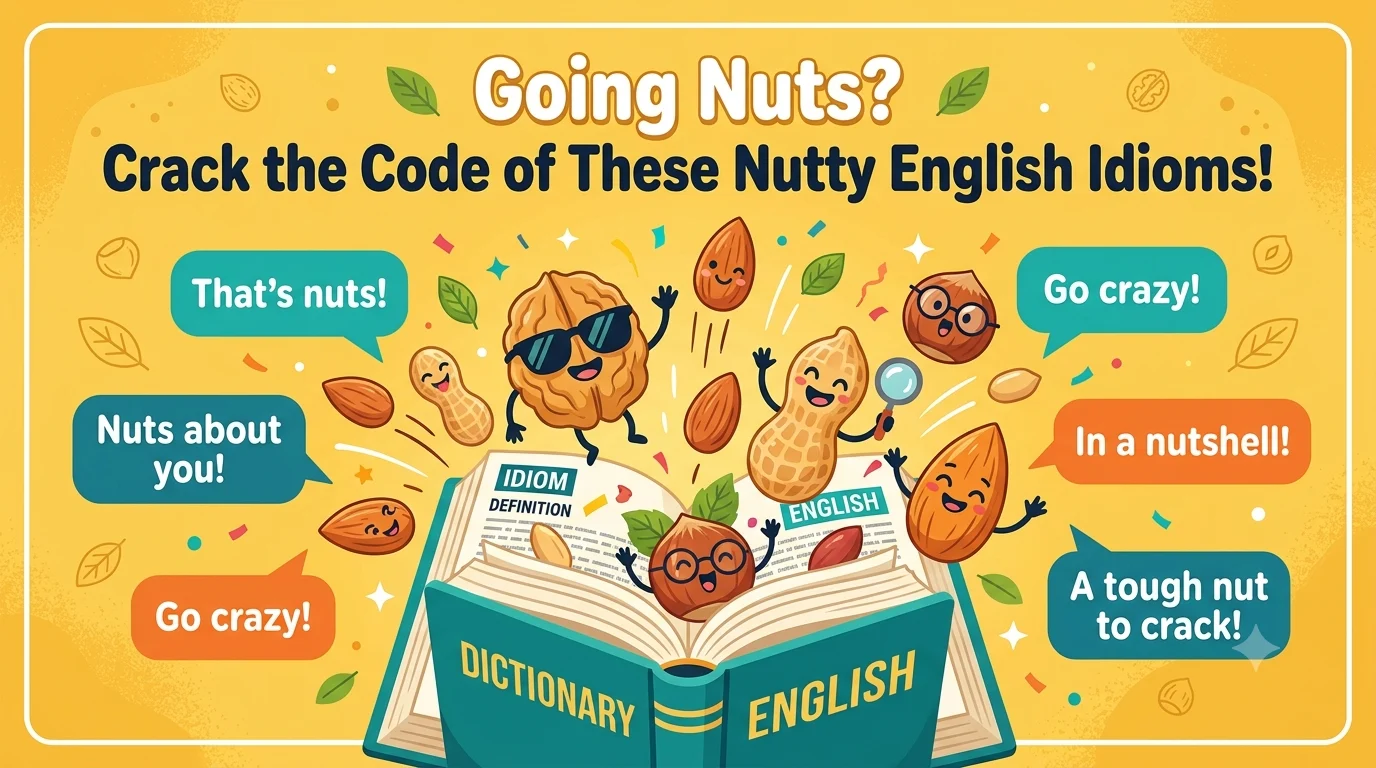
Have you ever met someone and thought, “Wow, they’re a tough nut to crack”? Or perhaps a project has driven you completely crazy with its complexity? Don’t worry; you’re not alone! The English language is packed with playful expressions, and some of the most fun and frequently used ones involve our favorite crunchy snack.
From describing a wild situation to calling someone a fitness fanatic, these playful expressions are everywhere. Understanding them can help you speak more naturally and understand native speakers better. In this guide, we’ll crack open the world of nutty English expressions, exploring their meanings and giving you the tools to use them like a pro. Let’s get started on this fun adventure!
What Does “Nuts” Really Mean?
Before we dive into the full list, let’s get to the root of it all. What does this slang term actually mean at its core?
The Core Meaning
At its simplest, if someone says you are “nuts,” they think you are crazy, wild, eccentric, or out of your mind. But here’s the interesting part—it’s not always an insult! It can be used affectionately or to express disbelief.
Examples:
- “You’re planning to run a marathon with no training? You’re nuts!” (Used in disbelief)
- “My friend is absolutely nuts about that new band.” (Used to mean she is “crazy about” or really loves them)
The Origin Story
This slang evolved from the word “nut” meaning “head” back in the 1800s. The phrase “off your nut” literally meant your head wasn’t on straight, implying insanity. By the mid-1800s, this expression as a synonym for “crazy” became solidly established in English slang. It stuck because it’s just a fun, punchy word to say!
Quick Fact: Did you know that using “nuts” to mean “crazy” is one of the most common slang terms in American English? It appears in movies, TV shows, and everyday conversations countless times daily.
Now, let’s get to the good stuff. Here are the most famous nutty expressions that will add flavor to your English vocabulary. Each one comes with clear explanations and real-life examples so you can start using them right away.
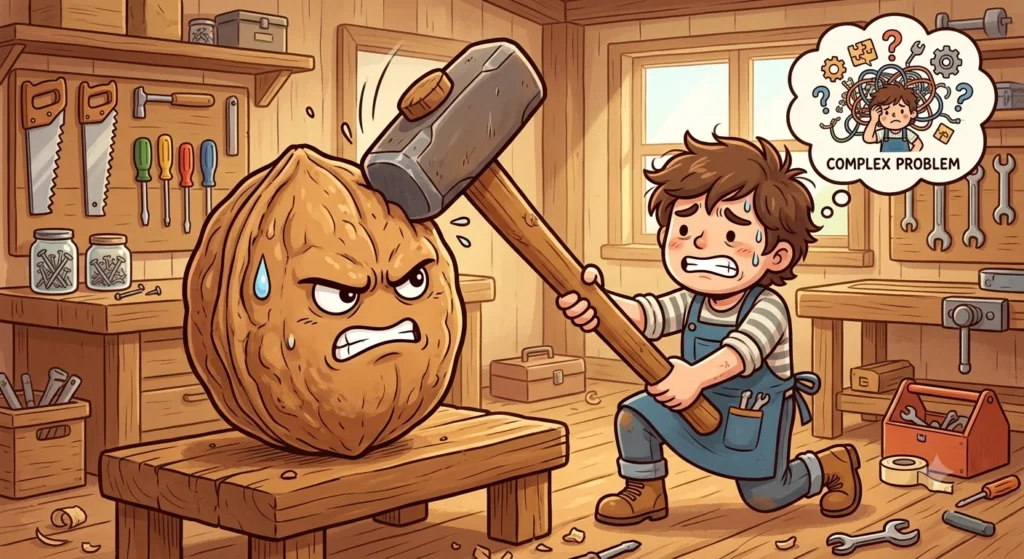
A Hard Nut to Crack
Meaning: A person, situation, or problem that is very difficult to understand, solve, or deal with.
Example Sentences:
- “He’s very shy and reserved; he’s definitely a hard nut to crack.”
- “This math equation is a hard nut to crack.”
Common Error: Saying “I need to crack a hard nut” without the “to crack” structure. It’s always a “hard nut to crack.”
Usage Note: Often used for people who are difficult to get to know. If you meet someone who seems closed off, you might say they’re a “hard nut to crack.”
Real-Life Scenario: Imagine you’re trying to befriend a new coworker who never speaks. Your colleague might say, “Good luck with him—he’s a real hard nut to crack!”
To Be Nuts About
Meaning: To be very fond of, enthusiastic about, or in love with someone or something.
Example Sentences:
- “My husband is nuts about classic cars.”
- “I’m absolutely nuts about this new chocolate flavor.”
Common Error: Forgetting the preposition “about.” You don’t say “I’m nuts chocolate.” You say “I’m nuts about chocolate.”
Usage Note: This is a positive and enthusiastic expression. It’s perfect for showing excitement about hobbies, food, or even people you love.
Real-Life Scenario: Your friend just got a new puppy and won’t stop talking about it. You could say, “You’re completely nuts about that dog, aren’t you?”
To Drive Someone Nuts
Meaning: To annoy, irritate, or frustrate someone so much that they feel they are going crazy.
Example Sentences:
- “That repetitive noise is driving me nuts!”
- “My little brother’s constant questions drive me nuts.”

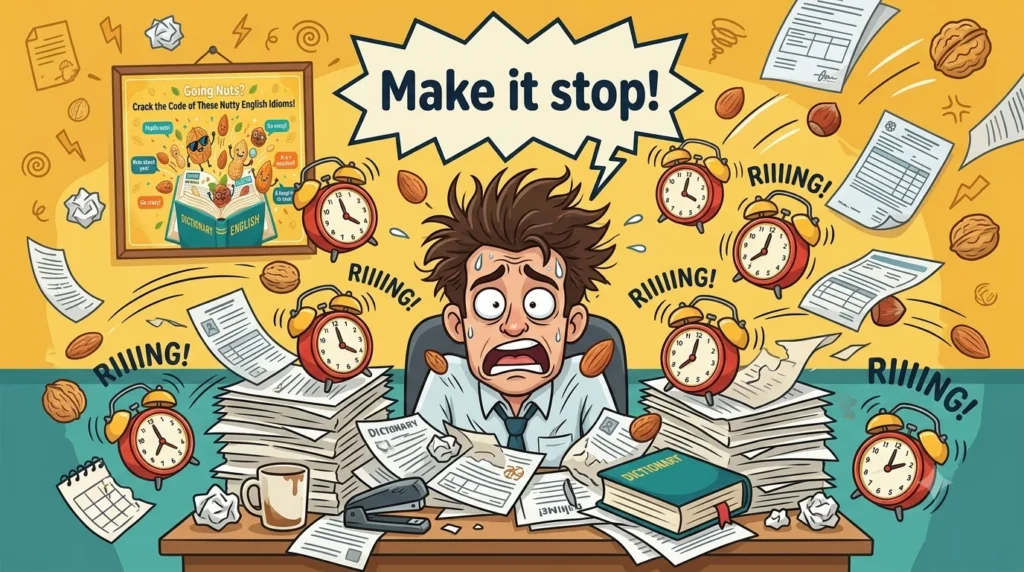
Common Error: Using “to” instead of “nuts.” It’s “drive me nuts,” not “drive me to nuts.”
Usage Note: A very common expression for everyday annoyance. You can use it for anything from a dripping faucet to a chatty coworker.
Real-Life Scenario: Picture this: you’re trying to work, but your phone keeps buzzing with notifications. You’d probably say, “This constant buzzing is driving me nuts!”
Nuts and Bolts
Meaning: The basic, practical, and most important details of a job, activity, or process.
Example Sentences:
- “Before we start the project, let’s discuss the nuts and bolts of the plan.”
- “He’s great at the creative side, but I handle the nuts and bolts of running the business.”
Common Error: Misusing it to mean “something extra” rather than the “core basics.”
Usage Note: This is a professional and practical term, widely used in business and engineering contexts. If someone says “let’s get down to the nuts and bolts,” they want to focus on the essentials.
Real-Life Scenario: You’re starting a new business with a partner. You might say, “Let’s discuss the nuts and bolts—who handles finances, who handles marketing?”
For Nuts
Meaning: To be incapable of doing something. Used in negative sentences to say someone can’t do something at all. (Primarily used in UK)
Example Sentences:
- “I can’t sing for nuts.”
- “He can’t cook for nuts.”
Common Error: Using it in a positive context. It is only used negatively (“can’t… for nuts”).
Usage Note: This is mostly British and sounds a bit old-fashioned but is still used. Think of it as a humorous way to admit a lack of skill.
Real-Life Scenario: You’re at a karaoke night and someone asks you to sing. You might laugh and say, “Oh no, I can’t sing for nuts!”
Deez Nuts
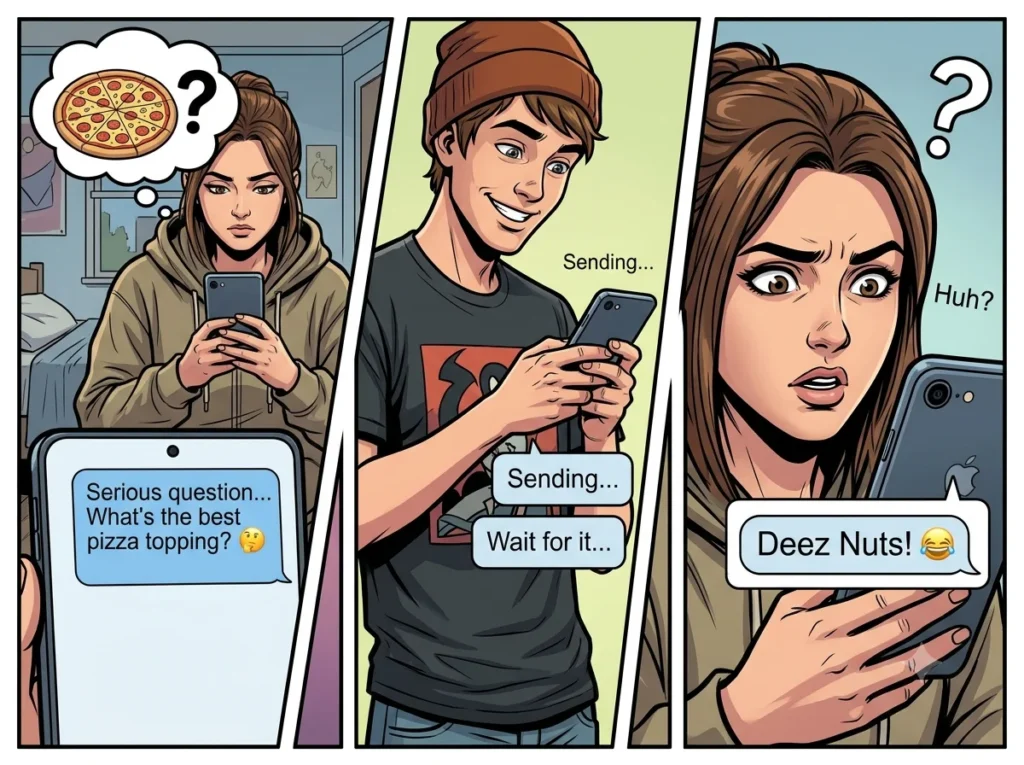
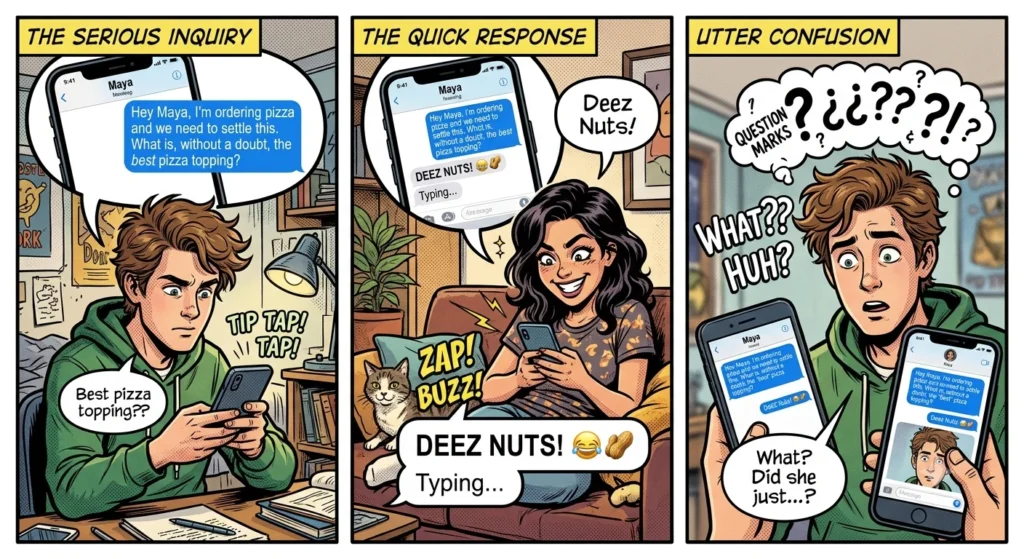
Meaning: A punchline for a joke or prank, especially popular with Gen Z. A person asks a question expecting a serious answer, and the reply is “Deez Nuts!” to be funny and absurd.
Example Sentences:
- Person 1: “What’s a good place to eat?” Person 2: “Deez Nuts.”
- Person 1: “Did you hear about the new phone?” Person 2: “Yeah, it’s called Deez Nuts.”
Common Error: Using it in formal or professional settings—it’s highly informal and a bit crude.
Usage Note: This is a pure internet meme. It’s one of the most famous pranks in modern slang culture.
Real-Life Scenario: Your friend asks what you’re holding. You respond, “Deez Nuts!” and everyone laughs. It’s all about the delivery and timing.
The Nuts
Meaning: In poker, it means the best possible hand you can have. More generally, it can mean something excellent or the best.
Example Sentences:
- “With that royal flush, he knew he had the nuts.”
- “Her new car is absolutely the nuts!” (Meaning: It’s excellent)
Common Error: Confusing it with “deez nuts” or “I’m nuts.”
Usage Note: Often used in a gambling context, but can be used casually to describe anything excellent.
Real-Life Scenario: Your friend shows you their new gaming setup. You might say, “Wow, that PC is the nuts!”
A Tough Nut to Crack
Meaning: A synonym for “a hard nut to crack.” It refers to a difficult problem or a stubborn person.
Example Sentences:
- “Getting funding for the project was a tough nut to crack.”
- “My new boss is a tough nut to crack, but I’ll win her over.”
Common Error: Using “hard” and “tough” interchangeably—which is fine, they mean the same here!
Usage Note: Interchangeable with “hard nut to crack.” Use whichever sounds better to you.
Real-Life Scenario: You’re trying to solve a complex puzzle. Your friend says, “That’s a tough nut to crack, isn’t it?”
Off Your Nut
Meaning: To be acting crazy or insane. Primarily used in UK.
Example Sentences:
- “He’s completely off his nut if he thinks that plan will work.”
- “You must be off your nut to pay that much for a t-shirt.”
Common Error: Forgetting the possessive pronoun. “Off your nut,” “off his nut,” etc.
Usage Note: More common in British English. It’s a colorful way to call someone crazy.
Real-Life Scenario: Your friend buys an overpriced coffee. You tease them, “You’re off your nut paying that much!”
Nutty as a Fruitcake
Meaning: A humorous way to say someone is completely crazy or eccentric.
Example Sentences:
- “My great-aunt is lovely but nutty as a fruitcake.”
- “The professor is brilliant but nutty as a fruitcake.”
Common Error: Using it as an insult; it’s often used affectionately.
Usage Note: This is a classic, somewhat old-fashioned British expression. It’s usually said with a smile.
Real-Life Scenario: Your eccentric neighbor wears a different wacky hat every day. You might say, “She’s nutty as a fruitcake, but I love her!”
To Go Nuts
Meaning: To become very angry, excited, or enthusiastic about something.
Example Sentences:
- “The crowd went nuts when the band came on stage.” (Excited)
- “My parents are going to go nuts when they see I scratched the car.” (Angry)
Common Error: Using it when you just mean “slightly annoyed.”
Usage Note: Can be positive or negative, depending on the context. It’s all about the situation.
Real-Life Scenario: Your team just won the championship. The fans will definitely go nuts!
He’s a Nut
Meaning: A person who is very enthusiastic about a particular thing, or an odd/eccentric person.
Example Sentences:
- “My brother is a fitness nut. He goes to the gym every single day.”
- “He’s a bit of a nut if you ask me, but he’s harmless.”
Common Error: Using it to describe someone’s character without context.
Usage Note: This is a noun form and is different from the adjective “nuts.”
Real-Life Scenario: Your coworker bikes to work in all weather. You might say, “He’s a real fitness nut!”
To Nut
Meaning: In UK slang, to headbutt someone.
Example Sentences:
- “He got angry and nutted the other player.”
- “If you don’t stop, I’ll nut you!”
Common Error: Misunderstanding this to mean “to gather nuts.”
Usage Note: A violent term; use with caution in the UK. It’s definitely not for polite conversation.
Real-Life Scenario: This is mostly used in sports or aggressive situations. It’s best avoided in everyday conversation.
Ah, Nuts!
Meaning: An exclamation of dismay, frustration, or mild annoyance.
Example Sentences:
- “Ah, nuts! I forgot my keys!”
- “Nuts! The internet is down again.”
Common Error: Using it in a very serious, high-stakes situation. It’s for minor frustrations.
Usage Note: A polite way to express mild annoyance without swearing. Perfect for when you spill your coffee or miss the bus.
Real-Life Scenario: You’re about to leave home and realize you left your phone inside. “Ah, nuts!” you say as you run back in.
To Get Nuts
Meaning: A situation becomes wild, exciting, or out of control.
Example Sentences:
- “The party really got nuts after midnight.”
- “The crowd at the concert got nuts.”
Common Error: Confusing with “to go nuts.”
Usage Note: Very informal, used to describe events or situations that become chaotic in an entertaining way.
Real-Life Scenario: The sale at your favorite store is about to start. “It’s going to get nuts in there!” you warn your friend.
Hard Nut
Meaning: A synonym for “hard nut to crack,” but often used as a noun for a strong or tough person.
Example Sentences:
- “He used to be a boxer; he’s a real hard nut.”
- “She’s a hard nut in business negotiations.”
Common Error: Forgetting that it implies difficulty or toughness.
Usage Note: Can describe a person’s physical or mental toughness.
Real-Life Scenario: You’re about to negotiate with a tough client. “She’s a hard nut,” your colleague warns, “but she’s fair.”
Nuts to You
Meaning: A dismissive insult meaning “I don’t care about you” or “go away.” Old-fashioned.
Example Sentences:
- “You don’t like my idea? Well, nuts to you!”
- “Nuts to you, I’m going to do it anyway.”
Common Error: Using it in modern conversation; it sounds dated.
Usage Note: Rarely used today. You might hear it in old movies or books.
Real-Life Scenario: This phrase is best avoided; it sounds like something from the 1950s!
To Go Nutting
Meaning: To hunt for or gather nuts. This is a literal meaning, not an idiom.
Example Sentences:
- “We used to go nutting in the woods when we were kids.”
- “It’s a good season for nutting.”
Common Error: Using it as a slang term.
Usage Note: A literal activity, not a common idiom. It refers to actually collecting nuts from trees.
Real-Life Scenario: In autumn, families might go nutting in the forest to collect walnuts and hazelnuts.
Nut-cutlet
Meaning: A vegetarian dish made from nuts.
Example Sentences:
- “They’re serving a delicious nut-cutlet for dinner.”
- “Have you ever tried a nut-cutlet?”
Common Error: Thinking it’s slang or an idiom—it’s just a food.
Usage Note: A standard vegetarian dish in many countries, especially in the UK and parts of Europe.
Real-Life Scenario: You’re at a vegetarian restaurant and the special is a nut-cutlet with gravy. It’s delicious!
To Do One’s Nut
Meaning: To become very angry or upset. Primarily used in UK.
Example Sentences:
- “My dad did his nut when I crashed the car.”
- “She’ll do her nut if she finds out we broke her vase.”
Common Error: Using it outside the UK.
Usage Note: A British phrase for extreme anger. It’s a very expressive way to say someone lost their temper.
Real-Life Scenario: You accidentally break a family heirloom. “Mom’s going to do her nut when she sees this!” you whisper to your sibling.
Why Are “Nuts” and “Crazy” Connected?
It’s a fair question: why do these tasty snacks get such a bad rap in slang? The meaning in body originally referred to the head. “Off your nut” literally meant your head wasn’t on straight, implying insanity.
The Linguistic Journey
This was reinforced by phrases like “being nuts on something,” which meant being very fond of it—a kind of “crazy about” attachment. By the mid-1800s, this slang as a synonym for “crazy” became solidly established in English. It stuck because it’s just a fun, punchy word to say!
Cultural Impact
Today, this expression appears everywhere—from everyday conversations to movie dialogues. It’s one of the most versatile slang terms in the English language. Whether you’re in London, New York, or Sydney, people will understand what you mean when you say something is “nuts.”
Frequently Asked Questions
1. What does the slang term “nuts” mean?
In slang, this word means crazy, insane, or very enthusiastic about something. It can also be an exclamation of dismay (“Ah, nuts!”). In relationship contexts, it often refers to being “nuts about” someone, meaning deeply in love with them.
2. What do “nuts” mean in Gen Z slang?
While Gen Z uses this term to mean “crazy” or “wild” (e.g., “That party was nuts!”), they are most famous for the “Deez Nuts” meme. It’s a comedic punchline used to trick people in conversations. It’s one of the most famous pranks on the internet.
3. Are there any idioms using the word “nut”?
Absolutely! Hard nut to crack is a classic. Other common ones include nuts about (to really like), nuts and bolts (the basics), and off your nut (crazy). There are dozens of expressions using this versatile word.
4. Is “nuts” a rude word?
It depends on the context. When saying someone is “nuts” or “going nuts,” it’s informal but not usually considered rude. However, this term as a slang word for testicles is vulgar and should be avoided in polite company. Also, expressions like “nuts to you” can be considered dismissive.
5. How can I use “nuts” in a relationship context?
You can say you are “nuts about” someone. This means you are very attracted to them or deeply in love. For example: “I am absolutely nuts about my girlfriend; she’s incredible!” It’s a fun, casual way to express strong feelings.
6. What’s the most common nut-related expression?
The most common expression is probably “That’s nuts! ” meaning “That’s crazy!” or “That’s amazing!” It’s used in countless situations daily. Another very common one is “drive someone nuts,” used when something is annoying you.
7. Can I use these expressions in professional settings?
Some of them yes, some no. Expressions like “nuts and bolts” are perfectly professional. However, “deez nuts” or “nuts to you” are too informal. Always consider your audience! When in doubt, stick to the more neutral expressions.
8. Are these expressions used in British and American English?
Most of these are used in both, but some are more common in one region. For example, “for nuts” and “to do one’s nut” are primarily British. “Deez nuts” is more American. But overall, you’ll be understood on both sides of the Atlantic!
Conclusion
And there you have it! We’ve taken a deep dive into the wonderfully weird world of nutty expressions. From describing the annoying sound that’s driving you nuts to being nuts about a new hobby, these phrases are the nuts and bolts of fluent, natural English conversation.
Why Learning These Expressions Matters
Learning idioms is one of the best ways to sound more like a native speaker and understand the humor and culture behind the language. These expressions add color and personality to your speech. They show that you’ve moved beyond textbook English and into real-world communication.

“Wilkie Collins brings classic idioms to life on LearnIdom.com, making language learning engaging, memorable, and full of literary charm.”