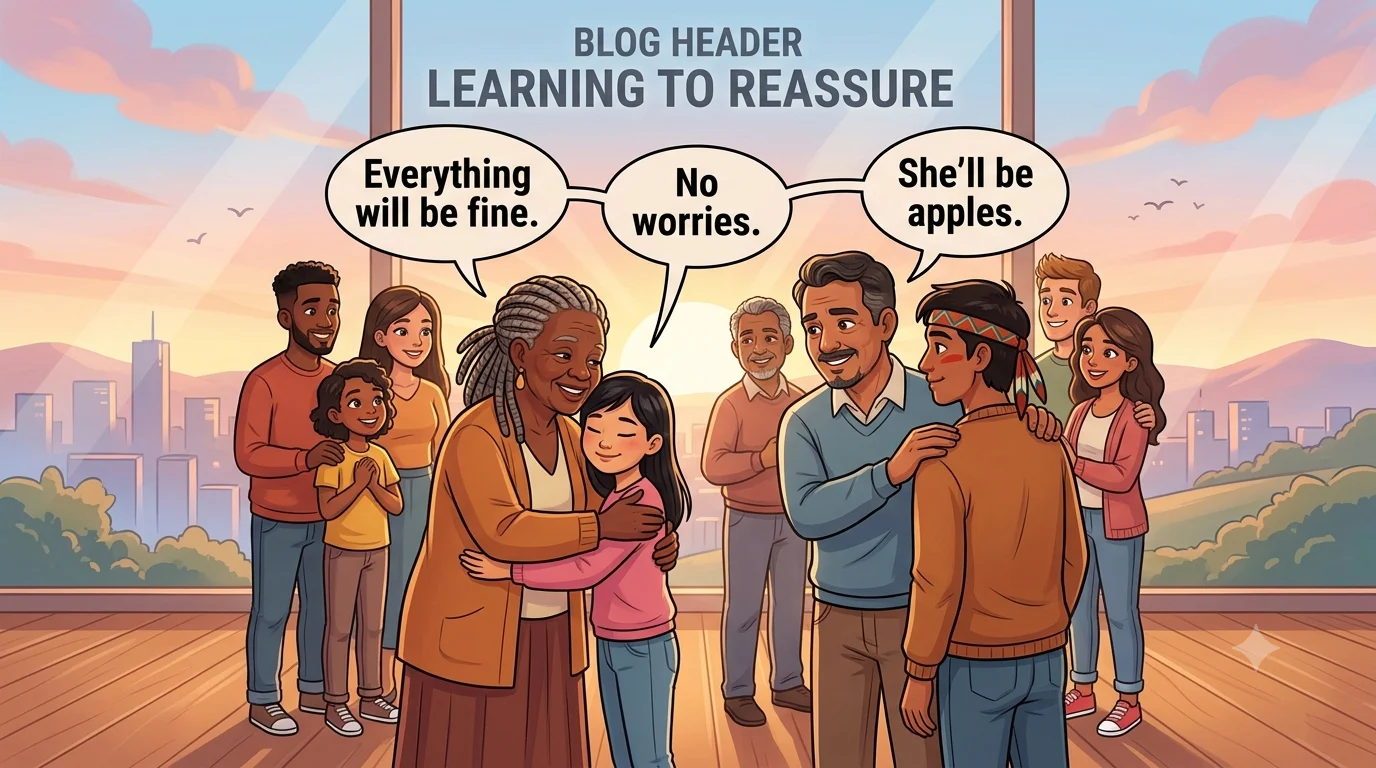
Life has a way of throwing unexpected challenges our way. One moment everything seems perfect, and the next, anxiety creeps in and we desperately need to hear that everything will be fine. Whether you’re comforting a nervous friend before a job interview, calming a worried child on their first day of school, or soothing your own racing thoughts before a big presentation, the right words can work like magic.
The English language is wonderfully rich with idioms for everything will be fine—creative expressions that offer comfort and hope when things feel uncertain. These phrases carry centuries of cultural wisdom, reminding us that difficulties are temporary and brighter days always lie ahead.
Think about it. When was the last time someone’s simple words made you feel instantly better? Perhaps a friend said “no worries” when you apologized for being late, or a colleague assured you that “everything will work out” during a stressful project. These small reassurances have enormous power.
In this comprehensive guide, we’ll explore powerful idioms that mean everything will be alright. You’ll learn their exact meanings, see them in real-life situations, discover their fascinating origins, and understand exactly when to use each one. By the time you finish reading, you’ll have a complete toolkit of comforting phrases ready for any situation that calls for reassurance.
Everything Will Be Just Fine
Word-by-Word Meaning:
“Everything” means all matters or situations. “Will be” indicates a future state. “Just fine” means completely satisfactory or acceptable.
Figurative Meaning:
This classic reassurance promises that despite current difficulties, the outcome will be positive. It’s the most versatile phrase among all reassuring idioms—works in almost any situation.
Origin:
Emerged from 19th-century American English. The word “fine” originally meant “pure” or “refined” before evolving to mean “excellent” or “satisfactory.”
Real-Life Example:
When Priya called her mother crying about failing her math exam, her mother calmly replied: “Beta, everything will be just fine. We’ll make a study plan together and try again.”
Common Error:
❌ “Everything will just be fine” (incorrect word order)
✅ “Everything will be just fine” (correct structure)
Usage Note:
Perfect for comforting children, reassuring colleagues, and self-talk during moments of anxiety. It’s warm, simple, and universally understood.
Everything Will Be All Right
Word-by-Word Meaning:
“Everything” refers to all circumstances. “Will be” shows future tense. “All right” means completely acceptable or satisfactory.
Figurative Meaning:
This expression serves as a comforting promise that things will work out positively, even when the path forward isn’t clear yet.

Origin:
First recorded in 19th-century British literature. The debate between “alright” and “all right” continues today—both are accepted, though “all right” remains more formal.
Real-Life Example:
After announcing company layoffs, the manager gathered the team and said: “I know this is unsettling, but everything will be all right. We’ve weathered storms before, and we’ll do it again.”
Common Error:
❌ “Everything will be alright” (informal, but widely accepted in casual writing)
✅ “Everything will be all right” (preferred in formal contexts)
Usage Note:
Ideal for professional settings, written communication, and formal reassurance. It sounds more polished than “okay” while remaining warm.
She’ll Be Apples
Word-by-Word Meaning:
“She’ll” is a contraction of “she will,” where “she” refers to the situation. “Be” indicates a state. “Apples” means the fruit—but here it’s rhyming slang.
Figurative Meaning:
This uniquely Australian idiom means everything will be fine or turn out well. It conveys laid-back optimism and the belief that things work themselves out naturally.

Origin:
Believed to come from Cockney rhyming slang where “apples and spice” rhymes with “nice.” Over time, it became shortened to “she’ll be apples” and spread to Australia and New Zealand.
Real-Life Example:
Before her big job interview, Maya was a nervous wreck. Her roommate squeezed her hand and said: “Stop overthinking it—she’ll be apples, I promise. You’ve got this!”
Common Error:
❌ “He’ll be apples” (changes the fixed pronoun)
❌ “It’ll be apples” (also incorrect)
✅ “She’ll be apples” (the fixed idiomatic form)
Usage Note:
Best used in casual, friendly settings. Deeply connected to Australian culture—use it with Aussie friends or when you want to sound uniquely reassuring.
She’ll Be Right
Word-by-Word Meaning:
“She’ll” means “it will.” “Be” shows state. “Right” means correct, proper, or satisfactory.
Figurative Meaning:
This Australian and New Zealand expression conveys that everything will be fine and there’s no need to worry. It reflects a relaxed, optimistic attitude.
Origin:
Emerged from Australian English in the early 20th century. It’s the more common cousin of “she’ll be apples” in everyday Australian speech.
Real-Life Example:
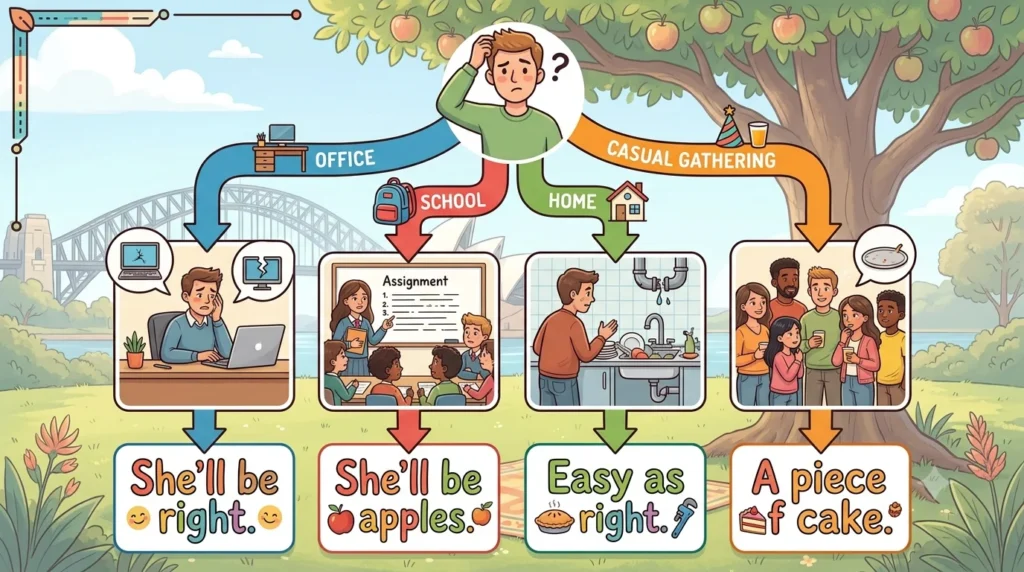
The bike chain broke during their ride, but Jake shrugged and said: “Don’t stress, a quick fix and she’ll be right. Let’s find a repair shop nearby.”
Common Error:
❌ Using it in formal or professional settings where it seems dismissive
✅ Using it in casual conversations with friends and family
Usage Note:
This is one of the most recognizable idioms for everything will be fine from Down Under. Perfect for casual conversations and lightening the mood.
As Right as Rain
Word-by-Word Meaning:
“As right” means correct or healthy. “As” makes a comparison. “Rain” is the weather element. The comparison creates a vivid image of restoration.
Figurative Meaning:
This idiom means someone has recovered and feels healthy again, or that a situation has been fixed and works correctly. It implies a complete return to normal.
Origin:
Dates back to 19th-century England. Rain was associated with renewal and growth—after rain, everything becomes fresh and clean again.
Real-Life Example:
After three days of rest, Ahmed woke up feeling energetic. His mother smiled and said: “See? You’re as right as rain now. Time to enjoy your weekend!”
Common Error:
❌ Using it for serious medical conditions where recovery is uncertain
✅ Using it for minor illnesses and temporary setbacks
Usage Note:
This expression can sound slightly old-fashioned but remains widely understood. It’s perfect when you want to say that everything will be fine after a minor hiccup.
Everything Will Work Out
Word-by-Word Meaning:
“Everything” means all matters. “Will work out” means to resolve or conclude successfully. “All right” means satisfactorily.
Figurative Meaning:
This common reassurance means that despite current difficulties, the situation will eventually resolve positively and everything will be fine.
Origin:
Emerges from everyday American English. “Work out” has been used figuratively since the 19th century to mean “turn out well.”
Real-Life Example:
When Sara couldn’t find affordable housing in the city, her friend assured her: “I know it’s stressful now, but everything will work out. Keep looking—the right place will come along.”
Common Error:
❌ “Everything will workout” (one word is incorrect)
✅ “Everything will work out” (two words, correct form)
Usage Note:
This is one of the most natural reassuring phrases for everyday conversation. It’s comforting without being overly sentimental.
It’ll All Work Out in the End
Word-by-Word Meaning:
“It’ll” means “it will.” “All” means everything. “Work out” means resolve. “In the end” means ultimately or finally.
Figurative Meaning:
This expression emphasizes that despite present challenges, things will ultimately resolve favorably. It encourages patience and trust in the process.
Real-Life Example:
After the startup’s funding fell through, the founder told the team: “I know this is discouraging, but it’ll all work out in the end. We’ve overcome obstacles before, and we’ll find a way.”
Common Error:
❌ “It’ll all workout in the end” (incorrect spelling)
✅ “It’ll all work out in the end” (correct)
Usage Note:
This variant is particularly comforting because it acknowledges current difficulty while promising a positive outcome. Great for long-term challenges.
Don’t Sweat It
Word-by-Word Meaning:
“Don’t” means do not. “Sweat” refers to physical perspiration. “It” means the situation or problem.
Figurative Meaning:
This American expression tells someone not to stress about a problem. While it doesn’t directly say everything will be fine, it implies things aren’t worth worrying over.
Origin:
Became popular in American English during the 1970s. “Sweating” was already used metaphorically for worrying or working hard.
Real-Life Example:
When Tom realized he forgot his presentation notes, his colleague whispered: “Don’t sweat it—you know this material inside out. Just speak from your heart.”
Common Error:
❌ “Don’t sweat about it” (less natural phrasing)
✅ “Don’t sweat it” (the fixed idiomatic form)
Usage Note:
More informal than most comforting phrases. Use it with friends and close colleagues, not in formal situations.
No Worries
Word-by-Word Meaning:
“No” means absence of. “Worries” means concerns or anxieties.
Figurative Meaning:
This globally recognized phrase means there is no problem or cause for concern. It functions as both reassurance and a response to thanks.
Origin:
Originated in Australian English in the 1960s and spread worldwide through tourism and pop culture. It perfectly captures the Australian “laid-back” attitude.
Real-Life Example:
“I’m so sorry I’m late to dinner!” Maria apologized. Her friend smiled and replied: “No worries—we just ordered. Grab a seat and relax.”
Common Error:
❌ “No worry” (singular form is rarely used)
✅ “No worries” (plural is the standard idiomatic form)
Usage Note:
Among the most widely recognized idioms for everything will be fine worldwide. Versatile enough for both casual and semi-formal situations.
All Is Well
Word-by-Word Meaning:
“All” means everything. “Is” shows present state. “Well” means good or satisfactory.
Figurative Meaning:
This phrase indicates that a situation has improved or that everything is satisfactory at the present moment. It’s a calm, confident statement.
Origin:
Shakespeare famously used variations of this phrase in his plays. It has a timeless, slightly poetic quality.
Real-Life Example:
After a week of doctors’ appointments, the family finally received good news. The doctor smiled and said: “The test results are clear—all is well. You can go home with peace of mind.”
Common Error:
❌ “All are well” (incorrect when “all” refers to a situation)
✅ “All is well” (correct usage)
Usage Note:
Carries a slightly poetic or formal tone. One of the more elegant reassuring expressions for serious situations.
Things Will Get Better
Word-by-Word Meaning:
“Things” refers to circumstances or situations. “Will get” shows future change. “Better” means improved.
Figurative Meaning:
This phrase offers hope that current difficulties are temporary and improvement is coming. It’s straightforward, sincere, and deeply comforting.
Real-Life Example:
When her grandmother passed away, Maria felt lost. Her father held her hand and said: “I know your heart is heavy now, but things will get better. The pain will ease with time.”
Common Error:
❌ “Things will got better” (incorrect verb form)
✅ “Things will get better” (correct tense)
Usage Note:
This is one of the most accessible comforting phrases. It’s not overly complex and works across all settings—from grief to daily frustrations.
Smooth Sailing
Word-by-Word Meaning:
“Smooth” means without obstacles. “Sailing” means traveling by water.
Figurative Meaning:
This phrase means progress is being made without difficulties. It implies the situation is under control and everything will be fine from here on.
Origin:
Derived from nautical terminology. Sailors preferred calm, smooth waters for safe travel—the opposite of stormy seas.
Real-Life Example:
After two weeks of chaotic home renovations, Rohan told his wife: “The kitchen is finally done. From now on, it’s smooth sailing—just enjoy your new space!”
Common Error:
❌ “Smooth sail” (incorrect singular form)
✅ “Smooth sailing” (the fixed idiomatic phrase)
Usage Note:
One of the more colorful idioms for everything will be fine. It suggests not just that things will be okay, but that they’ll be easy.
It’s All Good
Word-by-Word Meaning:
“It’s” is a contraction of “it is.” “All” means everything. “Good” means fine or satisfactory.
Figurative Meaning:
This modern, informal expression reassures someone that everything is fine or there are no problems to worry about.
Origin:
Became popular in American English during the 1990s, especially in hip-hop culture and among young people. Now used globally.
Real-Life Example:
When Jack spilled coffee on the meeting notes, his boss laughed: “It’s all good—we have digital copies anyway. Don’t give it another thought.”
Common Error:
❌ Using “it’s all good” in very formal situations where it seems too casual
✅ Using it in casual conversations and informal settings
Usage Note:
One of the most popular reassuring phrases in modern English. Short, friendly, and universally understood.
Under Control
Word-by-Word Meaning:
“Under” means beneath or within. “Control” means management or regulation.
Figurative Meaning:
This phrase means a situation is being managed effectively. It’s a practical way of saying everything will be fine because the necessary oversight is in place.
Real-Life Example:
During the power outage, the hotel manager announced: “The backup generators are running, and our team is handling everything. The situation is under control—please stay calm.”
Common Error:
❌ “Undercontrolled” (incorrect form)
✅ “Under control” (correct phrasing)
Usage Note:
More practical than most comforting idioms. It emphasizes competence and active management rather than just hope.
It’ll Be Okay
Word-by-Word Meaning:
“It’ll” means “it will.” “Be” shows future state. “Okay” means acceptable or fine.
Figurative Meaning:
This is a phrase of comfort used in times of stress or uncertainty. It’s a simple promise that things will turn out acceptably.
Origin:
“Okay” emerged in 19th-century American English as a slang term, possibly from the Choctaw word “okeh” meaning “it is so.”
Real-Life Example:
On her first day at a new school, little Aisha held her father’s hand nervously. He knelt down and whispered: “It’ll be okay, sweetheart. You’re brave, and I’ll be right here when you finish.”
Common Error:
❌ Using “it’ll be okay” for life-threatening situations where stronger reassurance is needed
✅ Using it for everyday worries and concerns
Usage Note:
This is perhaps the most common of all idioms for everything will be fine. Simple, warm, and works in virtually any context.
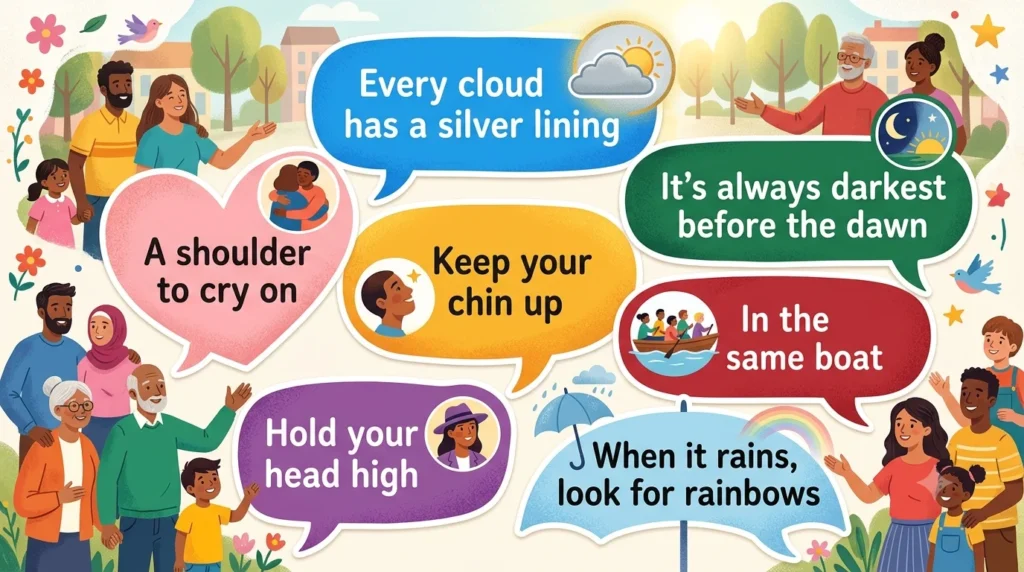
Keep Your Chin Up
Word-by-Word Meaning:
“Keep” means maintain. “Your” is possessive. “Chin” refers to the jaw. “Up” means elevated position.
Figurative Meaning:
This encouraging phrase means to remain optimistic and not let difficulties get you down. It suggests everything will be fine if you maintain a positive attitude.
Origin:
First recorded in the 19th century. The imagery suggests maintaining a confident, upright posture instead of looking down in defeat.
Real-Life Example:
After Rehman didn’t get the promotion, his colleague said: “I know you’re disappointed, but keep your chin up—something better is coming. Your talent is undeniable.”
Common Error:
❌ “Keep up your chin” (incorrect word order)
✅ “Keep your chin up” (correct idiomatic order)
Usage Note:
More encouraging than most reassuring idioms. It’s not just about the outcome—it’s about maintaining personal resilience.
It’s Not the End of the World
Word-by-Word Meaning:
“It’s” means “it is.” “Not” is negative. “The end of the world” means complete catastrophe.
Figurative Meaning:
This phrase means that while something bad has happened, it’s not a catastrophe. It’s a way of putting problems in perspective and suggesting everything will be fine.
Real-Life Example:
When Fatima failed her driving test, her mother comforted her: “It’s not the end of the world—you can try again next month. Many people don’t pass the first time.”
Common Error:
❌ Using it in response to genuinely serious problems where it may seem dismissive
✅ Using it for moderate setbacks and disappointments
Usage Note:
More realistic than some comforting expressions. It acknowledges difficulty while maintaining perspective and hope.
Where There’s Life, There’s Hope
Word-by-Word Meaning:
“Where” indicates location or situation. “There’s” means “there is.” “Life” means existence. “Hope” means expectation of improvement.
Figurative Meaning:
This ancient proverb means that as long as someone is alive or a situation is ongoing, there remains the possibility of recovery or improvement.
Origin:
An ancient proverb found in many cultures. The Greek playwright Euripides referenced similar ideas over 2,400 years ago.
Real-Life Example:
When the family business faced bankruptcy, the grandfather told everyone: “We’ve lost money, but we haven’t lost each other. Remember—where there’s life, there’s hope. We’ll rebuild.”
Common Error:
❌ “Where there is life there are hope” (incorrect agreement)
✅ “Where there is life, there is hope” (correct)
Usage Note:
One of the most profound idioms for everything will be fine. Particularly appropriate for serious challenges and long-term difficulties.
Everything’s Gonna Be Alright
Word-by-Word Meaning:
“Everything’s” means “everything is.” “Gonna” is a casual contraction of “going to.” “Be” shows future state. “Alright” means fine.
Figurative Meaning:
This casual expression is a comforting phrase that means all will be well. The use of “gonna” makes it feel warm, friendly, and approachable.
Origin:
Popularized in 20th-century American music and film. Bob Marley famously sang “Everything’s Gonna Be Alright” in his song “Three Little Birds.”
Real-Life Example:
Stuck in traffic before her wedding, the bride started crying. Her sister played Bob Marley’s song and sang along: “Don’t worry about a thing, everything’s gonna be alright.”
Common Error:
❌ Using “everything’s gonna be alright” in formal writing
✅ Using it in casual speech and informal writing
Usage Note:
This variant of reassuring phrases is particularly popular in songs and casual conversation. It feels warm, friendly, and emotionally connecting.
The Situation Is Resolved
Word-by-Word Meaning:
“The situation” means the matter at hand. “Is” shows present state. “Resolved” means settled or concluded.
Figurative Meaning:
This phrase indicates that a problem has been solved. It’s a direct, factual way of saying everything will be fine because the issue has been handled.
Real-Life Example:
After three hours of troubleshooting, the IT specialist reported: “The server issue is fixed. The situation is resolved—you can resume work normally now.”
Common Error:
❌ Using this for ongoing problems (it implies completion)
✅ Using it when problems are fully handled
Usage Note:
More formal than most comforting idioms. Ideal for professional contexts, official communications, and situations requiring clear confirmation.
How to Choose the Right Idiom
| Situation | Best Idiom | Why It Works |
|---|---|---|
| Comforting a crying child | Everything will be just fine | Simple, warm, and reassuring |
| Professional crisis at work | Everything will be all right | Formal yet comforting |
| Talking to an Australian friend | She’ll be apples / She’ll be right | Cultural connection |
| Casual friend conversation | No worries / It’s all good | Informal and friendly |
| Serious health situation | Where there’s life, there’s hope | Profound and meaningful |
| Minor everyday setback | It’ll be okay / Don’t sweat it | Light and encouraging |
| After solving a problem | The situation is resolved | Clear and professional |
| Encouraging resilience | Keep your chin up | Builds confidence |
| Putting things in perspective | It’s not the end of the world | Helps see the bigger picture |
FAQ
Q1: What is another way to say everything is fine?
You can say “all is well,” “no worries,” “it’s all good,” “everything is under control,” or “smooth sailing.” Each has a slightly different tone. Choose based on your situation.
Q2: How do you say everything will be fine in a formal way?
Use “everything will be all right,” “the situation is resolved,” or “all is well.” These expressions maintain professionalism while offering reassurance.
Q3: What is the idiom for perfectly fine?
“As right as rain” is the classic idiom, especially for recovery from illness. In Australia, “she’ll be apples” means the same thing. Both convey that everything is in perfect order.
Q4: What is the idiom for considering everything?
“All things considered” is the closest idiom. For reassurance, “everything will work out” implies all factors have been considered and the outcome will be positive.
Q5: Which idiom is best for serious situations?
“Where there’s life, there’s hope” is the most profound. It acknowledges seriousness while maintaining optimism. “All is well” is also appropriate for serious, formal contexts.
Q6: Can I use these idioms in professional writing?
Absolutely. Use “everything will be all right,” “all is well,” and “the situation is resolved” in professional emails and formal communications. Save casual idioms for informal contexts.
Q7: Are these idioms used in all English-speaking countries?
Most of these are understood globally, but some are regional. “She’ll be apples” and “she’ll be right” are primarily Australian. “No worries” and “it’s all good” are understood worldwide.
Q8: How can I remember these idioms?
Practice using one new idiom daily. Write them in a notebook, use them in conversations, and pay attention when native speakers use them. Consistent practice is the best way to learn.
Conclusion
These idioms for everything will be fine are more than just words—they’re tiny vessels of hope, passed down through generations. They remind us that challenges are temporary, resilience is always possible, and somehow, in some way, everything will work out.
Think about the people in your life who need encouragement right now. Perhaps a friend is going through a difficult breakup, a colleague is stressed about a deadline, or a family member is worried about health issues. These comforting phrases give you the perfect words to offer them hope.
Your 30-Day Challenge:
- Week 1: Use one new idiom daily with friends or family
- Week 2: Practice using them in professional contexts
- Week 3: Write encouraging notes or messages using these idioms
- Week 4: Share your favorite idiom with someone who needs comfort
Remember, these reassuring idioms have the power to transform someone’s entire day. A simple “no worries” can lift a heavy burden. A heartfelt “everything will be just fine” can calm a racing heart. Words matter, and now you have the perfect words ready when they’re needed most.
So the next time life throws a curveball—whether it’s yours or someone else’s—reach for one of these expressions. You’ll find that sometimes, the simple act of saying everything will be fine can be the first step toward making it true.
Which of these idioms is your favorite? Start using it today and spread a little more hope in the world. 🕊️

“Rose Macaulay shares the charm of idioms on LearnIdom.com, making language learning delightful, insightful, and full of wit for every reader.”