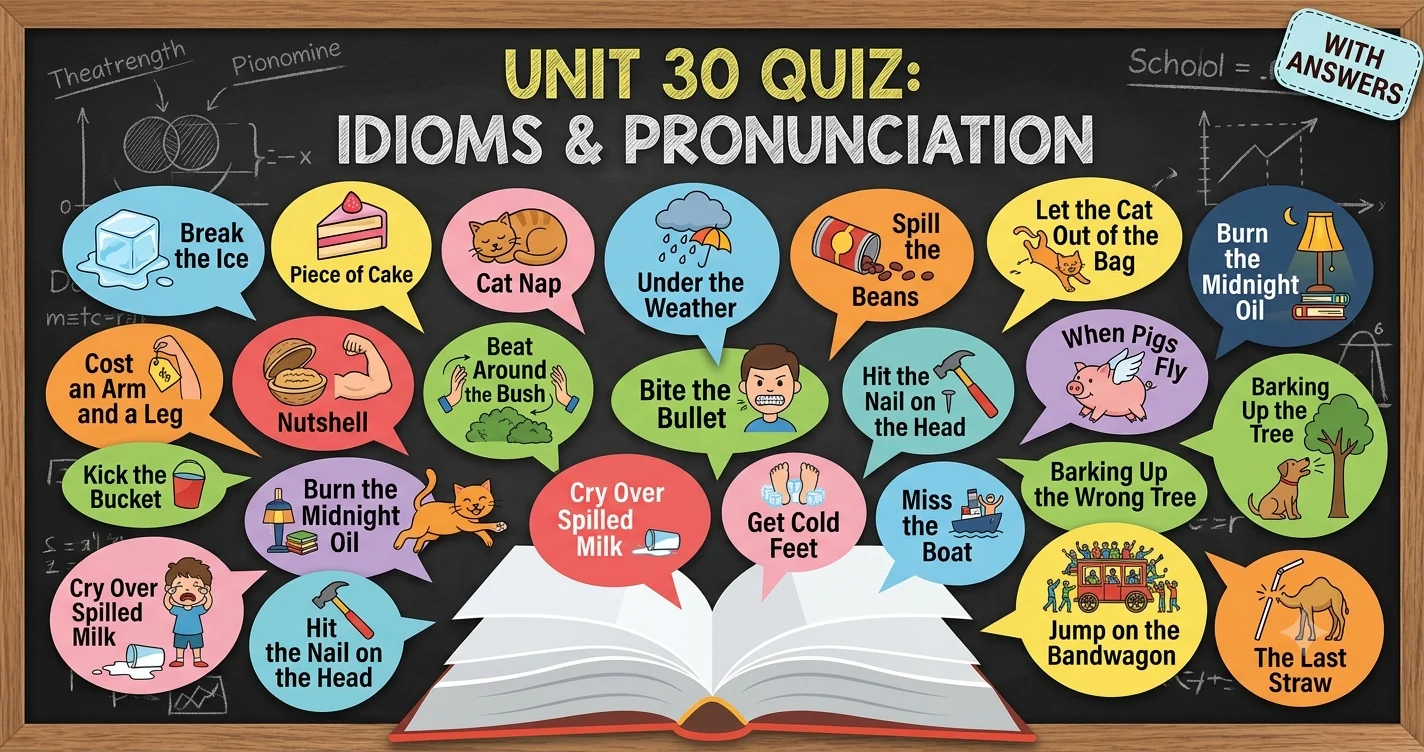
Have you ever found yourself in a conversation where you understood every word but completely missed the meaning? That’s the magic—and the challenge—of English idioms. The Unit 30 quiz idioms and pronunciation section represents a critical milestone for anyone serious about sounding natural and confident in English.
Think about it: you can have perfect grammar and an extensive vocabulary, but if you don’t understand idioms, you’ll still feel lost in everyday conversations. When your American colleague says “I’m swamped,” they’re not talking about a wetland—they’re telling you they’re incredibly busy. And when you mispronounce “break the ice” as “break thee ice,” you might get confused looks instead of laughs.
This comprehensive guide is your roadmap to acing not just the Unit 30 quiz idioms and pronunciation assessment, but to using these expressions naturally in your daily life. We’ll cover the 20 most essential idioms, break down their pronunciation, and give you the confidence to use them like a native speaker.
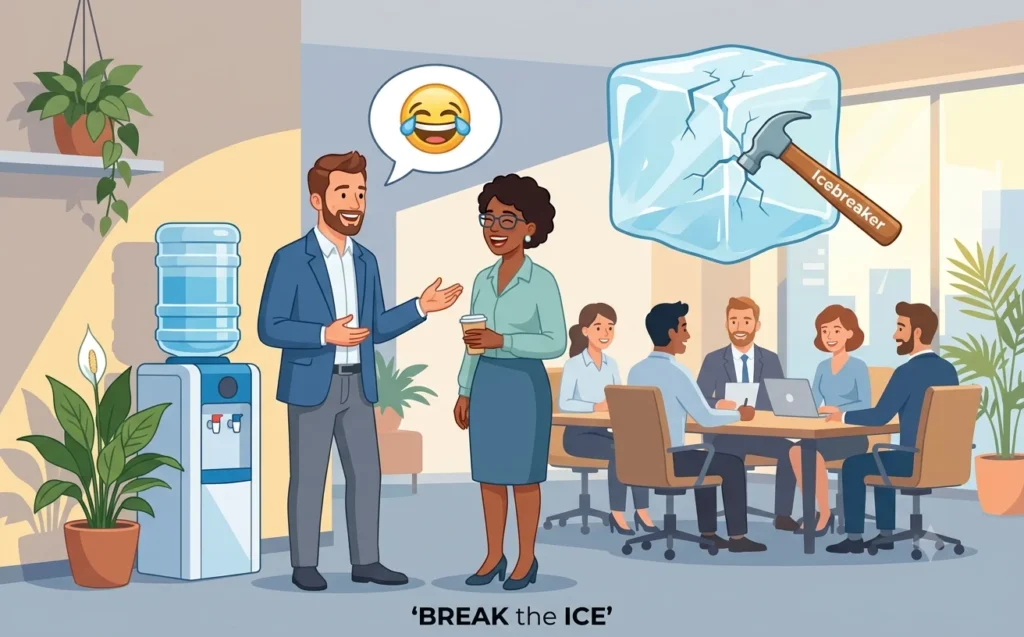
Break the Ice
Word-by-Word Meaning:
- Break: to separate into pieces
- The: a definite article
- Ice: frozen water
Idiomatic Meaning: To initiate conversation in a social setting to make people feel more comfortable.
Example Sentences:
- “I told a joke to break the ice at the meeting.”
- “Let’s play an icebreaker game to break the ice.”
Pronunciation Guide: STRESS on “BREAK” and “ICE.” The word “the” reduces to a quick /ðə/ sound. Say it as “BREAK-the-ICE” with a slight pause between words.
Common Error: Using it in formal business emails. It’s primarily a spoken idiom for social situations.
Modern Alternative: “Get the ball rolling” is a more contemporary version with similar meaning.
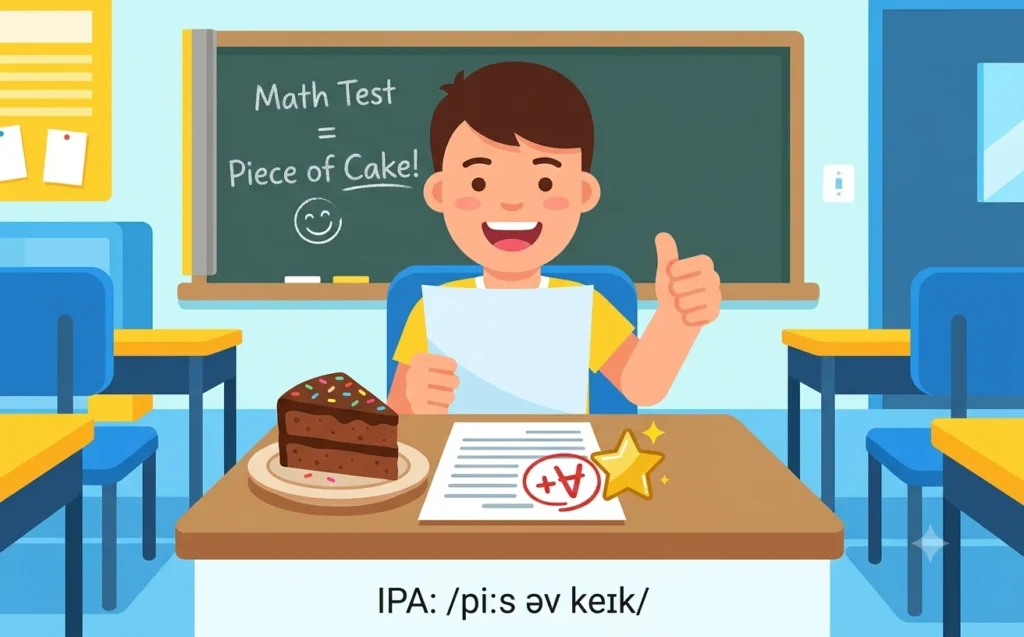
Piece of Cake
Word-by-Word Meaning:
- Piece: a portion or part
- Of: a preposition
- Cake: a baked dessert
Idiomatic Meaning: Something that is very easy to do.
Example Sentences:
- “The exam was a piece of cake.”
- “Don’t worry about the project—it’ll be a piece of cake.”
Pronunciation Guide: “Piece of” blends together to sound like “PEE-suv” /piːsəv/. The main stress falls on “PIECE” and “CAKE.” Never say “piece OF cake”—it sounds unnatural.
Common Error: Saying “piece of a cake”—it’s always “piece of cake” without the article before cake.
Modern Alternative: “No-brainer” is commonly used today for something extremely easy.
Bite the Bullet
Word-by-Word Meaning:
- Bite: to use teeth to cut
- The: a definite article
- Bullet: a projectile fired from a gun

Idiomatic Meaning: To face a difficult situation courageously.
Example Sentences:
- “I bit the bullet and asked my boss for a raise.”
- “Sometimes you just have to bite the bullet and apologize.”
Pronunciation Guide: Stress falls on “BITE” and “BULL-et.” The word “the” is short and unstressed. Say “BITE-thuh-BULL-et” in natural speech.
Common Error: Misplacing the stress on “the” instead of the content words.
Cost an Arm and a Leg
Word-by-Word Meaning:
- Cost: to require payment
- An: indefinite article
- Arm: upper limb
- And: conjunction
- A: indefinite article
- Leg: lower limb

Idiomatic Meaning: Something that is very expensive.
Example Sentences:
- “That new car cost an arm and a leg.”
- “Rent in the city costs an arm and a leg.”
Pronunciation Guide: In natural speech, “and” becomes a quick /ənd/ or even just /ən/. Stress hits “COST,” “ARM,” and “LEG.” Say “COST-n-ARM-n-LEG” with equal stress on the body parts.
Common Error: Stressing every word equally, which sounds robotic and unnatural.
Let the Cat Out of the Bag
Word-by-Word Meaning:
- Let: to allow
- The: definite article
- Cat: a small feline animal
- Out: outside
- Of: preposition
- The: definite article
- Bag: a container
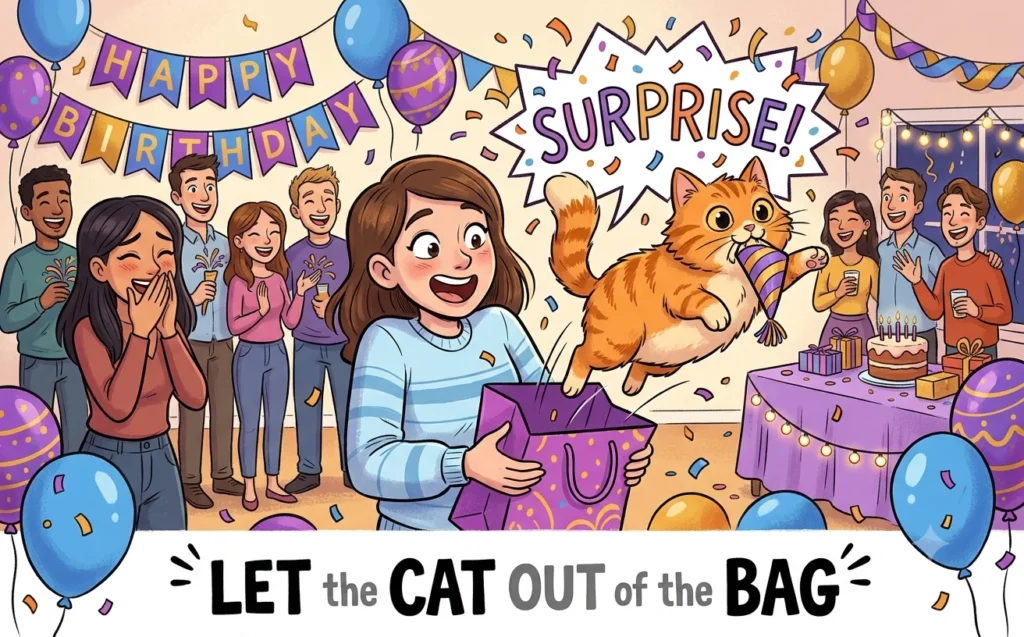
Idiomatic Meaning: To reveal a secret accidentally.
Example Sentences:
- “I let the cat out of the bag about the surprise party.”
- “Please don’t let the cat out of the bag.”
Pronunciation Guide: This idiom flows best when you stress “CAT” and “BAG.” The smaller words (the, of) are reduced. Say “LET-thuh-CAT-out-uv-the-BAG.”
Common Error: Overemphasizing every word. Let it flow naturally.
Burning the Midnight Oil
Word-by-Word Meaning:
- Burning: consuming by fire
- The: definite article
- Midnight: 12:00 AM
- Oil: fuel
Idiomatic Meaning: Working late into the night.
Example Sentences:
- “She’s burning the midnight oil to finish her thesis.”
- “I’ll be burning the midnight oil to meet the deadline.”
Pronunciation Guide: Say it as one smooth phrase: “BURN-ing-the-MID-night-OIL.” Stress falls on “BURN,” “MID,” and “OIL.”
Common Error: Pronouncing it too slowly or mechanically. It should flow as one continuous phrase.
Going Overboard
Word-by-Word Meaning:
- Going: moving
- Over: above
- Board: a flat piece of wood
Idiomatic Meaning: Doing or saying too much; being excessive.
Example Sentences:
- “He went overboard with the decorations.”
- “The manager went overboard criticizing the team.”
Pronunciation Guide: Stress falls on “GO-ing” and “OVER-board.” Say “GO-ing-OVER-board” with equal emphasis.
Common Error: Confusing “overboard” with “overseeing” or “overworking.”
Nothing to Write Home About
Word-by-Word Meaning:
- Nothing: not anything
- To: preposition
- Write: to put words on paper
- Home: one’s residence
- About: concerning
Idiomatic Meaning: Something that is not especially good or exciting.
Example Sentences:
- “The movie was okay but nothing to write home about.”
- “Dinner at that restaurant was nothing to write home about.”
Pronunciation Guide: Stress falls on “NOTH-ing,” “WRITE,” and “HOME.” Say “NOTH-ing-to-WRITE-HOME-about.”
Common Error: Using it in positive contexts—it should only describe mediocrity.
Lose Your Lunch
Word-by-Word Meaning:
- Lose: to misplace
- Your: belonging to you
- Lunch: a midday meal
Idiomatic Meaning: To vomit. (We’re using “lunch” instead of “cookies” for a more modern version!)
Example Sentences:
- “The ride was so bumpy I almost lost my lunch.”
- “He ate too much and lost his lunch.”
Pronunciation Guide: Stress falls on “LOSE” and “LUNCH.” Say “LOOZ-yer-LUNCH” quickly.
Common Error: Using this in formal situations. It’s strictly informal.
Usage Note: “Lose your cookies” is the older version. “Lose your lunch” is more contemporary and widely used today.
Can’t Wait
Word-by-Word Meaning:
- Can’t: cannot
- Wait: to delay action
Idiomatic Meaning: To be very excited or eager for something.
Example Sentences:
- “I can’t wait for summer vacation!”
- “She can’t wait to see her family.”
Pronunciation Guide: The /t/ in “can’t” is often dropped in fast speech, becoming “căn.” Say “cănt-WAIT” with stress on “WAIT.”
Common Error: Saying “cannot wait” in casual conversation—it sounds too formal and robotic.
All Thumbs
Word-by-Word Meaning:
- All: entirely
- Thumbs: the largest digits on hands
Idiomatic Meaning: Clumsy, especially with one’s hands.
Example Sentences:
- “I can’t wrap presents well—I’m all thumbs.”
- “He’s all thumbs when it comes to fixing things.”
Pronunciation Guide: Say “ALL-THUMS” with equal stress. The “th” sound should be voiced /ð/.
Common Error: Taking it literally. No one is actually all thumbs!
Modern Alternative: “Butterfingers” is a more casual, modern version.
Drag Your Feet
Word-by-Word Meaning:
- Drag: to pull along
- Your: belonging to you
- Feet: plural of foot
Idiomatic Meaning: To delay or procrastinate.
Example Sentences:
- “Stop dragging your feet and make a decision.”
- “The committee is dragging its feet on the proposal.”
Pronunciation Guide: Stress falls on “DRAG” and “FEET.” Say “DRAG-yer-FEET” quickly.
Common Error: Using it to describe physical dragging of feet (it’s figurative).
Add Insult to Injury
Word-by-Word Meaning:
- Add: to put together
- Insult: an offensive remark
- To: preposition
- Injury: physical harm
Idiomatic Meaning: To make a bad situation worse.
Example Sentences:
- “My car broke down, and to add insult to injury, my phone died.”
- “Don’t add insult to injury by laughing at her mistake.”
Pronunciation Guide: Stress falls on “ADD,” “IN-sult,” and “IN-jury.” Say “ADD-IN-sult-to-IN-jury.”
Common Error: Getting the order wrong—it’s always “insult” before “injury.”
Against the Clock
Word-by-Word Meaning:
- Against: in opposition to
- The: definite article
- Clock: a timepiece
Idiomatic Meaning: In a hurry to finish before a deadline.
Example Sentences:
- “We’re working against the clock to finish the project.”
- “The rescue team raced against the clock.”
Pronunciation Guide: Stress falls on “A-gainst” and “CLOCK.” Say “A-gainst-the-CLOCK.”
Common Error: Saying “with the clock” instead of “against.”
At a Snail’s Pace
Word-by-Word Meaning:
- At: indicating position
- A: indefinite article
- Snail’s: belonging to a snail
- Pace: speed
Idiomatic Meaning: Moving very slowly.
Example Sentences:
- “Traffic is moving at a snail’s pace.”
- “The project progressed at a snail’s pace.”
Pronunciation Guide: Stress falls on “SNAIL” and “PACE.” Say “at-uh-SNAILS-PACE.”
Common Error: Using it for something that is fast or normal speed.
Cost a Pretty Penny
Word-by-Word Meaning:
- Cost: to require payment
- A: indefinite article
- Pretty: beautiful or considerable
- Penny: a small coin
Idiomatic Meaning: To be expensive.
Example Sentences:
- “That designer handbag cost a pretty penny.”
- “Renovations will cost a pretty penny.”
Pronunciation Guide: Stress falls on “COST,” “PRET-ty,” and “PEN-ny.” Say “COST-uh-PRET-ty-PEN-ny.”
Don’t Mention It
Word-by-Word Meaning:
- Don’t: do not
- Mention: to refer to
- It: pronoun
Idiomatic Meaning: You’re welcome; it was nothing.
Example Sentences:
- “Thank you for helping me.”
- “Don’t mention it!”
Pronunciation Guide: Stress falls on “DON’T” and “MEN-tion.” Say “DON’T-MEN-shun-it” with quick, connected speech.
Common Error: Using it in formal situations where “you’re welcome” might be more appropriate.
Right Up Your Alley
Word-by-Word Meaning:
- Right: exactly
- Up: in the direction of
- Your: belonging to you
- Alley: a narrow street
Idiomatic Meaning: Suited to your interests or abilities.
Example Sentences:
- “That job is right up your alley.”
- “Science projects aren’t up my alley.”
Pronunciation Guide: Stress falls on “RIGHT,” “UP,” and “AL-ley.” Say “RIGHT-up-yer-AL-ley.”
Common Error: Saying “down your alley” instead of “up your alley” (most native speakers now say “up”).
Act Up
Word-by-Word Meaning:
- Act: to behave
- Up: upward or in action
Idiomatic Meaning: To malfunction or misbehave.
Example Sentences:
- “My computer is acting up again.”
- “The kids are acting up today.”
Pronunciation Guide: Stress falls on “ACT” and “UP.” Say “ACT-UP” with equal emphasis.
Common Error: Using it to describe something that’s actually behaving well.
Chill Out
Word-by-Word Meaning:
- Chill: to make cold
- Out: outside or away
Idiomatic Meaning: To relax.
Example Sentences:
- “Chill out—everything will be fine.”
- “I need to chill out after that busy week.”
Pronunciation Guide: Stress falls on “CHILL” and “OUT.” Say “CHILL-OUT” with a slight pause.
Common Error: Using it in professional settings. It’s very casual.
Modern Alternative: “Take it easy” is a slightly more formal version.
Mastering Pronunciation for the Unit 30 Quiz
Why Pronunciation Matters
When you take the Unit 30 quiz idioms and pronunciation section, you’re not just tested on meaning—your ability to pronounce these expressions naturally matters too. Native speakers use idioms constantly, and if you mispronounce them, listeners may not recognize them even if you use the right words.
The Three Pillars of Idiom Pronunciation
1. Stress Patterns
English is a stress-timed language, meaning certain syllables are emphasized while others are reduced. In idioms, the content words (nouns, verbs, adjectives) carry the main stress, while function words (the, a, of, and, in) are reduced.
| Idiom | Correct Stress | Incorrect Stress |
|---|---|---|
| Break the ice | BREAK the ICE | break THE ice |
| Bite the bullet | BITE the BULL-et | bite THE bullet |
| Piece of cake | PIECE of CAKE | piece OF cake |
| Cost an arm and a leg | COST an ARM and a LEG | cost an arm AND a leg |
2. Connected Speech
Native speakers link words together in natural speech. Some common patterns in idioms include:
- “Piece of” sounds like “PEE-suv” (/piːsəv/)
- “Break the” sounds like “BREAK-thuh” (the /k/ connects to /ð/)
- “Let the” blends to “LED-the” in fast speech
3. The Schwa Sound
The schwa /ə/ is the most common vowel sound in English and appears frequently in idioms. Words like “the,” “a,” “of,” and “an” all use the schwa in natural speech. Practice saying “the” as “thuh” /ðə/ and “of” as “uv” /əv/ in idioms.
Pronunciation Practice Table
| Idiom | IPA Pronunciation | Stress Pattern |
|---|---|---|
| Break the ice | /breɪk ðə aɪs/ | BREAK-the-ICE |
| Piece of cake | /piːs əv keɪk/ | PIECE-of-CAKE |
| Bite the bullet | /baɪt ðə ˈbʊlɪt/ | BITE-the-BULL-et |
| Cost an arm and a leg | /kɒst ən ɑːrm ənd ə leg/ | COST-an-ARM-and-a-LEG |
Practice Quiz: Test Your Knowledge
Section A: Multiple Choice (Questions 1-10)
1. What does “piece of cake” mean?
- A) Something expensive
- B) Something very easy
- C) Something delicious
- D) Something difficult
Answer: B
2. “Break the ice” is used to:
- A) Start a conversation
- B) End an argument
- C) Break something cold
- D) Make a decision
Answer: A
3. If you “bite the bullet,” you:
- A) Face a difficult situation
- B) Eat something quickly
- C) Give up easily
- D) Make a mistake
Answer: A
4. “Cost an arm and a leg” means:
- A) Very cheap
- B) Very expensive
- C) Physically painful
- D) Average price
Answer: B
5. “Let the cat out of the bag” means to:
- A) Reveal a secret
- B) Let a pet out
- C) Clean the house
- D) Go shopping
Answer: A
6. If you’re “burning the midnight oil,” you’re:
- A) Working late at night
- B) Cooking dinner
- C) Going to bed early
- D) Waking up early
Answer: A
7. “Going overboard” means:
- A) Doing too much
- B) Going swimming
- C) Traveling abroad
- D) Making a mistake
Answer: A
8. “Nothing to write home about” describes something:
- A) Very exciting
- B) Mediocre
- C) Terrible
- D) Perfect
Answer: B
9. “Can’t wait” expresses:
- A) Impatience or excitement
- B) Patience
- C) Indifference
- D) Anger
Answer: A
10. If someone is “all thumbs,” they are:
- A) Clumsy
- B) Talented
- C) Angry
- D) Happy
Answer: A
Section B: Fill in the Blanks (Questions 11-15)
11. The new car was beautiful but it _________ an arm and a leg.
Answer: cost
12. I accidentally _________ the cat out of the bag about the surprise party.
Answer: let
13. Stop _________ your feet and make a decision!
Answer: dragging
14. The traffic was moving at a _________ pace.
Answer: snail’s
15. I’ll be _________ the midnight oil to finish this project.
Answer: burning
Section C: Match the Idiom to the Meaning (Questions 16-20)
| Idiom | Meaning |
|---|---|
| 16. Break the ice | A) Very expensive |
| 17. Piece of cake | B) Relax |
| 18. Chill out | C) Start a conversation |
| 19. Drag your feet | D) Very easy |
| 20. Cost a pretty penny | E) Procrastinate |
Answers:
16-C, 17-D, 18-B, 19-E, 20-A
Answer Key Summary
| Q# | Answer | Q# | Answer | Q# | Answer |
|---|---|---|---|---|---|
| 1 | B | 6 | A | 11 | cost |
| 2 | A | 7 | A | 12 | let |
| 3 | A | 8 | B | 13 | dragging |
| 4 | B | 9 | A | 14 | snail’s |
| 5 | A | 10 | A | 15 | burning |
Matching Section:
16-C, 17-D, 18-B, 19-E, 20-A
Test-Taking Strategies for the Unit 30 Quiz
Before the Quiz
- Create a study schedule: Review 5 idioms per day for 4 days
- Use flashcards: Write the idiom on one side, meaning on the other
- Practice aloud: Say each idiom 5 times focusing on stress patterns
- Listen actively: Watch YouTube videos or podcasts using these idioms
- Create stories: Write a short paragraph using 5-6 idioms together
During the Quiz
- Read all options first: Don’t jump to the first answer
- Look for context clues: The sentence structure often hints at the meaning
- Eliminate obvious wrong answers: Narrow down your choices
- Trust your ear: If an idiom sounds natural, it’s probably correct
- Don’t overthink: Your first instinct is often right
After the Quiz
- Review wrong answers: Understand why you missed them
- Practice weak areas: Focus on idioms you got wrong
- Track progress: Keep a log of your scores
- Teach someone else: Explaining idioms reinforces learning
Most Common Mistakes and How to Fix Them
Mistake #1: Pronouncing Every Word Equally
Wrong: “piece OF cake” (stressing “of”)
Right: “PIECE of CAKE” (stressing content words)
Fix: Remember: nouns and verbs get stress; function words don’t
Mistake #2: Using the Wrong Preposition
Wrong: “down your alley”
Right: “up your alley”
Fix: Most native speakers now say “up your alley”
Mistake #3: Taking Idioms Literally
Wrong: Thinking “break the ice” means literally breaking ice
Right: Understanding it means starting a conversation
Fix: Always think about the context, not individual words
Mistake #4: Using Idioms in Wrong Contexts
Wrong: Saying “chill out” in a job interview
Right: Using “relax” or “take it easy” in professional settings
Fix: Know the register—informal vs. formal
Practice Conversation Scenarios
Scenario 1: At Work
Sarah: How’s the project going?
Mike: It’s actually a piece of cake! I’m almost done.
Sarah: Great! Remember, don’t drag your feet on the final review.
Mike: I won’t. I’ll bite the bullet and finish it tonight.
Scenario 2: Social Setting
Alex: I’m nervous about meeting new people.
Emma: Just tell a joke to break the ice.
Alex: Good idea! But I hope I don’t let the cat out of the bag about my secret.
Emma: Don’t worry, just relax and chill out.
Scenario 3: Shopping
Customer: That handbag is beautiful!
Salesperson: Yes, it costs a pretty penny but it’s worth it.
Customer: Wow, it costs an arm and a leg!
Salesperson: Quality isn’t cheap, but it’s nothing to write home about if you don’t buy it.
FAQs About the Unit 30 Quiz
Q: What’s the best way to memorize idioms for the Unit 30 quiz?
A: Group idioms by theme (work idioms, social idioms, etc.) and create stories using them. Using them in context helps memory far better than rote memorization. Practice with the flashcards and worksheets in our free study kit.
Q: Why is pronunciation included in the Unit 30 quiz?
A: Knowing an idiom’s meaning is only half the battle. Native speakers need to recognize it when you speak, and correct pronunciation ensures they do. The Unit 30 quiz idioms and pronunciation format reflects real-world communication needs.
Q: How can I practice idiom pronunciation if I’m learning on my own?
A: Use the YouGlish website to hear idioms pronounced in different contexts, by different speakers. You can also use Google’s pronunciation tool, watch YouTube videos, and practice with language exchange partners.
Q: Are the idioms in Unit 30 used in everyday conversation?
A: Yes! All 20 idioms in this guide are commonly used in daily English. Some are slightly informal (“chill out”), but most are appropriate in both casual and professional contexts.
Q: How do I pronounce “idioms” correctly?
A: Break it down into three syllables: “ID-ee-uhmz” (/ˈɪdiːəmz/). Primary stress falls on the first syllable. Try not to say “eye-dee-oms” or “id-EYE-oms.”
Q: What if I get stuck during the quiz?
A: Don’t panic! Use elimination strategies, look for context clues, and remember the stress patterns. If you’ve practiced with this guide, you’re well-prepared.
Q: How long should I study before the quiz?
A: We recommend studying 30 minutes daily for 5-7 days before your Unit 30 quiz. This spaced repetition approach is proven to improve retention.
Q: Can I get a PDF version of this guide?
A: Yes! This complete Unit 30 quiz idioms and pronunciation with answers guide is available as a downloadable PDF in our free study kit.
Conclusion: Your Path to Fluency
Mastering the Unit 30 quiz idioms and pronunciation isn’t just about passing a test—it’s about unlocking a deeper level of English communication. When you can use idioms naturally and pronounce them confidently, you move from being a careful language learner to a fluent speaker.
The 20 idioms we’ve covered are your foundation. Practice them regularly, use them in conversations, and don’t be afraid to make mistakes. Every native English speaker has experienced the embarrassment of using an idiom slightly wrong—it’s part of the learning journey.
Start small. Choose five idioms to focus on this week. Practice their pronunciation, use them in sentences, and listen for them in movies or conversations. As your confidence grows, the rest will follow.
Remember, the Unit 30 quiz idioms and pronunciation assessment is a stepping stone, not a final destination. The real goal is using English naturally and confidently in your daily life.

“Rose Macaulay shares the charm of idioms on LearnIdom.com, making language learning delightful, insightful, and full of wit for every reader.”