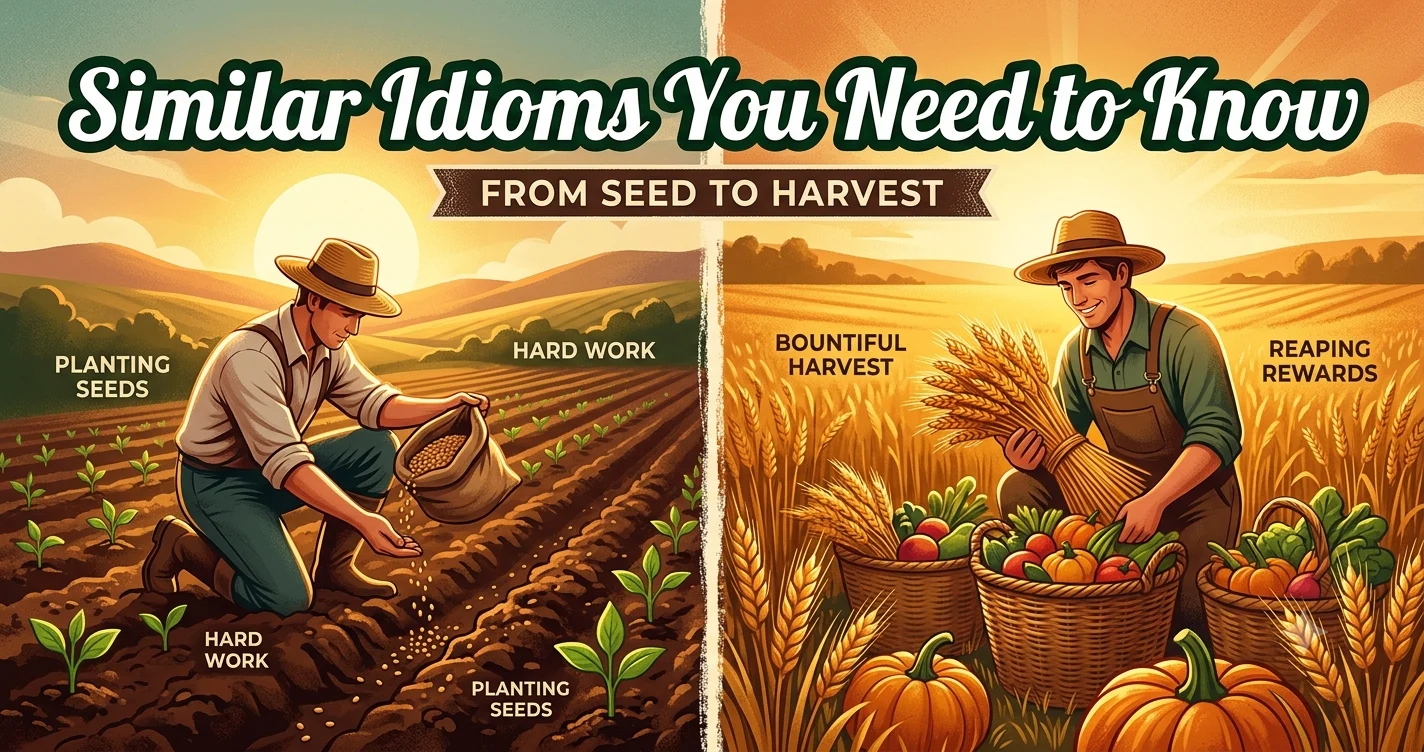
You reap what you sow—it’s one of the most profound truths that governs our lives. This timeless principle, often called the law of cause and effect, appears across cultures, religions, and philosophies, reminding us that our actions and outcomes are inevitably connected.
Think about it: when you plant tomato seeds, you don’t expect to harvest potatoes. Life works the same way. If you invest kindness, you’ll likely receive kindness in return. Cut corners at work, and your reputation will suffer. These aren’t just abstract concepts—they’re observable, daily realities.
The phrase “you reap what you sow” originates from ancient agricultural wisdom and appears prominently in the Bible’s book of Galatians: “Do not be deceived: God cannot be mocked. A man reaps what he sows.” But this sowing and reaping principle extends far beyond religious contexts. It’s woven into the fabric of human experience, appearing in countless idioms, proverbs, and everyday expressions across languages.
In this comprehensive guide, we’ll explore 20 of the most famous “you reap what you sow” similar idioms. Each one offers a unique perspective on cause and effect, helping you understand and apply this universal truth more effectively in your personal and professional life.
What Does “You Reap What You Sow” Really Mean?
Before diving into similar idioms, let’s understand the core concept. The reap meaning is simple: you harvest what you plant. This karma meaning principle suggests that your current circumstances are the direct result of past actions. The Bible verse Galatians 6:7 popularized this wisdom: “Do not be deceived: God cannot be mocked. A man reaps what he sows.”
This isn’t about punishment or reward—it’s about natural consequences. Just as gravity works whether you believe in it or not, the law of cause and effect operates regardless of your awareness. Understanding this transforms how you approach decisions, relationships, and long-term goals.
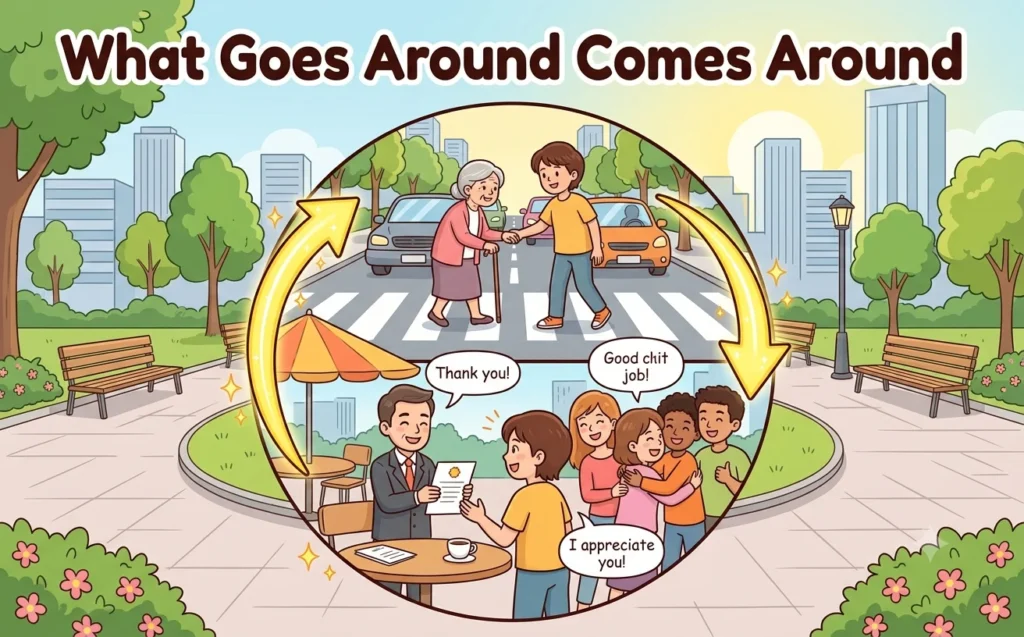
What Goes Around Comes Around
Word-by-Word Meaning: “Goes around” refers to actions circulating in the world, and “comes around” means they eventually return to the source.
Idiomatic/Figurative Meaning: This popular modern idiom suggests that the universe has a way of balancing things out. Good deeds return as blessings, while harmful actions eventually boomerang back to the perpetrator. It’s a casual way of expressing the you reap what you sow principle.
Example Sentences:
- “She always treats her employees with respect, and what goes around comes around—now they’re going above and beyond to help her.”
- “He cheated his business partners for years, but what goes around comes around. Now nobody trusts him.”
Common Error: People sometimes misuse it to justify revenge. Remember: it’s about natural consequences, not personal retaliation.
Usage Note: This phrase is particularly common in modern, informal contexts and carries a slightly casual tone. It’s perfect for everyday conversations about karma meaning.
As You Sow, So Shall You Reap
Word-by-Word Meaning: “Sow” means to plant seeds; “reap” means to harvest. This is the older, more formal version of the modern phrase.
Idiomatic/Figurative Meaning: Your harvest—whether good or bad—is determined by what you plant. Your current circumstances are the direct result of your past actions. This Bible verse from Galatians 6:7 is the original source of the you reap what you sow concept.

Example Sentences:
- “As you sow, so shall you reap. If you spend all your savings now, don’t complain about being broke later.”
- “She’s invested years in building her skills, and as she sows, so shall she reap—a promotion is inevitable.”
Common Error: People sometimes treat it as a curse or threat rather than a neutral observation about cause and effect.
Usage Note: This formal version appears frequently in religious texts and formal writing. It carries more weight and gravitas than the casual alternatives.
Actions Have Consequences
Word-by-Word Meaning: “Actions” means deeds or behaviors; “consequences” refers to the results or outcomes that follow.
Idiomatic/Figurative Meaning: Every choice you make triggers a chain of events. Nothing happens in isolation. This straightforward phrase is a direct way of explaining the sowing and reaping principle.
Example Sentences:
- “Actions have consequences, so think twice before sending that angry email.”
- “The company’s unethical practices caught up with them. Actions have consequences in the business world.”
Common Error: Some interpret this phrase as implying all consequences are negative. In reality, positive actions also produce positive consequences.
Usage Note: This no-nonsense expression works in virtually any context—from parenting to business leadership.
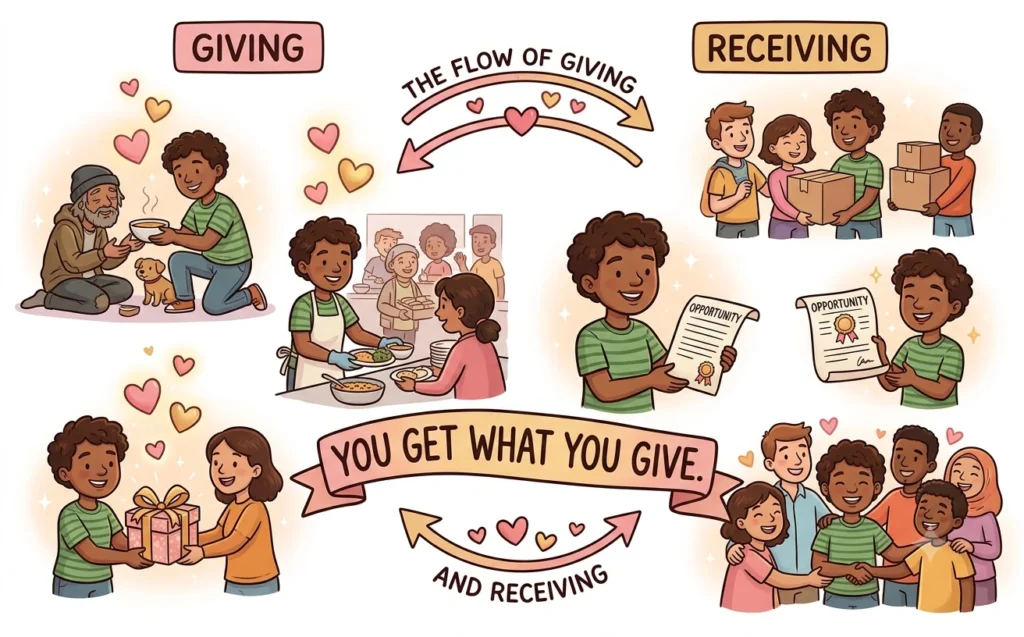
You Get What You Give
Word-by-Word Meaning: What you receive is directly proportional to what you contribute.
Idiomatic/Figurative Meaning: The energy, effort, and attitude you pour into something determine what you get back. It’s the reciprocity principle in action and a modern version of you reap what you sow.

Example Sentences:
- “I’m not surprised she has so many friends. You get what you give, and she’s incredibly generous.”
- “You get what you give in this industry—network and help others, and they’ll help you.”
Common Error: People sometimes interpret this narrowly in material terms. It applies to emotional investments, too.
Usage Note: This phrase is widely used in motivational contexts, relationships, and professional networking.
You Made Your Bed, Now Lie in It
Word-by-Word Meaning: You created your situation (“made your bed”), and now you must accept and deal with it (“lie in it”).
Idiomatic/Figurative Meaning: You created this situation, so you must face the consequences. There’s no escaping responsibility for your choices.
Example Sentences:
- “I warned you about taking on too much debt. You made your bed, now lie in it.”
- “She decided to drop out of college, and now she can’t find a good job. You made your bed, now lie in it.”
Common Error: People use it too harshly, often failing to recognize that people can change their circumstances over time.
Usage Note: This expression tends to sound blunt and unsympathetic. Use it carefully in sensitive situations.
Cause and Effect
Word-by-Word Meaning: “Cause” refers to what makes something happen; “effect” is the result that follows.
Idiomatic/Figurative Meaning: This logical principle states that every cause produces an effect, and every effect has a cause. Nothing happens randomly. It’s the scientific term for the law of cause and effect.
Example Sentences:
- “His failure was a classic case of cause and effect—poor planning led to poor results.”
- “In relationships, cause and effect is simple: neglect leads to distance, and attention builds connection.”
Common Error: Some mistakenly think “cause and effect” only applies to physical sciences. It applies equally to human behavior.
Usage Note: This academic-sounding phrase works best in analytical, educational, or philosophical contexts.
Chickens Come Home to Roost
Word-by-Word Meaning: Chickens (negative actions) eventually “come home to roost” (return to their source).
Idiomatic/Figurative Meaning: Past misdeeds eventually return to haunt you. The consequences of bad behavior always catch up eventually.
Example Sentences:
- “He thought he’d gotten away with fraud for years, but the chickens came home to roost when the audit started.”
- “The politicians’ lies have finally caught up with them. The chickens have come home to roost.”
Common Error: This phrase is always negative—it only describes bad consequences returning, not good ones.
Usage Note: This colorful, slightly old-fashioned idiom adds flavor to writing about karma meaning or justice.
Sowing and Reaping
Word-by-Word Meaning: “Sowing” means planting seeds; “reaping” means harvesting the crop.
Idiomatic/Figurative Meaning: This is the agricultural metaphor behind the entire concept—what you plant determines what you harvest.
Example Sentences:
- “Sowing and reaping applies to relationships: invest time and care, and you’ll harvest deep connections.”
- “He’s learning about sowing and reaping the hard way—you can’t expect a harvest from neglected seeds.”
Common Error: People think the harvest happens instantly. In reality, there’s always a gap between sowing and reaping.
Usage Note: This phrase carries strong biblical and agricultural connotations, making it suitable for spiritual or nature-focused contexts.
Boomerang Effect
Word-by-Word Meaning: A boomerang returns to its thrower.
Idiomatic/Figurative Meaning: Your actions return to you—good or bad. What you send out into the world eventually comes back.
Example Sentences:
- “The company’s generosity created a boomerang effect—customers rewarded them with fierce loyalty.”
- “His hostility had a boomerang effect, pushing away everyone who might have helped him.”
Common Error: Some think the boomerang effect only works for negative actions. Positive actions also boomerang back.
Usage Note: This modern phrase is excellent for discussing workplace culture, customer service, or social dynamics.
The Law of the Farm
Word-by-Word Meaning: The “law of the farm” refers to agricultural principles—you must plant, water, and tend crops to harvest.
Idiomatic/Figurative Meaning: This is the you reap what you sow principle applied to life. You can’t shortcut success; you must invest time and effort.
Example Sentences:
- “Building a successful career follows the law of the farm: consistent effort produces consistent results.”
- “He wanted overnight success but ignored the law of the farm. Real growth takes time.”
Common Error: People mistake this for mere “time in” rather than “time invested.” Not all time produces results—quality matters.
Usage Note: This phrase appears frequently in leadership development and personal growth literature.
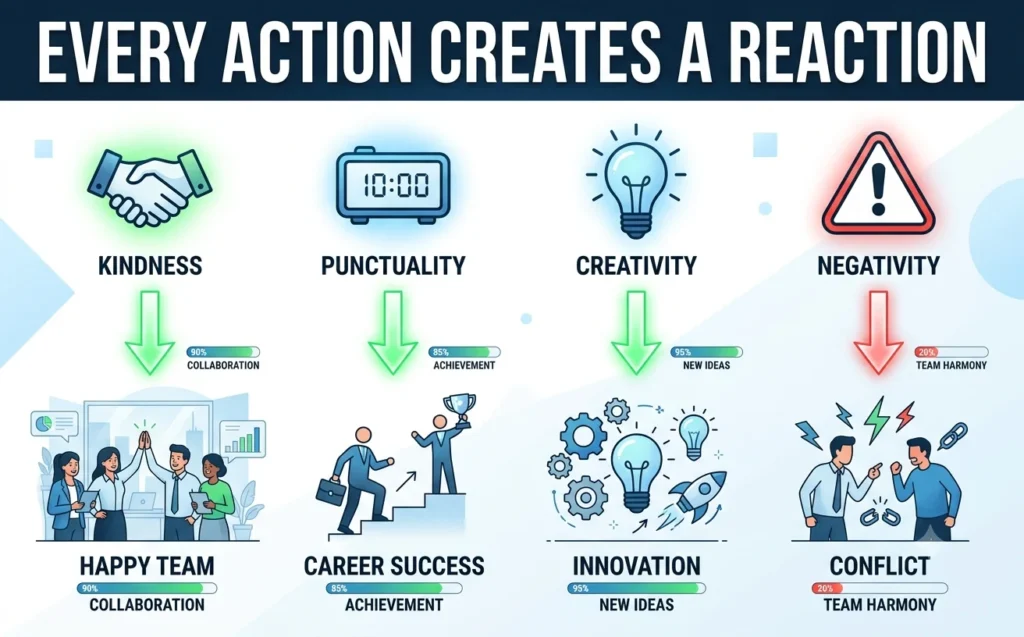
For Every Action, There is an Equal Reaction
Word-by-Word Meaning: Newton’s third law of motion applied metaphorically.
Idiomatic/Figurative Meaning: Every action triggers a corresponding reaction. Nothing is without response.
Example Sentences:
- “In politics, for every action, there is an equal reaction. Push a policy too hard, and you’ll create resistance.”
- “For every action, there is an equal reaction—kindness generates kindness, hostility generates hostility.”
Common Error: People take “equal” too literally. The reaction might be proportional but not mechanically identical.
Usage Note: This scientific-sounding phrase works well in formal or analytical writing.
Life Pays You Back
Word-by-Word Meaning: Life provides returns on your investments.
Idiomatic/Figurative Meaning: The universe has a way of rewarding or punishing based on your actions.
Example Sentences:
- “She’s been volunteering for years, and life pays you back—she’s built an incredible network.”
- “Life pays you back, so stop complaining and start contributing.”
Common Error: Some interpret this too literally, expecting immediate, tangible rewards.
Usage Note: This casual, optimistic phrase is common in self-help and personal development contexts.
The Wheel of Fortune
Word-by-Word Meaning: Fate or fortune is cyclical, like a rotating wheel.
Idiomatic/Figurative Meaning: Your luck and circumstances go through cycles, often influenced by past actions.
Example Sentences:
- “The wheel of fortune turned against him after years of questionable business practices.”
- “Be patient—the wheel of fortune turns, and your hard work will pay off.”
Common Error: People treat it as random luck. In practice, the “wheel” often turns based on merit and actions.
Usage Note: This older phrase carries philosophical and historical overtones. It appears in classical literature and Tarot.
Sowing the Wind, Reaping the Whirlwind
Word-by-Word Meaning: “Sowing the wind” means producing chaos or destruction; “reaping the whirlwind” means receiving an even worse outcome.
Idiomatic/Figurative Meaning: Wrongdoing leads to disastrous consequences, often much worse than expected.
Example Sentences:
- “The company cut corners on safety, and now they’re reaping the whirlwind of lawsuits.”
- “Dictators who sow the wind inevitably reap the whirlwind of rebellion.”
Common Error: People underestimate how much worse the whirlwind can be than the original bad action.
Usage Note: This dramatic biblical phrase warns of severe consequences and appears in serious contexts.
Like Father, Like Son
Word-by-Word Meaning: The son resembles the father.
Idiomatic/Figurative Meaning: Children inherit not just physical traits but also behaviors, values, and consequences from their parents.
Example Sentences:
- “He’s dishonest in business, and now his son is following suit—like father, like son.”
- “They both love helping others. Like father, like son.”
Common Error: This idiom focuses primarily on inheritance, not necessarily consequences of action. However, it works when discussing generational patterns.
Usage Note: This phrase can be positive or negative and appears frequently in family and generational discussions.
No Pain, No Gain
Word-by-Word Meaning: “Pain” means effort or discomfort; “gain” means reward or benefit.
Idiomatic/Figurative Meaning: Effort and sacrifice are prerequisites for achievement. You can’t get results without putting in work.
Example Sentences:
- “I know you’re tired of studying, but no pain, no gain—your exam scores will show it.”
- “The gym is tough right now, but no pain, no gain.”
Common Error: People sometimes suffer unnecessarily, thinking all pain equals progress. This isn’t true—you need smart effort.
Usage Note: This motivational phrase is extremely common in fitness, sports, and personal development.
You’ve Made Your Bed
Word-by-Word Meaning: You’ve created your situation.
Idiomatic/Figurative Meaning: You’re responsible for your circumstances.
Example Sentences:
- “You’ve made your bed, so don’t complain about the consequences.”
- “She made her bed when she chose to skip school, and now she’s paying for it.”
Common Error: People use the shortened version to sound less harsh, but it’s still quite blunt.
Usage Note: This phrase is conversational and somewhat sharp, best used with people you know well.
Actions Speak Louder Than Words
Word-by-Word Meaning: What you do matters more than what you say.
Idiomatic/Figurative Meaning: Behavior reveals more about your values and character than promises or declarations.
Example Sentences:
- “Don’t tell me you’re sorry—show me. Actions speak louder than words.”
- “He claims to support equality, but actions speak louder than words. He hires only men.”
Common Error: People treat it as a complete substitute for communication. Both actions and words matter.
Usage Note: This phrase applies to relationships, leadership, and any context where behavior contradicts speech.
You Can’t Cheat the Weigh Scale
Word-by-Word Meaning: In fitness, the scale reveals your true progress.
Idiomatic/Figurative Meaning: You can’t fake results. The outcomes reveal the truth of your efforts.
Example Sentences:
- “He thought he could skip workouts and still lose weight, but you can’t cheat the weigh scale.”
- “You can’t cheat the weigh scale in business either. Results show the truth.”
Common Error: This idiom applies to fitness but metaphorically works for any results-oriented domain.
Usage Note: This more modern phrase is direct and vivid, common in fitness, business, and personal development.
You Can’t Make an Omelette Without Breaking Eggs
Word-by-Word Meaning: Omelettes require breaking eggs.
Idiomatic/Figurative Meaning: Achieving anything worthwhile requires sacrifice and discomfort.
Example Sentences:
- “Innovation requires risk. You can’t make an omelette without breaking eggs.”
- “You can’t make an omelette without breaking eggs—we had to lay off some employees to save the company.”
Common Error: Some use this to justify harming others. Used correctly, it acknowledges necessary trade-offs.
Usage Note: This pragmatic phrase is useful in business, strategy, and change management contexts.
Reference Table: Similar Idioms
| Idiom | Core Meaning | Best Used In |
|---|---|---|
| What Goes Around Comes Around | Actions return to you | Casual conversation |
| As You Sow, So Shall You Reap | Planting determines harvest | Formal/Religious contexts |
| Actions Have Consequences | Every action has a result | Any context |
| You Get What You Give | Reciprocity principle | Relationships/Business |
| You Made Your Bed, Now Lie in It | Accept consequences | Blunt conversations |
| Cause and Effect | Logic of consequences | Analytical contexts |
| Chickens Come Home to Roost | Past misdeeds return | Serious warnings |
| Sowing and Reaping | Agricultural metaphor | Spiritual/Nature contexts |
| Boomerang Effect | Actions return | Modern/Workplace contexts |
| Law of the Farm | Consistent effort needed | Personal growth |
| Equal Reaction | Every action has a response | Scientific/Business contexts |
| Life Pays You Back | Universe rewards you | Self-help contexts |
| Wheel of Fortune | Circumstances cycle | Philosophical contexts |
| Sowing Wind, Reaping Whirlwind | Consequences multiply | Dramatic warnings |
| Like Father, Like Son | Generational patterns | Family contexts |
| No Pain, No Gain | Effort brings reward | Fitness/Motivation |
| You’ve Made Your Bed | You created your situation | Blunt conversations |
| Actions Speak Louder Than Words | Behavior reveals truth | Leadership/Relationships |
| You Can’t Cheat the Scale | Results show truth | Fitness/Performance |
| Can’t Make Omelette Without Breaking Eggs | Sacrifice required | Business/Strategy |
FAQs About “You Reap What You Sow” and Similar Idioms
Q: What is another way of saying “you reap what you sow”?
A: Popular alternatives include “what goes around comes around,” “as you sow, so shall you reap,” “actions have consequences,” and “you get what you give.” Each expresses the law of cause and effect in different tones, from casual to formal.
Q: What is another quote for “reap what you sow”?
A: Beyond the biblical original from Galatians 6:7, popular quotes include: “What goes around comes around,” “You can’t cheat the weigh scale,” and “The chickens come home to roost.” Each offers a slightly different emotional or contextual resonance.
Q: Is “You reap what you sow” an idiom?
A: Yes, it functions as both an idiom and a proverb, with a meaning that extends beyond literal farming. It’s widely recognized in English-speaking cultures and appears in formal and informal settings. The phrase is also directly quoted from the Bible verse Galatians 6:7.
Q: What is the opposite of “reap what you sow”?
A: The opposite would be “you can get something for nothing” or “actions don’t matter.” However, the sowing and reaping principle is so universal that these opposing ideas are generally viewed as unrealistic. The direct opposite of “reap” is “sow.”
Q: Is “you reap what you sow” a funny idiom?
A: While the phrase itself isn’t inherently funny, there are humorous variations like “you reap what you sow—unless you’re a farmer with bad luck.” Many people also use funny “you reap what you sow similar idioms” like “you can’t cheat the weigh scale” in lighthearted contexts.
Conclusion
The you reap what you sow principle is more than an idiom—it’s a fundamental law of cause and effect that governs every aspect of life. Understanding these similar expressions gives you a rich vocabulary for discussing actions and outcomes in any context.
Start paying attention to what you’re sowing today. Are you planting seeds of kindness, effort, and integrity? Or are you sowing neglect, dishonesty, and laziness? Remember, the harvest is coming—you’ll ultimately reap exactly what you’ve sown. The reap meaning is simple: your future is built on your present choices.
The beauty of this sowing and reaping principle is its empowering message: you have control over your future harvest. Change your seeds, and you’ll change your harvest. Start sowing wisely starting today!
Now it’s your turn: Which of these idioms resonates most with you? Share your favorite in the comments below and spread this wisdom with someone who needs to hear it today!

“Rose Macaulay shares the charm of idioms on LearnIdom.com, making language learning delightful, insightful, and full of wit for every reader.”