Have you ever met someone who acts so strangely that calling them “crazy” just doesn’t capture it? 😄
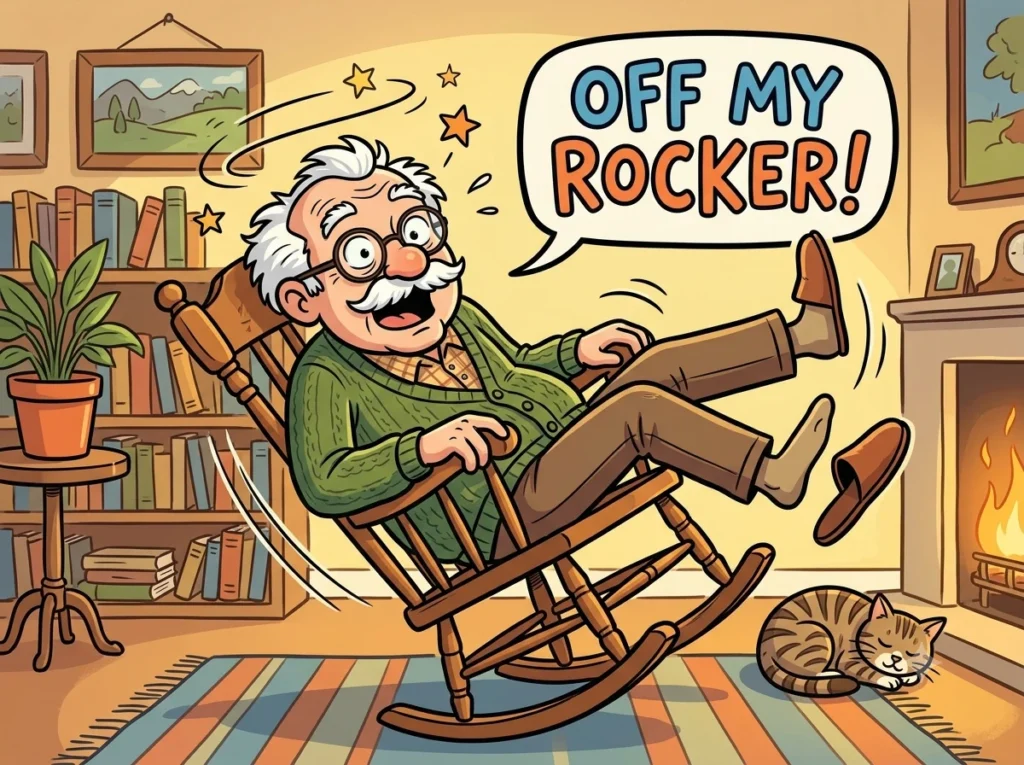
Maybe they’ve “lost their marbles” or are “off their rocker.” This article explores the most colorful idioms for crazy person that make English conversations more vivid and humorous.
From funny idioms for crazy person to playful expressions, these crazy idioms phrases funny are essential for any English learner. Let’s explore 20 hilarious ways native speakers describe eccentric people! 🎭
What Are Idioms for Crazy Person?
Short idioms for crazy person are everyday expressions used to describe someone acting strangely. Native speakers use these funny ways to say crazy person constantly in casual conversations.
These expressions are:
- Informal – used with friends and family
- Playful – not meant to be offensive
- Colorful – add personality to your speech
The best idioms for crazy person have interesting origins. Many come from historical events, while others come from everyday objects and activities.
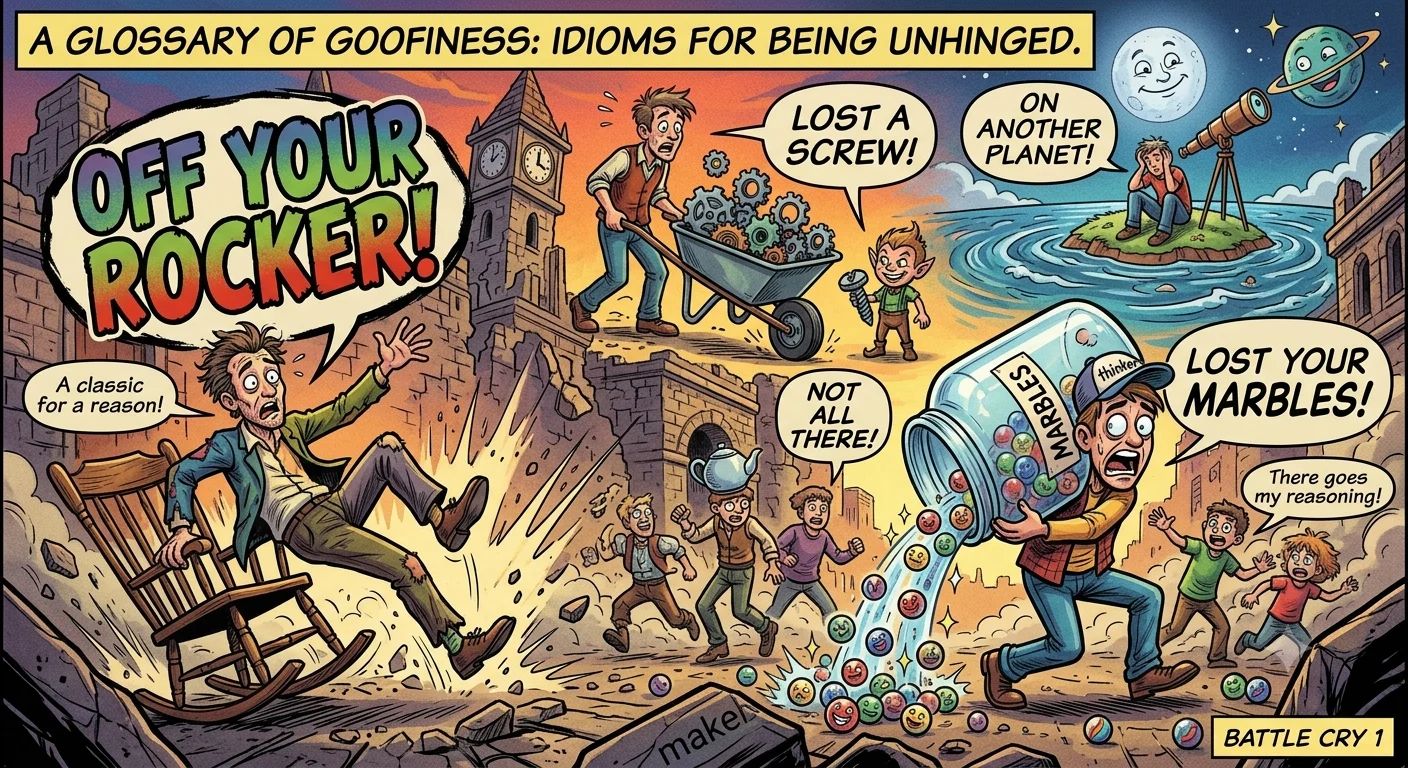
Off Your Rocker 🪑
Word-by-word meaning: “Rocker” refers to the curved piece on a rocking chair. If you’re “off” it, you’ve fallen.
Idiomatic meaning: Acting completely crazy or unreasonable. This is one of the most classic idioms for crazy person in English.
Example sentences:
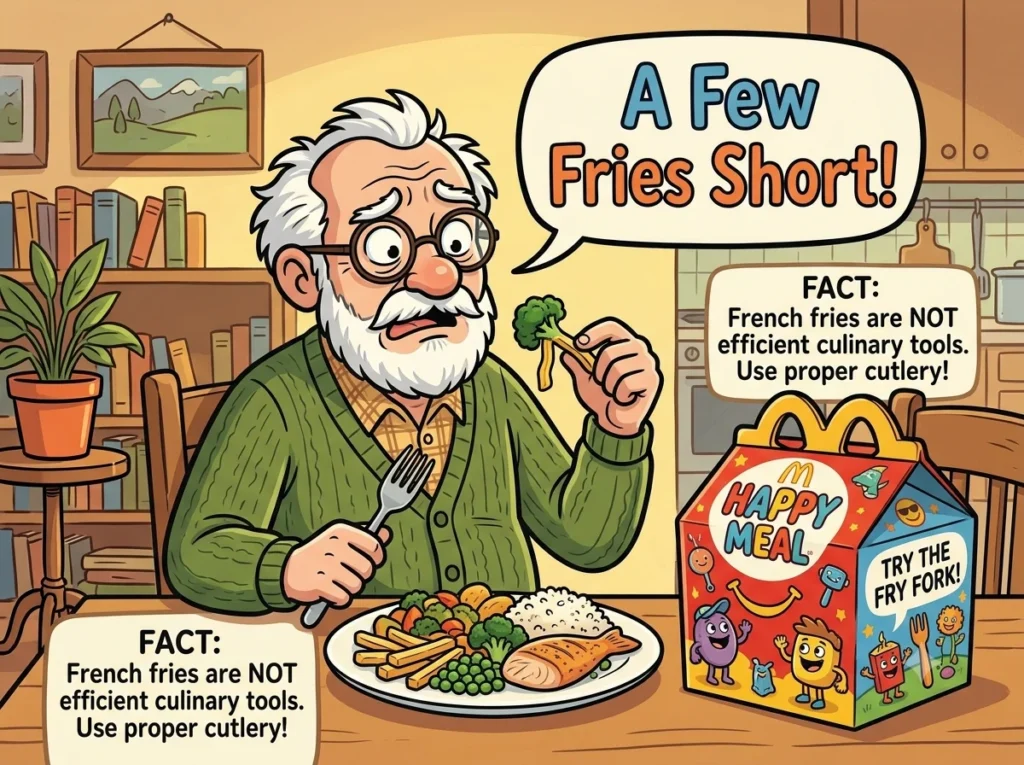
- “My uncle wants to quit his job and become a gamer—he’s off his rocker!” 😲
- “She painted her cat’s nails pink again—she’s off her rocker.”
Common error: Don’t confuse this with “off the rocker.” Always use a possessive pronoun: off my/your/his/her rocker.
Usage note: This idiom for crazy person funny is informal but not offensive. Perfect for playful teasing.
A Few Fries Short of a Happy Meal 🍟
Word-by-word meaning: A Happy Meal is McDonald’s kids’ meal. Missing some fries means you’re incomplete.
Idiomatic meaning: Not very smart or acting strange. This is among the most creative funny ways to say crazy person.
Example sentences:
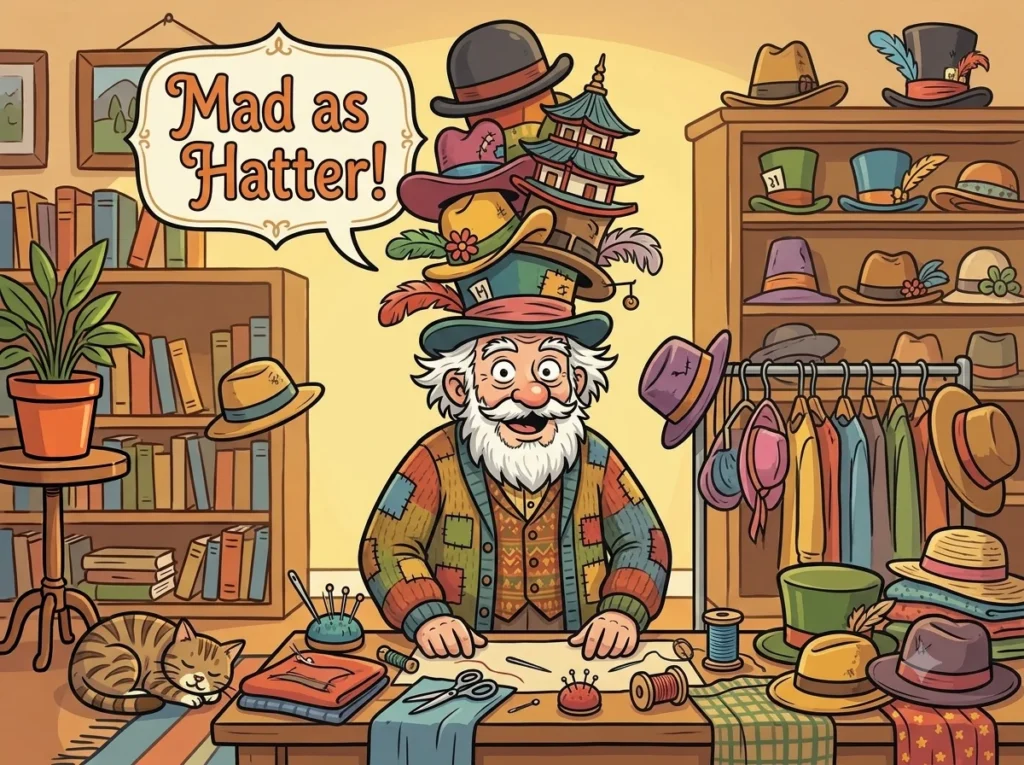
- “He tried to microwave a carton of milk—maybe he’s a few fries short of a Happy Meal.” 🥛
- “That idea? Sounds like someone’s a few fries short of a Happy Meal.”
Common error: People say “short of the Happy Meal.” The correct version uses “a Happy Meal.”
Usage note: This funny expression for crazy is very informal. Best with friends who can take a joke.
Mad as a Hatter 🎩
Word-by-word meaning: “Mad” means crazy; “hatter” is someone who makes hats. From Lewis Carroll’s Alice in Wonderland.
Idiomatic meaning: Completely crazy or eccentric. A famous funny idiom for crazy person with literary origins.
Example sentences:
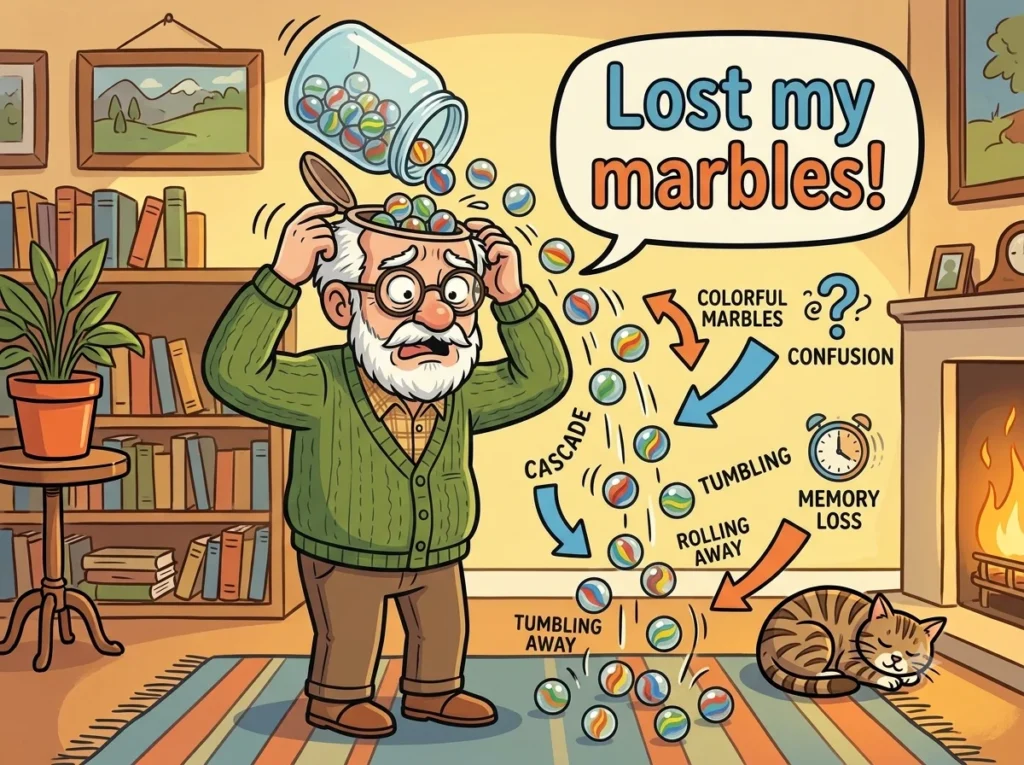
- “He wore five mismatched hats to the party—mad as a hatter!” 🧢
- “She talks to her pet rock like her therapist—absolutely mad as a hatter.”
Common error: Sometimes spelled “mad as a hater” (wrong!). It’s “hatter,” the hat maker.
Usage note: This phrase for crazy person sounds sophisticated and fun.
Historical fact: Hat makers used mercury in their work. This caused neurological damage and erratic behavior. 🧪
Lost Your Marbles 🔮
Word-by-word meaning: “Marbles” are small glass balls children play with. Losing them means missing something important.
Idiomatic meaning: Gone crazy or become confused. One of the most enduring idioms for crazy person.
Example sentences:
- “He shouted at the TV for three hours—he’s definitely lost his marbles!” 📺
- “I think I’ve lost my marbles; I just put my phone in the fridge!” 📱
Common error: Remember the plural—marbles, not “marble.”
Usage note: This funny saying about being crazy works for self-deprecation too.
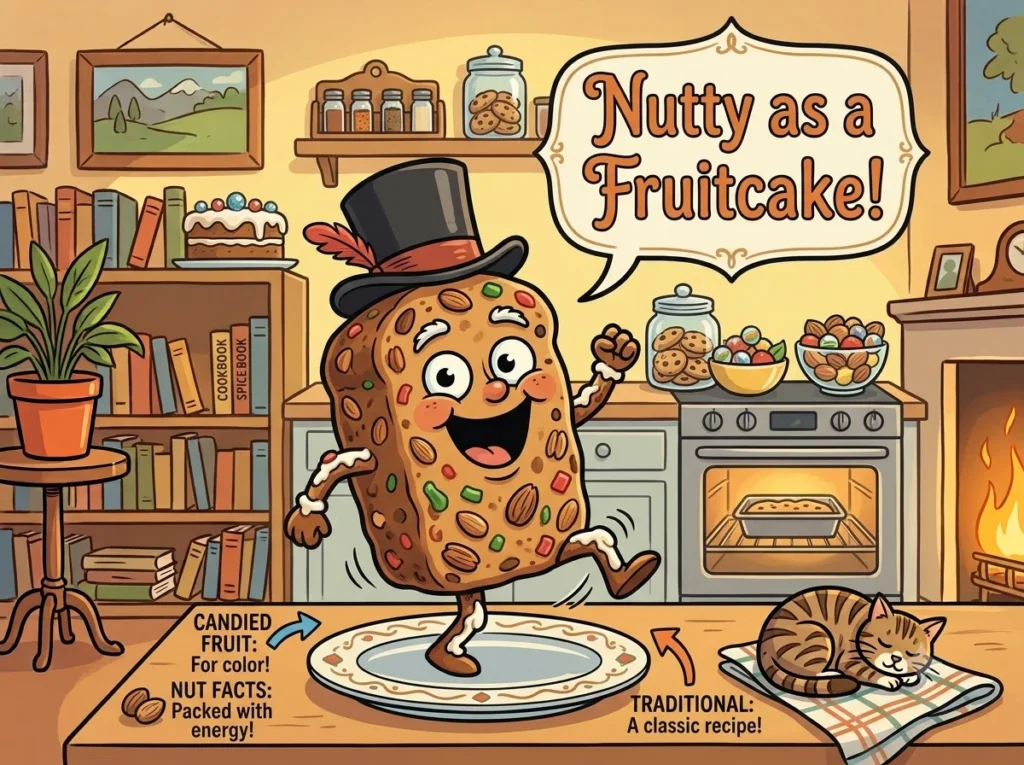
Nutty as a Fruitcake 🥜
Word-by-word meaning: “Nutty” means full of nuts; “fruitcake” is a dense cake with nuts and dried fruit.
Idiomatic meaning: Very weird or odd. Perfect for describing someone with eccentric habits.
Example sentences:
- “She puts ketchup on her ice cream—nutty as a fruitcake!” 🍦
- “That conspiracy theory? Nutty as a fruitcake.”
Common error: Don’t say “nuts like a fruitcake.” The correct idiom is as nutty as a fruitcake.
Usage note: This playful funny way to describe a crazy person is affectionate, not insulting.
A Sandwich Short of a Picnic 🥪
Word-by-word meaning: Going on a picnic but didn’t pack enough sandwiches—something’s missing.
Idiomatic meaning: Not thinking clearly. A creative funny expression for crazy.
Example sentences:
- “He brought a spoon to a football game—a sandwich short of a picnic!” 🥄
- “You think aliens are stealing your socks? You’re a sandwich short of a picnic.” 👽
Common error: Some say “a few sandwiches”—the correct version is “a sandwich short.”
Usage note: This idiom for crazy person funny is a staple of British humor.
Bats in the Belfry 🦇
Word-by-word meaning: A “belfry” is the tower where church bells hang. Bats flying inside would be chaotic.
Idiomatic meaning: Silly or strange; having weird ideas.
Example sentences:
- “He talks to trees like they’re his best friends—he’s got bats in the belfry.” 🌳
- “Don’t mind my grandma; she’s got a few bats in the belfry.”
Common error: Usually used with “got” or “has”: got bats in the belfry.
Usage note: This is a gentle nice word for crazy person that suggests harmless eccentricity.
Not Playing with a Full Deck ♠️
Word-by-word meaning: A deck of cards is missing some cards, making it impossible to play properly.
Idiomatic meaning: A little crazy or not thinking clearly.
Example sentences:
- “He wore socks on his ears to the interview—definitely not playing with a full deck.” 🧦
- “Her plan had so many holes—like someone not playing with a full deck.”
Common error: Don’t say “not playing with the full deck.” Omit “the.”
Usage note: One of the most common idioms for crazy person in English.
Bonkers 🤪
Word-by-word meaning: A playful, made-up word that sounds like “bonk” (hitting something).
Idiomatic meaning: Very crazy. Simple, direct, and fun to say!
Example sentences:
- “He’s bonkers for eating pizza with pineapple and chocolate!” 🍍
- “She went absolutely bonkers when the Wi-Fi went out.” 📶
Common error: None—it’s straightforward.
Usage note: Perhaps the most popular funny word for crazy person. Short and universally understood.
Loco 🤠
Word-by-word meaning: Spanish for “crazy.” Adopted into American English, especially in the Southwest.
Idiomatic meaning: A little crazy (in a funny way).
Example sentences:
- “She tried to paint her dog neon blue—that’s loco!” 🎨
- “That plan? Totally loco.”
Common error: Don’t use it in formal writing. It’s slang.
Usage note: This funny way to call someone crazy adds Spanish flair. Common in the US.
Gone Cuckoo 🕊️
Word-by-word meaning: “Cuckoo” is a bird whose call sounds repetitive. Also the sound of a cuckoo clock.
Idiomatic meaning: Acting very silly or strange.
Example sentences:
- “He dances alone in the rain—completely gone cuckoo!” 🌧️
- “The whole office went cuckoo when the boss announced pizza.” 🍕
Common error: Usually used as “gone cuckoo” or “go cuckoo.”
Usage note: A lighthearted crazy idioms phrase funny for temporary silliness.
Out to Lunch 🥗
Word-by-word meaning: Literally not in the office because you’re eating lunch. Figuratively, you’re “not there” mentally.
Idiomatic meaning: Not paying attention; acting odd or spaced out.
Example sentences:
- “Don’t ask him to help—he’s totally out to lunch today.” 😵
- “I asked her a question and she just stared—completely out to lunch.”
Common error: This doesn’t mean someone is actually eating lunch. It’s figurative.
Usage note: A gentle nice word for crazy person suggesting temporary distraction.
Lost in Space 🚀
Word-by-word meaning: Physically present but mentally elsewhere—as if floating through space.
Idiomatic meaning: Daydreaming or not focused.
Example sentences:
- “She stared at the wall for ten minutes—completely lost in space.” 👀
- “He’s not listening; his brain’s in space!”
Common error: Often used as “in space” rather than just “lost in space.”
Usage note: A modern funny way to describe a crazy person popular with younger speakers.
Not the Sharpest Tool in the Shed 🔧
Word-by-word meaning: Tools should be sharp to work well. A dull tool is ineffective.
Idiomatic meaning: Not very intelligent; a bit slow.
Example sentences:
- “He put milk in the closet instead of the fridge—not the sharpest tool.” 🥛
- “That answer? Definitely not the sharpest tool in the shed.”
Common error: Some say “not the brightest tool”—the correct phrase uses “sharpest.”
Usage note: A funny saying about being crazy that critiques intelligence rather than sanity.
One Brick Short of a Load 🧱
Word-by-word meaning: A truckload of bricks is incomplete if one is missing.
Idiomatic meaning: Not quite right in the head; a bit crazy.
Example sentences:
- “He sang opera to his houseplants—one brick short!” 🎵
- “That plan? Definitely one brick short of a load.”
Common error: Use “short of” (not “from”).
Usage note: This idiom for crazy person funny suggests gentle, jokey criticism.
Off the Deep End 💦
Word-by-word meaning: The deep end of a pool is dangerous. Going “off” it means jumping recklessly.
Idiomatic meaning: Acting wild, strange, or out of control.
Example sentences:
- “She quit her job to start a llama farm—she’s gone off the deep end!” 🦙
- “He went off the deep end when the restaurant got his order wrong.”
Common error: Usually “go off the deep end” (not “in”).
Usage note: This crazy idioms phrase can describe both anger and eccentricity.
Looney Tunes 🎬
Word-by-word meaning: The famous Warner Bros. cartoon series. A pun on “lunatic” (crazy person).
Idiomatic meaning: Really silly or crazy.
Example sentences:
- “He tried to jump off the garage with a towel cape—total Looney Tunes!” 🦸
- “That idea was straight out of Looney Tunes.”
Common error: Spelled “loony” sometimes. The correct is looney, after the cartoons.
Usage note: A pop culture funny expression for crazy recognizable to almost everyone.
Not All There 👤
Word-by-word meaning: Something is missing; the person isn’t completely present mentally.
Idiomatic meaning: Not fully thinking or acting normally.
Example sentences:
- “He brought a spoon to a football game—he’s not all there.” 🥄
- “That answer? Definitely not all there.”
Common error: No articles needed—just “not all there.”
Usage note: A gentle nice word for crazy person suggesting something is “missing.”
Cracked 🥚
Word-by-word meaning: Like an egg that’s cracked—damaged but not completely broken.
Idiomatic meaning: A little bit crazy.
Example sentences:
- “He talked to his sandwich like his friend—completely cracked!” 🥪
- “Her idea to paint the house purple is cracked but kind of fun.” 🏠
Common error: This can also mean “cracked up” (to laugh)—don’t confuse them.
Usage note: This idiom for crazy person funny suggests harmless eccentricity.
Crazy Like a Fox 🦊
Word-by-word meaning: Appears crazy but actually has a clever plan—like a fox’s cunning.
Idiomatic meaning: Seems crazy but is actually smart and strategic.
Example sentences:
- “He acted silly all game, then won—crazy like a fox!” 🏆
- “She fooled everyone with her crazy act—absolutely crazy like a fox.”
Common error: This is a compliment—don’t use it as an insult.
Usage note: The perfect funny saying about being crazy when you want to praise cleverness.
Bonus Expressions
Here are more short idioms for crazy person to expand your vocabulary:
| Funny Expression | Meaning |
|---|---|
| One cookie short of a dozen | A bit crazy |
| Riding the crazy train | Acting wild |
| His elevator doesn’t go to the top | Not all there |
| Lights are on but nobody’s home | Not paying attention |
| A few bees buzzing up there | Strange ideas |
| A few screws loose | Not quite right |
| Daffy | Silly or strange |
| Wacko | Wild and strange |
| Off the wall | Very unusual |
| Out of your tree | Acting very silly |
FAQ About Idioms for Crazy Person ❓
Q1: What is the most common idiom for a crazy person?
A: “Off your rocker” is the most common idiom for crazy person in English. It’s widely understood, not offensive, and has been used for generations. “Lost your marbles” and “bonkers” are also extremely common.
Q2: Are these idioms offensive to people with mental health conditions?
A: These funny idioms for crazy person are playful and not intended to be hurtful. However, use them only with friends who understand you’re joking. Avoid using them to describe anyone with genuine mental health challenges.
Q3: Can I use these idioms in professional settings?
A: Most idioms for crazy person are informal. Use them only in casual workplace conversations. In business emails, stick to literal language. Phrases like “not the sharpest tool” might be considered unprofessional.
Q4: Where did “mad as a hatter” come from?
A: This famous idiom for crazy person originated in 18th-century England. Hat makers used mercury in their work, causing neurological damage and erratic behavior. Lewis Carroll popularized it in Alice in Wonderland. 📚
Q5: What’s the difference between “crazy like a fox” and other idioms?
A: Most crazy idioms phrases describe someone acting strange. But “crazy like a fox” is unique—it’s a compliment. It means someone seems crazy but is actually very clever and strategic.
Q6: How can I practice using these idioms?
A: Try this 3-step method:
- Choose 5-10 short idioms for crazy person you like
- Write 3 example sentences for each
- Use them in conversations with friends this week
Example: “My friend wore shorts in the snow—he’s off his rocker!” The more you use them, the more natural they’ll become! 💪
Conclusion
English is full of colorful idioms for crazy person that make conversations more entertaining. Whether using funny idioms for crazy person like “nuts as a fruitcake” or common ones like “off your rocker,” these expressions add life to your language skills.
Quick Recap ✅
- Start with 5-10 idioms and practice them regularly
- Listen for them in movies, TV shows, and conversations
- Use them in context—describe real situations you encounter
- Don’t force them—let them come naturally
- Have fun with them—these are playful expressions!
Final Thought 💭
Being “crazy” (in the playful sense) often makes life interesting! Next time someone does something delightfully unexpected, you’ll have the perfect funny expression for crazy ready. “You’ve got bats in the belfry, and I love it!” 🦇

“Rose Macaulay shares the charm of idioms on LearnIdom.com, making language learning delightful, insightful, and full of wit for every reader.”