Have you ever read a book where the characters felt so real you could almost hear them speaking? Chances are, the author was a master of idioms with story elements. These colorful phrases are the secret sauce that makes dialogue pop and narratives unforgettabl
What is an idiom in a story? Simply put, it’s a phrase whose meaning isn’t literal. When a character says “it’s raining cats and dogs,” you know it’s pouring outside, not that pets are falling from the sky! Understanding what is an idiom in a story is your first step toward becoming a better writer.
In this comprehensive guide, we’ll explore famous idioms, their origins, and how to weave them naturally into your storytelling. Whether you’re writing a novel, a blog post, or just want to understand English better, these idioms for story writing will elevate your skills.
What Makes Idioms Essential for Storytelling?
Idioms are more than just fancy phrases. They are figurative language tools that make dialogue sound authentic, show character personality, create vivid imagery, and help readers connect emotionally. When you master idioms with story contexts, your writing becomes more engaging and memorable.
Communication and Conflict Idioms
Bite the Bulle
Mini-Story: Sarah had dreaded this moment for weeks. Standing outside the dentist’s office, she took a deep breath. “I have to bite the bullet,” she whispered, pushing open the door.
Literal meaning: To bite down on a bullet, used in old war surgeries without anesthesia.
Figurative meaning: To face a difficult or unpleasant situation with courage.
Example sentences:
- “I hate confrontation, but I’ll bite the bullet and talk to my boss tomorrow.”
- “The company had to bite the bullet and admit their mistake publicly.”
- “After months of procrastination, he finally decided to bite the bullet and start his business.”
Common error: Using for minor inconveniences. “I bit the bullet and ate broccoli” is too casual.
Usage note: Perfect for character growth moments when your protagonist faces their biggest fear.
Spill the Beans
Mini-Story: “I know you’re hiding something,” Maria said, eyeing her brother suspiciously. “Come on, spill the beans!” He sighed and confessed he’d eaten the last piece of cake.
Literal meaning: To knock over a container of beans.
Figurative meaning: To reveal a secret or confidential information.
Example sentences:
- “We’re planning a surprise party, so please don’t spill the beans!”
- “The journalist finally spilled the beans about the corruption scandal.”
- “She refused to spill the beans about her new boyfriend.”
Common error: Saying “spill the tea” is modern slang; “spill the beans” is the classic idiom.
Usage note: Great for creating suspense when a character’s secret is about to be exposed.
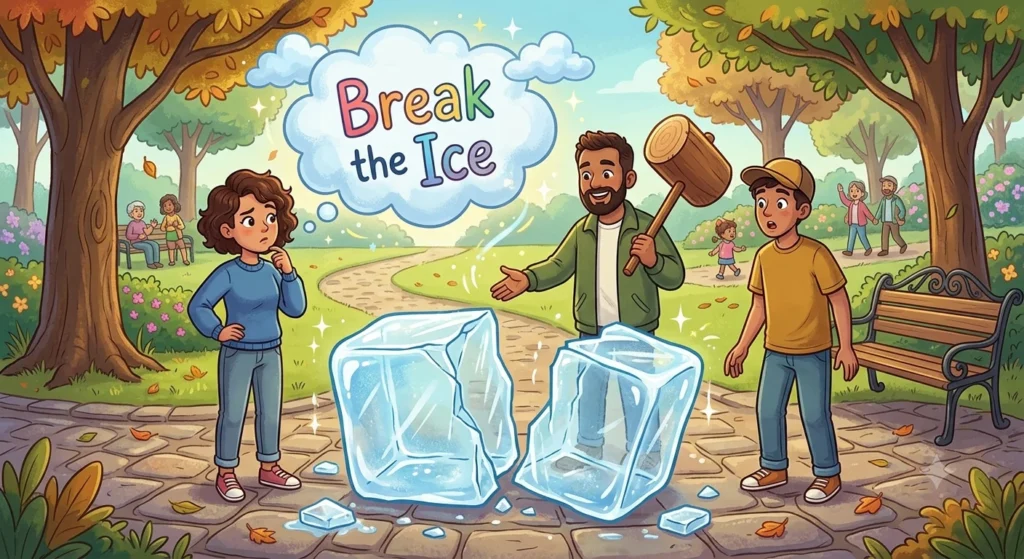
Break the Ice
Mini-Story: At the networking event, everyone stood awkwardly with their drinks. “Hi, I’m David,” he said to the stranger. “That’s a great tie!” His comment helped break the ice, and soon they were chatting comfortably.
Literal meaning: To physically break ice, like on a frozen lake.
Figurative meaning: To initiate conversation and reduce tension in a social setting.
Example sentences:
- “A good joke can break the ice at any party.”
- “The workshop started with a game to break the ice.”
- “I always bring snacks to meetings—it helps break the ice.”
Common error: Using it to mean “start a project” — its meaning is specifically social.
Usage note: Ideal for romance scenes or workplace settings where characters meet for the first time.
Hit the Nail on the Head
Mini-Story: The team was struggling with their project. “The real problem is poor communication,” said the new manager. Everyone nodded—she had hit the nail on the head.
Literal meaning: To strike a nail perfectly on its head.
Figurative meaning: To describe exactly what is causing a situation or problem.
Example sentences:
- “You hit the nail on the head when you said we need better leadership.”
- “The film critic hit the nail on the head in his review.”
- “Her analysis of the company’s issues hit the nail on the head.”
Common error: Misspelling as “hit the nail on the nose.”
Usage note: Shows a character is perceptive and intelligent—great for detective or mentor characters.
Read Between the Lines
Mini-Story: His email said he was “fine,” but she knew him too well. She could read between the lines—he was heartbroken about the breakup.
Literal meaning: To interpret the hidden meaning between written text.
Figurative meaning: To understand the unspoken or hidden message in someone’s words.
Example sentences:
- “If you read between the lines of his speech, he’s planning to resign.”
- “Her text said she was busy, but I could read between the lines—she was angry.”
- “Good readers can read between the lines and understand subtext.”
Common error: Using when meaning is already obvious.
Usage note: Perfect for mystery or thriller genres where nothing is as it seems.
Success and Failure Idioms
Hit the Jackpot
Mini-Story: Arjun had been writing for years with little success. Then one day, his blog post went viral. He had hit the jackpot—overnight, he became a famous blogger.
Literal meaning: To win the top prize on a slot machine.
Figurative meaning: To achieve great success or make a big profit unexpectedly.
Example sentences:
- “Our new product hit the jackpot in the international market.”
- “She hit the jackpot when she found that antique vase at a garage sale.”
- “Investing in cryptocurrency early was risky, but he hit the jackpot.”
Common error: Using for minor wins like finding $5 on the street.
Usage note: Creates excitement—great for success stories and turning points.
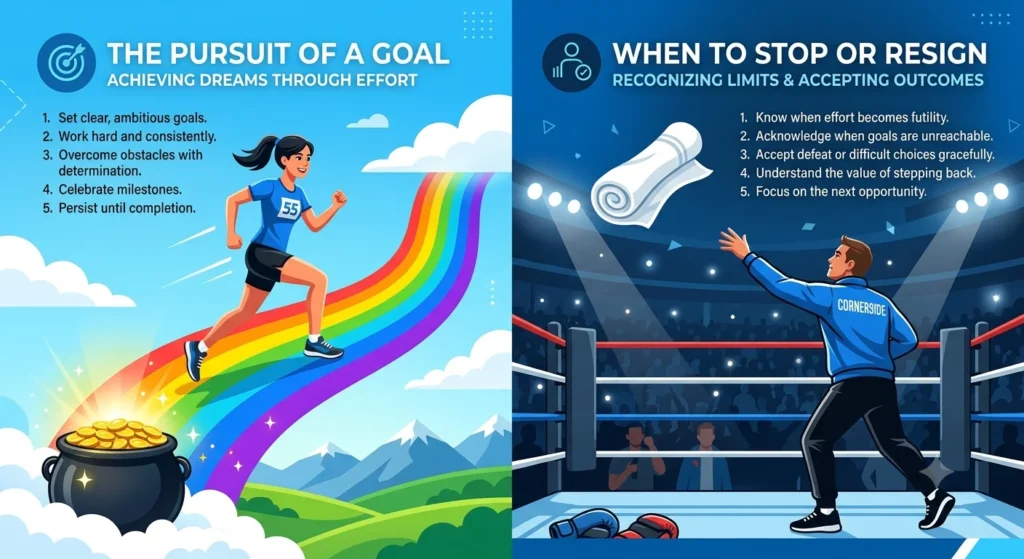
Throw in the Towel
Mini-Story: After 12 years of trying to get published, Rohan felt exhausted. “I’m done,” he told his wife. “I have to throw in the towel.” But she convinced him to try one more time—and that time, he succeeded.
Literal meaning: To throw a towel into a boxing ring to surrender.
Figurative meaning: To give up or accept defeat.
Example sentences:
- “After 50 failed attempts, he finally threw in the towel.”
- “The losing team threw in the towel in the final quarter.”
- “Don’t throw in the towel just yet—you’re so close!”
Common error: Thinking it means “to take a break” — it means permanent surrender.
Usage note: Shows character’s lowest point—perfect before a comeback.
Burn the Midnight Oil
Mini-Story: Priya had an important exam in the morning. She knew she’d have to burn the midnight oil to cover the remaining chapters. By 3 AM, her eyes were tired, but she was determined.
Literal meaning: To burn oil in lamps while working late at night.
Figurative meaning: To work or study late into the night.
Example sentences:
- “The team burned the midnight oil to meet the deadline.”
- “I have to burn the midnight oil if I want to finish this course.”
- “Successful people often burn the midnight oil early in their careers.”
Common error: Using for working hard at any time of day.
Usage note: Shows dedication—great for characters chasing big dreams.
Go the Extra Mile
Mini-Story: When the customer’s package got lost, the delivery company didn’t just apologize. They went the extra mile—they sent a replacement within 2 hours and gave a free gift. The customer was thrilled.
Literal meaning: To travel an additional mile.
Figurative meaning: To make extra effort beyond what’s required.
Example sentences:
- “Our best employees always go the extra mile for customers.”
- “If you want to stand out, you need to go the extra mile.”
- “The teacher went the extra mile to help struggling students.”
Common error: Using literally for walking distances.
Usage note: Shows character’s positive qualities—great for heroes and helpful characters.
Miss the Boat
Mini-Story: Amit had been thinking about investing in Bitcoin for years. “I’ll do it next month,” he always said. When he finally decided to invest, prices had skyrocketed. He had missed the boat.
Literal meaning: To fail to board a boat before it departs.
Figurative meaning: To miss an opportunity by being too slow.
Example sentences:
- “If you don’t apply now, you’ll miss the boat.”
- “We missed the boat on that property deal—it’s already sold.”
- “I missed the boat on learning French; now I’m too busy.”
Common error: Saying “miss the train” is also common but “miss the boat” is classic.
Usage note: Creates regret and urgency—great for life lesson stories.
Emotions and Feelings Idioms
Walk on Eggshells
Mini-Story: Since her father lost his job, Meera felt like she was walking on eggshells at home. Every word she said seemed to make him angry. She learned to stay quiet and avoid any topic that could cause conflict.
Literal meaning: To walk carefully to avoid breaking eggshells.
Figurative meaning: To be extremely cautious around someone who is easily upset.
Example sentences:
- “I always feel like I’m walking on eggshells around my strict boss.”
- “Their relationship was toxic—she constantly walked on eggshells.”
- “After his accident, we all walked on eggshells around him.”
Common error: Using for normal caution in everyday situations.
Usage note: Brilliant for showing tense relationships and drama.
Have a Heart of Gold
Mini-Story: Despite his tough exterior, Mr. Sharma had a heart of gold. He secretly paid for the education of ten underprivileged children in his neighborhood. Nobody knew about his kindness until one of the children wrote about him in a school essay.
Literal meaning: To have a heart made of gold.
Figurative meaning: To be a genuinely kind, generous, and honest person.

Example sentences:
- “My grandmother has a heart of gold—she volunteers at the shelter every day.”
- “Don’t judge him by his rough manners; he has a heart of gold.”
- “The world needs more people with hearts of gold.”
Common error: Using for someone who’s just polite.
Usage note: Shows a character’s fundamental goodness—great for lovable characters.
Cry Wolf
Mini-Story: Rahul was known for exaggerating. “The building is on fire!” he shouted, and everyone panicked—but it was just a burnt toast. He cried wolf so often that when a real emergency happened, nobody believed him.
Literal meaning: To shout “Wolf!” as a warning from the classic fable.
Figurative meaning: To raise false alarms so often that people don’t believe you when it’s real.
Example sentences:
- “Stop crying wolf about your problems—people are tired of listening.”
- “Politicians who cry wolf about every issue lose credibility.”
- “If you cry wolf too many times, nobody will help you when you need it.”
Common error: Using it to mean crying loudly.
Usage note: A cautionary tale for characters who are dishonest or dramatic.
On Cloud Nine
Mini-Story: When Ananya got the acceptance letter from her dream university, she was on cloud nine. She danced around the room, called everyone she knew, and couldn’t stop smiling for days.
Literal meaning: To be on the ninth cloud.
Figurative meaning: To be extremely happy and excited.
Example sentences:
- “I’ve been on cloud nine since I got engaged.”
- “Winning the competition put her on cloud nine.”
- “He was on cloud nine after his first book got published.”
Common error: The origin is debated but the meaning is always high happiness.
Usage note: Simple and effective way to show pure, unfiltered joy.
See Red
Mini-Story: When Vikram saw someone bullying his little brother, he saw red. Without thinking, he charged at the bully. His friends had to hold him back before he did something he’d regret.
Literal meaning: To see the color red.
Figurative meaning: To become extremely angry.
Example sentences:
- “She saw red when she discovered the betrayal.”
- “Traffic jams make me see red—I can’t control my anger.”
- “If you see red, take a deep breath before reacting.”
Common error: Using for mild irritation.
Usage note: Powerful phrase for action scenes and moments of intense anger.
Events and Situations Idioms
Once in a Blue Moon
Mini-Story: The entire family gathered together for dinner. It happened once in a blue moon because everyone was so busy, but when it did, it was magical.
Literal meaning: During a blue moon, the second full moon in a month.
Figurative meaning: Very rarely.
Example sentences:
- “My uncle visits us once in a blue moon.”
- “That kind of talent appears once in a blue moon.”
- “We eat pizza once in a blue moon—it’s a special treat.”
Common error: Using for something that happens monthly.
Usage note: Shows rarity and makes events more special.
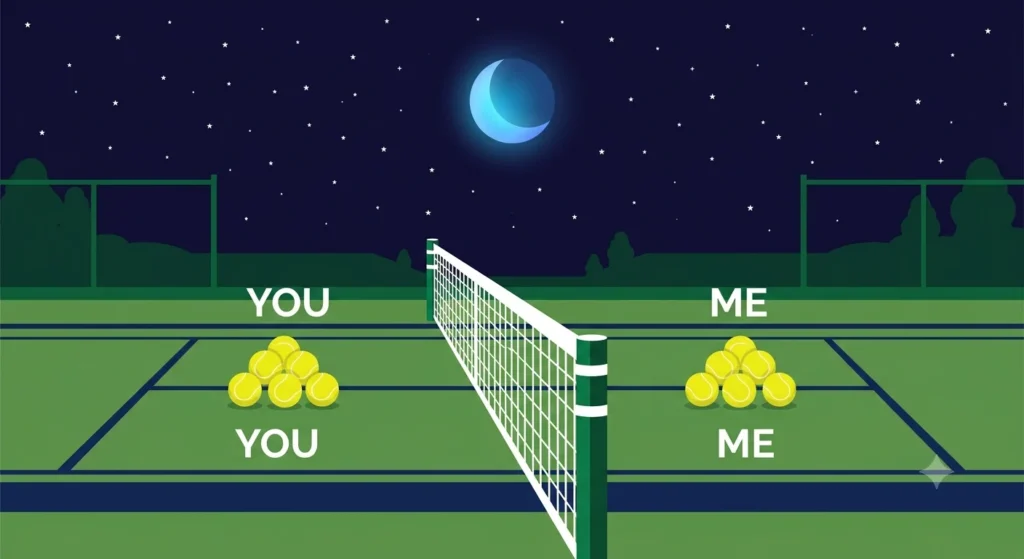
The Ball is in Your Court
Mini-Story: “I’ve made my offer,” said the CEO. “Now the ball is in your court. You decide whether you want to join us.” The candidate had to make the biggest decision of his career.
Literal meaning: The ball is on your side of the tennis court.
Figurative meaning: It’s your turn to take action or make a decision.
Example sentences:
- “I’ve done everything I can. Now the ball is in your court.”
- “She apologized, so the ball is in your court to forgive her.”
- “The company presented their proposal—now the ball is in your court.”
Common error: Saying “the ball is on your court.”
Usage note: Builds suspense when a character must make a crucial decision.
Steal Someone’s Thunder
Mini-Story: Neha had been planning to announce her promotion. But her colleague announced his engagement at the same meeting and completely stole her thunder. Everyone forgot about her news.
Literal meaning: To steal another person’s source of power, like Zeus’s thunderbolts.
Figurative meaning: To take attention away from someone else’s achievement or idea.
Example sentences:
- “He always steals my thunder in meetings with his announcements.”
- “She stole his thunder by wearing a more beautiful dress to the party.”
- “Don’t steal someone’s thunder—let them have their moment.”
Common error: Using to mean “to be louder than someone.”
Usage note: Perfect for office politics or sibling rivalry scenes.
Beat Around the Bush
Mini-Story: “Just tell me the truth,” Priya demanded. “Stop beating around the bush! I need to know if you broke my phone.” Her brother finally confessed.
Literal meaning: To hit around a bush to flush out animals.
Figurative meaning: To avoid saying what you mean, usually because it’s uncomfortable.
Example sentences:
- “Please stop beating around the bush and tell me what happened.”
- “The politician was beating around the bush and didn’t answer the question.”
- “Don’t beat around the bush—just be honest with me.”
Common error: Thinking it’s a friendly way to avoid conflict—it’s seen as frustrating.
Usage note: Creates frustration for characters and readers who just want the truth.
A Penny for Your Thoughts
Mini-Story: “You’re looking thoughtful,” his mother said. “A penny for your thoughts?” He smiled and told her he was thinking about his future plans after college.
Literal meaning: An offer to pay a penny for your thoughts.
Figurative meaning: A way to ask someone what they are thinking about when they are quiet.
Example sentences:
- “You’ve been quiet all evening. A penny for your thoughts?”
- “She stared at the ceiling. ‘A penny for your thoughts?’ he asked.”
- “I could see she was worried. ‘A penny for your thoughts,’ I said gently.”
Common error: Using in a serious situation where it might seem inappropriate.
Usage note: Excellent for deepening a character’s inner world.
How to Weave These Idioms Into Your Stories
Knowing idioms is one thing, but using them effectively is another. Your characters should speak and think in idioms that fit their personality. An elderly, wise character might use more traditional idioms like “a penny for your thoughts.” A young, energetic character might use more modern variations.
Imagine reading a short story with idioms in every sentence—it becomes distracting. Try writing a short story with 5 idioms in English to practice finding the perfect balance. This approach ensures every idiom serves a purpose.
Dialogue is the most natural place for idioms. People use figurative language to express themselves authentically. A short paragraph with idioms in dialogue can instantly bring a scene to life.
Why Idioms Transform Your Writing
Why go through all this effort to learn idioms with story contexts? Because they are the lifeblood of natural, engaging language. They help you “show, not tell.” Instead of telling the reader a character is nervous, you can show them walking on eggshells.
They make your writing more memorable and relatable. When a reader connects with an idiom, they connect with the character who used it. They are the key to making your stories resonate deeply. If you’re searching for a story with idioms for kids, these colorful phrases are also fantastic for building vocabulary in an engaging, memorable way.
Frequently Asked Questions
What are the top 10 idioms I should know for writing?
The top 10 idioms most useful for writers are: Bite the Bullet, Spill the Beans, Break the Ice, Read Between the Lines, Throw in the Towel, Hit the Nail on the Head, Walk on Eggshells, Steal Someone’s Thunder, Miss the Boat, and Beat Around the Bush.
What are some good words for a story?
While idioms are phrases, some good words for a story to pair with them are strong verbs like hissed, snapped, murmured, exclaimed and vivid adjectives like unexpected, cautious, defeated, radiant. Using these strong words with idioms creates powerful sentences.
What is the idiom story of my life?
The phrase “idiom story of my life” isn’t a specific idiom, but it’s an idiomatic expression used to describe a situation typical of one’s own personal experiences. For example, if you’re always missing the bus, you might say “Missing the bus is the story of my life!”
Are idioms always appropriate for formal writing?
Generally, no. While they are fantastic for storytelling, dialogue, and informal writing, they are often best avoided in highly formal or academic texts where literal and precise language is required.
Conclusion
Mastering idioms with story isn’t just about learning a list of phrases. It’s about unlocking a new dimension of your creativity. It’s about giving your characters a voice that is rich, colorful, and undeniably human.
Now it’s your turn! Try writing a short story with idioms in English. Take this guide, pick your favorites, and weave them into a narrative. Challenge yourself to not just use them, but to use them well.
Don’t be afraid to make mistakes—it’s all part of the learning process. The key is to experiment and have fun with it. Your next great story is just a few idioms away!

“Elizabeth Bowen shares timeless idioms and language wisdom on LearnIdom.com, making learning phrases fun, easy, and unforgettable.”