We all have those mornings. You wake up late, spill coffee on your favorite shirt, and then realize your phone battery is dead. In moments like these, saying “this is bad” feels completely inadequate.
That’s where learning idioms for when things go wrong becomes your secret weapon. These colorful expressions don’t just expand your vocabulary—they help you connect with native speakers on an emotional level. Whether you need an idiom for doing something wrong at work or a funny way to describe a bad situation to friends, this guide has you covered.
Research shows that using idioms makes you sound 40% more fluent in everyday conversations. So let’s dive into these 20 essential phrases that will transform your English from textbook-perfect to naturally native.
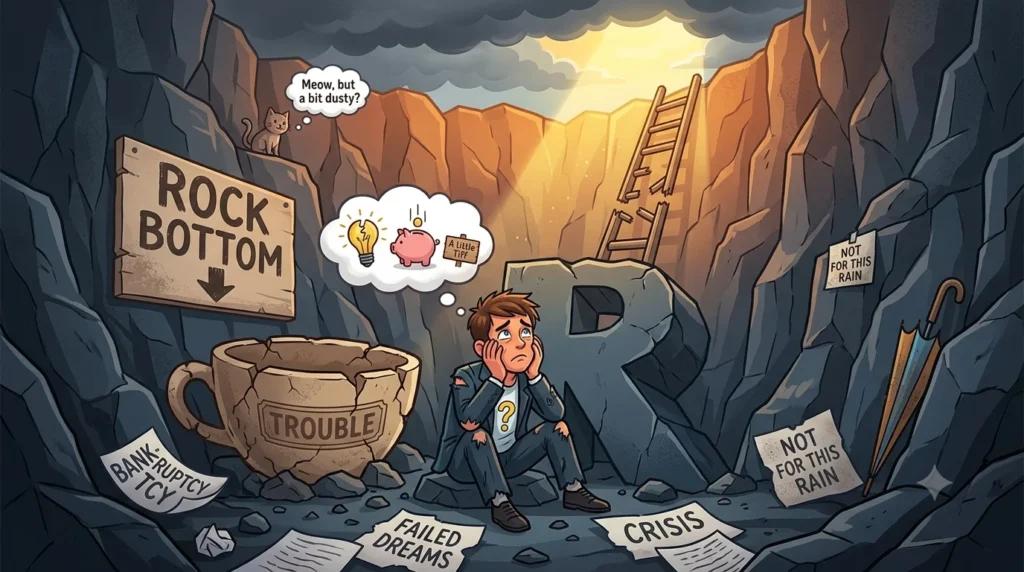
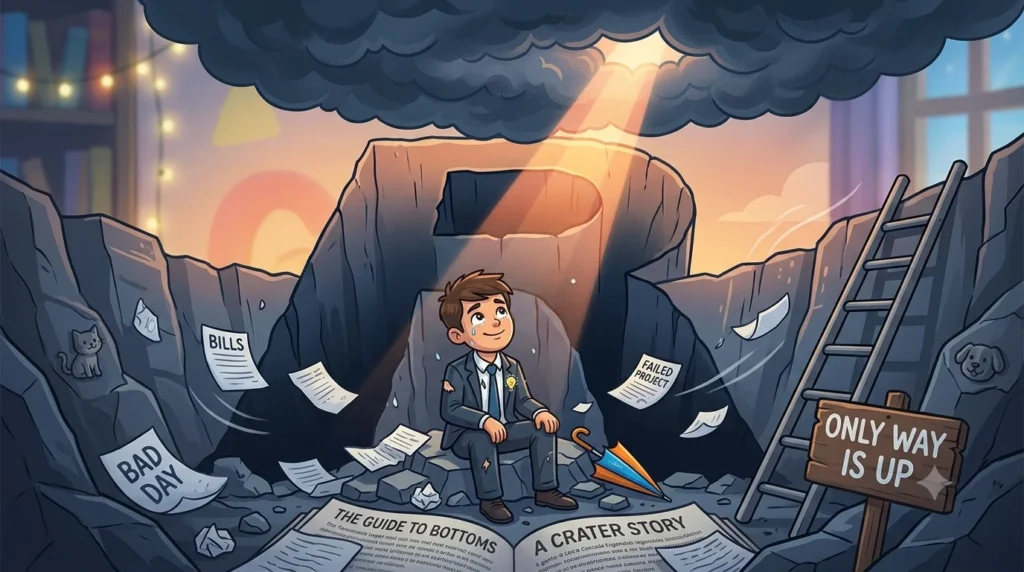
HIT ROCK BOTTOM
Word-by-Word Meaning:
- Hit: To strike or reach
- Rock Bottom: The lowest possible ground level
Idiomatic Meaning:
This is the ultimate expression for reaching the lowest point possible. When you’ve hit rock bottom, things literally cannot get any worse. It’s often used as a turning point—the moment when recovery becomes possible because there’s nowhere to go but up.
Real-Life Example:
“I lost my job, my girlfriend left me, and my car broke down all in one week. I honestly felt like I’d hit rock bottom.”
Common Error:
❌ “I hit the rock bottom”
✅ “I hit rock bottom” (No article needed)
Smart Usage Tip:
Use this for dramatic effect. It works perfectly for financial crises, emotional breakdowns, or professional failures. Interestingly, it’s also used as an idiom for bad person behavior—like when someone’s moral choices reach their lowest point.
GO UP IN SMOKE
Word-by-Word Meaning:
- Go Up: To rise or ascend
- Smoke: The visible vapor from burning
Idiomatic Meaning:
When your plans, savings, or hard work go up in smoke, they vanish completely. This is a perfect idiom related to problem where your efforts produce zero results. It implies sudden, complete destruction.
Real-Life Example:
“I spent six months building that business, and it all went up in smoke when my partner backed out.”
Common Error:
❌ “My plans went up in the smoke”
✅ “My plans went up in smoke”
Smart Usage Tip:
This works best for dramatic failures. It’s less about slow decline and more about watching everything disappear in an instant.
BITE OFF MORE THAN YOU CAN CHEW
Word-by-Word Meaning:
- Bite Off: To sever with teeth
- Chew: To grind food in your mouth
Idiomatic Meaning:
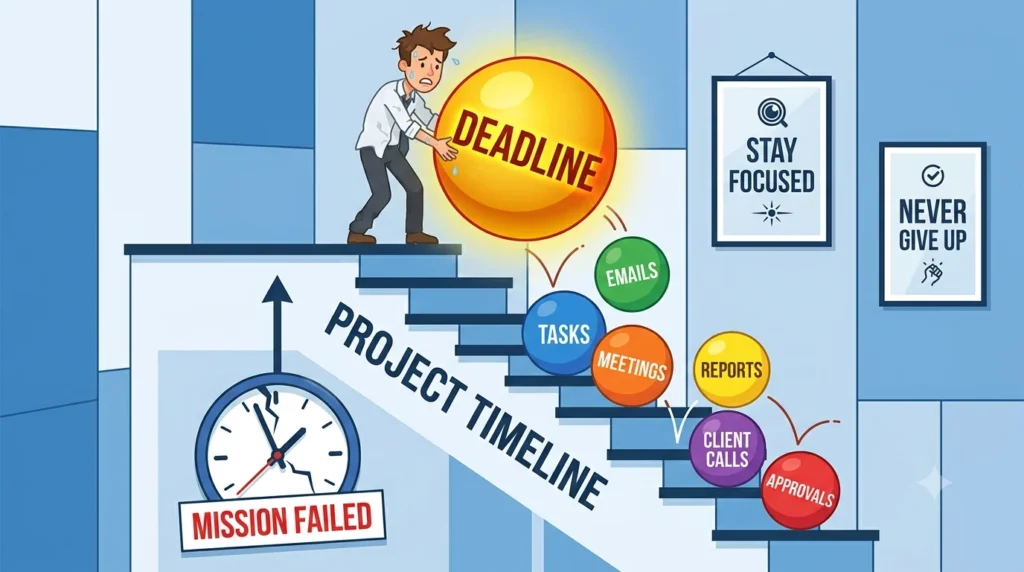
The classic idiom for doing something wrong by overcommitting. When you take on too many responsibilities, you’re literally trying to put more in your mouth than you can handle.
Real-Life Example:
“I agreed to organize the conference, manage the team, AND handle the presentation. I definitely bit off more than I could chew.”
Common Error:
❌ “I bite more than I can chew”
✅ “I bit off more than I can chew” (The ‘off’ is essential)
Smart Usage Tip:
Highly versatile—use it at work, in personal projects, or even when planning vacations. It’s universally understood across all English-speaking countries.
GO FROM BAD TO WORSE
Word-by-Word Meaning:
- Bad: Negative or poor
- Worse: The comparative form
Idiomatic Meaning:
This literally describes the going from bad to worse idiom meaning—a situation that’s actively deteriorating. It’s the English equivalent of “it never rains but it pours.”
Real-Life Example:
“First, I missed the bus. Then it started raining. And then I realized I forgot my wallet. Things definitely went from bad to worse.”
Common Error:
❌ “It goes bad to worst”
✅ “It goes from bad to worse” (Use ‘worse’ for comparison)
Smart Usage Tip:
This is one of the most common phrases for when things go wrong. It works in both casual chats and formal reports.
THROW A WRENCH IN THE WORKS
Word-by-Word Meaning:
- Wrench: A mechanical tool
- Works: The inner mechanism of machinery
Idiomatic Meaning:
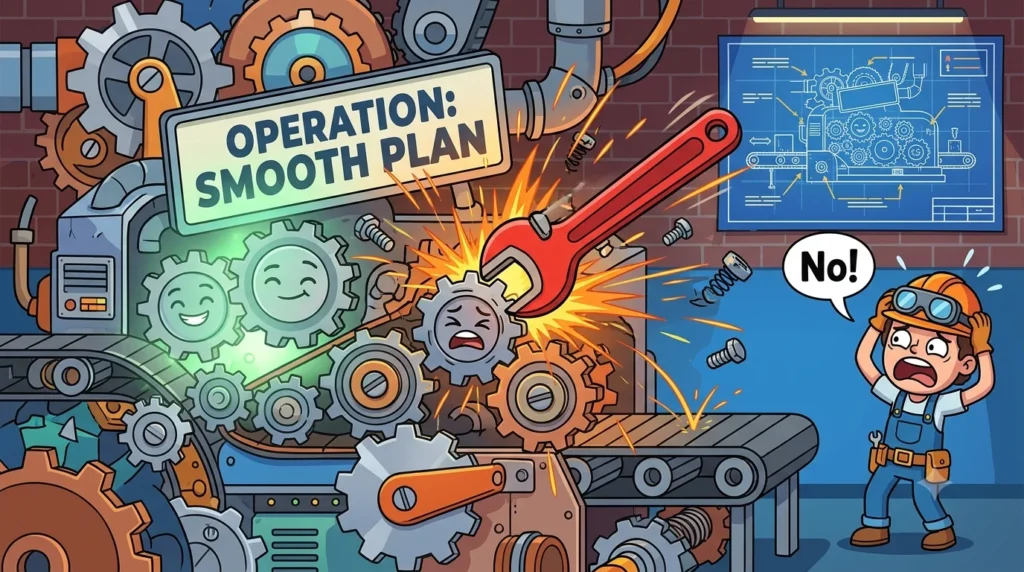
To suddenly disrupt a smooth process. This idiom related to problem creation is highly visual—imagine a tool jamming the gears of a well-oiled machine.
Real-Life Example:
“Everything was perfect for the wedding until the caterer canceled. That really threw a wrench in the works.”
Common Error:
❌ “Throw a monkey in the works”
✅ “Throw a wrench in the works” (In British English, they say ‘spanner’)
Smart Usage Tip:
Perfect for describing unexpected obstacles—whether in business projects, travel plans, or personal arrangements.
COME APART AT THE SEAMS
Word-by-Word Meaning:
- Come Apart: To break or separate
- Seams: The stitched lines in fabric
Idiomatic Meaning:
When something or someone comes apart at the seams, they’re falling apart completely. It’s a powerful metaphor for something bad happening on a large scale.
Real-Life Example:
“The team was so stressed that they started coming apart at the seams right before the product launch.”
Common Error:
❌ “It came apart at the seam”
✅ “It came apart at the seams” (Always plural)
Smart Usage Tip:
Use this for organizational failures, emotional breakdowns, or project collapses.
IN HOT WATER
Word-by-Word Meaning:
- Hot: High temperature
- Water: The liquid
Idiomatic Meaning:
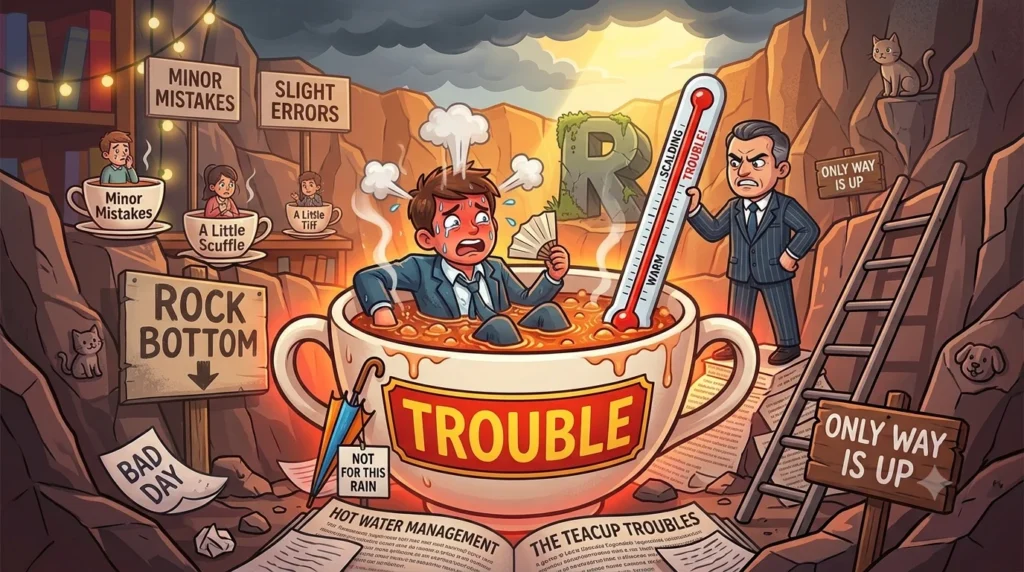
The ultimate idiom for ‘in trouble’. When you’re in hot water, you’ve done something wrong and someone is upset about it. The heat represents pressure and discomfort.
Real-Life Example:
“I forgot to submit the report on time. Now I’m in hot water with my manager.”
Common Error:
❌ “In the hot water”
✅ “In hot water”
Smart Usage Tip:
Usually used with authority figures—bosses, parents, teachers. It’s informal but acceptable in most professional settings.
UP THE CREEK WITHOUT A PADDLE
Word-by-Word Meaning:
- Up the Creek: Moving along a narrow waterway
- Without a Paddle: Having no tool to navigate
Idiomatic Meaning:
Being stuck in a difficult situation with no obvious solution. This is often used as a funny idiom for when things go wrong funny because it paints such a vivid picture of helplessness.
Real-Life Example:
“If we miss this train, we’ll be up the creek without a paddle in a foreign city with no money.”
Common Error:
❌ “Up the river without a paddle”
✅ “Up the creek without a paddle”
Smart Usage Tip:
Great for lightening the mood while acknowledging a serious problem.
BACK TO THE WALL
Word-by-Word Meaning:
- Back: The rear body part
- Wall: A solid vertical structure
Idiomatic Meaning:
When your back is to the wall, you have no room to retreat. It’s a defensive idiom for bad situation that forces you to fight or find a creative solution.
Real-Life Example:
“With our back to the wall, we had to accept the competitor’s merger offer.”
Common Error:
❌ “Back against the wall”
✅ “Back to the wall” (Both exist, but this is standard)
Smart Usage Tip:
Perfect for business negotiations, sports commentary, or any high-stakes scenario.
A SLIPPERY SLOPE
Word-by-Word Meaning:
- Slippery: Difficult to hold
- Slope: An incline
Idiomatic Meaning:
A course of action that seems harmless but leads to disaster. It’s a warning idiom related to problem prevention.
Real-Life Example:
“Missing one gym session seems fine, but it’s a slippery slope to quitting completely.”
Common Error:
❌ “A slipper slope”
✅ “A slippery slope”
Smart Usage Tip:
Often used in arguments to warn people about small compromises leading to big consequences.
DOWN THE DRAIN
Word-by-Word Meaning:
- Down: Toward a lower position
- Drain: A pipe carrying waste water
Idiomatic Meaning:
When effort, time, or money goes down the drain, it’s completely wasted. This is a sad but common idiom for bad situation involving loss.
Real-Life Example:
“All those late nights at the office went down the drain when the project was canceled.”
Common Error:
❌ “Down the sink”
✅ “Down the drain”
Smart Usage Tip:
Very common in financial or time management contexts. It expresses frustration effectively.
THE LAST STRAW
Word-by-Word Meaning:
- Last: Final
- Straw: A thin dried stalk or drinking tube
Idiomatic Meaning:
The final annoyance that makes a situation unbearable. This idiom related to problem escalation comes from the proverb “the last straw that breaks the camel’s back.”
Real-Life Example:
“He was always late, but missing my birthday dinner was the last straw. I ended the friendship.”
Common Error:
❌ “The final straw” (Accepted but less common)
✅ “The last straw”
Smart Usage Tip:
Use this to explain why you’ve finally reached your limit.
IN A FIX
Word-by-Word Meaning:
- In: Inside
- Fix: A difficult situation
Idiomatic Meaning:
To be stuck in an awkward or challenging spot. It’s a gentle idiom for ‘in trouble’ without implying serious consequences.
Real-Life Example:
“I promised to help two friends move on the same day. I’m in a fix!”
Common Error:
❌ “In a fixing”
✅ “In a fix”
Smart Usage Tip:
Perfect for everyday dilemmas—not serious crises.
BOIL OVER
Word-by-Word Meaning:
- Boil: To heat until bubbling
- Over: Beyond capacity
Idiomatic Meaning:
When emotions or tensions reach a breaking point and explode. It’s a powerful metaphor for something bad happening emotionally.
Real-Life Example:
“Tensions in the office boiled over when the boss announced layoffs without warning.”
Common Error:
❌ “Boiled up”
✅ “Boiled over”
Smart Usage Tip:
Excellent for describing workplace conflicts, family arguments, or political situations.
JUMP OUT OF THE FRYING PAN INTO THE FIRE
Word-by-Word Meaning:
- Jump: To move suddenly
- Frying Pan: Cooking vessel
- Fire: Flames
Idiomatic Meaning:
Escaping one bad situation only to land in a worse one. This classic proverb is perfect for describing poor decisions.
Real-Life Example:
“I quit my stressful job for a ‘relaxed’ startup, but they’re even more demanding. I jumped out of the frying pan into the fire.”
Common Error:
❌ “Jump from the pan to the fire”
✅ “Jump out of the frying pan into the fire”
Smart Usage Tip:
A bit long, but it carries weight and wisdom.
IN THE DOGHOUSE
Word-by-Word Meaning:
- Doghouse: A small shelter for canines
Idiomatic Meaning:
Being in disgrace or disfavor with someone. This is a light-hearted idiom for when things go wrong in relationships.
Real-Life Example:
“I forgot our anniversary dinner. I’m definitely in the doghouse with my wife.”
Common Error:
❌ “In the dog house”
✅ “In the doghouse” (Usually one word)
Smart Usage Tip:
Mostly used for minor relationship troubles.
DROP THE BALL
Word-by-Word Meaning:
- Drop: To let fall
- Ball: A round object
Idiomatic Meaning:
The perfect idiom for doing something wrong through negligence or forgetfulness.
Real-Life Example:
“I really dropped the ball by forgetting to confirm the hotel booking.”
Common Error:
⚠️ Don’t confuse it with literal ball-dropping games
Smart Usage Tip:
Extremely common in professional environments.
BARKING UP THE WRONG TREE
Word-by-Word Meaning:
- Barking: Making dog sounds
- Wrong Tree: Incorrect plant
Idiomatic Meaning:
Pursuing a false lead or blaming the wrong person. An excellent idiom related to problem solving.
Real-Life Example:
“If you think I stole your pen, you’re barking up the wrong tree. I was at home all day.”
Common Error:
❌ “Barking up the wrong track”
✅ “Barking up the wrong tree”
Smart Usage Tip:
Highly visual and memorable—great for everyday conversation.
HAVE YOUR WORK CUT OUT FOR YOU
Word-by-Word Meaning:
- Work: Task or job
- Cut Out: Prepared or assigned
Idiomatic Meaning:
Facing a very difficult task ahead. This describes a bad situation in terms of workload.
Real-Life Example:
“With only two hours to clean this huge house, you’ve certainly got your work cut out for you.”
Common Error:
❌ “Have your work cut”
✅ “Have your work cut out for you”
Smart Usage Tip:
Encouraging yet realistic—shows you recognize the challenge.
BE SNOWED UNDER
Word-by-Word Meaning:
- Snowed: Covered with snow
- Under: Beneath
Idiomatic Meaning:
Overwhelmed with too many problems or tasks. This is a modern idiom for ‘in trouble’ related to busyness.
Real-Life Example:
“I can’t join the team lunch. I’m completely snowed under with reports.”
Common Error:
❌ “Snowed in” (means trapped by weather)
✅ “Snowed under”
Smart Usage Tip:
Very common in office environments globally.
Reference Table
| Intensity Level | Best Idioms to Use |
|---|---|
| Mild Issues | Drop the Ball, In a Fix, In the Doghouse |
| Moderate Trouble | In Hot Water, Up the Creek, Throw a Wrench |
| Severe Crises | Hit Rock Bottom, Go Up in Smoke, Boil Over |
Frequently Asked Questions
1. What is the idiom for doing something wrong?
The most common is “drop the ball,” meaning you failed to meet expectations. Another excellent option is “bite off more than you can chew” when you took on too much.
2. What is an idiom for “in trouble”?
“In hot water” is the universal choice. You can also say “in a fix” for mild trouble or “back to the wall” for serious trouble.
3. What is the idiom for a bad situation?
“Hit rock bottom” describes the worst possible situation. “Going from bad to worse” describes a situation actively deteriorating.
4. Is there a funny idiom for when things go wrong?
Yes! “Up the creek without a paddle” is both humorous and vivid. “In the doghouse” is also funny for relationship troubles.
5. What’s the meaning of “going from bad to worse”?
It means a situation that was already negative is becoming even more negative. It’s a classic way to describe cascading failures.
6. What idiom means “everything is falling apart”?
“Coming apart at the seams” perfectly describes something falling apart completely.
7. What’s a professional idiom for making a mistake?
“Drop the ball” is widely accepted in workplaces. “Have your work cut out for you” is also professional for describing difficult tasks.
8. What idiom means “things are getting worse”?
“Go from bad to worse” is the direct answer. “Boil over” also works for tensions escalating.
9. What’s an idiom for a problem creator?
“Throwing a wrench in the works” describes someone causing problems. “Barking up the wrong tree” describes someone blaming incorrectly.
10. Can I use these idioms in IELTS or TOEFL?
Absolutely! Using idioms naturally can boost your speaking and writing scores significantly.
Conclusion
Learning these 20 idioms for when things go wrong transforms your English from functional to fluent. The next time you face a bad situation or make a mistake, you’ll have the perfect phrase ready.
Remember: even native speakers use these daily. Practice them in conversation, and soon they’ll become second nature. When life throws challenges your way, you’ll have the perfect language to describe every twist and turn.

“Rose Macaulay shares the charm of idioms on LearnIdom.com, making language learning delightful, insightful, and full of wit for every reader.”