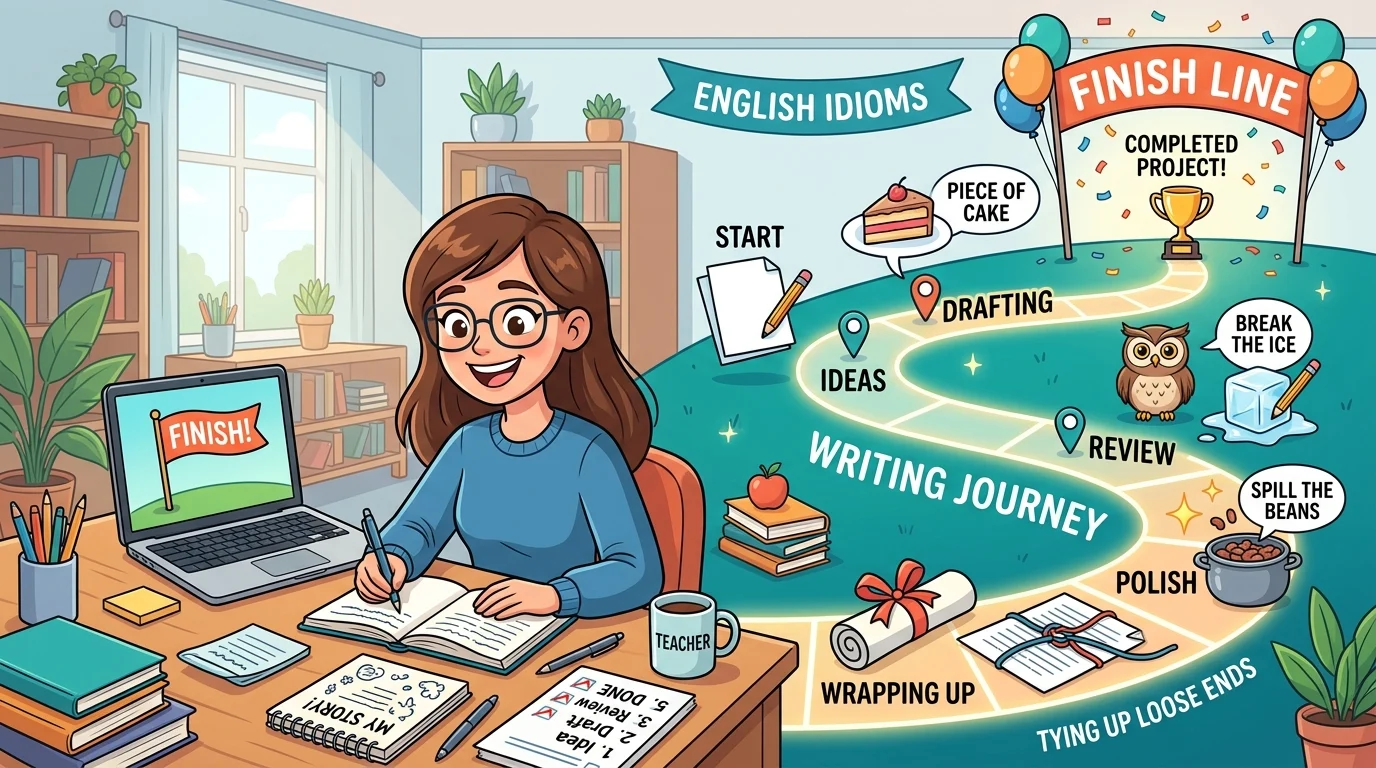
If you want your English to sound more natural, writing with idioms is a great skill to develop. Expressions such as wrap things up, call it a day, and tie up loose ends can make simple sentences more lively.
Imagine finishing a difficult assignment after hours of work. Instead of simply saying, “I finished it,” you could say, “I finally got it over the line.” The right expression gives your writing more personality while helping you communicate the exact kind of ending you mean.
What Is the Idiom for Completing a Task?
There is no single idiom for every situation. See something through, wrap things up, get something over the line, and tie up loose ends are excellent expressions for talking about completing a task.
- See something through — continue until it is finished.
- Wrap things up — bring an activity to an end.
- Get something over the line — successfully complete something difficult.
- Tie up loose ends — deal with the remaining details.
The best choice depends on whether you want to emphasize completion, persistence, final details, or success.
These are some of the most useful expressions for completing tasks, ending activities, reaching goals, and bringing situations to a close.
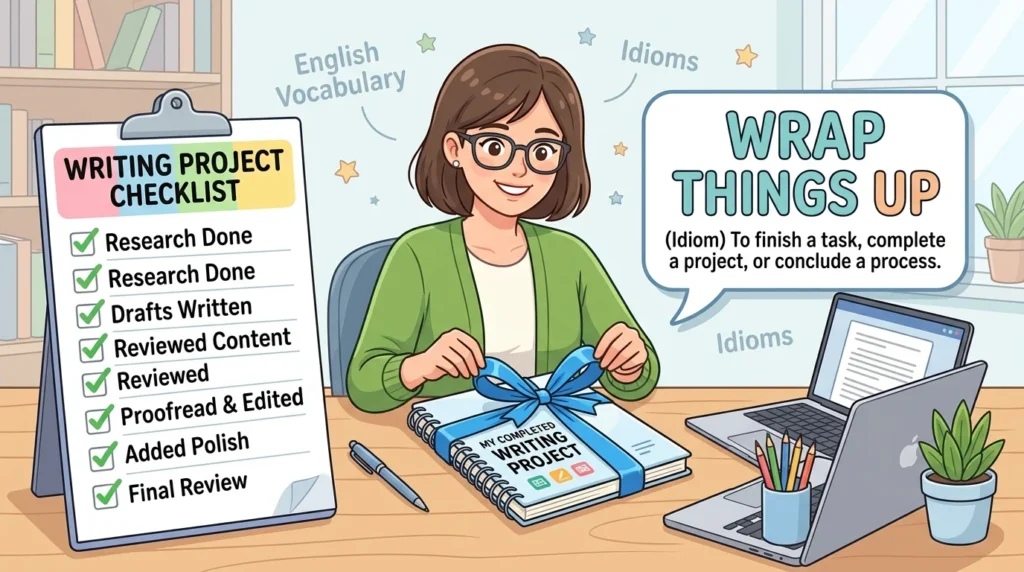
Wrap Things Up
Meaning: To finish an activity or deal with the remaining work.
Example:
We only have a few points left, so let’s wrap things up.
Common error: Don’t assume it means literally wrapping an object.
Usage note: This is one of the most natural idioms for finishing something in English and works especially well in conversations and workplace situations.
Call It a Day
Meaning: To stop working or participating in an activity for the day.

Example:
We’ve completed most of the project. Let’s call it a day.
Common error: It does not necessarily mean the entire project is finished.
Usage note: Use it when you are stopping work, especially after making enough progress.
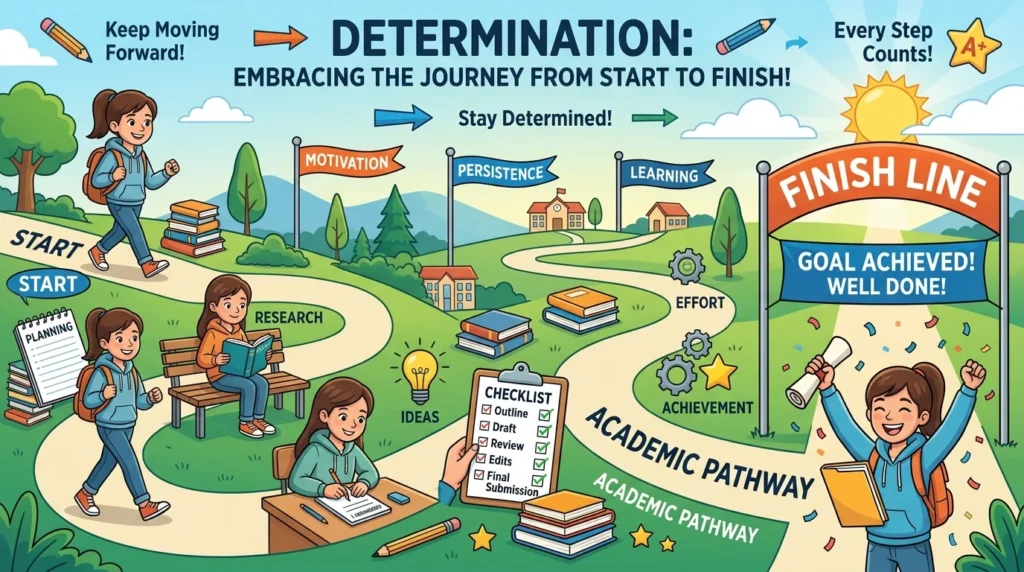
See Something Through
Meaning: To continue with something until it is completely finished.
Example:
I started this course, and I’m determined to see it through.
Common error: Don’t use it when you only mean starting or attempting something.
Usage note: This expression highlights determination and commitment.
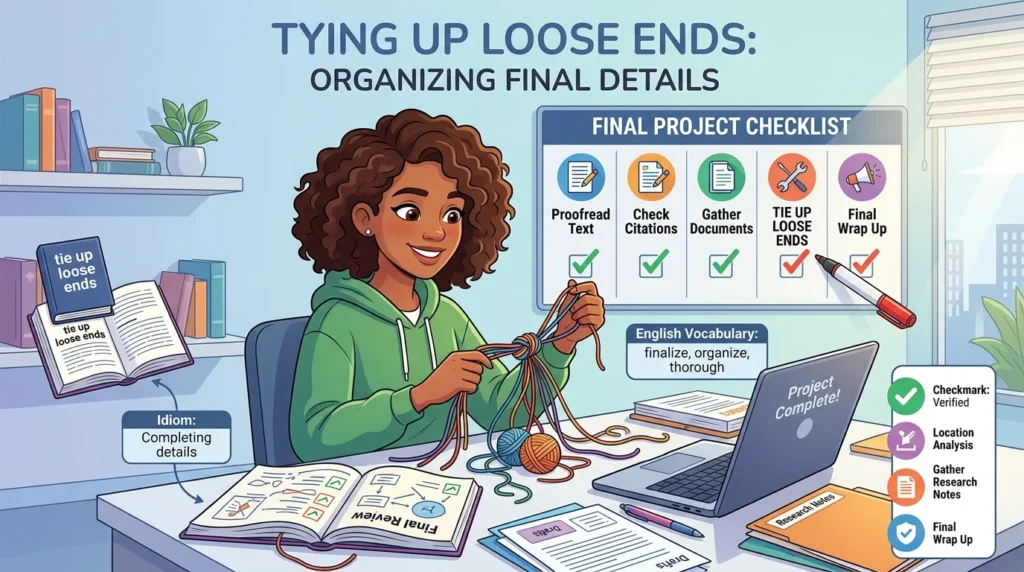
Get Something Over the Line
Meaning: To successfully complete something, especially after difficulty or delay.
Example:
A final meeting helped us get the project over the line.
Common error: It is not normally used for tiny everyday tasks.
Usage note: This is useful when completion required effort or teamwork.
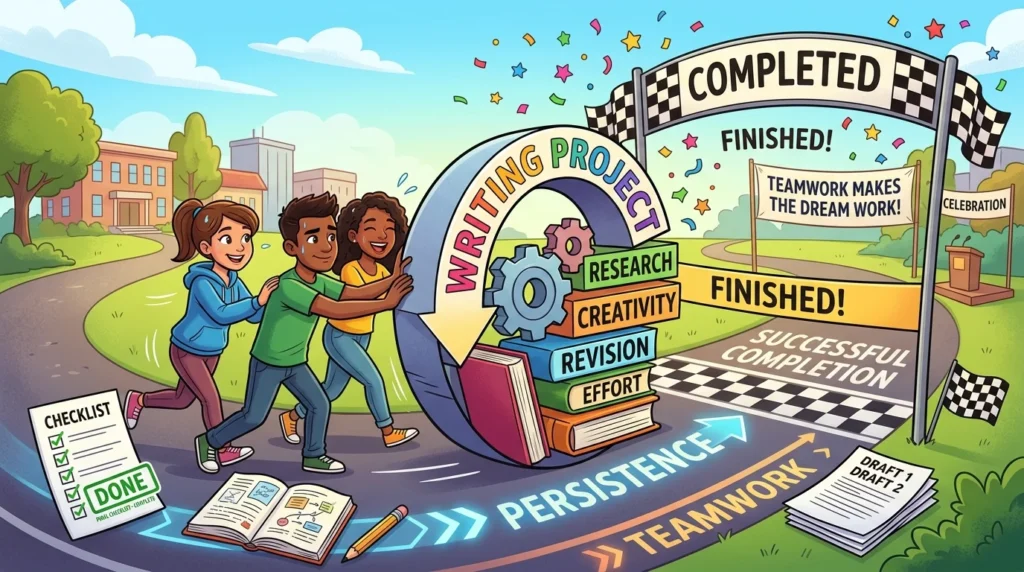
Tie Up Loose Ends
Meaning: To finish small remaining tasks or solve final details.
Example:
I need another hour to tie up a few loose ends.
Common error: It usually refers to several unfinished details rather than the main task.
Usage note: This is excellent for projects, work, plans, and stories.
Put the Finishing Touches On
Meaning: To make the final improvements before something is completed.
Example:
I’m putting the finishing touches on my presentation.
Common error: Don’t use it when nothing remains to be improved.
Usage note: Perfect for creative work, presentations, articles, designs, and projects.
Bring Something to an End
Meaning: To cause an activity, event, or situation to finish.
Example:
The host brought the discussion to an end.
Common error: It can sound too formal for very casual conversation.
Usage note: A flexible expression suitable for both speaking and writing.
Come to a Close
Meaning: To reach the end.
Example:
The school year is coming to a close.
Common error: It is generally used for events, periods, or situations rather than small tasks.
Usage note: A natural choice when describing something gradually ending.
Draw to a Close
Meaning: To gradually reach an ending.
Example:
The conference drew to a close in the afternoon.
Common error: Don’t use it as a direct replacement for “I finished my homework.”
Usage note: It sounds polished and works particularly well in descriptive writing.
Round Things Off
Meaning: To finish something in a suitable or satisfying way.
Example:
We had a short discussion to round things off.
Common error: It doesn’t mean physically making something round.
Usage note: Use it when describing a pleasant or appropriate final part.
Call It Quits
Meaning: To decide to stop doing something or end a situation.
Example:
After several unsuccessful attempts, they decided to call it quits.
Common error: Don’t confuse it with simply taking a short break.
Usage note: It can also be used when people decide to end a relationship or partnership.
Close the Book on Something
Meaning: To consider something officially finished or no longer worth continuing.
Example:
The company decided to close the book on the unsuccessful project.
Common error: It doesn’t literally require a book.
Usage note: This expression works well for chapters, investigations, disputes, projects, and past situations.
Get to the Finish Line
Meaning: To successfully reach the final stage of something.
Example:
We’ve worked hard, and we’re finally getting to the finish line.
Common error: Don’t use it for every simple completed action.
Usage note: It is especially effective when describing a difficult project or long process.
Make It to the End
Meaning: To successfully continue until the final point.
Example:
The book was challenging, but I made it to the end.
Common error: It is different from “finish early”; it emphasizes reaching the final stage.
Usage note: This is a simple, natural expression for stories, journeys, courses, and difficult activities.
Put an End to Something
Meaning: To stop something completely.
Example:
The new rules helped put an end to the confusion.
Common error: It can sound strong when used for ordinary tasks.
Usage note: Best when something unwanted or ongoing needs to stop.
Bring the Curtain Down
Meaning: To bring an event, period, or activity to an end.
Example:
The final performance brought the curtain down on the festival.
Common error: This is more figurative than everyday “finish.”
Usage note: It works particularly well in creative, dramatic, and journalistic writing.
Put the Past Behind You
Meaning: To accept that something has ended and move forward.
Example:
After the disagreement, they decided to put the past behind them.
Common error: This does not mean completing a physical task.
Usage note: It is useful when discussing personal experiences, past problems, or ending a relationship.
Go Your Separate Ways
Meaning: To stop being together or continue in different directions.
Example:
After years of working together, the two partners decided to go their separate ways.
Common error: Don’t use it when two people are simply walking in different directions.
Usage note: It can describe friendships, partnerships, relationships, or groups.
Leave No Stone Unturned
Meaning: To make every possible effort to find an answer or achieve an outcome.
Example:
We left no stone unturned while preparing for the final presentation.
Common error: It does not literally mean completing something.
Usage note: It is useful when emphasizing thorough effort before reaching completion.
Finish With a Flourish
Meaning: To end something in an impressive, confident, or memorable way.
Example:
The speaker finished with a flourish that the audience remembered.
Common error: Don’t use it when an ordinary ending is meant.
Usage note: This expression is especially useful in creative writing, speeches, performances, and storytelling.
Idioms for Finishing Something Funny
Sometimes you need a playful idiom for finishing something rather than a serious expression. Casual phrases can make your writing more entertaining.
Try:
- Call it a day — when you’re humorously ready to stop.
- That’s a wrap — a casual way to announce that something is finished.
- Get to the finish line — useful for a difficult or exhausting task.
- Wrap things up — friendly and conversational.
- Call it quits — useful when joking about giving up.
For example:
After three coffees and five hours of homework, I decided it was time to call it a day.
The expression makes the sentence sound more conversational without making it difficult to understand.
Phrases for the End of Something
Different situations call for different phrases. Choosing the right one makes writing with idioms much more effective.
| Situation | Best expression |
|---|---|
| Finish a discussion | Wrap things up |
| Stop working for the day | Call it a day |
| Complete a difficult project | Get it over the line |
| Finish remaining details | Tie up loose ends |
| Add final improvements | Put the finishing touches on |
| End an event | Come to a close |
| Gradually reach an ending | Draw to a close |
| Stop something completely | Put an end to it |
| End a partnership | Go your separate ways |
| Finish impressively | Finish with a flourish |
Common Phrases Using “Finish”
If you specifically want phrases using the word finish, these are useful:
- Finish up — complete the remaining part.
- Finish off — complete the final part.
- Finish with — reach the end of something.
- Finish on a high note — end positively.
- Finish strong — end with energy or a strong performance.
For example:
I need to finish up my report.
Let’s finish off the last section.
The event finished on a high note.
These are common expressions, although not all of them are traditional idioms. In everyday English, knowing both idioms and common phrases gives you more flexibility.
To Complete Something: Synonyms and Alternatives
If you’re searching for a to complete something synonym, the best option depends on your context.
| Synonym | Best used for |
|---|---|
| Finish | Everyday tasks |
| Complete | Formal or general writing |
| Accomplish | Goals and achievements |
| Finalize | Plans, documents, decisions |
| Conclude | Discussions, events, arguments |
| Fulfill | Duties, promises, requirements |
| Wrap up | Casual work and activities |
| Carry out | Tasks, plans, instructions |
For example, you might complete a form, accomplish a goal, finalize a report, or conclude a meeting.
How Do You Say “Done” in a Cool Way?
In casual English, you can replace a plain “done” with:
- That’s a wrap!
- All wrapped up!
- Job done!
- All set!
- We’re good to go!
- Finished and sorted!
“That’s a wrap” is particularly useful when an activity, project, recording session, or event has finished.
However, choose the expression based on your audience. A casual phrase may not be suitable for a formal academic paper.
Idioms for Ending a Relationship
English also has expressions for relationships or partnerships that have reached their end.
Call it quits means deciding to stop a relationship or activity.
Go your separate ways means two people decide to continue their lives independently.
Put the past behind you focuses on accepting an ending and moving forward.
For example:
- After trying to solve their problems, they decided to call it quits.
- Eventually, the two partners went their separate ways.
- She was ready to put the past behind her.
These expressions should be used thoughtfully because the emotional meaning can be stronger than simply saying that something “ended.”
What Are the Top 10 Idioms?
If you want to learn only ten expressions first, start with these:
- Wrap things up
- Call it a day
- See something through
- Get it over the line
- Tie up loose ends
- Put the finishing touches on
- Bring something to an end
- Come to a close
- Call it quits
- Get to the finish line
Once these become familiar, you can gradually add more expressions to your everyday vocabulary.
How to Use Idioms Naturally in Writing
Using more idioms does not automatically make writing better. The goal is to use the right idiom in the right place.
Follow these simple tips:
- Choose idioms that match your meaning.
- Avoid putting several idioms in one sentence.
- Consider whether your audience understands the expression.
- Use simpler language in formal academic writing when appropriate.
- Read the sentence aloud to check whether the idiom sounds natural.
- Learn idioms through examples rather than memorizing definitions alone.
For example, instead of writing:
We completed all the final tasks and ended the meeting.
You could write:
We tied up the loose ends and wrapped things up.
The second version sounds more natural in casual English because the expressions match the situation.
FAQs About Writing With Idioms
What is the idiom for completing a task?
Useful choices include see something through, wrap things up, get something over the line, and tie up loose ends. Each emphasizes a slightly different part of completion.
What are common phrases using finish?
Common expressions include finish up, finish off, finish with, finish strong, and finish on a high note.
How do you say done in a cool way?
In casual conversation, you can say That’s a wrap, all wrapped up, job done, or all set.
What is a good phrase for the end of something?
Come to a close, draw to a close, and bring something to an end are useful choices. For a more casual ending, wrap things up works well.
Can idioms improve writing?
Yes. Well-chosen idioms can make conversational, creative, and personal writing more vivid. The key is moderation and choosing expressions that fit the context.
Conclusion
Writing with idioms gives you more ways to describe endings, completion, progress, and achievement. Instead of repeatedly using the word “finish,” you can wrap things up, see something through, tie up loose ends, or get something over the line.
The most important step is practice. Choose three expressions from this list and create your own sentences today. Then try using them in a conversation, story, or short piece of writing.
Remember, natural English is not about using as many idioms as possible. It is about choosing an expression that fits your meaning and your audience. Once you understand when each phrase works, your English can become clearer, more expressive, and much more confident.

“Wilkie Collins brings classic idioms to life on LearnIdom.com, making language learning engaging, memorable, and full of literary charm.”