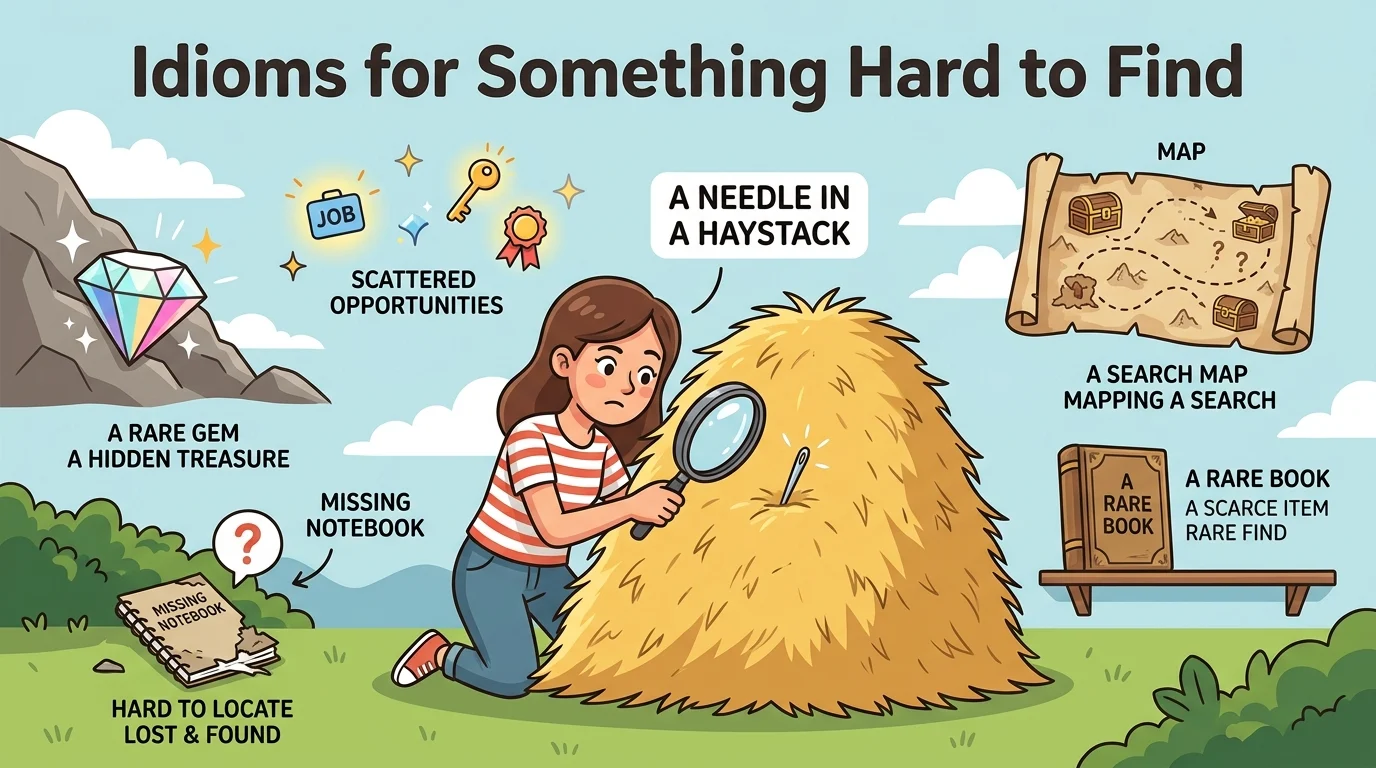
Finding something that seems impossible to locate can be frustrating. From a missing key to a rare opportunity, English has many useful idioms for something hard to find.
If you have ever searched through hundreds of files for one document, you already know the feeling. You can say it is like finding a needle in a haystack, but there are many other expressions for things that are rare, hidden, unavailable, or difficult to discover.
What Are Idioms for Something Hard to Find?
Idioms for something hard to find describe objects, people, opportunities, information, or places that are difficult to locate or obtain.
Some expressions focus on the difficulty of searching, while others describe something that is rare or unavailable.
For example:
- Finding one photograph among thousands is like finding a needle in a haystack.
- Affordable homes in that area are few and far between.
- Good opportunities can be hard to come by.
- My missing notebook was nowhere to be found.
Here are useful expressions to help you choose the right phrase for each situation.
A Needle in a Haystack
Word-by-word meaning: A small needle hidden inside a large pile of hay.
Idiomatic meaning: Something extremely difficult to find because there is a huge area or amount of material to search.
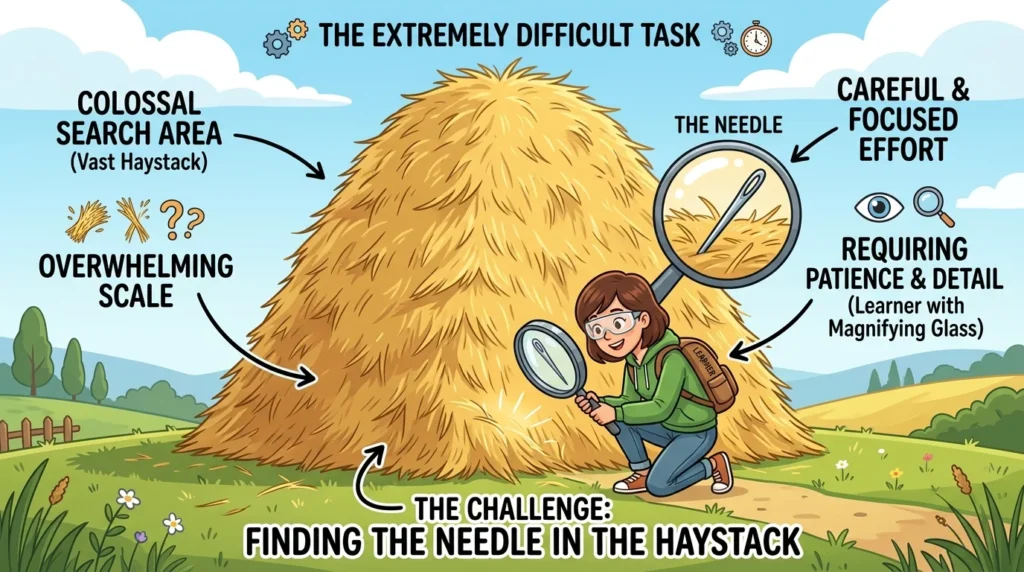
Example: Finding one specific email in that inbox is like finding a needle in a haystack.
Common error: Do not use this for something that is merely inconvenient to find.
Usage note: This is probably the best-known expression for something extremely difficult to locate.
Hard to Come By
Word-by-word meaning: Difficult to obtain or encounter.
Idiomatic meaning: Something is difficult to find or get.

Example: Reliable information about the old building is hard to come by.
Common error: It does not necessarily mean something is physically hidden.
Usage note: Use it for jobs, opportunities, information, resources, and other things that are difficult to obtain.
Few and Far Between
Word-by-word meaning: Few things with a lot of distance between them.
Idiomatic meaning: Something is uncommon, rare, or happens infrequently.
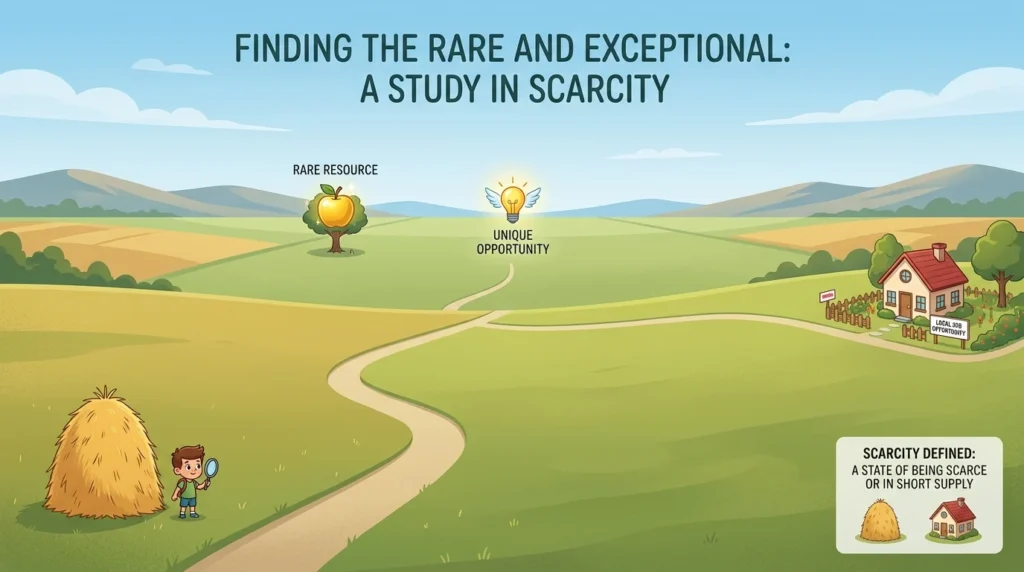
Example: Quiet places in the city are few and far between.
Common error: Do not normally use it for one particular lost object.
Usage note: It is best for things that are generally rare rather than simply misplaced.
Nowhere to Be Found
Word-by-word meaning: Not present in any place where it can be located.
Idiomatic meaning: Completely missing or impossible to locate.
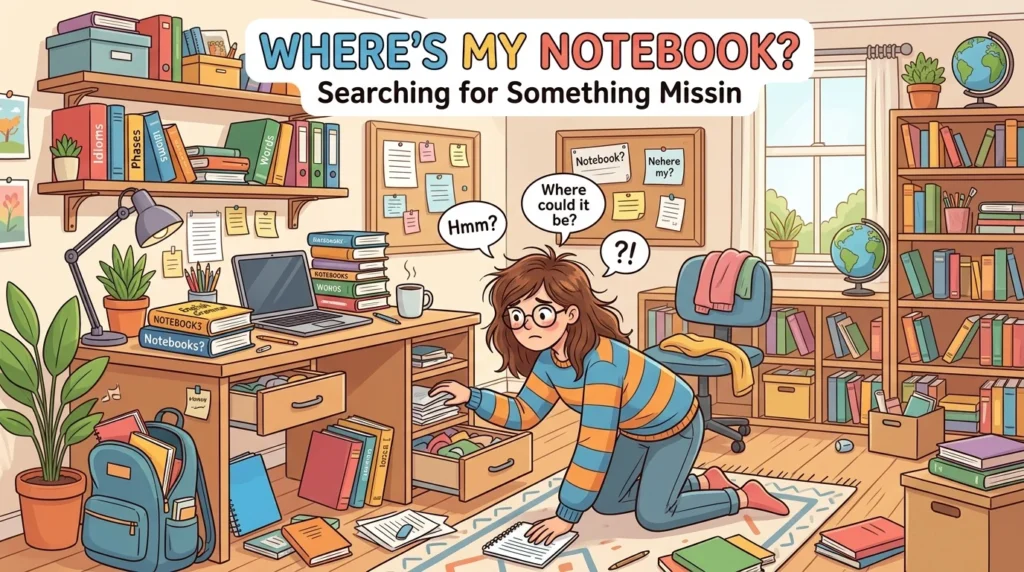
Example: I searched the whole room, but my notebook was nowhere to be found.
Common error: Do not use it when something is simply expensive or unavailable.
Usage note: This is a very natural everyday expression for missing objects or people.
Search High and Low
Word-by-word meaning: Search in high and low places.
Idiomatic meaning: Search everywhere possible.

Example: We searched high and low for the missing document.
Common error: The standard expression is search high and low, not “search high or low.”
Usage note: This expression emphasizes the effort involved in searching.
Lost in the Shuffle
Word-by-word meaning: Lost while things are being moved or mixed.
Idiomatic meaning: Forgotten, overlooked, or missed among many other things.
Example: My application may have been lost in the shuffle.
Common error: It usually does not mean that something is physically lost.
Usage note: It is especially useful for emails, paperwork, requests, and busy situations.
Out of Sight
Word-by-word meaning: Not visible.
Idiomatic meaning: Hidden or not currently visible.
Example: The spare keys are probably out of sight somewhere.
Common error: Out of sight does not automatically mean permanently lost.
Usage note: Use it when something may still be nearby but cannot be seen.
Out of Reach
Word-by-word meaning: Too far away to reach.
Idiomatic meaning: Difficult or impossible to obtain, access, or achieve.
Example: That rare book is currently out of reach.
Common error: It can describe abstract things too, so do not restrict it to physical objects.
Usage note: It works well for goals, opportunities, information, and possessions.
Hidden Gem
Word-by-word meaning: A valuable gem that is hidden.
Idiomatic meaning: Something excellent that is not widely known or easily discovered.
Example: We found a hidden gem of a restaurant on a quiet street.
Common error: A hidden gem does not have to be extremely difficult to find.
Usage note: Use this expression when the discovery is especially valuable or enjoyable.
Off the Beaten Track
Word-by-word meaning: Away from the usual path.
Idiomatic meaning: Unusual, less visited, or outside the mainstream.
Example: We discovered a beautiful village off the beaten track.
Common error: It is not a general synonym for “lost.”
Usage note: This phrase is particularly useful when talking about unusual places and discoveries.
Elusive
Word-by-word meaning: Difficult to catch, reach, or understand.
Idiomatic meaning: Difficult to find, identify, achieve, or obtain.
Example: The researchers were still looking for the elusive answer.
Common error: Elusive is an adjective rather than a fixed idiom.
Usage note: It works naturally with answers, solutions, people, goals, and objects.
A Rare Find
Word-by-word meaning: Something found rarely.
Idiomatic meaning: A person or thing that is unusual, valuable, or difficult to discover.
Example: That original book was a rare find.
Common error: Something can be hard to find without necessarily being valuable.
Usage note: This phrase often has a positive meaning.
Scarce as Hen’s Teeth
Word-by-word meaning: As uncommon as teeth on a chicken.
Idiomatic meaning: Extremely rare or almost impossible to find.
Example: Affordable houses in that neighborhood are as scarce as hen’s teeth.
Common error: Do not use it when something is merely hidden.
Usage note: It is a humorous expression for something extremely scarce.
A Diamond in the Rough
Word-by-word meaning: A valuable diamond hidden in an unpolished form.
Idiomatic meaning: A person or thing with great value or potential that is not immediately obvious.
Example: That small bookstore is a diamond in the rough.
Common error: This expression suggests hidden value, not simply difficulty finding something.
Usage note: It is useful when the thing discovered turns out to be especially worthwhile.
One in a Million
Word-by-word meaning: One example among a million.
Idiomatic meaning: Extremely rare, special, or unusual.
Example: A teacher with that level of patience is one in a million.
Common error: It does not always mean something is literally one out of one million.
Usage note: It is often used positively for people, experiences, or exceptional things.
Once in a Blue Moon
Word-by-word meaning: Something happening during a rare blue moon.
Idiomatic meaning: Something that happens very rarely.
Example: We only find such excellent bargains once in a blue moon.
Common error: It describes how often something happens, not how difficult one specific object is to locate.
Usage note: Use it for rare events or occasions.
Few and Far Between Opportunities
Word-by-word meaning: Opportunities that are limited and widely separated.
Idiomatic meaning: Chances that do not appear very often.
Example: Good scholarships in this field are few and far between.
Common error: Do not use this expression for every ordinary opportunity.
Usage note: It works especially well with opportunities, jobs, chances, and special experiences.
Like Looking for a Needle in a Haystack
Word-by-word meaning: Searching through a large pile of hay for one tiny needle.
Idiomatic meaning: A search that is extremely difficult.
Example: Finding one typo in thousands of pages is like looking for a needle in a haystack.
Common error: Use looking for a needle in a haystack, not “looking a needle in a haystack.”
Usage note: This is a natural variation of a needle in a haystack and is commonly used to describe an extremely difficult search.
Wild-Goose Chase
Word-by-word meaning: A chase involving a wild goose.
Idiomatic meaning: A search or pursuit that is unlikely to succeed, often because the information leading you there is wrong.
Example: We spent the afternoon looking for that address, but the whole thing turned into a wild-goose chase.
Common error: It does not simply mean “something hard to find.”
Usage note: Use it when the search itself seems pointless or based on misleading information. Cambridge also identifies it as an idiom for a search that is essentially a waste of time.
Looking in the Wrong Place
Word-by-word meaning: Searching somewhere that is not the correct location.
Idiomatic meaning: Searching for an answer or solution in the wrong area.
Example: If you think the problem is caused by the software, you may be looking in the wrong place.
Common error: This expression does not mean something is rare.
Usage note: It is useful when the problem is not the difficulty of finding something but choosing the wrong place to search.
Guide: Which Idiom Should You Use?
| Expression | Best Used For |
|---|---|
| A needle in a haystack | Extremely difficult searches |
| Hard to come by | Difficult to obtain |
| Few and far between | Rare things or events |
| Nowhere to be found | Missing objects or people |
| Search high and low | Searching everywhere |
| Lost in the shuffle | Something overlooked |
| Hidden gem | Valuable but little-known discoveries |
| Out of reach | Difficult to obtain or achieve |
| Scarce as hen’s teeth | Extremely rare things |
| Wild-goose chase | A pointless or misleading search |
Idioms for Finishing Something in English
The main topic is finding something difficult to locate, but learners often search for related phrases such as idioms for finishing something, idioms for finishing something in English, or phrase for finishing something.
For completing a task, these expressions are especially useful:
- Get the job done — complete a task successfully.
- Finish the job — complete the work.
- Wrap things up — bring an activity to an end.
- See it through — continue until something is completed.
- Call it a day — stop working for the day.
- Bring something to a close — finish an event, discussion, or process.
What Is the Idiom for Completing a Task?
Get the job done is one of the most natural answers. It means successfully completing a task.
For example:
We still have two hours, so let’s get the job done.
Another useful phrase is see it through, especially when you want to emphasize continuing until the task is finished.
How Do You Say Done in a Cool Way?
For casual English, you can say:
- That’s a wrap!
- Job done!
- Done and dusted!
- Mission accomplished!
- All done!
That’s a wrap is especially natural when an activity, project, meeting, or event has finished.
Phrases for the End of Something
If you are looking for phrases for the end of something, useful choices include:
- Come to an end
- Draw to a close
- Bring something to an end
- Bring something to a close
- Wrap things up
- Reach the end
- Call it a day
For example: The meeting is drawing to a close.
Idioms for Ending a Relationship
Some learners also search for idioms for ending a relationship. These have a different meaning from idioms about finding something.
Common expressions include:
- Call it quits — decide to stop a relationship or activity.
- Part ways — separate from someone.
- Go separate ways — continue life independently.
- Break things off — end a relationship.
- Move on — leave a past relationship or situation behind.
To Complete Something: Synonyms
If you need a to complete something synonym, choose according to the context:
Finish, accomplish, finalize, conclude, fulfill, achieve, complete, carry out, wrap up, and bring to completion.
For everyday conversation, finish, complete, get done, and wrap up are usually the most natural choices.
FAQ About Idioms for Something Hard to Find
What is the best idiom for something hard to find?
A needle in a haystack is the strongest and most widely recognized choice when something is extremely difficult to locate.
What does hard to come by mean?
Hard to come by means difficult to find, obtain, or encounter. For example, “Good opportunities are hard to come by.”
What are common phrases using finish?
Common phrases include finish the job, finish up, finish off, finish what you started, and finish strong.
What is the idiom for completing a task?
Get the job done is a common expression for completing a task successfully. See it through is another good choice when emphasizing persistence.
What are the top 10 idioms for something hard to find?
Ten particularly useful choices are a needle in a haystack, hard to come by, few and far between, nowhere to be found, search high and low, lost in the shuffle, hidden gem, out of reach, scarce as hen’s teeth, and rare find.
Conclusion
The right expression can make your English much more natural. When something is extremely difficult to locate, a needle in a haystack is an excellent choice. When something is generally rare, few and far between works better. For something missing, say nowhere to be found, and when you want to emphasize a thorough search, use search high and low.
You can also expand your vocabulary with expressions for completing tasks, such as get the job done, wrap things up, and see it through. Practice these phrases in your own sentences, and they will become much easier to remember and use naturally.

“Elizabeth Bowen shares timeless idioms and language wisdom on LearnIdom.com, making learning phrases fun, easy, and unforgettable.”