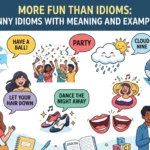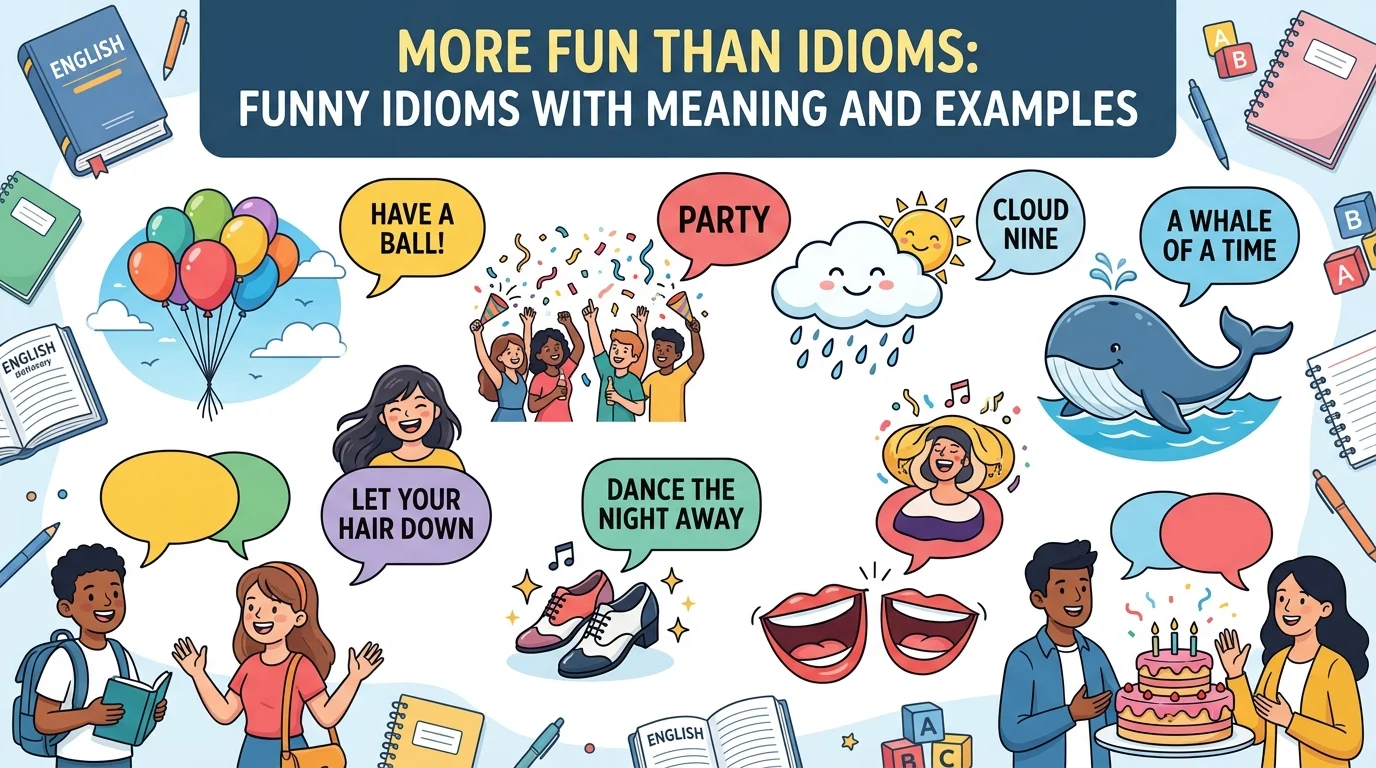
If you want more fun than idioms with meaning, English has plenty of colorful expressions to make conversations more interesting. Instead of always saying “I had fun,” you can say “I had a blast” or “We had a whale of a time.”
These expressions add personality to everyday English and are useful for learners, students, and adults. Below are popular funny idioms with meaning, simple examples, common mistakes, and usage notes to help you understand when to use them.
Have a Blast 💥
Word-by-word meaning: Have a blast or explosion.
Idiomatic meaning: To have a very enjoyable or exciting time.
Example sentences:
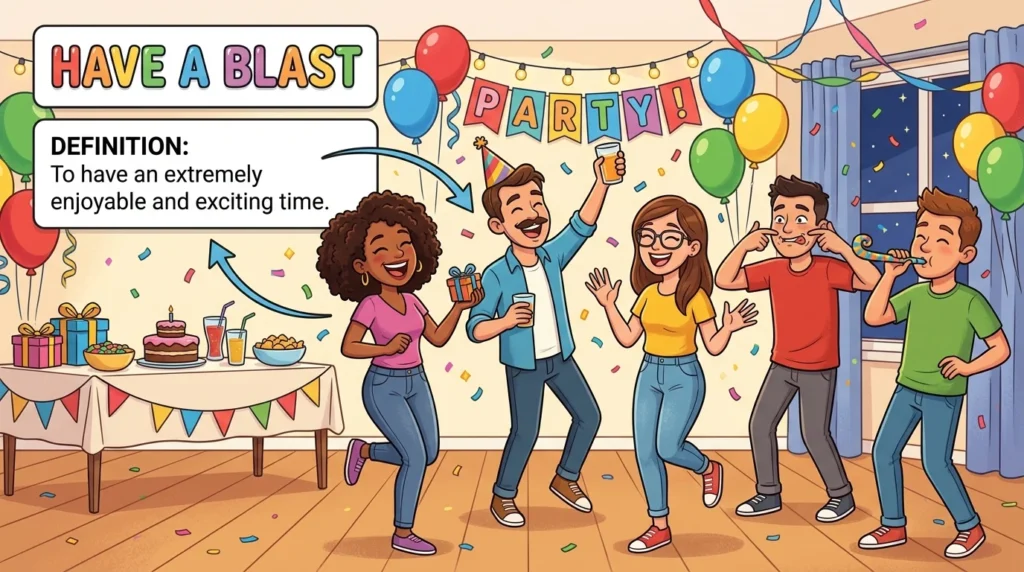
- We had a blast at the school festival.
- I hope you have a blast on your vacation.
Common error: Saying “make a blast” instead of “have a blast.”
Usage note: This is a common informal expression for having lots of fun.
Have a Ball 🎈
Word-by-word meaning: Have a ball.
Idiomatic meaning: To enjoy yourself greatly.
Example sentences:
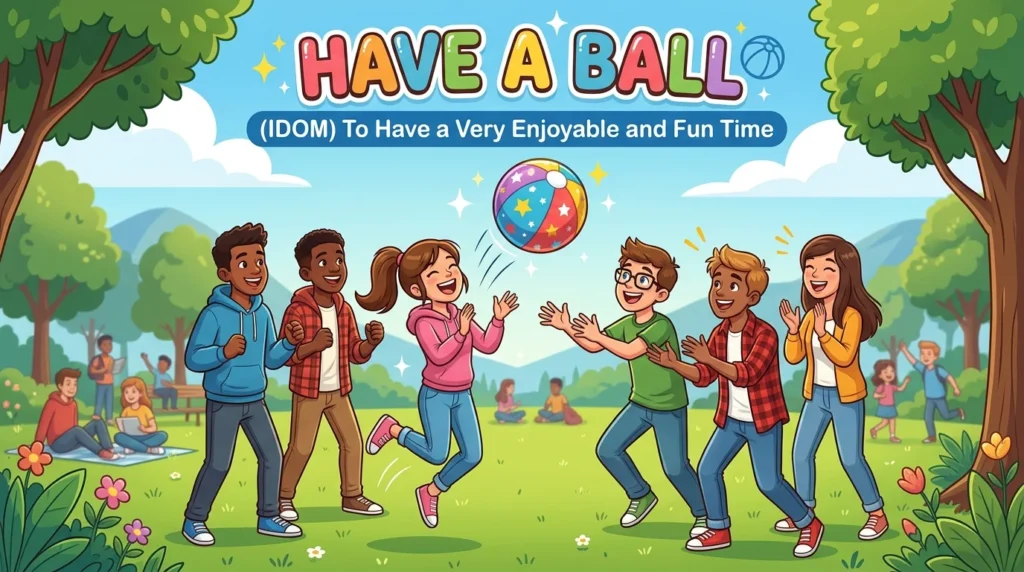
- The children had a ball at the party.
- We had a ball during the school trip.
Common error: Understanding “ball” literally instead of recognizing the idiomatic meaning.
Usage note: This friendly expression works well in casual conversations.
Paint the Town Red 🎨
Word-by-word meaning: Paint a town red.
Idiomatic meaning: To go out and enjoy yourself, usually by celebrating or socializing.
Example sentences:
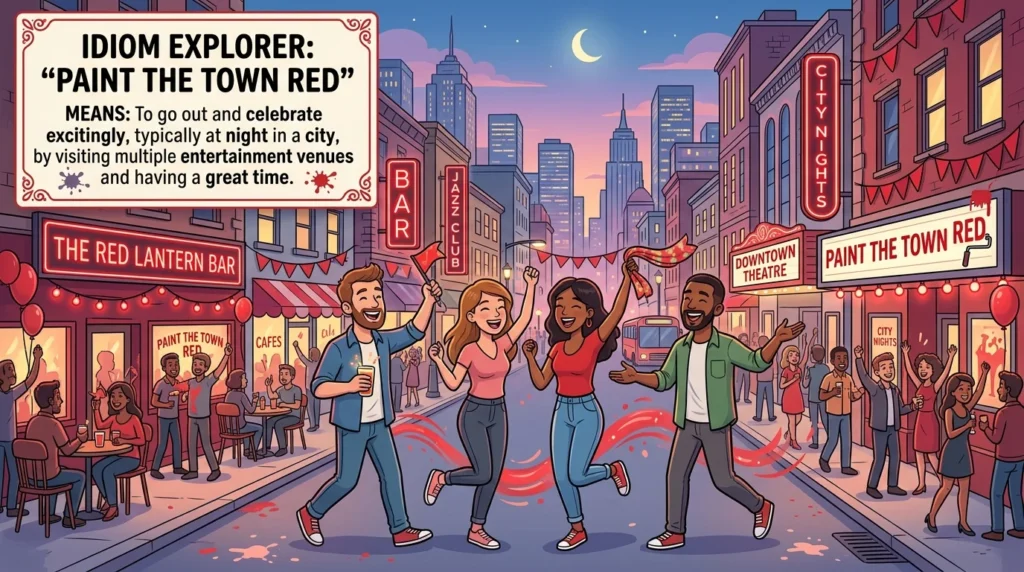
- The friends painted the town red after graduation.
- We are going downtown tonight to paint the town red.
Common error: Using it when you actually mean painting a building.
Usage note: It is usually associated with an exciting celebration or night out.
Let Your Hair Down 💇
Word-by-word meaning: Allow your hair to hang freely.
Idiomatic meaning: To relax and enjoy yourself without worrying too much.
Example sentences:

- After my exams, I want to let my hair down.
- Everyone let their hair down after the project was finished.
Common error: Assuming the expression is only about hairstyles.
Usage note: It is useful when talking about relaxing after work, study, or responsibility.
Be in High Spirits 😄
Word-by-word meaning: Be in a high or elevated mood.
Idiomatic meaning: To feel very cheerful, happy, and enthusiastic.
Example sentences:
- The students were in high spirits after winning the competition.
- Everyone was in high spirits at the celebration.
Common error: Saying “in high spirit.”
Usage note: The expression normally uses the plural spirits.
The Life of the Party 🎉
Word-by-word meaning: The life of a party.
Idiomatic meaning: A person who makes a social event lively and entertaining.
Example sentences:
- Maria was the life of the party.
- My cousin is always the life of the party.
Common error: Using this expression to describe the whole party.
Usage note: It describes a person, not an event.
Kick Up Your Heels 👟
Word-by-word meaning: Lift or kick your heels.
Idiomatic meaning: To celebrate, relax, or enjoy yourself.
Example sentences:
- After finishing her exams, Sara wanted to kick up her heels.
- We kicked up our heels after the successful event.
Common error: Thinking it simply means kicking while walking.
Usage note: This playful expression is generally informal.
Let the Good Times Roll 🎶
Word-by-word meaning: Allow good times to roll.
Idiomatic meaning: Continue enjoying yourself and having a good time.
Example sentences:
- The music started, and everyone shouted, “Let the good times roll!”
- It is the weekend, so let the good times roll.
Common error: Changing “good times” to “good time.”
Usage note: It fits celebrations, parties, and other enjoyable occasions.
Goof Around 🤪
Word-by-word meaning: Behave foolishly.
Idiomatic meaning: To act playfully or spend time behaving in a silly way instead of being serious.
Example sentences:
- The students were goofing around during the break.
- We spent the afternoon goofing around.
Common error: Using it in formal writing.
Usage note: This is especially common in casual American English.
Fool Around 😜
Word-by-word meaning: Behave like a fool.
Idiomatic meaning: To behave playfully, waste time, or avoid being serious.
Example sentences:
- The children were fooling around in the garden.
- Stop fooling around and finish your work.
Common error: Assuming it always means exactly the same thing in every context.
Usage note: Context is important because this expression can have other meanings.
Have the Time of Your Life 🌟
Word-by-word meaning: Have the best time of your life.
Idiomatic meaning: To enjoy yourself enormously.
Example sentences:
- We had the time of our lives at the concert.
- I hope you have the time of your life on your trip.
Common error: Saying “have a time of your life.”
Usage note: The standard expression uses the.
Have a Whale of a Time 🐋
Word-by-word meaning: Have a very large or remarkable time involving a whale.
Idiomatic meaning: To have an extremely enjoyable time.
Example sentences:
- We had a whale of a time at the amusement park.
- The children had a whale of a time at the beach.
Common error: Trying to understand “whale” literally.
Usage note: This is one of the memorable funny idioms with meaning because of its unusual imagery.
Make Merry 🥳
Word-by-word meaning: Make something merry or cheerful.
Idiomatic meaning: To celebrate and enjoy yourself.
Example sentences:
- The families gathered to make merry during the festival.
- Everyone made merry late into the evening.
Common error: Using it as a direct replacement for “have fun” in every situation.
Usage note: This expression has a traditional and somewhat old-fashioned feel.
Let Loose 🎊
Word-by-word meaning: Release or allow something to become free.
Idiomatic meaning: To relax, stop being restrained, and enjoy yourself.
Example sentences:
- The team finally let loose after completing the project.
- We danced and let loose at the celebration.
Common error: Assuming it always refers to physical movement.
Usage note: It is informal and commonly used when someone stops being overly serious.
Live It Up 🥳
Word-by-word meaning: Live in an energetic or exciting way.
Idiomatic meaning: To enjoy yourself fully, often by celebrating or having an exciting time.
Example sentences:
- They decided to live it up during their vacation.
- We are going to live it up this weekend.
Common error: Saying “live up it.”
Usage note: The correct word order is live it up.
Cut Loose 🎶
Word-by-word meaning: Cut something free.
Idiomatic meaning: To relax and behave freely without worrying about being too serious or restrained.
Example sentences:
- After the exams, the students wanted to cut loose.
- Everyone cut loose when the music started.
Common error: Confusing “cut loose” with “let loose” in every context.
Usage note: It is an informal expression often connected with celebration or relaxation.
Go to Town 🏙️
Word-by-word meaning: Go to a town.
Idiomatic meaning: To do something with great enthusiasm or energy.
Example sentences:
- The children went to town decorating the classroom.
- She really went to town preparing the party.
Common error: Assuming it always means physically traveling to a town.
Usage note: Context determines the meaning. It can describe enthusiastic effort, not only having fun.
A Barrel of Laughs 😂
Word-by-word meaning: A barrel full of laughs.
Idiomatic meaning: Someone or something that is very funny or entertaining.
Example sentences:
- My little brother is a barrel of laughs.
- The comedy show was a barrel of laughs.
Common error: Saying “a barrel of laugh.”
Usage note: This informal expression is useful when describing a funny person, event, or experience.
On Cloud Nine ☁️
Word-by-word meaning: Be on the ninth cloud.
Idiomatic meaning: To feel extremely happy or delighted.
Example sentences:
- She was on cloud nine after receiving the award.
- He has been on cloud nine since hearing the good news.
Common error: Saying “in cloud nine.”
Usage note: The standard expression is on cloud nine.
In Seventh Heaven 😇
Word-by-word meaning: Be in a heavenly seventh place.
Idiomatic meaning: To feel extremely happy, delighted, or satisfied.
Example sentences:
- They were in seventh heaven after the celebration.
- I was in seventh heaven when I received the good news.
Common error: Mixing this expression with “on cloud nine.”
Usage note: Both describe intense happiness, but they are separate idioms.
Funny Idioms for Students
These expressions are especially useful for learners who want to make everyday English more lively. Funny idioms for students can also make vocabulary lessons easier to remember because the expressions create unusual mental pictures.
Students can start with simple examples such as:
- Have a blast: We had a blast on our school trip.
- Goof around: We were goofing around during lunch.
- Have a ball: Everyone had a ball at the class party.
- Be in high spirits: The team was in high spirits after winning.
- On cloud nine: I was on cloud nine after getting good news.
The key is to learn the meaning and then create your own sentence.
More Fun Than Idioms for Adults
Adults can use these expressions naturally in casual conversations with friends, family, and colleagues.
For example, after a weekend event, someone might say, “We had a blast,” “We really let our hair down,” or “Everyone was in high spirits.”
These more fun than idioms for adults can make ordinary conversations sound more expressive without making the speaker sound overly formal.
More Fun Than Idioms in English: When Should You Use Them?
These expressions are useful when talking about:
- Parties
- Vacations
- School events
- Celebrations
- Weekend activities
- Social gatherings
- Funny experiences
- Exciting moments
Most of these expressions are informal, so they are best suited to conversations and friendly writing. In formal academic or professional writing, a direct expression such as “enjoyed the event” may sometimes be more appropriate.
More Fun Than Idioms and Phrases
Idioms and ordinary phrases are not exactly the same. A normal phrase can usually be understood directly, while an idiom often has a figurative meaning.
For example:
Plain expression: We enjoyed the party.
Idiomatic expression: We had a blast.
Both communicate enjoyment, but the idiom gives the sentence more personality.
This is why learning more fun than idioms and phrases can help English learners understand how native speakers make everyday communication more colorful.
What Is an Idiom for Having Fun?
If you are asking what is an idiom for having fun, some of the most useful answers are:
- Have a blast
- Have a ball
- Paint the town red
- Let your hair down
- Live it up
- Let the good times roll
- Have the time of your life
Choose the expression according to the situation. “Have a blast” is suitable for many casual situations, while “paint the town red” suggests going out and celebrating.
What Are Some Funny Idioms?
Some memorable funny idioms include have a whale of a time, kick up your heels, a barrel of laughs, and goof around.
Their unusual literal pictures make them easier to remember. For example, imagining a huge whale somehow having a great time can help you remember that have a whale of a time means to enjoy yourself enormously.
What Are Some Cool Idioms?
If you want some cool idioms for casual English, try:
- Have a blast
- Live it up
- Cut loose
- Let loose
- Paint the town red
- Have a ball
These expressions can make conversations sound more natural and energetic when used in the right context.
20+ Hunting Phrases in English 🎯📝 Learn with Examples
FAQs About Fun Idioms
What is an idiom for having fun?
Common idioms for having fun include have a blast, have a ball, live it up, let your hair down, and have the time of your life.
What are some funny idioms with meaning?
Examples include have a whale of a time, meaning to have an extremely enjoyable time, and a barrel of laughs, meaning someone or something very entertaining.
Are these idioms suitable for students?
Yes. Many are useful for students in casual speaking and creative writing. However, learners should understand whether an expression is informal before using it in formal writing.
Which fun idioms can adults use?
Adults can naturally use expressions such as have a blast, live it up, let loose, be in high spirits, and have a ball in casual conversations.
How can I learn funny idioms quickly?
Learn each idiom with its figurative meaning and one original example. Then use it in a real conversation or write your own sentence. Repeated practice helps the expressions become easier to remember.
Conclusion
Learning fun idioms gives you more ways to express happiness, excitement, celebration, and relaxation. Instead of repeating “I had fun,” you can say, “I had a blast,” “We had a ball,” or “We had the time of our lives.”
These expressions are useful for students, adults, and anyone learning conversational English. Start with five idioms, understand their meanings, and practice them in your own sentences.
The goal is not to memorize every expression at once. Choose the ones that fit your everyday conversations and gradually add more. With regular practice, these funny idioms with meaning will become a natural part of your English vocabulary.

“Iris Murdoch explores the beauty of language and idioms on LearnIdom.com, making learning phrases engaging, memorable, and fun for everyone.”