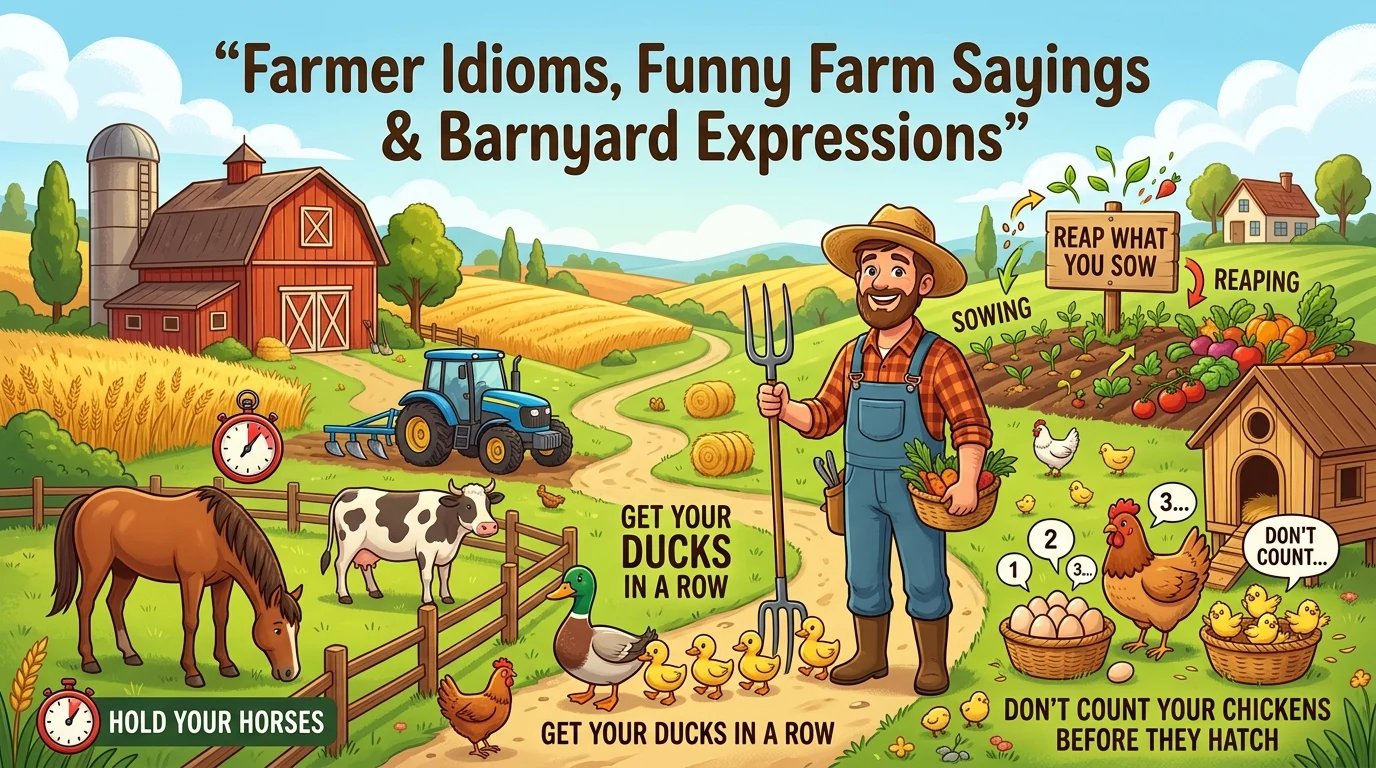
Farmer idioms turn simple ideas about crops, animals, barns, and rural life into memorable English expressions. From reap what you sow to hold your horses, these phrases can make everyday English more colorful and natural.
If you enjoy funny farm idioms, short funny farmer sayings, or catchy farm phrases, this guide explains useful expressions with simple meanings and realistic examples.
What Are Farmer Idioms?
Farmer idioms are expressions inspired by farming, agriculture, farm animals, crops, tools, barns, and rural life. Some describe farming directly, while others use farm-related images to express an entirely different idea.
For example, reap what you sow comes from planting and harvesting crops. Figuratively, however, it means that your actions eventually produce consequences.
These expressions are especially useful for English learners because the literal image often makes the figurative meaning easier to remember.
Farmer Idioms at a Glance
| Idiom | Simple Meaning |
|---|---|
| Reap what you sow | Get the results of your actions |
| Sow the seeds | Start something that can grow later |
| Make hay while the sun shines | Use an opportunity while it lasts |
| The grass is always greener | Other situations may seem better |
| Separate the wheat from the chaff | Identify what is useful or valuable |
| Don’t put all your eggs in one basket | Don’t risk everything on one option |
| Count your chickens before they hatch | Don’t assume success too early |
| Hold your horses | Wait or slow down |
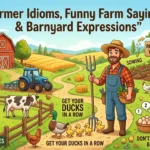
| Get your ducks in a row | Get organized |
| Straight from the horse’s mouth | From the original source |
| Dark horse | An unexpected competitor |
| Stubborn as a mule | Extremely stubborn |
| Eat like a horse | Eat a lot |
| A bull in a china shop | A clumsy or careless person |
| Barking up the wrong tree | Pursuing the wrong idea |
| Go against the grain | Act differently from expectations |
| Bring home the bacon | Earn money or provide support |
| From the ground up | Build something from the beginning |
| Throw a monkey wrench | Cause an unexpected problem |
| Don’t look a gift horse in the mouth | Don’t criticize a gift |
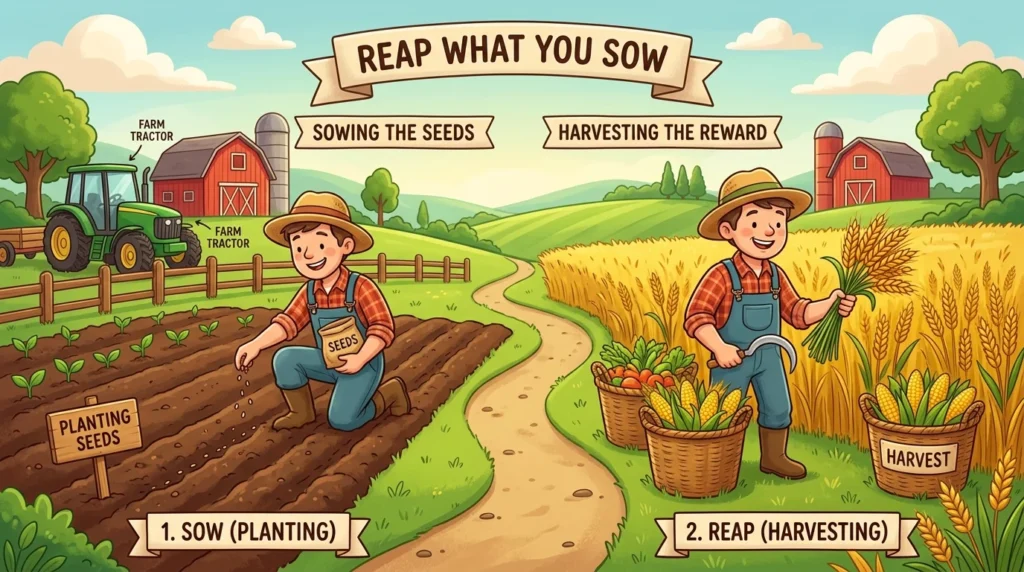
Reap What You Sow 🌱
Meaning: You eventually experience the results of your actions.
The expression comes directly from farming. A farmer plants seeds and later harvests the resulting crop.
Example:
If you work honestly and treat people well, you will often reap what you sow.
Common mistake: It can describe both positive and negative consequences, not only success.
Usage note: This is one of the clearest farming-based expressions for talking about consequences.
Sow the Seeds
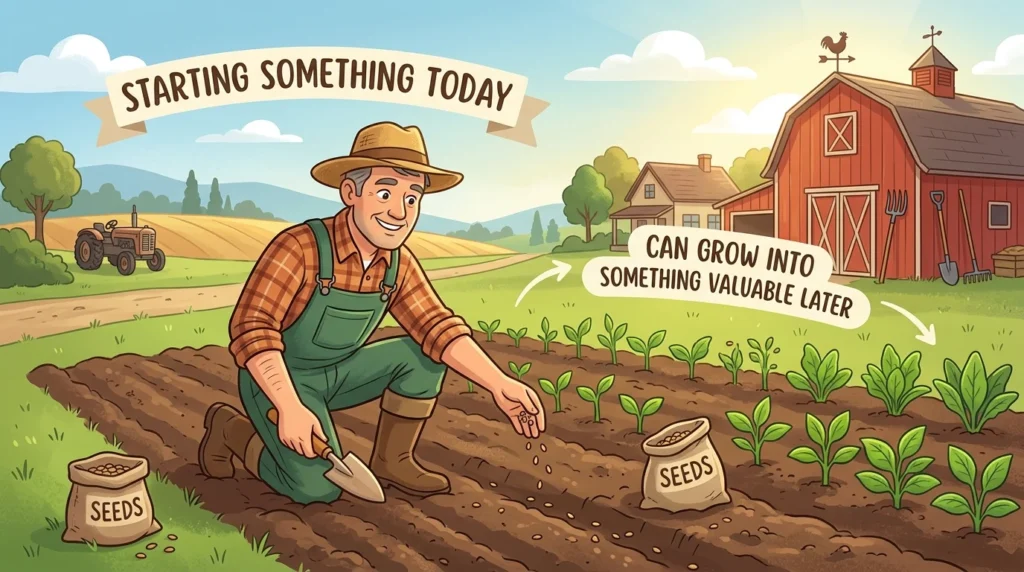
Meaning: Begin something that may produce results in the future.
A farmer sows seeds before a crop can grow. In everyday English, the expression describes starting an idea, relationship, habit, or opportunity.
Example:
Her first small project sowed the seeds for a successful career.
Common mistake: It does not mean that results will appear immediately.
Usage note: Use it when emphasizing beginnings and future growth.
Make Hay While the Sun Shines ☀️
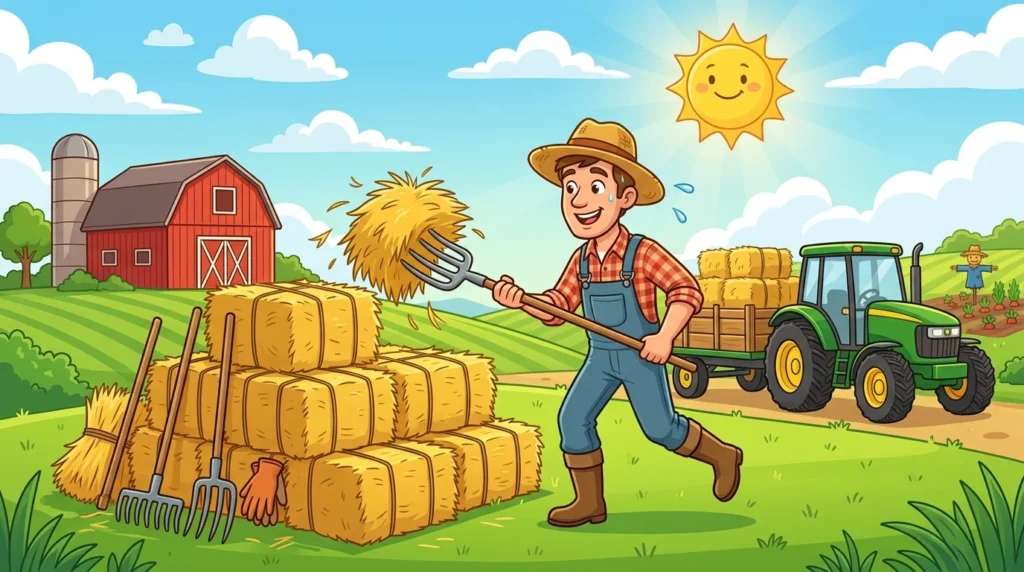
Meaning: Take advantage of a good opportunity while it is available.
Farmers traditionally need suitable weather to make hay. The expression reminds us that favorable conditions may not last forever.
Example:
The store is busy this week, so we’re making hay while the sun shines.
Common mistake: It is not simply another way to say “work hard.”
Usage note: Use it when timing and opportunity are important.
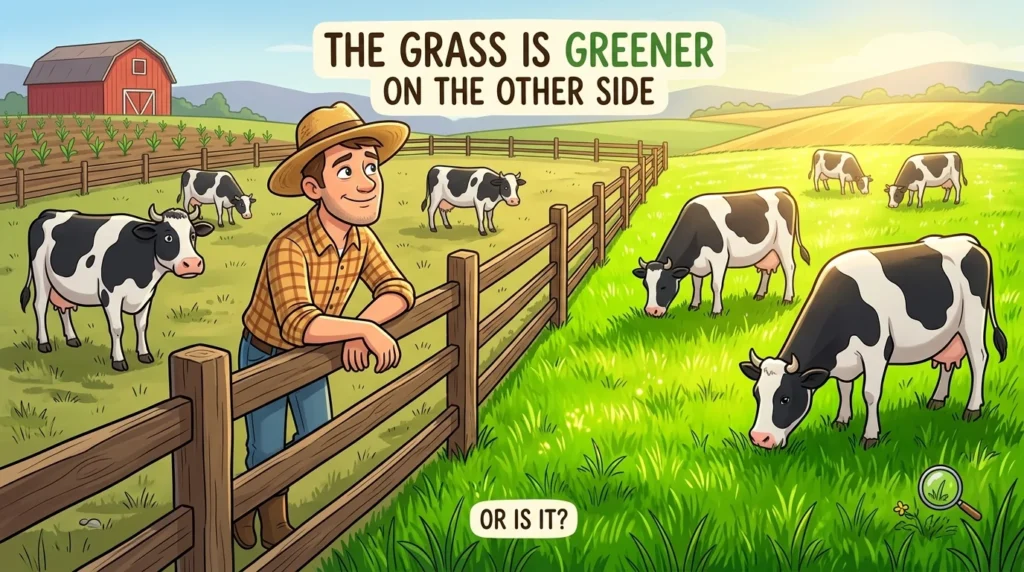
The Grass Is Always Greener on the Other Side 🌿
Meaning: Another situation may appear better than your current one.
The image comes from looking across a fence and thinking another field has better grass.
Example:
He keeps changing jobs because he thinks the grass is always greener on the other side.
Common mistake: The phrase usually refers to an attractive alternative that may not actually be better.
Usage note: It is useful when discussing dissatisfaction or comparison.
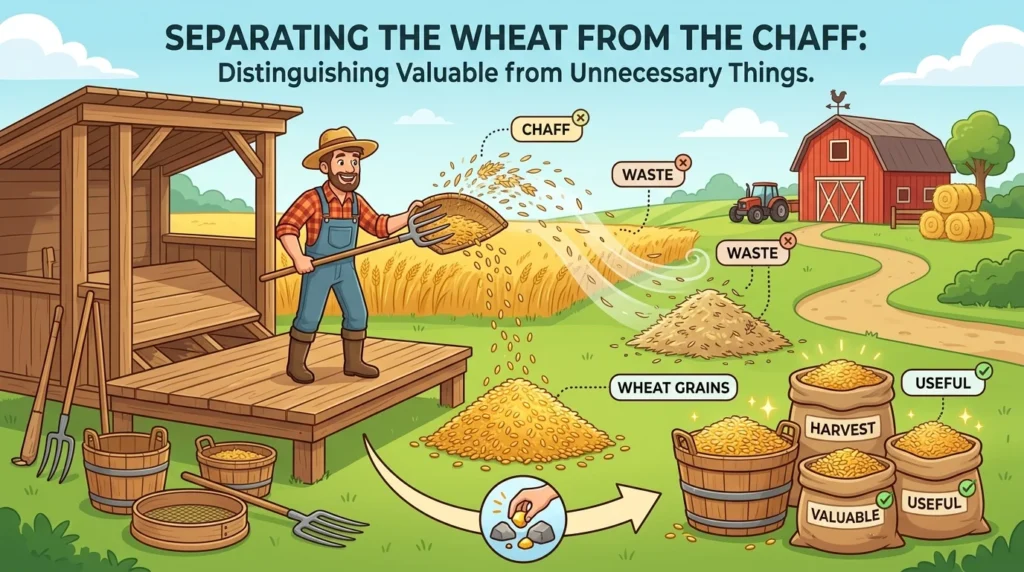
Separate the Wheat From the Chaff 🌾
Meaning: Separate valuable things from things that are unnecessary or inferior.
Farmers historically separated useful wheat from unwanted chaff. Today, the expression can describe information, ideas, people, or choices.
Example:
The review process helps us separate the wheat from the chaff.
Common mistake: It is normally figurative in modern conversation.
Usage note: It works particularly well in education, business, and decision-making.
Don’t Put All Your Eggs in One Basket 🥚
Meaning: Don’t depend completely on one option.
The farm-related image is simple: if every egg is placed in one basket and something happens to it, everything could be lost.
Example:
I’m applying to several colleges because I don’t want to put all my eggs in one basket.
Common mistake: Don’t change the expression to “put all eggs into one basket.”
Usage note: This is a common and practical expression for discussing risk.
Don’t Count Your Chickens Before They Hatch 🐔
Meaning: Don’t assume that something will happen before it actually happens.
A farmer cannot know exactly how many chicks will hatch simply by counting eggs.
Example:
We may win the contract, but don’t count your chickens before they hatch.
Common mistake: It is about premature confidence, not about chickens themselves.
Usage note: It is useful when reminding someone to wait for a confirmed result.
Hold Your Horses 🐎
Meaning: Wait, slow down, or be patient.
The expression creates a humorous image of someone stopping their horses before moving ahead.
Example:
Hold your horses! We haven’t finished checking the details yet.
Common mistake: It is informal, so it may not suit highly formal writing.
Usage note: This is one of the most recognizable humorous animal expressions.
Get Your Ducks in a Row 🦆
Meaning: Organize everything before taking action.
The phrase creates a funny picture of ducks standing neatly together.
Example:
I need to get my ducks in a row before starting the new project.
Common mistake: Don’t use it when you simply mean “begin.”
Usage note: It is a popular barnyard idiom for organization and preparation.
Straight From the Horse’s Mouth 🐴
Meaning: Information received directly from the original or most reliable source.
Example:
I heard the news straight from the horse’s mouth.
Common mistake: It doesn’t mean information literally came from an animal.
Usage note: This is generally informal and conversational.
Dark Horse
Meaning: An unexpected person or competitor who may succeed.
Example:
The young player could be the dark horse of the competition.
Common mistake: A dark horse is not necessarily a secretive person.
Usage note: The expression is common in competitions and situations involving unexpected outcomes.
Stubborn as a Mule
Meaning: Extremely unwilling to change your mind or behavior.
Mules have long been associated in popular language with stubbornness.
Example:
My brother is stubborn as a mule when he thinks he’s right.
Common mistake: This is informal and can sound critical.
Usage note: It is usually used humorously among people who know each other well.
Eat Like a Horse
Meaning: Eat a very large amount of food.
Example:
The kids ate like horses after spending the whole afternoon outdoors.
Common mistake: It is a playful expression, not a literal comparison.
Usage note: Use it in casual conversations.
A Bull in a China Shop 🐂
Meaning: A person who behaves in a clumsy, careless, or overly forceful way.
Example:
He walked into the delicate situation like a bull in a china shop.
Common mistake: The expression is about behavior, not physical size.
Usage note: This is a humorous animal idiom and works well in informal English.
Barking Up the Wrong Tree 🐕
Meaning: Looking in the wrong place or blaming the wrong person.
The image comes from a dog barking at a tree while its target is somewhere else.
Example:
If you think I broke the computer, you’re barking up the wrong tree.
Common mistake: It means pursuing the wrong direction, not simply making any mistake.
Usage note: This is a common animal idiom in everyday English.
Go Against the Grain 🌾
Meaning: Do something differently from what is normal or expected.
The phrase comes from moving against the natural direction of grain.
Example:
Choosing a completely different career went against the grain of her family’s expectations.
Common mistake: It does not necessarily mean doing something wrong.
Usage note: It can describe unusual opinions, decisions, or behavior.
Bring Home the Bacon 🥓
Meaning: Earn money or provide financial support for a household.
Example:
Both parents work hard to bring home the bacon.
Common mistake: This is a food-related idiom rather than a literal farming expression.
Usage note: It is informal and often used humorously.
From the Ground Up 🌱
Meaning: Build or develop something from the beginning.
The expression has a natural connection with farming because crops begin in the ground and develop upward.
Example:
They built their family business from the ground up.
Common mistake: It doesn’t mean simply repairing something.
Usage note: It works well for businesses, projects, careers, and organizations.
Throw a Monkey Wrench 🔧
Meaning: Cause an unexpected problem or disruption.
Example:
The sudden equipment failure threw a monkey wrench into our plans.
Common mistake: This is not strictly a farming idiom. It is a work-and-tools expression that fits naturally with practical farm situations.
Usage note: Include it when discussing farm work, equipment, plans, or unexpected problems rather than presenting it as a traditional agricultural idiom.
Don’t Look a Gift Horse in the Mouth 🐴
Meaning: Don’t criticize or complain about something that was given to you for free.
The expression refers to judging a horse’s age and condition by looking at its teeth.
Example:
The free laptop isn’t perfect, but don’t look a gift horse in the mouth.
Common mistake: Don’t use it to say that every gift is automatically good.
Usage note: It is useful when someone is being overly critical of a gift.
Funny Farm Idioms and Short Funny Farmer Sayings
If you’re searching for funny farm idioms, animal expressions are often the easiest to remember because they create amusing mental pictures.
Here are some short, original-style short funny farmer sayings that work well for casual content:
- Keep calm and grow something.
- Don’t rush the harvest.
- Plant good ideas and let them grow.
- Life is better with a little dirt on your boots.
- When the plan fails, check the barn.
- Good things take time to grow.
These are sayings rather than established idioms, so they can be adapted for captions, classroom activities, farm-themed designs, or creative writing.
Catchy Farm Phrases for Everyday English
Catchy farm phrases often focus on growth, patience, hard work, and rural life.
Useful examples include:
- From seed to harvest
- Farm fresh
- Grow through what you go through
- Let your ideas grow
- Keep calm and harvest on
- Rooted in hard work
- Made with patience and care
Remember that not every catchy phrase is a traditional English idiom. Keeping this distinction clear makes your vocabulary more accurate.
Barnyard Idioms and Animal Idioms
Many memorable expressions come from farm animals. These animal idioms are useful because the mental images are easy to remember.
Popular barnyard idioms include:
- Hold your horses
- Get your ducks in a row
- Don’t count your chickens before they hatch
- Stubborn as a mule
- Eat like a horse
- Barking up the wrong tree
- A bull in a china shop
- Straight from the horse’s mouth
Learning them as a group can make vocabulary practice faster and more enjoyable.
Farming Idioms, Tools, and Practical Work
Some expressions connected with work and tools are often included in searches for farming idioms monkey wrench.
Throw a monkey wrench is the clearest example. Although it is not specifically an agricultural idiom, it fits naturally into farm-related situations because farms depend on tools, machinery, schedules, and practical work.
For example:
The broken tractor threw a monkey wrench into the farmer’s plans.
This distinction is useful: a good vocabulary guide should explain whether an expression is directly agricultural or simply related to farm life.
Phrases With the Word Farm
Not every phrase containing the word farm is an idiom. Many are straightforward expressions describing agricultural life.
Examples include:
- family farm
- working farm
- organic farm
- farm animal
- farm worker
- farm equipment
- farm life
- farm fresh
- farm business
- farm-to-table
A literal phrase describes something directly, while an idiom usually has a figurative meaning.
How to Remember Farmer Idioms
The best way to learn these expressions is to connect the literal picture with the figurative meaning.
For example, picture someone trying to stop several horses when you learn hold your horses. The funny mental image can make the meaning easier to remember.
Try this three-step method:
- Picture it: Imagine the literal farming scene.
- Understand it: Learn the figurative meaning.
- Use it: Write your own sentence.
For example:
Idiom: Reap what you sow
Meaning: Experience the results of your actions
Your sentence: If I practice every day, I can reap what I sow.
Using an idiom yourself is usually more useful than simply memorizing its definition.
FAQs About Farmer Idioms
What are farmer idioms?
Farmer idioms are expressions inspired by farming, crops, animals, barns, rural work, and agricultural life. Many use these subjects to communicate figurative ideas.
What are some funny farm idioms?
Hold your horses, get your ducks in a row, a bull in a china shop, and stubborn as a mule are humorous farm- or animal-based expressions commonly used in English.
What is a famous idiom about farming?
Reap what you sow is a well-known farming-based idiom. It means that people eventually experience the results of their actions.
Is “throw a monkey wrench” a farming idiom?
Not exactly. It is an idiom about causing an unexpected problem. Because monkey wrenches are tools, the expression can naturally appear in stories about farm work and equipment.
Why are animal idioms important in English?
Animal idioms are memorable because they connect abstract ideas with familiar images. Learning them in context can make everyday English easier and more natural.
Conclusion
Farmer idioms show how farming, animals, crops, and rural life have influenced everyday English. Expressions such as reap what you sow, make hay while the sun shines, and don’t count your chickens before they hatch turn simple farm images into useful lessons about life.
If you’re learning English, start with five expressions and create your own sentences. Then practice them in conversations, writing, or short stories.
From funny farm idioms and barnyard idioms to animal idioms and catchy farm phrases, these expressions can make your vocabulary more memorable, natural, and fun. 🌾🚜

Ethan Brooks is a digital language writer who explains emoji meanings, internet slang, and social media symbols through clear, reliable, and easy guides.