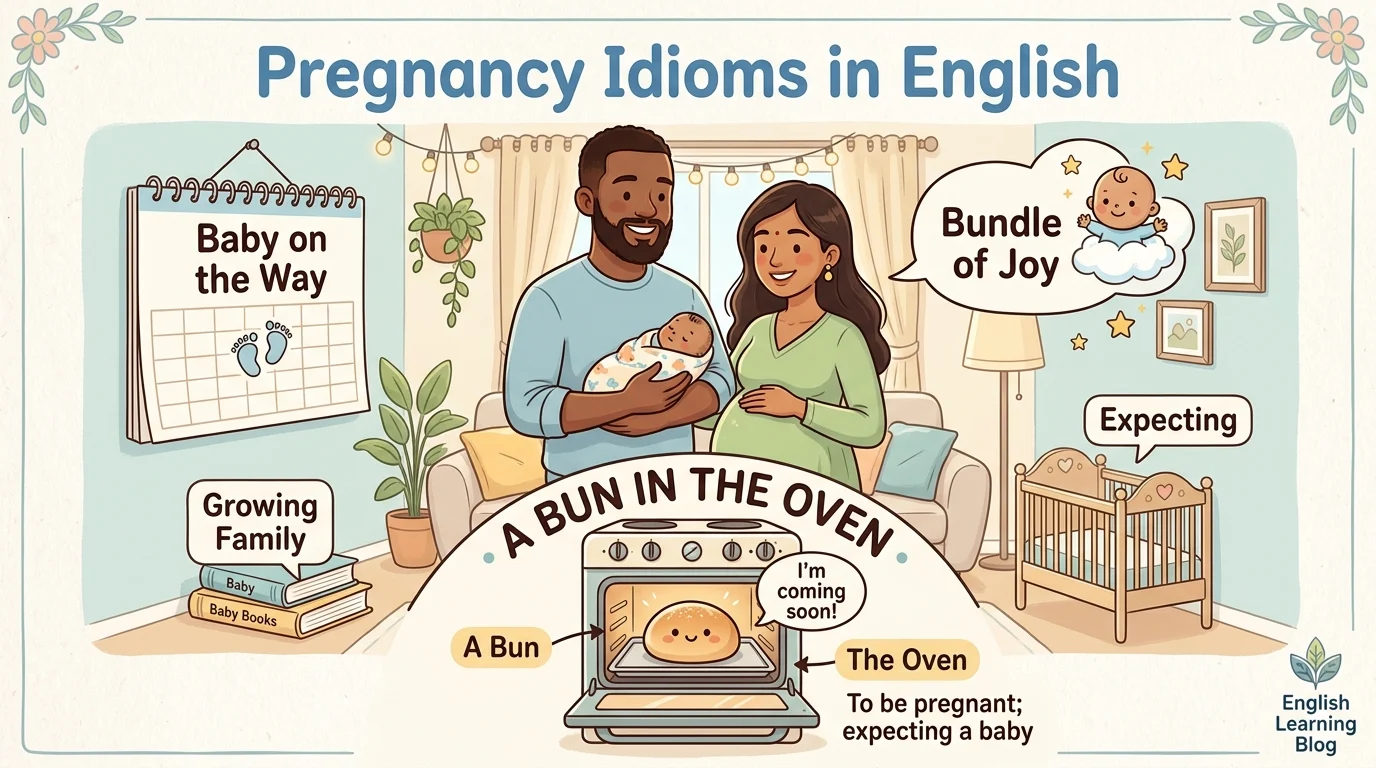
Pregnancy idioms can make everyday English more colorful and easier to understand. If you hear someone say they have a bun in the oven or are expecting, they may be talking about pregnancy without saying the word directly.
English has many expressions for being pregnant, expecting a baby, welcoming a newborn, and entering parenthood. Some are modern and polite, while others are humorous, informal, or old-fashioned. Here are useful pregnancy-related expressions with simple explanations and examples.
What Are Pregnancy Idioms?
Pregnancy idioms are expressions that communicate ideas about pregnancy, expecting a baby, childbirth, or becoming a parent without always using direct language.
Some expressions are genuine idioms, while others are common phrases or euphemisms. Knowing the difference helps English learners understand how native speakers use them in real conversations.
For everyday communication, pregnant, expecting, having a baby, and a baby on the way are usually the clearest choices.
A Bun in the Oven
Word-by-word meaning
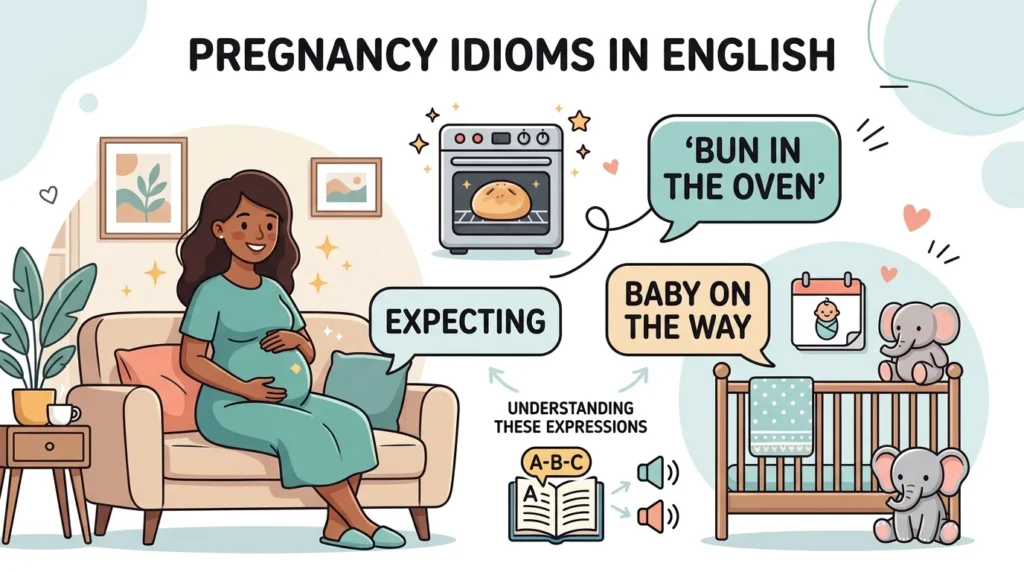
A bun is a small baked bread, and an oven is where food is cooked.
Idiomatic meaning
A bun in the oven is a playful idiom meaning someone is pregnant.
Example sentences
- Sarah has a bun in the oven.
- My sister surprised us by announcing that she has a bun in the oven.
Common error
Do not interpret the expression literally.
Usage note
This is a humorous and informal expression. It works best in friendly conversations rather than formal or medical situations.
Expecting
Word-by-word meaning
To expect means to believe that something is going to happen.
Idiomatic meaning
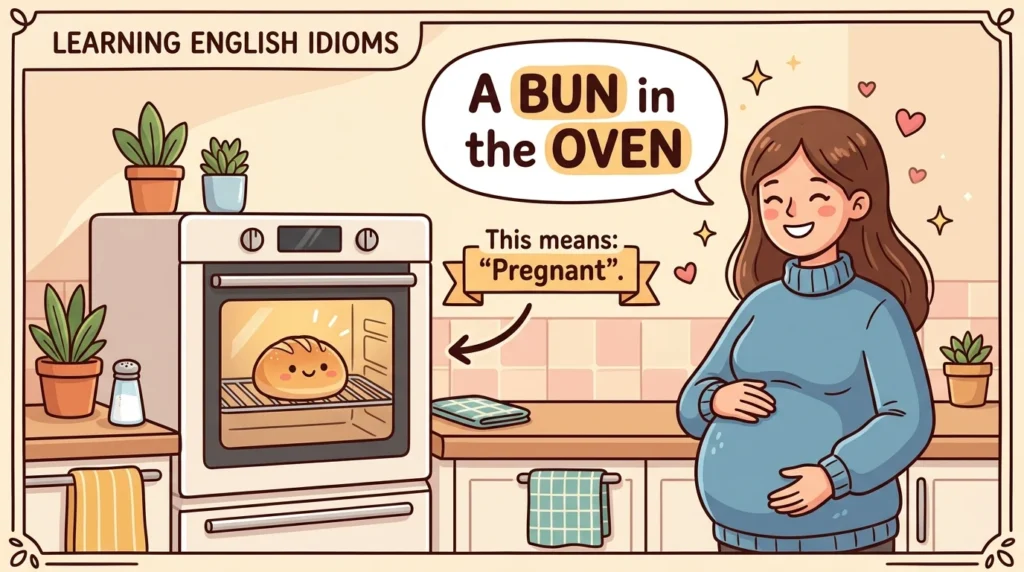
When someone says they are expecting, it commonly means they are pregnant and waiting for a baby.
Example sentences
- Emma is expecting her first baby.
- They are expecting later this year.
Common error
“Expecting” does not always mean pregnancy. The surrounding context determines its meaning.
Usage note
This is one of the most natural and widely understood pregnancy expressions.
Expecting a Baby
Word-by-word meaning
It means waiting for a baby to arrive.
Idiomatic meaning
Expecting a baby is a polite and direct way to say someone is pregnant.
Example sentences
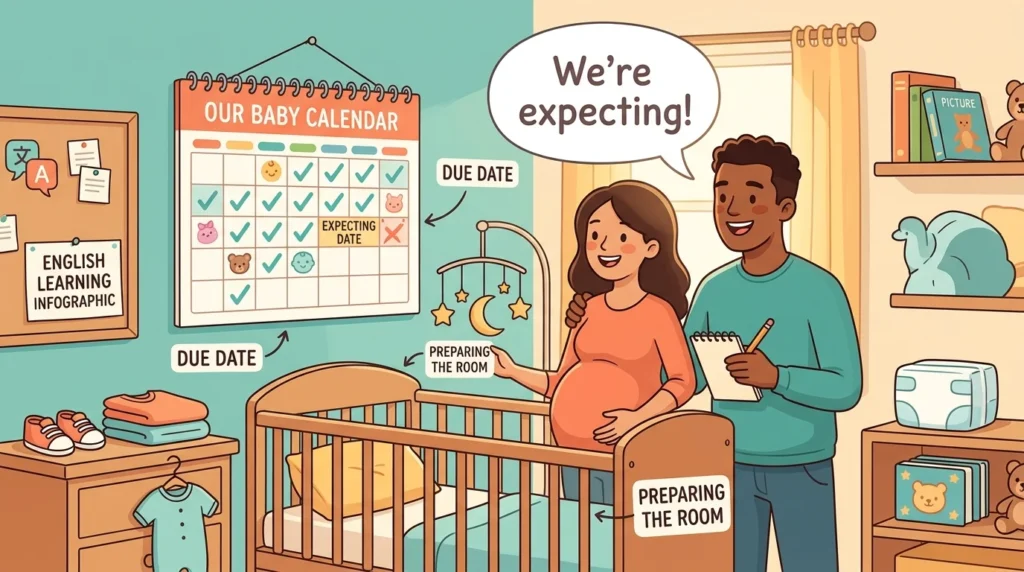
- They are expecting a baby in November.
- My cousin is expecting a baby.
Common error
Avoid assuming someone is pregnant unless they have shared that information.
Usage note
This phrase is friendly, clear, and appropriate in most everyday situations.
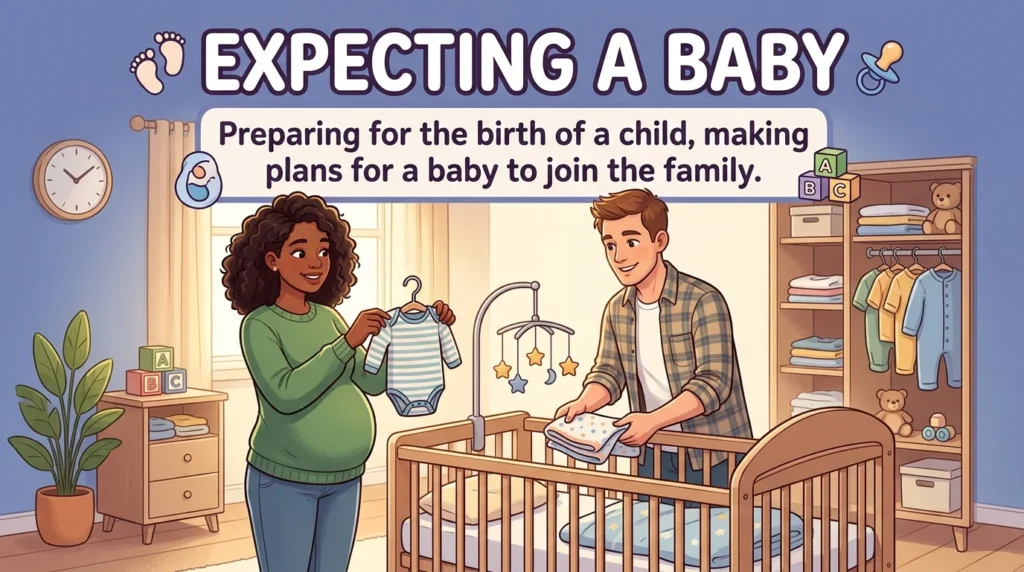
A Baby on the Way
Word-by-word meaning
“On the way” normally means traveling toward a destination.
Idiomatic meaning
In this context, a baby on the way means a baby is expected.
Example sentences
- They have a baby on the way.
- We heard that our neighbors have a little one on the way.
Common error
It should not be confused with a baby who is literally traveling somewhere.
Usage note
This is a warm and conversational expression often used in announcements.
A Little One on the Way
Word-by-word meaning
A “little one” is an affectionate way to refer to a child.
Idiomatic meaning
It means that someone is expecting a baby.
Example sentences
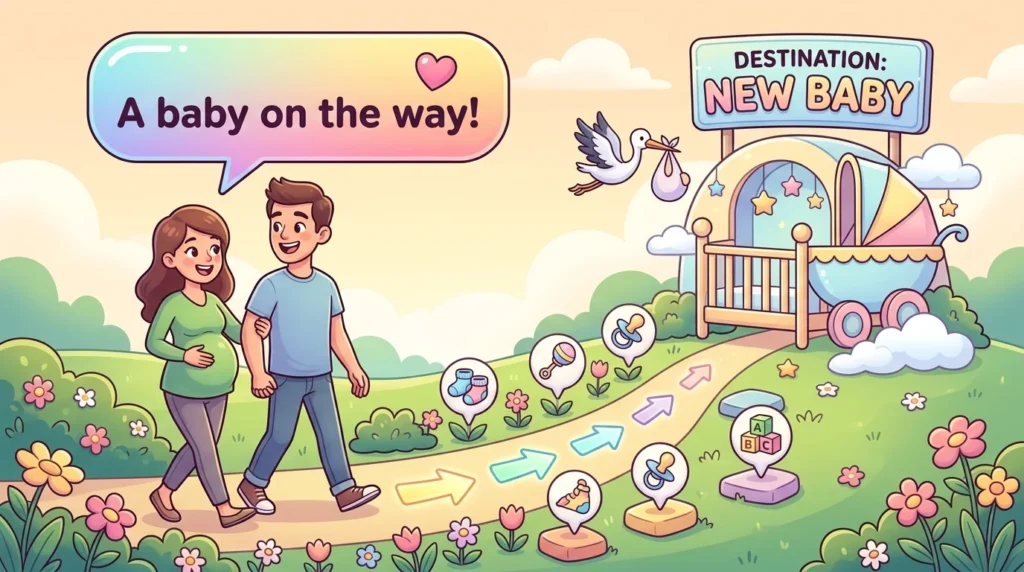
- Congratulations! I heard you have a little one on the way.
- They are excited about their little one on the way.
Usage note
This expression sounds warm, affectionate, and informal.
With Child
Word-by-word meaning
“With child” literally refers to carrying or having a child.
Idiomatic meaning
With child is an old-fashioned expression meaning pregnant.
Example sentences
- The historical novel describes her as being with child.
- I came across the phrase “with child” while reading an old book.
Common error
It is not a typical modern expression for everyday conversation.
Usage note
This phrase is useful mainly for understanding literature, history, and older forms of English.
In the Family Way
Word-by-word meaning
The phrase refers to being connected with family life.
Idiomatic meaning
In the family way is an old-fashioned euphemism for being pregnant.
Example sentences
- The phrase “in the family way” appears in older English writing.
- Her grandmother used this old expression.
Common error
Do not assume it is a common modern phrase.
Usage note
Use it mainly when discussing historical language or older texts.
Knocked Up
Word-by-word meaning
The literal words do not explain the intended meaning.
Idiomatic meaning
Knocked up is informal slang that can mean pregnant.
Example sentences
- The expression appeared in an informal movie conversation.
- He recognized “knocked up” as slang for being pregnant.
Common error
Do not use it casually with everyone because it can sound blunt or insensitive.
Usage note
It is more important for English learners to recognize this expression than to use it themselves.
Eating for Two
Word-by-word meaning
Eating for two suggests eating enough food for two people.
Idiomatic meaning
Eating for two is a humorous expression traditionally associated with pregnancy.
Example sentences
- Her friend jokingly said she was eating for two.
- “Are you eating for two?” is sometimes used as a pregnancy joke.
Common error
Do not treat this expression as literal health advice.
Usage note
Because comments about food and pregnancy can be personal, use this expression carefully and only when the situation is clearly comfortable.
Bundle of Joy
Word-by-word meaning
A bundle is something gathered together, while joy means great happiness.
Idiomatic meaning
A bundle of joy is an affectionate expression for a baby or newborn.
Example sentences
- Their new bundle of joy arrived safely.
- Everyone is excited to meet the family’s little bundle of joy.
Common error
It refers to a baby rather than pregnancy itself.
Usage note
It is especially common in congratulations, cards, and baby announcements.
New Arrival
Word-by-word meaning
An arrival is someone or something that has arrived.
Idiomatic meaning
A new arrival can affectionately refer to a newborn baby joining a family.
Example sentences
- The family is preparing for their new arrival.
- Everyone is excited about the new arrival.
Common error
The phrase can refer to many kinds of new things, so context matters.
Usage note
It is a natural and gentle expression for a newborn.
The Stork Is Coming
Word-by-word meaning
A stork is a bird traditionally connected with babies in European folklore.
Idiomatic meaning
The stork is coming is a playful way of suggesting that a baby will arrive.
Example sentences
- Grandma joked that the stork was coming.
- The children laughed when they heard that the stork was coming.
Common error
The expression comes from folklore and is not a literal explanation of childbirth.
Usage note
It is mainly playful, traditional, or humorous.
The Stork Is Bringing a Baby
Word-by-word meaning
The phrase imagines a stork delivering a baby.
Idiomatic meaning
It playfully refers to an expected baby.
Example sentences
- The old story says the stork is bringing a baby.
- The children heard a funny story about the stork bringing a baby.
Usage note
This expression is more common in children’s stories and traditional imagery than serious conversation.
A New Addition to the Family
Word-by-word meaning
An addition is something newly added.
Idiomatic meaning
A new addition to the family commonly means a new baby has joined or will soon join the family.
Example sentences
- They are excited about their new addition to the family.
- Everyone is preparing to welcome the new addition.
Common error
The phrase can also describe an adopted child, pet, or another new family member.
Usage note
It is warm, positive, and suitable for announcements.
Welcoming a Little One
Word-by-word meaning
Welcoming means receiving someone happily, and a little one means a child.
Idiomatic meaning
Welcoming a little one means preparing to receive a baby into the family.
Example sentences
- They are excited about welcoming a little one.
- The family is preparing for welcoming their little one.
Usage note
This phrase works well in friendly announcements and conversations.
Growing Your Family
Word-by-word meaning
Growing means increasing, while family refers to a group of relatives.
Idiomatic meaning
Growing your family means adding another child or family member.
Example sentences
- They are excited about growing their family.
- The couple announced that they are growing their family.
Common error
It does not necessarily mean pregnancy; adoption and other family changes can also fit.
Usage note
This is a positive and modern expression.
Starting a Family
Word-by-word meaning
Starting means beginning something.
Idiomatic meaning
Starting a family means beginning family life, often by having or adopting children.
Example sentences
- They hope to start a family someday.
- After getting married, they talked about starting a family.
Common error
Starting a family does not automatically mean someone is pregnant.
Usage note
This expression describes a broader life stage rather than pregnancy alone.
Becoming a Parent
Word-by-word meaning
Becoming means entering a new state, and a parent is someone who raises a child.
Idiomatic meaning
Becoming a parent describes the transition into parenthood.
Example sentences
- They are excited about becoming parents.
- Becoming a parent is a major new chapter in their lives.
Usage note
This is clear, modern, and appropriate in many situations.
A New Chapter
Word-by-word meaning
A chapter is a section of a book.
Idiomatic meaning
A new chapter means a new stage or period of life. It is often used when talking about pregnancy and parenthood.
Example sentences
- The baby marks a new chapter in their lives.
- They are excited to begin this new chapter together.
Common error
This is not a pregnancy-specific idiom.
Usage note
Use it when you want to focus on the life change rather than pregnancy itself.
A Bundle of Happiness
Word-by-word meaning
A bundle is a collection, while happiness means joy or pleasure.
Idiomatic meaning
This is a warm, creative expression for a baby who brings happiness to a family.
Example sentences
- Their baby is a little bundle of happiness.
- Everyone welcomed the family’s new bundle of happiness.
Common error
Unlike “bundle of joy,” this is less established as a fixed idiom.
Usage note
It works best as a creative phrase rather than a standard dictionary idiom.
Pregnancy Idioms: Quick Reference
| Expression | Meaning | Tone |
|---|---|---|
| A bun in the oven | Pregnant | Playful |
| Expecting | Pregnant | Common |
| Expecting a baby | Pregnant | Polite |
| A baby on the way | Baby expected | Friendly |
| A little one on the way | Baby expected | Warm |
| With child | Pregnant | Old-fashioned |
| In the family way | Pregnant | Old-fashioned |
| Knocked up | Pregnant | Slang |
| Eating for two | Pregnancy-related joke | Humorous |
| Bundle of joy | Baby | Affectionate |
| New arrival | Newborn | Warm |
| The stork is coming | Baby expected | Playful |
| New addition to the family | New family member | Warm |
| Growing your family | Adding to family | Modern |
| Starting a family | Beginning family life | Common |
Modern vs. Old-Fashioned Pregnancy Expressions
Not every pregnancy expression is equally useful in modern English.
For everyday conversations, expecting, expecting a baby, pregnant, and a baby on the way are clear and natural.
Expressions such as with child and in the family way are mainly useful when reading older books or hearing historical language.
Knocked up is slang, so English learners should recognize it but use it carefully. The tone can vary depending on the speaker, audience, and context.
Understanding these differences is just as important as learning the meanings themselves.
How to Use Pregnancy Idioms Naturally
The best expression depends on the situation.
For a straightforward conversation, say:
- She is pregnant.
- They are expecting a baby.
- They have a baby on the way.
For a warm congratulations message, you could say:
- Congratulations on your little one!
- Best wishes for your growing family.
- Congratulations on your new addition!
For informal or humorous conversations, a bun in the oven can work when the relationship and context make the joke appropriate.
The key is to avoid assuming that someone is pregnant. Pregnancy is personal, so these expressions should be used after the person has shared the news.
Frequently Asked Questions
What is the most common pregnancy idiom?
A bun in the oven is one of the best-known humorous pregnancy idioms. It means that someone is pregnant.
What is a polite way to say someone is pregnant?
Expecting, expecting a baby, and having a baby on the way are friendly alternatives. Simply saying pregnant is also clear and normal.
What does “a bun in the oven” mean?
It means that someone is pregnant. The expression compares a baby to a bun being prepared inside an oven.
What does “bundle of joy” mean?
Bundle of joy is an affectionate expression for a baby, especially a newborn who brings happiness to a family.
Are pregnancy idioms always appropriate?
No. Some are modern and polite, while others are humorous, slang, or old-fashioned. Choose an expression based on the audience and situation.
Conclusion
Learning pregnancy idioms gives English learners a better understanding of the creative ways people talk about pregnancy, babies, and family life. Expressions such as a bun in the oven, expecting, a baby on the way, and bundle of joy are useful for understanding everyday English.
At the same time, remember that some expressions are old-fashioned or informal. With child and in the family way are mostly historical, while knocked up is slang. When speaking politely, simple expressions such as pregnant and expecting a baby are usually the clearest choices.
Try writing your own sentences with five expressions from this list. Practicing them in context will help you recognize and understand pregnancy-related English more naturally.

“L.P. Hartley brings classic idioms to life on LearnIdom.com, helping readers explore language with wit, clarity, and timeless insight.”