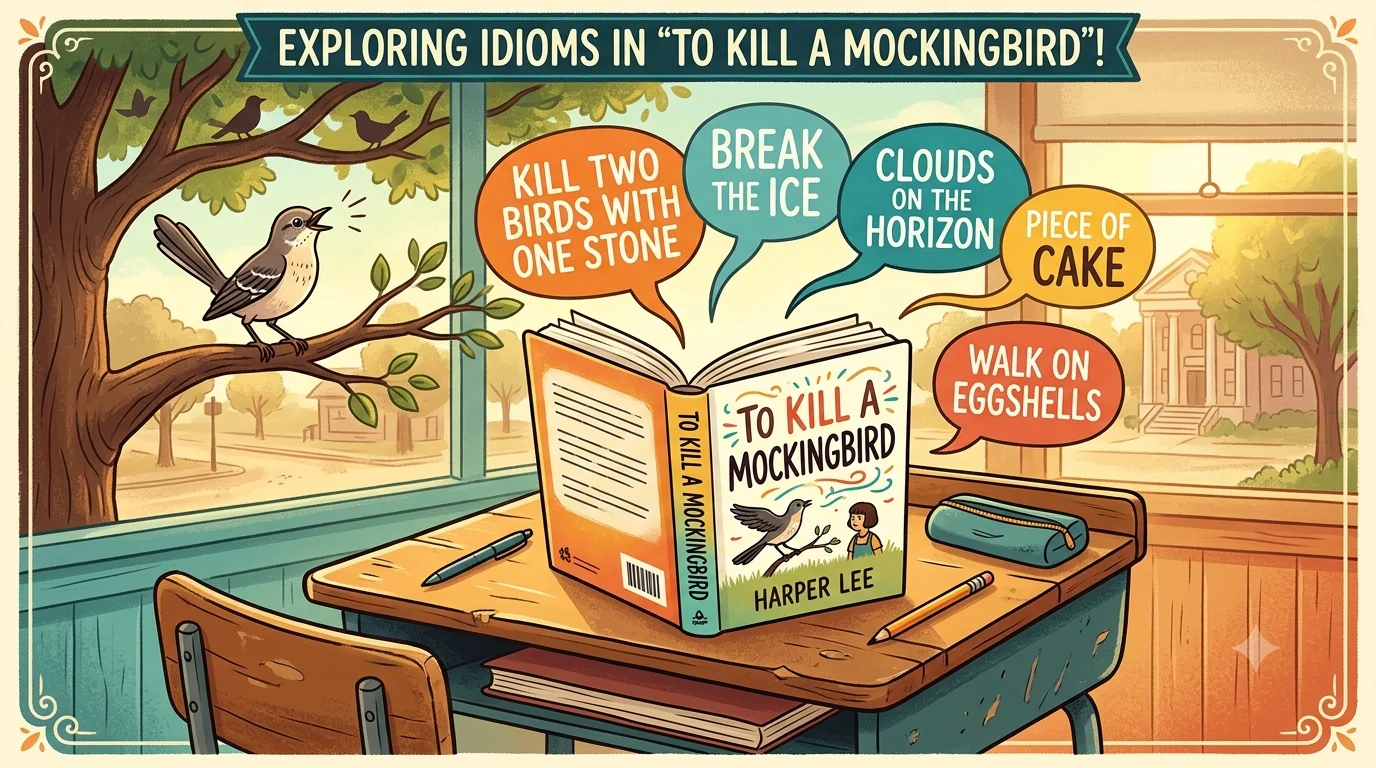
Idioms from To Kill a Mockingbird help readers understand not only the English language but also the emotions, culture, and life lessons hidden inside Harper Lee’s timeless novel. Whether you’re a student, English learner, or literature enthusiast, mastering these expressions will make your vocabulary richer and your communication more natural.
Imagine reading a chapter and suddenly finding an expression that doesn’t make literal sense. That’s where idioms become exciting—they reveal the deeper meaning behind everyday conversations.
What Are Idioms in To Kill a Mockingbird?
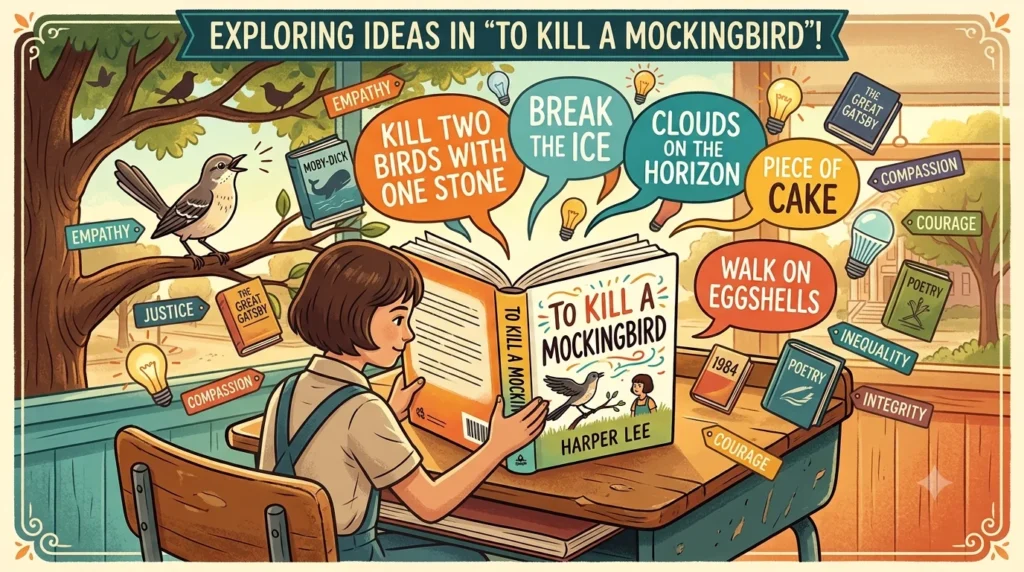
Idioms are expressions whose meanings cannot be understood by translating each individual word. Harper Lee uses idioms throughout To Kill a Mockingbird to create authentic Southern dialogue and realistic characters.
These idioms help readers understand:
- Southern American culture
- Family relationships
- Justice and morality
- Childhood experiences
- Human emotions
Learning these expressions also improves reading comprehension and spoken English.
Why Learn Idioms from To Kill a Mockingbird?
There are many benefits to studying literary idioms.
- Improve English fluency
- Understand classic literature more deeply
- Expand everyday vocabulary
- Prepare for school exams
- Speak English more naturally
Many English teachers also recommend reading the novel because it contains valuable expressions still used today.
Hold Your Head High
Word-by-word Meaning
- Hold = keep
- Your = belonging to you
- Head = part of the body
- High = raised
Idiomatic Meaning
Remain proud and confident even during difficult situations.
Example Sentences
- After telling the truth, she held her head high.
- Atticus taught his children to hold their heads high.
Common Error
❌ Hold your face high
✅ Hold your head high
Usage Note
Usually used after facing criticism or hardship.
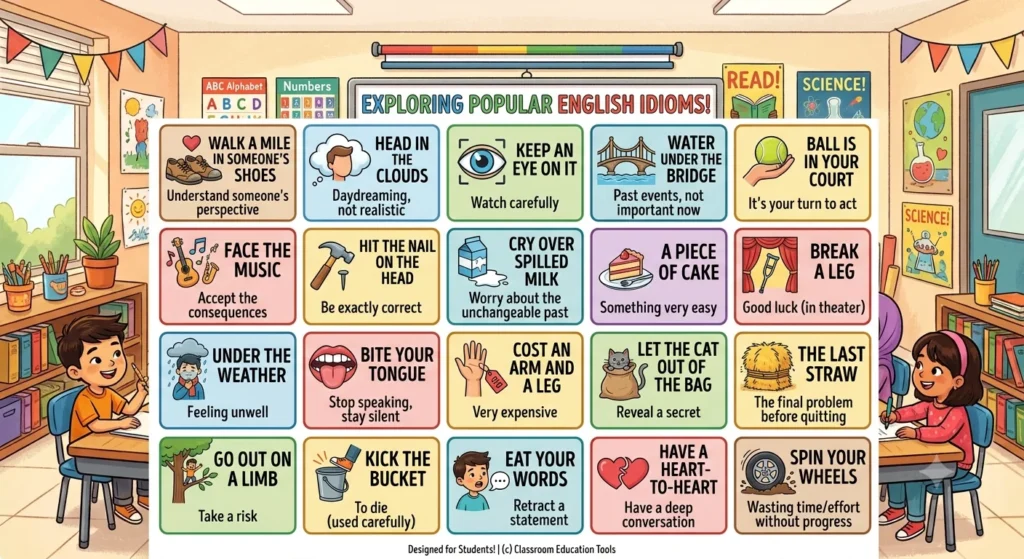
Walk in Someone’s Shoes
Word-by-word Meaning
Walk wearing another person’s shoes.
Idiomatic Meaning
Understand another person’s feelings or experiences.
Example Sentences
- Try to walk in his shoes before judging him.
- Scout learned to walk in another person’s shoes.
Common Error
Don’t say walk on someone’s shoes.
Usage Note
Often used when talking about empathy.
Turn a Blind Eye
Word-by-word Meaning
Pretend one eye cannot see.
Idiomatic Meaning
Ignore something intentionally.
Example Sentences
- The teacher turned a blind eye to the small mistake.
- People shouldn’t turn a blind eye to injustice.
Common Error
Don’t say close a blind eye.
Usage Note
Frequently used when discussing fairness.
Bite Your Tongue
Word-by-word Meaning
Literally bite your tongue.
Idiomatic Meaning
Stop yourself from saying something.
Example Sentences
- I had to bite my tongue during the argument.
- She bit her tongue to avoid hurting his feelings.
Common Error
Don’t replace tongue with mouth.
Usage Note
Common in emotional situations.
Keep an Eye On
Word-by-word Meaning
Watch carefully.
Idiomatic Meaning
Look after someone or something.
Example Sentences
- Please keep an eye on my bag.
- Jem kept an eye on Scout.
Common Error
Don’t say keep eyes on.
Usage Note
Used in daily conversation.
Lose Your Temper
Word-by-word Meaning
Become angry.
Idiomatic Meaning
Fail to control your emotions.
Example Sentences
- Never lose your temper during an interview.
- He almost lost his temper.
Common Error
Don’t say miss your temper.
Usage Note
Very common in spoken English.
In Hot Water
Word-by-word Meaning
Being in hot water.
Idiomatic Meaning
Being in trouble.
Example Sentences
- He was in hot water after breaking the rules.
- Scout often found herself in hot water.
Common Error
Don’t say inside hot water.
Usage Note
Used for small or serious trouble.
Make Up Your Mind
Word-by-word Meaning
Decide.
Idiomatic Meaning
Reach a final decision.
Example Sentences
- Make up your mind quickly.
- Jem couldn’t make up his mind.
Common Error
Don’t omit up.
Usage Note
Common for choices.
Stick to Your Guns
Word-by-word Meaning
Stay with your weapons.
Idiomatic Meaning
Remain firm in your beliefs.
Example Sentences
- Atticus stuck to his guns.
- She stuck to her principles.
Common Error
Don’t change guns to weapon.
Usage Note
Used for determination.
Break the Ice
Word-by-word Meaning
Break frozen ice.
Idiomatic Meaning
Start a friendly conversation.
Example Sentences
- A joke helped break the ice.
- Scout quickly broke the ice.
Common Error
Don’t say cut the ice.
Usage Note
Useful in meetings.
At the End of the Day
Word-by-word Meaning
The day’s ending.
Idiomatic Meaning
Ultimately.
Example Sentences
- At the end of the day, honesty wins.
- Family matters most at the end of the day.
Common Error
Avoid overusing it.
Usage Note
Common in discussions.
Hit the Nail on the Head
Word-by-word Meaning
Strike a nail correctly.
Idiomatic Meaning
Say something exactly right.
Example Sentences
- You hit the nail on the head.
- His explanation was perfect.
Common Error
Don’t say touch the nail.
Usage Note
Very common expression.
On the Same Page
Word-by-word Meaning
Reading the same page.
Idiomatic Meaning
Having the same understanding.
Example Sentences
- Let’s get on the same page.
- The class was finally on the same page.
Common Error
Don’t say same book.
Usage Note
Popular in workplaces.
The Ball Is in Your Court
Word-by-word Meaning
Ball on your side.
Idiomatic Meaning
It is your turn to decide.
Example Sentences
- I’ve explained everything. The ball is in your court.
- Now the decision is yours.
Common Error
Don’t say ground instead of court.
Usage Note
Common in negotiations.
Burn Bridges
Word-by-word Meaning
Destroy bridges.
Idiomatic Meaning
Damage relationships permanently.
Example Sentences
- Never burn bridges with colleagues.
- He avoided burning bridges.
Common Error
Don’t use break bridges.
Usage Note
Useful in career advice.
Face the Music
Word-by-word Meaning
Face musicians.
Idiomatic Meaning
Accept consequences.
Example Sentences
- It’s time to face the music.
- He admitted his mistake.
Common Error
Don’t change music.
Usage Note
Used after mistakes.
Cry Over Spilled Milk
Word-by-word Meaning
Cry because milk spilled.
Idiomatic Meaning
Don’t worry about past mistakes.
Example Sentences
- There’s no use crying over spilled milk.
- Move forward instead.
Common Error
Don’t omit spilled.
Usage Note
Encourages positivity.
A Tough Nut to Crack
Word-by-word Meaning
Hard nut.
Idiomatic Meaning
A difficult problem or person.
Example Sentences
- The puzzle was a tough nut to crack.
- The mystery remained difficult.
Common Error
Don’t say hard nut.
Usage Note
Common in education.
Pull Yourself Together
Word-by-word Meaning
Gather yourself.
Idiomatic Meaning
Calm yourself emotionally.
Example Sentences
- Pull yourself together before speaking.
- She quickly regained confidence.
Common Error
Don’t remove yourself.
Usage Note
Used after emotional moments.
The Last Straw
Word-by-word Meaning
Final piece of straw.
Idiomatic Meaning
The final problem that causes someone to lose patience.
Example Sentences
- His rude comment was the last straw.
- Everyone has limits.
Common Error
Don’t say final straw in the idiom.
Usage Note
Often used in conflicts.
Common Themes Behind the Idioms
Most idioms from To Kill a Mockingbird revolve around:
- Courage
- Justice
- Compassion
- Family values
- Moral responsibility
- Respect
- Empathy
- Personal growth
These themes are exactly what make Harper Lee’s novel a lasting classic.
Vocabulary Words Frequently Found in To Kill a Mockingbird
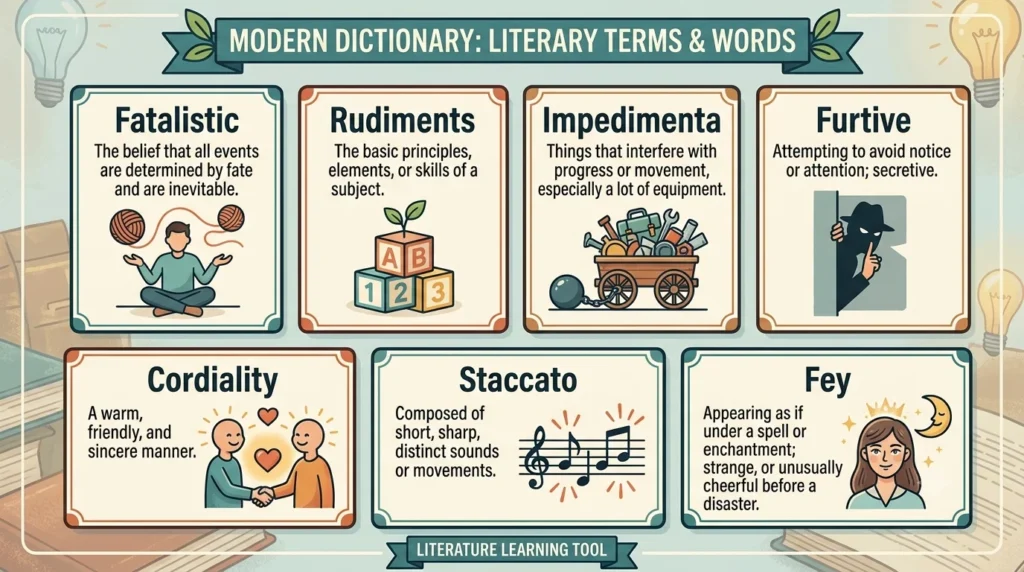
Besides learning idioms from To Kill a Mockingbird, many readers also search for difficult vocabulary used in the novel. Understanding these words makes reading much easier and improves academic performance.
| Vocabulary | Simple Definition |
|---|---|
| Fatalistic definition To Kill a Mockingbird | Believing that events are controlled by fate and cannot be changed. |
| Rudiments definition To Kill a Mockingbird | The basic principles or first lessons of a subject. |
| Impedimenta definition To Kill a Mockingbird | Equipment, baggage, or unnecessary burdens that slow someone down. |
| Furtive definition To Kill a Mockingbird | Secretive or done quietly to avoid being noticed. |
| Cordiality definition To Kill a Mockingbird | Warmth, friendliness, and sincere kindness toward others. |
| Staccato definition To Kill a Mockingbird | Short, quick, and sharply separated sounds or speech. |
| Fey definition To Kill a Mockingbird | Appearing magical, mysterious, or giving the feeling that something unusual is about to happen. |
Many students also search online for a To Kill a Mockingbird vocabulary PDF before exams. While a downloadable vocabulary list can be useful for revision, understanding each word in context is the best way to remember its meaning permanently.
Tips for Remembering Literary Idioms
- Read one chapter daily.
- Write one idiom in a notebook.
- Create your own example sentence.
- Use idioms during conversations.
- Review them every week.
- Practice with flashcards.
- Learn both vocabulary and idioms together.
Frequently Asked Questions
Are these idioms directly written in To Kill a Mockingbird?
Some are used directly, while others represent the style and themes commonly associated with the novel and its discussions in English classrooms.
Why is To Kill a Mockingbird useful for learning English?
The novel combines everyday conversations with advanced literary vocabulary, making it excellent for improving reading, speaking, and comprehension skills.
What is the hardest vocabulary in To Kill a Mockingbird?
Many learners find words like impedimenta, fatalistic, fey, furtive, and staccato challenging at first, but they become easier with context and practice.
Is learning idioms important for IELTS and TOEFL?
Yes. Understanding idioms improves reading comprehension and helps learners sound more natural in speaking and writing exams.
Where can I practice these idioms?
Practice by reading literature, writing your own sentences, discussing stories with friends, and reviewing vocabulary regularly.
Conclusion
Learning idioms from To Kill a Mockingbird is one of the best ways to improve your English while enjoying one of the world’s greatest novels. These expressions teach more than language—they reveal empathy, courage, wisdom, and human nature.
Make it a habit to learn one idiom every day, use it in conversation, and review it regularly. Over time, you’ll build stronger vocabulary, improve your speaking confidence, and understand classic literature with much greater ease.

“L.P. Hartley brings classic idioms to life on LearnIdom.com, helping readers explore language with wit, clarity, and timeless insight.”