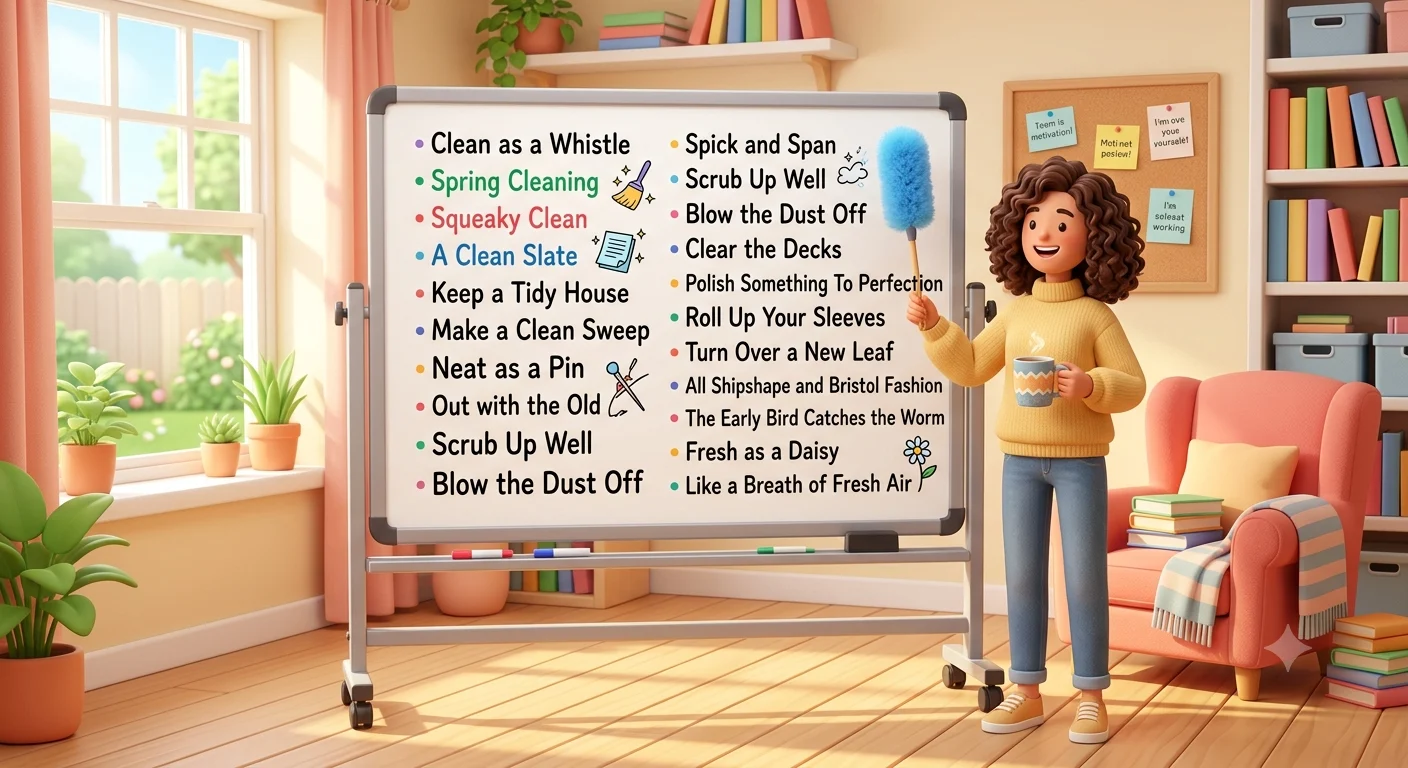
We all know that feeling—walking into a room so spotless that you instinctively take off your shoes. It’s refreshing, calming, and almost therapeutic. But have you ever noticed how we use cleanliness idioms in English to describe not just physical spaces, but also honesty, fresh starts, and even hidden secrets?
Last week, my friend Sarah told me she was doing her annual spring cleaning—not just her closet, but her entire life. She deleted old contacts, quit her toxic job, and moved to a new city for a clean slate. That conversation inspired me to explore the fascinating world of cleanliness idioms and phrases.
Whether you’re looking for cleanliness quotes for your Instagram caption, trying to understand cleaning metaphors in a novel, or simply want to expand your vocabulary, you’re in the right place. In this comprehensive guide, we’ll explore 20 essential idioms for cleaning house and beyond. By the end, you’ll not only know these phrases but also use them confidently in conversations, emails, and even job interviews.
Let’s dive in and give your English a squeaky clean upgrade!
Clean as a Whistle
Word-by-Word Meaning: “Clean” means free from dirt, and “whistle” refers to the instrument. Historically, this phrase meant “completely” or “thoroughly.”
Figurative Meaning: Extremely clean, pure, or clear. Can describe a room, a person’s record, or even a sound.
Real-Life Story: My grandfather was a navy officer. He used to say, “Son, a ship’s deck must be clean as a whistle before sunrise.” That discipline stayed with him for life.
Example Sentences:
- “After three hours of scrubbing, my kitchen was clean as a whistle.”
- “His criminal record is clean as a whistle—he’s never even had a parking ticket.”
Common Error: Don’t use it for something that is just “tidy.” It implies an extremely high standard of cleanliness.
Usage Note: Very versatile—use it for places, objects, legal standing, or even a clear voice.
Spring Cleaning
Word-by-Word Meaning: “Spring” refers to the season of renewal, and “cleaning” means removing dirt.
Figurative Meaning: A thorough cleaning or major overhaul—of a house, a system, or even your digital life.
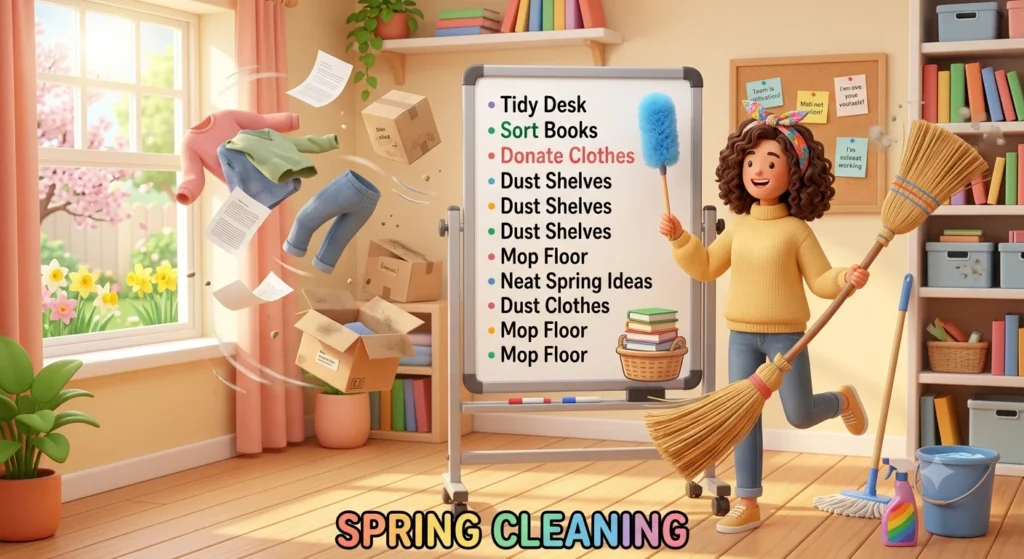
Real-Life Story: Every March, my mom goes on a spring cleaning spree. Last year, she donated 50 kg of old clothes and rearranged the entire living room. It felt like we had a new house!
Example Sentences:
- “I’m doing a digital spring cleaning—unsubscribing from 200 useless emails.”
- “The company did a financial spring cleaning and fired all redundant projects.”
Common Error: Thinking it only happens in spring. Many people do it in January or even summer!
Usage Note: One of the most common idioms for cleaning house. Associated with renewal and fresh energy.
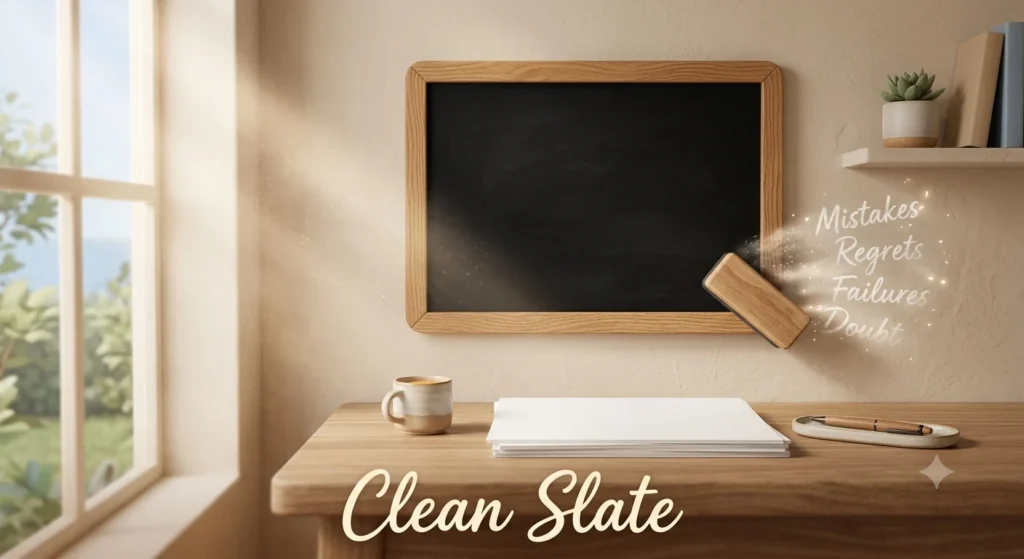
Clean Slate / Clean Sheet
Word-by-Word Meaning: “Slate” is a rock used for writing; a clean one has no marks. “Sheet” means fresh paper.
Figurative Meaning: To forget past mistakes and start over.
Real-Life Story: After a heated argument, my sister and her best friend decided to wipe the clean slate. They apologized and now they’re closer than ever.
Example Sentences:
- “I’m moving to Australia for a clean sheet—new city, new me.”
- “The new manager gave everyone a clean slate, regardless of their past performance.”
Common Error: Confusing with “blank slate.” Both are correct in this context.
Usage Note: Widely used in relationships, legal contexts, and career changes.
Squeaky Clean
Word-by-Word Meaning: “Squeaky” is the high-pitched sound made when you rub a clean glass or window.
Figurative Meaning: Perfectly clean. Also describes someone with an unblemished reputation.
Real-Life Story: My little nephew came out of the bath squeaky clean and ran straight to the cookie jar—only to drop a chocolate chip on the floor!
Example Sentences:
- “The hotel room was squeaky clean—not a speck of dust anywhere.”
- “The celebrity maintained a squeaky clean image for 20 years before the scandal broke.”
Common Error: Using it for “okay” cleanliness. It implies a top-tier standard.
Usage Note: Very common in advertisements and daily conversation.
A Clean Bill of Health
Word-by-Word Meaning: “Bill” means a certificate or report; “health” refers to physical condition.
Figurative Meaning: Confirmation that someone is healthy or that a system or machine is functioning properly.
Real-Life Story: My uncle had a heart scare last month. After a full check-up, the doctor gave him a clean bill of health. We all celebrated with a family dinner!

Example Sentences:
- “The mechanic gave my 10-year-old car a clean bill of health.”
- “The auditor gave the company’s finances a clean bill of health.”
Common Error: Using it for physical cleanliness of a room.
Usage Note: Originally medical, now widely used for any inspection.
Swept Under the Rug
Word-by-Word Meaning: “Swept” means brushed away; “under the rug” means hidden from view.
Figurative Meaning: To hide or ignore a problem instead of solving it.
Real-Life Story: My neighbor’s family tried to sweep their financial problems under the rug for years. Eventually, they had to sell their house.
Example Sentences:
- “The government tried to sweep the corruption scandal under the rug, but the media exposed everything.”
- “Don’t sweep your emotions under the rug—talk to someone.”
Common Error: Confusing with literal cleaning. This is about hiding, not tidying.
Usage Note: Very common in workplace and political contexts.
Make a Clean Breast of It
Word-by-Word Meaning: “Breast” refers to heart or conscience; “clean” means pure confession.
Figurative Meaning: To fully confess something you’ve been hiding.
Real-Life Story: My colleague Mark had been taking office supplies for months. One day, he decided to make a clean breast of it and returned everything.
Example Sentences:
- “He finally made a clean breast of it and admitted he stole the money.”
- “I need to make a clean breast of it—I was the one who broke your vase.”
Common Error: This is old-fashioned. Use it in formal or literary contexts only.
Usage Note: Perfect for dramatic confessions.
Come Clean
Word-by-Word Meaning: “Come” means arrive; “clean” means honest.
Figurative Meaning: To confess the truth.
Real-Life Story: My younger brother ate the last slice of cake and blamed the dog. But eventually, he came clean and apologized to mom.
Example Sentences:
- “The politician finally came clean about his tax evasions.”
- “I think you should come clean and tell your boss the truth.”
Common Error: Using it for physical cleaning.
Usage Note: Very common in everyday speech and journalism.
A New Broom Sweeps Clean
Word-by-Word Meaning: A new broom has stiff bristles and sweeps better.
Figurative Meaning: New leaders or managers bring fresh changes.
Real-Life Story: When our company hired a new CEO, she fired the entire marketing team in her first week. Within 3 months, our sales tripled.
Example Sentences:
- “The new principal changed all the school rules on day one. A new broom sweeps clean.”
- “We needed a fresh perspective, so we hired an external consultant.”
Common Error: Using it for cleaning houses.
Usage Note: A proverb—often used in business and politics.
Clean Hands
Word-by-Word Meaning: Hands physically free of dirt.
Figurative Meaning: Innocent; not involved in wrongdoing.
Real-Life Story: The CEO was accused of fraud, but the investigation proved she had clean hands. She was reinstated the next day.
Example Sentences:
- “The judge ruled that the defendant had clean hands in the case.”
- “I want to enter politics with clean hands—no corruption, no lies.”
Common Error: Confusing with literal handwashing.
Usage Note: Often used in legal and ethical discussions.
Rubdown
Word-by-Word Meaning: “Rub” plus “down” means to wipe or polish.
Figurative Meaning: A quick clean or polish.
Real-Life Story: Before selling his old bike, my cousin gave it a quick rubdown with a wet cloth. It looked almost new and sold within a day!
Example Sentences:
- “The car just needs a quick rubdown and it’s ready for the showroom.”
- “I gave my leather shoes a rubdown with some polish.”
Common Error: Confusing with a massage (which is also called a rubdown).
Usage Note: Practical and casual.
Clean Up One’s Act
Word-by-Word Meaning: “Clean up” means tidy; “act” means behavior.
Figurative Meaning: To improve your behavior or lifestyle.
Real-Life Story: My friend Ravi used to party every night and fail his classes. But after his father had a heart attack, he cleaned up his act, started studying, and now has a great job.
Example Sentences:
- “The company needs to clean up its act regarding workplace harassment.”
- “If you don’t clean up your act, you’ll lose your scholarship.”
Common Error: Using it for literal cleaning.
Usage Note: Very common for personal development.
Wash One’s Hands of Something
Word-by-Word Meaning: Washing hands to remove dirt or guilt.
Figurative Meaning: To refuse further responsibility or involvement.
Real-Life Story: My aunt had been helping her friend with debts for years. Finally, she said, “I wash my hands of this—it’s destroying my peace.”
Example Sentences:
- “I tried to help him, but he lied again. I wash my hands of him now.”
- “The company washed its hands of the controversial project.”
Common Error: Confusing with literal handwashing.
Usage Note: Biblical reference. Implies a decisive break.
Airing Dirty Laundry
Word-by-Word Meaning: “Airing” means hanging clothes to dry; “dirty laundry” means soiled clothes.
Figurative Meaning: Making private disputes public.
Real-Life Story: My neighbors had a huge fight and started airing their dirty laundry on Facebook. The whole street knew about their marriage problems within hours!
Example Sentences:
- “Please don’t air our dirty laundry in front of guests.”
- “The celebrity couple’s divorce became messy when they started airing their dirty laundry in court.”
Common Error: Using it for physical laundry.
Usage Note: Very common in relationship and celebrity contexts.
Spic and Span
Word-by-Word Meaning: “Spic” was originally a type of wooden spike, and “span” meant a newly made chip—together meaning “brand new.”
Figurative Meaning: Perfectly clean and neat.
Real-Life Story: My grandmother is 80 years old, but her house is always spic and span. She says cleanliness keeps her young!
Example Sentences:
- “She keeps her house spic and span—not a single dust particle anywhere.”
- “The hotel room was spic and span when we arrived.”
Common Error: Using it for just “tidy.”
Usage Note: A classic cleanliness quote that is very descriptive.
Scrub Up
Word-by-Word Meaning: “Scrub” means to clean vigorously with a brush.
Figurative Meaning: To wash oneself thoroughly, especially before a medical procedure.
Real-Life Story: My cousin is a surgeon. Every morning, he scrubs up for 10 minutes before entering the operation theater.
Example Sentences:
- “The surgeon needs to scrub up before the operation.”
- “He went to scrub up before dinner.”
Common Error: Overuse in casual contexts.
Usage Note: Very common in medical professions but can be used casually.
Clean Out
Word-by-Word Meaning: “Out” means to remove.
Figurative Meaning: To empty a space by cleaning or removing clutter. It can also mean to take all of someone’s money (in a negative sense).
Real-Life Story: We spent the entire weekend cleaning out the garage. We found old toys, books, and even a bicycle from the 1990s!
Example Sentences:
- “We need to clean out the storage room this weekend.”
- “The gambler cleaned out his savings account.”
Common Error: Using it only for literal cleaning.
Usage Note: One of the most common cleanliness phrases in everyday use.
Polish Off
Word-by-Word Meaning: “Polish” means to make shiny.
Figurative Meaning: To finish something, especially food.
Real-Life Story: Last night, we ordered a large pizza, and my brother polished off half of it in 10 minutes!
Example Sentences:
- “We polished off that pizza in 10 minutes.”
- “He polished off a bottle of wine by himself.”
Common Error: Using it for cleaning.
Usage Note: A great slang term for finishing a task or meal.
House-Proud
Word-by-Word Meaning: “House” plus “proud” meaning proud of something.
Figurative Meaning: To be very proud of the appearance of one’s home.
Real-Life Story: My neighbor Mrs. Khan is extremely house-proud. She vacuums twice a day and even polishes her doorknobs weekly!
Example Sentences:
- “She is very house-proud and is always cleaning.”
- “Don’t sit on the sofa; he’s very house-proud.”
Common Error: Confusing with “homeowner.”
Usage Note: A unique adjective to describe someone who values cleanliness.
A Clean Break
Word-by-Word Meaning: “Break” means separation.
Figurative Meaning: A sudden and complete separation from something.
Real-Life Story: After 10 years in a toxic relationship, my cousin finally made a clean break. She moved to another city and never looked back.
Example Sentences:
- “She made a clean break from her past.”
- “He wants a clean break from the company.”
Common Error: Using it for physical cleaning.
Usage Note: Very effective in psychological and relationship contexts.
Popular Cleanliness Quotes for Daily Inspiration
Sometimes, a simple cleanliness quote can motivate us to keep our spaces and lives organized. Here are some powerful quotes to inspire you:
- “Cleanliness is next to godliness.” — Ancient Proverb
- “Clean your house before you judge the world.” — Unknown
- “The first step to a better life is a clean home.” — Unknown
- “A clean space creates a clear mind.” — Marie Kondo
- “Cleanliness is not about being perfect—it’s about being peaceful.” — Unknown
These cleanliness quotes are perfect for social media captions, wall art, or daily reminders. Which one resonates with you the most?
Common Cleaning Metaphors in Everyday Life
Cleaning metaphors are powerful tools that help us describe complex situations using the language of cleanliness. Here are some popular ones:
“Clearing the Cobwebs”
Meaning: Removing outdated ideas or refreshing your mind.
Example: “I need to go for a walk to clear the cobwebs from my brain.”
“Wiping the Slate Clean”
Meaning: Forgiving someone and starting fresh.
Example: “Let’s wipe the slate clean and forget the past.”
“Turning Over a New Leaf”
Meaning: Changing your behavior for the better.
Example: “After prison, he turned over a new leaf and became a social worker.”
“Polishing Your Image”
Meaning: Improving your reputation.
Example: “The company hired a PR firm to polish its image.”
“Scratching the Surface”
Meaning: Only dealing with the obvious issues.
Example: “We’ve only scratched the surface of the problem.”
These cleaning metaphors add color and depth to your conversations. Try using one today!
Practical Clean Synonyms to Expand Your Vocabulary
If you’re tired of using the word “clean” repeatedly, here are some powerful clean synonyms to enrich your vocabulary:
| Clean Synonym | Meaning | Example Sentence |
|---|---|---|
| Spotless | Extremely clean | “The kitchen was spotless after she finished.” |
| Pristine | In perfect condition | “The beach was pristine—no trash anywhere.” |
| Immaculate | Perfectly clean | “Her uniform was immaculate.” |
| Sparkling | Shining and clean | “The windows were sparkling in the sunlight.” |
| Purity | State of being clean | “The purity of the mountain air was refreshing.” |
| Sterile | Completely clean | “The hospital room was sterile.” |
| Untainted | Not contaminated | “His reputation remained untainted.” |
Using these clean synonyms will make your English more diverse and impressive. Practice using them in your daily conversations!
Frequently Asked Questions
Q1: What is the most common idiom for being completely innocent?
The most common idiom is “clean hands” or “clean as a whistle.” For example, “The investigation proved he had clean hands in the fraud case.”
Q2: What does “spring cleaning” mean in business?
In business, “spring cleaning” refers to restructuring, removing outdated processes, or firing unproductive employees. Example: “The company did a spring cleaning of its management team.”
Q3: What is the difference between “clean slate” and “blank slate”?
Both are used interchangeably in everyday language. “Clean slate” emphasizes forgetting past mistakes, while “blank slate” emphasizes starting with no preconceptions. Example: “The new CEO gave everyone a clean slate.”
Q4: What is a good slogan for cleanliness?
A great slogan for cleanliness is “Clean is green” or “Keep calm and clean on.” These are catchy and memorable.
Q5: How can I use “clean phrase AI” to learn idioms?
You can use AI tools like ChatGPT to generate practice sentences or quiz yourself. For example, prompt: “Give me 5 sentences using ‘squeaky clean’ and ‘spic and span’ in different contexts.”
Conclusion
Congratulations! You’ve now mastered 20 essential cleanliness idioms in English—from “clean as a whistle” to “a clean break.” These phrases will help you sound more natural, expressive, and fluent in your conversations.
Remember, learning idioms is like spring cleaning for your vocabulary—it clears out the old and makes room for new growth. Here’s your action plan for the next 7 days:
- Day 1-2: Choose 5 idioms and use them in different conversations.
- Day 3-4: Write a short story using at least of these idioms.
- Day 5-6: Share your favorite cleanliness quote on social media.
- Day 7: Practice with a friend or language partner using the idioms you’ve learned.
The key to mastering cleanliness idioms and phrases is consistent practice. Don’t be afraid to make mistakes—every error is a step closer to fluency.
Now it’s your turn! Which idiom resonated with you the most? Share your answer in the comments below! And if you found this guide helpful, don’t forget to share it with a friend who’s also learning English.
Remember: A clean slate awaits you every single day. Start fresh, keep practicing, and soon you’ll be using these idioms like a native speaker!
Happy learning, and stay squeaky clean! 🌟

“Rose Macaulay shares the charm of idioms on LearnIdom.com, making language learning delightful, insightful, and full of wit for every reader.”