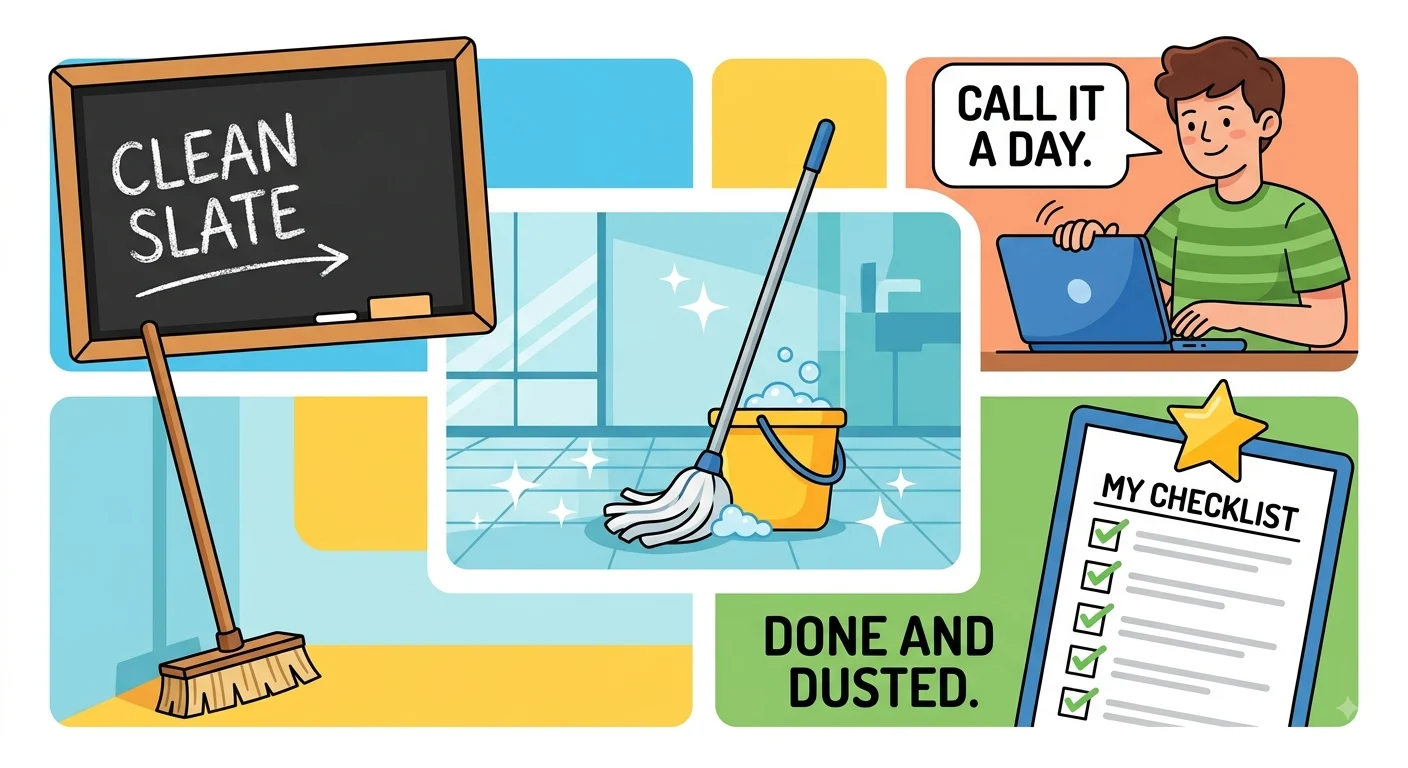
Have you ever scrubbed your kitchen for hours and thought, “Now it’s spick and span“? Or maybe you finished a messy work project and said, “Let’s call it a day.”
English is full of colorful idioms for cleaning — and they’re not just about housework!
Native speakers use cleaning idioms to talk about:
- Finishing tasks
- Fixing mistakes
- Starting fresh
- Ending relationships
- Solving problems
Learning these phrases for cleaning will help you:
- Sound more natural in conversations
- Understand movies, news, and books better
- Express yourself clearly and creatively
In this guide, you’ll discover essential idioms for cleaning and completion — with word-by-word meanings, figurative meanings, example sentences, common errors, and usage notes.
Let’s begin!
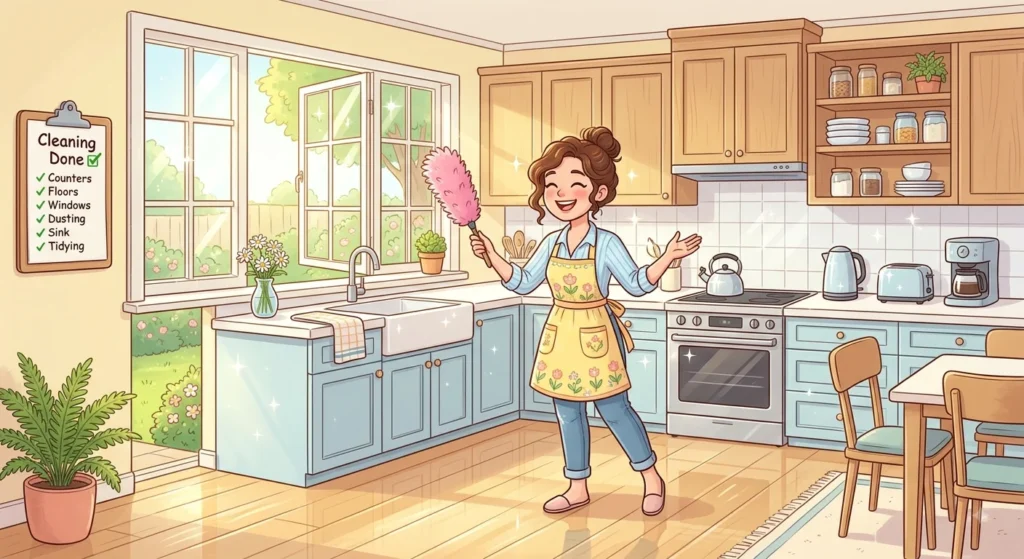
Spick and Span
Word-by-Word Meaning
“Spick” means neat, and “span” means new or fresh. Together, they describe something perfectly clean.
Figurative Meaning
Completely clean, tidy, and in excellent condition.
Example Sentences
- “After three hours of cleaning, my entire house is spick and span.”
- “She always keeps her office desk spick and span.”
Common Error
Don’t say “spick and span clean” — it’s already complete.
Usage Note
Use this when you want to emphasize extreme cleanliness — perfect for housework or organizing.
Clean Slate
Word-by-Word Meaning
A “slate” was a writing board in old schools. A clean slate means no marks or mistakes on it.
Figurative Meaning
A fresh start — leaving past mistakes, arguments, or problems behind.

Example Sentences
- “After their big fight, they decided to start with a clean slate.”
- “Moving to a new city gave me a clean slate in life.”
Common Error
This is NOT about literal cleaning — it’s about new beginnings and second chances.
Usage Note
Very common in relationships, jobs, and personal growth.
Call It a Day
Word-by-Word Meaning
“Call” means to decide, and “a day” refers to the working day.
Figurative Meaning
To stop working for the rest of the day — because you’ve done enough.
Example Sentences
- “We’ve been cleaning for five hours. Let’s call it a day.”
- “After finishing the report, I decided to call it a day.”
Common Error
Don’t use this early in the morning. It’s for ending a period of activity.
Usage Note
Great for workplaces and casual settings when you want to signal “I’m done.”
Done and Dusted
Word-by-Word Meaning
“Done” means completed, and “dusted” refers to the final cleaning touch.
Figurative Meaning
Completely finished — with no loose ends remaining.
Example Sentences
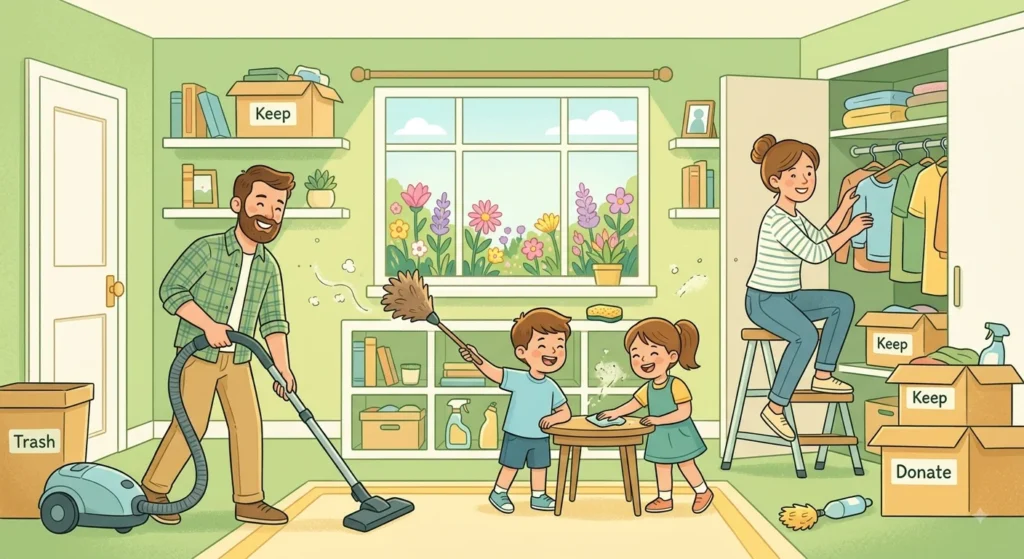
- “My spring cleaning is done and dusted — time to relax!”
- “The project is done and dusted before the deadline.”
Common Error
Don’t use this for ongoing tasks. It implies final completion.
Usage Note
Satisfying and confident. Use it to celebrate finishing something big.
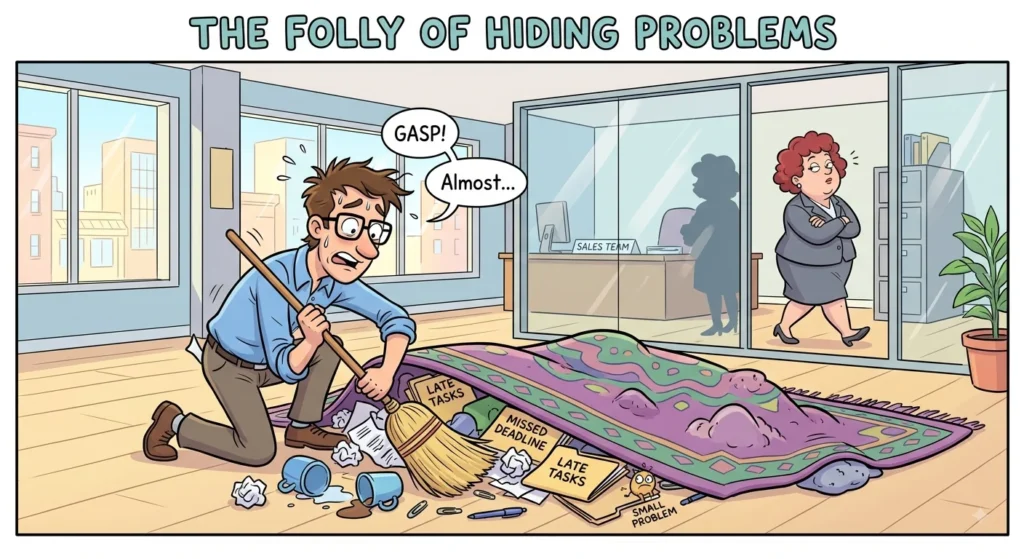
Sweep Under the Rug
Word-by-Word Meaning
Literally sweeping dust under a rug to hide it.
Figurative Meaning
To hide or ignore a problem instead of solving it.
Example Sentences
- “You can’t sweep this issue under the rug — we need to fix it.”
- “My boss tried to sweep the mistake under the rug.”
Common Error
This is negative — it means avoiding responsibility.
Usage Note
Use it when someone is hiding problems instead of facing them.
Wipe the Slate Clean
Word-by-Word Meaning
Literally wiping a writing board to remove all marks.
Figurative Meaning
To forget past mistakes and start over completely.
Example Sentences
- “Let’s wipe the slate clean and begin the project again.”
- “After the apology, they wiped the slate clean.”
Common Error
Don’t confuse with “clean slate” — both are similar, but “wipe” emphasizes the action.
Usage Note
Perfect for fresh starts in business, studies, or relationships.
Clean House
Word-by-Word Meaning
Literally cleaning your entire house.
Figurative Meaning
To remove unwanted people, things, or problems — often in an organization.
Example Sentences
- “The new manager decided to clean house and fire lazy employees.”
- “It’s time to clean house and get rid of old clothes.”
Common Error
Don’t use this for daily chores — it implies major change.
Usage Note
Common in business and politics when removing corruption or inefficiency.
Mop Up
Word-by-Word Meaning
Using a mop to clean a wet floor.
Figurative Meaning
To finish the last small parts of a task or solve remaining problems.
Example Sentences
- “We just need to mop up a few details before submitting.”
- “The team is working to mop up after the system crash.”
Common Error
Don’t use for starting a task — it’s for the final stages.
Usage Note
Great for project management and fixing minor issues.
Scrub Up Well
Word-by-Word Meaning
To clean oneself thoroughly.
Figurative Meaning
To look very nice after dressing up or preparing for an event.
Example Sentences
- “He really scrubs up well in a suit!”
- “Everyone scrubbed up well for the wedding.”
Common Error
This is about appearance, not actual cleaning.
Usage Note
Casual and complimentary. Use it when someone looks surprisingly good.
Dust Off
Word-by-Word Meaning
To remove dust from something.
Figurative Meaning
To revive or reuse something that hasn’t been used in a long time.
Example Sentences
- “I need to dust off my old guitar and start playing again.”
- “She dusted off her interview skills for the job application.”
Common Error
Not for brand-new items — only for things you haven’t used recently.
Usage Note
Perfect for skills, hobbies, or objects you’ve neglected.
Polish Off
Word-by-Word Meaning
To polish means to make shiny. “Off” adds finality.
Figurative Meaning
To finish something completely, especially food or tasks.
Example Sentences
- “The kids polished off the entire pizza in 10 minutes.”
- “I need to polish off this report before noon.”
Common Error
When used for food, it means eating everything — not cleaning!
Usage Note
Very casual and common in daily conversations.
Spring Cleaning
Word-by-Word Meaning
The tradition of deep cleaning your home in spring.
Figurative Meaning
A thorough review and clean-up of anything — not just houses.
Example Sentences
- “I’m doing spring cleaning of my email inbox.”
- “Our company needs a digital spring cleaning.”
Common Error
Don’t use it year-round — it specifically refers to spring or big clean-ups.
Usage Note
Use it for major organizing or decluttering projects.
Clear the Decks
Word-by-Word Meaning
Literally clearing a ship’s deck before a battle.
Figurative Meaning
To remove obstacles and prepare for action.
Example Sentences
- “Let’s clear the decks before we start the new project.”
- “We need to clear the decks of all old files.”
Common Error
This is about preparation, not actual cleaning.
Usage Note
Great for getting ready for big events or projects.
Wipe Out
Word-by-Word Meaning
To wipe something completely away.
Figurative Meaning
To destroy, eliminate, or erase completely.
Example Sentences
- “The pandemic wiped out many small businesses.”
- “We need to wipe out all errors in this document.”
Common Error
This is very strong — use it for serious situations.
Usage Note
Common in news, finance, and competitive contexts.
Tidy Up
Word-by-Word Meaning
To make things neat and organized.
Figurative Meaning
To organize or fix small things, not just physical spaces.
Example Sentences
- “Can you tidy up your room before guests arrive?”
- “Let’s tidy up the budget report.”
Common Error
Don’t confuse with deep cleaning — “tidy” means organize, not scrub.
Usage Note
One of the most common phrases for cleaning in everyday English.
Pick Up After
Word-by-Word Meaning
To clean up the mess someone else made.
Figurative Meaning
To fix problems caused by another person.
Example Sentences
- “I’m tired of picking up after my lazy roommate.”
- “The new manager has to pick up after the previous one’s mistakes.”
Common Error
This implies you are not responsible for the mess — someone else is.
Usage Note
Use it when you’re cleaning up others’ messes, literal or figurative.
Wash Your Hands Of
Word-by-Word Meaning
Literally washing hands to remove dirt.
Figurative Meaning
To refuse responsibility for something or someone.
Example Sentences
- “I washed my hands of that project after all the drama.”
- “The company washed its hands of the scandal.”
Common Error
This means abandoning responsibility — not actual cleaning.
Usage Note
Strong and decisive. Use it when you want to walk away.
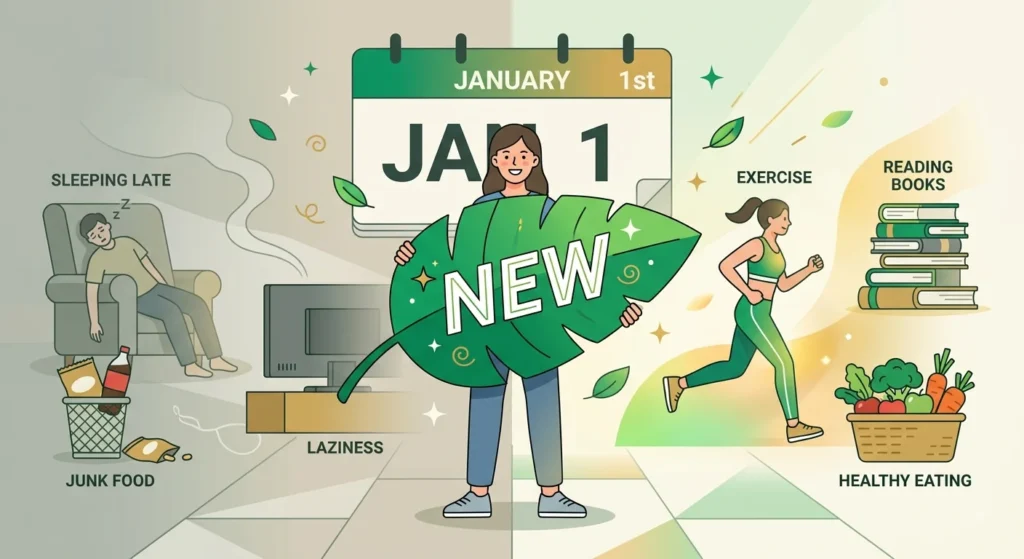
Turn Over a New Leaf
Word-by-Word Meaning
A leaf is a page in a book. Turning it means starting a new page.
Figurative Meaning
To change your behavior for the better and start fresh.
Example Sentences
- “After the incident, he turned over a new leaf.”
- “She decided to turn over a new leaf and exercise daily.”
Common Error
This is about personal change, not literal cleaning.
Usage Note
Perfect for New Year’s resolutions or life changes.
Put the House in Order
Word-by-Word Meaning
Organizing your home properly.
Figurative Meaning
To organize your life, finances, or business.
Example Sentences
- “Before starting a business, put your house in order.”
- “The CEO needs to put the house in order.”
Common Error
Don’t use for small tasks — it’s about major organization.
Usage Note
Common in business, finance, and personal development.
Close the Book On
Word-by-Word Meaning
Closing a book after finishing reading.
Figurative Meaning
To finish something permanently and move on.
Example Sentences
- “Let’s close the book on this project and start a new one.”
- “They closed the book on their old rivalry.”
Common Error
Don’t use for everyday tasks — it implies a significant ending.
Usage Note
Great for endings of relationships, jobs, or long projects.
Quick Reference Table: 20 Cleaning Idioms
| # | Idiom | Meaning | Best Used For |
|---|---|---|---|
| 1 | Spick and Span | Perfectly clean | Housework, organizing |
| 2 | Clean Slate | Fresh start | Relationships, jobs |
| 3 | Call It a Day | Stop working | Work, study |
| 4 | Done and Dusted | Completely finished | Projects, tasks |
| 5 | Sweep Under Rug | Hide problems | Workplace, politics |
| 6 | Wipe Slate Clean | Start over | Business, studies |
| 7 | Clean House | Remove problems | Organizations |
| 8 | Mop Up | Finish details | Project management |
| 9 | Scrub Up Well | Look good | Events, weddings |
| 10 | Dust Off | Revive skills | Hobbies, old skills |
| 11 | Polish Off | Finish completely | Food, tasks |
| 12 | Spring Cleaning | Major clean-up | Decluttering |
| 13 | Clear Decks | Prepare | Big projects |
| 14 | Wipe Out | Eliminate | News, finance |
| 15 | Tidy Up | Organize | Daily chores |
| 16 | Pick Up After | Fix others’ mess | Relationships |
| 17 | Wash Hands Of | Refuse responsibility | Decisions |
| 18 | Turn Over Leaf | Change behavior | Personal growth |
| 19 | Put House Order | Organize life | Business, finance |
| 20 | Close Book On | End permanently | Endings, moving on |
FAQ
What is the idiom for cleaning a house?
“Spick and span” is the most common idiom for a clean house. You can also say “spring cleaning” for a deep clean, or “tidy up” for organizing.
What are common phrases using cleaning words?
Popular cleaning phrases include “clean slate” (fresh start), “sweep under the rug” (hide problems), “wipe the slate clean” (start over), and “pick up after” (clean someone else’s mess).
How do you say “done cleaning” in a cool way?
You can say “done and dusted,” “spick and span,” or “call it a day” to sound natural and cool.
What is the difference between “clean slate” and “wipe the slate clean”?
Both mean a fresh start. However, “clean slate” is a noun (a state), while “wipe the slate clean” is a verb phrase (the action of starting over).
Can cleaning idioms be used in professional settings?
Absolutely! “Clean house,” “mop up,” “clear the decks,” and “put the house in order” are very common in business and professional environments.
Conclusion
Learning idioms for cleaning is more than just vocabulary — it’s about sounding like a native speaker and understanding everyday English.
These cleaning idioms help you:
- Express yourself more naturally
- Understand movies, shows, and conversations
- Sound confident and fluent
Start small. Pick 3 idioms from this list and practice them this week.
- Use “spick and span” when you finish cleaning.
- Say “call it a day” when you’re done working.
- Try “clean slate” when starting something new.
The more you practice, the more natural they’ll feel.
So, what are you waiting for? Tidy up your English vocabulary today and start using these amazing cleaning phrases!

“L.P. Hartley brings classic idioms to life on LearnIdom.com, helping readers explore language with wit, clarity, and timeless insight.”