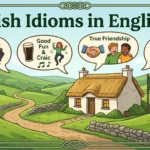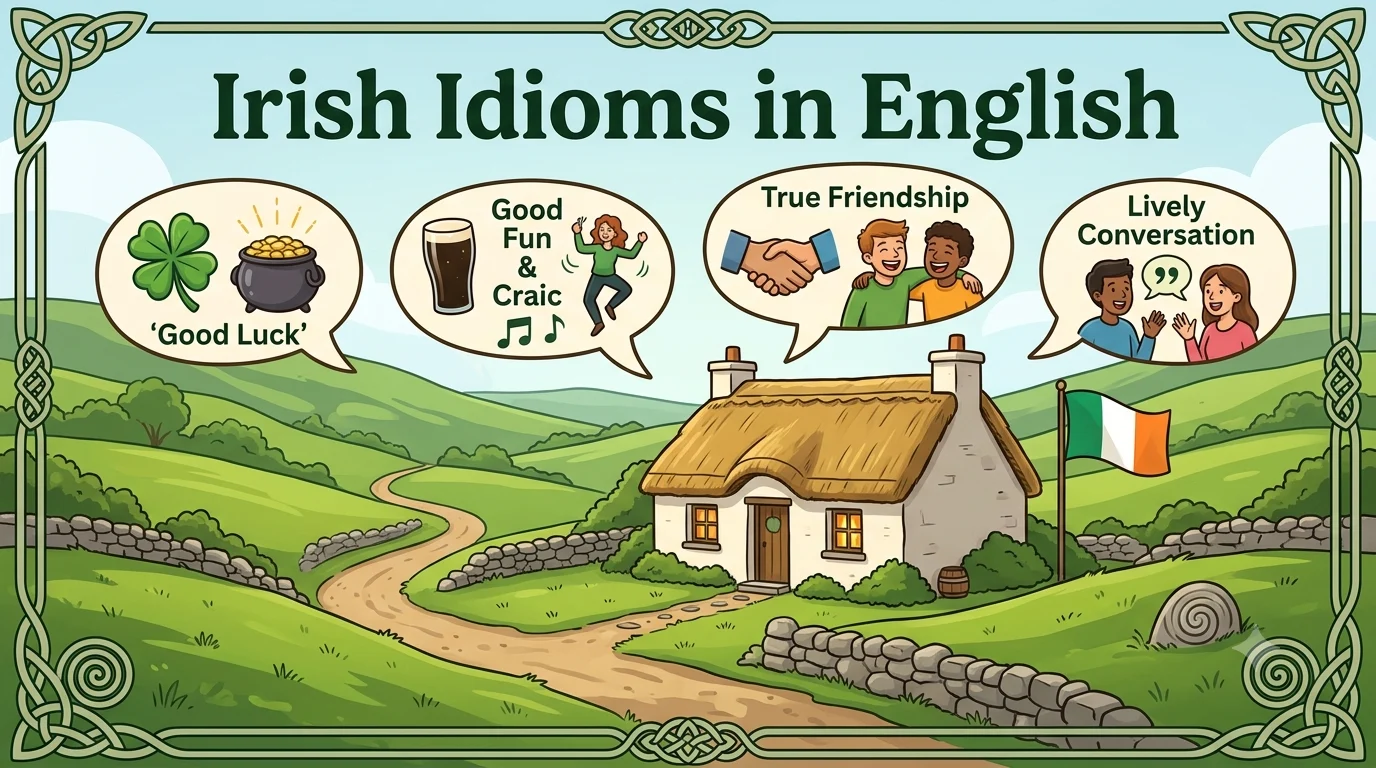
Irish idioms in English add humor, warmth, and personality to everyday conversation. From “the luck of the Irish” to “what’s the craic?”, these expressions can make ordinary English sound much more lively.
Whether you are learning English, exploring Irish culture, or simply looking for interesting Irish idioms in English, this guide explains 20 popular expressions in simple language with practical examples.
What Are Irish Idioms in English?
Irish idioms are expressions commonly associated with Irish English, Irish culture, or traditional Irish speech. Their meanings are often different from the literal meanings of their individual words.
For example, if someone says, “What’s the craic?”, they usually are not asking about a physical object called “craic.” They are asking what is happening, how things are going, or whether there is any fun or news.
Irish expressions are especially interesting because they often reflect Ireland’s storytelling tradition, humor, friendliness, and distinctive way of communicating.
Below are popular Irish expressions worth knowing. Each one includes its literal meaning, figurative meaning, examples, common mistakes, and usage tips.
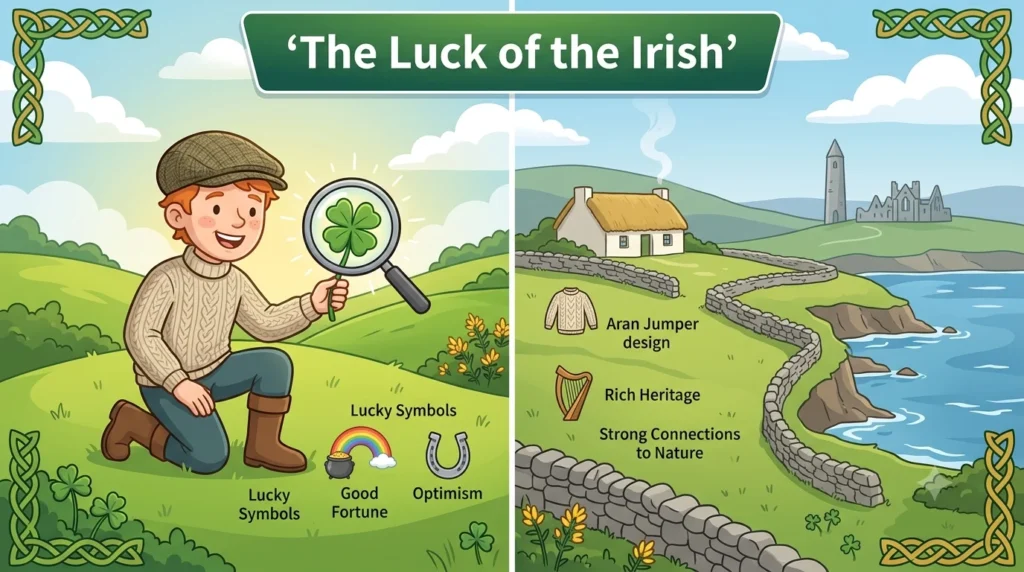
The Luck of the Irish 🍀
Word-by-word meaning:
“The luck” means good fortune, while “Irish” refers to Ireland or Irish people.
Idiomatic/figurative meaning:
It describes someone who seems to have unusually good luck.
Example sentences:
- He won the competition on his first try—the luck of the Irish!
- We found the last available table just in time. It must be the luck of the Irish.
Common error:
Do not assume the expression literally means that every Irish person is lucky.
Usage note:
This phrase is often used humorously when someone experiences unexpected good fortune.
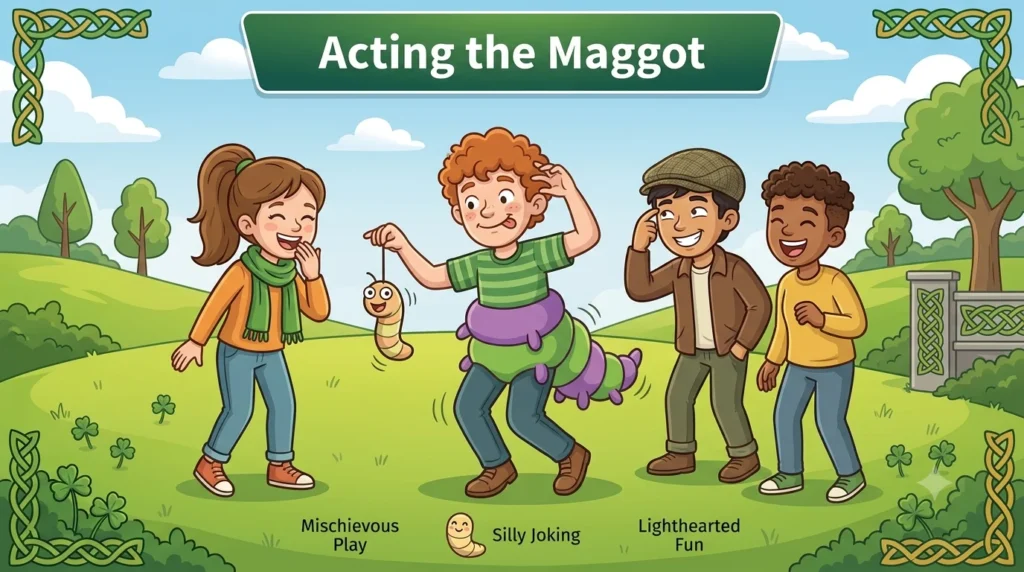
What’s the Craic? 😄
Word-by-word meaning:
“What’s” means “what is,” while “craic” is an Irish English term associated with fun, entertainment, news, or conversation.
Idiomatic/figurative meaning:
It generally means “What’s happening?”, “How are you?”, or “What’s new?”
Example sentences:
- Hey, Sarah! What’s the craic?
- We met our friends downtown and asked, “What’s the craic?”
Common error:
Do not interpret “craic” as a negative or inappropriate word simply because it looks similar to another English word.
Usage note:
This is informal and works best in friendly conversations.
Grand
Word-by-word meaning:
“Grand” literally means impressive, large, or magnificent.
Idiomatic/figurative meaning:
In Irish English, grand can mean “fine,” “okay,” “good,” or “no problem.”
Example sentences:
- “How are you feeling?” “I’m grand, thanks.”
- Don’t worry about me. Everything is grand.
Common error:
Learners sometimes assume “grand” always means magnificent or luxurious.
Usage note:
It is extremely useful in informal Irish English and can describe a situation that is simply okay.
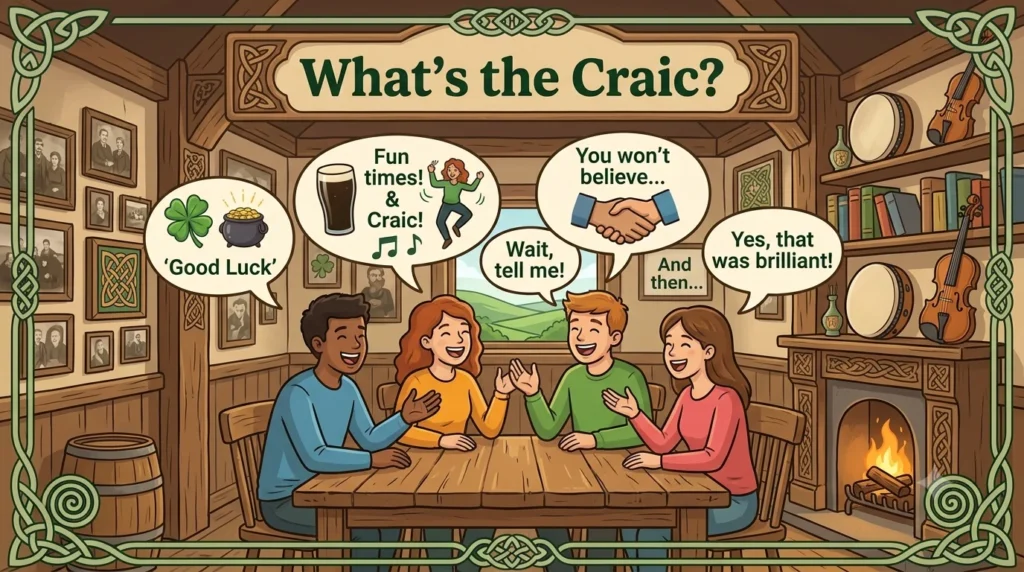
Acting the Maggot 🙃
Word-by-word meaning:
“Acting” means behaving, while “maggot” literally refers to a small larva.
Idiomatic/figurative meaning:
It means behaving foolishly, playfully, or mischievously.
Example sentences:
- The children were acting the maggot during the family dinner.
- Stop acting the maggot and finish your homework.
Common error:
The phrase does not mean that someone is literally behaving like an insect larva.
Usage note:
It is informal and often used humorously.
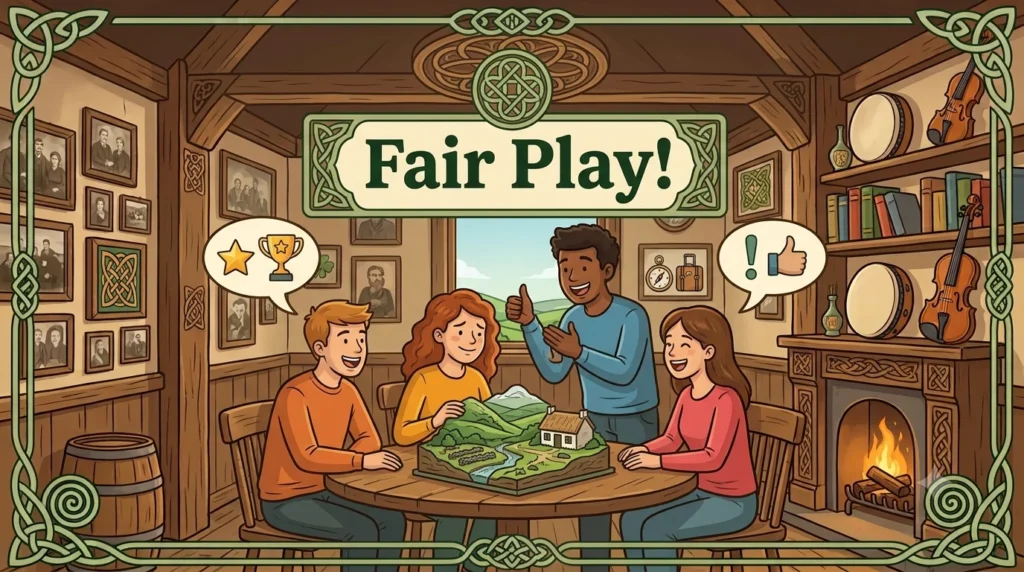
Fair Play! 👏
Word-by-word meaning:
“Fair” means just or reasonable, and “play” refers literally to playing.
Idiomatic/figurative meaning:
It is an expression of approval, praise, or admiration.
Example sentences:
- You finished the whole project yourself? Fair play!
- Fair play to Emma for helping everyone.
Common error:
Do not use it only when talking about sports.
Usage note:
It can be used to compliment someone’s effort, courage, honesty, or achievement.
Give Out
Word-by-word meaning:
“Give” means to provide, while “out” indicates outward movement.
Idiomatic/figurative meaning:
In Irish English, give out can mean to complain, scold, or criticize someone.
Example sentences:
- My mother gave out to me for coming home late.
- He was giving out about the long wait.
Common error:
“Give out” does not always mean physically handing something to someone.
Usage note:
The exact meaning depends on context. It can relate to complaining or telling someone off.
Sure Look
Word-by-word meaning:
“Sure” means certain, and “look” refers to seeing.
Idiomatic/figurative meaning:
It is a conversational expression used to accept a situation, move a conversation along, or express resignation.
Example sentences:
- Sure look, we can try again tomorrow.
- Sure look, sometimes things don’t go according to plan.
Common error:
It is not necessarily an instruction to look at something.
Usage note:
This expression is highly conversational and is best understood from context.
Your Man / Your One
Word-by-word meaning:
“Your man” literally sounds as though the person belongs to you, while “your one” similarly sounds possessive.
Idiomatic/figurative meaning:
These expressions can refer casually to a particular person whose name the speaker does not mention.
Example sentences:
- Your man from the shop was there earlier.
- Your one who works at the library helped me yesterday.
Common error:
The phrase does not necessarily refer to someone’s partner.
Usage note:
Meaning depends heavily on context and tone.
Yer Man
Word-by-word meaning:
“Yer” is a conversational form of “your,” while “man” refers to a male person.
Idiomatic/figurative meaning:
It can casually refer to a particular man, especially when the speaker expects the listener to know who they mean.
Example sentences:
- Yer man was telling us about his new car.
- Did you see yer man at the café?
Common error:
Do not treat “yer” as standard formal English.
Usage note:
This is informal Irish speech and is generally unsuitable for formal writing.
Kiss of the Blarney Stone 🏰
Word-by-word meaning:
A kiss refers to touching with the lips, while the Blarney Stone is a famous stone associated with Blarney Castle.
Idiomatic/figurative meaning:
It is connected with having a gift for persuasive, charming, or flattering speech.
Example sentences:
- He could convince anyone—he must have kissed the Blarney Stone.
- She talked her way out of the situation with the kiss of the Blarney Stone.
Common error:
The expression is not normally used to describe an ordinary romantic kiss.
Usage note:
It is strongly connected with Irish cultural imagery and storytelling.
Away with the Fairies 🧚
Word-by-word meaning:
“Away” means somewhere else, while “fairies” refers to mythical beings.
Idiomatic/figurative meaning:
It describes someone who seems distracted, dreamy, unrealistic, or not paying attention.
Example sentences:
- John was away with the fairies during the meeting.
- She looked completely away with the fairies after staying up all night.
Common error:
It does not necessarily mean someone believes in fairies.
Usage note:
Use it informally and usually in a playful way.
Not the Full Shilling
Word-by-word meaning:
A shilling was an old British and Irish currency unit.
Idiomatic/figurative meaning:
Historically, this expression could describe someone as strange, eccentric, or not quite mentally sharp.
Example sentences:
- People jokingly said he wasn’t the full shilling.
- She has an unusual sense of humor, but she’s certainly not the full shilling.
Common error:
Do not use this expression in a serious medical context.
Usage note:
Today it can sound old-fashioned or insensitive, so it should be used carefully.
The Jacks 🚻
Word-by-word meaning:
“Jacks” is a plural noun that may refer to a game or objects in other contexts.
Idiomatic/figurative meaning:
In Irish English, the jacks commonly means the toilet or bathroom.
Example sentences:
- Excuse me, where are the jacks?
- I’ll be back in a minute. I’m just going to the jacks.
Common error:
A learner may search for “jacks” expecting a specific object.
Usage note:
It is informal. “Bathroom” or “restroom” is safer in formal situations.
The Spuds 🥔
Word-by-word meaning:
“Spuds” is an informal word for potatoes.
Idiomatic/figurative meaning:
It simply refers to potatoes, especially in casual Irish conversation.
Example sentences:
- We’re having spuds with dinner tonight.
- She bought a bag of spuds from the market.
Common error:
Do not confuse “spuds” with a completely different food.
Usage note:
It is informal and playful rather than formal vocabulary.
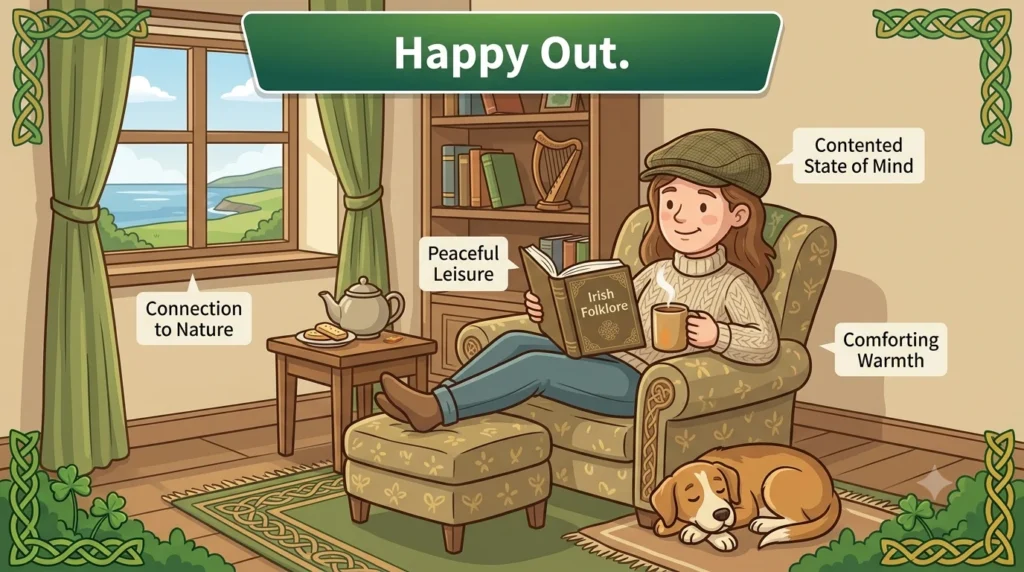
Happy Out 😊
Word-by-word meaning:
“Happy” means pleased, and “out” literally suggests being outside.
Idiomatic/figurative meaning:
It means being very satisfied, comfortable, or content with a situation.
Example sentences:
- Give me a book and a cup of tea, and I’m happy out.
- He’s happy out with his new job.
Common error:
It does not necessarily mean someone is happy because they are physically outside.
Usage note:
This is a casual Irish English expression.
Come Here to Me
Word-by-word meaning:
“Come here” sounds like an invitation to approach, while “to me” emphasizes the speaker.
Idiomatic/figurative meaning:
It can introduce a thought, correction, question, or piece of information.
Example sentences:
- Come here to me, did you finish the assignment?
- Come here to me, I’ve just remembered something important.
Common error:
It does not always require the listener to physically move closer.
Usage note:
It is a conversational expression and is usually informal.
Your Only Man
Word-by-word meaning:
“Your only man” literally suggests one particular man.
Idiomatic/figurative meaning:
It can mean someone is the ideal or reliable person for a particular job or situation.
Example sentences:
- If you need help fixing the computer, Tom is your only man.
- For advice about hiking, she’s your only woman.
Common error:
The expression is not necessarily romantic.
Usage note:
Context determines whether it means “the right person” or simply identifies someone.
The Craic Is Ninety
Word-by-word meaning:
“The craic” refers to fun, entertainment, or good times, while “ninety” is a number.
Idiomatic/figurative meaning:
It means that the atmosphere is excellent and everyone is having a great time.
Example sentences:
- We went to the festival last night—the craic was ninety!
- Bring your friends along. The craic will be ninety.
Common error:
The phrase is not a mathematical statement.
Usage note:
It is playful, informal, and strongly associated with Irish conversational culture.
God Between Us and All Harm 🙏
Word-by-word meaning:
The phrase expresses a wish for protection from harm.
Idiomatic/figurative meaning:
It is a traditional expression used when discussing something frightening, dangerous, or undesirable.
Example sentences:
- God between us and all harm, I hope the storm passes quickly.
- God between us and all harm, that was a frightening story.
Common error:
Do not treat it as an ordinary synonym for “good luck.”
Usage note:
This expression has a traditional and religious tone, so consider the context before using it.
The Soft Day
Word-by-word meaning:
“Soft” usually means gentle rather than hard, while “day” refers to a period of daylight.
Idiomatic/figurative meaning:
A soft day describes a mild, damp, or drizzly day.
Example sentences:
- It’s a soft day outside, so bring your jacket.
- We had a lovely soft day for walking.
Common error:
It does not mean the day itself is physically soft.
Usage note:
This is a charming example of how Irish English can describe weather in a distinctive way.
Irish Idioms in English vs. Standard English
Irish English often uses familiar English words in distinctive ways. This can make the language fascinating for learners.
| Irish Expression | Meaning | Simple English Equivalent |
|---|---|---|
| What’s the craic? | What’s happening? | What’s new? |
| Grand | Fine or okay | Good / Fine |
| Acting the maggot | Behaving foolishly | Fooling around |
| Fair play! | Well done | Good job! |
| Give out | Scold or complain | Tell off / Complain |
| Happy out | Very satisfied | Very happy |
| The jacks | Toilet | Bathroom |
| Spuds | Potatoes | Potatoes |
| Away with the fairies | Distracted | Daydreaming |
| The craic is ninety | Great fun | We’re having a great time |
Irish Wish Idioms and Phrases
Irish culture and English-language traditions also provide interesting expressions connected with wishes, luck, blessings, and good fortune.
If you’re searching for wish idioms and phrases, here are a few useful expressions to know.
“The Luck of the Irish”
This is one of the best-known expressions connected with Irish identity and good fortune. It is commonly used when someone experiences unexpected luck.
Example:
“I found my lost wallet on the first day of vacation. The luck of the Irish!”
“May the Road Rise to Meet You”
This is associated with the well-known traditional Irish blessing. It expresses a wish for a safe, pleasant, and successful journey through life.
Example:
“Take care on your journey. May the road rise to meet you.”
“A Hundred Thousand Welcomes”
The expression “a hundred thousand welcomes” is associated with the Irish phrase céad míle fáilte, expressing a warm and generous welcome.
Example:
“Our guests received a hundred thousand welcomes when they arrived.”
Wish Away Meaning: What Does “Wish Away” Mean?
The wish away meaning is to try to make an unpleasant situation disappear simply by wishing that it were different.
It usually suggests that wishing alone is not enough to solve a problem.
Examples:
- You can’t wish away your responsibilities.
- We can’t wish away the problem; we need to deal with it.
- She wished the difficult day away by focusing on something positive.
Is “Wish Away” an Idiom?
Yes. Wish away can function as an idiomatic phrasal expression meaning to hope that something unwanted will disappear without necessarily taking action.
Common mistake:
Do not confuse wish away with wish for. “Wish for” means to desire something, while “wish away” suggests wanting an existing situation or problem to disappear.
What Does “To Wish Upon” Mean?
To wish upon means to make a wish connected with something believed to have magical or symbolic power, most famously a star.
For example:
“She made a wish upon a star.”
The expression is associated with hope, dreams, and imagination.
“Wish Upon a Star” Meaning
Wish upon a star means to make a hopeful or imaginative wish, often about something that seems difficult to achieve.
Example:
- As a child, I used to wish upon a star whenever I wanted something special.
- Sometimes it’s nice to wish upon a star and imagine what the future could bring.
Common error:
“Wish upon” is not the same as simply saying “wish for.” It has a more poetic and imaginative feeling.
Common Mistakes When Learning Irish Idioms
Taking Every Expression Literally
This is one of the biggest problems for beginners. Idioms are often figurative.
Using Informal Expressions in Formal Writing
Expressions such as “what’s the craic?” are suitable for casual conversations but not necessarily for academic writing.
Assuming Every Expression Is Used Everywhere in Ireland
Irish English varies by region, age group, and social context. An expression that is common in one setting may be less common elsewhere.
Using an Idiom Without Understanding Its Tone
Some phrases are playful, some are old-fashioned, and some can sound insensitive depending on the context.
Frequently Asked Questions
What is a famous Irish idiom?
“The luck of the Irish” is one of the most internationally recognized expressions associated with Ireland. It describes someone experiencing unusually good fortune.
What does “What’s the craic?” mean?
“What’s the craic?” is an informal Irish English expression that can mean “What’s happening?”, “What’s new?”, or “How are things?”
What does “grand” mean in Irish English?
In Irish English, grand commonly means fine, okay, or good. For example, “I’m grand” can simply mean “I’m fine.”
What does “wish away” mean?
Wish away means to hope that an unwanted situation, problem, or difficulty will disappear simply by wishing it were different.
What does “to wish upon” mean?
To wish upon means to make a wish connected to something symbolic or magical, especially a star. “Wish upon a star” has a poetic sense of hoping for something.
Final Thoughts on Irish Idioms in English 🇮🇪
Learning Irish idioms in English is a fun way to expand your vocabulary while discovering the humor and character of Irish English. Expressions such as “grand,” “fair play,” “what’s the craic?”, and “acting the maggot” can make everyday English more colorful and memorable.
Don’t try to learn all expressions in one sitting. Pick three today, create your own sentences, and use them in conversation when the situation feels natural.
And remember: language is not only about perfect grammar. Sometimes, the most memorable English comes from the colorful expressions that people use every day.

“Iris Murdoch explores the beauty of language and idioms on LearnIdom.com, making learning phrases engaging, memorable, and fun for everyone.”