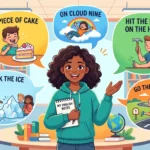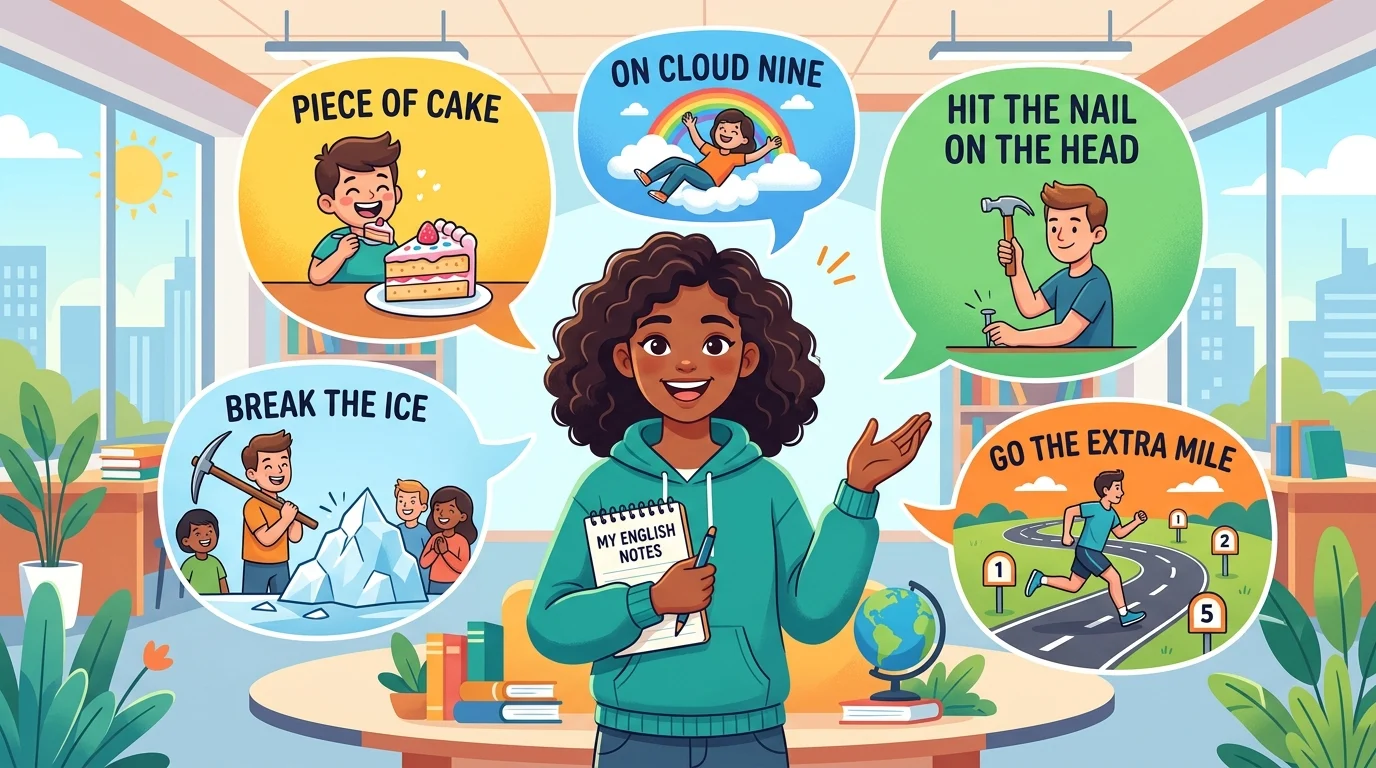
The usage of idioms makes everyday English more colorful, natural, and expressive. Instead of saying “I am very happy,” you might say, “I’m on cloud nine,” just as someone might say they are “under the weather” instead of simply feeling unwell.
Idioms are expressions whose overall meaning is often different from the literal meaning of their individual words. Learning how to use them correctly can help English learners understand conversations, movies, books, social media, and everyday communication more naturally.
In this guide, you’ll learn 20 famous English idioms, their meanings, example sentences, common mistakes, and practical usage notes. You’ll also see how expressions such as wish idioms and phrases, wish away meaning, and to wish upon are used naturally in English.
What Is the Usage of Idioms?
An idiom is a fixed or commonly recognized expression with a figurative meaning. For example, “break the ice” does not usually mean physically breaking ice. It means to make people feel more comfortable in a new or awkward situation.
Literal Meaning vs. Idiomatic Meaning
| Expression | Literal Meaning | Idiomatic Meaning |
|---|---|---|
| Break the ice | Break frozen water | Make people feel comfortable |
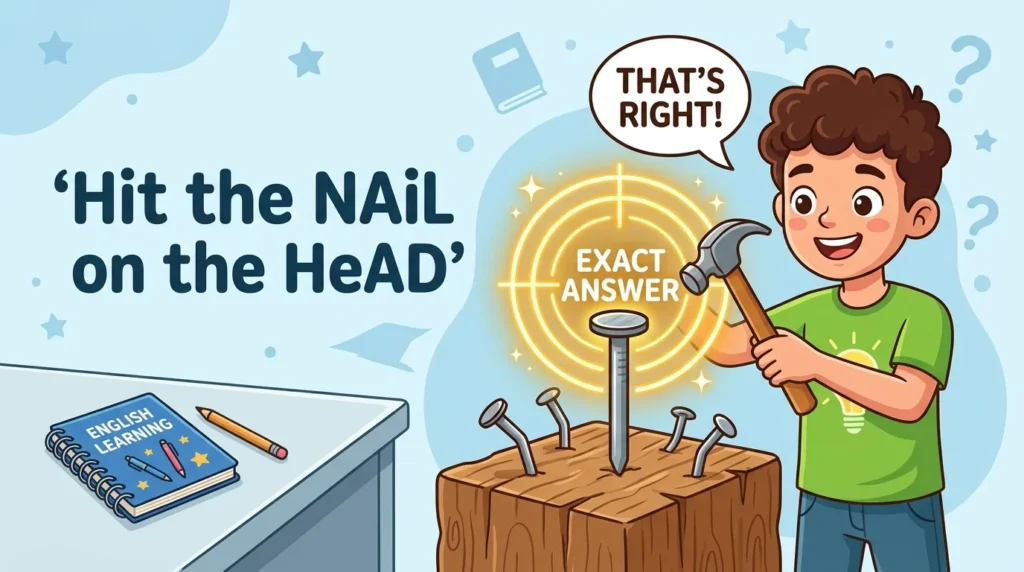
| Hit the nail on the head | Strike a nail accurately | Say exactly what is correct |
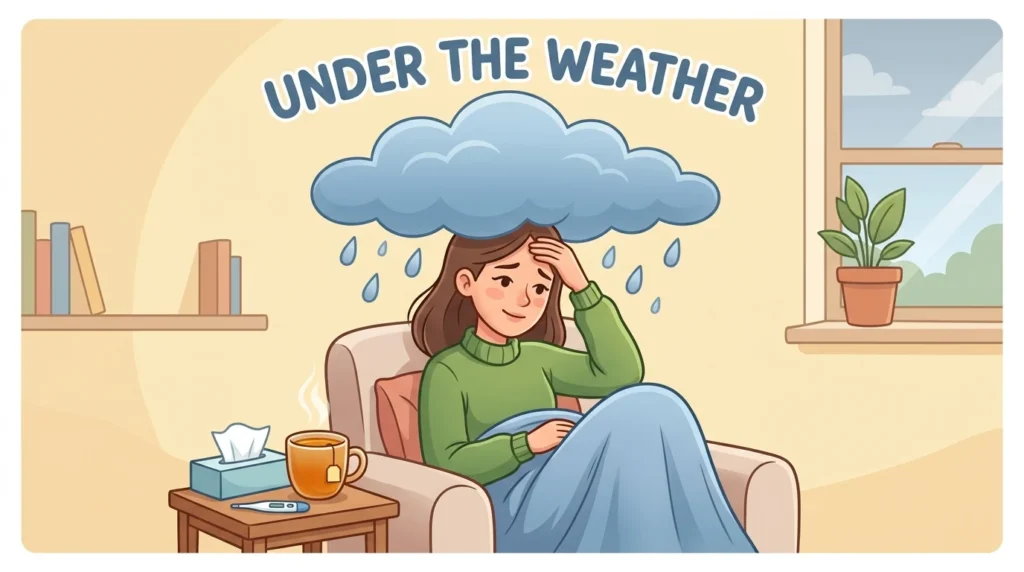
| Under the weather | Beneath the weather | Feeling unwell |
| Piece of cake | A slice of cake | Something very easy |
| On cloud nine | On a cloud | Extremely happy |
The key to mastering idioms is to learn the whole expression, not just each individual word.
Break the Ice 🧊
Word-by-Word Meaning
- Break = separate or damage something
- Ice = frozen water
Idiomatic/Figurative Meaning
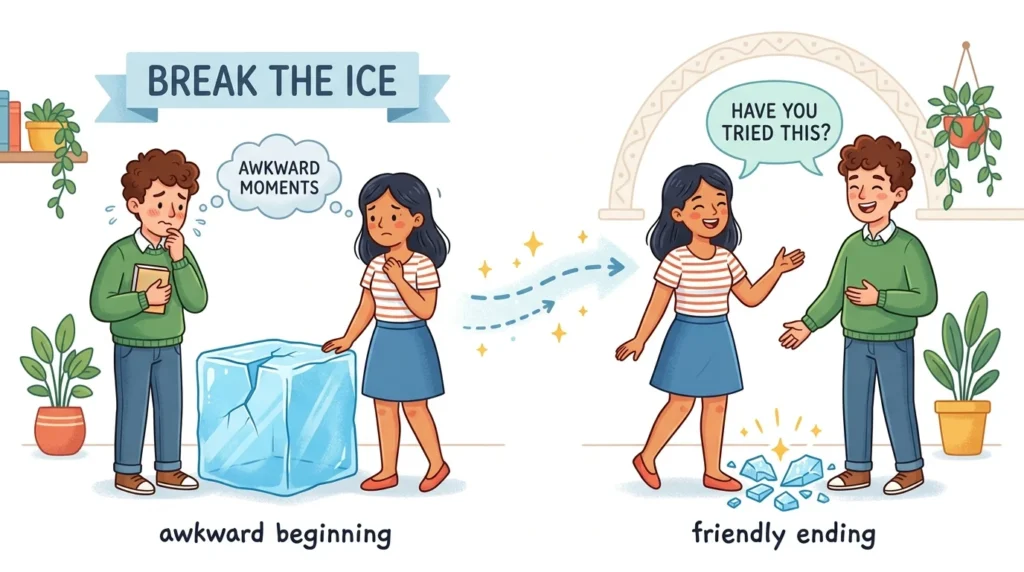
Break the ice means to start a friendly conversation or make people feel more comfortable in a new or awkward situation.
Example Sentences
- I told a funny story to break the ice at the meeting.
- A simple question can help break the ice with a new classmate.
- The teacher played a game to break the ice on the first day.
Common Error
❌ “I broke an ice with my new friends.”
✅ “I broke the ice with my new friends.”
Usage Note
Use this idiom when people are meeting, interacting for the first time, or feeling uncomfortable.
Piece of Cake 🍰
Word-by-Word Meaning
- Piece = a portion of something
- Cake = a sweet baked food
Idiomatic/Figurative Meaning
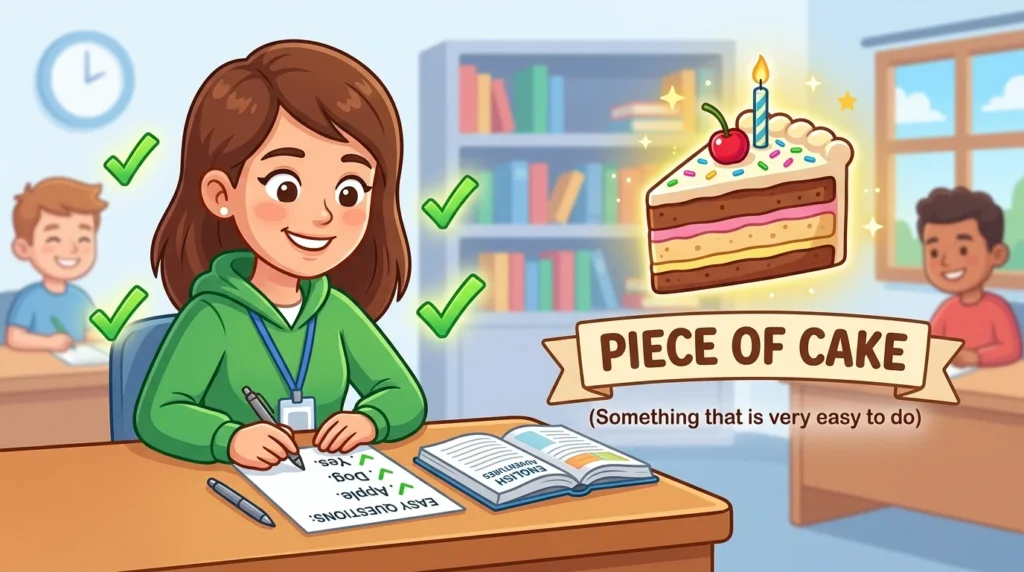
A piece of cake means something is very easy to do.
Example Sentences
- The English test was a piece of cake.
- Fixing this small problem should be a piece of cake.
- Once you understand the rules, the exercise is a piece of cake.
Common Error
❌ “This task is piece of cake.”
✅ “This task is a piece of cake.”
Usage Note
The article a is normally included in this idiom.
Hit the Nail on the Head 🔨
Word-by-Word Meaning
- Hit = strike
- Nail = a small metal fastener
- Head = the top part of the nail
Idiomatic/Figurative Meaning
Hit the nail on the head means to describe a situation or problem exactly.
Example Sentences
- You hit the nail on the head when you said communication was the problem.
- Sarah hit the nail on the head with her explanation.
- His answer hit the nail on the head.
Common Error
❌ “You hit on the nail.”
✅ “You hit the nail on the head.”
Usage Note
This idiom is especially useful when agreeing that someone has identified the exact reason, answer, or issue.
Under the Weather 🌧️
Word-by-Word Meaning
- Under = beneath
- Weather = atmospheric conditions
Idiomatic/Figurative Meaning
Under the weather means feeling sick, tired, or generally unwell.
Example Sentences
- I’m feeling under the weather today.
- Mark stayed home because he was under the weather.
- She looked a little under the weather after the long trip.
Common Error
❌ “I am under a weather.”
✅ “I am under the weather.”
Usage Note
This is a casual expression and works well in everyday conversation.
Once in a Blue Moon 🌙
Word-by-Word Meaning
- Once = one time
- Blue moon = an uncommon type of moon event
Idiomatic/Figurative Meaning
Once in a blue moon means something happens very rarely.
Example Sentences
- We eat at that restaurant once in a blue moon.
- I only watch television once in a blue moon.
- He visits the city once in a blue moon.
Common Error
❌ “I visit them one blue moon.”
✅ “I visit them once in a blue moon.”
Usage Note
Use this idiom for events that happen infrequently.
Cost an Arm and a Leg 💰
Word-by-Word Meaning
- Cost = require payment
- Arm and a leg = body parts
Idiomatic/Figurative Meaning
Cost an arm and a leg means something is extremely expensive.
Example Sentences
- That new phone cost an arm and a leg.
- The repairs cost us an arm and a leg.
- A hotel near the beach can cost an arm and a leg.
Common Error
❌ “It costs arms and legs.”
✅ “It costs an arm and a leg.”
Usage Note
This is an informal idiom often used when talking about prices.
Let the Cat Out of the Bag 🐱
Word-by-Word Meaning
- Let = allow
- Cat = an animal
- Bag = a container
Idiomatic/Figurative Meaning
Let the cat out of the bag means to accidentally reveal a secret.
Example Sentences
- Tom let the cat out of the bag about the surprise party.
- Please don’t let the cat out of the bag.
- She accidentally let the cat out of the bag.
Common Error
❌ “He let out cat from the bag.”
✅ “He let the cat out of the bag.”
Usage Note
This expression is commonly used when information is revealed before it was supposed to be.
Spill the Beans 🫘
Word-by-Word Meaning
- Spill = accidentally drop or pour out
- Beans = seeds used as food
Idiomatic/Figurative Meaning
Spill the beans means to reveal secret or confidential information.
Example Sentences
- Who spilled the beans about the new project?
- Don’t spill the beans before the announcement.
- Maya finally spilled the beans.
Common Error
❌ “She spilled beans the secret.”
✅ “She spilled the beans.”
Usage Note
This is an informal expression and is particularly common in conversational English.
Bite the Bullet 💪
Word-by-Word Meaning
- Bite = use your teeth on something
- Bullet = a projectile
Idiomatic/Figurative Meaning
Bite the bullet means to face a difficult or unpleasant situation with courage.
Example Sentences
- I decided to bite the bullet and finish the difficult assignment.
- She bit the bullet and apologized.
- We need to bite the bullet and make a decision.
Common Error
❌ “I bite a bullet yesterday.”
✅ “I bit the bullet yesterday.”
Usage Note
Remember that the past tense of bite is bit.
On Cloud Nine ☁️
Word-by-Word Meaning
- On = positioned on
- Cloud nine = a cloud
Idiomatic/Figurative Meaning
On cloud nine means extremely happy or excited.
Example Sentences
- She was on cloud nine after receiving the good news.
- I was on cloud nine when my team won.
- They have been on cloud nine all week.
Common Error
❌ “I am in cloud nine.”
✅ “I am on cloud nine.”
Usage Note
Use on, not in, with this idiom.
A Blessing in Disguise 🎁
Word-by-Word Meaning
- Blessing = something beneficial
- Disguise = something that hides its true appearance
Idiomatic/Figurative Meaning
A blessing in disguise is something that initially seems bad but later turns out to be helpful.
Example Sentences
- Missing that bus was a blessing in disguise because I avoided the traffic.
- Losing that job became a blessing in disguise.
- The unexpected change was a blessing in disguise.
Common Error
❌ “It was blessing on disguise.”
✅ “It was a blessing in disguise.”
Usage Note
Use the expression when a negative-looking event produces a positive result.
When Pigs Fly 🐷
Word-by-Word Meaning
- Pigs = farm animals
- Fly = move through the air
Idiomatic/Figurative Meaning
When pigs fly means something is extremely unlikely or probably will never happen.
Example Sentences
- He’ll clean his room when pigs fly.
- She says he’ll arrive early—when pigs fly!
- They’ll agree to that plan when pigs fly.
Common Error
❌ “When pig will fly.”
✅ “When pigs fly.”
Usage Note
This is usually humorous and informal.
The Ball Is in Your Court ⚽
Word-by-Word Meaning
- Ball = a round object used in sports
- Court = an area where certain sports are played
Idiomatic/Figurative Meaning
The ball is in your court means it is now your responsibility to take the next action or make a decision.
Example Sentences
- I’ve explained my offer; the ball is in your court now.
- We have done our part, so the ball is in their court.
- I sent the information. Now the ball is in your court.
Common Error
❌ “The ball is on your court.”
✅ “The ball is in your court.”
Usage Note
The preposition in is part of the standard expression.
Kill Two Birds with One Stone 🐦
Word-by-Word Meaning
- Kill = cause to die
- Two birds = two birds
- One stone = one stone
Idiomatic/Figurative Meaning
Kill two birds with one stone means accomplishing two objectives with one action.
Example Sentences
- I walked to the store and exercised at the same time, killing two birds with one stone.
- We can kill two birds with one stone by combining the meetings.
- She killed two birds with one stone by studying while traveling.
Common Error
❌ “Kill two birds by one stone.”
✅ “Kill two birds with one stone.”
Usage Note
The traditional idiom is widely understood, although in sensitive contexts some speakers prefer alternatives such as “achieve two goals with one action.”
Go the Extra Mile 🏃
Word-by-Word Meaning
- Go = move
- Extra = additional
- Mile = a unit of distance
Idiomatic/Figurative Meaning
Go the extra mile means to make an additional effort beyond what is expected.
Example Sentences
- Our teacher always goes the extra mile to help students.
- She went the extra mile to make the event successful.
- Good customer service often means going the extra mile.
Common Error
❌ “He went extra miles.”
✅ “He went the extra mile.”
Usage Note
This idiom is useful when describing dedication, effort, or excellent service.
Keep an Eye on Something 👀
Word-by-Word Meaning
- Keep = maintain
- Eye = organ used for seeing
- On = focused toward
Idiomatic/Figurative Meaning
Keep an eye on something or someone means to watch or monitor them carefully.
Example Sentences
- Can you keep an eye on my bag?
- Please keep an eye on the children.
- I’ll keep an eye on the oven.
Common Error
❌ “Keep your eye to my bag.”
✅ “Keep an eye on my bag.”
Usage Note
The expression normally uses on after “eye.”
Add Fuel to the Fire 🔥
Word-by-Word Meaning
- Add = put something extra
- Fuel = material that produces energy when burned
- Fire = burning flames
Idiomatic/Figurative Meaning
Add fuel to the fire means to make an already difficult, angry, or problematic situation worse.
Example Sentences
- His rude comment added fuel to the fire.
- Arguing now will only add fuel to the fire.
- The criticism added fuel to the fire.
Common Error
❌ “He added fuel on the fire.”
✅ “He added fuel to the fire.”
Usage Note
Use to, not on, in the standard expression.
Go with the Flow 🌊
Word-by-Word Meaning
- Go = move
- Flow = move smoothly in a particular direction
Idiomatic/Figurative Meaning
Go with the flow means to accept a situation and adapt instead of trying to control everything.
Example Sentences
- We don’t have a strict plan, so let’s go with the flow.
- I usually go with the flow when traveling.
- She decided to go with the flow and see what happened.
Common Error
❌ “Go with flow.”
✅ “Go with the flow.”
Usage Note
The expression is informal and works particularly well in relaxed conversations.
Wish Upon a Star ⭐
Word-by-Word Meaning
- Wish = hope strongly for something
- Upon = on
- Star = a bright object visible in the night sky
Idiomatic/Figurative Meaning
To wish upon a star means to make a wish while looking at a star, often expressing hope for something wonderful to happen.
Example Sentences
- As a child, I used to wish upon a star before going to sleep.
- She looked at the night sky and wished upon a star.
- Sometimes people wish upon a star when they hope for something special.
Common Error
❌ “I wished on a stars.”
✅ “I wished upon a star.”
Usage Note
To wish upon is usually associated with making a hopeful or imaginative wish. You will also see wish upon a star as a familiar phrase in English.
Wish Away ✨
Word-by-Word Meaning
- Wish = desire or hope for something
- Away = continuously or completely
Wish Away Meaning
The wish away meaning is to try to make an unpleasant problem, situation, or feeling disappear simply by wishing that it would go away.
Idiomatic/Figurative Meaning
Wish away suggests that wishing alone cannot usually solve a real problem.
Example Sentences
- You can’t wish away your responsibilities.
- We cannot wish away the problem; we need to solve it.
- She wished the difficult days away.
Common Error
❌ “I wish away the problem yesterday.”
✅ “I wished away the problem yesterday.”
Usage Note
Wish away is commonly followed by a noun or object, as in wish away the problem, wish away the pain, or wish away the difficulties.
How to Use Idioms Correctly
Knowing an idiom’s dictionary definition is only the beginning. Good usage of idioms depends on understanding context, grammar, tone, and frequency.
Learn the Complete Expression
Do not memorize isolated words.
For example:
❌ “ball on court”
✅ “the ball is in your court”
Idioms are often fixed expressions, so changing one small word can make them sound unnatural.
Pay Attention to Grammar
Idioms still follow normal English grammar.
For example:
- Present: She goes the extra mile.
- Past: She went the extra mile.
- Present perfect: She has gone the extra mile.
The idiom stays recognizable while the verb changes according to the sentence.
Consider the Situation
Some idioms are informal.
For example, piece of cake is perfectly natural in a casual conversation but may sound less suitable in a highly formal academic report.
Do Not Overuse Idioms
Using one or two well-chosen idioms can make your English expressive. Using an idiom in every sentence can make your writing sound unnatural.
A good rule is:
Use an idiom when it communicates an idea more naturally or memorably than ordinary wording.
Learn Idioms in Context
Instead of memorizing:
“Break the ice = start a conversation.”
Try remembering:
“I told a joke to break the ice at the meeting.”
Context makes idioms easier to remember and use correctly.
Common Mistakes English Learners Make with Idioms
Changing a Word in the Idiom
❌ “It costs a hand and a leg.”
✅ “It costs an arm and a leg.”
Using the Wrong Preposition
❌ “The ball is on your court.”
✅ “The ball is in your court.”
Taking an Idiom Literally
If someone says, “I’m under the weather,” they usually are not physically underneath clouds or rain. The expression means they feel unwell.
Using an Idiom in the Wrong Tone
Some expressions are playful or informal. Before using an idiom in a formal situation, consider whether a straightforward phrase would be more appropriate.
Translating Idioms Word for Word
An idiom that works in one language may not work in another. Learn English idioms as complete expressions rather than translating each word individually.
Why Is the Usage of Idioms Important for English Learners?
Understanding idioms can improve several areas of communication.
Better Listening Skills
Native and fluent English speakers frequently use idiomatic expressions in casual conversations, interviews, television, podcasts, and movies.
More Natural Speaking
Using familiar idioms appropriately can help learners express ideas in a more conversational way.
Stronger Reading Comprehension
Idioms appear in novels, news writing, blogs, advertisements, and online conversations. Recognizing them makes unfamiliar sentences easier to understand.
More Expressive Writing
A carefully selected idiom can add personality and color to suitable types of writing.
Better Cultural Understanding
Many idioms reflect history, traditions, sports, nature, work, food, and everyday experiences. Learning them can therefore reveal interesting aspects of English-speaking culture.
Frequently Asked Questions About Idioms
What is the usage of idioms?
The usage of idioms involves using fixed expressions with meanings that are often different from their literal words. Idioms make communication more expressive and conversational when used appropriately.
What are the most common English idioms?
Some widely recognized English idioms include break the ice, piece of cake, hit the nail on the head, under the weather, once in a blue moon, go the extra mile, and the ball is in your court.
What does “wish away” mean?
The wish away meaning is to try to make an unwanted problem or situation disappear simply by wishing that it would disappear. For example, “You cannot wish away your responsibilities.”
What does “to wish upon” mean?
To wish upon means to make a hopeful or imaginative wish, especially in the expression “wish upon a star.” For example, “She wished upon a star.”
Why should English learners learn idioms?
Idioms help learners understand natural conversations, improve reading comprehension, expand vocabulary, and communicate ideas in a more expressive way.
Final Thoughts 🌟
Mastering the usage of idioms is less about memorizing hundreds of expressions and more about learning how, when, and where to use them. Start with a few familiar idioms such as break the ice, piece of cake, and go the extra mile, then gradually add more to your vocabulary.
Pay special attention to wish idioms and phrases, including wish away and to wish upon, because small differences in grammar and context can change how natural an expression sounds.
Choose one new idiom today, create your own sentence, and use it in conversation. With regular practice, these colorful expressions can become a natural part of your English vocabulary.

“Wilkie Collins brings classic idioms to life on LearnIdom.com, making language learning engaging, memorable, and full of literary charm.”