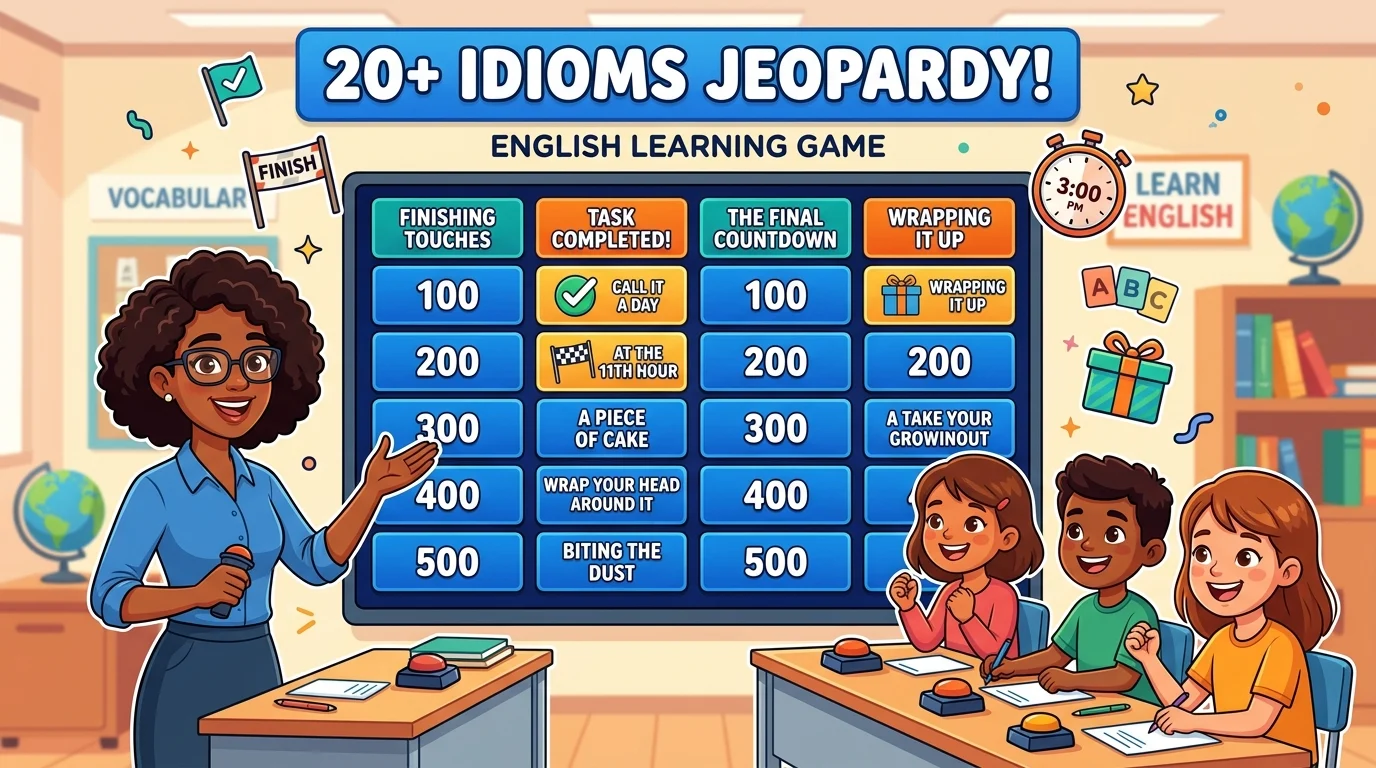
If you enjoy idioms jeopardy, you know that learning expressions can feel more like a game than a grammar lesson. From “wrap things up” to “call it a day,” English has plenty of colorful ways to talk about finishing a task or reaching the end of something.
Imagine finally completing a difficult school project and telling your friend, “That’s a wrap!” These expressions make everyday English more natural, memorable, and fun.
In this guide, you’ll discover 20 famous idioms related to finishing, completing, ending, and reaching a goal, along with meanings, examples, common mistakes, and usage tips. They’re also perfect for an idioms jeopardy game or classroom activity.
What Are Idioms for Finishing Something?
Idioms for finishing something are expressions that describe completing a task, ending an activity, reaching a goal, or bringing something to a close.
Instead of always saying finish, native English speakers often use phrases such as:
- Wrap things up
- Call it a day
- Bring something to an end
- Get something over with
- See something through
- Put the finishing touches on
- Cross the finish line
These expressions can make conversations much more natural and engaging.
Wrap Things Up 🎁
Word-by-word meaning: To wrap something means to cover it.
Idiomatic/figurative meaning: To finish an activity, meeting, discussion, or piece of work.
Example sentences:
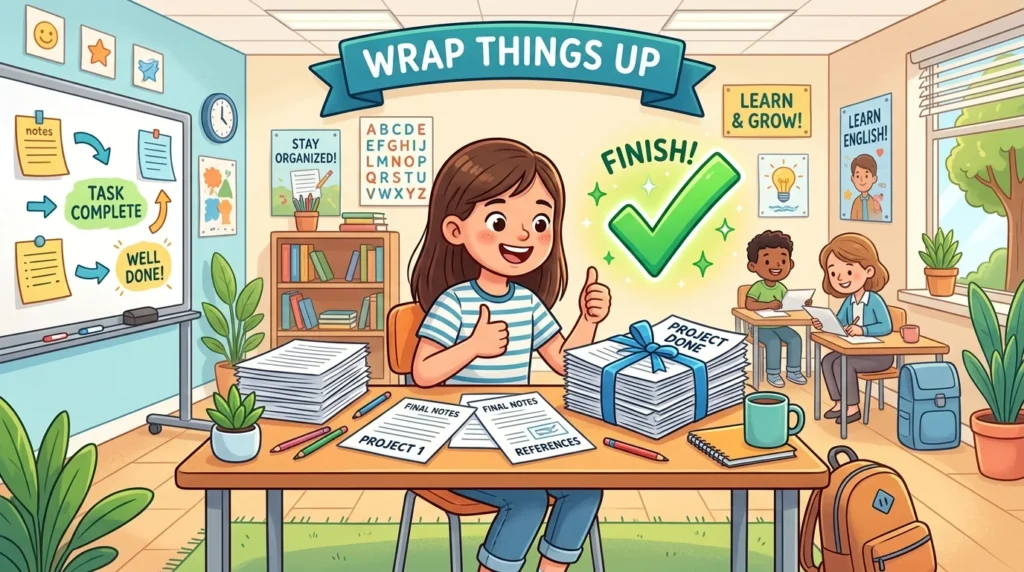
- “Let’s wrap things up before lunch.”
- “I just need ten minutes to wrap up the report.”
Common error: Don’t confuse wrap up with physically wrapping an object when the context is clearly about completing work.
Usage note: This is one of the most useful phrases for the end of something, especially in work and school situations.
Call It a Day 🌅
Word-by-word meaning: Decide that the day is finished.
Idiomatic/figurative meaning: Stop working for the day.
Example sentences:
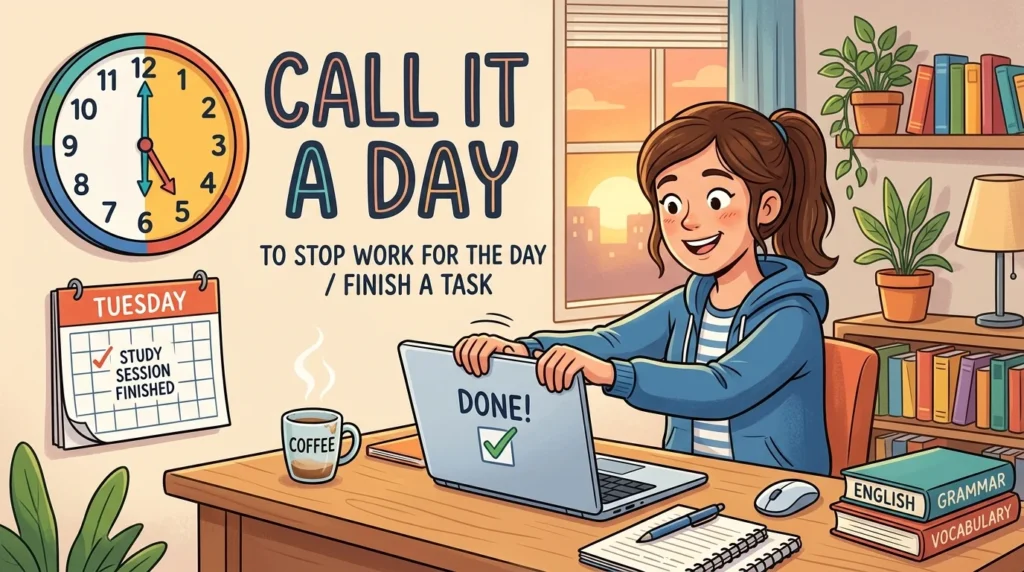
- “We’ve done enough work. Let’s call it a day.”
- “After three hours of studying, I decided to call it a day.”
Common error: Call it a day does not necessarily mean everything is completely finished.
Usage note: Use it when you’re stopping an activity, particularly work or study.
Get It Over With
Word-by-word meaning: Move something past you.
Idiomatic/figurative meaning: Finish something unpleasant or difficult as quickly as possible.
Example sentences:
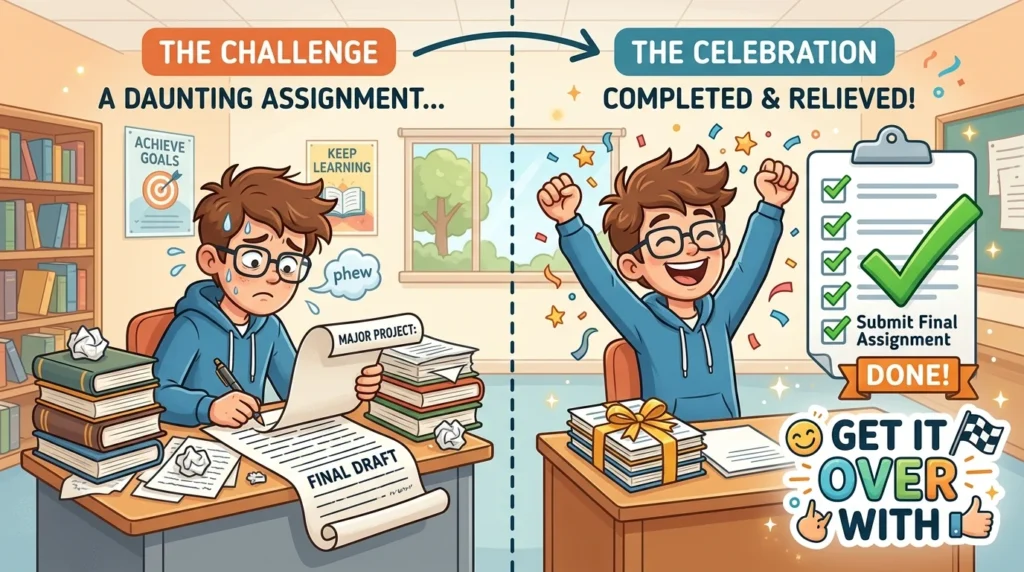
- “I want to get this difficult assignment over with.”
- “Let’s get the boring part over with first.”
Common error: Don’t use this expression when you simply mean you completed something enjoyable.
Usage note: It usually suggests that the speaker is happy the unpleasant experience will end.
See Something Through
Word-by-word meaning: Continue to see something until its end.
Idiomatic/figurative meaning: Continue an activity or commitment until it is completely finished.
Example sentences:
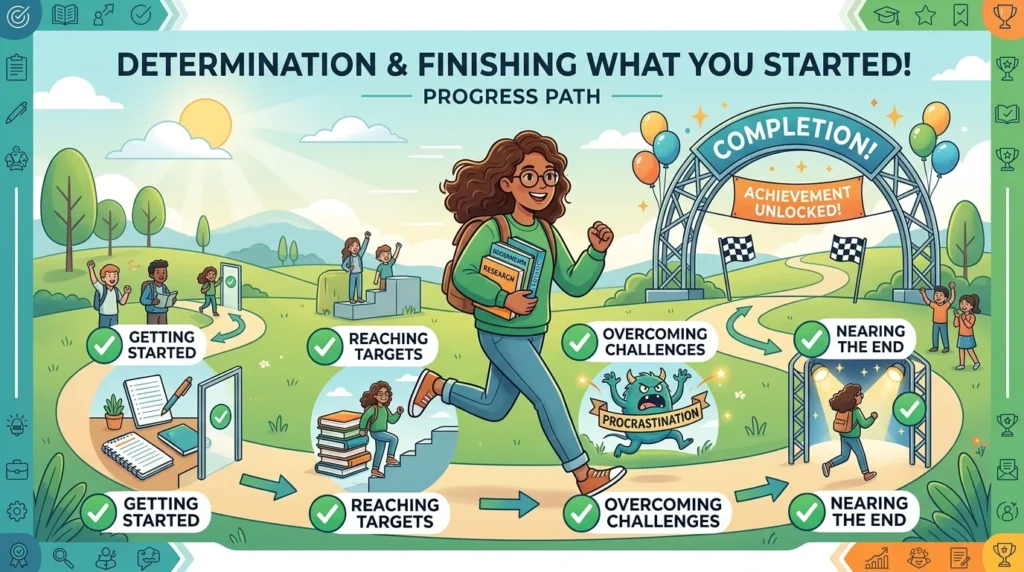
- “You started the project, so you should see it through.”
- “She saw the difficult course through to the end.”
Common error: Saying see through something can have other meanings, so context matters.
Usage note: This idiom emphasizes persistence and completion.
Put the Finishing Touches On ✨
Word-by-word meaning: Add the final details.
Idiomatic/figurative meaning: Complete the last small improvements before something is finished.
Example sentences:
- “I’m putting the finishing touches on my presentation.”
- “The designer put the finishing touches on the website.”
Common error: The expression is normally used with “the finishing touches.”
Usage note: This is ideal when something is almost complete but still needs minor improvements.
Bring Something to an End
Word-by-word meaning: Move something toward its ending.
Idiomatic/figurative meaning: Cause an activity, event, situation, or process to finish.
Example sentences:
- “The teacher brought the discussion to an end.”
- “We need to bring this meeting to an end.”
Common error: Don’t automatically use it for every small task; it sounds more formal than wrap up.
Usage note: A useful phrase for the end of something, especially in formal writing.
Come to an End
Word-by-word meaning: Arrive at an ending.
Idiomatic/figurative meaning: Finish naturally.
Example sentences:
- “The semester has come to an end.”
- “The concert finally came to an end.”
Common error: Come to an end usually describes something ending rather than someone actively finishing it.
Usage note: It works well for events, periods, experiences, and situations.
Finish Off
Word-by-word meaning: Finish something completely.
Idiomatic/figurative meaning: Complete the final part of something.
Example sentences:
- “I need to finish off this assignment.”
- “She finished off the last section of the report.”
Common error: The phrase can also mean consuming the last portion of food, so context is important.
Usage note: It is informal and common in everyday English.
Put a Period to Something
Word-by-word meaning: Put a full stop at the end.
Idiomatic/figurative meaning: Bring something to a definite conclusion.
Example sentences:
- “The agreement put a period to the long dispute.”
- “His decision put a period to the argument.”
Common error: This expression is less common in everyday conversation than bring something to an end.
Usage note: It can be useful in more formal or literary contexts.
Cross the Finish Line 🏁
Word-by-word meaning: Move across the final line of a race.
Idiomatic/figurative meaning: Successfully complete a difficult process or reach a goal.
Example sentences:
- “After months of work, we finally crossed the finish line.”
- “The team is almost ready to cross the finish line.”
Common error: It doesn’t have to refer to an actual race.
Usage note: Excellent for describing major achievements and long projects.
Close the Book on Something 📖
Word-by-word meaning: Shut a book.
Idiomatic/figurative meaning: Officially finish or stop dealing with something.
Example sentences:
- “The company decided to close the book on the old project.”
- “It’s time to close the book on that chapter.”
Common error: Don’t interpret it literally when discussing experiences or situations.
Usage note: It often suggests moving on from something permanently.
Draw to a Close
Word-by-word meaning: Move toward a closing point.
Idiomatic/figurative meaning: Gradually approach the end.
Example sentences:
- “The meeting is drawing to a close.”
- “As the year draws to a close, people reflect on their goals.”
Common error: Say “draw to a close,” not “draw at a close.”
Usage note: This expression is slightly formal and works especially well in writing.
Bring the Curtain Down 🎭
Word-by-word meaning: Lower a theater curtain.
Idiomatic/figurative meaning: Bring an event, period, or activity to an end.
Example sentences:
- “The final performance brought the curtain down on the festival.”
- “The announcement brought the curtain down on the project.”
Common error: This expression can sound dramatic, so it isn’t necessary for ordinary tasks.
Usage note: Great for storytelling, journalism, and memorable idioms jeopardy questions.
Tie Up Loose Ends
Word-by-word meaning: Secure things that are still loose.
Idiomatic/figurative meaning: Finish the remaining small details of a task or situation.
Example sentences:
- “I just need to tie up a few loose ends.”
- “Before leaving, she tied up all the loose ends.”
Common error: It normally refers to unfinished details rather than the main task itself.
Usage note: A very practical expression for work, projects, and planning.
Finish in Style 🌟
Word-by-word meaning: End something stylishly.
Idiomatic/figurative meaning: End an activity successfully or impressively.
Example sentences:
- “The team finished the season in style.”
- “She finished her presentation in style.”
Common error: Don’t assume it means expensive or fashionable.
Usage note: It emphasizes a positive or impressive ending.
Go Out With a Bang 💥
Word-by-word meaning: Leave with a loud explosion.
Idiomatic/figurative meaning: End something in an exciting, dramatic, or memorable way.
Example sentences:
- “The festival went out with a bang.”
- “The final episode went out with a bang.”
Common error: This is usually about an exciting ending, not simply completing homework.
Usage note: Perfect for entertainment, celebrations, and memorable endings.
Leave No Stone Unturned
Word-by-word meaning: Check every stone.
Idiomatic/figurative meaning: Make every possible effort before finishing a search or investigation.
Example sentences:
- “The team left no stone unturned in solving the problem.”
- “We left no stone unturned before making the final decision.”
Common error: It does not directly mean finish something.
Usage note: It is related to completion because it emphasizes doing everything necessary before reaching a conclusion.
Put the Lid on Something
Word-by-word meaning: Cover something with a lid.
Idiomatic/figurative meaning: Stop or bring something to an end.
Example sentences:
- “The new rules put the lid on the argument.”
- “The manager finally put the lid on the ongoing discussion.”
Common error: This is more about stopping something than completing a normal task.
Usage note: Use it carefully because it can sound informal or metaphorical.
Call Time on Something ⏰
Word-by-word meaning: Declare that the time has ended.
Idiomatic/figurative meaning: Decide to stop or end something.
Example sentences:
- “The company called time on the old program.”
- “They decided to call time on the project.”
Common error: This expression is especially common in British English.
Usage note: It can describe ending projects, activities, or situations.
Put Something to Rest
Word-by-word meaning: Allow something to rest.
Idiomatic/figurative meaning: Finally settle, resolve, or stop discussing an issue.
Example sentences:
- “The evidence put the rumors to rest.”
- “The decision finally put the debate to rest.”
Common error: It doesn’t simply mean completing any ordinary task.
Usage note: Use it when an issue, rumor, argument, or uncertainty is finally settled.
Idioms for Ending a Relationship
Some expressions about finishing specifically describe ending a relationship or moving on from one.
A common phrase is “call it quits,” which means to decide to stop something, including a relationship or partnership.
Another expression is “go separate ways,” meaning two people decide to continue their lives independently.
For example:
- “After years of disagreements, they decided to call it quits.”
- “The two business partners eventually went their separate ways.”
These expressions are useful when the context involves bringing a relationship, partnership, or shared activity to an end.
FAQs About Idioms for Finishing Something
What is the most common idiom for finishing a task?
“Wrap things up” is one of the most common informal expressions for finishing a task, meeting, discussion, or project.
What idiom means to finish something difficult?
“See it through” means continuing with something until it is completely finished, especially when it requires determination.
What is a funny idiom for finishing something?
“That’s a wrap!” is a fun and casual way to announce that something is finished.
What is an idiom for ending something?
Expressions such as “bring something to an end,” “call it quits,” “draw to a close,” and “close the book on something” can describe different types of endings.
What is an idiom for completing a task?
“Wrap things up,” “finish off,” “see it through,” and “get the job done” are useful expressions for completing a task.
Final Thoughts
English becomes much more interesting when you move beyond basic words like finish and complete. Expressions such as “wrap things up,” “call it a day,” “see it through,” and “cross the finish line” give your conversations more variety and personality.
If you’re building an idioms jeopardy game, these expressions are also excellent clues because learners can guess meanings, complete examples, and challenge one another.
Start with five idioms today. Write one sentence for each, use them in conversation, and then gradually add more. Once you practice them, you’ll be ready to wrap things up like a natural English speaker!

“Wilkie Collins brings classic idioms to life on LearnIdom.com, making language learning engaging, memorable, and full of literary charm.”