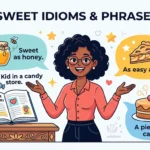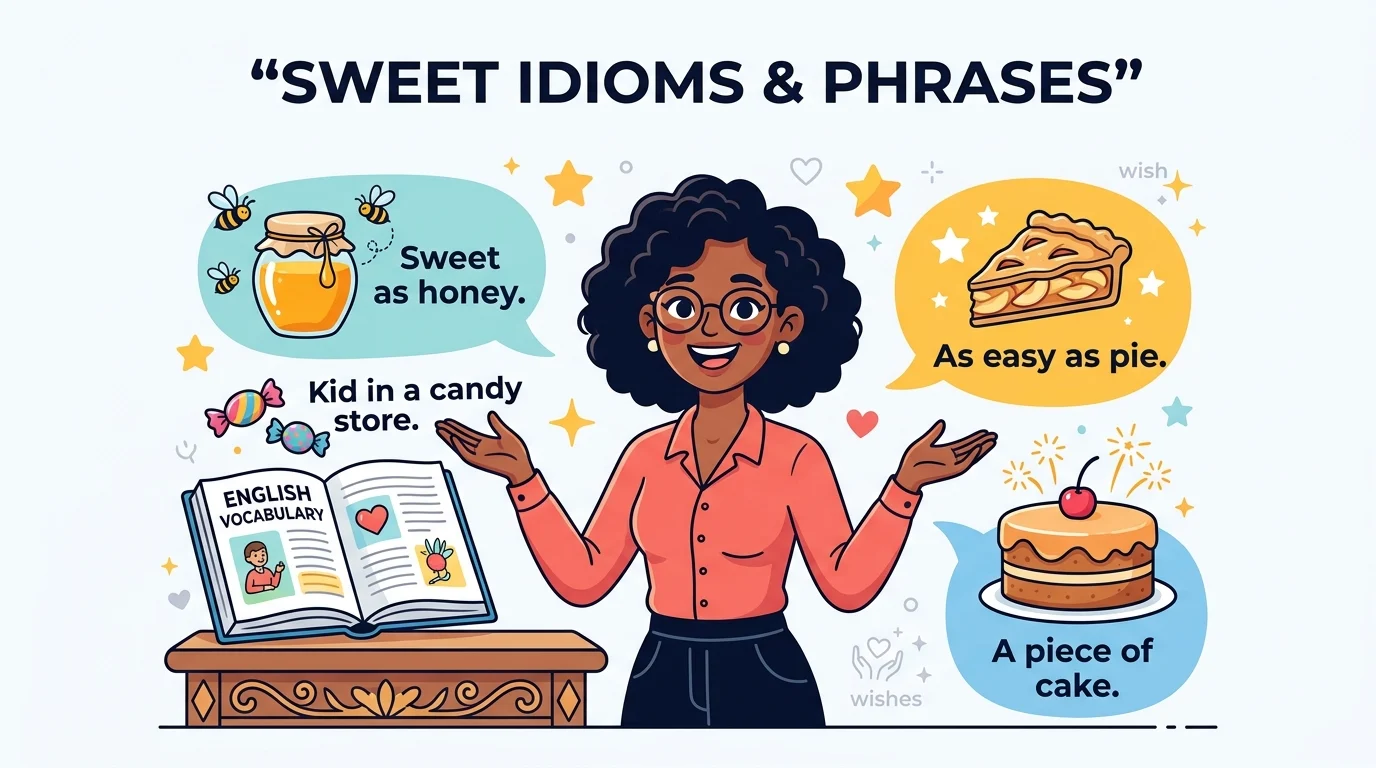
Sweet idioms and phrases can make everyday English warmer, more expressive, and easier to understand. From calling a kind person sweet as pie to talking about hopes with wish upon a star, these expressions add personality to ordinary conversations.
If you have ever heard an English speaker say, “She has a sweet tooth,” or “Don’t let him sweet-talk you,” you may have wondered what those words really mean. The answer is often different from the literal meaning. This guide explains popular sweet idioms and phrases in simple English, with examples, common mistakes, and useful tips for using them naturally.
What Are Sweet Idioms and Phrases?
Sweet idioms and phrases are expressions connected with sweetness, kindness, pleasant experiences, affection, dreams, or attractive situations. Some are directly related to sweet foods, while others use “sweet” figuratively.
For example, sweet tooth is not about having a sugary tooth. It means that someone enjoys sweet foods. Likewise, calling someone sweet as pie usually means that person is very kind or pleasant.
Learning these expressions can help you understand conversations, stories, social media posts, and everyday English more naturally.
Sweet as Pie 🥧
Meaning
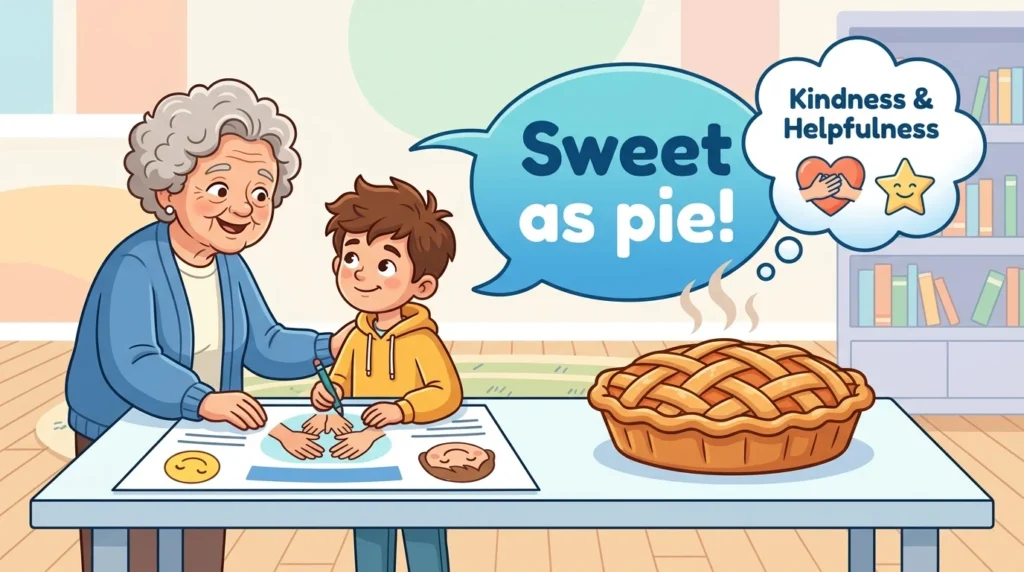
Sweet as pie describes someone who is extremely kind, friendly, pleasant, or gentle.
Example
- My new teacher is sweet as pie.
- Your grandmother is sweet as pie for helping everyone.
Common Mistake
It usually describes a person’s personality, not the actual taste of a pie.
Usage Note
This is an informal and friendly expression, especially common in conversational English.
Sweet Tooth 🍫
Meaning
A sweet tooth means a strong liking for sugary foods such as chocolate, cookies, cake, or candy.
Example
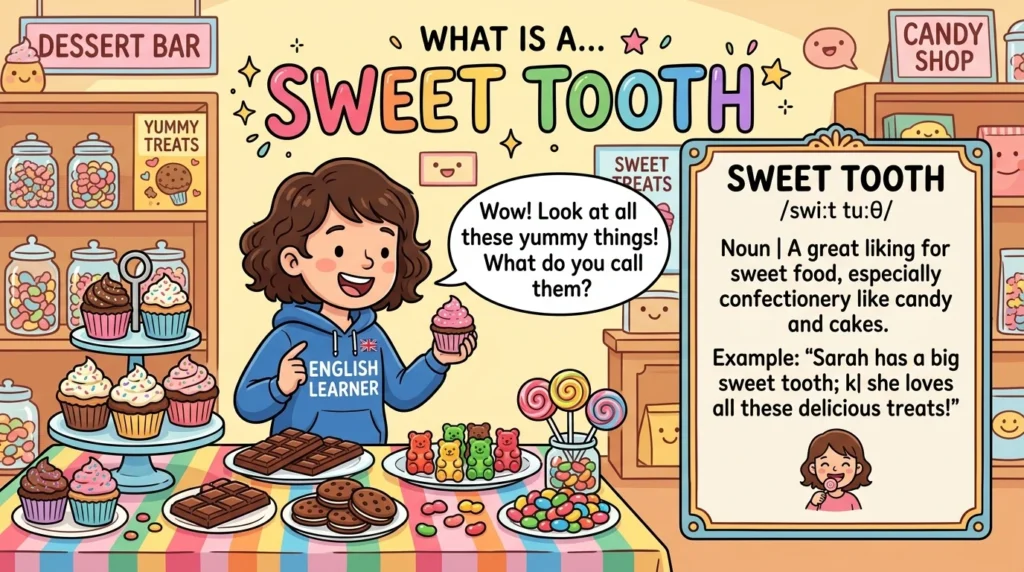
- I have a sweet tooth, so chocolate is my favorite dessert.
- Sara has a serious sweet tooth.
Common Mistake
Don’t say “I have sweet teeth.” The usual expression is have a sweet tooth.
Usage Note
This is one of the most useful food-related idioms in everyday English.
Sweet Talk 💬
Meaning
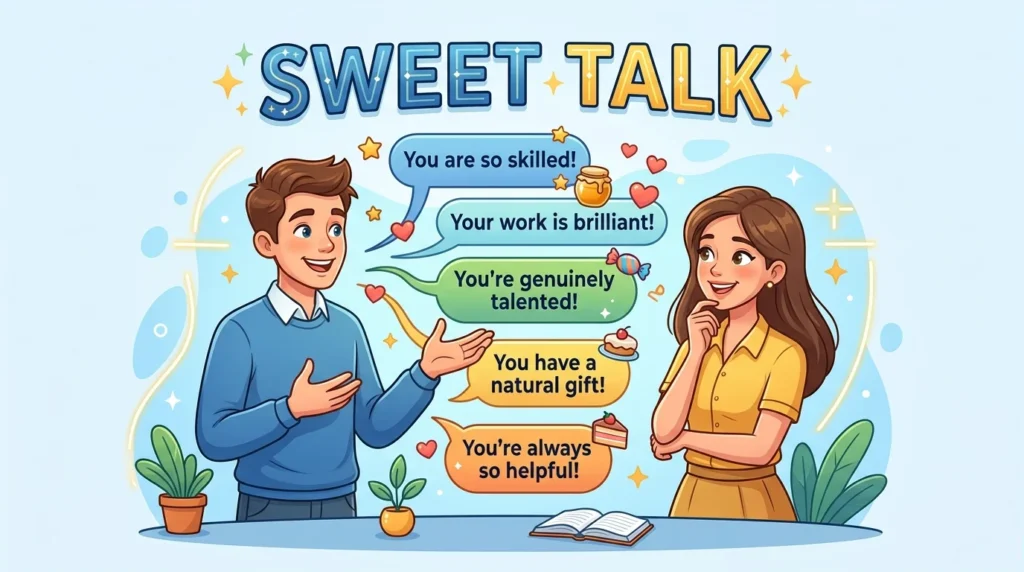
Sweet talk means using flattering, charming, or pleasant words to persuade someone.
Example
- He tried to sweet-talk his parents into changing their decision.
- Don’t let clever sweet talk convince you too quickly.
Common Mistake
Sweet talk is not simply any nice conversation. It often involves persuasion.
Usage Note
It can sound playful, positive, or slightly suspicious depending on context.
Sweeten the Deal 🤝
Meaning
To sweeten the deal means to make an offer more attractive by adding an extra benefit.
Example

- The shop sweetened the deal by offering free delivery.
- They added a bonus to sweeten the deal.
Common Mistake
It does not mean adding sugar to anything.
Usage Note
This phrase is especially useful when discussing business, shopping, negotiations, or offers.
Sweet Dreams 🌙
Meaning
Sweet dreams is a friendly way to wish someone a pleasant night’s sleep.
Example
- Good night! Sweet dreams!
- Mom wished the children sweet dreams before leaving the room.
Common Mistake
It is generally a good-night expression rather than a prediction about someone’s dreams.
Usage Note
It is natural in conversations with family, friends, and people you know well.
Sweet Sixteen 🎂
Meaning
Sweet sixteen refers to a person’s sixteenth birthday, especially the celebration associated with turning sixteen.
Example
- She is planning a special sweet sixteen party.
- His family celebrated his sweet sixteen with friends.
Common Mistake
The expression doesn’t literally mean that someone is sweet because they are sixteen.
Usage Note
The phrase is particularly familiar in American English and popular culture.
As Sweet as Honey 🍯
Meaning
As sweet as honey describes someone or something as extremely pleasant, kind, gentle, or appealing.
Example
- Her voice was as sweet as honey.
- The little girl was as sweet as honey to everyone.
Common Mistake
The phrase can be figurative, so it doesn’t always refer to food.
Usage Note
Use it as a colorful comparison when describing pleasant qualities.
Sweet on Someone 💗
Meaning
To be sweet on someone means to like or admire that person, often with romantic interest.
Example
- I think he is sweet on his new classmate.
- She has been sweet on him for months.
Common Mistake
It doesn’t mean simply being kind to someone.
Usage Note
This expression is informal and can sound old-fashioned in some situations.
Sweet Nothings 💕
Meaning
Sweet nothings are affectionate or flattering words spoken softly, especially between people who care about each other.
Example
- The couple exchanged sweet nothings during their conversation.
- The novel was filled with romantic sweet nothings.
Common Mistake
The expression is normally plural: sweet nothings.
Usage Note
It is most suitable for romantic or affectionate contexts.
Sweet and Sour 🍋
Meaning
Sweet and sour can describe something containing two contrasting qualities, such as pleasant and unpleasant experiences.
Example
- Their journey had sweet and sour moments.
- Life can sometimes feel sweet and sour.
Common Mistake
The phrase can be literal when discussing food, so context matters.
Usage Note
Use it figuratively when describing mixed experiences or emotions.
Sweeten the Pill 💊
Meaning
To sweeten the pill means to make something unpleasant easier to accept by adding something positive.
Example
- The company offered extra benefits to sweeten the pill.
- The teacher gave students more preparation time to sweeten the pill.
Common Mistake
It does not necessarily refer to actual medicine.
Usage Note
This expression is useful when an undesirable decision or situation is made more acceptable.
A Sweet Deal 💰
Meaning
A sweet deal is a particularly good, attractive, or favorable offer.
Example
- I found a sweet deal on a new backpack.
- That discount makes this a sweet deal.
Common Mistake
Don’t confuse a sweet deal with sweeten the deal. A sweet deal is already attractive; sweetening a deal means improving it.
Usage Note
It is common in informal conversations about shopping and bargains.
Life Is Sweet 🌈
Meaning
Life is sweet expresses happiness, satisfaction, or appreciation for positive experiences.
Example
- After finishing my exams, I realized that life is sweet.
- Good friends can remind us that life is sweet.
Common Mistake
This is usually figurative, not a statement about taste.
Usage Note
It works well in casual conversation, captions, and positive writing.
Make a Wish ⭐
Meaning
To make a wish means to express a hope or desire that you would like to become true.
Example
- Close your eyes and make a wish.
- She made a wish before blowing out the birthday candles.
Common Mistake
English speakers normally say make a wish, not “do a wish.”
Usage Note
This phrase is common at birthdays and other special moments.
Wish Upon a Star 🌟
Meaning
To wish upon a star means to make a wish while looking at a star. Figuratively, it represents hope for a dream to come true.
Example
- As a child, I loved to wish upon a star.
- She looked at the night sky and wished upon a star.
Common Mistake
Don’t change the established expression unnecessarily.
Usage Note
This phrase is especially common in stories, inspirational writing, and discussions about dreams.
Wish Away ✨
Meaning
The wish away meaning is to try to make a problem or unwanted situation disappear simply by wishing that it were different.
Example
- You cannot wish away every problem.
- We shouldn’t wish away our responsibilities.
Common Mistake
Wish away does not mean that wishing literally makes something disappear.
Usage Note
Use it when someone is relying on hope instead of taking practical action.
Wish for Something 💭
Meaning
To wish for something means to hope or desire to have it.
Example
- She wished for a chance to travel.
- Many people wish for happiness and success.
Common Mistake
Use wish for + noun, such as “wish for peace.” For an action, use wish to + verb.
Usage Note
This is a useful everyday structure for talking about hopes and desires.
Be Careful What You Wish For ⚠️
Meaning
Be careful what you wish for warns that getting exactly what you want can sometimes create unexpected problems.
Example
- You wanted more responsibility, but now you’re extremely busy. Be careful what you wish for!
- She wanted a demanding job and soon discovered why people say, be careful what you wish for.
Common Mistake
It isn’t necessarily a warning against having dreams. It highlights possible consequences.
Usage Note
Use it when an apparently positive outcome has an unexpected downside.
Wishful Thinking 💭
Meaning
Wishful thinking means believing something will happen mainly because you want it to be true, rather than because there is good evidence.
Example
- Expecting the problem to disappear without doing anything is wishful thinking.
- Believing you’ll succeed without preparation may be wishful thinking.
Common Mistake
Don’t confuse wishful thinking with realistic planning.
Usage Note
This phrase is useful in school, work, conversations, and discussions about plans.
If Wishes Were Horses 🐎
Meaning
If wishes were horses, beggars would ride means that simply wishing for something cannot make it happen.
Example
- You need to study instead of only hoping for a good grade. If wishes were horses, beggars would ride.
- Dreams are valuable, but action matters too.
Common Mistake
The expression is figurative, so don’t interpret the horses literally.
Usage Note
It is an old proverb and can sound more traditional than modern casual expressions.
Wish Idioms and Phrases at a Glance
| Idiom or Phrase | Simple Meaning |
|---|---|
| Make a wish | Express a hope |
| Wish upon a star | Hope a dream comes true |
| Wish away | Try to make a problem disappear by wishing |
| Wish for something | Hope to have something |
| Wishful thinking | Believe something because you want it to be true |
| Be careful what you wish for | What you want may have unexpected consequences |
| If wishes were horses | Wishing alone cannot make things happen |
Common Mistakes With Sweet Idioms
Taking Idioms Literally
Idioms often have figurative meanings. A sweet tooth isn’t a tooth made of sugar, and sweeten the deal isn’t about adding something sweet to a contract.
Changing the Expression
Learn common idioms in their standard forms. Small changes can make an expression sound unnatural.
Ignoring Context
An idiom suitable for a conversation with friends may not be appropriate for formal academic writing. Always consider your audience.
Using Too Many Idioms
Natural English doesn’t require an idiom in every sentence. One well-chosen expression is usually better than several forced ones.
Frequently Asked Questions
What are sweet idioms and phrases?
Sweet idioms and phrases are English expressions associated with sweetness, kindness, pleasant experiences, affection, or related figurative ideas. Examples include sweet tooth, sweet as pie, and sweet talk.
What does “sweet as pie” mean?
Sweet as pie means very kind, pleasant, friendly, or gentle. It is an informal expression commonly used to compliment someone’s personality.
What is the wish away meaning?
The wish away meaning is trying to make an unwanted problem disappear simply by wishing it were different. It suggests that wishing alone is not enough to solve a problem.
What does “to wish upon a star” mean?
To wish upon a star means to make a wish while looking at a star. Figuratively, it represents hope, dreams, and the desire for something good to happen.
Why should English learners study idioms?
Idioms help learners understand natural English and recognize expressions that cannot always be understood word by word. They can also make speaking and writing more expressive.
Final Thoughts
Sweet idioms and phrases give English learners an easy and enjoyable way to make their vocabulary more expressive. Start with familiar expressions such as sweet tooth, sweet dreams, sweet talk, and sweet as pie, then practice useful wish expressions such as wish away, wishful thinking, and to wish upon a star.
The key is practice. Choose three idioms today, write your own examples, and try using them naturally in conversation or writing. Once you understand both the meaning and the context, these colorful expressions will become much easier to remember and use confidentl

“Wilkie Collins brings classic idioms to life on LearnIdom.com, making language learning engaging, memorable, and full of literary charm.”