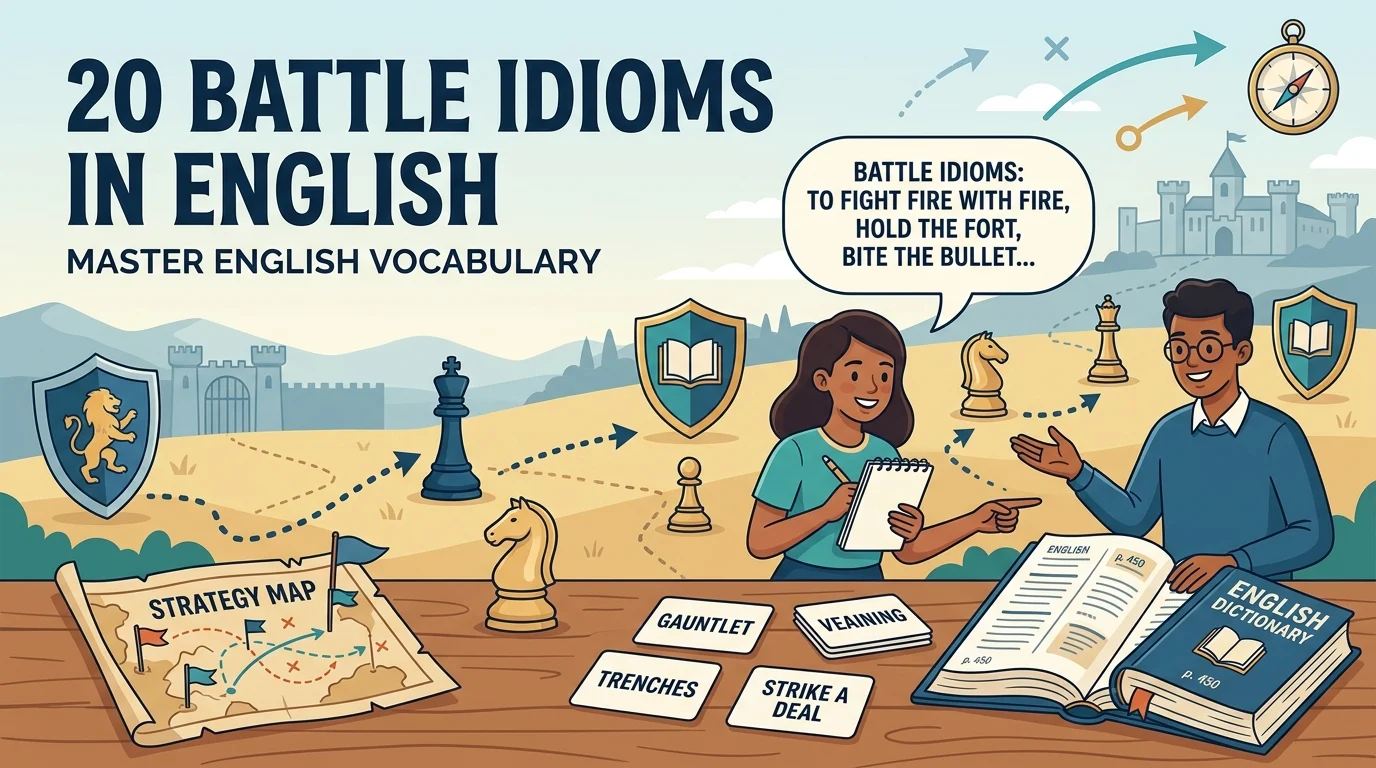
Battle idioms bring the language of conflict, courage, competition, and strategy into everyday English. You can use expressions like “pick your battles” or “an uphill battle” to describe arguments, difficult tasks, competitions, and personal challenges without talking about a literal war.
These expressions make English more natural and expressive. In this guide, you’ll learn famous battle idioms, what they mean, how to use them correctly, and which situations they fit best.
What Are Battle Idioms?
Battle idioms are figurative expressions inspired by war, fighting, military strategy, boxing, and competition. Their modern meanings are usually not literal.
For example, an “uphill battle” is not necessarily a fight on a mountain. It describes something difficult that requires a lot of effort.
Battle-related expressions can describe:
- Arguments and disagreements
- Difficult tasks and challenges
- Sports and competitions
- Business competition
- Personal goals
- Success and failure
- Defending an opinion or position
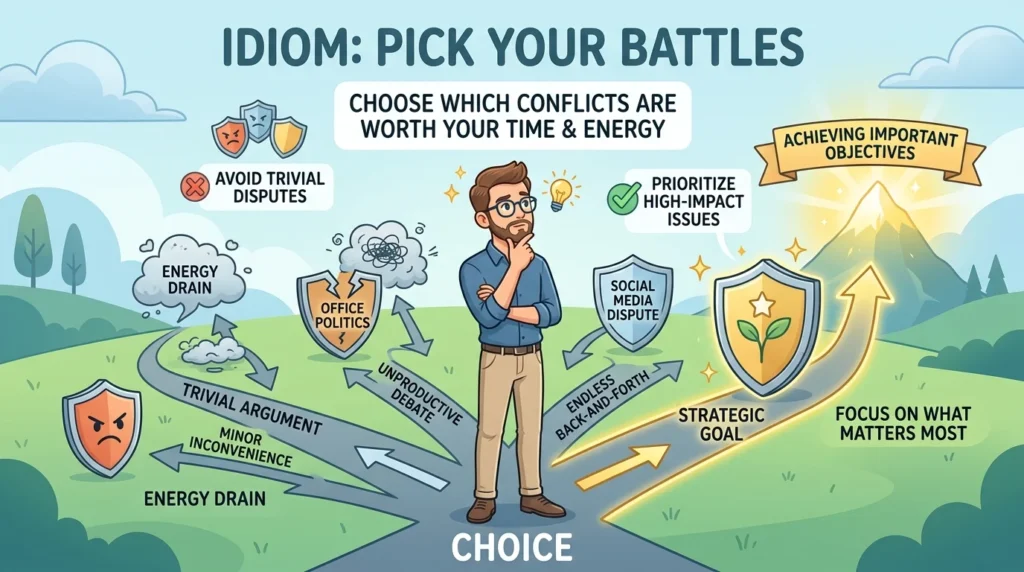
Pick Your Battles 🎯
Meaning: Choose which disagreements or problems are worth your time and energy.
Example:
You don’t have to argue about every little mistake. Pick your battles.
Common error: Don’t use this expression to mean winning every argument.
Usage note: This is one of the most useful battle idioms for everyday conversations, especially when discussing disagreements.
An Uphill Battle ⛰️
Meaning: A difficult struggle that requires considerable effort.
Example:
Getting the project approved was an uphill battle, but we eventually succeeded.

Common error: Don’t say “an uphill war.” The natural expression is “an uphill battle.”
Usage note: It works well for school, work, business, sports, and personal challenges.
Fight Tooth and Nail 🦷
Meaning: Try extremely hard to achieve or protect something.
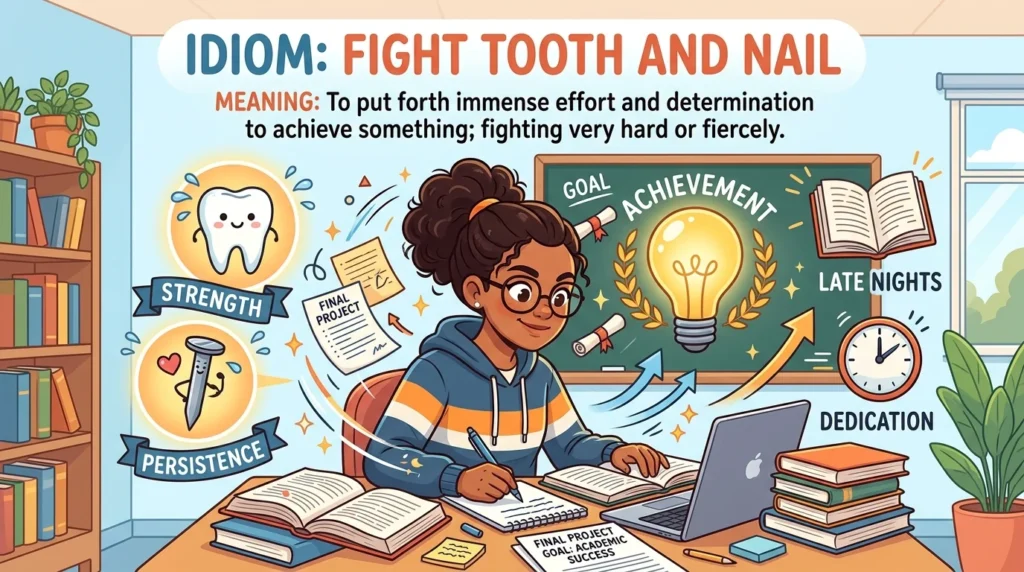
Example:
She fought tooth and nail to win the scholarship.
Common error: The idiom normally appears as “fight tooth and nail,” not “fight teeth and nails.”
Usage note: It emphasizes determination rather than literal physical fighting.
Battle It Out ⚔️
Meaning: Compete or argue until one side wins or a decision is reached.
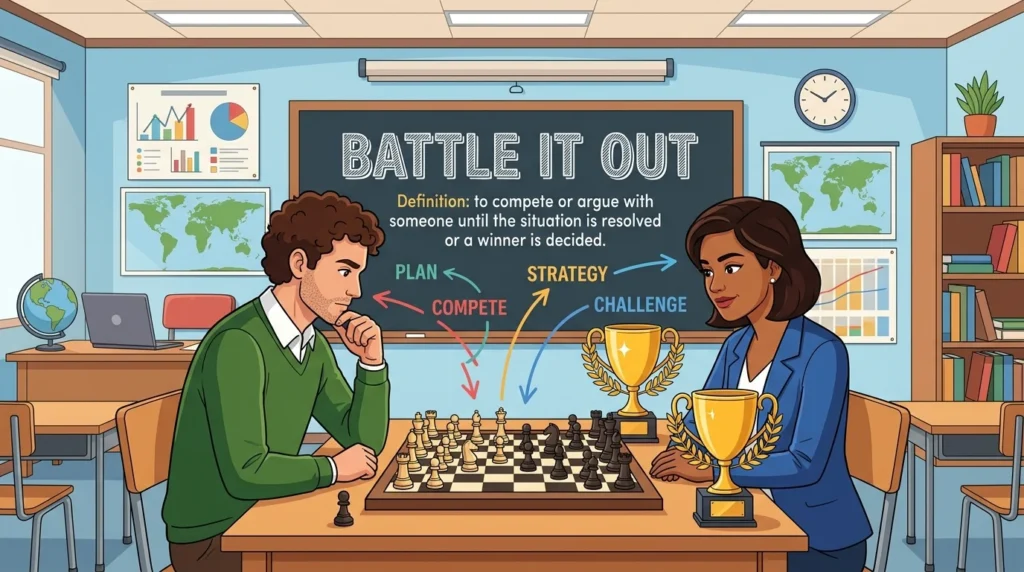
Example:
The two teams will battle it out in the championship game.
Common error: “Battle out” is incomplete. Use “battle it out.”
Usage note: This expression is especially common in sports, competitions, and debates.
Hold Your Ground 🛡️
Meaning: Refuse to change your position, opinion, or advantage.
Example:
Despite the pressure, Maya held her ground during the discussion.
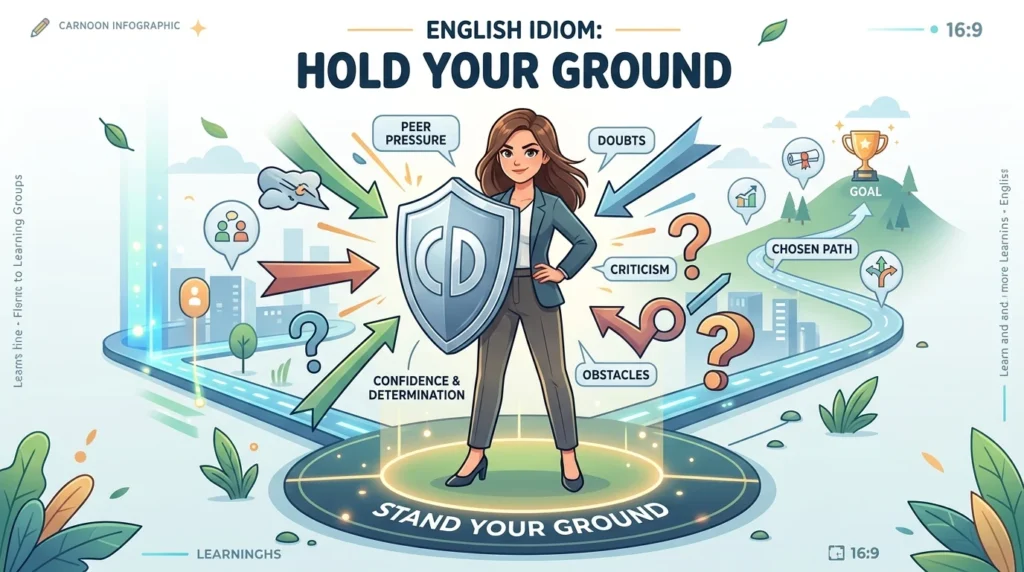
Common error: The correct expression is “hold your ground,” not “hold your grounds.”
Usage note: It can describe defending an opinion, negotiating, competing, or facing pressure.
Fight Fire with Fire 🔥
Meaning: Respond to someone’s actions using similar methods.
Example:
Instead of reacting emotionally, we should find a smarter way to solve the problem rather than simply fight fire with fire.
Common error: Don’t use “fight fire by fire.”
Usage note: This expression can have a negative implication because responding to bad behavior with similar behavior may make a situation worse.
Throw in the Towel 🥊
Meaning: Give up or stop trying.
Example:
The task was difficult, but he refused to throw in the towel.
Common error: The idiom is “throw in the towel,” not simply “throw the towel.”
Usage note: It comes from boxing and is now widely used for difficult situations.
Wave the White Flag 🏳️
Meaning: Surrender, give up, or admit defeat.
Example:
After several attempts to fix the problem, the team finally waved the white flag and asked for help.
Common error: Don’t confuse it with simply “raise a flag.” The figurative meaning is surrender.
Usage note: It can be serious or humorous depending on the context.
A War of Words 🗣️
Meaning: A heated argument or verbal conflict.
Example:
The meeting turned into a war of words between the two managers.
Common error: It refers to verbal conflict, not necessarily physical fighting.
Usage note: This expression is common when describing public debates, political disagreements, and arguments.
A Fighting Chance 🍀
Meaning: A reasonable possibility of success.
Example:
If we prepare properly, we have a fighting chance of finishing the project on time.
Common error: “Fighting chance” does not mean a chance to participate in a physical fight.
Usage note: It is useful when success is difficult but still possible.
In the Trenches
Meaning: Directly involved in the most difficult or demanding part of a situation.
Example:
Teachers are in the trenches every day, dealing with real classroom challenges.
Common error: Don’t assume it always refers to soldiers or war.
Usage note: It is often used figuratively in workplaces, education, journalism, and other demanding fields.
Take the Offensive
Meaning: Take active action instead of simply defending yourself.
Example:
The company decided to take the offensive and introduce a new product.
Common error: In modern figurative English, it usually means becoming more proactive, not physically attacking someone.
Usage note: It is common in business, sports, politics, and strategic discussions.
On the Defensive
Meaning: Forced to protect yourself or your position against criticism or challenge.
Example:
The manager was on the defensive after several employees questioned the decision.
Common error: Don’t use “in the defensive” in this expression.
Usage note: It is useful for conversations involving criticism, competition, and pressure.
Draw First Blood 🩸
Meaning: Gain the first advantage in a competition or conflict.
Example:
Our team drew first blood by scoring in the opening minutes.
Common error: In figurative use, it does not necessarily involve injury.
Usage note: It is particularly effective in sports and competitive situations.
Call the Shots 🎯
Meaning: Be the person who makes the important decisions.
Example:
The project leader calls the shots when major decisions need to be made.
Common error: “Call the shot” is possible in some literal contexts, but the common idiom meaning control is “call the shots.”
Usage note: This is an informal expression and works well in conversations about leadership and authority.
Keep Your Powder Dry
Meaning: Stay prepared and wait for the right opportunity before taking action.
Example:
We don’t need to announce our plans yet; let’s keep our powder dry until we’re ready.
Common error: Its modern meaning is not about literally keeping gunpowder dry.
Usage note: This is a more advanced battle-related expression and is best suited to strategic situations.
Meet Your Match
Meaning: Encounter someone who is equally skilled, strong, or capable.
Example:
The champion finally met her match in the final round.
Common error: It doesn’t necessarily refer to romance or marriage.
Usage note: It can be used for sports, competition, arguments, and challenging situations.
Come Out Swinging 🥊
Meaning: Begin a situation with strong energy, determination, or aggressive action.
Example:
The new team came out swinging and quickly took the lead.
Common error: It doesn’t have to describe literal boxing.
Usage note: This is common in sports, debates, business, and competitive situations.
Go Down Fighting
Meaning: Continue resisting or trying even when defeat seems likely.
Example:
The team refused to give up and went down fighting.
Common error: It does not necessarily describe a physical fight.
Usage note: Use it to emphasize courage, persistence, and determination.
Win the Battle, Lose the War 🏆
Meaning: Achieve a short-term victory but fail to achieve the larger goal.
Example:
They saved money in the short term but damaged the project overall—they won the battle but lost the war.
Common error: Don’t use this expression simply to describe losing after winning.
Usage note: It is particularly useful when discussing long-term strategy and decision-making.
Battle Idioms by Meaning
Learning idioms by category can make them easier to remember.
For Difficult Situations
- An uphill battle — a difficult struggle
- In the trenches — involved in demanding work
- A fighting chance — some possibility of success
For Determination
- Fight tooth and nail — try extremely hard
- Hold your ground — refuse to give up your position
- Go down fighting — continue resisting
For Competition
- Battle it out — compete directly
- Meet your match — encounter an equally capable opponent
- Draw first blood — gain the first advantage
For Giving Up
- Throw in the towel — give up
- Wave the white flag — surrender
For Strategy and Control
- Pick your battles — choose which conflicts matter
- Take the offensive — act proactively
- On the defensive — protect your position
- Call the shots — make the decisions
- Keep your powder dry — stay prepared
Battle Idioms That Are Easy to Confuse
Some expressions have similar meanings, but they are not interchangeable.
Throw in the towel vs. wave the white flag:
Both can mean giving up. “Throw in the towel” is especially associated with stopping an attempt, while “wave the white flag” emphasizes surrender or admitting defeat.
Pick your battles vs. hold your ground:
“Pick your battles” means deciding which conflicts are worth engaging in. “Hold your ground” means refusing to give up your existing position.
An uphill battle vs. a fighting chance:
An “uphill battle” emphasizes difficulty. A “fighting chance” emphasizes that success is still possible.
Take the offensive vs. on the defensive:
Taking the offensive means actively pursuing your strategy, while being on the defensive means protecting yourself or your position.
How to Use Battle Idioms Naturally
Don’t add an idiom simply because you want to sound advanced. Choose one that matches the situation.
For example:
Simple:
“This assignment is very difficult.”
More expressive:
“This assignment is an uphill battle.”
Simple:
“She worked extremely hard to keep her position.”
More natural:
“She fought tooth and nail to keep her position.”
A good rule is to use one strong idiom where it adds meaning, rather than filling every sentence with figurative language.
FAQs About Battle Idioms
What is the most common battle idiom?
“Pick your battles” is one of the most common battle-related idioms in everyday English. It means choosing which conflicts are worth your attention.
What idiom means fighting hard?
“Fight tooth and nail” means to try extremely hard to achieve or protect something.
What idiom means a difficult struggle?
“An uphill battle” describes a situation that is difficult and requires substantial effort.
What idiom means giving up?
“Throw in the towel” and “wave the white flag” can both mean giving up or admitting defeat.
What are the top 10 battle idioms?
Ten especially useful expressions are pick your battles, an uphill battle, fight tooth and nail, battle it out, hold your ground, fight fire with fire, throw in the towel, wave the white flag, a war of words, and a fighting chance.
Conclusion
Battle idioms turn ordinary descriptions of conflict, difficulty, competition, and determination into memorable English expressions. From “pick your battles” to “win the battle, lose the war,” each phrase gives you a different way to describe challenges and strategies.
Start with five expressions that fit your everyday life: pick your battles, an uphill battle, fight tooth and nail, hold your ground, and throw in the towel. Then practice creating your own sentences.
The more you use idioms in real conversations and writing, the easier they become to remember—and the more natural your English will sound.

“Wilkie Collins brings classic idioms to life on LearnIdom.com, making language learning engaging, memorable, and full of literary charm.”