Have you ever heard someone say, “He blew his top” or “She’s seeing red” and wondered what they actually meant? Mad idioms are colorful English expressions that describe anger, frustration, or irritation without using the word “angry.”
Whether you’re an English learner, student, content writer, or language enthusiast, this guide explains the most common mad idioms, their meanings, examples, and even modern Gen Z slang for “mad” in easy-to-understand language.
What Are Mad Idioms?
Mad idioms are expressions that describe anger, annoyance, frustration, or losing emotional control. Their meanings cannot be understood by translating each word literally.
For example:
- ❌ Blow your top doesn’t mean your head explodes.
- ✅ It means to become extremely angry.
Learning these idioms helps you:
- Speak natural English.
- Understand native speakers.
- Improve IELTS and TOEFL vocabulary.
- Write more engaging English.
Why Learn Mad Idioms?
Using mad idioms makes your English sound more fluent and expressive.
Benefits include:
- Better spoken English
- Improved writing skills
- Easier understanding of movies and TV shows
- Higher vocabulary scores in English exams
- More natural conversations
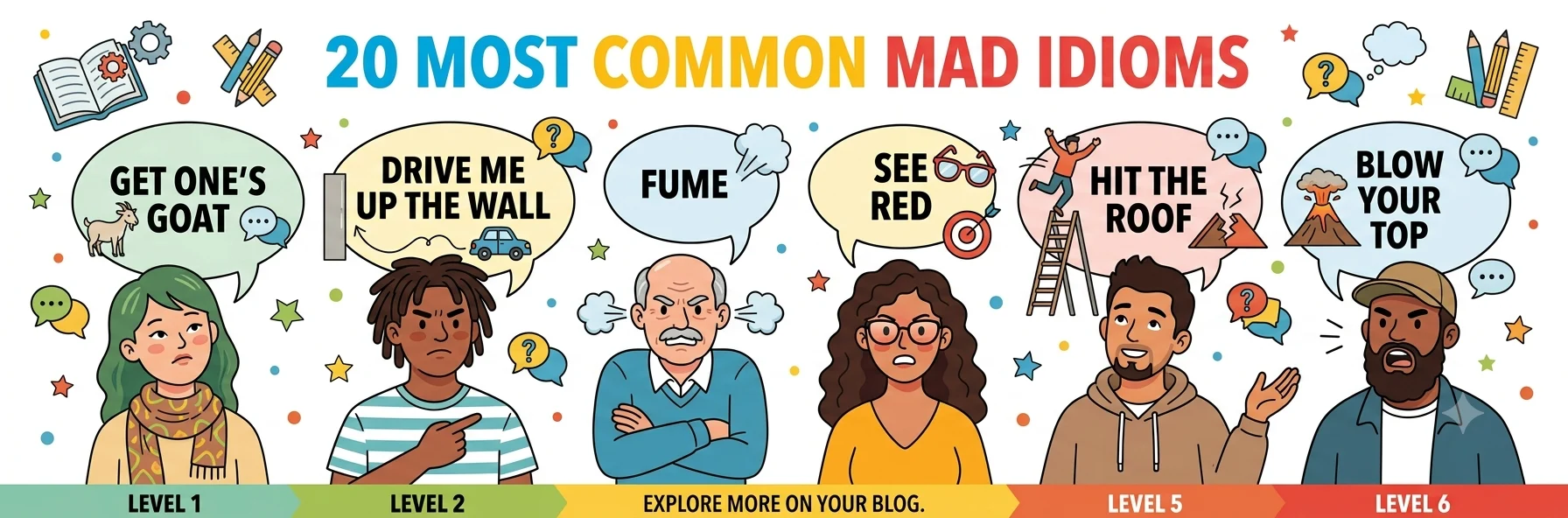
Blow Your Top
Word-by-Word Meaning
- Blow = explode
- Top = head
Idiomatic Meaning
Become extremely angry.
Example Sentences
- Dad blew his top when he saw the broken window.
- My teacher nearly blew her top after the class ignored instructions.
Common Error
❌ Blow your head
✅ Blow your top
Usage Note
Used for sudden and intense anger.
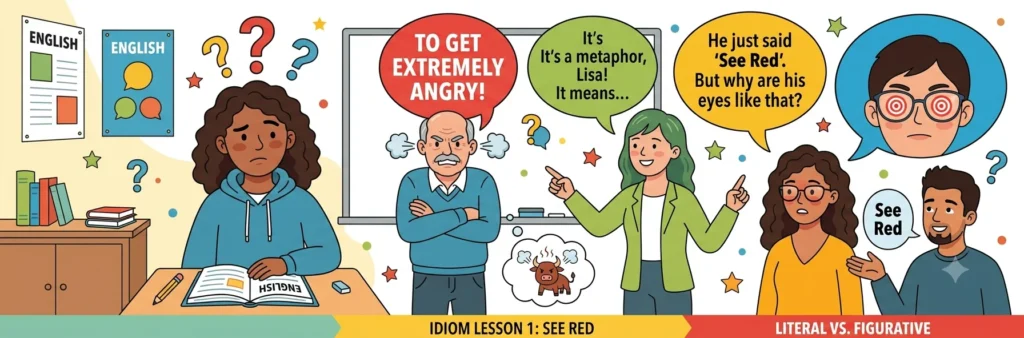
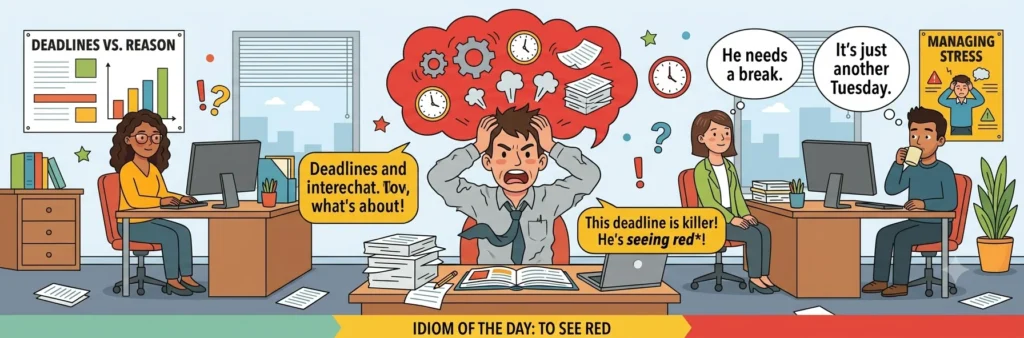
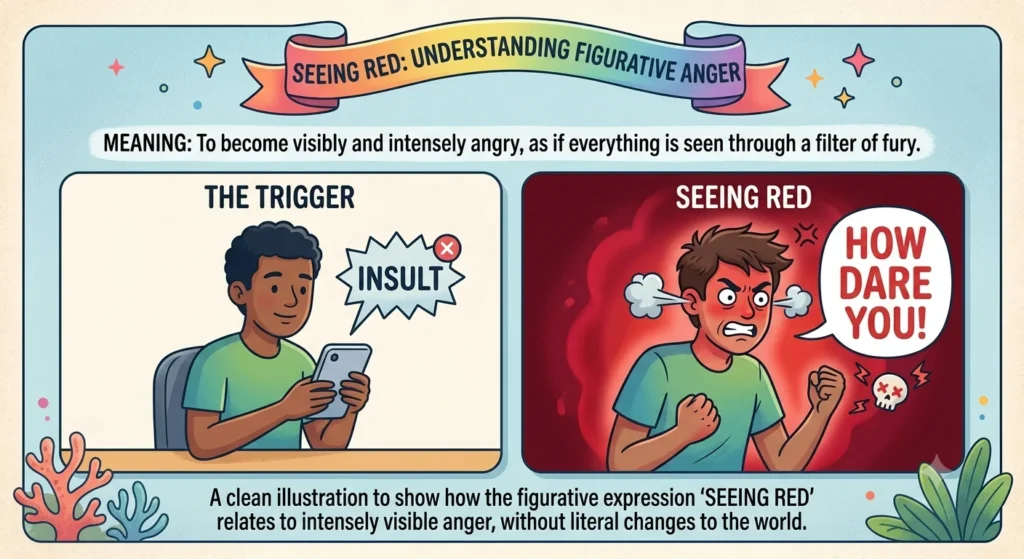
See Red
Word-by-Word Meaning
- See = notice
- Red = color
Idiomatic Meaning
Become instantly furious.
Example Sentences

- She saw red after hearing the insult.
- He always sees red when people lie.
Common Error
Don’t interpret it literally as seeing a red color.
Usage Note
Often describes immediate anger.
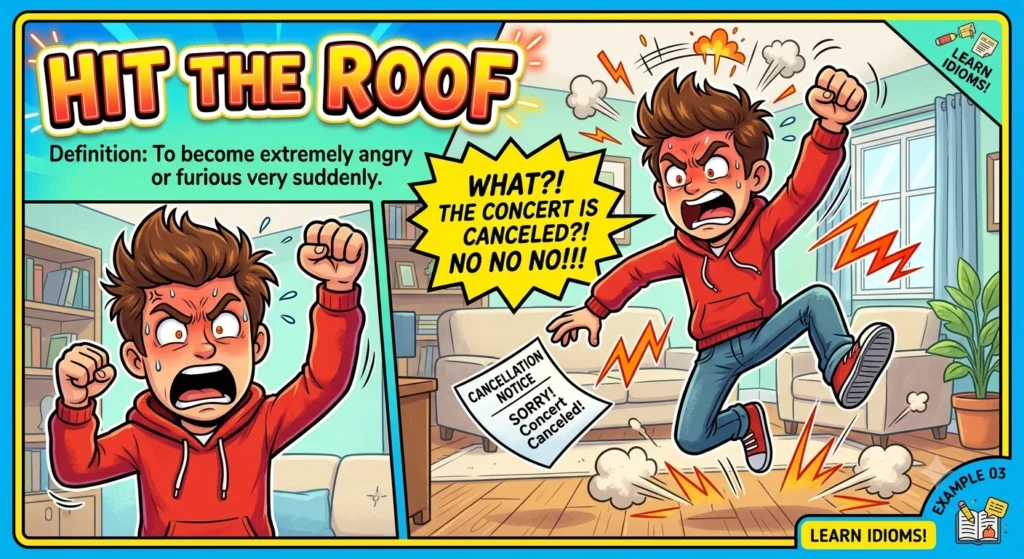
Hit the Roof
Word-by-Word Meaning
- Hit = strike
- Roof = top of a house
Idiomatic Meaning
Become extremely angry.
Example Sentences
- Mom hit the roof when she found the broken vase.
- My boss hit the roof over the mistake.
Common Error
Not about physically hitting a roof.
Usage Note
Very common in American English.
Lose Your Temper
Word-by-Word Meaning
Lose = fail to control
Temper = emotions
Idiomatic Meaning
Become angry unexpectedly.
Example Sentences
- Don’t lose your temper during the meeting.
- He rarely loses his temper.
Common Error
Don’t say “lose your angry.”
Usage Note
Suitable in formal and informal English.
Fly Off the Handle
Word-by-Word Meaning
Handle = part of a tool
Idiomatic Meaning
React angrily without thinking.
Example Sentences
- He flew off the handle over a small mistake.
- Try not to fly off the handle.
Common Error
Not related to flying.
Usage Note
Describes overreacting.
Foam at the Mouth
Word-by-Word Meaning
Foam = bubbles
Mouth = lips
Idiomatic Meaning
Be extremely angry.
Example Sentences
- The coach was foaming at the mouth after the loss.
- She was practically foaming at the mouth.
Common Error
Usually figurative.
Usage Note
Shows intense anger.
Blow a Fuse
Word-by-Word Meaning
Fuse = electrical safety device
Idiomatic Meaning
Lose your temper suddenly.
Example Sentences
- He blew a fuse over the late delivery.
- Dad blew a fuse again.
Common Error
Don’t confuse with electrical problems.
Usage Note
Informal English.
Get Hot Under the Collar
Word-by-Word Meaning
Hot = warm
Collar = shirt collar
Idiomatic Meaning
Become upset or angry.
Example Sentences
- She got hot under the collar during the debate.
- Don’t get hot under the collar over criticism.
Common Error
Not about body temperature.
Usage Note
Common in British English.
Bite Someone’s Head Off
Word-by-Word Meaning
Bite = use teeth
Head = body part
Idiomatic Meaning
Reply angrily.
Example Sentences
- Don’t bite my head off.
- She bit his head off for asking a simple question.
Common Error
Not literal.
Usage Note
Used in conversations.
Go Ballistic
Word-by-Word Meaning
Ballistic = explosive movement
Idiomatic Meaning
Become wildly angry.
Example Sentences
- Dad went ballistic.
- My coach went ballistic after the loss.
Common Error
Not about weapons.
Usage Note
Very informal.
Lose It
Word-by-Word Meaning
Lose = no control
It = emotions
Idiomatic Meaning
Become emotionally angry.
Example Sentences
- She finally lost it.
- I almost lost it yesterday.
Usage Note
Very common in spoken English.
Burn with Anger
Word-by-Word Meaning
Burn = feel hot
Idiomatic Meaning
Feel intense anger.
Example Sentences
- He burned with anger.
- She was burning with anger.
Go Up in Smoke
Word-by-Word Meaning
Smoke = disappear
Idiomatic Meaning
Plans fail because of anger or problems.
Example Sentences
- Our vacation plans went up in smoke.
Be at Boiling Point
Word-by-Word Meaning
Boiling = extremely hot
Idiomatic Meaning
Ready to explode with anger.
Example Sentences
- He was at boiling point.
Raise Cain
Word-by-Word Meaning
Raise = create
Cain = biblical figure
Idiomatic Meaning
Cause an angry scene.
Example Sentences
- Customers raised Cain.
Have a Short Fuse
Word-by-Word Meaning
Short fuse = quick explosion
Idiomatic Meaning
Become angry easily.
Example Sentences
- He has a short fuse.
Keep Your Shirt On
Word-by-Word Meaning
Keep = don’t remove
Shirt = clothing
Idiomatic Meaning
Stay calm.
Example Sentences
- Keep your shirt on.
- Relax and stay patient.
Blow Off Steam
Word-by-Word Meaning
Steam = pressure
Idiomatic Meaning
Release anger safely.
Example Sentences
- Exercise helps me blow off steam.
Get Worked Up
Word-by-Word Meaning
Worked = emotionally excited
Idiomatic Meaning
Become upset.
Example Sentences
- Don’t get worked up.
Throw a Fit
Word-by-Word Meaning
Throw = display
Fit = emotional outburst
Idiomatic Meaning
Become very angry.
Example Sentences
- The child threw a fit.
- My brother threw a fit when he lost the game.
What Are Some Common Mad Idioms?
Some of the most common mad idioms include:
- Blow your top
- See red
- Hit the roof
- Lose your temper
- Fly off the handle
- Blow a fuse
- Bite someone’s head off
- Go ballistic
- Throw a fit
- Have a short fuse
These expressions are widely used in everyday English and help speakers express emotions naturally.
How Do You Say “Mad” in Gen Z?
Modern Gen Z often replaces “mad” with trendy slang expressions.
Popular Gen Z words include:
- Heated
- Salty
- Pressed
- Triggered
- Big mad
- Tight
- Fuming
- Crashing out
- Losing it
- Low-key annoyed
Example:
“I’m not mad… I’m just pressed.”
How Do You Say “Mad” in Slang?
Common slang for “mad” includes:
- Pissed
- Tick
- Heated
- Salty
- Big mad
- Bent out of shape
- Livid
- Furious
- Fuming
- Triggered
These expressions are common in casual conversations and social media.
What Are the Top 10 Idioms?
If you’re just starting, these are among the most useful English idioms:
| Idiom | Meaning |
|---|---|
| Break the ice | Start a conversation |
| Hit the books | Study hard |
| Piece of cake | Very easy |
| Once in a blue moon | Very rarely |
| Spill the beans | Reveal a secret |
| Under the weather | Feeling sick |
| See red | Become angry |
| Blow your top | Lose your temper |
| Hit the sack | Go to bed |
| Cost an arm and a leg | Very expensive |
Tips for Remembering Mad Idioms
- Learn one idiom every day.
- Watch English movies.
- Practice with friends.
- Write your own example sentences.
- Use idioms during conversations.
Frequently Asked Questions (FAQs)
1. What are some common mad idioms?
Common mad idioms include see red, blow your top, hit the roof, lose your temper, throw a fit, and go ballistic.
2. How do you say “mad” in Gen Z?
Gen Z commonly says pressed, heated, salty, triggered, big mad, or fuming instead of simply saying “mad.”
3. How do you say “mad” in slang?
Popular slang words include pissed, livid, furious, heated, salty, ticked off, and big mad.
4. Why should I learn mad idioms?
Mad idioms improve speaking, listening, writing, and help you understand native English conversations more naturally.
5. Which mad idiom is used the most?
The most commonly used expressions are lose your temper, see red, hit the roof, blow your top, and have a short fuse.
Conclusion
Mastering mad idioms is one of the fastest ways to sound more natural in English. Instead of simply saying someone is angry, you can use expressive phrases like see red, blow your top, or go ballistic to communicate emotions more vividly.
Practice a few idioms every week, create your own example sentences, and use them in daily conversations. The more you use these expressions, the more confident and fluent your English will become.

“L.P. Hartley brings classic idioms to life on LearnIdom.com, helping readers explore language with wit, clarity, and timeless insight.”