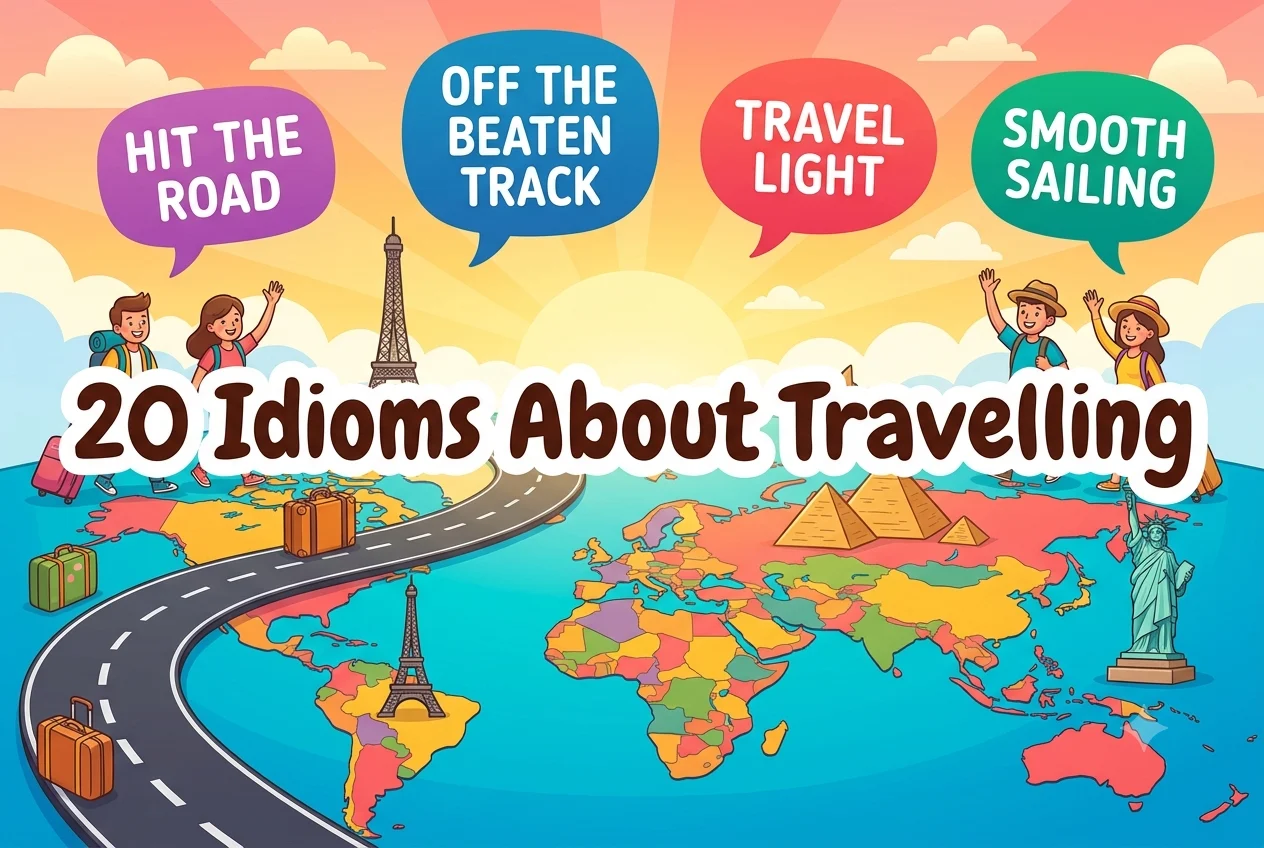
Have you ever felt confused when native English speakers say things like “let’s hit the road” or “I’ve got itchy feet”? These idioms about travelling are essential for sounding natural and fluent in English conversations. This complete guide will teach you 20 powerful travel idioms with clear meanings, real-life examples, and practical usage tips that will transform your English skills.
Whether you’re preparing for an IELTS exam, planning a trip with friends, or simply want to expand your vocabulary, this article covers everything you need. From common travel phrases in English to advanced adventure idioms and phrases, you’ll learn how to express yourself like a native speaker. Let’s begin this exciting linguistic journey together!
What Are Travel Idioms and Why Should You Learn Them?
Travel idioms with meaning are colorful expressions that native speakers use to describe journeys, adventures, and holiday experiences. Instead of saying “I want to leave,” you can say “Let’s hit the road!” which sounds much more engaging and natural.
Understanding idioms about travelling helps you in three important ways. First, you’ll understand movies, songs, and conversations better. Second, you’ll sound more fluent and natural when speaking. Third, using idioms appropriately can boost your IELTS speaking and writing scores significantly.
Think of idioms as the spice that makes English delicious. While basic travel vocabulary words with meaning give you the ingredients, idioms add the flavor that makes your English memorable and impressive.
Idioms for Starting Your Journey
These idioms describe the beginning of a travel adventure. Whether you’re leaving home or starting a new chapter, these expressions capture that exciting moment of departure.
Hit the Road
Word-by-word meaning: To physically strike the road with your vehicle’s wheels.
Idiomatic meaning: To begin a journey, especially by car, or simply to leave a place and start moving.
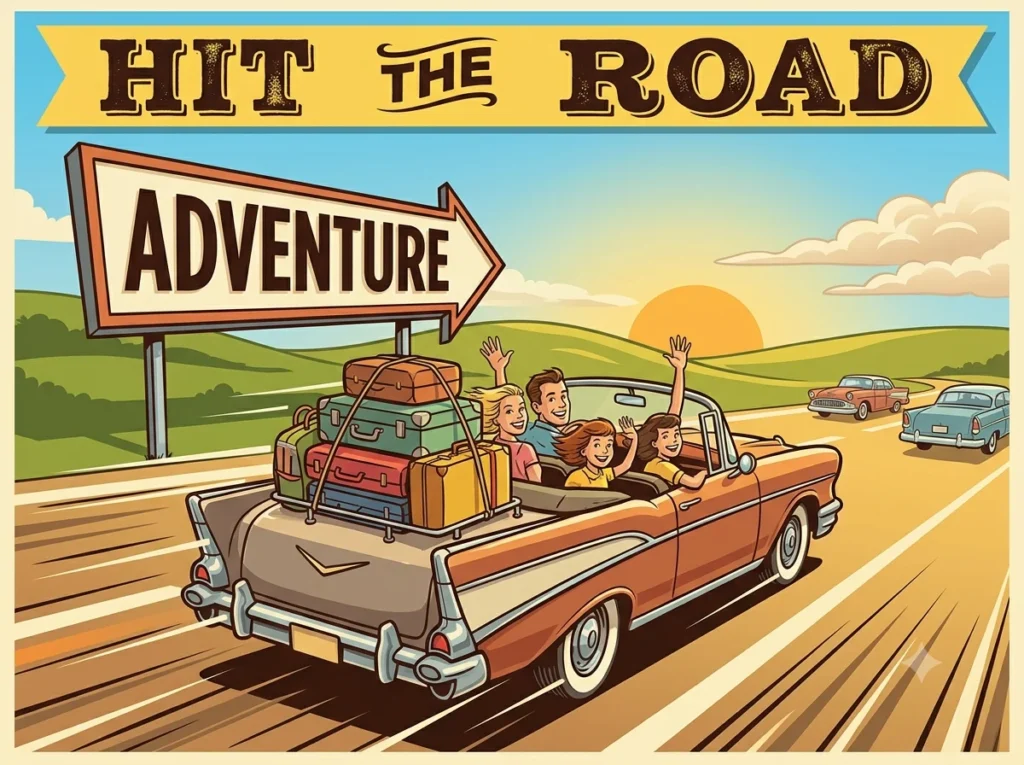
Example sentence: “We need to hit the road by 6 AM to avoid the heavy traffic and reach the beach before noon.”
Common error: Don’t use this idiom for flights. It’s specifically for road travel and car journeys.
Usage note: This is one of the most common idioms about travelling with friends. You’ll hear it constantly in casual conversations. It’s perfect for road trips and weekend getaways.
Set Sail
Word-by-word meaning: To raise the sails of a boat to catch the wind.
Idiomatic meaning: To begin a journey, traditionally by boat, but now used for any adventurous start.
Example sentence: “After months of planning, we finally set sail on our Mediterranean cruise adventure.”

Common error: Using it for car trips. While acceptable metaphorically, it’s most authentic for water travel.
Usage note: This romantic travel phrase in English evokes images of adventure and exploration. Use it when describing memorable vacations.
Off to the Races
Word-by-word meaning: Going to watch horse races.

Idiomatic meaning: To begin something energetically or start a journey with great enthusiasm and excitement.
Example sentence: “With our bags packed and tickets in hand, we’re off to the races on our European tour!”
Common error: Using it for boring or forced trips. This idiom requires genuine excitement.
Usage note: Among the most energetic adventure idioms and phrases, this one sets a fun, positive tone.
Idioms for Travel Experiences
Once you’re on the road, these idioms help you describe your experiences, challenges, and memorable moments during your journey.
The Journey Is the Reward
Word-by-word meaning: The process of travelling itself is the prize or reward.
Idiomatic meaning: The experiences, lessons, and memories gained during a journey are more valuable than reaching the destination.

Example sentence: “We missed our flight and had to take trains through beautiful villages, proving that the journey is the reward.”
Common error: Using it when you’re solely focused on the destination. It’s about appreciating the process.
Usage note: This beautiful travel phrase in English is often used philosophically. It’s perfect for reflective travel writing.
Smooth Sailing
Word-by-word meaning: Sailing on calm, undisturbed waters.
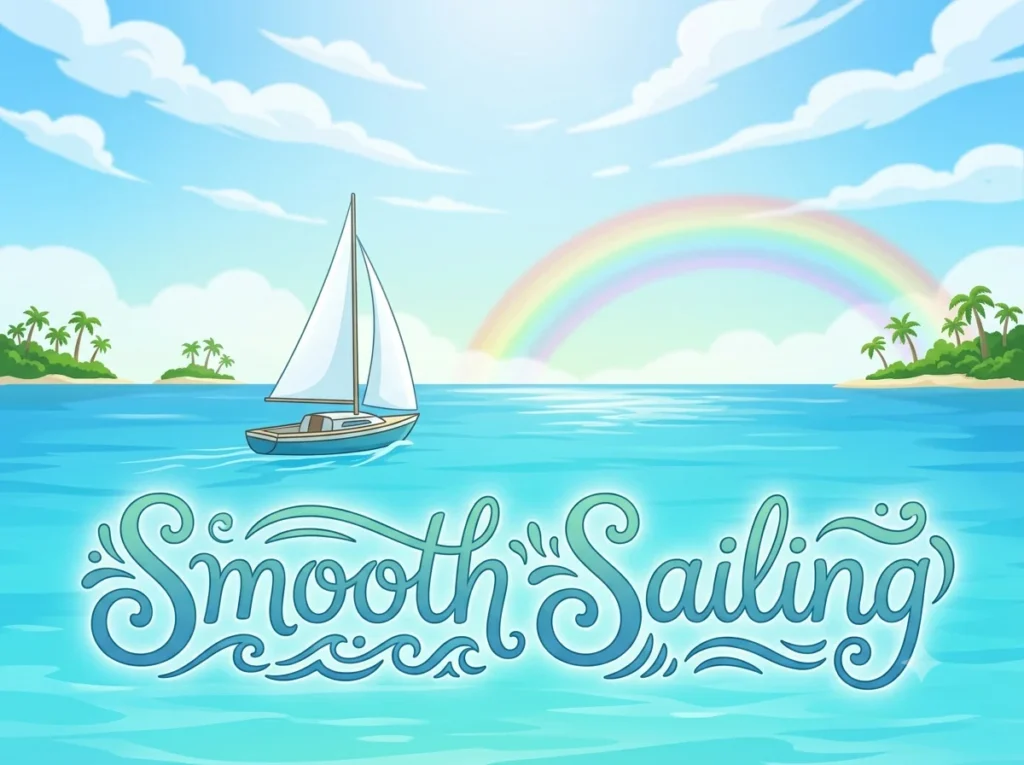
Idiomatic meaning: A journey or process that proceeds without any problems, difficulties, or obstacles.
Example sentence: “After we got through the chaotic airport security, the rest of our trip was smooth sailing.”
Common error: Using it prematurely before the journey is complete. It’s often used retrospectively.
Usage note: One of the most positive travel idioms with meaning, this expression reassures others that everything is going well.
A Bumpy Ride
Word-by-word meaning: A ride that is physically rough due to bumps on the road.
Idiomatic meaning: A journey or experience that has many difficulties, problems, or unexpected challenges.
Example sentence: “The trek through the mountains was a bumpy ride with constant rain and difficult terrain.”
Common error: Only using for literal physical bumps. It’s mostly figurative in modern usage.
Usage note: This is an honest travel vocabulary word with meaning that acknowledges travel isn’t always perfect.
A Rough Ride
Word-by-word meaning: An uncomfortable, physically jarring ride.
Idiomatic meaning: A very difficult and unpleasant experience, often more serious than a “bumpy ride.”
Example sentence: “Getting lost in the desert with no water was definitely a rough ride for the inexperienced hikers.”
Common error: Using for minor inconveniences. This idiom implies significant hardship.
Usage note: Among the more serious adventure idioms and phrases, use this when experiences are genuinely challenging.
Idioms for Budget and Practical Travel
These idioms about travelling focus on the practical aspects of journeys, including money, packing, and logistics.
Travel Light
Word-by-word meaning: To journey with minimal weight or luggage.
Idiomatic meaning: To bring very few belongings on a trip, packing only essentials.
Example sentence: “For our backpacking adventure through Southeast Asia, we had to travel light with just one small bag each.”
Common error: Saying “travel lightly” instead of “travel light.” The idiom uses “light” as an adjective.
Usage note: This practical travel phrase in English is essential advice for all travellers, especially budget backpackers.
Travel on a Shoestring
Word-by-word meaning: To travel using only a shoestring (metaphor for minimal money).
Idiomatic meaning: To travel while spending as little money as possible, often on a very tight budget.
Example sentence: “We travelled on a shoestring through Eastern Europe, staying in hostels and eating street food.”
Common error: Using for moderate budget travel. It implies extreme financial limitation.
Usage note: One of the most useful travel idioms with meaning for student and budget travellers worldwide.
Live Out of a Suitcase
Word-by-word meaning: To exist using only items stored in a suitcase.
Idiomatic meaning: To travel so frequently or move so often that you never fully unpack your belongings.
Example sentence: “As a flight attendant, she spends most of her life living out of a suitcase in hotel rooms.”
Common error: Using for a short weekend trip. It implies a permanent or extended travel lifestyle.
Usage note: This describes a nomadic travel vocabulary word with meaning that many professionals and digital nomads experience.
Idioms for Exploration and Adventure
These adventure idioms and phrases describe discovering new places, taking risks, and experiencing the unknown.
Off the Beaten Track
Word-by-word meaning: Away from the path that many people use regularly.
Idiomatic meaning: In a place where few tourists go; far from popular, overcrowded destinations.
Example sentence: “We discovered a stunning waterfall completely off the beaten track, with no other tourists in sight.”
Common error: Using it for just a quiet street in a city. It implies remote or unusual locations.
Usage note: Among the most cherished idioms about travelling, this one celebrates authentic, hidden-gem experiences.
12. Travel Far and Wide
Word-by-word meaning: To journey to distant places in many different directions.
Idiomatic meaning: To visit many places across a large geographical area, exploring extensively.
Example sentence: “The wildlife photographer travelled far and wide across Africa to capture images of rare animals.”
Common error: Using for visiting two cities in one country. It implies extensive exploration.
Usage note: This adventurous travel phrase in English describes seasoned travellers who have seen much of the world.
The Road Less Travelled
Word-by-word meaning: The path that fewer people choose to take.
Idiomatic meaning: An unconventional choice or lifestyle that most people avoid because it’s different.
Example sentence: “Instead of becoming a lawyer like his father, he took the road less travelled and became a travel blogger.”
Common error: Using for just any quiet street. It has a profound, philosophical meaning.
Usage note: Popularized by Robert Frost’s poem, this is one of the most famous idioms about travelling.
Idioms for Time and Duration
These travel idioms with meaning help you describe when you travel and how long journeys take.
At the Crack of Dawn
Word-by-word meaning: At the moment when dawn breaks or first light appears.
Idiomatic meaning: Very early in the morning, typically around sunrise or even earlier.
Example sentence: “We had to wake up at the crack of dawn to catch the sunrise over the Grand Canyon.”
Common error: Using for 8 AM or later. It specifically means around sunrise time.
Usage note: This vivid travel phrase in English is perfect for describing early morning adventures.
A Red-Eye Flight
Word-by-word meaning: A flight that makes your eyes red from fatigue.
Idiomatic meaning: An overnight flight that departs late at night and arrives early the next morning.
Example sentence: “We took the red-eye flight from Los Angeles to New York to save money on accommodation.”
Common error: Using for any late flight. It specifically refers to overnight flights that disrupt sleep.
Usage note: Among the most practical travel vocabulary words with meaning, this one is essential for frequent flyers.
Break the Journey
Word-by-word meaning: To interrupt or pause during a journey.
Idiomatic meaning: To stop for rest or sightseeing during a long trip before continuing.
Example sentence: “We decided to break the journey in a charming village to stretch our legs and have lunch.”
Common error: Using for a quick bathroom break. It implies a significant stop.
Usage note: This useful travel phrase in English helps describe multi-day road trips.
Idioms for Travel Companions
These idioms about travelling with friends describe shared experiences and group dynamics.
In the Same Boat
Word-by-word meaning: Together in the same physical boat.
Idiomatic meaning: Facing the same difficult situation, challenge, or problem as others.
Example sentence: “When our flight got cancelled, we were all in the same boat, trying to find alternative routes.”
Common error: Using for positive situations. This idiom typically describes shared challenges.
Usage note: Perfect for idioms about travelling with friends when things go wrong together.
Travel With
Word-by-word meaning: To journey in someone’s company.
Idiomatic meaning: To accompany someone on a trip or be someone’s travel companion.
Example sentence: “She’s travelling with her best friend across South America for three months.”
Common error: There’s no error—this is straightforward and commonly used.
Usage note: The most direct travel vocabulary word with meaning for describing companions.
Idioms for Escape and Relaxation
These idioms about travel and holidays capture the desire to escape daily stress and find peace.
Get Away from It All
Word-by-word meaning: To move away from everything and everyone.
Idiomatic meaning: To go on holiday to escape the stress, routines, and demands of daily life.
Example sentence: “I desperately need a beach holiday to get away from it all and recharge my batteries.”
Common error: Using for a quick errand or short break. It implies a deliberate escape.
Usage note: Among the most popular travel idioms with meaning for describing holiday motivation.
Make a Pit Stop
Word-by-word meaning: To stop in the pits like race cars do.
Idiomatic meaning: To take a short break during a journey, typically for fuel, food, or restroom use.
Example sentence: “Let’s make a pit stop at the next gas station for coffee and snacks.”
Common error: Using for long breaks or overnight stays. It’s meant to be brief.
Usage note: Originally from motorsports, now a common travel phrase in English for all road trips.
Essential Travel Vocabulary Words
While idioms about travelling add color, understanding basic travel vocabulary words with meaning builds your foundation.
| Vocabulary Word | Meaning | Example in Context |
|---|---|---|
| Destination | The specific place where someone is going | “Paris has been our dream destination for years.” |
| Itinerary | A detailed plan or schedule of a journey | “Our itinerary includes museums, restaurants, and day trips.” |
| Tourist Trap | An overcrowded place that overcharges tourists | “We avoided the tourist trap restaurants and found local gems.” |
| Backpacking | Budget travel with minimal luggage in a backpack | “Backpacking through Asia was the adventure of a lifetime.” |
| Layover | A short stop between connecting flights | “We had a six-hour layover in Dubai.” |
Frequently Asked Questions
What are some common idioms about travelling?
Some frequently used idioms about travelling include “hit the road” (start a journey), “off the beaten track” (unusual places), “travel light” (pack minimally), “itchy feet” (desire to travel), and “smooth sailing” (easy progress). These expressions help you sound natural in daily conversations about holidays and adventures.
What is the idiom for a long journey?
Several travel idioms with meaning describe long journeys. You can say “long haul” for something requiring significant time and effort. “Break the journey” describes stopping to rest during extended travel. Describing a difficult journey as a “bumpy ride” or “rough ride” acknowledges challenges along the way.
What are the top 10 travel idioms?
Popular idioms about travelling include “hit the road,” “off the beaten track,” “travel light,” “itchy feet,” “smooth sailing,” “bumpy ride,” “get away from it all,” “the journey is the reward,” “set sail,” and “live out of a suitcase.” These cover starting journeys, describing experiences, and discussing travel challenges.
What are some famous travel sayings?
Famous travel sayings often relate to adventure idioms and phrases. “The journey is the reward” is a well-known proverb about enjoying the process. “Life is a journey” is another common saying. “Take the road less travelled” comes from Robert Frost’s famous poem and encourages unique life choices.
How can I remember travel idioms easily?
Practice makes perfect with idioms about travelling with friends. Use them in conversations, write example sentences in a notebook, create flashcards, or download a travel idioms PDF from learning websites. Hearing them in songs, movies, and podcasts also helps you remember naturally.
Conclusion
Mastering idioms about travelling transforms your English from textbook-perfect to naturally fluent. From exciting adventure idioms and phrases like “set sail” to practical travel vocabulary words with meaning like “itinerary,” you now have a powerful toolkit for any travel conversation.
The next time someone asks about your holiday plans, impress them by saying “We’re hitting the road at the crack of dawn!” Practice one new idiom each day, and soon you’ll sound like a native speaker. Ready to travel far and wide with your improved English? Your linguistic adventure starts now!
Share this article with your travel buddies and practice these idioms together on your next trip!

“Rose Macaulay shares the charm of idioms on LearnIdom.com, making language learning delightful, insightful, and full of wit for every reader.”