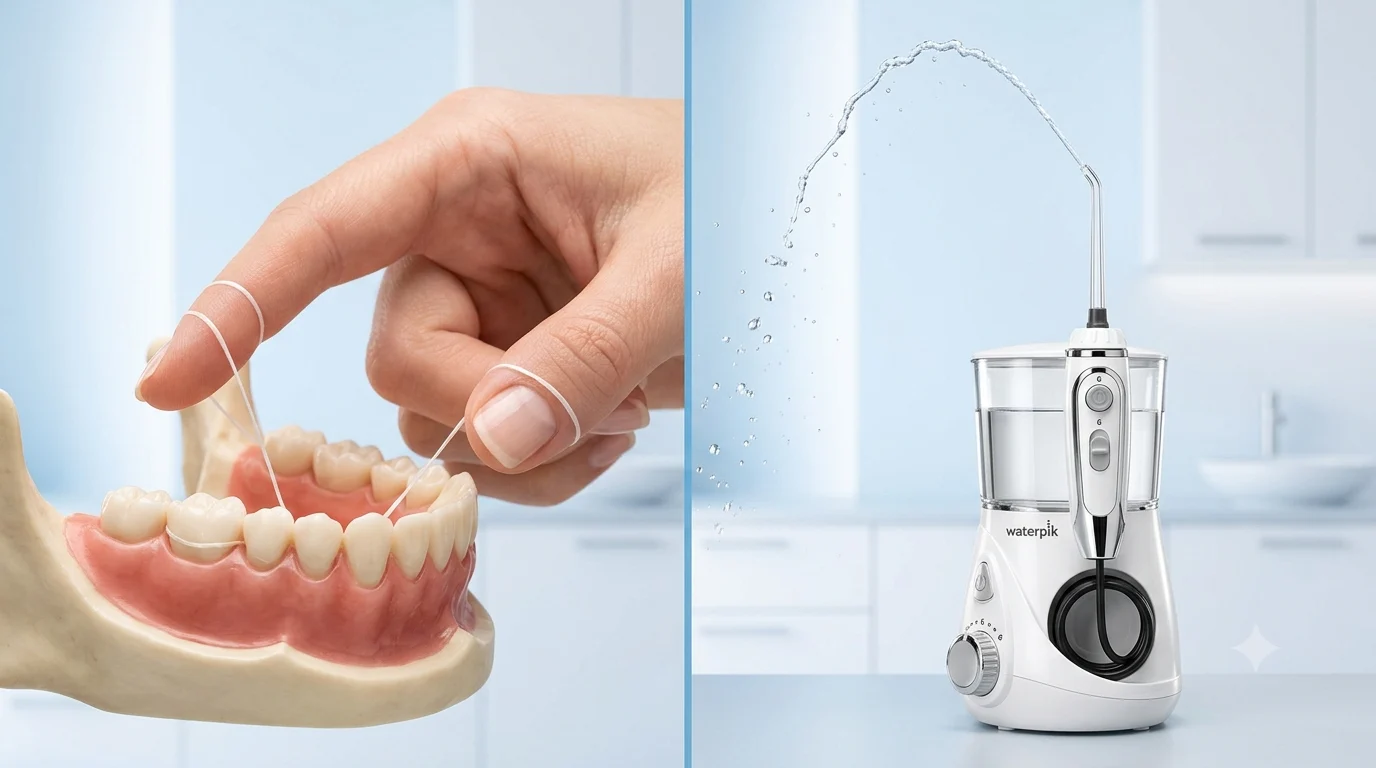
Let’s face it. You probably know you should floss, but let’s be honest, how often do you actually do it? The struggle is real. Between the awkward hand positions, the bleeding gums, and the time it takes, many people simply skip this crucial step. This is exactly why millions of people search for a better way. They want to know if a water flosser, often called a Waterpik, can replace the traditional string floss they hate using.
The confusion is understandable. Both tools promise to clean between your teeth, but they work in completely different ways. One scrapes, the other sprays. One costs a few dollars, the other costs significantly more.
This guide will cut through the marketing hype and give you a clear, honest comparison. By the end, you will know exactly which tool, or combination of tools, is right for your specific needs. This isn’t about choosing the most expensive option, it’s about choosing the most effective one that you will actually use every single day.
Floss or Waterpik
Choose traditional floss if you want the cheapest, most portable option that physically scrapes sticky plaque off the tight spaces between your teeth.
Choose a Waterpik if you have braces, dental implants, or arthritis that makes string flossing difficult. For most people, the best answer is to use both. This combination gives you the physical scraping action of floss along with the deep cleaning power of a water flosser.
The Origin of Waterpik and Floss
![Historical image showing early dental floss from the 1800s]
Traditional floss has a surprisingly long history. The idea started in 1815 when an American dentist recommended using waxed silk thread to clean between teeth. It became a commercial product in the 1880s with the introduction of unwaxed silk floss. After World War II, manufacturers replaced silk with nylon because it was more durable and effective.
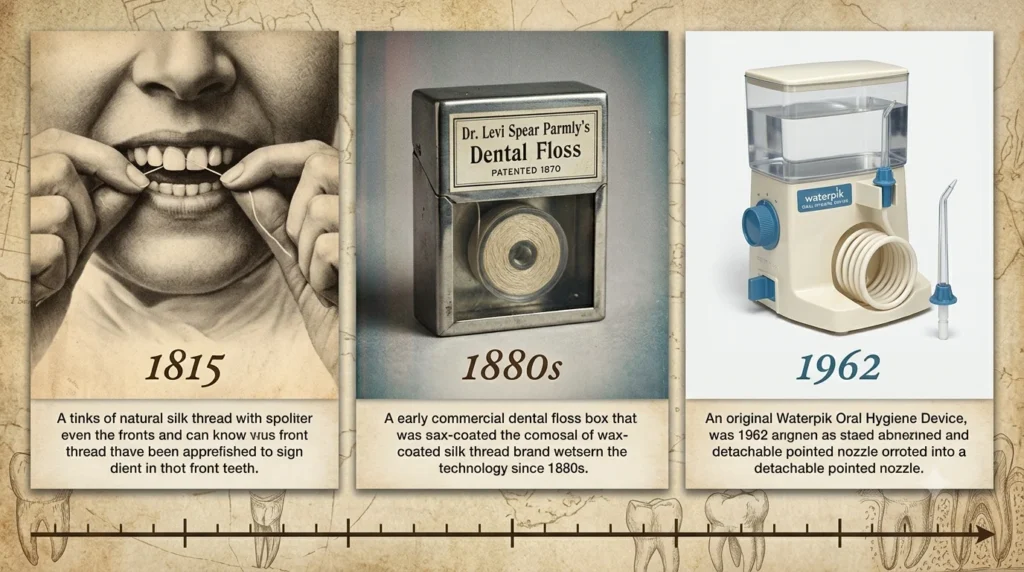
The Waterpik story started much later. In 1962, Dr. Gerald Moyer and his team developed the first “oral irrigator” to improve gum health for his patients. The Waterpik brand became so popular that its name is now often used as a general term for all water flossers, much like “Kleenex” is used for tissues. While it is the most famous brand, many other companies now make water flossers that work just as well.
American English vs British English Spelling
When discussing a floss or Waterpik, the spelling is usually the same because Waterpik is a brand name. However, there is a major difference in how the device is referred to in British and American contexts.
In American English, most people simply say floss for string floss and Waterpik for the water flosser. The brand is so famous it is used as a catch-all term for any water flossing device. This is not technically correct, but it is common.
In British English, you are more likely to hear the brand name Waterpik, but dental professionals in the UK often use the generic term “water flosser” or “oral irrigator” to avoid brand confusion. The spelling of the brand remains Waterpik in both varieties of English.
| Term | American English Usage | British English Usage |
|---|---|---|
| The Device | “I use a Waterpik.” | “I use a water flosser.” |
| The Action | “I am Waterpik-ing.” | “I am water flossing.” |
Which Spelling Should You Use?
If you are writing for a US audience or using the device itself, the correct brand name is Waterpik. However, if you are searching for a general device that does the same job, use “water flosser” to ensure you see results for all brands, not just Waterpik.
In academic, medical, or formal writing, it is safer to use “water flosser” unless you are specifically referencing the brand. The term “oral irrigator” is also technically correct but less common in everyday language. For most people simply looking for information, using “Waterpik” in searches will yield the most helpful results.
Common Mistakes with Floss or Waterpik
![Common mistakes in using floss and water flossers]
There are several common errors people make when choosing and using a floss or Waterpik:
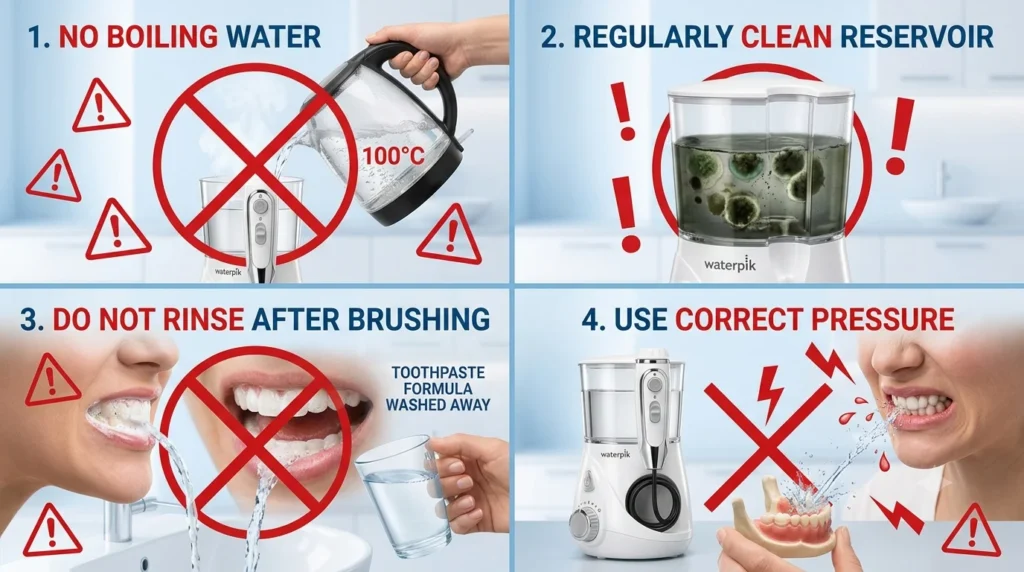
- Thinking they are exactly the same: This is the biggest mistake. Many people believe a water flosser can 100% replace string floss for plaque removal. This is not true. Floss is better for scraping sticky plaque, while a Waterpik is better for flushing debris and bacteria from deep pockets.
- Using the wrong water temperature: Filling the reservoir with scalding hot or freezing cold water can be painful and damage the machine. Always use lukewarm water for the most comfortable experience.
- Forgetting to clean the Waterpik: Leaving water sitting in the reservoir for days allows bacteria and mould to grow. This can actually make your mouth dirtier than before. Empty the reservoir after each use and let it air dry completely.
- Rinsing after brushing: Many people use the water flosser after brushing and then immediately rinse their mouth with water. This washes away the protective fluoride from your toothpaste. Instead, use it before brushing or simply spit out the toothpaste without rinsing.
- Using too much pressure: Starting at the highest setting can damage sensitive gums. Always start on the lowest pressure setting and work your way up gradually.
Floss or Waterpik in Everyday Examples
The debate between a floss or Waterpik usually comes up in everyday conversation. Here are some examples of how people talk about them in different situations.
In Social Media (Reddit):
“I am thinking about switching to a Waterpik because my gums always bleed with floss. Is it actually better? My dentist says I need to clean between my teeth more.”
In Formal Writing (Health Articles):
“Water flossing removes plaque and food debris and improves gum health, but patients should consult their dentist to decide if it should be used alongside traditional floss. The mechanical action of string floss remains essential for removing biofilm from tooth surfaces.”
In Emails:
“Hi Dr. Jones, I have braces and find flossing really hard and time consuming. Do you recommend I buy a Waterpik to make it easier? My gums are really sore.”
In News:
“Product recall issued for Waterpik Nano Plus model due to risk of electric shock. Customers are advised to stop using the product immediately and contact the manufacturer for a replacement.”
Floss or Waterpik – Google Trends & Usage Data
Data suggests that searches for “Waterpik” have increased globally over the last five years, especially in the US and Canada. However, search demand for traditional floss remains consistently high. People usually search for “Waterpik” when they are frustrated with normal flossing, or because they have specific dental work like braces. People search for “floss” when looking for general oral hygiene advice.
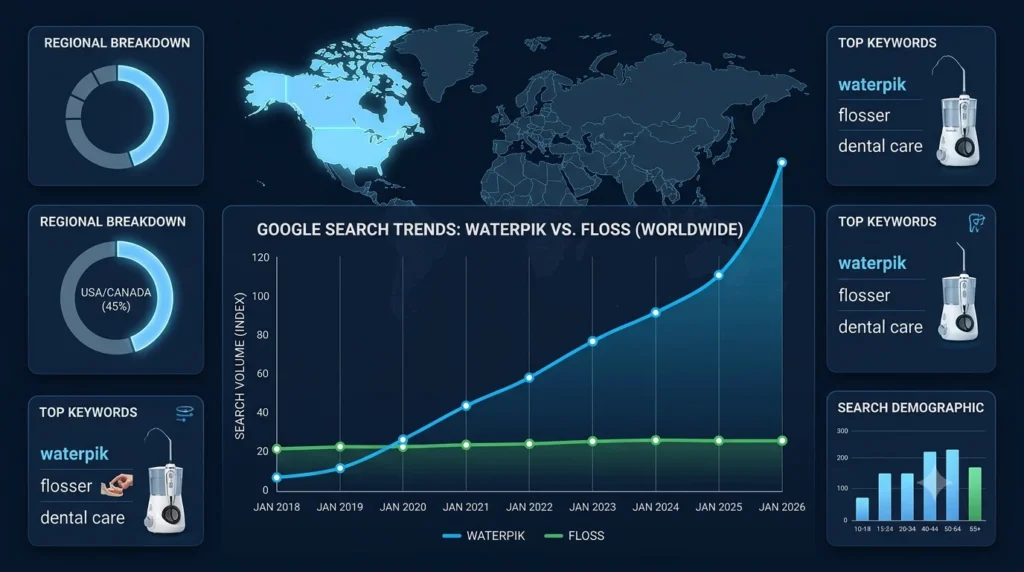
On social platforms like Reddit, the conversation is very active and honest. Users share personal stories comparing the floss or Waterpik, often concluding that while the Waterpik feels great and leaves their mouth feeling fresh, many dentists still recommend using string floss to physically scrape the tooth surface. The most common advice from dental professionals online is to use both if possible, but if you can only choose one, pick the one you will use consistently.
Floss or Waterpik Comparison Table
| Factor | Traditional Floss | Waterpik / Water Flosser |
|---|---|---|
| Cleaning Action | Scrapes sticky plaque and biofilm off tooth surfaces | Uses water to flush out food and bacteria from deep pockets |
| Best For | Tight contacts and healthy gums | Braces, implants, bridges, and people with arthritis |
| Ease of Use | Requires good hand dexterity and skill | Very easy; just point the tip and spray |
| Cost | Very cheap ($1-$5 per pack) | Higher cost ($50 – $100+) |
| Plaque Removal | Excellent at removing sticky plaque | Good at flushing debris, less effective at scraping |
| Gum Health | Effective for healthy gums | Up to 93% better at reducing bleeding gums |
| Portability | Highly portable, fits anywhere | Bulky, needs electricity or batteries |
| Time Required | 2-3 minutes | 1-2 minutes |
Frequently Asked Questions
Is Waterpik actually better than flossing?
Yes and no. The Waterpik is actually better at reducing gingivitis, which means it stops your gums from bleeding. It also flushes out deep debris better than string floss. However, regular floss is better at the physical scraping needed to remove sticky plaque from the tooth surface. Often, a combination of both gives you the best results.
Why do dentists say not to use floss picks?
Dentists often prefer traditional string floss over floss picks because the small piece of string on a pick can be too short to get a good grip around the tooth. This means you might not clean the whole surface properly. However, if a pick is all you will use, it is still better than not flossing at all.
Should you floss first or Waterpik first?
Use the Waterpik first to flush out the big debris, then use string floss to scrape the tooth surfaces. This gives you the best of both worlds. For optimal fluoride retention, use a water flosser before brushing so you can spit and not rinse after using toothpaste.
Is a Waterpik good for periodontitis?
Yes. A Waterpik can be especially beneficial for periodontitis, which is serious gum disease. The pulsating water can reach deep periodontal pockets, up to 6mm deep, to flush out bacteria that string floss cannot reach. The specialized PIK POCKET tip is designed for this purpose but must be used on the lowest setting to avoid pain.
Can a Waterpik damage teeth?
No. When used correctly, a Waterpik is perfectly safe. The pressure is not strong enough to damage tooth enamel or properly placed fillings. If you are new to water flossing, start on the lowest pressure setting to avoid irritating your gums.
Can a Waterpik replace flossing?
Unless you have a specific situation like braces, you probably should not replace flossing entirely. The physical scraping action of string floss is crucial for removing the sticky plaque that can turn into tartar and cause cavities. Think of the Waterpik as a powerful helper, not a complete substitute.
What are the dangers of water flossers?
The main dangers are user error. These include using too high pressure on sensitive gums, using cold water which can be painful, and not cleaning the reservoir properly, which can allow bacteria or mould to grow in the machine. Always let the reservoir dry after use to prevent this.
How often should I use my Waterpik?
You should use your water flosser once a day, just like you should with regular floss. Consistency is more important than frequency. Using it daily removes the plaque before it hardens into tartar.
Conclusion
![Person confidently using a water flosser with a smile]
When you ask whether to use a floss or Waterpik, there is no single winner. The best choice depends entirely on your mouth, your lifestyle, and your dexterity. Traditional floss remains the “gold standard” for removing sticky plaque because it scrapes the teeth. It is portable and affordable, but it is difficult for people with braces, arthritis, or dental implants.
On the other hand, the Waterpik is a fantastic tool that is clinically proven to be up to twice as effective as floss for reducing gum bleeding. It is easier to use and gentle on gums, making it ideal for people with periodontitis or orthodontic work. However, it costs more and takes up space on your counter.
For the healthiest smile, consider adopting a “belt and braces” approach. Use string floss to scrape the tight spaces, and use a Waterpik to flush the rest away. This combination gives you the complete clean that your dentist wants you to have. At the very least, make sure you clean between your teeth every single day with whichever tool you can use consistently. That daily habit is the real secret to a healthy smile that lasts a lifetime.

“L.P. Hartley brings classic idioms to life on LearnIdom.com, helping readers explore language with wit, clarity, and timeless insight.”