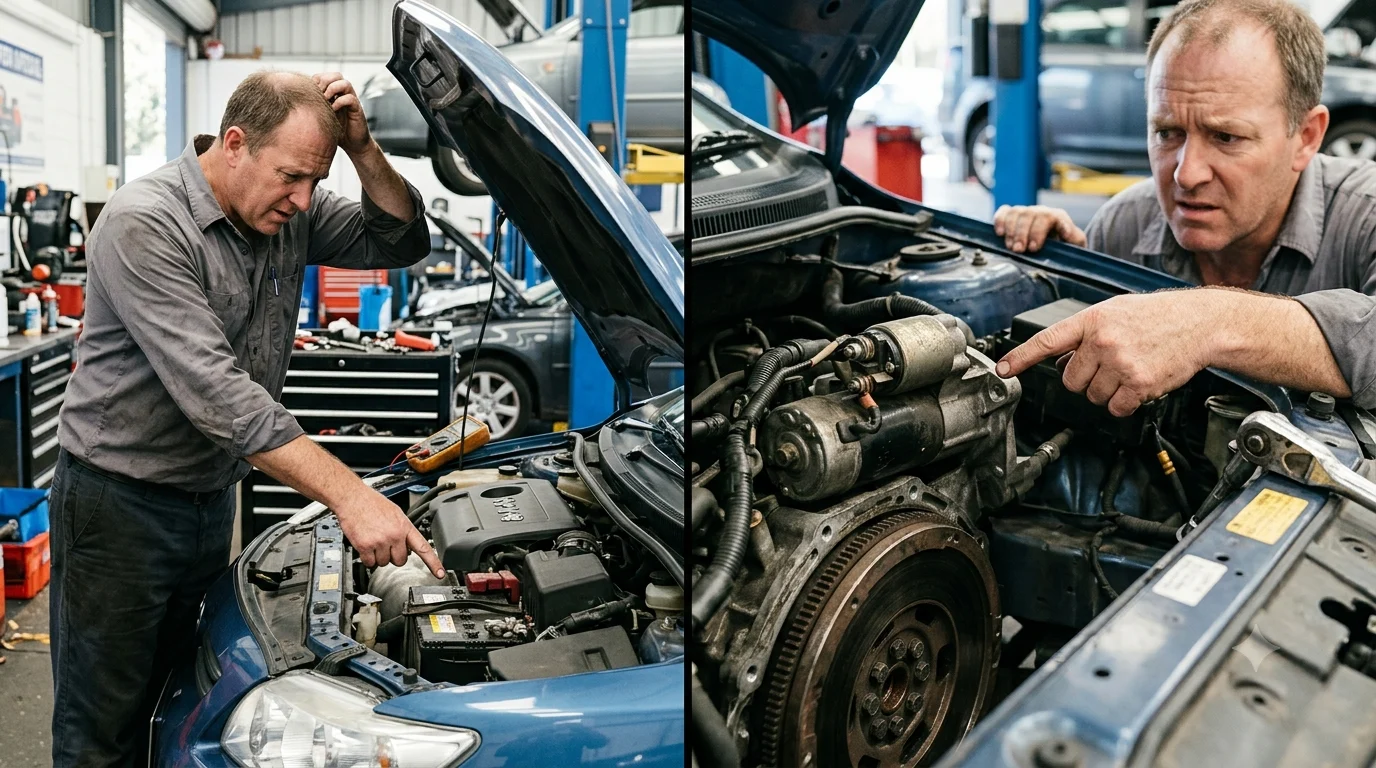
You turn the key in your ignition. Your car makes a strange sound. Nothing happens. Your heart sinks as you realize you might be late for work. This is one of the most frustrating moments any driver can face. The immediate question that pops into your mind is simple but urgent: is it the starter or battery?
Millions of car owners search for “starter or battery” every single day. They need quick answers to get their vehicles running again. The confusion between these two components is completely understandable because both parts work together to start your engine. When one fails, the symptoms can seem very similar.
Here is the honest truth: most people waste money replacing the wrong part. They buy a new battery when the starter is bad, or they replace the starter when a simple battery charge would have fixed everything. This guide exists to end that confusion forever. By the time you finish reading, you will know exactly how to tell the difference between a bad starter and a dead battery. You will save time, money, and unnecessary stress.
Starter or Battery
How do you know if it is the starter or battery? The answer is simpler than you think. Start by looking at your dashboard lights when you turn the key.
If the lights are dim or flickering: Your battery is likely dead. The car may make a rapid clicking sound. Jump-starting will probably get you going again.
If the lights are bright but the engine does not turn: Your starter is likely bad. You might hear a single loud click or complete silence. Jump-starting rarely helps in this situation.
Real example: Sarah turned her key and heard rapid clicks. Her headlights were weak. She got a jump start and drove to the shop. The problem was her battery. On the other hand, Mark heard one click, his lights were bright, but nothing else happened. Jump-starting did nothing. His starter was the culprit.
This simple test works in most cases. Remember: dim lights point to the battery. Bright lights point to the starter.
How to Diagnose Starter or Battery Problems
Let us walk through a step-by-step process to find the exact problem. Follow these steps in order.
Step 1: Check Your Dashboard Lights
Turn the key to the “on” position without starting the engine. Look at your dashboard.
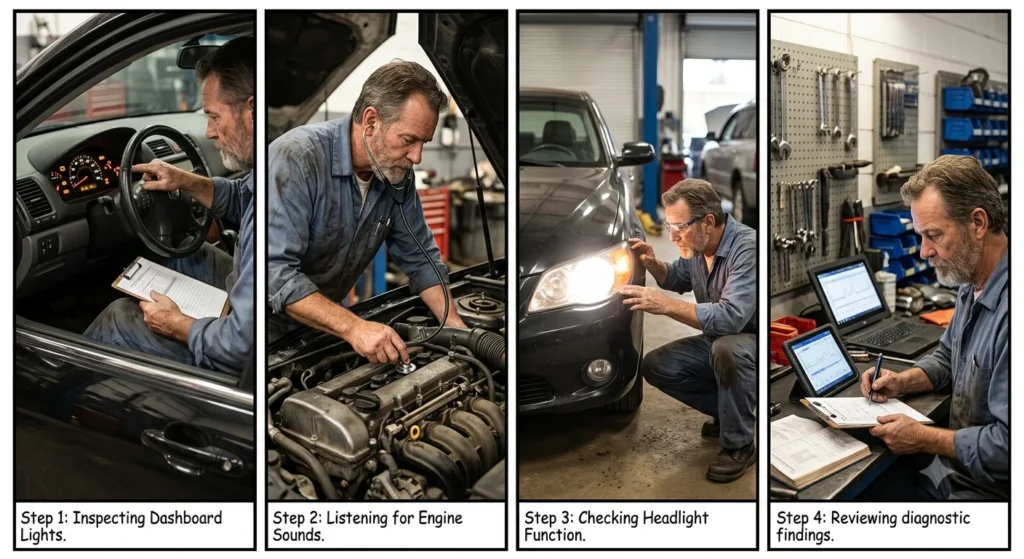
- Bright, steady lights indicate the battery has power
- Dim, flickering, or no lights indicate a weak or dead battery
Step 2: Listen Carefully
Now turn the key to start the engine. Pay close attention to the sound.
Rapid clicking (tat-tat-tat): This is a classic dead battery symptom. The starter is trying to work, but the battery does not have enough power.
Single click (clunk): This often means the starter is bad. It receives power but cannot turn the engine.
Complete silence: This could mean a dead battery, a bad starter, or an electrical issue.
Grinding noise: The starter gear may be damaged. This needs immediate professional attention.
Step 3: Test Your Headlights
Turn on your headlights while the car is off.
- Bright headlights = battery has charge
- Dim headlights = battery is weak
- Headlights that dim when you try to start = battery is struggling
Step 4: Try a Jump Start
If you have jumper cables, try to jump-start your car.
If the car starts and stays running: Your battery is likely the problem. Drive to a shop immediately to get it tested.
If the car starts but dies quickly: Your alternator may be bad. The battery is not getting charged while you drive.
If the car does not start at all: Your starter is likely the problem.
This four-step process will give you a clear answer most of the time. If you are still unsure, move to the next section.
Symptoms Comparison: Starter vs Battery
Here is a complete comparison of symptoms so you can see the difference at a glance.
| Symptom | Dead Battery | Bad Starter |
|---|---|---|
| Dashboard lights | Dim or flickering | Bright and steady |
| Headlight brightness | Weak | Normal |
| Sound when starting | Rapid clicking | Single click or silence |
| Jump-start works | Often yes | Rarely |
| Electrical accessories work | No or weak | Yes |
| Engine cranks slowly | Yes | No |
| Battery age over 4 years | Likely the issue | Not related |
| Burning smell | No | Sometimes |
| Clicking gets weaker | Yes | No change |
How to Test Your Battery at Home
Testing your battery is easy and does not require expensive tools. Here are three simple methods.
Method 1: Visual Inspection
Look at your battery. If you see corrosion around the terminals (white or blue powder), clean it off with a wire brush. Corrosion can cause starting problems that look like a bad starter.
Method 2: Voltage Test
If you have a multimeter, set it to DC voltage. Touch the red probe to the positive terminal and the black probe to the negative terminal.
- 12.6 volts or higher: Good battery
- 12.4 to 12.5 volts: Partially discharged
- Below 12.4 volts: Needs charging
- Below 11.8 volts: Likely dead
Method 3: Load Test
Turn on your headlights for two minutes without starting the car. Then try to start the engine. If the headlights dim significantly, your battery is weak.
How to Test Your Starter at Home
Testing the starter is a bit more complicated, but you can do some basic checks.
Check the Connections
Look at the wires connected to your starter. Make sure they are tight and clean. Loose connections can mimic a bad starter.
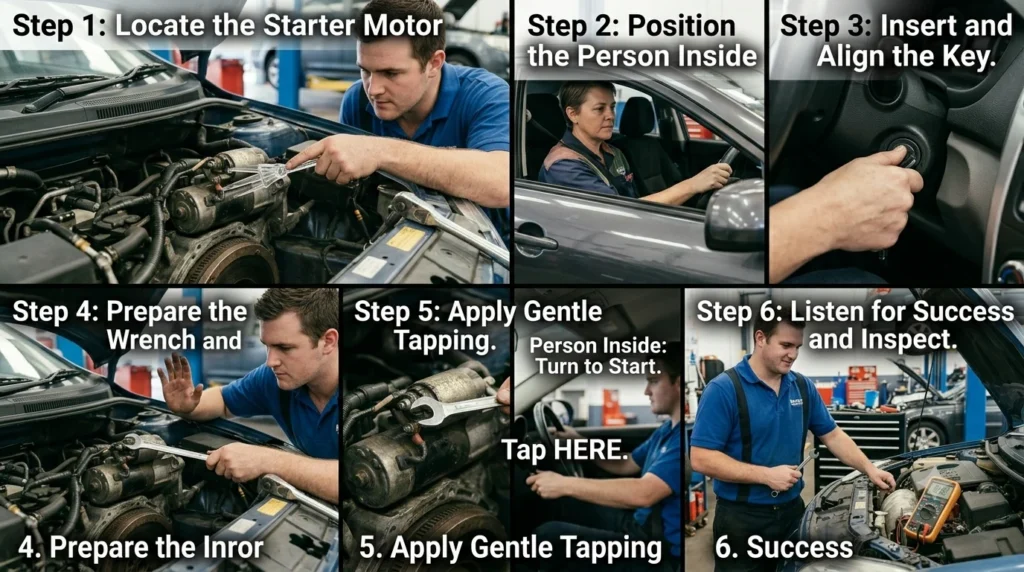
Tap the Starter
This is an old trick that sometimes works. Have someone turn the key while you gently tap the starter with a hammer or wrench. If the engine starts, the starter is failing and needs replacement soon.
Check for Power
Use a test light to check if power reaches the starter when you turn the key. If power is present but the starter does nothing, the starter is bad.
Alternator: The Third Player
Many people forget about the alternator. This part charges your battery while you drive. A bad alternator can cause problems that look like a dead battery.
Signs of a bad alternator:
- The car starts but dies while driving
- Dashboard warning light comes on
- Electrical accessories stop working
- You smell burning rubber
- The battery keeps dying even after replacement
How to test your alternator:
Start the car. Use a multimeter to check the battery voltage. It should read between 13.8 and 14.4 volts while running. If it reads lower, the alternator is not charging properly.
Cost Comparison: Battery vs Starter
Money matters when your car breaks down. Here is what you can expect to pay.
| Part | Average Cost (Part Only) | Average Cost (With Labor) |
|---|---|---|
| Car Battery | $100 – $200 | $120 – $250 |
| Starter Motor | $150 – $400 | $400 – $600 |
| Alternator | $200 – $500 | $500 – $800 |
Battery replacement is cheaper and faster. Most shops can replace a battery in 30 minutes. Starter replacement takes longer because the starter is often located under the engine.
When to Call a Professional
Some situations require expert help. Do not try to fix these problems yourself.
Call a mechanic immediately if:
- You smell smoke or burning while trying to start
- You see sparks near the battery
- Your car stops suddenly while driving
- The check engine light stays on
- You have tried jump-starting and it did not work
- You are not comfortable working with car electrical systems
Car batteries contain acid and can explode if handled incorrectly. Starters carry high electrical current. Safety always comes first.
Preventive Tips to Avoid Future Problems
Prevention is always better than repair. Follow these tips to keep your starter and battery healthy.
Battery Maintenance
- Clean battery terminals every three months
- Check voltage monthly
- Replace batteries every 3 to 5 years
- Turn off all lights before leaving your car
- Avoid short trips that do not fully charge the battery
Starter Maintenance
- Do not crank the engine for more than 10 seconds at a time
- Let the starter cool between attempts
- Keep electrical connections clean and tight
- Address battery problems immediately before they damage the starter
Frequently Asked Questions
How do I know if the starter or battery is bad?
Check your lights. Dim lights mean a dead battery. Bright lights with no cranking mean a bad starter.
Are the starter and battery the same thing?
No. The battery stores electrical power. The starter uses that power to physically turn the engine.
Do I need a battery or a starter?
If the car makes rapid clicking sounds, you likely need a battery. If you hear one click or nothing, you likely need a starter.
What does a dead starter sound like?
A dead starter usually makes a single loud click or complete silence. Sometimes you hear grinding.
What does a dead battery sound like?
A dead battery produces rapid clicking sounds. The clicks get weaker as the battery drains further.
Can a bad battery damage the starter?
Yes. A weak battery makes the starter work harder. This extra strain can shorten the starter’s life.
How long do car batteries last?
Car batteries typically last 3 to 5 years. Hot and cold weather can shorten their life.
How long do starters last?
Starters can last 100,000 to 150,000 miles with proper care. Regular maintenance helps extend their life.
Can I drive with a bad starter?
No. If the starter fails completely, your car will not start at all. You will need to get it towed.
Will a jump start fix a bad starter?
No. Jump-starting provides power to the battery, not the starter. If the starter is bad, jump-starting will not work.
Final Checklist Before You Call a Mechanic
Use this checklist to diagnose your problem with confidence.
- Check dashboard lights – are they dim or bright?
- Listen to the starting sound – rapid clicks or one click?
- Test headlights – weak or normal?
- Try jump-starting – does it work?
- Check battery age – over 4 years?
- Look for corrosion on battery terminals
- Test battery voltage with a multimeter
- Tap the starter gently while someone turns the key
If you complete all these steps, you will know exactly what is wrong with your car.
Conclusion
Understanding the difference between a starter and battery problem is not complicated. The key is to pay attention to the symptoms. Dim lights and rapid clicking point to a dead battery. Bright lights and a single click point to a bad starter.
Remember to test your battery first. It is the most common cause of starting problems and the cheapest to fix. If your battery is good, move on to testing the starter. And never forget about the alternator – it keeps your battery charged while you drive.
By following this guide, you will save hundreds of dollars on unnecessary repairs. You will also avoid the stress of being stranded with a car that will not start. Share this knowledge with friends and family. Everyone needs to know how to tell the difference between a starter and battery problem.

“Wilkie Collins brings classic idioms to life on LearnIdom.com, making language learning engaging, memorable, and full of literary charm.”