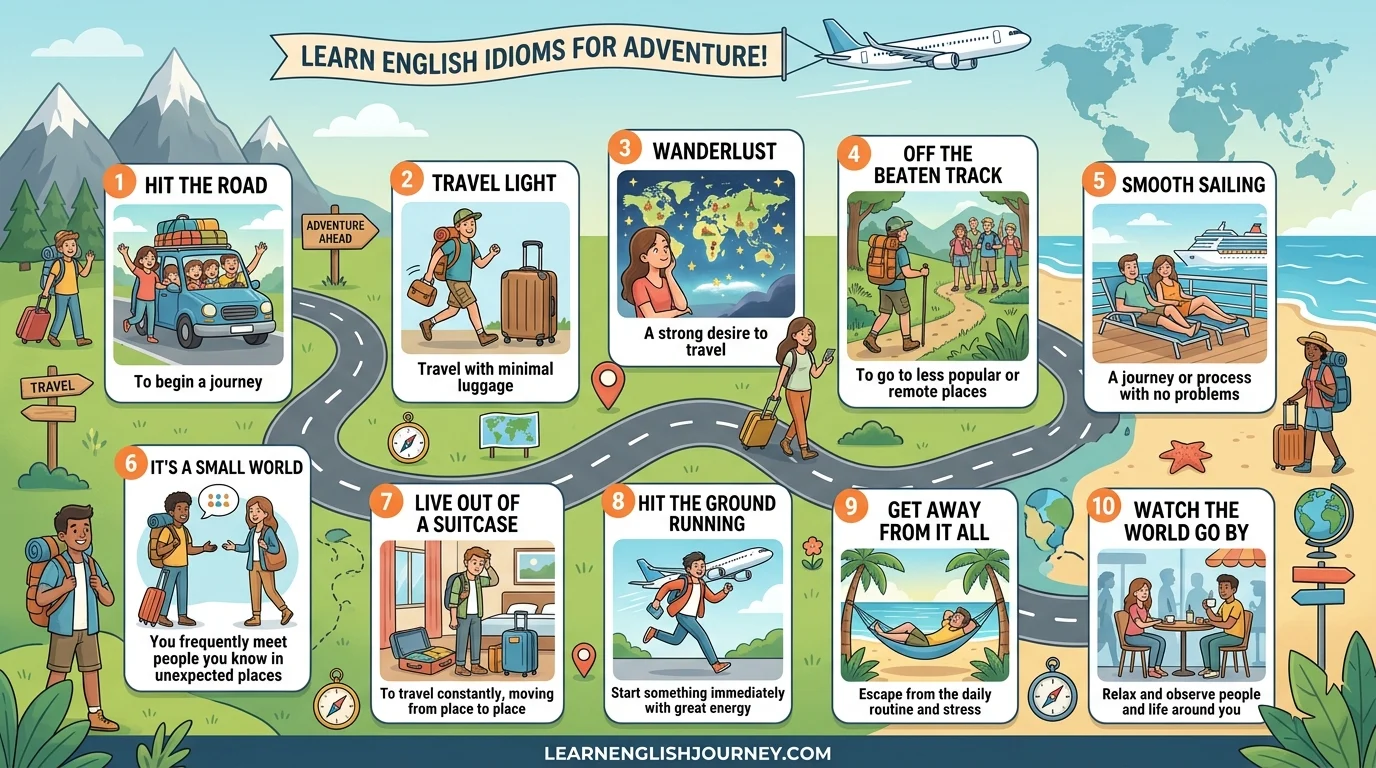
Travel is more than going from one place to another—it is about adventure, discovery, and new experiences. Learning idioms for travel with meaning can help you describe those experiences in natural, everyday English.
For example, if someone says, “I have itchy feet,” they are not talking about a foot problem. They mean they have a strong desire to travel. In this guide, you’ll discover 20 useful travel idioms, their meanings, examples, common mistakes, and simple usage tips.
What Are Travel Idioms?
Travel idioms are expressions connected with journeys, holidays, transportation, destinations, and exploration. Their figurative meanings are often different from the literal meanings of their words.
For English learners, idioms for travel in English are especially useful because native speakers commonly use them in conversations, stories, movies, and informal writing.
They can also make your travel stories more interesting and expressive.
Hit the Road 🚗
Meaning: To leave a place and start a journey.
Example:
We have packed everything, so let’s hit the road before the traffic gets worse.
Common mistake: “Hit” does not mean physically striking the road.
Usage note: This is an informal expression often used when someone is ready to leave.
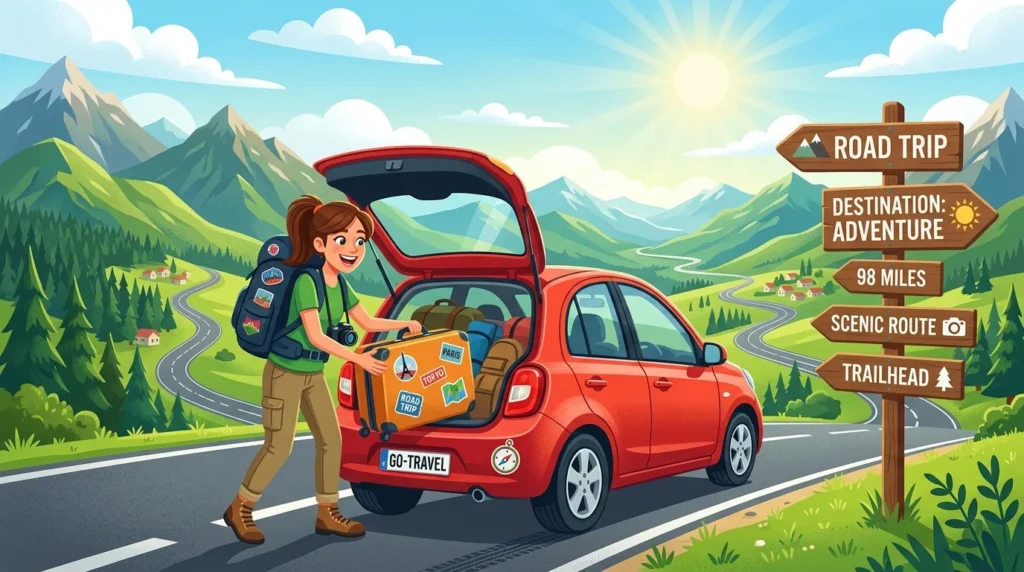
On the Road 🛣️
Meaning: Traveling from one place to another.
Example:
We spent two weeks on the road visiting different cities.
Common mistake: Do not say “on road” when using this idiom.
Usage note: It works well for road trips and longer journeys.
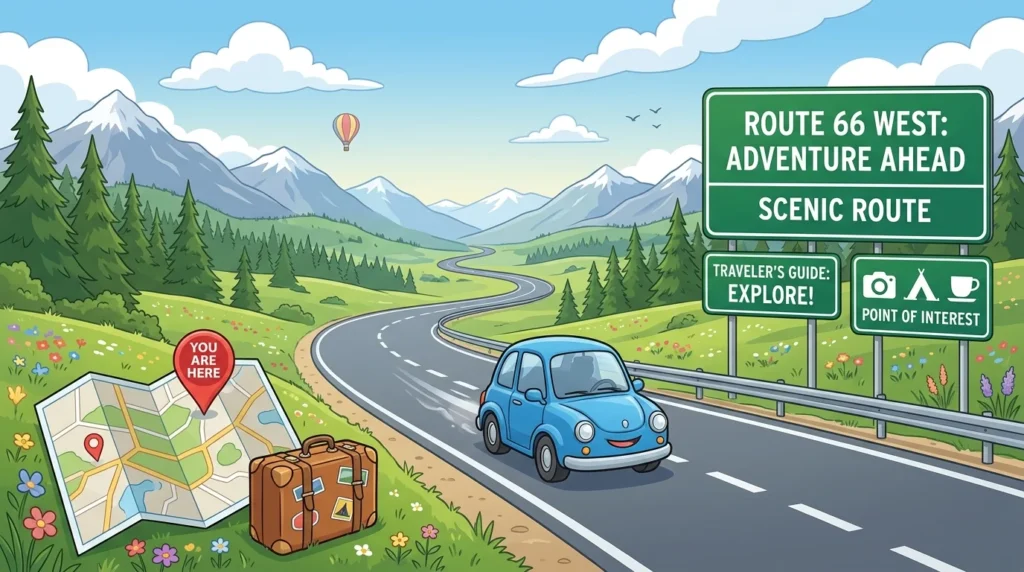
Off the Beaten Track 🌲
Meaning: A place that is away from popular tourist destinations.
Example:
We found a beautiful village off the beaten track.
Common mistake: The phrase is figurative when describing unusual or less-visited places.
Usage note: Use it when talking about hidden or less touristy destinations.
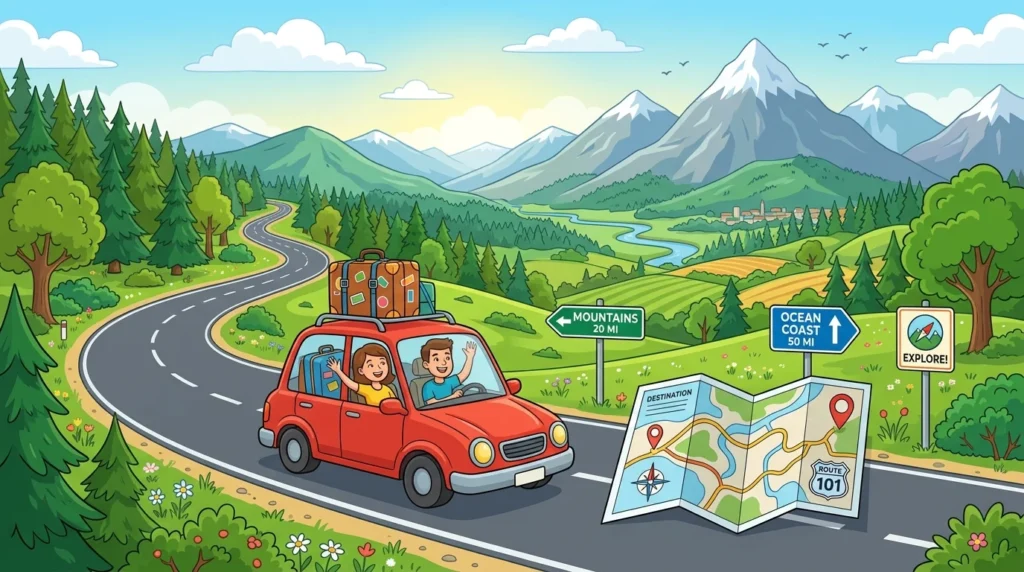
Travel Light 🎒
Meaning: To travel with very little luggage.
Example:
I always travel light when I go away for a weekend.
Common mistake: It does not mean traveling quickly.
Usage note: This phrase is particularly useful when discussing packing.
Hit the Beach 🏖️
Meaning: To go to the beach, usually to relax or have fun.

Example:
After checking into our hotel, we hit the beach.
Common mistake: “Hit” is not meant literally here.
Usage note: It is an informal expression commonly used during holidays.
Get Away 🌴
Meaning: To take a break or go somewhere for a short vacation.
Example:
I really need to get away for a few days.
Common mistake: Depending on context, “get away” can also mean escape.
Usage note: In travel conversations, it often refers to taking a relaxing break.
On the Fly ✈️
Meaning: To make decisions or arrangements quickly as a situation develops.
Example:
We planned the rest of our trip on the fly.
Common mistake: It does not refer to flying on an airplane.
Usage note: This expression is useful for flexible or spontaneous travel plans.
Around the World 🌎
Meaning: Traveling across many different parts of the world.
Example:
She hopes to travel around the world one day.
Common mistake: It does not necessarily mean visiting every country.
Usage note: Use it when discussing international travel or global adventures.
A Change of Scenery 🌄
Meaning: A change in your usual surroundings or environment.
Example:
A few days in the mountains would give us a nice change of scenery.
Common mistake: It does not necessarily refer to changing scenery itself.
Usage note: This expression can describe vacations, travel, or simply spending time somewhere different.
Wanderlust 🌍
Meaning: A strong desire to travel and explore new places.
Example:
His wanderlust inspired him to visit several countries.
Common mistake: “Wanderlust” is a noun, not normally a verb.
Usage note: This is one of the most popular words among travel lovers.
Itchy Feet 👣
Meaning: A strong desire to travel or move somewhere new.
Example:
After staying home for months, I started getting itchy feet.
Common mistake: The expression usually has a figurative meaning.
Usage note: It is a fun and informal expression for people who love traveling.
Go the Extra Mile 🚶
Meaning: To make an additional effort.
Example:
Our tour guide went the extra mile to help us find a local restaurant.
Common mistake: It does not have to involve physically walking an extra mile.
Usage note: Although not exclusively a travel idiom, it fits naturally into travel situations.
Miss the Boat 🚢
Meaning: To miss an opportunity or be too late.
Example:
We missed the boat on the early hotel discount.
Common mistake: In some situations, the phrase can literally mean failing to catch a boat.
Usage note: Context determines whether the meaning is literal or figurative.
Smooth Sailing ⛵
Meaning: A situation that progresses easily without major problems.
Example:
Once we passed the airport checks, the rest of our journey was smooth sailing.
Common mistake: It is not restricted to actual boat trips.
Usage note: You can use it for travel and many non-travel situations.
Pack Your Bags 🧳
Meaning: To prepare to leave or begin a journey.
Example:
Our tickets are booked, so pack your bags!
Common mistake: This phrase can be literal or playful depending on context.
Usage note: It is often used when announcing an upcoming trip.
Have the Time of Your Life 🎉
Meaning: To enjoy yourself extremely well.
Example:
We had the time of our lives during our family vacation.
Common mistake: It does not describe how long a trip lasts.
Usage note: Use it for memorable and enjoyable experiences.
Make a Pit Stop ⛽
Meaning: To make a short stop during a journey.
Example:
Let’s make a pit stop for some food before continuing our road trip.
Common mistake: The expression is not limited to racing.
Usage note: It is especially natural when talking about driving.
Back on Track 🗺️
Meaning: To return to the correct route, plan, or progress.
Example:
We took the wrong road, but the GPS helped us get back on track.
Common mistake: It can be literal during travel or figurative in everyday situations.
Usage note: It is useful when describing navigation problems or returning to a plan.
A Bumpy Ride 🚙
Meaning: A difficult or challenging journey or experience.
Example:
The road trip was a bumpy ride because of the bad weather.
Common mistake: It can describe an actual rough journey or a difficult experience.
Usage note: The figurative meaning is common in everyday English.
Take a Detour 🛣️
Meaning: To take a different route from the original one.
Example:
We took a detour and discovered a beautiful little town.
Common mistake: A detour is not always caused by a mistake.
Usage note: It is a useful expression for road trips and unexpected discoveries.
Idioms for Travel and Holidays
Many of these expressions are perfect for describing vacations and holiday experiences.
For example, you can say:
- I need to get away for a few days.
- We decided to hit the beach after breakfast.
- I prefer to travel light on short holidays.
- We had the time of our lives on our trip.
- We took a detour and discovered a beautiful village.
- I have itchy feet and want to travel again.
These phrases make simple travel conversations sound more natural and expressive.
Funny Idioms for Travel
Some funny idioms for travel sound strange when interpreted literally.
Imagine telling someone:
“I have itchy feet, so let’s hit the road!”
A beginner might imagine someone scratching their feet before physically hitting a road. In reality, the sentence simply means that the speaker wants to start traveling.
Other playful travel expressions include:
- Hit the beach
- Pack your bags
- Miss the boat
- Make a pit stop
- Travel light
- Have the time of your life
Understanding the figurative meaning is the key to using these expressions correctly.
Travel Idioms for English Learners
If you are learning idioms for travel in English, do not try to memorize all 20 at once.
Start with five:
| Idiom | Simple Meaning |
|---|---|
| Hit the road | Start a journey |
| Travel light | Carry little luggage |
| Get away | Take a short vacation |
| Itchy feet | Want to travel |
| Wanderlust | Strong desire to travel |
Then create your own sentences.
For example:
“I love to travel light because I do not like carrying heavy luggage.”
Using an idiom in a personal sentence makes it easier to remember than simply reading its definition.
20 Words Related to Travel
If you are looking for 20 words that are related to travel, these are useful for building your vocabulary:
Journey, adventure, vacation, holiday, destination, airport, luggage, passport, hotel, tourist, sightseeing, itinerary, departure, arrival, transportation, exploration, trip, voyage, accommodation, excursion.
You can combine these words with travel idioms to create stronger sentences and more natural travel descriptions.
Idioms for Travel Lovers
People who love exploring new places can use expressions such as wanderlust, itchy feet, around the world, off the beaten track, and get away.
For example:
“My wanderlust makes me want to explore places off the beaten track.”
This sounds more expressive than simply saying, “I really like traveling.”
These expressions are also useful for travel captions, personal stories, conversations, and English-learning exercises.
Idioms for Travel Worksheet Practice
A travel idioms worksheet can make learning easier. Try these simple activities:
Match: Connect each idiom with its correct meaning.
Complete: Fill in the missing idiom in a travel sentence.
Create: Write one sentence about your own travel experience.
Choose: Decide whether an expression is being used literally or figuratively.
For example:
We need to ______ before it gets dark.
Answer: hit the road
This type of practice helps learners understand both meaning and context.
What Are the Top 10 Idioms?
If you only have time to learn ten, start with these useful travel-related expressions:
- Hit the road
- Travel light
- Get away
- Off the beaten track
- Itchy feet
- Wanderlust
- Hit the beach
- Smooth sailing
- Make a pit stop
- Take a detour
Learning these expressions first gives you a useful foundation for talking about trips, holidays, and adventures.
What Is a Good Travel Quote?
A good travel quote can express curiosity, adventure, freedom, or discovery.
For English practice, you can use a simple original line such as:
“Every journey creates a new story.”
You can also turn your favorite travel idiom into a caption or personal sentence. This is a useful way to practice vocabulary while expressing your own travel experiences.
FAQs About Travel Idioms
What are the 20 idioms?
The 20 travel-related idioms in this guide are hit the road, on the road, off the beaten track, travel light, hit the beach, get away, on the fly, around the world, a change of scenery, wanderlust, itchy feet, go the extra mile, miss the boat, smooth sailing, pack your bags, have the time of your life, make a pit stop, back on track, a bumpy ride, and take a detour.
What is a good idiom for traveling?
Hit the road is a common informal idiom meaning to leave and begin a journey. Travel light is another useful expression when talking about luggage.
What is the idiom for loving travel?
Wanderlust describes a strong desire to travel and explore. Itchy feet is another informal expression for someone who wants to travel or move on to a new adventure.
What are some idioms for travel lovers?
Useful expressions for travel lovers include wanderlust, itchy feet, off the beaten track, around the world, get away, and hit the road.
How can I learn travel idioms quickly?
Learn a few expressions at a time and create your own sentences. Using travel idioms in conversations, worksheets, quizzes, and personal stories can make them easier to remember.
Conclusion
Learning idioms for travel with meaning gives you more natural ways to talk about journeys, holidays, adventures, and new experiences. Instead of simply saying that you want to travel, you can say you have itchy feet or wanderlust. Instead of saying that you are leaving, you can say, “Let’s hit the road.”
The best way to remember these expressions is to use them. Choose five idioms today, write your own examples, and try using them in a conversation or travel story.
Whether you are a student, an English learner, or one of many travel lovers, these expressions can make your vocabulary more colorful and useful.
So pack your bags, hit the road, and start your next adventure! ✈️🌍

“Rose Macaulay shares the charm of idioms on LearnIdom.com, making language learning delightful, insightful, and full of wit for every reader.”