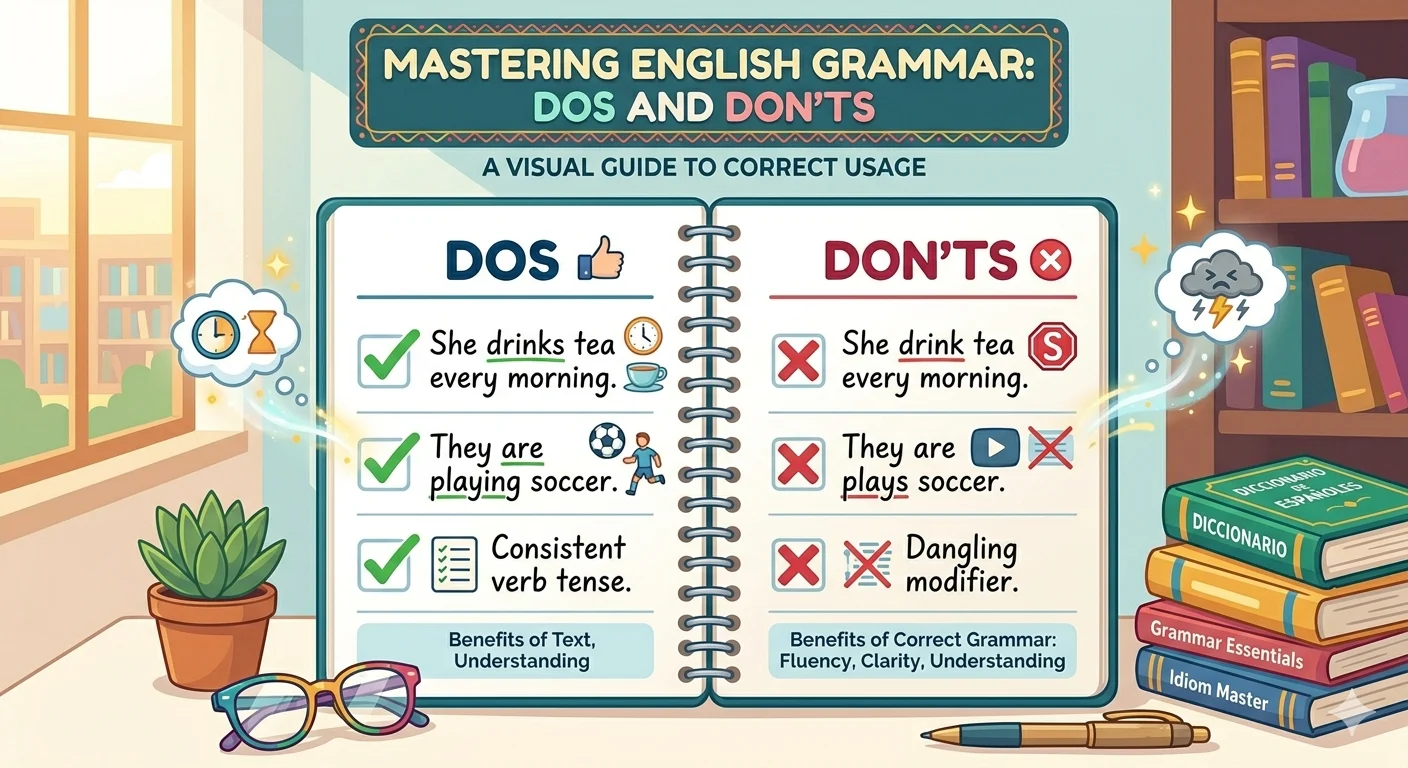
Don’ts vs dont’s is a common English punctuation question that often confuses learners and writers. The correct spelling is don’ts, while dont’s is incorrect in standard English. Don’ts is the plural form of don’t, meaning things that people should not do, and the apostrophe is retained because don’t is already a contraction of do not.
For example, “The guide lists several do’s and don’ts for visitors” is correct. Understanding don’ts vs dont’s is useful when writing instructions, rules, advice, guides, lists, and professional content. If you are unsure whether to write donts, don’ts, or dont’s, choosing the standard form don’ts will help you avoid a common punctuation mistake.
This guide explains the difference between don’ts and dont’s, the correct plural form, apostrophe usage, meanings, grammar rules, and clear examples so you can use the word confidently in everyday and formal English writing.
Don’ts or Don ts
The correct spelling is:
✔ don’ts
Incorrect forms include:
❌ dont’s
❌ don ts
❌ donts
The word don’ts is the plural form of don’t, which means things you should not do.
Simple Meaning
The phrase dos and don’ts refers to:
- Dos → things you should do
- Don’ts → things you should avoid
Example
Dos and don’ts of job interviews
Dos:
- Dress professionally
- Arrive on time
- Be polite
Don’ts:
- Interrupt the interviewer
- Speak negatively about previous employers
- Check your phone constantly
This is why the phrase dos and don’ts is commonly used in guidelines, rules, and instructions.
Dont’s or Don ts Meaning
Many learners ask about dont’s or don ts meaning. It simply refers to the plural of don’t used in the phrase dos and don’ts.
Simple Definition
Dos and don’ts means:
A set of rules explaining what you should do and what you should not do.
This phrase is widely used in:
- School instructions
- Professional guidelines
- Blogs and articles
- Workplace rules
- Social media advice
Example
Dos and don’ts of social media
Dos:
- Share useful content
- Respect others
Don’ts:
- Spread fake news
- Share private information
Looking at these dos and don ts examples helps people understand the dont’s or don ts meaning quickly and clearly.
The Origin of Don’ts or Don ts
To understand dont’s or don ts grammar, we need to examine the origin of the word don’t.
What is “Don’t”?
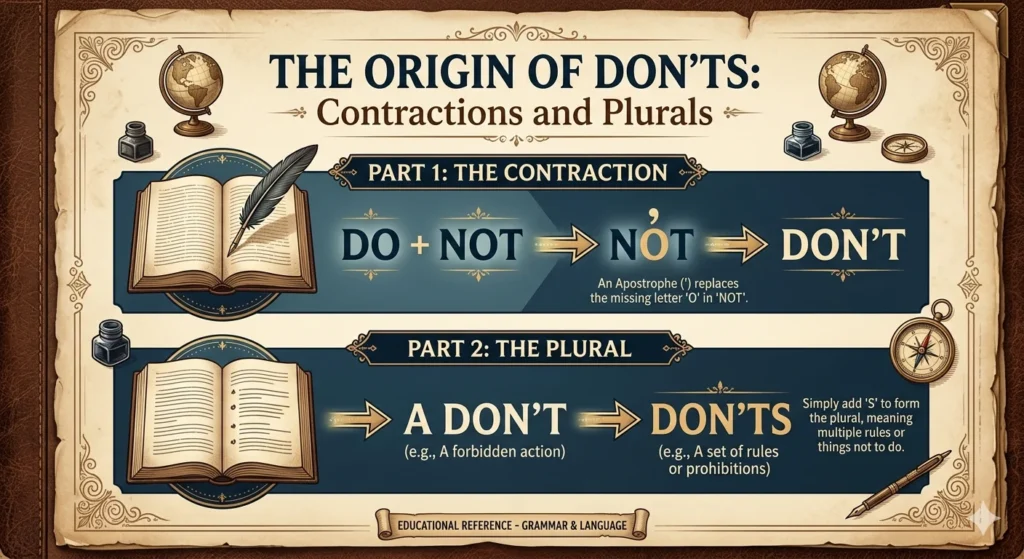
Don’t is a contraction, meaning it is a combination of two words:
| Full Form | Contraction |
|---|---|
| Do not | Don’t |
| Cannot | Can’t |
| Will not | Won’t |
| I am | I’m |
When we make a plural form of don’t, we simply add s, making it don’ts.
This is how the phrase dos and don’ts came into common use, meaning:
- Dos → actions to follow
- Don’ts → actions to avoid
British English vs American English Spelling
Many writers search “dont’s or don ts” because English spelling sometimes varies between regions.
However, in this case, both British English and American English accept the same modern spelling.
Modern Preferred Form
✔ Dos and don’ts
Older Acceptable Form
✔ Do’s and don’ts
The older form added extra apostrophes to avoid confusion, but modern guides recommend the simpler form.
Comparison Table
| Spelling | Correct? | Notes |
|---|---|---|
| Dos and don’ts | ✔ Preferred | Modern English writing |
| Do’s and don’ts | ✔ Acceptable | Older style |
| Dos and donts | ❌ Incorrect | Missing apostrophe |
| Dont’s or don ts | ❌ Incorrect | Grammar mistake |
Which Spelling Should You Use?
The correct spelling depends slightly on the audience, but modern English makes it simple.
For American English
Use dos and don’ts, common in:
- Blogs
- News articles
- Online writing
- Professional guides
For British English / Commonwealth
Also use dos and don’ts, widely accepted in:
- UK
- Canada
- Australia
- New Zealand
For Global Writing
If your audience is international, the safest choice is:
✔ dos and don’ts
This is clear, professional, and widely recognized.
Common Mistakes with Don’ts or Don ts
Writers often make mistakes when typing dont’s or don ts.
Common Errors
| Incorrect | Correct |
|---|---|
| dont’s | don’ts |
| don ts | don’ts |
| dos and donts | dos and don’ts |
| do’s and dont’s | dos and don’ts |
Why These Errors Happen
- Belief that all plurals need apostrophes.
- Removing apostrophe from the contraction.
- Autocorrect or typing mistakes.
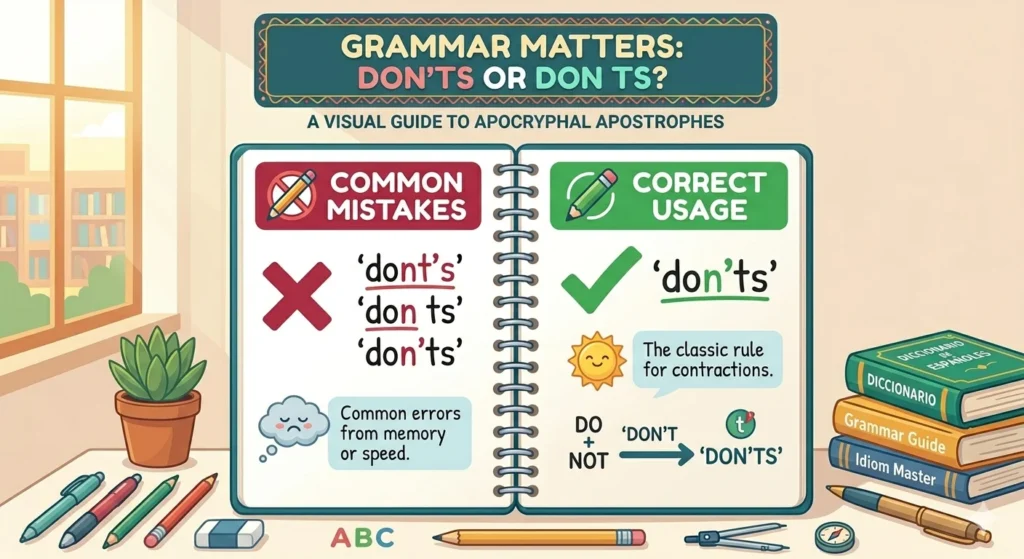
Important Grammar Rule: The apostrophe in don’ts belongs to the contraction don’t. The plural s is added after the apostrophe.
Dos and Don ts English Grammar
Understanding dos and don ts English grammar ensures proper usage.
Structure
The phrase contains two parts:
- Dos → plural of do
- Don’ts → plural of don’t
Example
Dos and don’ts of online meetings
Dos:
- Test your microphone
- Join on time
- Speak clearly
Don’ts:
- Interrupt speakers
- Talk loudly
- Ignore rules
This structure is universally accepted in modern English.
Don’ts or Don ts Examples in Everyday Life
Looking at dont’s or don ts examples helps learners apply the rule.
Example – Email Writing
Subject: Office Email Guidelines
Please follow these dos and don’ts when sending emails:
Dos:
- Use a clear subject line
- Be polite and concise
Don’ts:
- Use all caps
- Send irrelevant attachments
Example – Social Media
Dos and don’ts of Instagram growth
Dos:
- Post useful content regularly
- Respond to comments
Don’ts:
- Buy fake followers
- Copy other creators
Example – School Rules
Teachers explain dos and don’ts of classroom behavior:
Dos:
- Listen carefully
- Participate actively
Don’ts:
- Talk over others
- Use phones during class
Example – Workplace Etiquette
Dos and don’ts in office communication:
Dos:
- Respond promptly
- Be respectful
Don’ts:
- Spread gossip
- Ignore emails
Example – Travel Advice
Travel guides list dos and don’ts for tourists:
Dos:
- Respect local culture
- Carry identification
Don’ts:
- Litter
- Break local laws
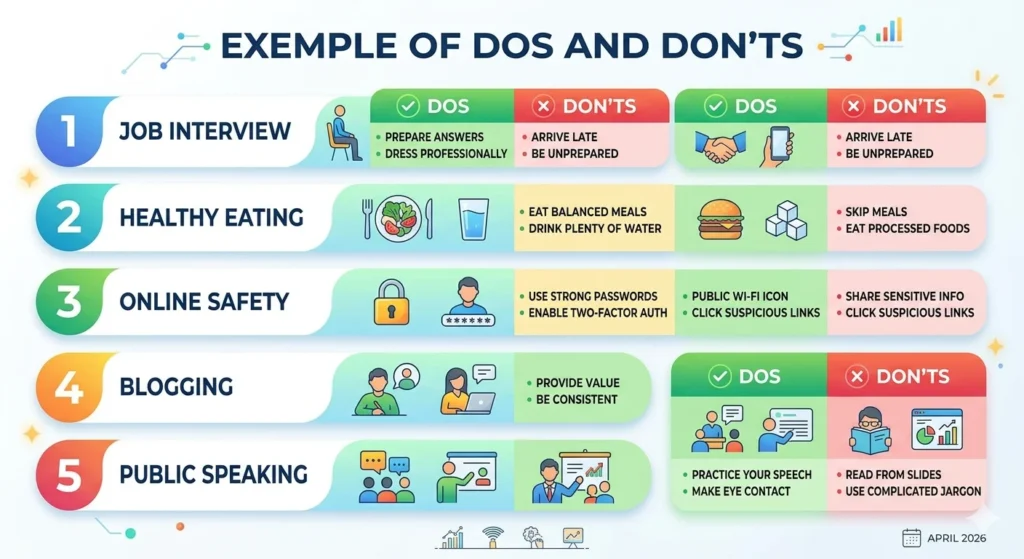
Example of Dos and Don ts
Here are 5 example of dos and don ts used in real-life situations:
- Dos and don’ts of healthy eating
- Dos and don’ts of online safety
- Dos and don’ts of blogging
- Dos and don’ts of public speaking
These examples show how the phrase is applied in guidelines, instructions, and tips.
Don’ts or Don ts – Google Trends & Usage Data
Many people type incorrect forms like:
- dont’s or don ts
- Is don ts a word
- Is dos and don’ts or do’s and don’ts
These searches are most common in:
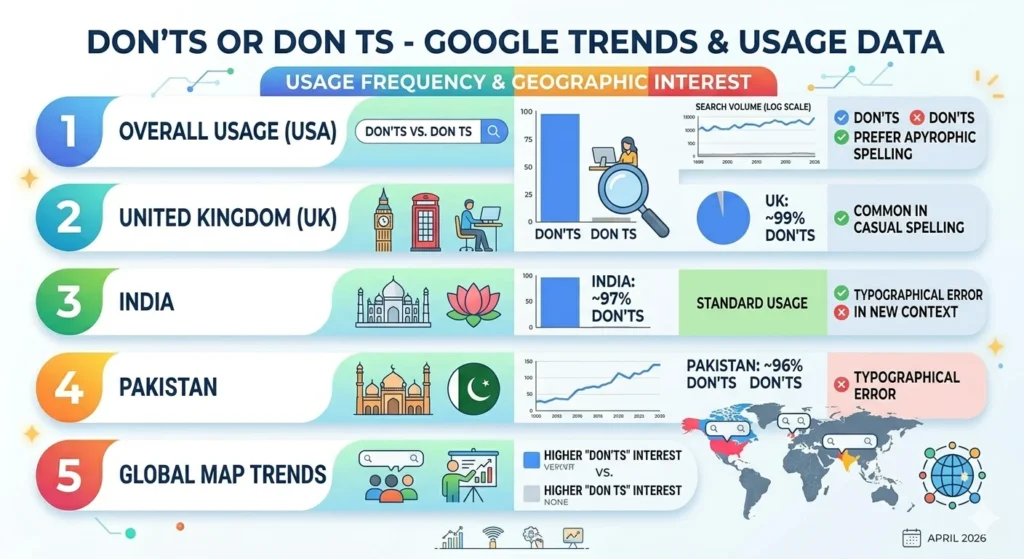
- United States
- United Kingdom
- India
- Pakistan
The reason: people want clear grammar rules for writing correctly.
According to modern writing guides and style experts, the correct spelling is:
✔ dos and don’ts
This spelling appears in:
- Dictionaries
- Grammar books
- Professional writing guides
- Online articles
Using the correct spelling improves clarity, professionalism, and readability.
Keyword Comparison Table
| Keyword Variation | Correct? | Explanation |
|---|---|---|
| don’ts | ✔ Correct | Plural of don’t |
| dont’s | ❌ Incorrect | Apostrophe misuse |
| don ts | ❌ Incorrect | Missing apostrophe |
| dos and don’ts | ✔ Preferred | Modern usage |
| do’s and don’ts | ✔ Acceptable | Older style |
FAQs
1. Is dos and don’ts or do’s and don’ts correct?
Both exist, but dos and don’ts is the modern, preferred spelling.
2. Is it correct to say don’ts?
Yes. Don’ts is the plural form of don’t and refers to things you should avoid doing.
3. What is do’s and don’ts?
It is a phrase meaning rules about what you should do and what you should not do.
4. Is it don’t or don’ts?
Don’t = do not
Don’ts = plural form of don’t, things you should not do
5. Is don ts a word?
No. Don ts is not correct in English.
6. What are dos and don ts examples?
Dos:
- Be polite
- Listen carefully
Don’ts:
- Interrupt others
- Ignore instructions
7. Why do people write dont’s incorrectly?
Many writers misunderstand apostrophe rules or rely on autocorrect, leading to mistakes.
Conclusion
Confusion between dont’s or don ts is common, but the correct spelling is simple. Don’ts is the plural of the contraction don’t (do not). Combined with dos, it forms the phrase dos and don’ts, widely used in guidelines, instructions, professional writing, blogs, and social media.
Common mistakes like dont’s, don ts, or dos and donts occur due to misunderstanding apostrophe rules. Modern grammar guides recommend dos and don’ts as clear, professional, and universally accepted in both American and British English.
By following these rules and examples, you can confidently use dos and don’ts in emails, articles, essays, blogs, and social media. Correct spelling improves clarity, professionalism, and credibility in your writing.
Remember:
✔ Dos and don’ts = correct
❌ Dont’s or don ts = incorrect

“Iris Murdoch explores the beauty of language and idioms on LearnIdom.com, making learning phrases engaging, memorable, and fun for everyone.”