Home security isn’t something to leave to chance anymore. Break-ins, package theft, and vandalism remain common concerns in neighborhoods everywhere, pushing more homeowners to look for reliable ways to protect their families and property. That’s why CCTV systems have become such a popular choice for modern home security—they offer round-the-clock visibility and peace of mind that a locked door alone can’t provide.
But not all CCTV systems are created equal, and choosing the wrong one can leave gaps in your coverage or drain your wallet unnecessarily. Before you invest, it helps to understand exactly what you’re looking for and why. Here are the key factors worth considering.
1. Your Home Security Needs
Start by walking around your property and identifying vulnerable entry points. Front doors, back doors, ground-floor windows, and side gates are common targets for intruders. Garages and driveways also deserve attention, especially if you store valuables there.
Once you’ve mapped out these high-risk areas, think about how much coverage each zone actually needs. A small apartment might only require a couple of cameras near the entrance, while a larger property with multiple access points could need a more extensive setup. Getting this right from the start ensures your home security system actually addresses your specific risks instead of leaving blind spots.
2. Camera Types and Technology
Not every camera suits every location. Indoor cameras tend to be compact and discreet, ideal for monitoring hallways or living spaces. Outdoor cameras, on the other hand, need weatherproof casings and durability to withstand rain, heat, and dust.
Resolution matters too. A higher-resolution camera captures clearer footage, which can make a real difference if you ever need to identify a face or license plate. Night vision capability is equally important, since many break-ins happen after dark.
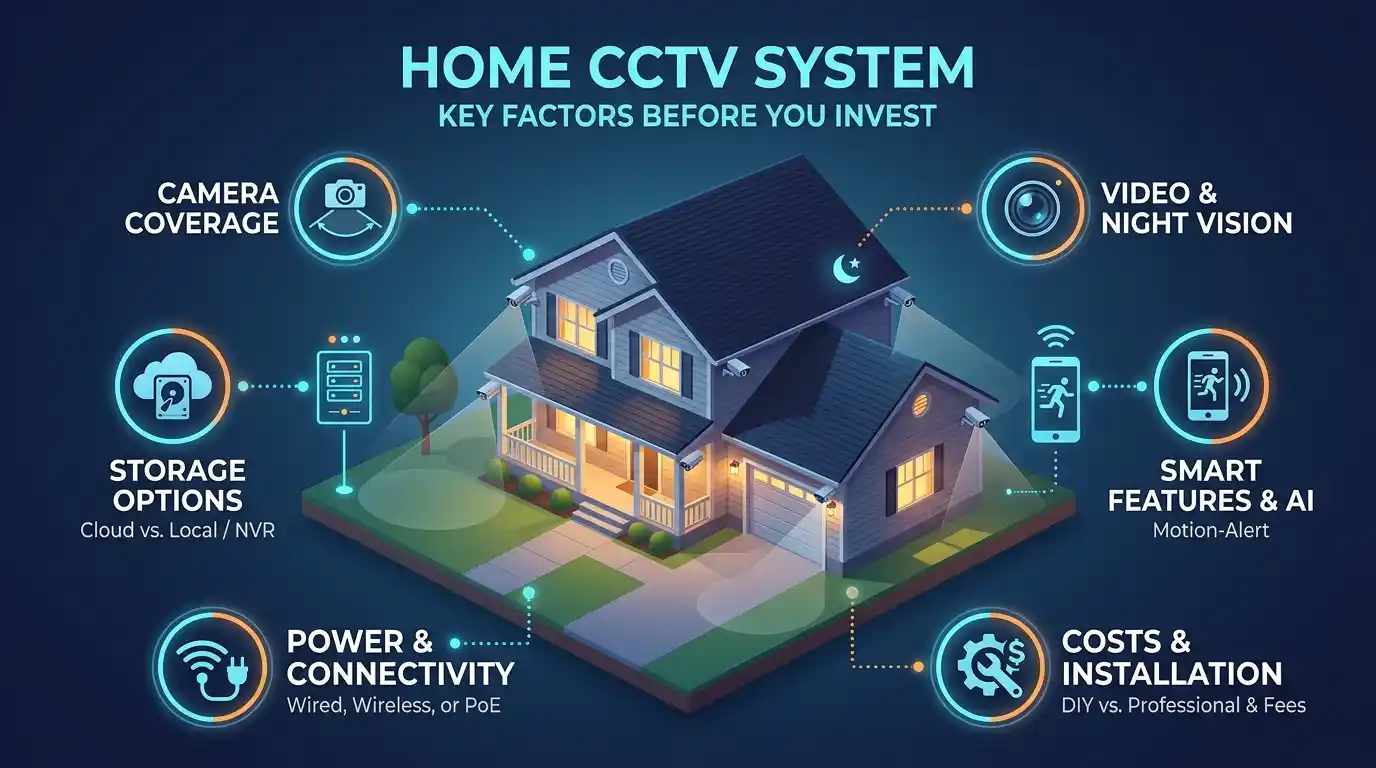
You’ll also need to decide between wired and wireless systems. Wired cameras generally offer more stable connections and don’t rely on battery life, but wireless options are easier to install and reposition. Your choice here often comes down to convenience versus reliability.
3. Storage and Footage Management
Once your cameras are capturing footage, you need somewhere to store it. Local storage, such as an SD card or hard drive, keeps footage on-site and doesn’t require a subscription. Cloud storage, meanwhile, backs up your footage remotely, so you won’t lose everything if a camera is stolen or damaged.
Consider how long you’ll need to retain footage and how easily you can access it when required. Some systems only keep recordings for a few days before overwriting them, while others allow months of storage. Think about what level of access and retention makes sense for your home security setup.
4. Budget and Installation
Costs vary widely depending on the number of cameras, their quality, and additional features like storage subscriptions. Set a realistic budget before you start shopping, and factor in not just the initial purchase but ongoing costs too.
Installation is another consideration. Professional installation ensures everything is set up correctly and positioned for optimal coverage, though it comes at an added cost. DIY setups can save money and are often straightforward with today’s user-friendly systems, but they do require a bit of time and patience. Either way, don’t forget to budget for long-term maintenance, such as replacing damaged equipment or upgrading outdated technology.
5. Integration and Smart Features
Many modern CCTV systems now connect directly to your smartphone, sending real-time alerts whenever motion is detected. This kind of instant notification can be invaluable, especially if you’re away from home and want to check in quickly.
If you already have smart home devices, look for a CCTV system that integrates smoothly with them. This way, your cameras, alarms, and smart locks can all work together as part of one cohesive home security network. Remote monitoring capabilities also let you keep an eye on your property from anywhere, whether you’re at work or on vacation.
6. Privacy and Legal Considerations
Before installing any cameras, it’s worth checking your local regulations regarding camera placement. Some areas have specific rules about where cameras can point, particularly if they might capture footage of a neighbor’s property.
Speaking of neighbors, it’s considerate (and sometimes legally required) to inform them if your cameras could capture any part of their property or shared spaces. A quick conversation can prevent misunderstandings and keep relationships friendly while you protect your own home.
Making the Right Choice for Your Home
Investing in a home CCTV system is one of the smartest steps you can take to protect your property and loved ones. But the right system for your neighbor might not be the right system for you. Take the time to evaluate your specific needs, from vulnerable entry points to budget constraints, before making a purchase.
The best home security setup isn’t necessarily the most expensive or feature-packed one. It’s the one that balances cost, functionality, and reliability in a way that fits your lifestyle and gives you genuine peace of mind.

“Elizabeth Bowen shares timeless idioms and language wisdom on LearnIdom.com, making learning phrases fun, easy, and unforgettable.”