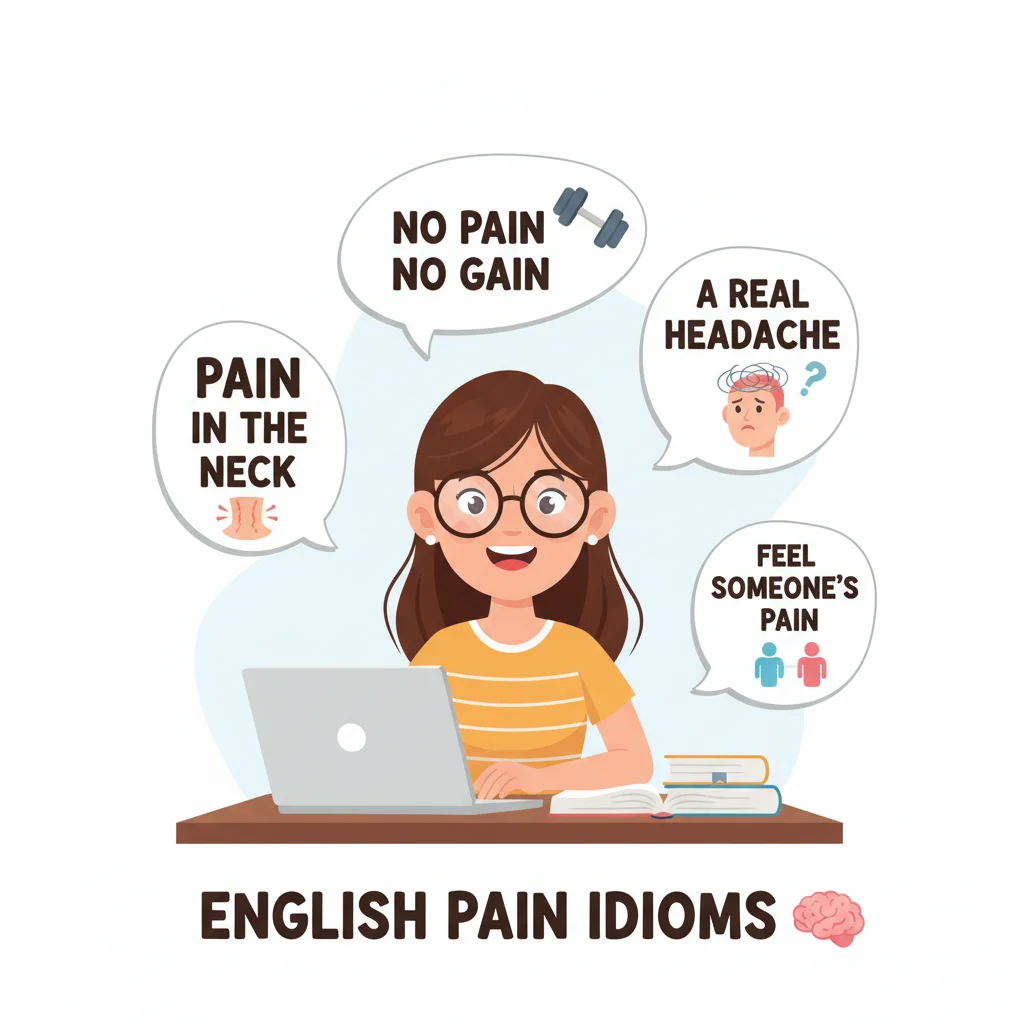
Pain-related idioms are common English expressions used to describe physical discomfort, emotional hurt, difficult experiences, stress, frustration, and personal struggles in a figurative way. These idioms about pain make conversations and writing more expressive by helping people communicate feelings and challenging situations without describing them literally.
Popular examples include “a pain in the neck,” “no pain, no gain,” “feel someone’s pain,” “rub salt in the wound,” and “add insult to injury.” Learning pain-related idioms with meanings and examples can expand your vocabulary, improve your understanding of figurative language, and help you recognize natural expressions used by fluent English speakers.
Whether you are a student, teacher, writer, or English learner, this guide explains common English idioms about pain, their meanings, example sentences, usage, and appropriate contexts so you can understand and use them confidently in everyday English communication.
Why Learn Idioms About Pain?
Idioms make your English more natural and expressive.
Benefits of learning them:
- Improve conversational English
- Understand movies and TV shows better
- Express emotions creatively
- Sound more fluent and natural
Pain in the Neck
Word-by-word meaning
Pain in the neck literally refers to physical discomfort in the neck.
Idiomatic meaning
A person or situation that is annoying or frustrating.
Example sentences
- My little brother can be a pain in the neck when I’m studying.
- Filling out these forms is a real pain in the neck.
Common error
❌ Saying pain of the neck instead of pain in the neck.
Usage note
Used informally to describe mild annoyance.
Pain in the Backside
Word-by-word meaning
Pain in the backside means discomfort in the lower body.
Idiomatic meaning
Something extremely irritating.
Example sentences
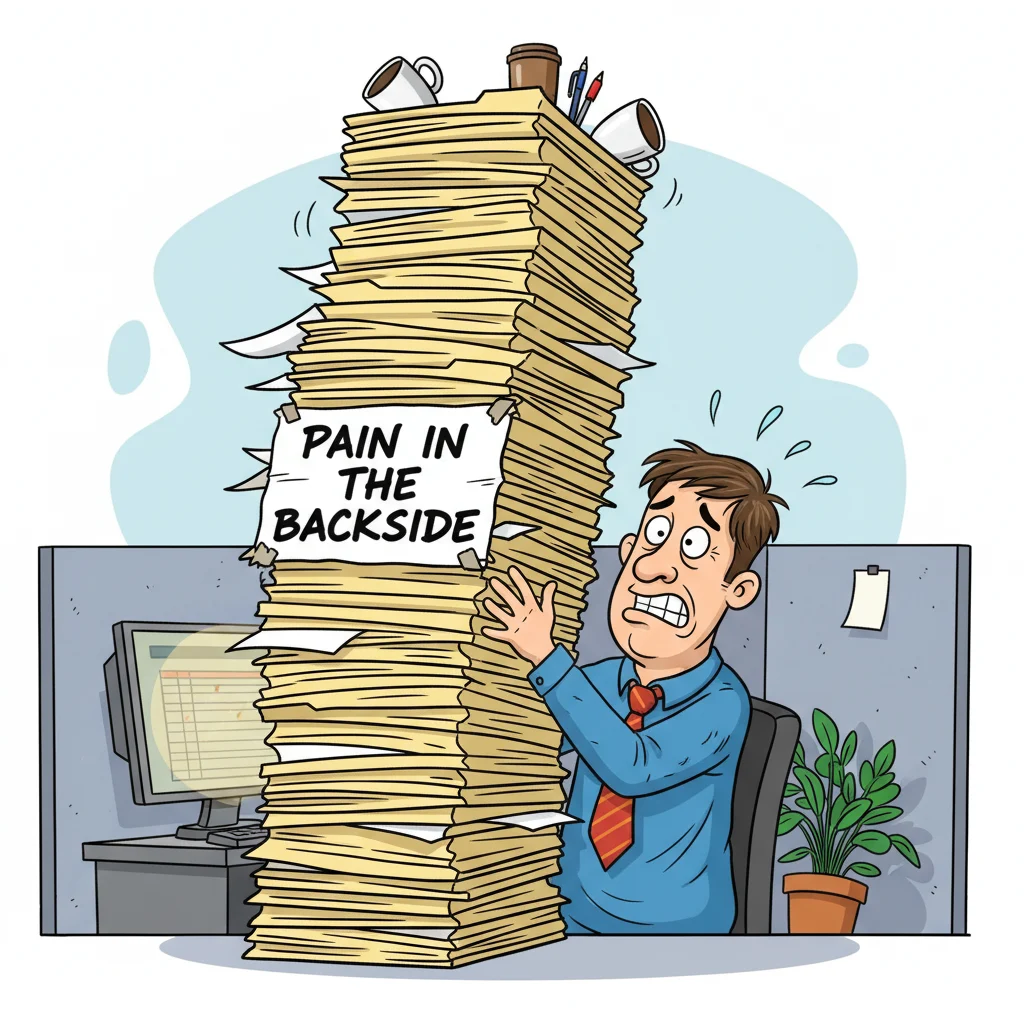
- Commuting every day is a pain in the backside.
- This software update is a real pain in the backside.
Common error
Using it in formal writing.
Usage note
More polite than stronger slang versions.
A Real Headache
Word-by-word meaning
A headache is pain in the head.
Idiomatic meaning
A difficult problem or stressful situation.
Example sentences

- Managing the project became a real headache.
- This math problem is giving me a headache.
Common error
Confusing literal headache with figurative meaning.
Usage note
Very common in business and daily conversations.
No Pain, No Gain
Word-by-word meaning
Without pain, there is no gain.
Idiomatic meaning
Success requires effort and hardship.
Example sentences
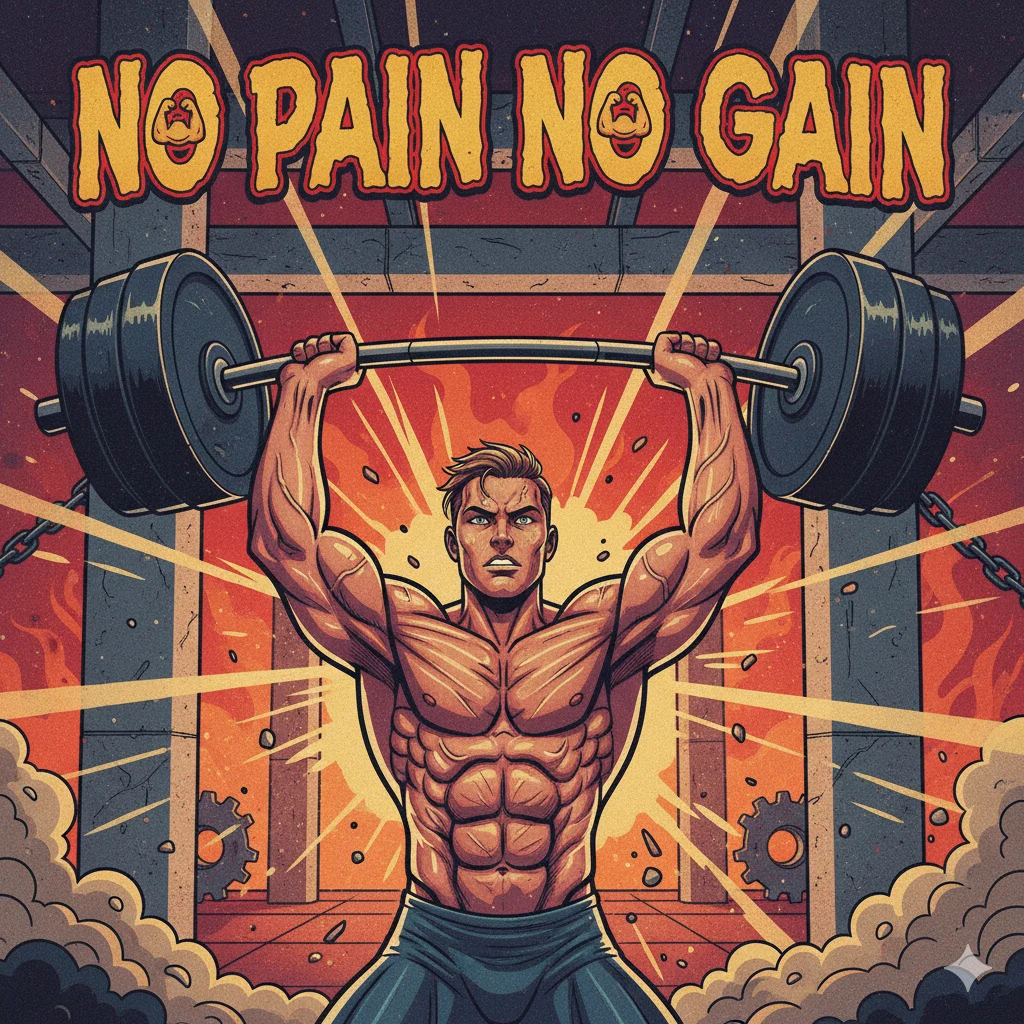
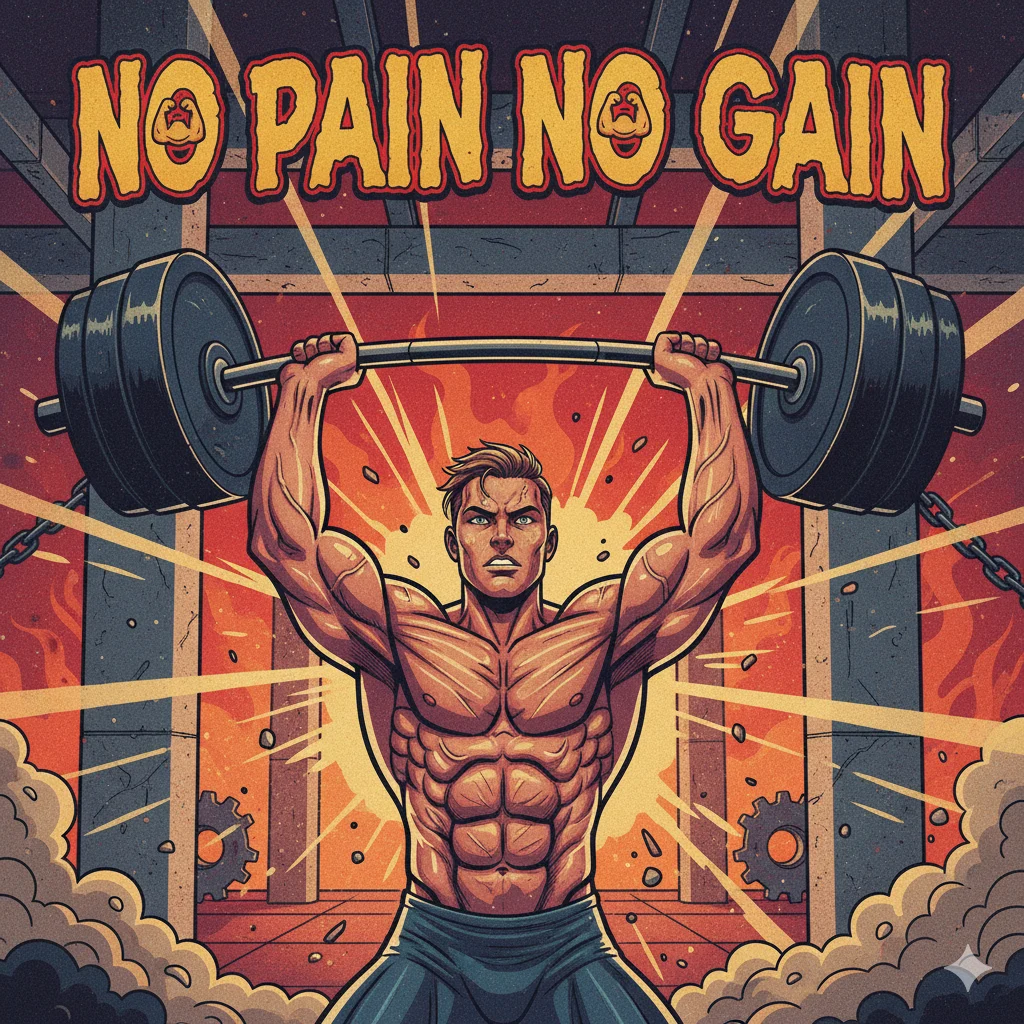
- He trains every day because he believes in no pain, no gain.
- Learning a language follows the rule no pain, no gain.
Common error
Using it to justify unhealthy habits.
Usage note
Often used in fitness or motivation contexts.
Feel Someone’s Pain
Word-by-word meaning
To feel another person’s pain.
Idiomatic meaning
To understand or sympathize with someone’s struggle.
Example sentences

- I really feel your pain about failing the exam.
- Parents feel their children’s pain deeply.
Common error
Using it sarcastically in sensitive situations.
Usage note
Common in empathetic conversations.
A Painful Reminder
Word-by-word meaning
A reminder that causes pain.
Idiomatic meaning
Something that reminds someone of a bad experience.
Example sentences
- The old photos were a painful reminder of the breakup.
- That injury is a painful reminder of the accident.
Common error
Using it for neutral memories.
Usage note
Often used in emotional contexts.
Pain in the Butt
Word-by-word meaning
Literal pain in the body.
Idiomatic meaning
Something annoying.
Example sentences
- Cleaning the garage is a pain in the butt.
- Group projects can sometimes be a pain in the butt.
Common error
Using it in formal settings.
Usage note
Informal expression.
Take the Pain
Word-by-word meaning
To accept pain.
Idiomatic meaning
To accept difficulties or consequences.
Example sentences
- He decided to take the pain and start over.
- Sometimes you just have to take the pain and move forward.
Common error
Using it literally in emotional context.
Usage note
Common in motivational speech.
Ease the Pain
Word-by-word meaning
To reduce pain.
Idiomatic meaning
To make a difficult situation easier.
Example sentences
- Music helped ease the pain after the loss.
- The apology helped ease the pain.
Common error
Confusing it with medical pain relief only.
Usage note
Used for emotional situations.
Bring Pain
Word-by-word meaning
To cause pain.
Idiomatic meaning
To defeat someone strongly or cause serious trouble.
Example sentences
- The team came ready to bring the pain.
- He promised to bring the pain in the competition.
Common error
Using it in sensitive contexts.
Usage note
Often used in sports or competitive language.
Cry in Pain
Word-by-word meaning
To cry because of pain.
Idiomatic meaning
To express strong suffering or frustration.
Example sentences
- The fans cried in pain after the loss.
- He almost cried in pain when he saw the bill.
Usage note
Can be literal or exaggerated.
A World of Pain
Word-by-word meaning
A large amount of pain.
Idiomatic meaning
Extreme trouble or suffering.
Example sentences
- Missing the deadline will put us in a world of pain.
- He knew he was in a world of pain after the mistake.
Hide the Pain
Word-by-word meaning
To conceal pain.
Idiomatic meaning
To pretend everything is fine despite struggles.
Example sentences
- She smiled to hide the pain.
- Many people hide their pain at work.
Feel the Pain
Word-by-word meaning
Experience pain.
Idiomatic meaning
Experience negative consequences.
Example sentences
- If you skip practice, you’ll feel the pain later.
- Businesses felt the pain during the recession.
Go Through Pain
Word-by-word meaning
Experience pain.
Idiomatic meaning
Endure hardship.
Example sentences
- Athletes go through pain to succeed.
- Entrepreneurs often go through pain before success.
A Painful Truth
Word-by-word meaning
Truth that causes pain.
Idiomatic meaning
A difficult reality to accept.
Example sentences
- It was a painful truth he had to face.
- Sometimes honesty reveals painful truths.
Suffer the Pain
Word-by-word meaning
Experience pain.
Idiomatic meaning
Accept consequences.
Example sentences
- He had to suffer the pain of his decision.
- Lazy students suffer the pain during exams.
Inflict Pain
Word-by-word meaning
Cause pain.
Idiomatic meaning
Cause emotional or physical harm.
Example sentences
- Harsh words can inflict pain.
- The loss inflicted pain on the whole team.
A Sharp Pain
Word-by-word meaning
Sudden strong pain.
Idiomatic meaning
A sudden emotional hurt.
Example sentences
- The memory caused a sharp pain in her heart.
- He felt a sharp pain when he heard the news.
Pain Runs Deep
Word-by-word meaning
Pain that goes deep.
Idiomatic meaning
Strong emotional suffering.
Example sentences
- After the betrayal, the pain ran deep.
- Loss of trust makes pain run deep.
Frequently Asked Questions (FAQs)
1. What are idioms about pain?
Idioms about pain are expressions that use the word pain to describe emotional struggles, annoyance, or difficult situations rather than physical pain.
2. Why are pain idioms common in English?
Because pain is a universal experience, it helps people describe problems, stress, and emotions in a vivid way.
3. Are idioms about pain used in formal writing?
Most are informal and used in conversations, storytelling, and casual writing.
4. How can I learn idioms faster?
Practice them in daily conversations, write example sentences, and read English stories or blogs.
5. Which idiom about pain is most common?
“Pain in the neck” and “No pain, no gain” are among the most widely used.
Conclusion
Learning idioms about pain can make your English sound much more natural and expressive. These phrases help you describe frustration, struggles, and emotional experiences in a colorful way.
Instead of saying something is simply difficult, you can say it’s a real pain in the neck. Instead of saying success requires effort, you can use the motivating phrase no pain, no gain.
Try using these idioms in your daily conversations, writing practice, or even social media posts. The more you use them, the more natural they will feel.
Keep practicing—and soon these idioms will become a natural part of your English vocabulary.

“Rose Macaulay shares the charm of idioms on LearnIdom.com, making language learning delightful, insightful, and full of wit for every reader.”