
Went and gone are both forms of the verb “go,” but they are used differently in English grammar. Went is the simple past tense of go and is used to describe an action that happened in the past. Gone is the past participle of go and is typically used with helping verbs such as has, have, or had.
Understanding the difference between went and gone is essential for correct sentence structure, grammar accuracy, and fluent English communication. Whether you’re a student, writer, or English learner, knowing when to use went or gone can help you avoid common grammar mistakes.
Went or Gone
The verb go has several forms.
- Went is the past tense (V2) of go
- Gone is the past participle (V3) of go
Verb Forms of Go
| Verb Form | Word |
|---|---|
| V1 (Base Form) | Go |
| V2 (Past Tense) | Went |
| V3 (Past Participle) | Gone |
| V4 (Present Participle) | Going |
| V5 (Present Form) | Goes |
This explains the question: What is go went gone?
They are simply the different forms of the same verb.
Simple Rule
Went → used for past actions
Example:
I went to school yesterday.
Gone → used with have, has, or had
Example:
She has gone to the market.
Went or Gone Meaning
The went or gone meaning depends on grammar tense.
Went Meaning
Went describes something that happened in the past and is finished.
Example:
- I went to the park.
- She went to the meeting yesterday.
Gone Meaning
Gone shows that someone has left or moved somewhere. It is used with helping verbs.
Example:
- He has gone home.
- They have gone abroad.
What are V1, V2, V3, V4, V5 Verbs?
English verbs have five basic forms.
| Verb Form | Meaning | Example with “Go” |
|---|---|---|
| V1 | Base verb | go |
| V2 | Past tense | went |
| V3 | Past participle | gone |
| V4 | Present participle | going |
| V5 | Present tense | goes |

These forms help create different tenses in English.
So when people ask “Went or gone past tense?” the answer is:
- Went = past tense
- Gone = past participle
The Origin of Went or Gone
The word go comes from Old English “gān.”
The word gone developed from the same root and has been used for centuries as the past participle.
However, went has a surprising history. It originally came from another verb called “wend.” Over time, English speakers began using went as the past tense of go.
Because of this historical change, the forms go, went, and gone look very different. This is why many learners find went or gone grammar confusing.
British English vs American English Usage
The grammar rule for went and gone is the same in both British and American English.
The only small difference may appear in vocabulary around the sentence.
Example Comparison
| Situation | British English | American English |
|---|---|---|
| Past action | I went to the shop. | I went to the store. |
| Present perfect | She has gone home. | She has gone home. |
| Conversation | He has gone out. | He has gone out. |
As you can see, the verb forms do not change. Only surrounding words like shop or store may differ.
Which Form Should You Use?
The correct choice depends on the tense of the sentence.
Use Went when:
The action happened in the past.
Examples:
- I went to the library.
- She went to the doctor.
- We went to the beach last summer.
Use Gone when:
The sentence includes have, has, or had.
Examples:
- She has gone home.
- They have gone to another country.
- The opportunity has gone.
What’s the Difference Between “I Went” and “I’ve Gone”?
This question is very common.
I Went
Used for a finished past action.
Example:
I went to London last year.
I’ve Gone
Used in present perfect tense.
Example:
I have gone to London several times.
The action connects to the present moment.
Common Mistakes with Went or Gone
Many learners make similar errors when using these forms.
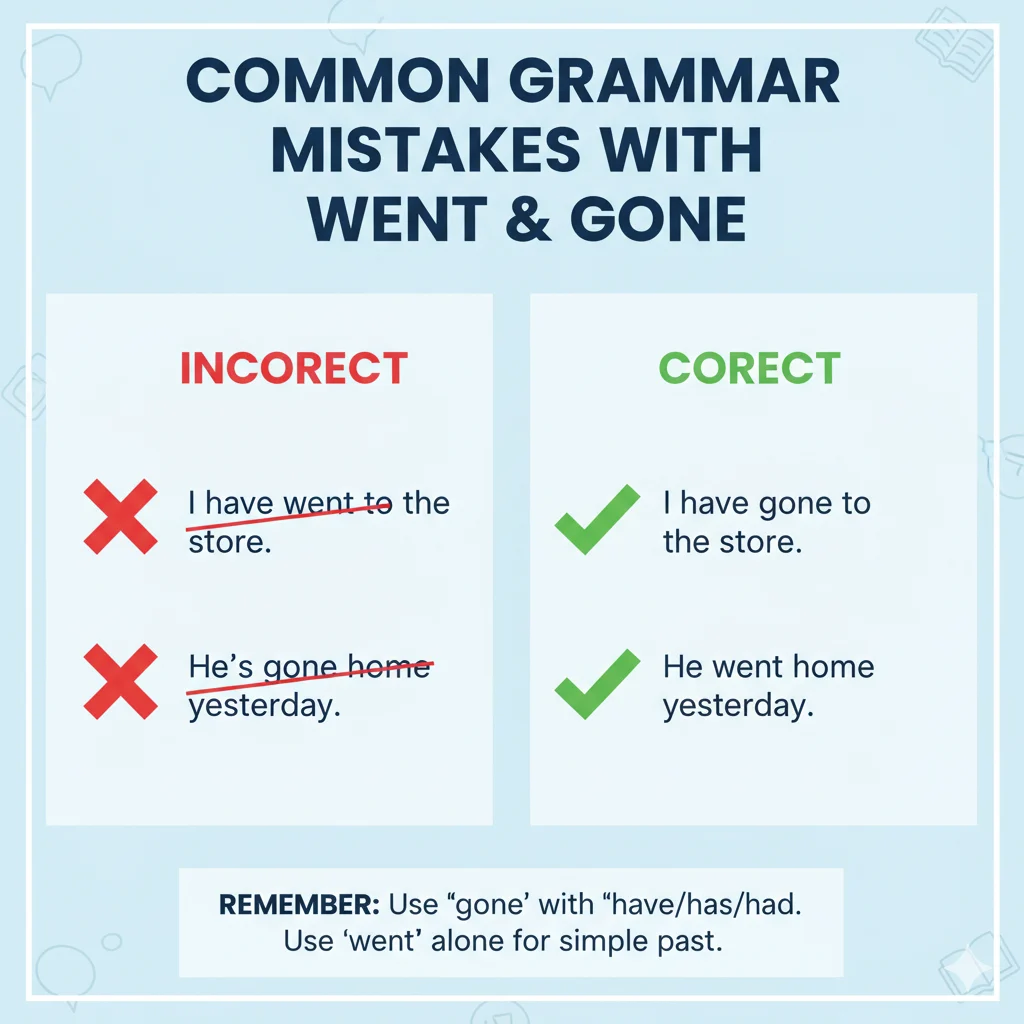
Mistake 1
❌ I have went to the office.
✔ I have gone to the office.
Mistake 2
❌ She had went home early.
✔ She had gone home early.
Mistake 3
❌ I would have went there.
✔ I would have gone there.
So when asking “I would have went or gone?”, the correct answer is gone.
Because gone is the past participle.
Went and Gone Examples in Daily Life
Here are clear went and gone examples used in everyday situations.
Emails
I went to the meeting yesterday.
The manager has gone to another office.
News Writing
The president went to the summit.
The storm has gone away.
Social Media
I went hiking today.
The weekend has gone so fast.
Formal Writing
The company went through many changes.
Several opportunities have gone unnoticed.
These went or gone sentences show how both forms are used in real communication.
Went or Gone – Usage Around the World
English learners across many countries search for explanations of went or gone grammar.
Common questions include:

- Past tense of go is went or gone
- How do I use gone
- What’s the difference between I went and I’ve gone
Students, writers, and professionals often look for clear examples to avoid mistakes in speaking and writing.
Because go, went, gone is an irregular verb, it appears very often in English conversations, books, news reports, and everyday messages.
Comparison Table of Verb Forms
| Verb | Grammar Role | Example |
|---|---|---|
| Go | Base form | I go to school |
| Went | Past tense | I went yesterday |
| Gone | Past participle | I have gone home |
| Going | Present participle | I am going now |
| Goes | Present tense | She goes daily |
This table helps explain go went gone verb forms clearly.
Frequently Asked Questions
1. Past tense of go is went or gone?
The past tense is went.
Gone is the past participle used with helping verbs.
Example:
I went to the store.
2. What is go went gone?
They are the three main forms of the verb go.
Go → Went → Gone
3. How do I use gone?
Use gone with helping verbs:
- have gone
- has gone
- had gone
Example:
She has gone to the office.
4. Can I say “I have went”?
No. That sentence is incorrect.
Correct form:
I have gone.
5. I would have went or gone?
The correct sentence is:
I would have gone.
6. Is gone present tense?
No. Gone is the past participle.
It is used in present perfect sentences such as:
She has gone home.
7. Why do go, went, and gone look different?
English changed over time. The past tense went originally came from another verb, which is why the forms look different.
Conclusion
Understanding the difference between went or gone is an important step in learning English grammar. Both words come from the verb go, but they serve different roles in a sentence.
Went is the past tense. It describes an action that happened and finished in the past. For example, “I went to the market yesterday.”
Gone is the past participle. It must be used with helping verbs such as have, has, or had. For example, “She has gone to the office.”
Many learners make mistakes like saying “I have went” or “I would have went.” The correct word in these cases is gone.
By remembering one simple rule—went for past actions and gone with have, has, or had—you can avoid most errors. Practicing went or gone sentences and learning verb forms like V1, V2, V3, V4, V5 will make your English clearer and more confident.
When you understand go, went, gone, your writing and speaking will sound more natural and accurate.

“Elizabeth Bowen shares timeless idioms and language wisdom on LearnIdom.com, making learning phrases fun, easy, and unforgettable.”