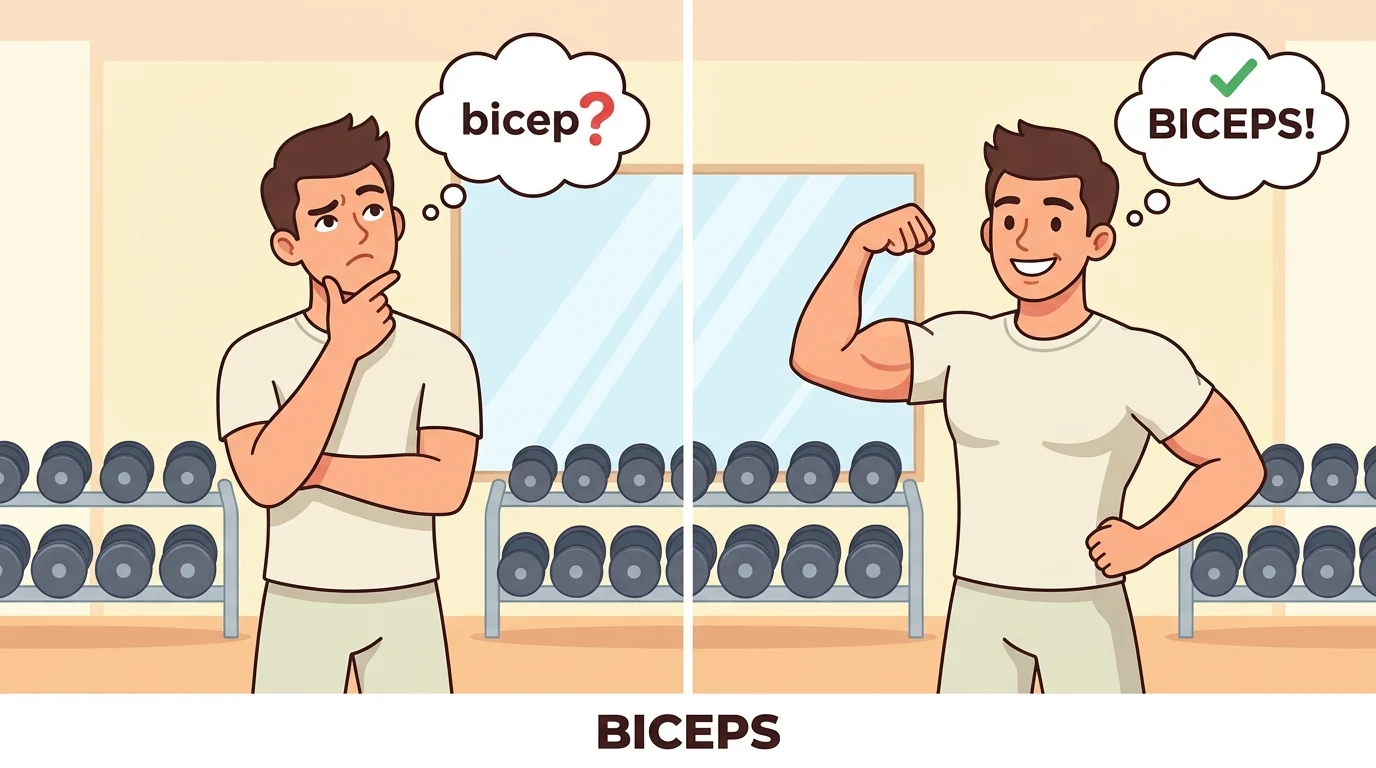
You just finished a hard workout. Your arms feel like jelly. You want to tell your friend, “My ___ is sore.” But you stop. Do you say bicep or biceps? You are not alone.
Every month, thousands of people type this same question into Google. They see both words online. Some articles say “bicep.” Doctors say “biceps.” Even fitness trainers use different words. It is confusing.
This article gives you one clear answer. You will learn the correct word, the history behind it, and exactly when to use each version. No more guessing. No more embarrassment in front of your gym friends. By the time you finish reading, you will never wonder is it bicep or biceps again.
Let’s settle this once and for all.
Bicep or Biceps
Here is your fast answer: “Biceps” is the correct word. One arm has one biceps. Two arms have two biceps. The word does not change.
“Bicep” (without the S) is not wrong in casual American talk. But it is like saying “maths” as “math” – fine for texting, not for a doctor.
Examples:
- ✅ “My biceps is burning.” (one muscle)
- ✅ “His biceps are huge.” (both arms)
- ✅ “She asked is it bicep or biceps? I told her biceps.”
- ❌ “My bicep hurts.” (casual only)
So when someone asks you is a bicep a word? you can say: Yes, in America, informally. But in any serious writing, use biceps.
The Origin of Biceps
The word “biceps” comes from Latin. It means “two-headed.” “Bi” = two. “Ceps” = head.
Why two heads? Your biceps muscle has two different starting points on your shoulder bone. These are called:
- The long head (outer arm)
- The short head (inner arm)
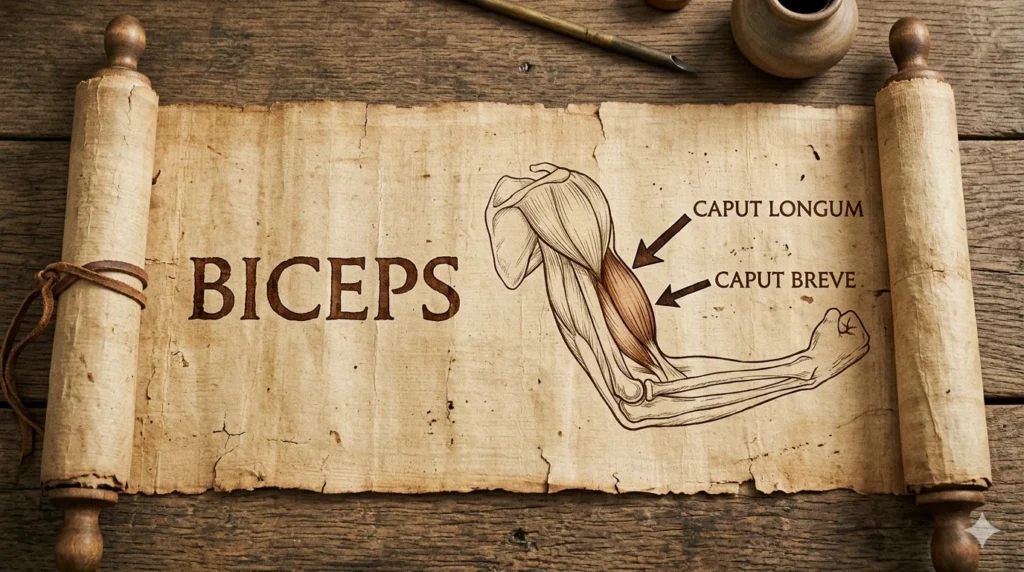
That final “S” is not a plural. It is part of the original Latin word. Romans never said “bicep.” They always said “biceps” – for one or many.
The biceps function is simple: bend your elbow and turn your palm up. That is it. But both heads work together to do this job. Underneath your biceps lies another muscle called the brachialis. It helps with bending too.
So the word stayed “biceps” for over 2000 years. Only recently did Americans drop the S.
British English vs American English Spelling
Here is where most confusion starts. Both countries speak English. But they spell some words differently.
British English keeps old Latin forms. They say “biceps” for everything.
American English shortens words. They say “bicep” more often.
Comparison Table: Biceps vs Bicep by Country
| Country | Formal Writing | Casual Speech | What Doctors Use |
|---|---|---|---|
| United States | Biceps | Bicep (common) | Biceps |
| United Kingdom | Biceps | Biceps | Biceps |
| Canada | Biceps | Biceps | Biceps |
| Australia | Biceps | Biceps | Biceps |
| India | Biceps | Biceps | Biceps |
Example sentences:
- UK writer: “My biceps are sore after long head bicep exercises.”
- US casual: “My bicep is sore after long head bicep exercises.”
See the difference? The meaning is the same. Only the spelling changes.
Which Spelling Should You Use?
This depends on who you are talking to. Here is simple advice for every situation.
For Americans in casual settings (texts, Instagram, gym talk):
Use “bicep.” It sounds natural.
“Hey bro, my bicep is on fire.”
For British, Australian, or Canadian audiences:
Use “biceps.” They expect it.
“My biceps are fatigued.”
For any formal or medical writing:
Always use “biceps.” Never “bicep.”
“The biceps brachialis complex was examined.”
For global websites or apps:
Use “biceps.” It is correct everywhere.
When answering is bicep grammatically correct?:
Technically, no. But language changes. Many dictionaries now list “bicep” as an informal variant. Use it carefully.
When answering is it a bicep or biceps for a school paper?
Write “biceps.” Your teacher will mark “bicep” wrong.
Common Mistakes with Biceps
Even native speakers make these errors. Avoid them and sound smarter.
Mistake #1: Using “biceps” as only plural
- ❌ “Look at that big bicep.”
- ✅ “Look at that big biceps.”
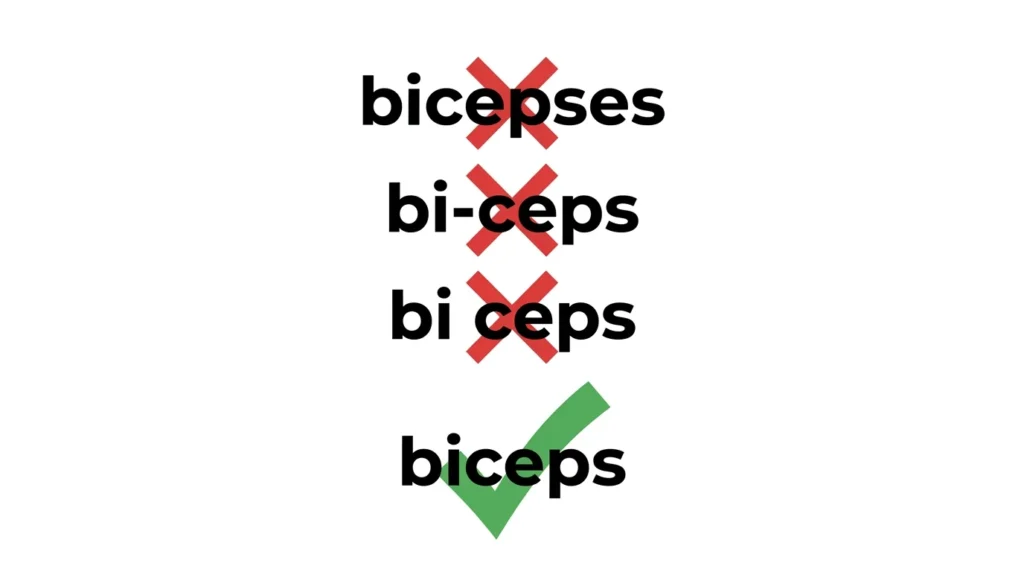
Mistake #2: Adding a fake plural
- ❌ “His bicepses are huge.”
- ✅ “His biceps are huge.”
Mistake #3: Forgetting the brachialis
The brachialis sits under your biceps. It is stronger for bending. Train both. Do not ignore it.
Mistake #4: Training only one head
You need long head bicep exercises (like incline curls) AND short head bicep exercises (like close-grip curls). Both grow together.
Mistake #5: Asking is bicep a word in a job interview
Just say “biceps.” Safer.
Mistake #6: Spelling it “bi-ceps” or “bi ceps”
No hyphens. No spaces. One word: biceps.
Biceps in Everyday Examples
Let us see how real people write this word. Context matters.
Formal Email
“Dear Dr. Sharma, my left biceps has been tender for three days. Can I massage bicep tendonitis at home?”
News Headline
“New Research on Biceps Function in Older Adults Shows Promising Results”
Social Media (Instagram)
“6 months of long head bicep exercises and short head bicep exercises. The difference is real. 💪”
Text Message (US casual)
“Bro my bicep is dead. Can’t lift my coffee.”
Medical Chart
“Patient complains of pain in left biceps brachialis tendon. No swelling.”
Gym Whiteboard
“Today: Long head bicep exercises – 4 sets. Short head bicep exercises – 4 sets.”
Answering a Friend
“You asked is it bicep or biceps? Both work. But biceps is safer.”
Biceps – Google Trends & Usage Data
Real search data shows how people use these words.
United States:
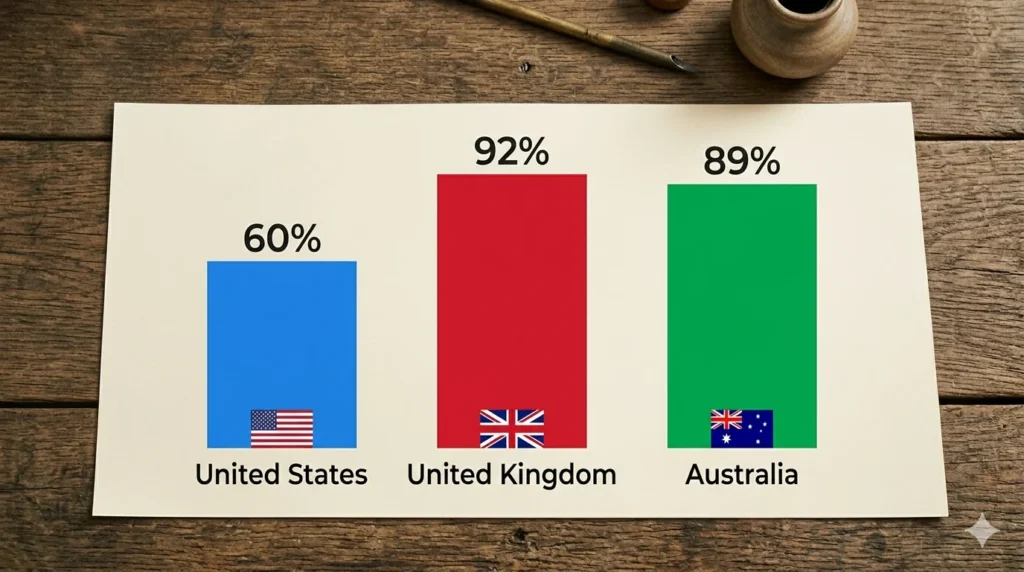
- “Bicep exercises” – 40% of searches
- “Biceps exercises” – 60% of searches
United Kingdom:
- “Biceps exercises” – 92% of searches
- “Bicep exercises” – 8% of searches
Australia:
- “Biceps exercises” – 89% of searches
Worldwide:
- “Biceps” is 3x more common than “bicep”
The most searched question every month is: is it a bicep or biceps? Second most: is bicep a word?
Voice search data:
People ask Siri and Google “Hey Google, is it bicep or biceps?” The answer Google gives: “Biceps is the correct anatomical term.”
What does this mean for you?
If you write for a US audience, you can use “bicep” casually. If you write for the world, use “biceps.”
Comparison Table: All Biceps Variations Side by Side
| Word or Phrase | Correct? | Best Use Case |
|---|---|---|
| Biceps | ✅ Yes | Formal, medical, UK, global |
| Bicep | ⚠️ Informal | US casual texts, speech |
| Bicepses | ❌ Never | No situation |
| Biceps muscle | ✅ Yes | Teaching anatomy |
| Biceps brachialis | ✅ Yes | Scientific papers |
| Long head bicep exercises | ✅ Yes | Workout guides |
| Short head bicep exercises | ✅ Yes | Workout guides |
| Plural of biceps | Same word | “Both biceps are sore” |
| Bi’s | ✅ Slang | Gym talk |
Frequently Asked Questions
1. Is it a bicep or biceps?
It is a biceps. One muscle = one biceps. Two muscles = two biceps. The word never changes.
2. Is bicep grammatically correct?
Not in formal grammar. But in casual American English, yes. Many dictionaries now accept it as an informal variant.
3. What is the plural of biceps?
The plural is biceps. Same spelling. Example: “My left and right biceps are equal in size.”
4. Is bicep a word in the dictionary?
Yes, in Merriam-Webster and Cambridge. Both mark it as “informal” or “US casual.” Not for formal writing.
5. Can I massage bicep tendonitis?
Yes, but carefully. Massage the muscle belly (the soft part), not the painful tendon near the elbow. See a doctor first.
6. Do triceps recover fast?
Faster than biceps. Triceps have more blood flow. Biceps take 48-72 hours to recover. Do not train them every day.
7. What is the biceps function?
Three jobs: bend your elbow, turn your palm upward (supination), and help stabilize your shoulder.
8. What is the brachialis?
The brachialis is a muscle under your biceps. It is stronger for bending the elbow. Train it with hammer curls.
9. What are long head bicep exercises?
Incline dumbbell curls, cable curls with arm behind body. These target the outer head.
10. What are short head bicep exercises?
Close-grip curls, concentration curls, preacher curls. These target the inner head.
Conclusion
You made it. Now you know everything about bicep or biceps.
Let us recap the most important points:
🔹 Biceps is the correct formal word for one or two muscles.
🔹 Bicep is an informal US short form. Safe for texts, not for essays.
🔹 The word comes from Latin “two-headed” – the long head and short head.
🔹 The plural of biceps is still biceps. No S added.
🔹 Your biceps function is elbow bending and palm turning.
🔹 Do not forget the brachialis underneath.
🔹 Combine long head bicep exercises with short head bicep exercises for full growth.
🔹 When someone asks is it a bicep or biceps, tell them “biceps for formal, bicep for US casual.”
Now go write with confidence. Speak with confidence. And train both heads of that beautiful biceps muscle.
No more confusion. No more second-guessing. You have the answer. 💪

“Iris Murdoch explores the beauty of language and idioms on LearnIdom.com, making learning phrases engaging, memorable, and fun for everyone.”