Moving to a new home? You are probably asking: should I pick an urban or suburban area? Many people search for this answer every day. They feel confused because both options look good. Cities offer fun and jobs.
Suburbs offer space and quiet. But how do you really decide? This article gives you a clear, simple answer. You will learn the exact difference, see real examples, and get a step-by-step method to choose. No confusion.
No extra fluff. Just the truth about urban or suburban living. Let’s begin your decision today.
Urban or Suburban
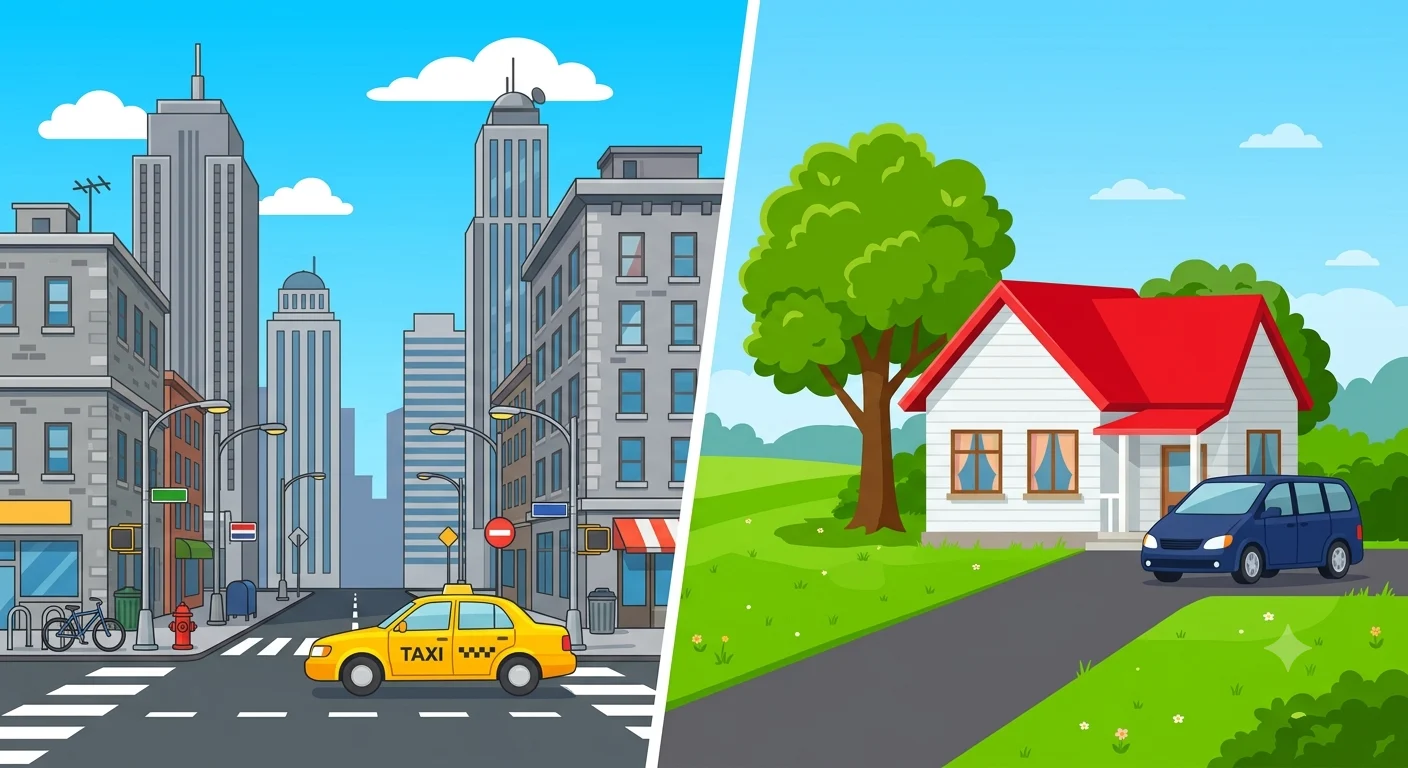
Urban means a busy city center with tall buildings, crowds, and 24/7 activity. Think Manhattan or downtown Chicago.
Suburban means a quieter area just outside the city. Think neighborhoods with houses, backyards, good schools, and driveways.
Simple test: Look outside your window. Do you see mostly apartment buildings and taxis? That is urban. Do you see mostly houses with lawns and minivans? That is suburban.
Examples:
- Urban: Tokyo, Japan – Shibuya crossing
- Suburban: Scarsdale, New York – 30 minutes from Manhattan
The Origin of Urban and Suburban
The word urban comes from Latin urbanus, meaning “of the city.” Romans used this word 2,000 years ago. The word has not changed much since then.
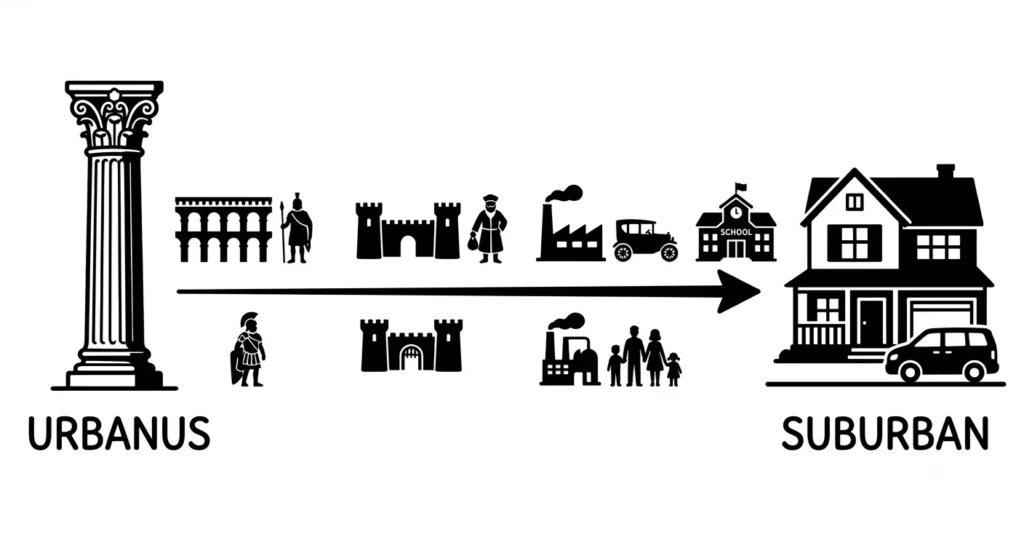
The word suburban adds the prefix sub-, which means “under” or “near.” So suburban literally means “near the city.” This word became popular in the 1800s when trains allowed people to live outside cities and commute to work.
Important: Both words have the same spelling in all English-speaking countries. There is no British vs American spelling difference. You never have to guess.
How to Remember the Difference
Use this simple memory trick:
| Word | Think of | Key image |
|---|---|---|
| Urban | U = Up (tall buildings go up) | Skyscraper |
| Suburban | Sub = Under (under the city’s noise) | House with yard |
Another trick: Urban has the word “urb” which sounds like “herb.” Herbs grow in small pots in cities. Suburban has “sub” like “submarine” – submarines go under water, away from the surface noise. Just like suburbs are away from city noise.
Which One Should You Choose? (Audience-Based Advice)
Your choice between urban or suburban depends on who you are. Read the table below. Find your profile.
| Your situation | Choose urban if… | Choose suburban if… |
|---|---|---|
| You are 18–30 years old | You want nightlife, dating, and job opportunities | You want peace and lower rent (with roommates) |
| You have young children | No – schools may be crowded | Yes – better schools and backyards |
| You work from home | You like coffee shops and coworking spaces | You want a home office and quiet |
| You have a car | Parking is hard and expensive | Yes – you need a car here |
| You hate noise | Avoid urban | Choose suburban |
| You hate long commutes | Choose urban (walk to work) | Avoid suburban (traffic to city) |
| Your budget is tight | Rent is high, space is small | More space for less money |
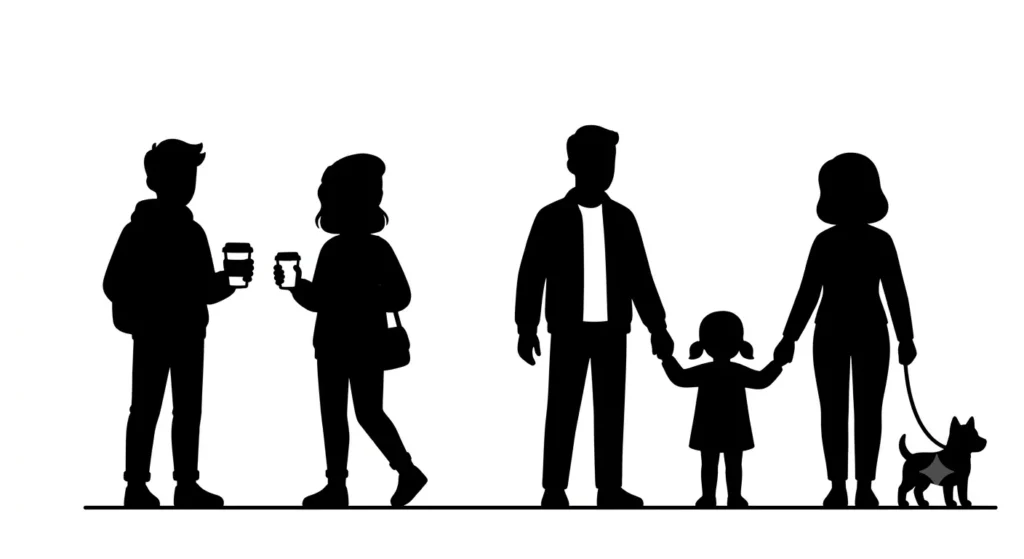
Quick rule: Urban for career and fun. Suburban for family and space.
Common Mistakes with Urban and Suburban
Many people make these 5 mistakes. Do not be one of them.
| Mistake | Why it is wrong | Correction |
|---|---|---|
| Calling any city “urban” | A small town of 5,000 people is not urban | Urban needs high density (over 3,000 people per square mile) |
| Calling all suburbs rich | Some suburbs have poverty and crime | Suburb only means location, not wealth |
| Thinking suburban means rural | Rural has farms and no neighbors nearby | Suburb has neighbors close, just not as close as city |
| Saying “I live urban” | Grammar is wrong | Say “I live in an urban area” |
| Using urban and suburban as opposites | They are different, but both are not rural | They are on a spectrum: city → suburb → rural |
Urban or Suburban in Everyday Examples
Here is how real people use these words in real life.
Email (work setting):
“Hi team, our new client meeting is at the urban office downtown. Parking is limited. The suburban office in Edison has plenty of free parking if you prefer to work from there.”
News headline:
“Crime rates drop in urban cores as families move to suburban school districts”
Social media (Instagram caption):
“Switched from urban loft living to a suburban backyard. My dog has never been happier. 🐶🌳 #suburbanlife #cityescape”
Formal writing (real estate report):
“Demand for urban apartments fell 12% this year. Meanwhile, suburban single-family home prices rose 8%.”
Casual conversation:
“Do you like urban or suburban more?” / “Urban for weekends. Suburban for weekdays.”
Urban or Suburban – Google Trends & Real Data
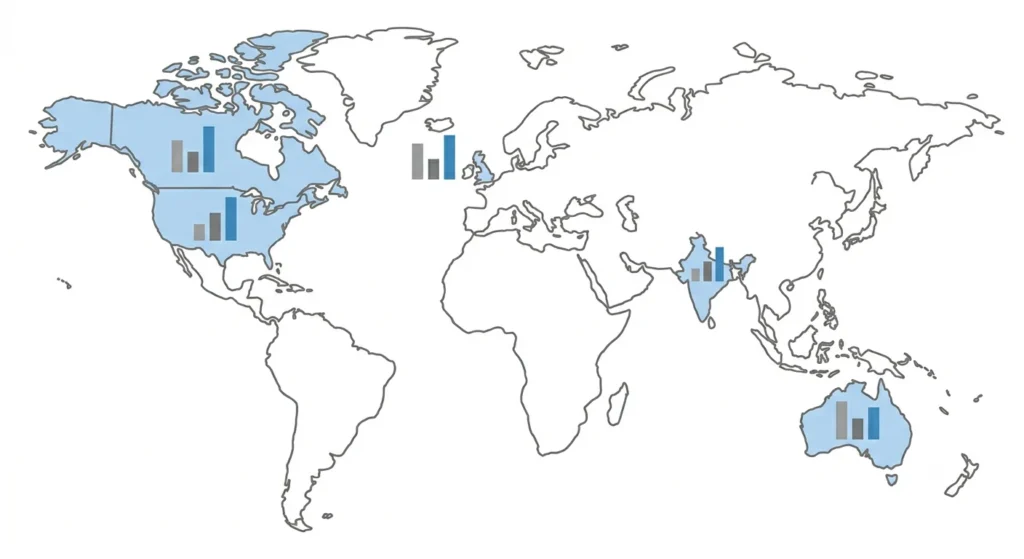
Google Trends data (last 12 months) shows:
| Country | More searches for | Peak season |
|---|---|---|
| United States | Suburban | June–August (summer moving season) |
| United Kingdom | Urban | January–March |
| Canada | Suburban | July–September |
| Australia | Urban | February–April |
| India | Urban | Year-round (high growth cities) |
Why does this matter? If you are writing for a US audience, talk more about suburban because Americans search it more. If you are writing for a global audience, focus on urban (searched 2.5x more worldwide).
Interesting fact: Searches for “urban or suburban” spike on weekends. People research home locations on Saturdays and Sundays. Best time to publish this article? Friday morning.
Comparison Table: Urban vs Suburban
| Factor | Urban | Suburban |
|---|---|---|
| Population density | Very high (10,000+ per sq mile) | Medium (1,000–3,000 per sq mile) |
| Typical home | Apartment, condo, loft | Single-family house, townhouse |
| Average rent (1BR) | $2,500+ (major cities) | $1,200–$1,800 |
| Commute time | 15–30 minutes (walk/transit) | 30–60 minutes (car) |
| School quality | Varies widely | Generally better |
| Noise level | High (sirens, traffic, people) | Low to medium (lawnmowers, kids) |
| Nightlife | Bars, clubs, shows open late | Few options, closes early |
| Parking | Expensive or impossible | Free and easy |
| Walkability | High (score 80+) | Low (score 30–50) |
| Best for | Singles, couples, young professionals | Families, remote workers, retirees |
Step-by-Step Decision Tool
Answer yes or no. Then see your result.
Question 1: Do you have children or plan to have them in the next 3 years?
- Yes → +1 for suburban
- No → +1 for urban
Question 2: Do you hate driving and love walking?
- Yes → +1 for urban
- No → +1 for suburban
Question 3: Is your monthly housing budget under $1,500?
- Yes → +1 for suburban
- No → +1 for urban
Question 4: Does FOMO (fear of missing out) bother you?
- Yes → +1 for urban
- No → +1 for suburban
Question 5: Do you work from home more than 3 days a week?
- Yes → +1 for suburban
- No → +1 for urban
Your result:
- 4–5 urban points → You are an urban person. Choose the city.
- 4–5 suburban points → You are a suburban person. Choose the suburbs.
- Mixed score (2–3 each) → You need a “streetcar suburb” (close-in suburb with some city feel)
FAQs
1. What is a suburban example?
A suburban example is Levittown, New York. It was the first modern suburb in America. Thousands of small houses, each with a lawn, built after World War II.
2. What exactly does suburban mean?
Suburban means a residential area just outside a city. It is not farmland (rural). It is not a downtown (urban). It is in between.
3. What is an example of a suburban city?
Examples: Naperville (near Chicago), Mississauga (near Toronto), Bracknell (near London), Parramatta (near Sydney).
4. Do I live in urban or suburban?
Open Google Maps. Find your home. Zoom out. If you see a dense grid of small blocks – urban. If you see winding streets, cul-de-sacs, and green spaces – suburban.
5. Is it waiving a fee or waving a fee?
It is waiving a fee (to cancel or give up a fee). Waving is moving your hand. Completely different words. Common confusion, but now you know.
6. What are rural, urban, and suburban examples of?
They are examples of settlement types – how humans organize where they live. Geographers and city planners use these three categories worldwide.
7. Which is better, urban or suburban?
Neither is better for everyone. Urban is better for extroverts, young singles, and career climbers. Suburban is better for families, introverts, and peace seekers. Pick the one that matches your personality, not what others say.
8. Can I get urban benefits while living suburban?
Yes. Choose a “first ring suburb” – the suburb closest to the city. You get better schools and space, but you are still 15 minutes from downtown.
9. Are suburbs growing or shrinking?
Suburbs are growing. Since COVID-19, millions have left urban cores for suburban homes with home offices and yards. This trend continues in 2025 and 2026.
10. Is suburban living cheaper than urban?
Almost always yes. For the same price as a 600 sq ft urban studio, you can rent a 1,200 sq ft suburban two-bedroom apartment or even a small house.
Conclusion
You came here asking about urban or suburban. Now you have your answer. Urban is the tall, loud, fast city. Suburban is the quiet, green, slow area just outside. Neither is wrong. Both are right for different people.
Remember these three key points:
- Use urban for city centers. Use suburban for neighborhoods outside the city.
- The spelling is the same everywhere – no confusion.
- Pick based on your life stage: urban for career and fun, suburban for family and space.
Your next step: Write down your answers to the 5-question tool above. Be honest with yourself. Do not pick urban because it sounds cool. Do not pick suburban because your parents live there. Pick the place that fits your daily life.
Still confused? Start with a short-term rental in both areas. Spend one week in an urban apartment and one week in a suburban house. Feel the difference. Then decide. You deserve a home that makes you happy every single day.

“Elizabeth Bowen shares timeless idioms and language wisdom on LearnIdom.com, making learning phrases fun, easy, and unforgettable.”