Many people search online for “unpure or impure” because they are not sure which word is correct in English. Both words look similar, and both seem like they should mean the opposite of “pure.” Because of this, writers often feel confused when they want to describe something that is not clean, not moral, or mixed with other substances.
Search engines show many questions like “Which is correct, impure or unpure?”, “Is unpure a word?”, or “Impure in a sentence.” These questions appear on grammar forums, language blogs, and even in online discussions such as unpure or impure reddit threads where users debate the correct spelling.
The confusion happens because English uses different prefixes to create opposite meanings. Sometimes we use un-, but other times we use im-, in-, or non-. Because of this rule, many learners assume that unpure must be correct.
This guide explains the unpure or impure meaning, their usage, examples, synonyms, and spelling rules. By the end of this article, you will clearly understand which word you should use in writing, emails, social media posts, and formal documents.
Unpure or Impure
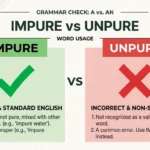
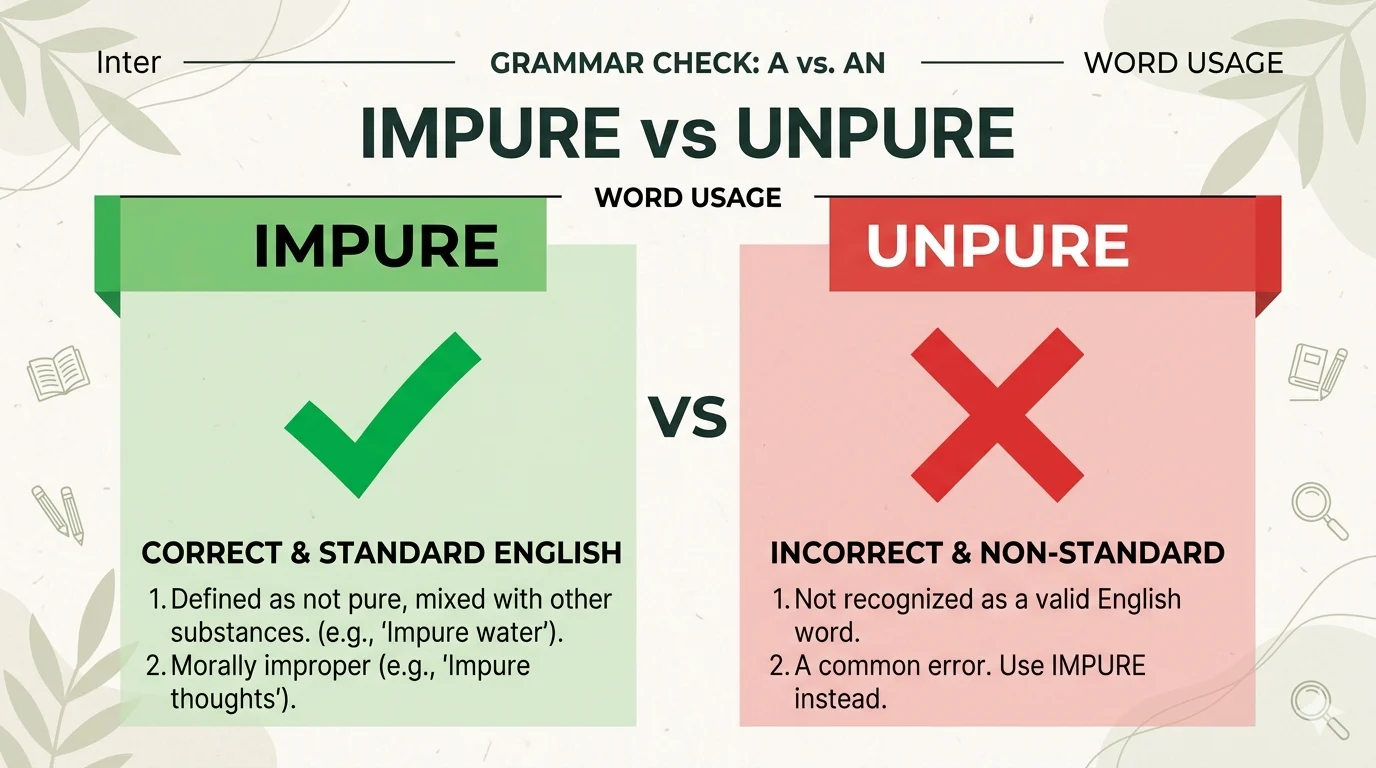
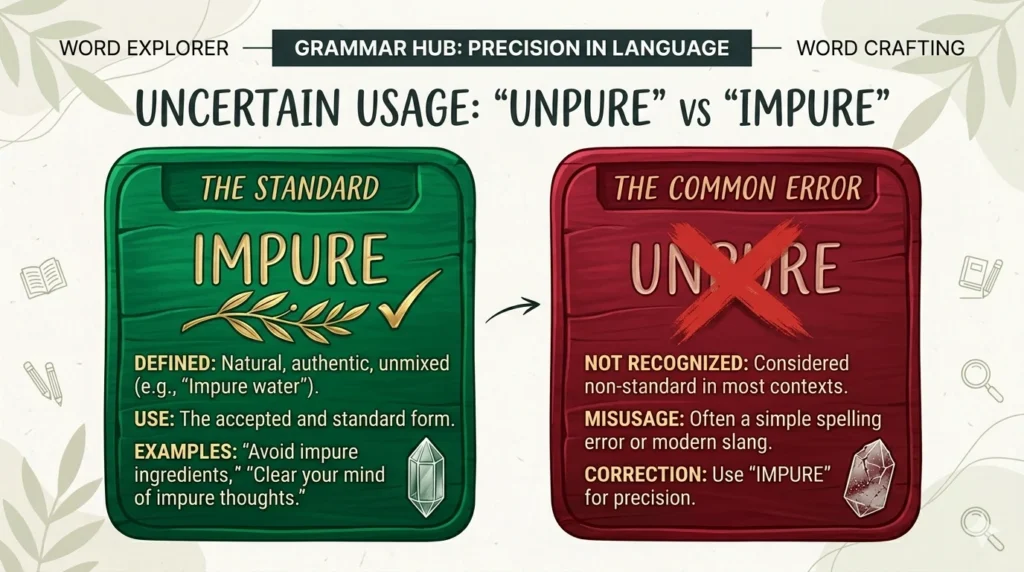
The correct and commonly used word in modern English is impure.
Impure means something that is not pure, mixed with unwanted material, dirty, contaminated, or morally questionable.
Examples
- The water became impure after the chemical leak.
- The scientist removed impure substances from the sample.
- Some religions warn people about impure thoughts meaning thoughts that are morally wrong.
Is Unpure a Word?
Many people ask “Is unpure a word?”
The answer is:
- It exists in rare historical usage
- It is not common in modern English
- Most dictionaries recommend using impure
So if you must choose between unpure or impure, always choose impure.
The Origin of Unpure or Impure
Understanding word origin helps explain why impure is correct.
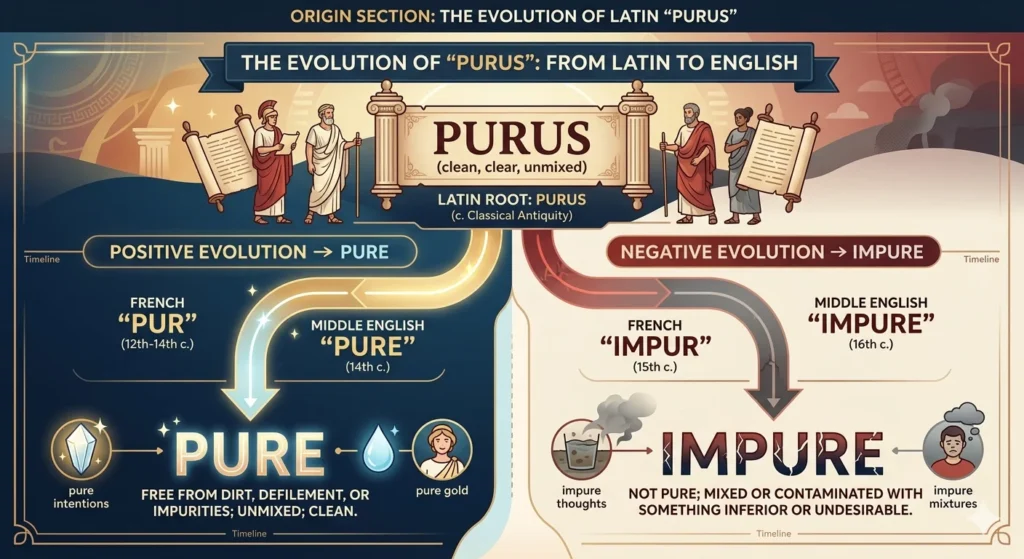
The word pure comes from the Latin word “purus.”
This word means clean, clear, or unmixed.
When English adopted the word, it also adopted Latin-style prefixes to create opposites.
Instead of adding un-, English used im-.
So the structure became:
pure → impure
This happens because im- is a variation of in-, which means not.
Examples of Similar Words
| Base Word | Negative Form |
|---|---|
| possible | impossible |
| polite | impolite |
| moral | immoral |
| pure | impure |
Because of this rule, impure became the standard word.
The form unpure appeared in some old texts, but it never became widely accepted.
British English vs American English Spelling
Sometimes English spelling changes between countries.
For example:
| British English | American English |
|---|---|
| colour | color |
| organise | organize |
| defence | defense |
But in the case of impure, both versions use the same spelling.
Comparison Table
| Version | Spelling | Example |
|---|---|---|
| American English | impure | The metal is impure. |
| British English | impure | The water is impure. |
| Rare form | unpure | rarely used |
So whether you write for US, UK, Canada, Australia, or global readers, the correct word is impure.
Which Spelling Should You Use?
Choosing the correct spelling is simple.
For American Audience
Use impure in essays, articles, blogs, and emails.
For British or Commonwealth Audience
Use impure as well.
For Global Audience
Use impure because it is widely recognized and understood.
Using unpure may confuse readers and may look like a grammar mistake.
Professional writers, journalists, and academics always use impure.
Common Mistakes with Unpure or Impure
Many learners make small mistakes when writing these words.
Here are the most common ones.
Using “Unpure” Instead of “Impure”
Incorrect:
The water is unpure.
Correct:
The water is impure.
Assuming All Opposites Use “Un-”
English uses different prefixes.
Examples:
| Word | Opposite |
|---|---|
| happy | unhappy |
| possible | impossible |
| pure | impure |
Confusing the Meaning
Sometimes people confuse impure with other words.
Example: inpour
Many people ask: What does inpour mean?
It means to pour or flow into something.
Example:
Donations began to inpour after the disaster.
This word has no connection with impure.
Unpure or Impure in Everyday Examples
To understand the word better, here are some real-life examples.
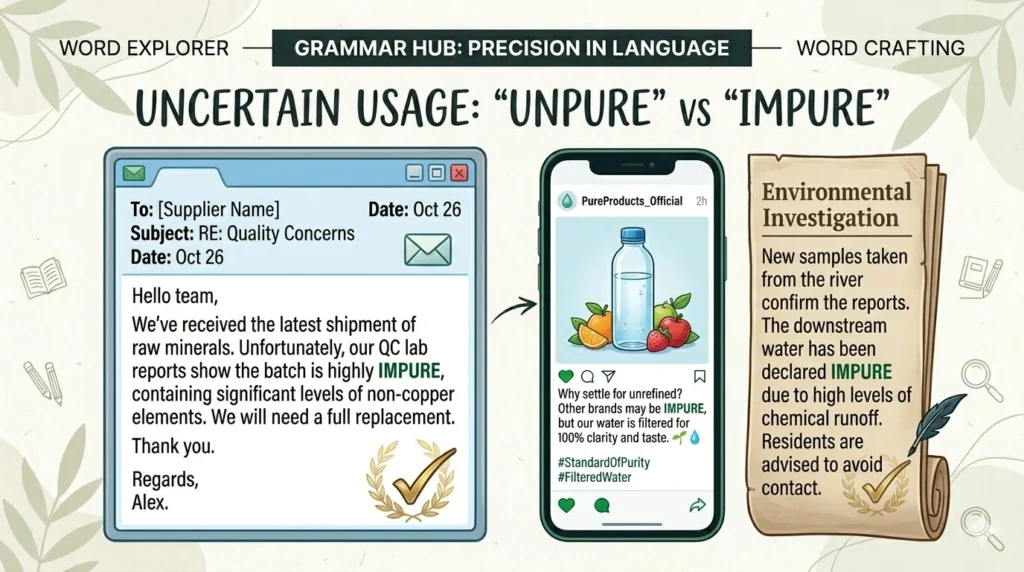
Impure in a Sentence
- The gold was impure because it contained other metals.
- The scientist rejected the impure chemical sample.
- The river water became impure after pollution.
Email Example
Subject: Lab Results
The test shows that the sample became impure due to contamination.
Social Media Example
People often discuss impure thoughts meaning when talking about morality or religion.
News Example
Experts warn that impure drinking water can cause disease.
Academic Writing Example
The researchers separated impure compounds during the experiment.
Unpure or Impure Synonym
People often search for “unpure or impure synonym.”
Here are common synonyms of impure.
| Synonym | Meaning |
|---|---|
| contaminated | mixed with harmful material |
| polluted | damaged by waste |
| dirty | not clean |
| corrupted | morally damaged |
| tainted | slightly impure |
These words are useful when you want variety in writing.
Unpure or Impure – Google Trends & Usage Data
Search trends show that impure is far more common than unpure.
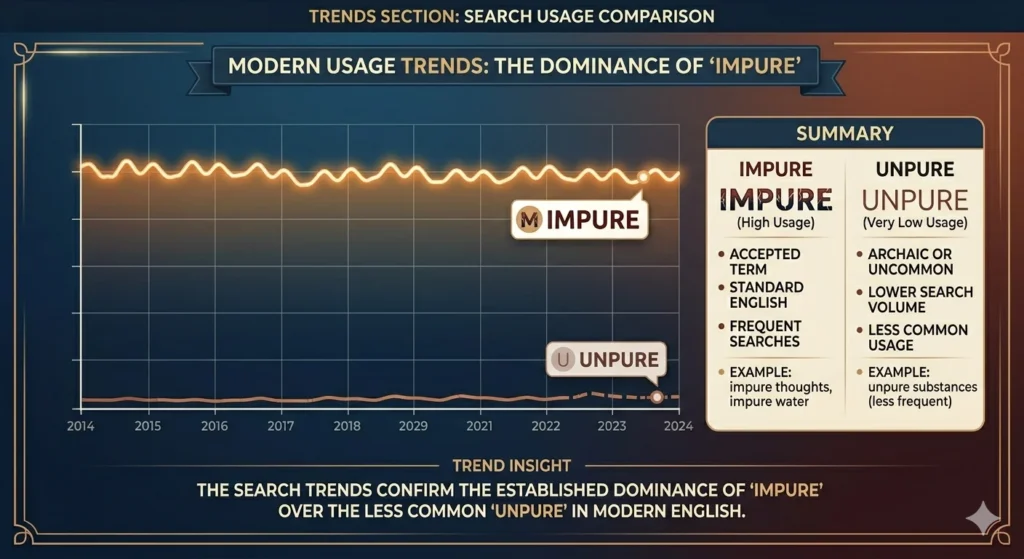
People usually search these keywords:
- unpure or impure meaning
- unpure or impure synonym
- is unpure a word
- impure in a sentence
- impure thoughts meaning
- which is correct impure or unpure
Language learners, students, and writers search these questions while improving their grammar.
Countries where the topic is popular
- United States
- India
- Pakistan
- United Kingdom
- Philippines
These regions have many English learners who want to improve writing skills.
Unpure or Impure Reddit Discussions
Many discussions about unpure or impure reddit appear on language forums.
Most users agree on three main points:
- Impure is the correct word
- Unpure sounds unnatural
- Dictionaries recommend impure
Language experts on discussion forums often explain that impure follows Latin grammar rules.
Comparison Table of Keyword Variations
| Keyword | Meaning | Usage |
|---|---|---|
| impure | not clean or mixed | correct word |
| unpure | rare form | not recommended |
| impurer | comparative form | rarely used |
| pure | clean or unmixed | base word |
What Does Unpurer Mean?
Some people ask: What does unpurer mean?
The word unpurer would mean more impure.
However, this form is rarely used.
Writers normally say:
more impure
Example:
This sample is more impure than the previous one.
Impure Thoughts Meaning
The phrase impure thoughts meaning appears in moral, religious, or psychological discussions.
It refers to thoughts considered immoral, inappropriate, or sinful according to certain beliefs.
Example:
The book advises readers to avoid impure thoughts and focus on positive actions.
Frequently Asked Questions (FAQs)
Which is correct, impure or unpure?
The correct word is impure. It is the accepted spelling in modern English.
Is unpure a word?
Yes, but it is rare and outdated. Most dictionaries recommend using impure.
What is a synonym for unpure?
Common synonyms include:
- contaminated
- polluted
- tainted
- dirty
Impure in a sentence?
Example:
The scientist rejected the sample because it was impure.
What does Unpurer mean?
It means more impure, but writers usually say more impure instead.
What does inpour mean?
Inpour means to flow or pour into something.
Example:
Support messages began to inpour after the announcement.
What is impure thoughts meaning?
It refers to morally wrong or inappropriate thoughts according to certain cultural or religious beliefs.
Conclusion
The confusion between unpure or impure is very common among English learners and writers. At first glance, both words look correct because English often forms opposite words by adding the prefix “un-.” However, the correct and widely accepted form is impure.
The word impure comes from the Latin root “purus,” meaning clean or unmixed. English adopted the prefix “im-” to create the opposite form. This same pattern appears in many other words such as impossible, impolite, and immoral.
Although unpure has appeared in rare historical usage, it is not common in modern English. Using it in writing may confuse readers or appear incorrect. Professional writers, journalists, and academics almost always use impure instead.
Understanding the unpure or impure meaning, spelling rules, and examples helps improve writing accuracy. Whether you are writing emails, essays, blog posts, or social media content, choosing the correct word makes communication clearer and more professional.
In simple terms, if you ever wonder which is correct, impure or unpure, remember this rule:
Use impure in modern English writing.

“L.P. Hartley brings classic idioms to life on LearnIdom.com, helping readers explore language with wit, clarity, and timeless insight.”