Storytelling idioms are the secret sauce that turns plain English into vivid, memorable language. Imagine a friend saying, “Let me set the scene,” before sharing a story—you’re instantly hooked. That’s the power of idioms in storytelling.
Whether you’re chatting with friends, writing essays, posting online, or giving presentations, storytelling idioms help you sound natural, confident, and expressive. They add drama, clarity, and emotion without needing long explanations.
In this guide, you’ll explore 20 of the most famous storytelling idioms, broken down clearly with meanings, examples, and usage notes. By the end, you won’t just understand stories better—you’ll tell them better too.
Why Storytelling Idioms Matter in English
Storytelling idioms help you:
- Make stories more engaging and emotional
- Sound fluent and native-like
- Organize events clearly and logically
- Capture attention quickly
100+ Powerful Idioms for Extreme Tiredness 😓💡
Native speakers use these idioms daily—in conversations, movies, books, and social media.
Set the scene

Word-by-word meaning: Arrange the setting
Idiomatic meaning: Describe the background before a story
Example: Let me set the scene—it was raining and completely silent.
Common error: Using it for physical decoration
Usage note: Often used at the beginning of stories
Long story short

Word-by-word meaning: A long story made short
Idiomatic meaning: Skip details and summarize
Example: Long story short, we missed the train.
Common error: Using it before telling a long story
Usage note: Great for casual conversation
Once upon a time
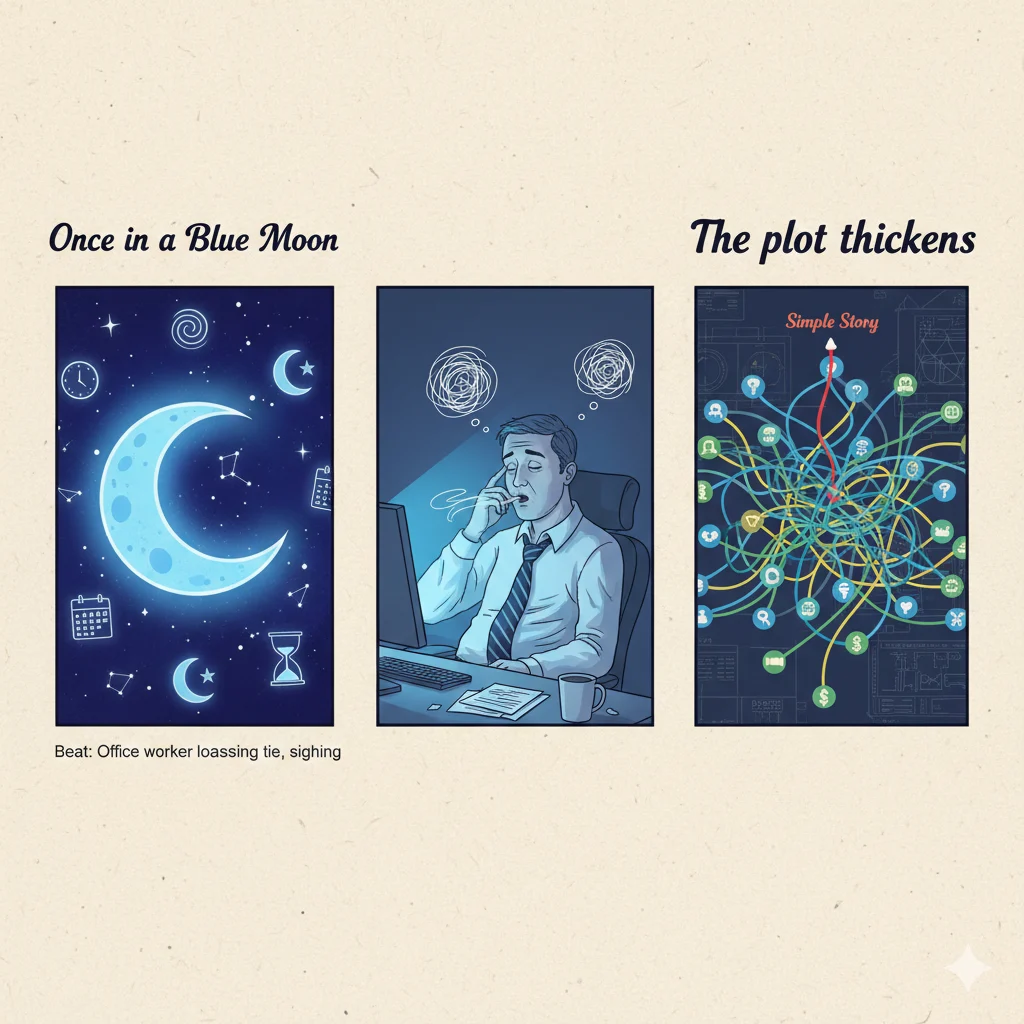
Word-by-word meaning: At some time in the past
Idiomatic meaning: Traditional story opening
Example: Once upon a time, there lived a curious cat.
Common error: Using it in formal reports
Usage note: Common in fairy tales
The plot thickens

Word-by-word meaning: The story becomes denser
Idiomatic meaning: The situation gets more complicated
Example: When he arrived unexpectedly, the plot thickened.
Common error: Using it for simple situations
Usage note: Adds drama
Paint a picture
Word-by-word meaning: Create an image
Idiomatic meaning: Describe vividly
Example: She painted a picture of life in the village.
Common error: Confusing with literal art
Usage note: Useful in writing and speaking
Twist in the tale
Word-by-word meaning: A turn in the story
Idiomatic meaning: A surprising ending
Example: There was a twist in the tale nobody expected.
Common error: Using it too early
Usage note: Often near the end
Steal the show
Word-by-word meaning: Take the performance
Idiomatic meaning: Be the most memorable part
Example: The ending stole the show.
Common error: Using it negatively
Usage note: Usually positive
Get to the point
Word-by-word meaning: Reach the main idea
Idiomatic meaning: Stop unnecessary details
Example: Can you get to the point?
Common error: Sounding rude unintentionally
Usage note: Use politely
Read between the lines
Word-by-word meaning: Read the spaces
Idiomatic meaning: Understand hidden meaning
Example: You have to read between the lines.
Common error: Taking it literally
Usage note: Common in analysis
Ring a bell
Word-by-word meaning: Cause a sound
Idiomatic meaning: Sound familiar
Example: That story rings a bell.
Common error: Using for loud sounds
Usage note: Informal
Add fuel to the fire
Word-by-word meaning: Make fire stronger
Idiomatic meaning: Make a situation worse
Example: That comment added fuel to the fire.
Common error: Using for positive events
Usage note: Often negative
In a nutshell
Word-by-word meaning: Inside a nut shell
Idiomatic meaning: In summary
Example: In a nutshell, the plan failed.
Common error: Overexplaining after
Usage note: Intro to summaries
Jump to conclusions
Word-by-word meaning: Leap to an ending
Idiomatic meaning: Assume without facts
Example: Don’t jump to conclusions.
Common error: Using for logical decisions
Usage note: Common advice
Give the backstory
Word-by-word meaning: Provide past story
Idiomatic meaning: Explain previous events
Example: Let me give you the backstory.
Common error: Overusing details
Usage note: Helps clarity
Tell it like it is
Word-by-word meaning: Say it exactly
Idiomatic meaning: Speak honestly
Example: She tells it like it is.
Common error: Sounding harsh
Usage note: Be mindful of tone
Drop a bombshell
Word-by-word meaning: Release an explosion
Idiomatic meaning: Reveal shocking news
Example: He dropped a bombshell at dinner.
Common error: Using for small news
Usage note: Dramatic effect
Spin a yarn
Word-by-word meaning: Twist thread
Idiomatic meaning: Tell a story (often exaggerated)
Example: He loves spinning yarns.
Common error: Using in formal writing
Usage note: Informal
Leave out the details
Word-by-word meaning: Exclude information
Idiomatic meaning: Skip specifics
Example: I’ll leave out the details.
Common error: Removing key info
Usage note: When details aren’t needed
The moral of the story
Word-by-word meaning: Lesson of the tale
Idiomatic meaning: Main lesson
Example: The moral of the story is be honest.
Common error: Overexplaining
Usage note: Endings
End on a high note
Word-by-word meaning: Finish positively
Idiomatic meaning: Conclude well
Example: She ended the story on a high note.
Common error: Using after negative endings
Usage note: Great for speeches
FAQs About Storytelling Idioms
1. What are storytelling idioms?
They are expressions commonly used to tell, structure, or enhance stories in English.
2. Are storytelling idioms formal or informal?
Most are informal, but many are acceptable in writing and presentations.
3. Can learners use storytelling idioms safely?
Yes—when used in the right context and tone.
4. How can I practice storytelling idioms?
Retell movies, personal stories, or news using 2–3 idioms.
Conclusion
Storytelling isn’t about perfect grammar—it’s about connection. By mastering these storytelling idioms, you’ll sound more natural, confident, and engaging in English. Pick five idioms from this list and use them in your next conversation or piece of writing. The more you practice, the more effortlessly your stories will flow.

“Rose Macaulay shares the charm of idioms on LearnIdom.com, making language learning delightful, insightful, and full of wit for every reader.”