Life gets busy fast. One minute you’re racing to finish homework or meet a deadline, and the next you’re wishing you could just breathe and slow down. That’s where relax idioms come in. Native speakers rarely say “I am relaxing now.” Instead, they say things like “take it easy” or “chill out.”
Imagine a friend telling you, “Hey, loosen up—it’s just a test,” or a parent saying, “Put your feet up after dinner.” These expressions sound warm, natural, and human. In this article, you’ll learn 20 of the most famous relax idioms, broken down simply with meanings, examples, and usage tips, so you can sound more confident and natural in everyday English.
Take it easy

Word-by-word meaning: Do something easily
Idiomatic meaning: Relax; don’t worry or work too hard
Example: Take it easy this weekend—you deserve a break.
Common error: Using it only for physical movement
Usage note: Very common in friendly advice
Chill out

Word-by-word meaning: Become cold
Idiomatic meaning: Calm down or relax
Example: Chill out! It’s not a big problem.
Common error: Using it in very formal writing
Usage note: Informal, common among friends
Kick back

Word-by-word meaning: Kick backward
Idiomatic meaning: Relax and enjoy free time
Example: Let’s kick back and watch a movie.
Common error: Confusing it with “kick off”
Usage note: Casual and conversational
Put your feet up
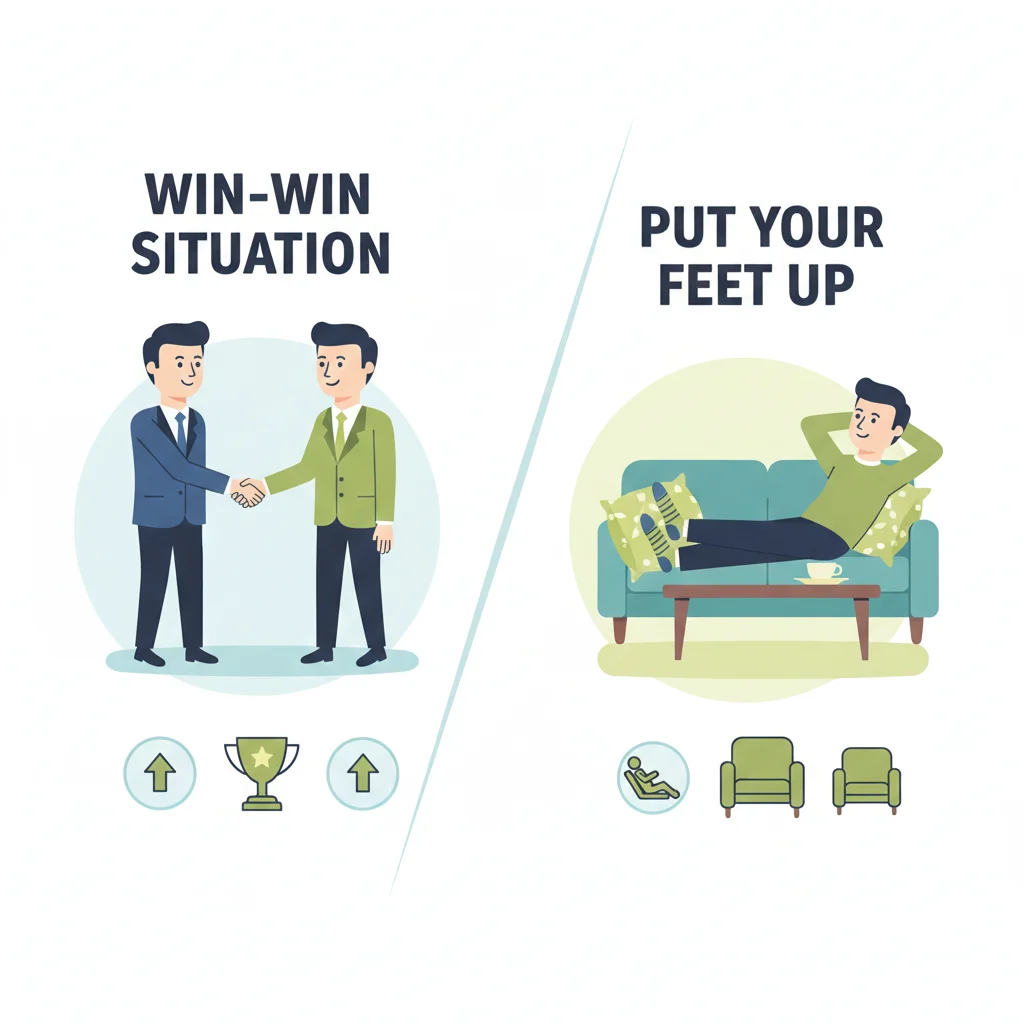
Word-by-word meaning: Lift your feet
Idiomatic meaning: Rest after work
Example: After cleaning all day, she put her feet up.
Common error: Taking it literally
Usage note: Often used at home
Take a breather
Word-by-word meaning: Take a breath
Idiomatic meaning: Short rest
Example: Let’s take a breather before studying again.
Common error: Using it for long vacations
Usage note: Short breaks only
Let your hair down
Word-by-word meaning: Release hair
Idiomatic meaning: Relax and have fun
Example: She really let her hair down at the party.
Common error: Thinking it’s only about appearance
Usage note: Social situations
Unwind
Word-by-word meaning: Untwist
Idiomatic meaning: Gradually relax
Example: I unwind by listening to music.
Common error: Forgetting it’s often reflective
Usage note: Common after work or study
Take a load off
Word-by-word meaning: Remove weight
Idiomatic meaning: Sit down and rest
Example: Take a load off—you look tired.
Common error: Using it for emotional stress only
Usage note: Friendly and caring tone
At ease
Word-by-word meaning: Without difficulty
Idiomatic meaning: Calm and comfortable
Example: He felt at ease in the new class.
Common error: Using it as a verb
Usage note: Neutral to formal
Blow off steam
Word-by-word meaning: Release steam
Idiomatic meaning: Release stress
Example: She jogs to blow off steam.
Common error: Using it for relaxing only (it’s active)
Usage note: Stress-related contexts
Calm down
Word-by-word meaning: Become calm
Idiomatic meaning: Relax emotionally
Example: Calm down—it’ll be okay.
Common error: Sounding rude if tone is wrong
Usage note: Be gentle when using
Take a break
Word-by-word meaning: Stop working
Idiomatic meaning: Rest briefly
Example: Take a break after 30 minutes of study.
Common error: Confusing with quitting
Usage note: Very common
Easy does it
Word-by-word meaning: Do it easily
Idiomatic meaning: Slow down and relax
Example: Easy does it—you’ve got time.
Common error: Overusing in formal writing
Usage note: Spoken English
Rest your mind
Word-by-word meaning: Let mind rest
Idiomatic meaning: Stop overthinking
Example: Try meditation to rest your mind.
Common error: Using it too literally
Usage note: Calm, reflective tone
Take things easy
Word-by-word meaning: Handle things lightly
Idiomatic meaning: Live with less stress
Example: He’s learning to take things easy.
Common error: Mixing with “take it easy”
Usage note: Lifestyle-related
Go easy on yourself
Word-by-word meaning: Be gentle to yourself
Idiomatic meaning: Don’t be too strict
Example: Go easy on yourself—you tried your best.
Common error: Using it physically only
Usage note: Emotional support
Slow down
Word-by-word meaning: Reduce speed
Idiomatic meaning: Relax pace of life
Example: You need to slow down and rest.
Common error: Only physical interpretation
Usage note: Advice-giving
Take time out
Word-by-word meaning: Step away
Idiomatic meaning: Pause to relax
Example: Take time out when you feel overwhelmed.
Common error: Confusing with punishment
Usage note: Mental health context
Zen out
Word-by-word meaning: Become Zen
Idiomatic meaning: Deeply relax
Example: I zen out while painting.
Common error: Using in formal settings
Usage note: Modern, informal
Decompress
Word-by-word meaning: Release pressure
Idiomatic meaning: Relax after stress
Example: I need time to decompress after exams.
Common error: Overusing in casual chat
Usage note: Semi-formal
FAQs About Relax Idioms
1. What are relax idioms?
Relax idioms are expressions used to talk about resting, calming down, or reducing stress naturally.
2. Are relax idioms formal or informal?
Most relax idioms are informal, but some (like unwind or decompress) work in semi-formal contexts.
3. Can I use relax idioms in writing?
Yes, especially in blogs, stories, or informal essays.
4. How can I remember relax idioms easily?
Use them in daily sentences and connect them to real-life situations.
Conclusion
Learning relax idioms isn’t just about vocabulary—it’s about sounding human, warm, and natural in English. Start by choosing two or three idioms and using them this week with friends or in writing. The more you practice, the more relaxed your English will feel too. Take it easy, and enjoy the process!

“Rose Macaulay shares the charm of idioms on LearnIdom.com, making language learning delightful, insightful, and full of wit for every reader.”