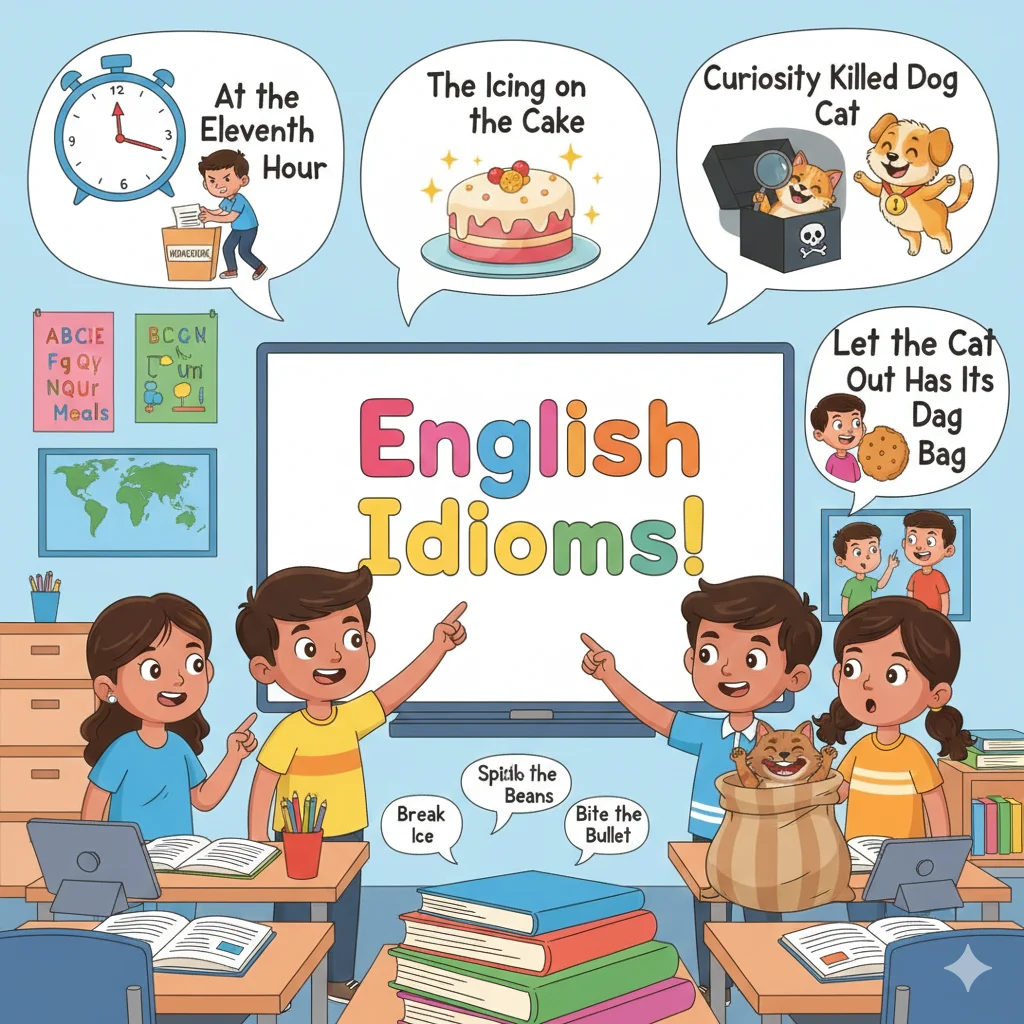
Have you ever wondered where common expressions like “break the ice” or “spill the beans” come from? The origins of phrases and idioms reveal fascinating stories from history, literature, and everyday life that make language colorful and memorable.
Understanding idioms is not just about memorizing their meanings; it’s about uncovering cultural tales, quirky events, and even old superstitions hidden in plain sight. For example, when someone says “hit the nail on the head,” they’re not giving carpentry advice—they’re praising precision.
Idioms make conversations lively, humorous, and relatable, but they can be tricky for learners because their literal meanings often differ from their figurative sense.
In this post, we’ll explore 20 of the most famous idioms, breaking down their word-by-word meaning, figurative sense, examples, common errors, and usage tips, making them easy to remember and use confidently.
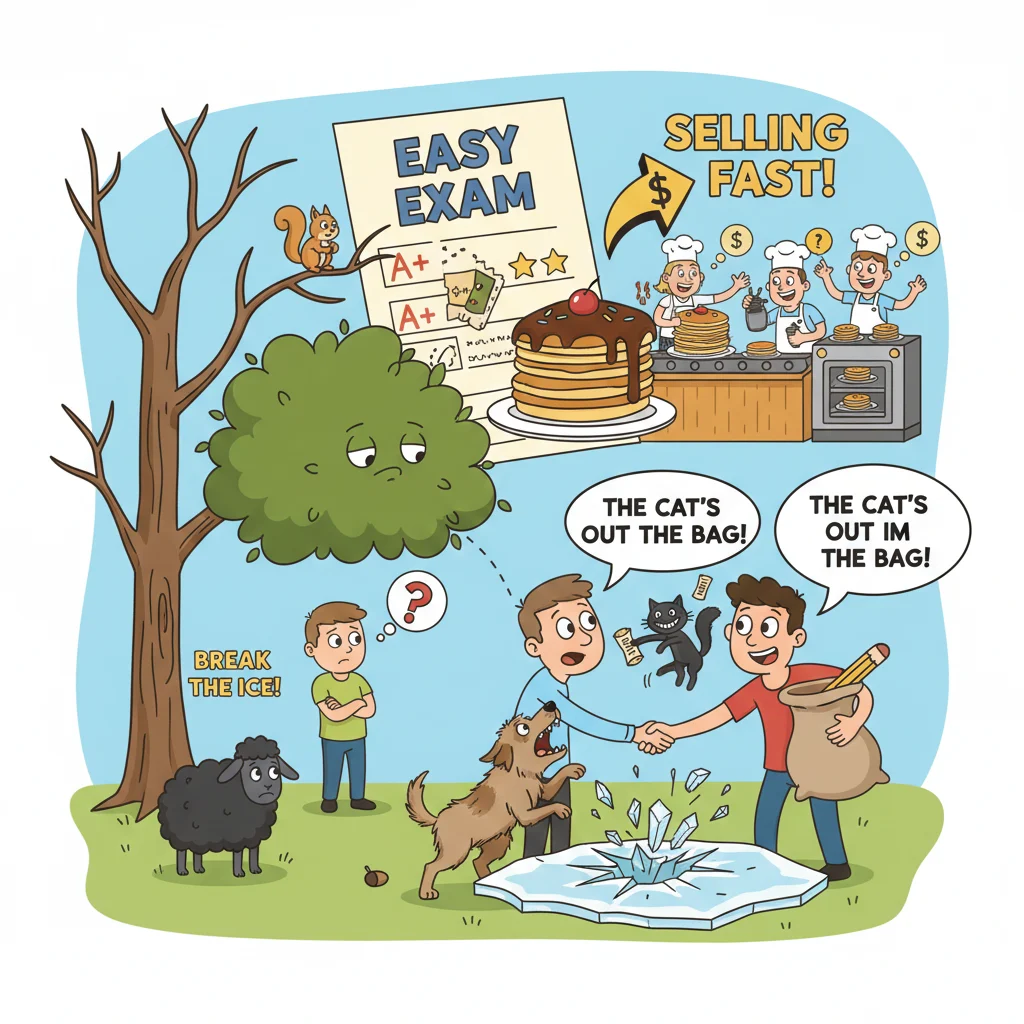
Break the Ice
Word-by-Word Meaning
Break – to smash or shatter
Ice – frozen water
Idiomatic/Figurative Meaning
To start a conversation or activity to reduce tension
Example Sentences
- At the party, John told a joke to break the ice.
Common Error
Incorrect: “I break the ice with the water.”
Usage Note
Use in social or professional settings when initiating interaction.
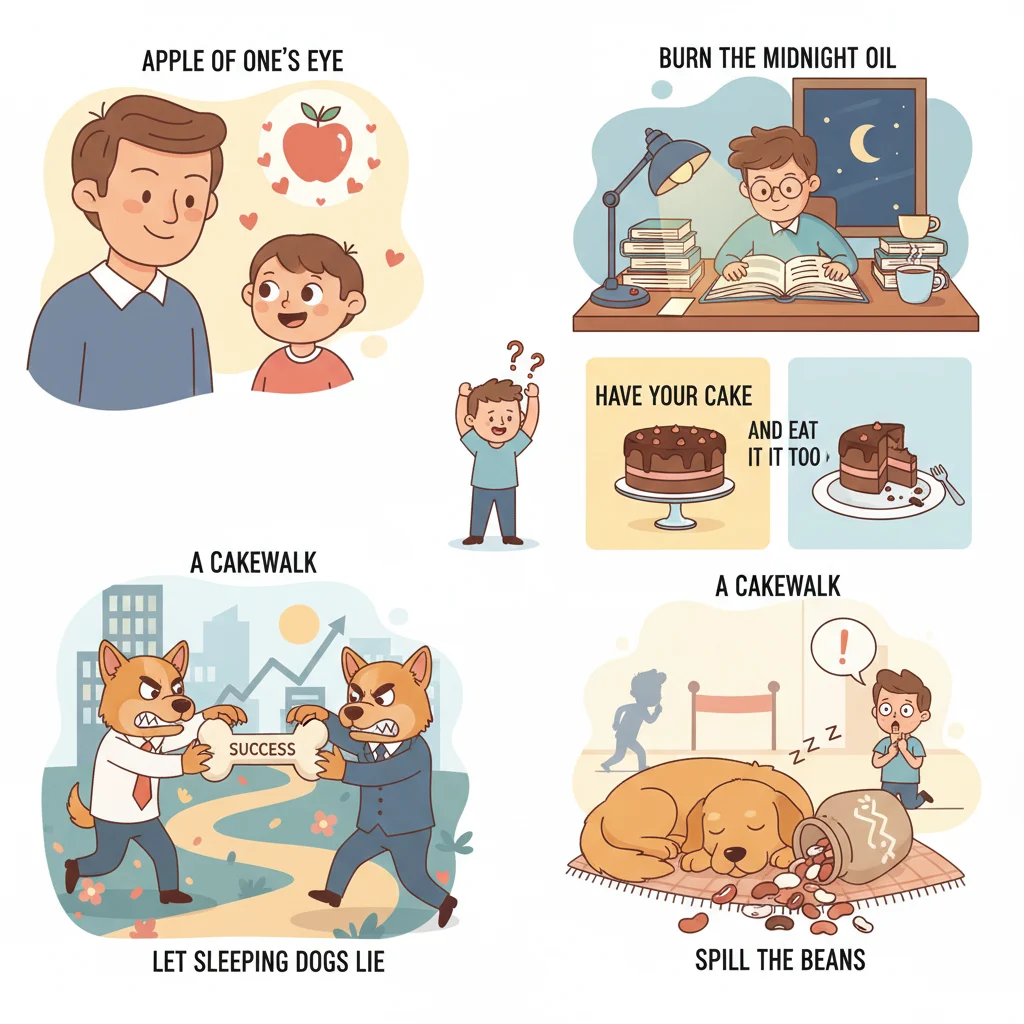
Spill the Beans
Word-by-Word Meaning
Spill – to accidentally pour out
Beans – edible seeds
Idiomatic/Figurative Meaning
To reveal a secret unintentionally or deliberately
Example Sentences
- Jane accidentally spilled the beans about the surprise party.
Common Error
Incorrect: “I spilled beans in the kitchen.” (literal meaning only)
Usage Note
Used when referring to sharing secrets or confidential information.
Hit the Nail on the Head
Word-by-Word Meaning
Hit – strike
Nail – metal fastener
Head – top part
Idiomatic/Figurative Meaning
To describe something accurately or find the exact solution
Example Sentences
- Your analysis hit the nail on the head.
Common Error
Incorrect: “Hit the head of a person.”
Usage Note
Used in business, teaching, or problem-solving contexts.
Let the Cat Out of the Bag
Word-by-Word Meaning
Let – allow
Cat – domestic animal
Out of the bag – release from a container
Idiomatic/Figurative Meaning
To accidentally reveal a secret
Example Sentences
- He let the cat out of the bag about the promotion.
Common Error
Incorrect: “Let the cat escape from the bag.”
Usage Note
Commonly used in informal conversation.
Bite the Bullet
Word-by-Word Meaning
Bite – use teeth to grip
Bullet – ammunition
Idiomatic/Figurative Meaning
To endure something painful or unpleasant with courage
Example Sentences
- I decided to bite the bullet and apologize.
Common Error
Incorrect: “Bite the bullet literally.”
Usage Note
Used in both personal and professional challenges.
A Piece of Cake
Word-by-Word Meaning
Piece – part
Cake – dessert
Idiomatic/Figurative Meaning
Something very easy to do
Example Sentences
- The test was a piece of cake.
Common Error
Incorrect: “I ate a piece of cake” (literal vs idiomatic)
Usage Note
Use for tasks that are simple or effortless.
Cost an Arm and a Leg
Word-by-Word Meaning
Cost – require payment
Arm and a leg – body parts
Idiomatic/Figurative Meaning
Something very expensive
Example Sentences
- That new phone costs an arm and a leg.
Common Error
Incorrect: “I literally gave my arm and leg.”
Usage Note
Use for expensive purchases or services.
Under the Weather
Word-by-Word Meaning
Under – beneath
Weather – atmospheric conditions
Idiomatic/Figurative Meaning
Feeling sick or unwell
Example Sentences
- I’m feeling under the weather today.
Common Error
Incorrect: “I am literally under the weather.”
Usage Note
Use casually when describing mild illness.
Burn the Midnight Oil
Word-by-Word Meaning
Burn – set fire
Midnight – 12 a.m.
Oil – fuel
Idiomatic/Figurative Meaning
Work late into the night
Example Sentences
- Students often burn the midnight oil before exams.
Common Error
Incorrect: “Burn oil at night literally.”
Usage Note
Common in academic or work contexts.
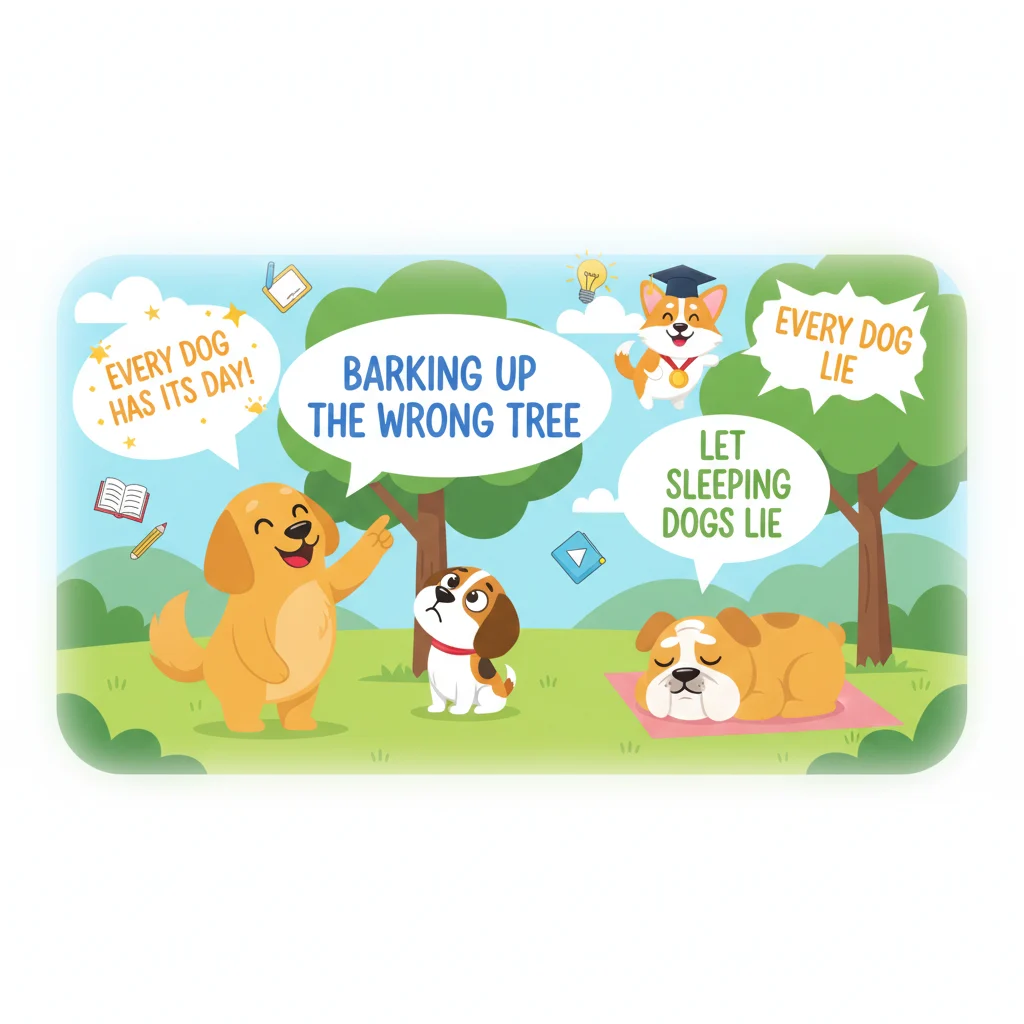
Barking Up the Wrong Tree
Word-by-Word Meaning
Barking – dog sound
Wrong tree – incorrect target
Idiomatic/Figurative Meaning
Accusing or blaming the wrong person
Example Sentences
- You’re barking up the wrong tree if you think I stole it.
Common Error
Incorrect: “Dog is literally barking at wrong tree.”
Usage Note
Use for misunderstandings or misdirected blame.
Cut to the Chase
Word-by-Word Meaning
Cut – to shorten or remove
Chase – pursuit
Idiomatic/Figurative Meaning
Get directly to the important point, skip unnecessary details
Example Sentences
- Let’s cut to the chase and discuss the budget.
Common Error
Incorrect: “Cut the tree in the chase.”
Usage Note
Used in business, meetings, or casual conversation to save time.
Hit the Sack
Word-by-Word Meaning
Hit – strike
Sack – bed or sleeping bag
Idiomatic/Figurative Meaning
Go to sleep
Example Sentences
- I’m exhausted; I’m going to hit the sack.
Common Error
Incorrect: “Hit the sack physically.”
Usage Note
Commonly used in informal or conversational English.
On Cloud Nine
Word-by-Word Meaning
Cloud – fluffy sky object
Nine – number
Idiomatic/Figurative Meaning
Extremely happy or joyful
Example Sentences
- She was on cloud nine after winning the competition.
Common Error
Incorrect: “Standing on cloud nine literally.”
Usage Note
Used to express high levels of happiness or success.
Once in a Blue Moon
Word-by-Word Meaning
Once – one time
Blue Moon – a rare moon occurrence
Idiomatic/Figurative Meaning
Something that happens very rarely
Example Sentences
- We go out for dinner once in a blue moon.
Common Error
Incorrect: “The moon turns blue literally.”
Usage Note
Used for rare events or occurrences.
Raining Cats and Dogs
Word-by-Word Meaning
Raining – falling water from clouds
Cats and Dogs – animals
Idiomatic/Figurative Meaning
Raining very heavily
Example Sentences
- Don’t forget your umbrella; it’s raining cats and dogs.
Common Error
Incorrect: “Animals are falling from the sky.”
Usage Note
Used in casual conversation to describe heavy rain.
The Ball is in Your Court
Word-by-Word Meaning
Ball – object in sports
Court – playing area
Idiomatic/Figurative Meaning
It’s your turn to make a decision or take action
Example Sentences
- I’ve given you all the information; now the ball is in your court.
Common Error
Incorrect: “Play the ball literally in the court.”
Usage Note
Used in business, negotiations, or personal decision-making contexts.
Throw in the Towel
Word-by-Word Meaning
Throw – toss
Towel – cloth for drying
Idiomatic/Figurative Meaning
Give up or surrender
Example Sentences
- After multiple failed attempts, he finally threw in the towel.
Common Error
Incorrect: “Throw a towel physically in anger.”
Usage Note
Commonly used in challenges, competitions, or personal struggles.
Break a Leg
Word-by-Word Meaning
Break – fracture
Leg – body part
Idiomatic/Figurative Meaning
Good luck (especially in performing arts)
Example Sentences
- Before the play, I told her to break a leg.
Common Error
Incorrect: “Actually break someone’s leg.”
Usage Note
Used in theater, exams, or any performance scenario.
Kick the Bucket
Word-by-Word Meaning
Kick – strike with foot
Bucket – container
Idiomatic/Figurative Meaning
To die
Example Sentences
- The old tree finally kicked the bucket.
Common Error
Incorrect: “Kick a bucket literally.”
Usage Note
Used humorously or informally to refer to death.
By the Skin of Your Teeth
Word-by-Word Meaning
Skin – outer layer
Teeth – body part
Idiomatic/Figurative Meaning
Barely, just managing to succeed
Example Sentences
- I passed the exam by the skin of my teeth.
Common Error
Incorrect: “Use teeth to measure skin.”
Usage Note
Used in situations of narrow escape or minimal success.
FAQs
Q1: Why do idioms have strange literal meanings?
Idioms often come from historical events, literature, or culture. Their literal words don’t always explain the figurative meaning.
Q2: How can I remember idioms easily?
Use them in daily conversations, associate them with stories, or make visual flashcards.
Q3: Can idioms be used in formal writing?
Some idioms are acceptable in professional writing, but casual idioms are better suited for spoken English.
Q4: Do all idioms exist in every language?
No. Idioms are culture-specific, though some have equivalents in other languages.
Q5: Can I translate idioms word-for-word?
Avoid literal translation; it usually changes the meaning. Always find the culturally equivalent idiom.
Conclusion
Mastering idioms not only boosts your English fluency but also makes your speech lively and memorable. Start using one new idiom every day, practice in conversation, and soon you’ll naturally impress with your colorful language. Remember, understanding the origins of phrases and idioms helps you use them confidently—and even share the stories behind them.

“L.P. Hartley brings classic idioms to life on LearnIdom.com, helping readers explore language with wit, clarity, and timeless insight.”