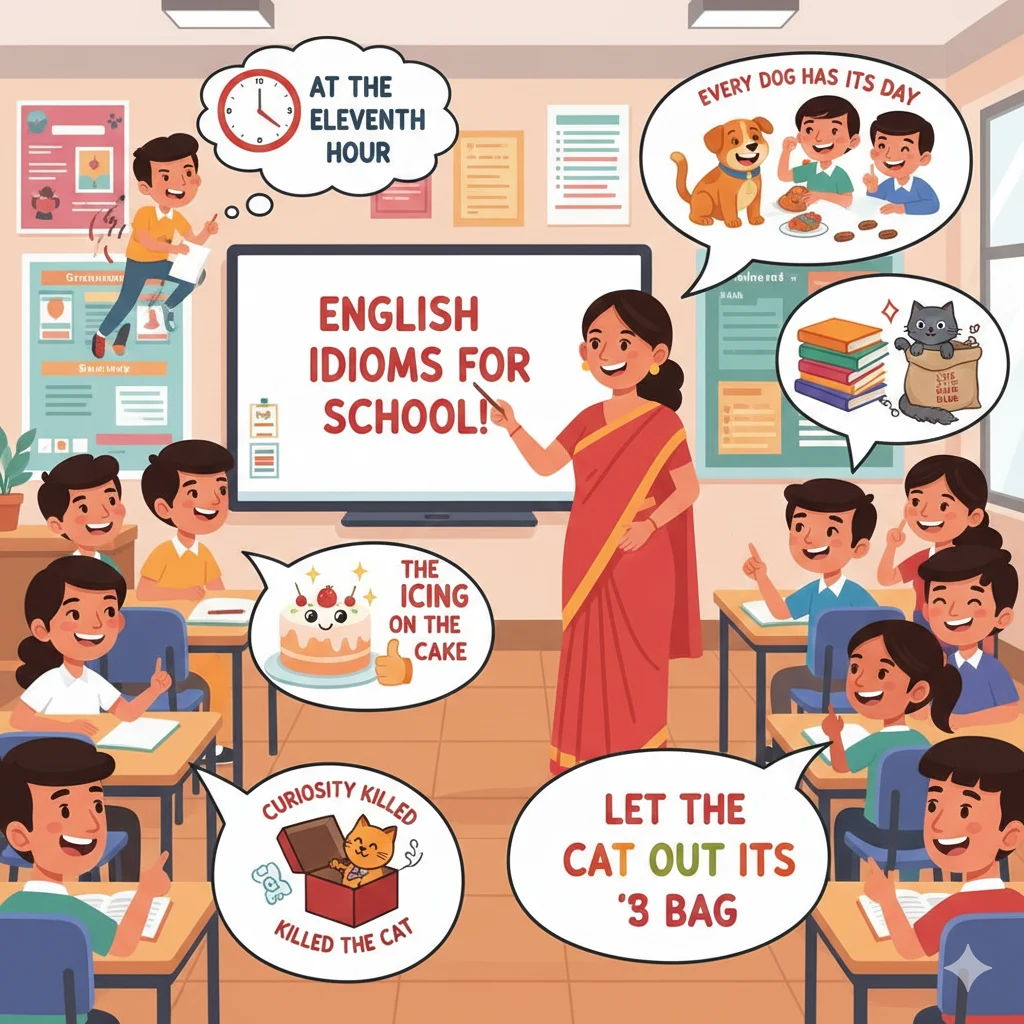
Learning English can be tricky, but idioms make it fun, especially for students navigating school life. Idioms for school are phrases that don’t always make literal sense but are used daily by teachers, classmates, and in exams.
Imagine hearing, “He’s burning the midnight oil” before a big test—you might wonder if someone is literally on fire! That’s the magic of idioms: they express ideas vividly. By mastering these idioms, you can understand conversations better, sound more natural, and even impress your teachers.
Whether you’re talking about exams, homework, or classroom experiences, these idioms fit perfectly. In this article, we’ll explore 20 famous school-related idioms, their meanings, examples, common mistakes, and usage tips. Get ready to make your English lively, memorable, and classroom-ready!
Burn the Midnight Oil
Word-by-Word Meaning
Burn + midnight + oil = literally staying up late with a lamp or light.
Idiomatic/ Figurative Meaning
To work or study late into the night.
Example Sentences
- She burned the midnight oil to finish her science project.
- I had to burn the midnight oil for the math test.

Common Error
Avoid saying “burn the midnight candle,” which is incorrect.
Usage Note
Commonly used for students or professionals working hard late at night.
Hit the Books
Word-by-Word Meaning
Hit + books = literally striking books.
Idiomatic/ Figurative Meaning
To study hard or seriously.
Example Sentences
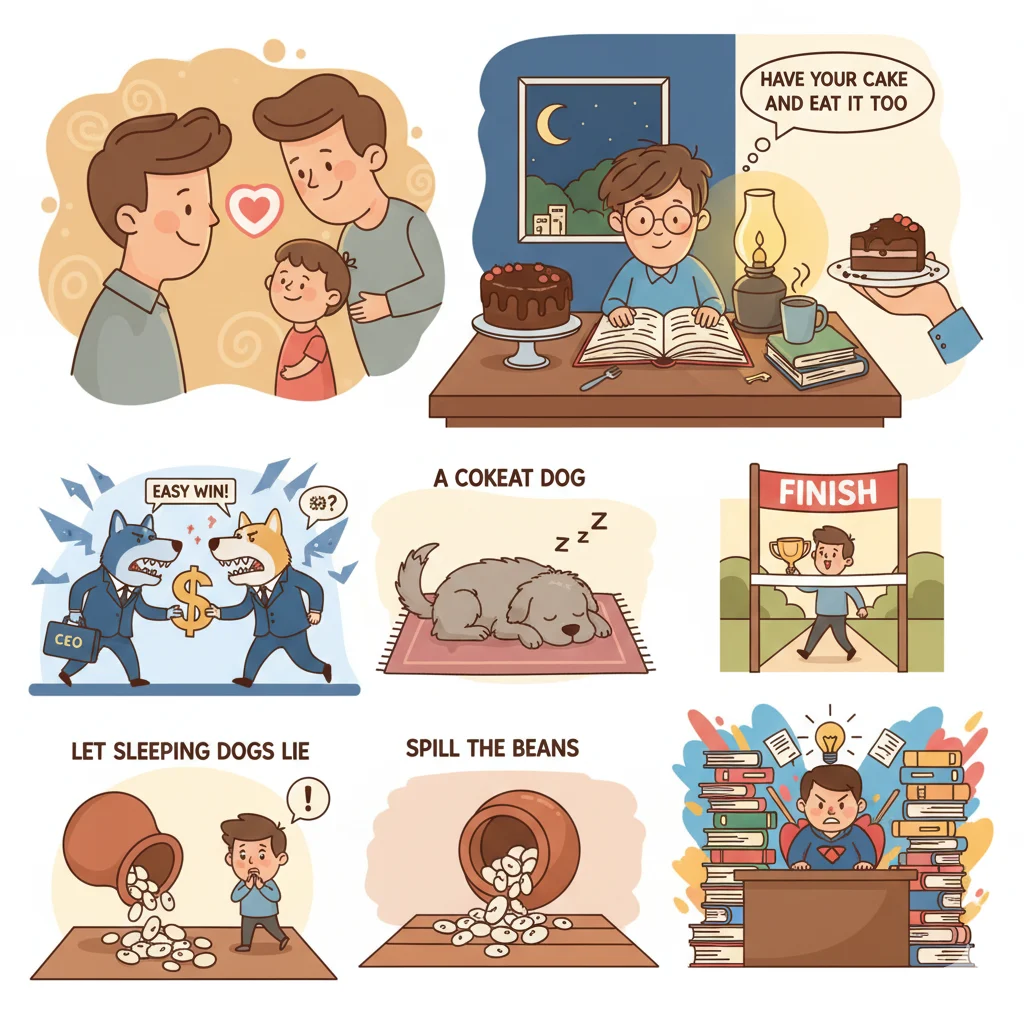
- Exams are next week; it’s time to hit the books.
- I hit the books for three hours last night.
Common Error
Do not use “hit the library” in place of this idiom.
Usage Note
Often used in casual conversations among students.
Pass with Flying Colors
Word-by-Word Meaning
Pass + flying colors = literally passing with flags or banners.
Idiomatic/ Figurative Meaning
To succeed easily and impressively.
Example Sentences
- She passed her final exams with flying colors.
- Our team won the quiz competition with flying colors.
Common Error
Do not say “pass with colors” only; the full idiom is required.
Usage Note
Typically used for tests, competitions, or achievements.
Learn by Heart
Word-by-Word Meaning
Learn + by heart = memorize completely.
Idiomatic/ Figurative Meaning
To memorize something thoroughly.
Example Sentences
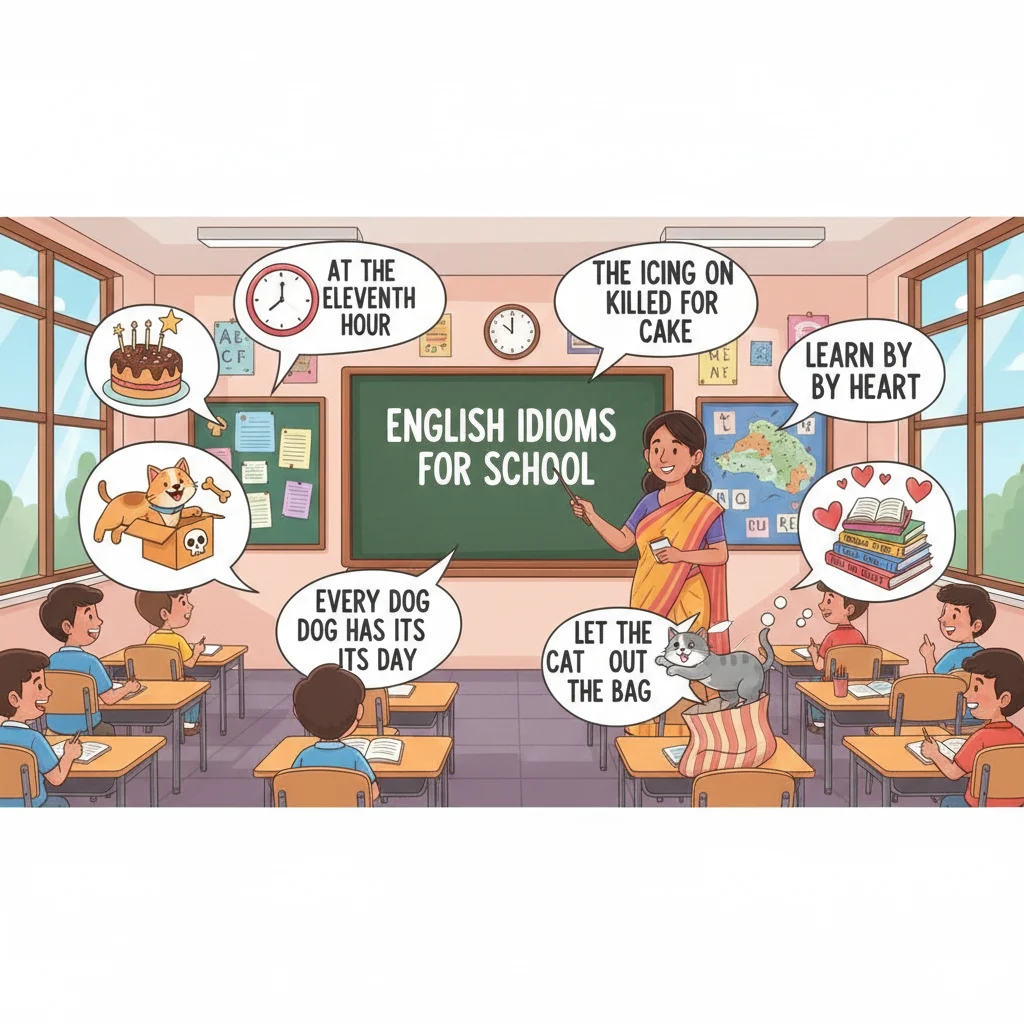
- I learned the poem by heart for the recital.
- You should learn the formulas by heart for math exams.
Common Error
Avoid saying “learn in heart,” which is incorrect.
Usage Note
Often used for memorization tasks, poems, or key facts.
Make the Grade
Word-by-Word Meaning
Make + grade = achieve a certain level.
Idiomatic/ Figurative Meaning
To meet expectations or succeed.
Example Sentences
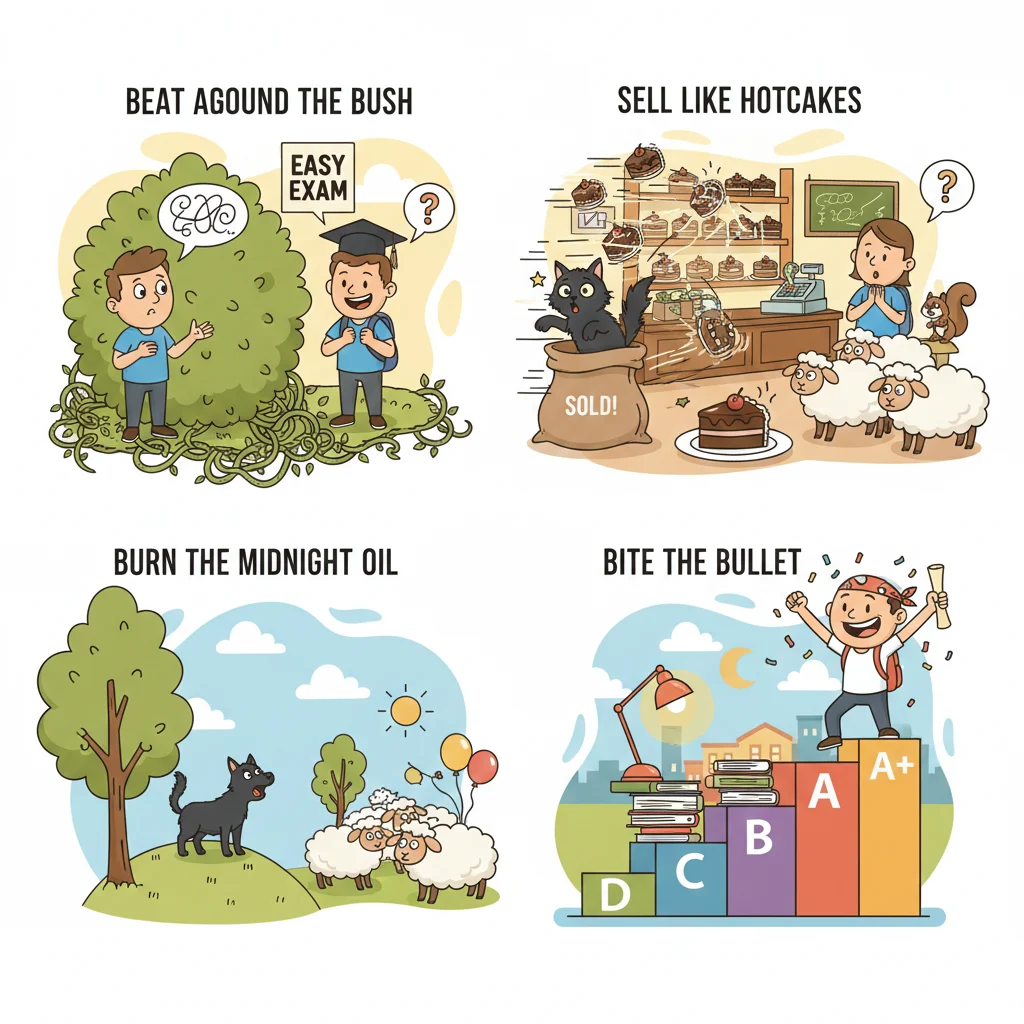
- She worked hard and finally made the grade.
- Only a few students made the grade in the advanced math class.
Common Error
Do not confuse with “get the grade” in formal writing.
Usage Note
Used for academic or performance success.
Ace a Test
Word-by-Word Meaning
Ace + test = get an excellent score.
Idiomatic/ Figurative Meaning
To do extremely well in a test or exam.
Example Sentences
- He aced the chemistry test effortlessly.
- If you study regularly, you can ace your exams too.
Common Error
Avoid using “win a test” as it sounds unnatural.
Usage Note
Common in spoken English and informal writing.
Cut Class
Word-by-Word Meaning
Cut + class = skip a lesson.
Idiomatic/ Figurative Meaning
To skip school or a specific class without permission.
Example Sentences
- He often cuts class to play football.
- Don’t cut class; you’ll miss important lessons.
Common Error
Do not say “miss school” as it has a broader meaning.
Usage Note
Used mainly by students in informal conversation.
Hit the Sack
Word-by-Word Meaning
Hit + sack = go to bed.
Idiomatic/ Figurative Meaning
To go to sleep, especially after studying.
Example Sentences
- I’m exhausted; time to hit the sack.
- After finishing homework, she hit the sack immediately.
Common Error
Avoid saying “hit the pillow” as a formal alternative.
Usage Note
Informal, casual expression; common among teens.
Cut and Dried
Word-by-Word Meaning
Cut + dried = literally pre-cut and dried.
Idiomatic/ Figurative Meaning
Something very clear, straightforward, or decided.
Example Sentences
- The rules for the competition are cut and dried.
- There’s no argument; the answer is cut and dried.
Common Error
Do not use “cut and dryed” (spelling mistake).
Usage Note
Used for decisions, rules, or instructions.
On the Ball
Word-by-Word Meaning
On + ball = literally balanced on a ball.
Idiomatic/ Figurative Meaning
To be alert, quick, or competent.
Example Sentences
- She’s on the ball and finished the project early.
- Teachers appreciate students who are on the ball.
Common Error
Avoid using “in the ball” instead.
Usage Note
Used in both school and workplace contexts.
Goof Off
Word-by-Word Meaning
Goof + off = literally do nothing or play around.
Idiomatic/ Figurative Meaning
To waste time instead of studying or working.
Example Sentences
- Stop goofing off and finish your homework!
- Some students goof off during free periods instead of revising.
Common Error
Do not say “goof away” – incorrect usage.
Usage Note
Informal, used mostly in casual conversations among students.
Hit the Nail on the Head
Word-by-Word Meaning
Hit + nail + head = strike a nail accurately.
Idiomatic/ Figurative Meaning
To describe exactly what is causing a situation or problem.
Example Sentences
- Your answer hit the nail on the head! That’s exactly why we failed the test.
- She hit the nail on the head when she explained why the experiment didn’t work.
Common Error
Do not say “hit the head of the nail” – unnatural.
Usage Note
Can be used for explaining mistakes, problems, or insights.
Sit on the Fence
Word-by-Word Meaning
Sit + on + fence = literally sitting on a fence.
Idiomatic/ Figurative Meaning
To avoid making a decision or choosing sides.
Example Sentences
- Don’t sit on the fence; decide which group project to join.
- He’s sitting on the fence about joining the debate team.
Common Error
Do not confuse with “stand on the fence.”
Usage Note
Useful when discussing choices or opinions in class.
Put on Your Thinking Cap
Word-by-Word Meaning
Put + thinking + cap = wear a cap for thinking.
Idiomatic/ Figurative Meaning
To think seriously or creatively about a problem.
Example Sentences
- Put on your thinking cap; we need a solution for the science fair.
- She put on her thinking cap and solved the tricky puzzle.
Common Error
Do not say “wear your brain hat” – it’s incorrect.
Usage Note
Fun, motivating idiom to encourage problem-solving.
Learn the Ropes
Word-by-Word Meaning
Learn + ropes = understand how ropes work.
Idiomatic/ Figurative Meaning
To understand the basics of a new activity or job.
Example Sentences
- It took me a week to learn the ropes in my new art class.
- New students need time to learn the ropes before the exams.
Common Error
Do not say “know the ropes” in the context of learning for the first time; that’s for already experienced people.
Usage Note
Commonly used for beginners learning a system, class, or activity.
Drop Out
Word-by-Word Meaning
Drop + out = leave something.
Idiomatic/ Figurative Meaning
To leave school or a course before finishing.
Example Sentences
- He dropped out of college to start his own business.
- Don’t drop out just because the subject is hard.
Common Error
Do not say “quit school” in formal writing; “drop out” is standard idiomatic expression.
Usage Note
Used for school, college, or courses.
Brainstorm
Word-by-Word Meaning
Brain + storm = storm in the brain.
Idiomatic/ Figurative Meaning
To think of many ideas quickly.
Example Sentences
- Let’s brainstorm ideas for the class project.
- The team brainstormed solutions for the science competition.
Common Error
Do not confuse with “think storm,” which is not used.
Usage Note
Commonly used in classrooms, group work, and projects.
Learn the Hard Way
Word-by-Word Meaning
Learn + hard + way = learn by difficult experiences.
Idiomatic/ Figurative Meaning
To learn something through mistakes or difficulties.
Example Sentences
- I learned the hard way that procrastinating ruins exam results.
- He learned the hard way not to leave homework until the last minute.
Common Error
Avoid saying “learn by the hard way” – incorrect structure.
Usage Note
Used for life lessons or school-related challenges.
Keep One’s Nose to the Grindstone
Word-by-Word Meaning
Keep + nose + grindstone = literally press nose to stone.
Idiomatic/ Figurative Meaning
To work hard and stay focused.
Example Sentences
- Keep your nose to the grindstone if you want to ace the exams.
- She kept her nose to the grindstone and improved her grades.
Common Error
Do not shorten to “nose to grindstone” in formal sentences without “keep one’s.”
Usage Note
Used for emphasizing diligence in studying or work.
Hit the Road
Word-by-Word Meaning
Hit + road = literally start a journey.
Idiomatic/ Figurative Meaning
To leave or start a journey.
Example Sentences
- It’s late; we should hit the road to get home before dark.
- After the school trip, the students hit the road back to the city.
Common Error
Do not confuse with “road hit” – meaningless.
Usage Note
Informal; also used for starting any journey, not just school trips.
FAQs
Q1: What are idioms for school?
A: Idioms for school are phrases commonly used by students and teachers that express school-related actions or experiences figuratively.
Q2: Why should I learn school idioms?
A: They make your English sound natural, improve comprehension, and help in exams and classroom conversations.
Q3: Can idioms be used in essays?
A: Yes, but use them sparingly and only when they fit the context to maintain formality.
Q4: How can I remember idioms easily?
A: Practice with flashcards, write sentences, or use them in conversations with friends.
Q5: Are school idioms the same worldwide?
A: Not always. Some idioms may vary by country, but many common ones are understood globally.
Conclusion
Mastering idioms for school adds color and clarity to your English. Start by practicing 2–3 idioms daily, use them in conversations, and gradually, they’ll become second nature. With these 20 idioms, you can express ideas vividly, impress teachers, and feel confident in class discussions. Remember, language learning is fun when you make it part of your daily school life!

“Wilkie Collins brings classic idioms to life on LearnIdom.com, making language learning engaging, memorable, and full of literary charm.”