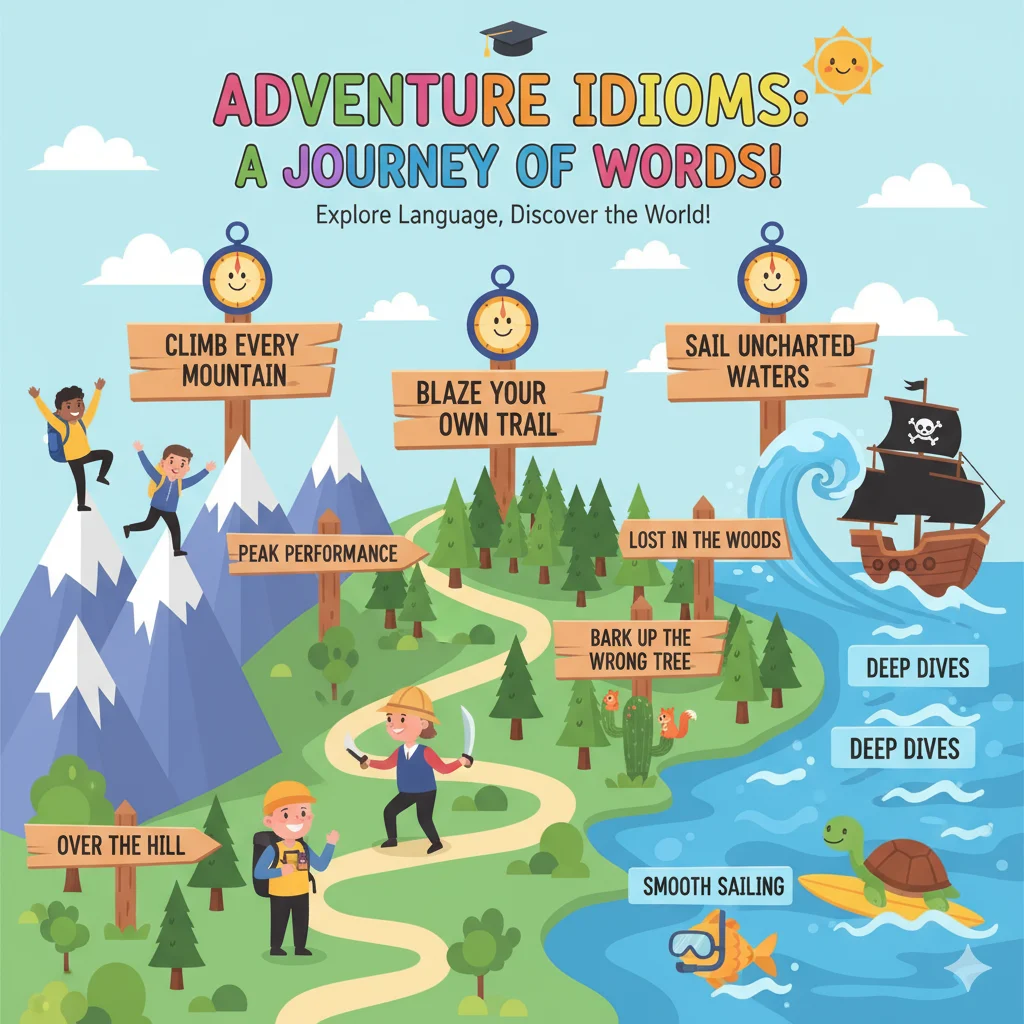
Adventure-related idioms are colorful English expressions used to describe exciting experiences, challenges, risks, exploration, courage, and new opportunities. These adventure idioms make everyday English more expressive and are commonly found in conversations, stories, travel writing, movies, and motivational content.
Popular examples include “go on an adventure,” “take the plunge,” “go off the beaten path,” “test the waters,” and “break new ground.” Learning adventure-related idioms with meanings and examples can expand your vocabulary, improve your understanding of figurative language, and help you communicate more naturally.
Whether you’re a student, teacher, traveler, writer, or English learner, this guide explores useful English idioms about adventure, with simple meanings, practical examples, and everyday usage to make these expressions easier to understand and remember.
Take the Plunge
Word-by-word meaning
- Take = to do something
- Plunge = jump into water
Idiomatic Meaning
To make a bold decision or start something risky or exciting.
Example Sentences
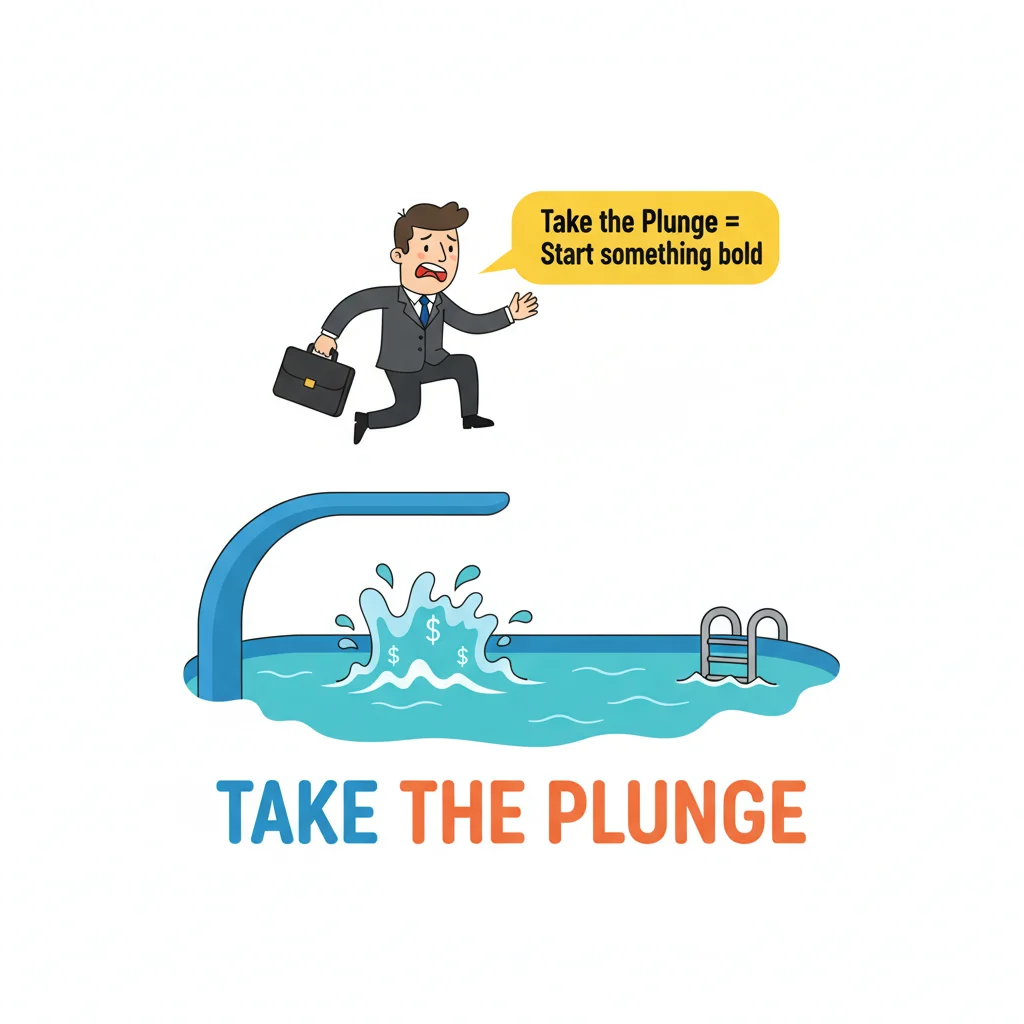
- After years of planning, she finally took the plunge and started her own business.
- I was nervous about traveling alone, but I took the plunge.
Common Error
❌ Take a plunge into decision
✔ Correct: Take the plunge
Usage Note
Often used when someone decides to try something new despite fear.
Off the Beaten Path
Word-by-word meaning
- Beaten path = commonly used route
Idiomatic Meaning
A place that is not crowded or commonly visited.
Example Sentences
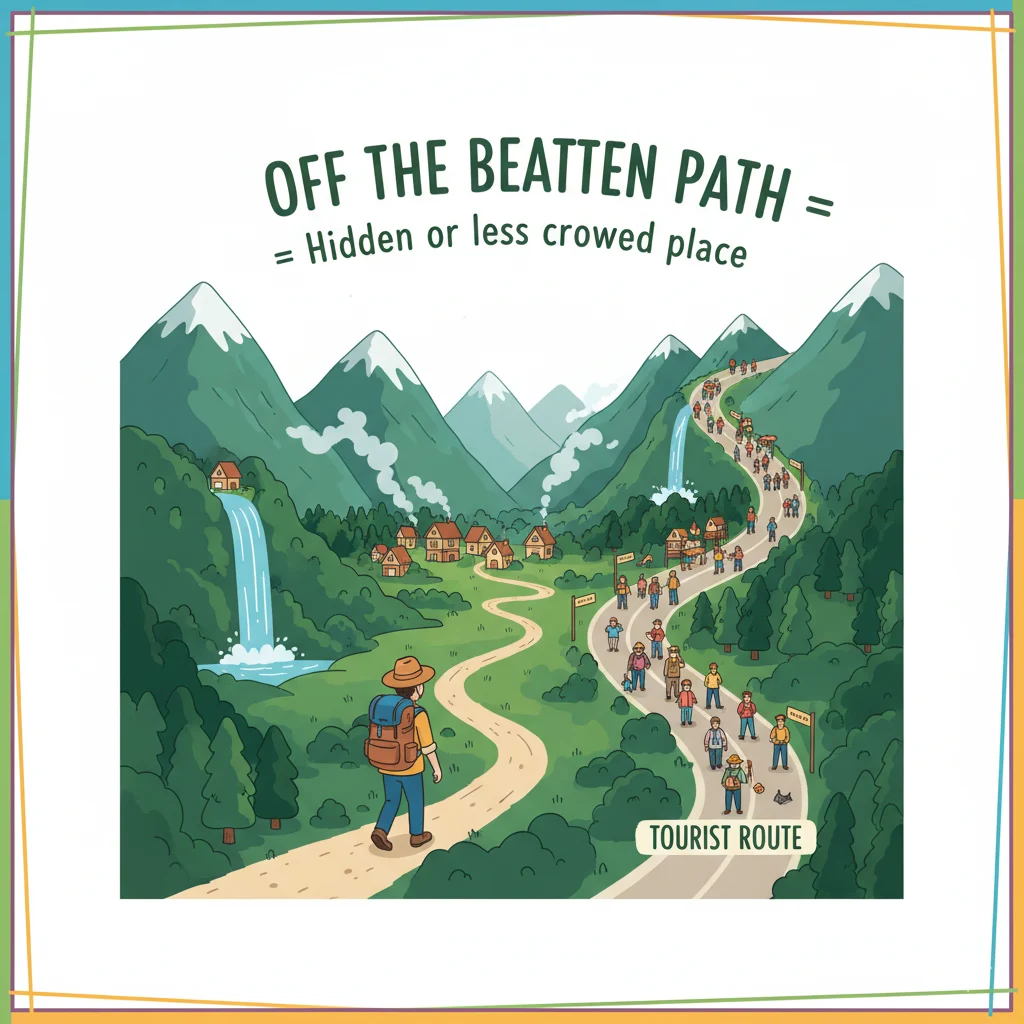
- We discovered a beautiful village off the beaten path.
- Travelers often look for destinations off the beaten path.
Common Error
❌ Off the beating path
Usage Note
Mostly used in travel conversations.
Go Out on a Limb
Word-by-word meaning
- Limb = branch of a tree
Idiomatic Meaning
To take a risk or support an uncertain idea.
Example Sentences
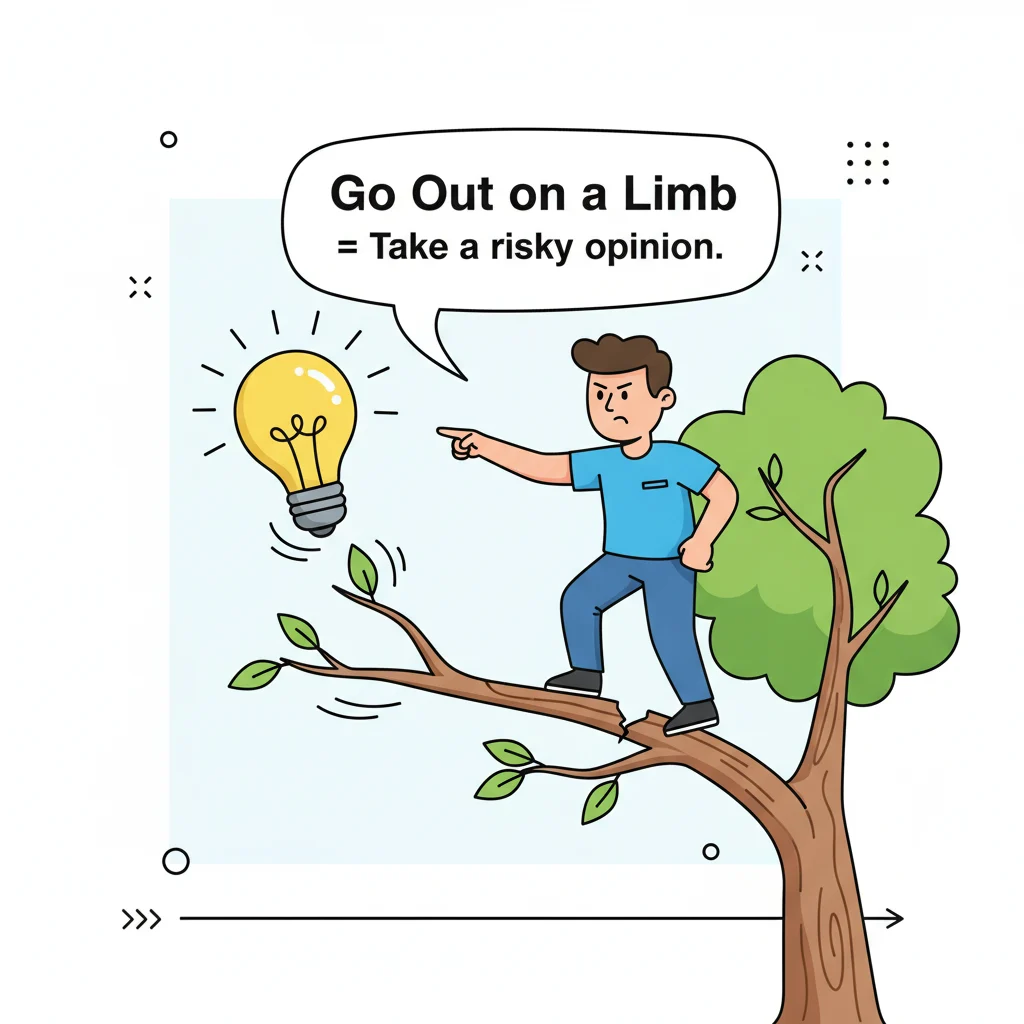
- I’ll go out on a limb and say this trip will change your life.
Common Error
❌ Go on a limb
Usage Note
Often used when expressing a risky opinion.
Dive Right In
Word-by-word meaning
- Dive = jump into water
Idiomatic Meaning
To start something immediately with enthusiasm.
Example Sentences
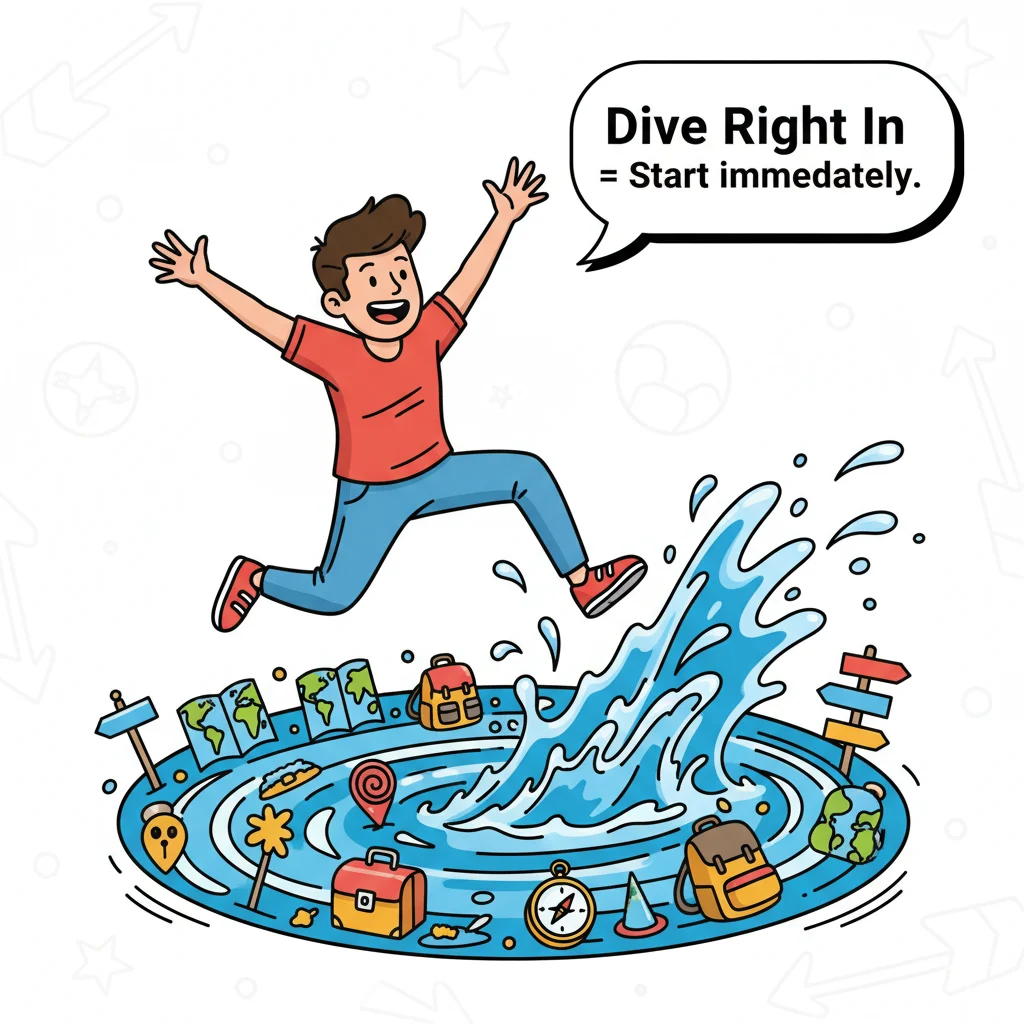
- Instead of waiting, he dived right in and started exploring.
Common Error
❌ Dive in right
Usage Note
Used when someone begins an adventure without hesitation.
Throw Caution to the Wind
Word-by-word meaning
- Caution = carefulness
- Wind = air movement
Idiomatic Meaning
To take a risk without worrying about consequences.
Example Sentences
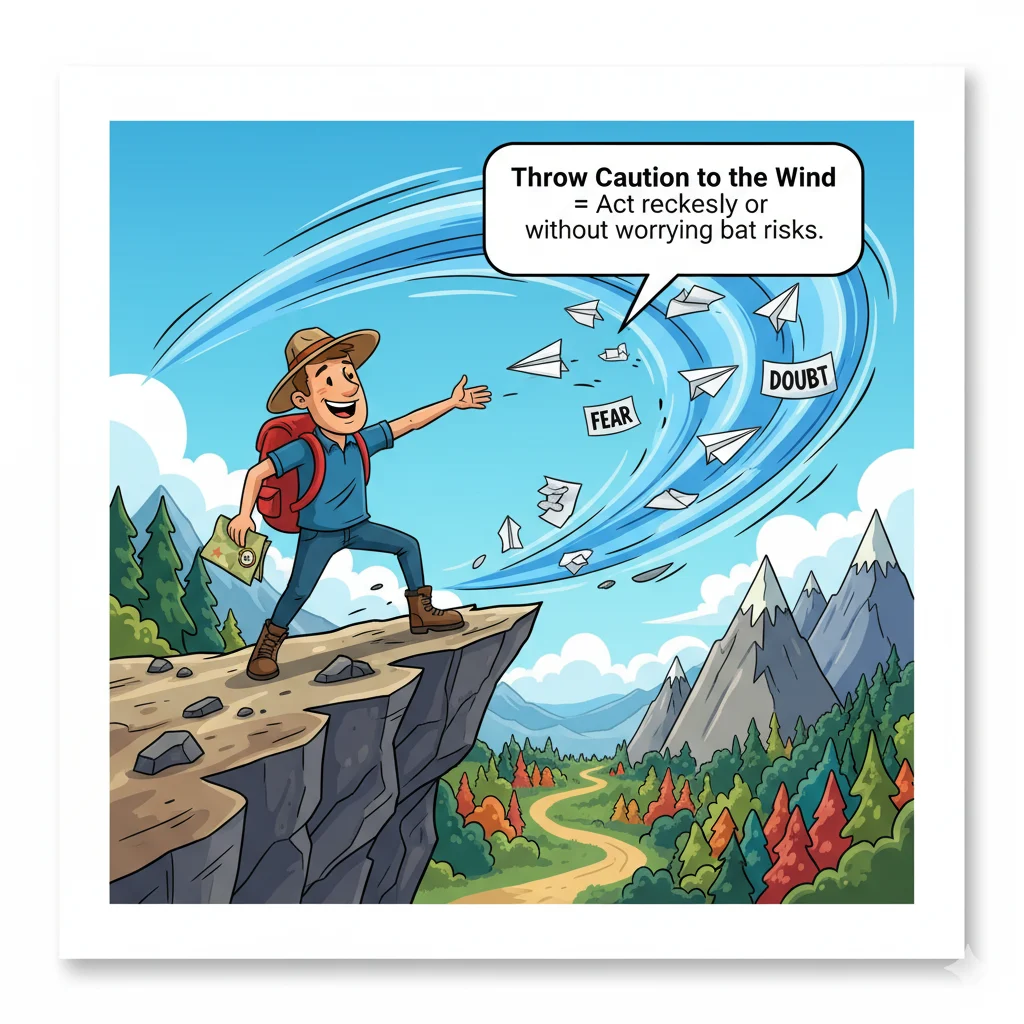
- They threw caution to the wind and backpacked across Europe.
Common Error
❌ Throw caution in wind
Usage Note
Often used when someone ignores fear.
Blaze a Trail
Word-by-word meaning
- Blaze = mark a path
- Trail = pathway
Idiomatic Meaning
To create a new path or do something innovative.
Example Sentences
- She blazed a trail by traveling solo across Asia.
Common Error
❌ Make a blaze trail
Usage Note
Common in exploration and career discussions.
Jump Ship
Word-by-word meaning
- Jump = leap
- Ship = boat
Idiomatic Meaning
To leave something suddenly for a new opportunity.
Example Sentences
- He jumped ship and moved abroad.
Common Error
❌ Jump from ship
Usage Note
Often used for changing jobs or plans.
The Road Less Traveled
Word-by-word meaning
A path few people choose.
Idiomatic Meaning
Choosing a unique or unconventional life path.
Example Sentences
- She chose the road less traveled and became a wildlife photographer.
Usage Note
Inspired by Robert Frost’s famous poem.
Take the Road Less Traveled
Word-by-word meaning
Choose a less popular road.
Idiomatic Meaning
To follow a unique life direction.
Example Sentences
- Entrepreneurs often take the road less traveled.
Go the Extra Mile
Word-by-word meaning
Travel an additional mile.
Idiomatic Meaning
To put in extra effort.
Example Sentences
- Adventurers always go the extra mile.
Hit the Road
Word-by-word meaning
Start moving on the road.
Idiomatic Meaning
To begin a journey.
Example Sentences
- We woke up early and hit the road.
Break New Ground
Word-by-word meaning
Dig new land.
Idiomatic Meaning
To try something completely new.
Example Sentences
- The expedition broke new ground.
Test the Waters
Word-by-word meaning
Check water before entering.
Idiomatic Meaning
Try something cautiously first.
Example Sentences
- She tested the waters with a short trip.
Push the Envelope
Word-by-word meaning
Extend limits.
Idiomatic Meaning
To go beyond normal limits.
Example Sentences
- Extreme travelers love to push the envelope.
Step Into the Unknown
Word-by-word meaning
Enter unfamiliar territory.
Idiomatic Meaning
Start something unpredictable.
Example Sentences
- Moving abroad felt like stepping into the unknown.
Take a Leap of Faith
Word-by-word meaning
Jump with belief.
Idiomatic Meaning
Trust something without certainty.
Example Sentences
- She took a leap of faith and started traveling.
Set Sail
Word-by-word meaning
Begin sailing.
Idiomatic Meaning
Start a new journey.
Example Sentences
- They set sail on a year-long adventure.
Go Where the Wind Takes You
Word-by-word meaning
Let wind decide direction.
Idiomatic Meaning
Live freely and explore.
Example Sentences
- He loves to go where the wind takes him.
Chart Your Own Course
Word-by-word meaning
Plan your own route.
Idiomatic Meaning
Make independent life decisions.
Example Sentences
- She charted her own course in life.
Take the Scenic Route
Word-by-word meaning
Choose a beautiful route.
Idiomatic Meaning
Enjoy the journey rather than rushing.
Example Sentences
- We took the scenic route through the mountains.
| Idiom | Meaning |
|---|---|
| Take the plunge | Start something risky |
| Off the beaten path | Uncommon place |
| Go out on a limb | Take a risk |
| Dive right in | Start immediately |
| Throw caution to the wind | Ignore fear |
FAQs About Idioms About Adventure
What are adventure idioms?
Adventure idioms are expressions used to describe risk-taking, exploration, and exciting life experiences.
Why are idioms important in English?
Idioms make speech more natural and expressive, helping learners sound like native speakers.
How can I learn idioms faster?
Practice them in sentences, watch English movies, and use them in conversations.
Are idioms used in everyday conversation?
Yes. Native speakers frequently use idioms in casual speech and storytelling.
Can idioms have multiple meanings?
Some idioms can vary slightly depending on context.
Conclusion
Learning idioms about adventure not only improves your English vocabulary but also helps you express emotions, courage, and excitement more naturally.
The next time you start a new journey — whether traveling, learning a skill, or making a big life decision — try using one of these idioms in conversation.
Who knows? Maybe you’ll take the plunge, hit the road, and discover your own adventure along the way.
Start practicing today and make your English sound more natural and engaging.

“Rose Macaulay shares the charm of idioms on LearnIdom.com, making language learning delightful, insightful, and full of wit for every reader.”