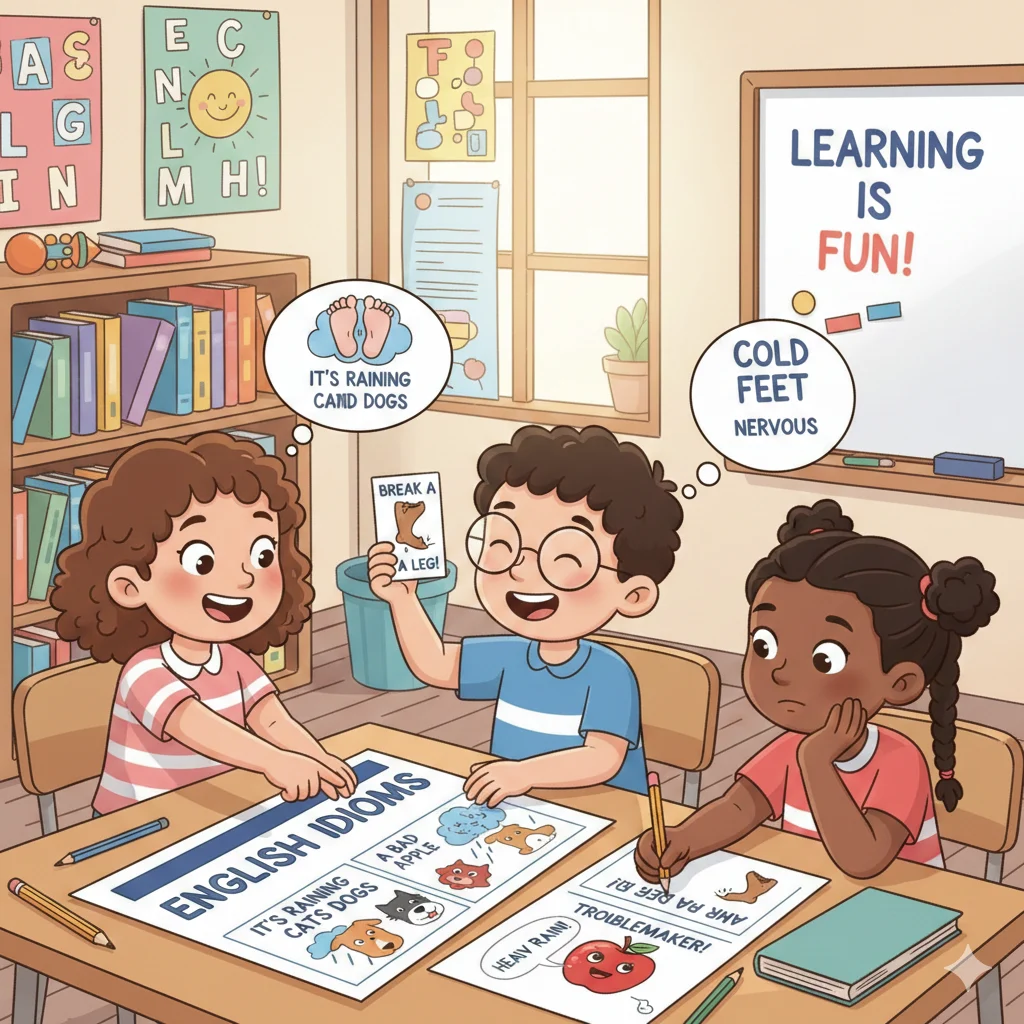
Learning idioms can feel confusing at first—why does “spill the beans” have nothing to do with food? This worksheet on idioms breaks down 20 of the most common English idioms with clear meanings, examples, and usage tips to help you sound more natural and confident in English.
Whether you’re a student, teacher, or self-learner, this guide works like a ready-made idioms worksheet you can study, practice, or even turn into classroom activities.
What Is an Idiom? (Quick Refresher)
An idiom is a fixed expression whose meaning is different from the literal meaning of its individual words.
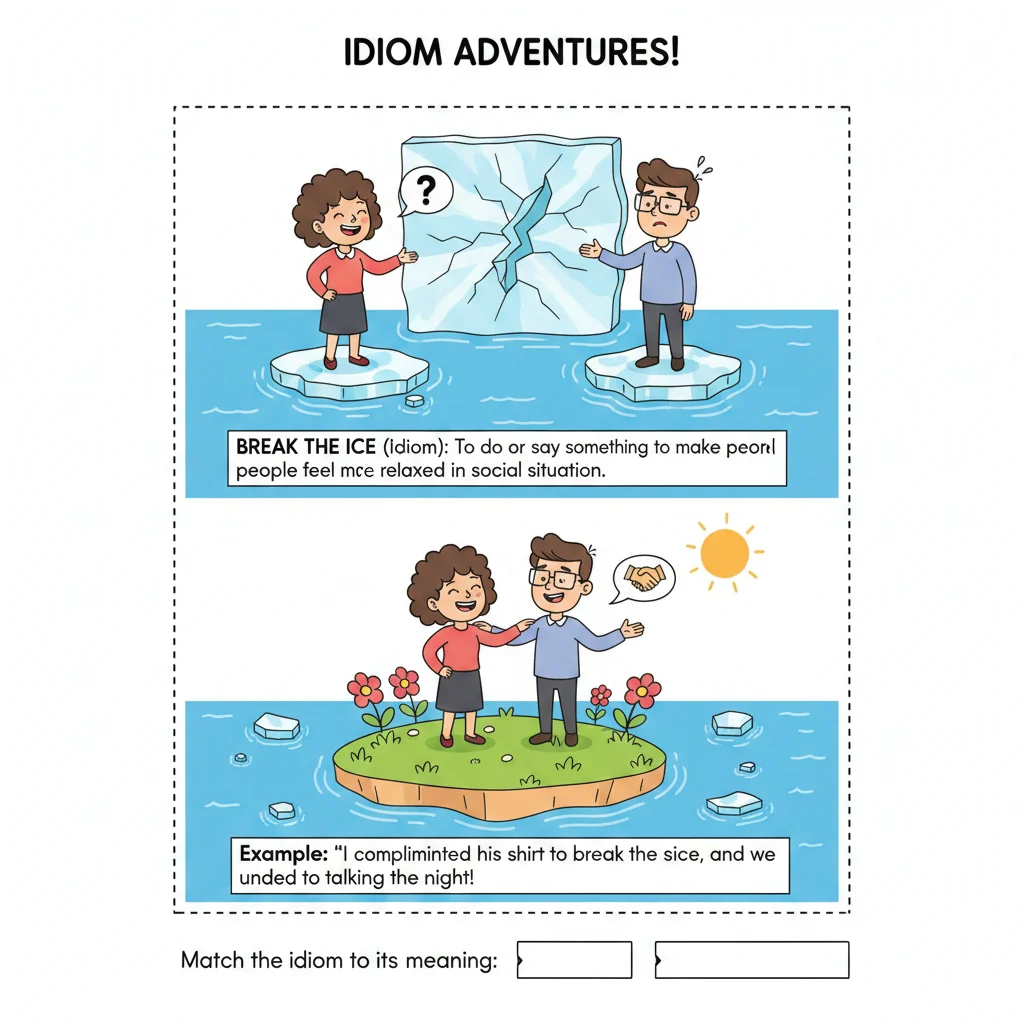
Example:
- “Break the ice” does not mean breaking actual ice.
- It means starting a conversation in a friendly way.
Each idiom below is structured like a worksheet on idioms, making it easy to study or teach.
Break the Ice
Word-by-word meaning: Break + ice
Idiomatic meaning: To start a conversation or reduce tension
Example sentence:
- I told a joke to break the ice at the meeting.
Common error: Using it for physical ice
Usage note: Often used in social or professional settings
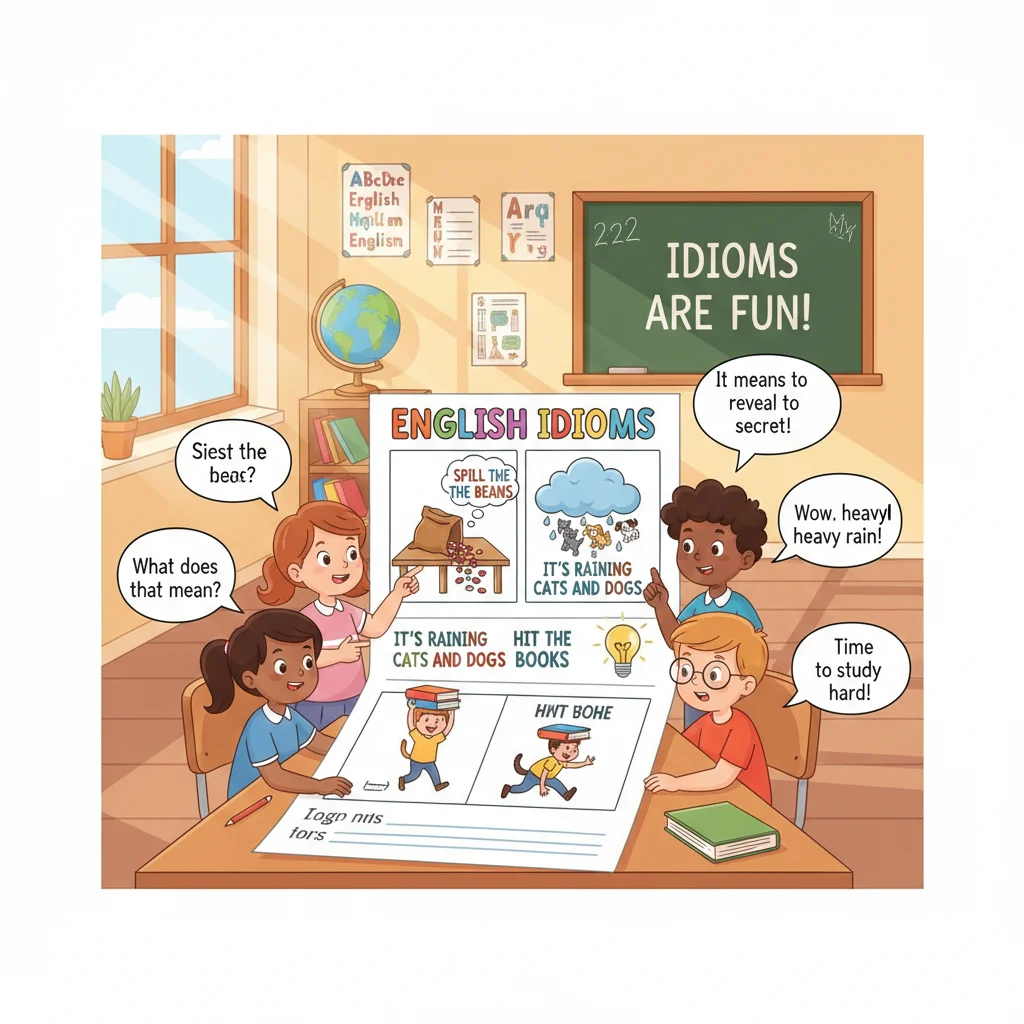
Spill the Beans
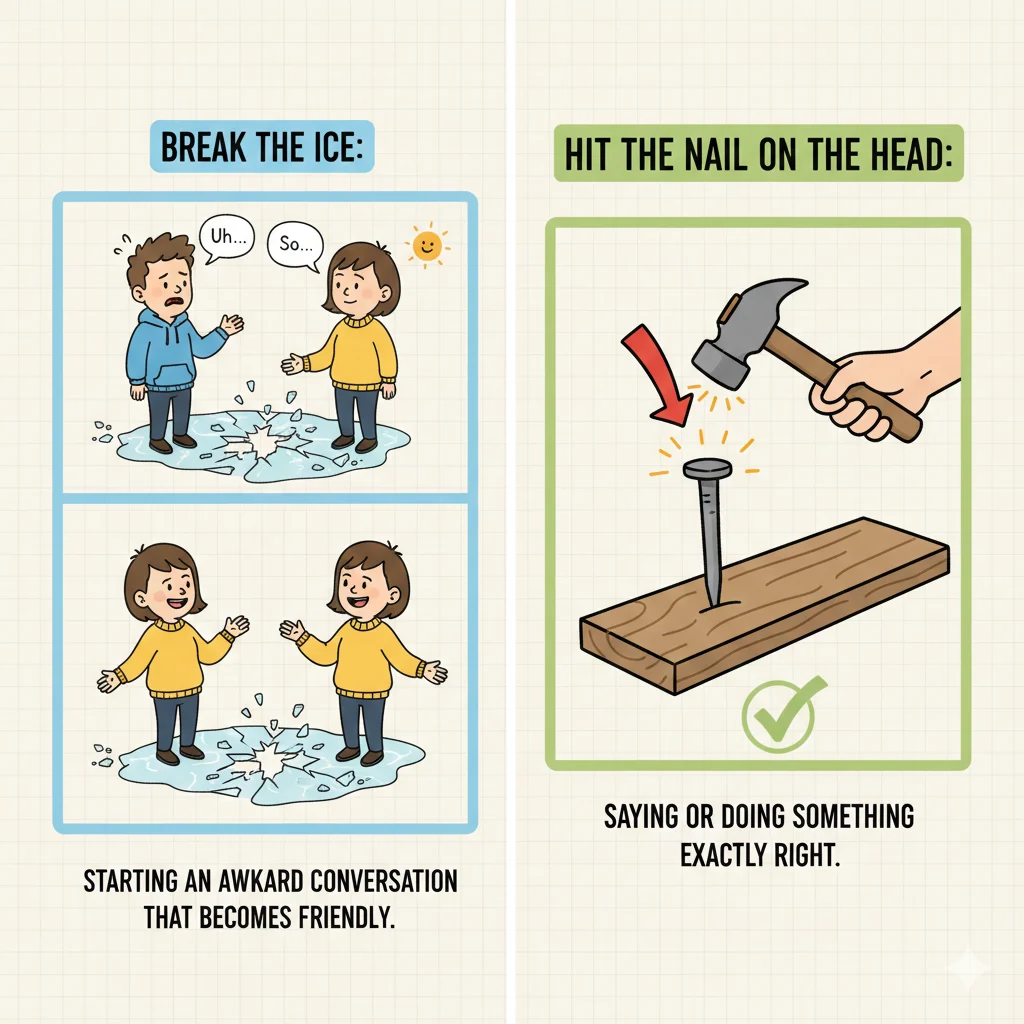
Word-by-word meaning: Spill + beans
Idiomatic meaning: Reveal a secret
Example sentence:
- He spilled the beans about the surprise party.
Common error: Using it for accidents
Usage note: Informal conversation
Hit the Nail on the Head
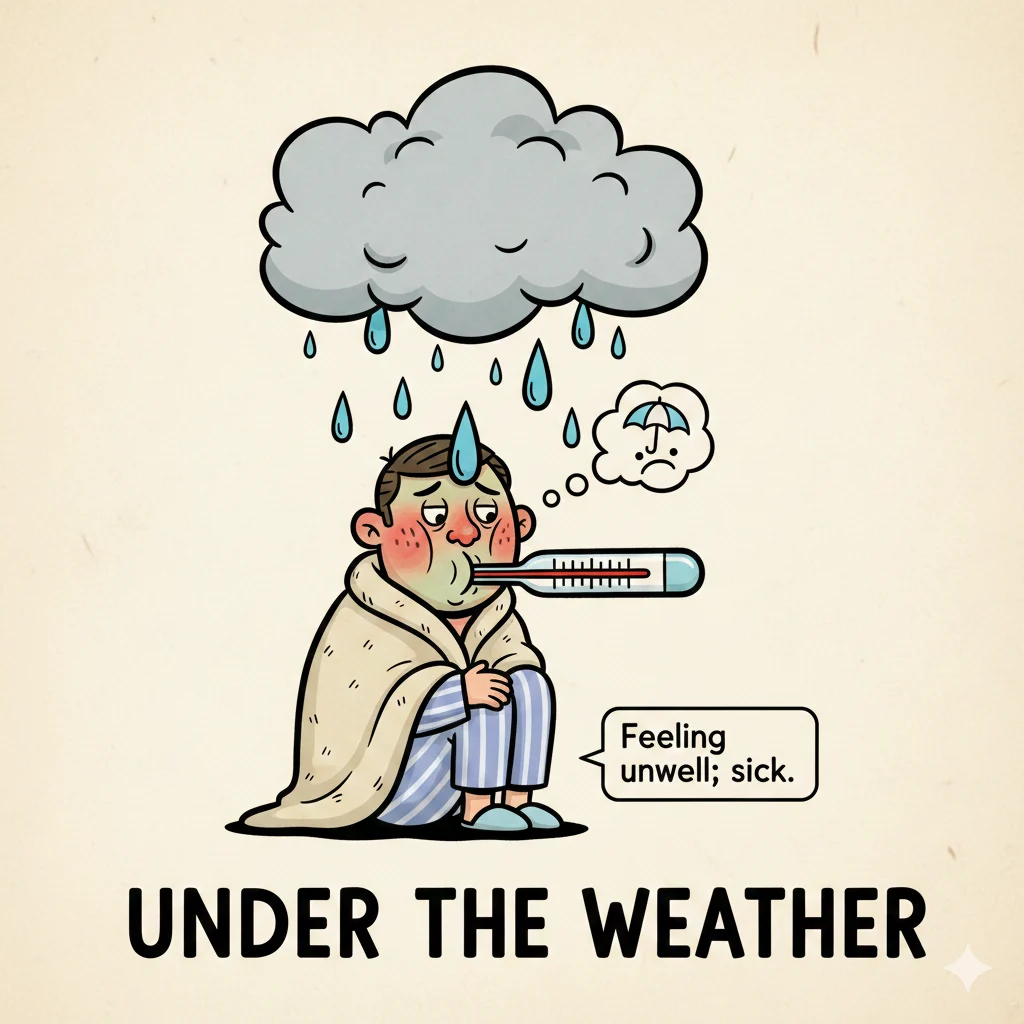
Word-by-word meaning: Hit + nail + head
Idiomatic meaning: Say something exactly right
Example sentence:
- You hit the nail on the head with that explanation.
Common error: Changing verb tense incorrectly
Usage note: Positive feedback expression
Under the Weather
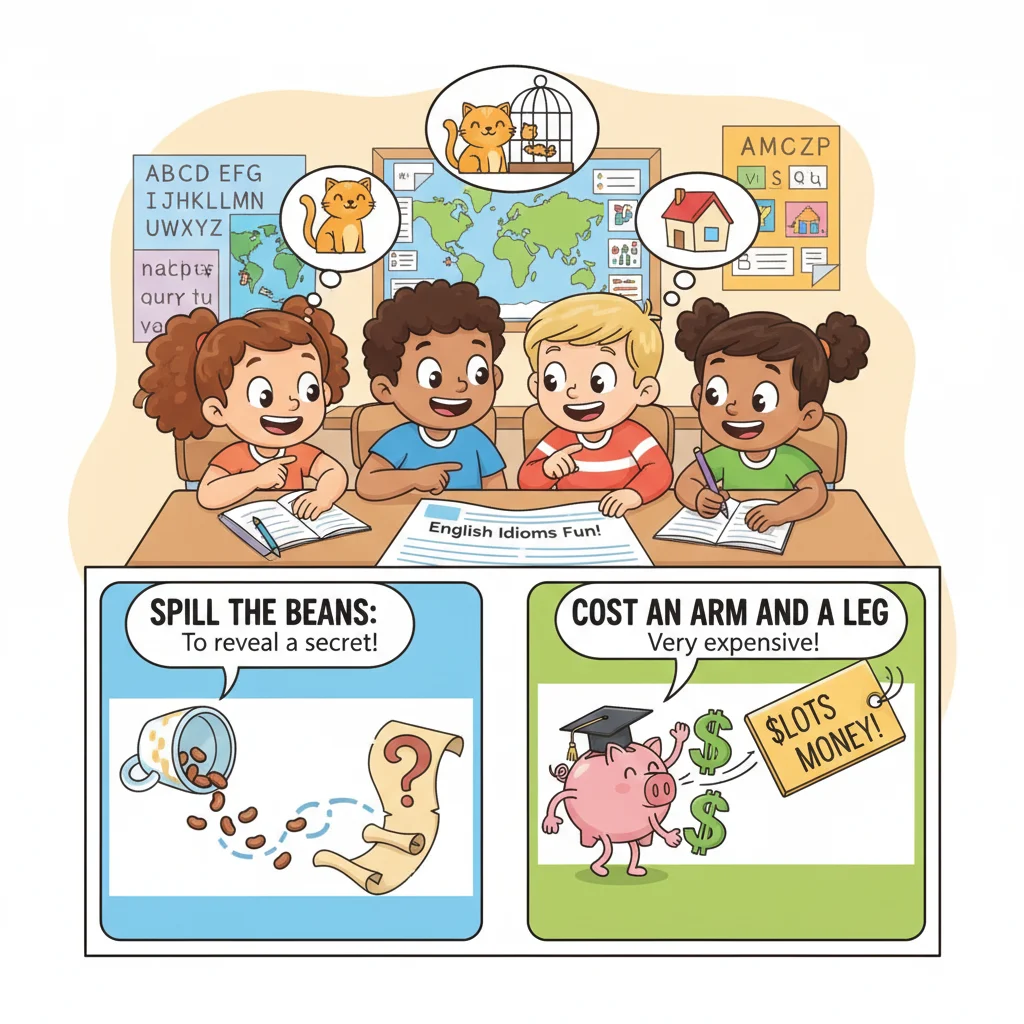
Word-by-word meaning: Under + weather
Idiomatic meaning: Feeling sick
Example sentence:
- I’m feeling under the weather today.
Common error: Using it for emotions
Usage note: Very common in daily speech
Cost an Arm and a Leg
Word-by-word meaning: Arm + leg
Idiomatic meaning: Very expensive
Example sentence:
- That phone cost an arm and a leg.
Common error: Using singular form
Usage note: Emphasizes high cost
Once in a Blue Moon
Word-by-word meaning: Rare moon
Idiomatic meaning: Very rarely
Example sentence:
- I eat fast food once in a blue moon.
Common error: Using it for future plans
Usage note: Frequency expression
Bite the Bullet
Word-by-word meaning: Bite + bullet
Idiomatic meaning: Face something difficult bravely
Example sentence:
- I bit the bullet and told the truth.
Common error: Literal interpretation
Usage note: Often used with tough decisions
Piece of Cake
Word-by-word meaning: Piece + cake
Idiomatic meaning: Very easy
Example sentence:
- The test was a piece of cake.
Common error: Using it for food context
Usage note: Casual and friendly
Let the Cat Out of the Bag
Word-by-word meaning: Cat + bag
Idiomatic meaning: Reveal a secret accidentally
Example sentence:
- She let the cat out of the bag about the trip.
Common error: Mixing with “spill the beans” structure
Usage note: Often accidental disclosure
Burn the Midnight Oil
Word-by-word meaning: Burn + oil
Idiomatic meaning: Work late into the night
Example sentence:
- I burned the midnight oil before exams.
Common error: Using it for daytime work
Usage note: Academic or work-related
Call It a Day
Idiomatic meaning: Stop working
Example sentence:
- Let’s call it a day and continue tomorrow.
On the Same Page
Idiomatic meaning: Agree or understand equally
Example sentence:
- Let’s make sure we’re on the same page.
Pull Someone’s Leg
Idiomatic meaning: Joke or tease
Example sentence:
- I’m just pulling your leg!
The Ball Is in Your Court
Idiomatic meaning: It’s your decision now
Example sentence:
- I’ve done my part—the ball is in your court.
Back to the Drawing Board
Idiomatic meaning: Start again
Example sentence:
- The plan failed, so it’s back to the drawing board.
A Blessing in Disguise
Idiomatic meaning: Something good that seemed bad
Example sentence:
- Losing that job was a blessing in disguise.
In Hot Water
Idiomatic meaning: In trouble
Example sentence:
- He’s in hot water for missing the deadline.
Keep an Eye On
Idiomatic meaning: Watch carefully
Example sentence:
- Please keep an eye on my bag.
Through Thick and Thin
Idiomatic meaning: In all situations
Example sentence:
- They supported each other through thick and thin.
Hit the Books
Idiomatic meaning: Study seriously
Example sentence:
- I need to hit the books tonight.
How to Use This as a Worksheet on Idioms
You can turn this article into a practical worksheet on idioms by:
- Matching idioms with meanings
- Filling in blanks using example sentences
- Writing short dialogues using 3–5 idioms
- Asking students to create real-life examples
FAQs About Idioms Worksheets
1. What is a worksheet on idioms?
A worksheet on idioms is a learning tool that explains idioms with meanings, examples, and practice exercises.
2. Are idioms important for English learners?
Yes. Idioms help learners understand native speakers and sound more natural.
3. How many idioms should I learn at once?
Start with 5–10 common idioms and practice using them in sentences.
4. Are idioms used in formal writing?
Some are, but most idioms are informal or conversational.
5. Can teachers use this as classroom material?
Absolutely. This article is structured like a ready-made idioms worksheet.
Final Thoughts
Idioms can be tricky—but with the right worksheet on idioms, they become fun and memorable. Pick a few idioms each day, use them in sentences, and notice how often they appear in movies, books, and conversations.
👉 Your next step: Choose 3 idioms from this list and write a short story using them today!

“L.P. Hartley brings classic idioms to life on LearnIdom.com, helping readers explore language with wit, clarity, and timeless insight.”