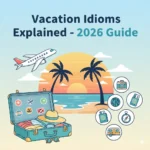
Ever tried talking about your trip in English but your sentences felt simple or boring? Vacation idioms are the secret phrases native speakers use to sound natural, fluent, and confident. Imagine saying “I need to recharge my batteries” instead of just “I’m tired.” Instantly smarter, right?
In 2026, English fluency is not only grammar—it’s real expressions people actually speak. This guide gives you 20 powerful vacation idioms with word meaning, idiomatic meaning, examples, common mistakes, and usage tips. Mobile-friendly, quick answers, and easy explanations—everything a learner needs in one place.
Quick Overview Table – Vacation Idioms
| Idiom | Short Meaning | Best Use |
|---|---|---|
| Get Away from It All | Escape stress | Relaxation |
| Recharge Your Batteries | Gain energy | Holidays |
| Take a Break | Short rest | Work/Travel |
| Hit the Road | Start journey | Departure |
| On the Road | Traveling | Trips |
| Travel Light | Less luggage | Packing |
| Off the Beaten Track | Unusual place | Tourism |
| Live It Up | Enjoy fully | Fun trips |
| Call It a Day | Stop activity | End day |
| Change of Scenery | New place | Refresh mind |
| Break the Journey | Mid stop | Long travel |
| Jet Lag | Time-zone tiredness | Flights |
| Wanderlust | Love of travel | Personality |
| In the Same Boat | Same problem | Situations |
| Packed Like Sardines | Very crowded | Transport |
| At Leisure | Relaxed pace | Holidays |
| Far and Wide | Everywhere | Exploration |
| Home Away from Home | Comfortable stay | Hotels |
| Scenic Route | Beautiful long way | Road trips |
| Catch Some Rays | Sunbathe | Beache |
Get Away from It All
Word-by-Word Meaning:
Get away = go far, It all = everything
Idiomatic Meaning:
To escape stress, routine, or responsibilities and relax.
Example Sentences:
- I booked a cabin to get away from it all.
- She traveled alone to get away from it all.
- We went hiking to get away from it all.
Common Error: Thinking it only means physical distance.
Usage Note: Mostly mental relaxation.
Recharge Your Batteries
Word Meaning: Charge batteries again
Idiomatic Meaning: To rest and regain energy.
Examples:

- I need sleep to recharge my batteries.
- Vacations help us recharge our batteries.
- He took leave to recharge his batteries.
Common Error: Confusing with phone charging.
Usage Note: Mental + physical energy.
Take a Break
Idiomatic Meaning: Short rest.
Examples:

- Let’s take a break after lunch.
- She took a break from studies.
- We took a break during travel.
Common Error: Thinking it means quitting forever.
Usage Note: Temporary pause.
Hit the Road
Idiomatic Meaning: Start a journey.
Examples:
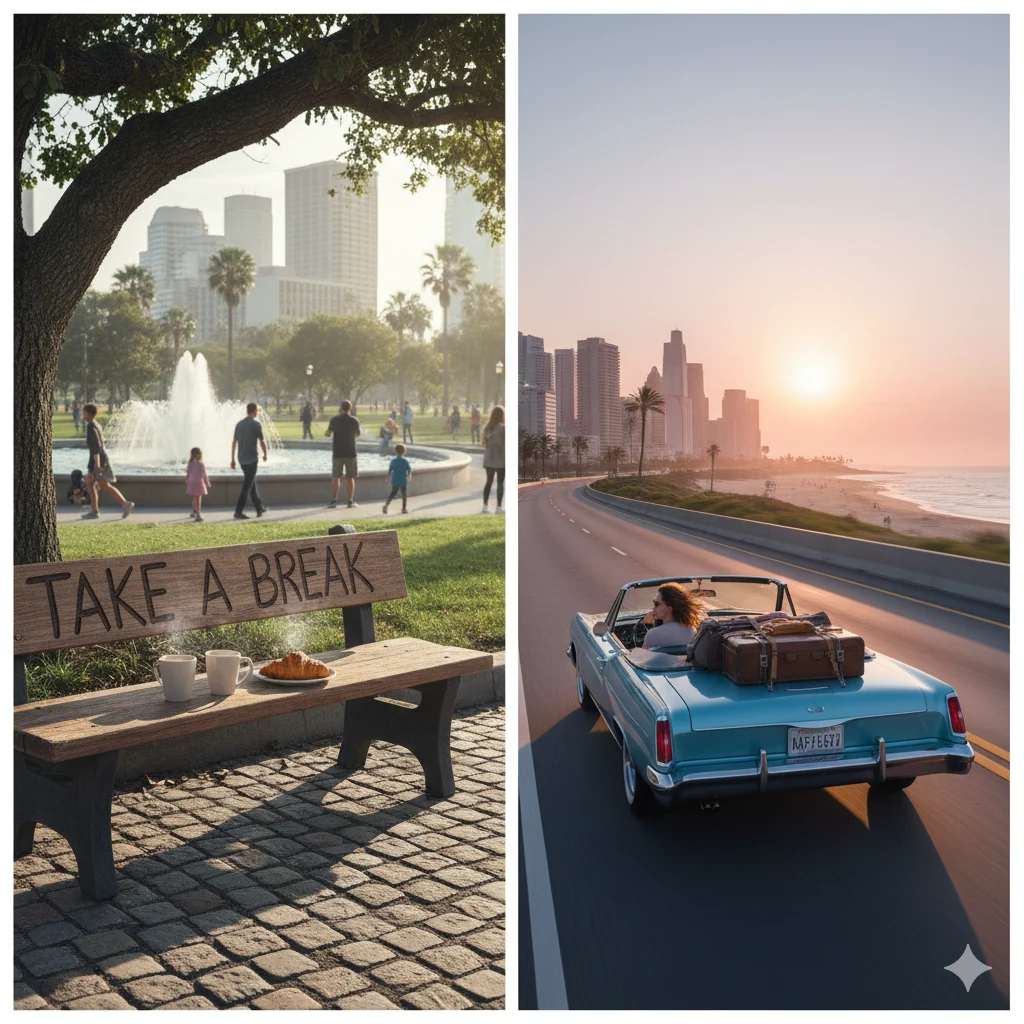
- It’s dawn—let’s hit the road.
- We packed and hit the road early.
- They waved goodbye and hit the road.
Common Error: Accident meaning.
Usage Note: Exact leaving moment.
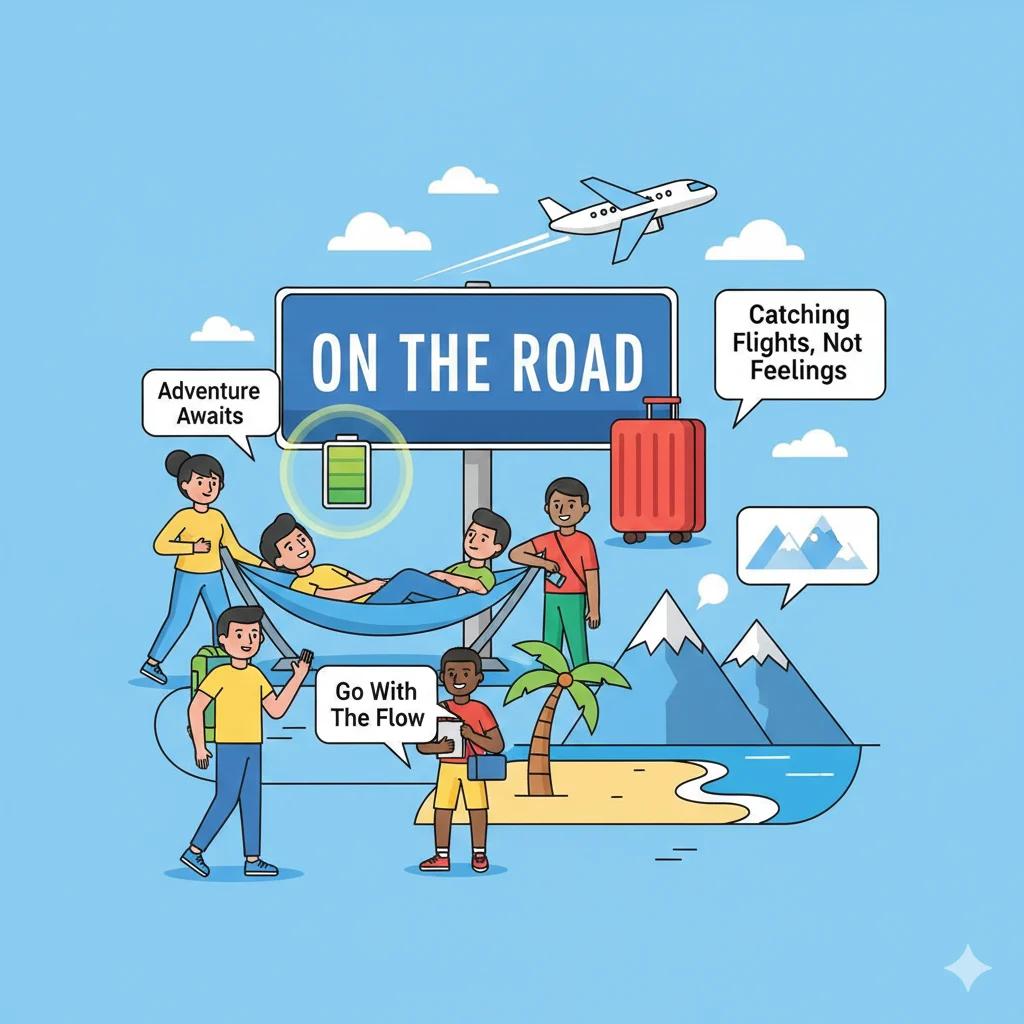
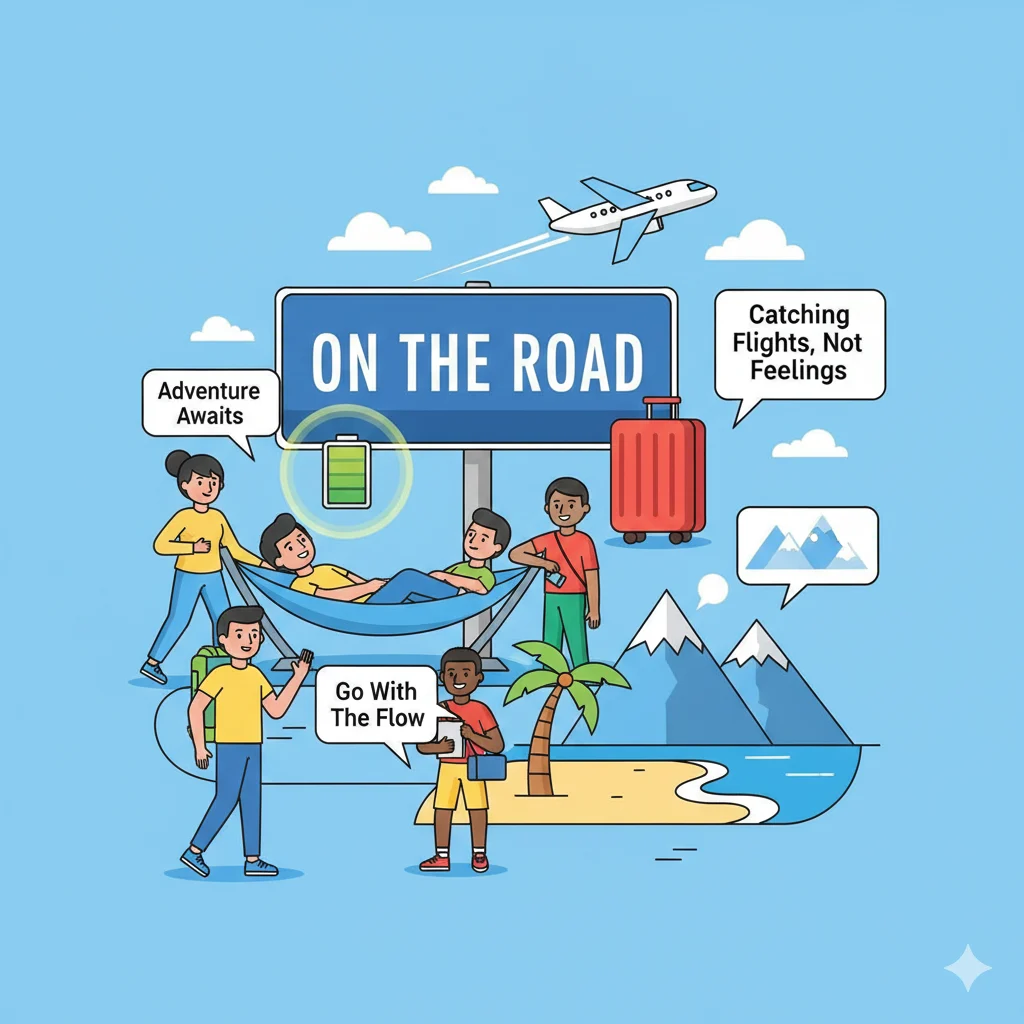
On the Road
Idiomatic Meaning: Already traveling.
Examples:
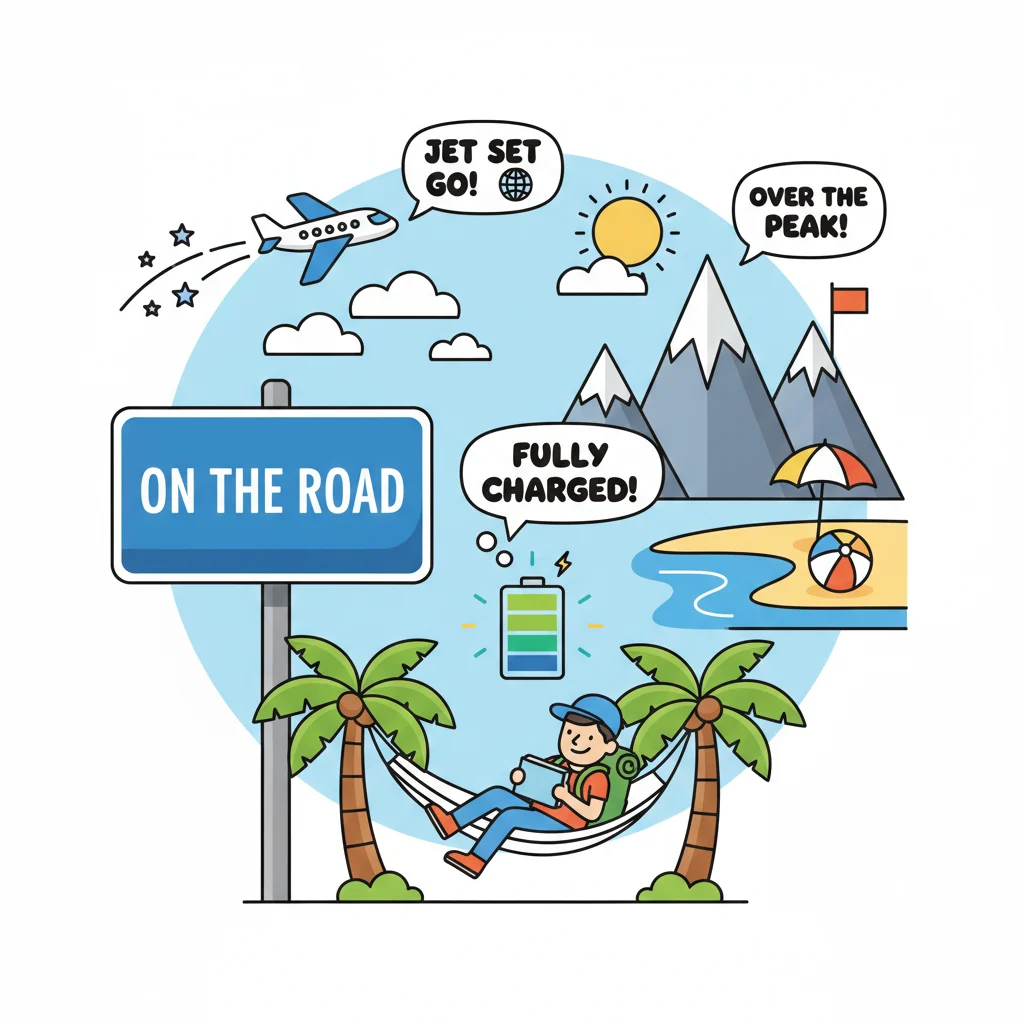
- We are on the road now.
- He spends life on the road.
- They’ve been on the road all day.
Common Error: Thinking only walking.
Usage Note: Any vehicle travel.
Travel Light
Idiomatic Meaning: Carry very little luggage.
Examples:
- I prefer to travel light.
- Backpackers travel light.
- She travels light every trip.
Common Error: Weight loss confusion.
Usage Note: Packing tip.
Off the Beaten Track
Idiomatic Meaning: Uncommon or less-visited place.
Examples:
- We found a beach off the beaten track.
- He loves villages off the beaten track.
- Tourists rarely go off the beaten track.
Common Error: Thinking dangerous area.
Usage Note: Adventure travel.
Live It Up
Idiomatic Meaning: Enjoy life in an exciting or luxurious way.
Examples:
- They lived it up in Dubai.
- We decided to live it up this summer.
- She saved money to live it up.
Common Error: Daily life confusion.
Usage Note: Fun & spending.
Call It a Day
Idiomatic Meaning: Stop activities for the day.
Examples:
- Let’s call it a day.
- We were tired and called it a day.
- They called it a day after dinner.
Common Error: Ending whole trip.
Usage Note: Only day ending.
A Change of Scenery
Idiomatic Meaning: Going somewhere new to feel refreshed.
Examples:
- I need a change of scenery.
- Travel gives a change of scenery.
- She moved cities for a change of scenery.
Common Error: Room decoration confusion.
Usage Note: Mental refresh.
Break the Journey
Word-by-Word Meaning:
Break = stop, Journey = trip
Idiomatic Meaning (English):
To stop somewhere during a long trip before continuing.
Example Sentences:
- We broke the journey in Lahore for lunch.
- They broke the journey at a small hotel.
- We broke the journey to rest for a night.
Common Error:
Thinking it means canceling the trip.
Usage Note:
Used for long road or train trips.
Jet Lag
Word-by-Word Meaning:
Jet = airplane, Lag = delay
Idiomatic Meaning:
Tiredness and confusion after flying across time zones.
Example Sentences:
- I had terrible jet lag after my flight.
- She slept all day because of jet lag.
- Jet lag ruined my first day of vacation.
Common Error:
Confusing with normal tiredness.
Usage Note:
Mostly used for international flights.
Wanderlust
Word-by-Word Meaning:
Wander = travel, Lust = strong desire
Idiomatic Meaning:
A strong love or desire to travel the world.
Example Sentences:
- She has serious wanderlust.
- His wanderlust made him a travel blogger.
- Wanderlust pushed them to explore new countries.
Common Error:
Thinking it means hobby only.
Usage Note:
Describes personality or passion.
In the Same Boat
Word-by-Word Meaning:
Same = same, Boat = boat
Idiomatic Meaning:
Being in the same difficult or similar situation as others.
Example Sentences:
- We missed the flight—we’re in the same boat.
- All students were in the same boat during exams.
- Travelers were in the same boat after delays.
Common Error:
Taking it literally as a real boat.
Usage Note:
Used for shared problems or situations.
Packed Like Sardines
Word-by-Word Meaning:
Packed = filled tightly, Sardines = small fish in a can
Idiomatic Meaning:
Very crowded with almost no personal space.
Example Sentences:
- The bus was packed like sardines.
- We stood packed like sardines in the train.
- The elevator felt packed like sardines.
Common Error:
Thinking it relates to food only.
Usage Note:
Used for transport or crowded places.
At Leisure
Word-by-Word Meaning:
At = in, Leisure = free time
Idiomatic Meaning:
Doing something slowly and without hurry.
Example Sentences:
- We explored the city at leisure.
- She walked through the park at leisure.
- Tourists enjoyed museums at leisure.
Common Error:
Confusing with laziness.
Usage Note:
Used for relaxed vacations.
Far and Wide
Word-by-Word Meaning:
Far = distant, Wide = large area
Idiomatic Meaning:
Over a large area; everywhere.
Example Sentences:
- We searched far and wide for a hotel.
- She traveled far and wide in Europe.
- They looked far and wide for tickets.
Common Error:
Thinking it means only far distance.
Usage Note:
Used for searching or traveling widely.
Home Away from Home
Word-by-Word Meaning:
Home = house, Away = far
Idiomatic Meaning:
A place where you feel as comfortable as your own home while traveling.
Example Sentences:
- This resort feels like home away from home.
- My aunt’s house is my home away from home.
- The hostel became our home away from home.
Common Error:
Thinking it means permanent house.
Usage Note:
Common for hotels, hostels, relatives’ homes.
Take the Scenic Route
Word-by-Word Meaning:
Scenic = beautiful view, Route = road
Idiomatic Meaning:
Choosing a longer but more beautiful or enjoyable path.
Example Sentences:
- Let’s take the scenic route to the hills.
- We took the scenic route by the lake.
- Drivers enjoy taking the scenic route.
Common Error:
Confusing with shortcut.
Usage Note:
Used for road trips and sightseeing.
Catch Some Rays
Word-by-Word Meaning:
Catch = get, Rays = sunlight
Idiomatic Meaning:
To relax in the sun or sunbathe.
Example Sentences:
- We went to the beach to catch some rays.
- She lay by the pool to catch some rays.
- Tourists love catching some rays in summer.
Common Error:
Thinking it means physically catching sunlight.
Usage Note:
Mostly used for beaches, pools, summer holidays.
FAQs – Vacation Idioms
Q1: Why learn vacation idioms?
They make English natural and impressive.
Q2: Useful for IELTS?
Yes, especially speaking.
Q3: How to memorize?
Use 2 daily in sentences.
Q4: Formal or informal?
Mostly informal but widely accepted.
Conclusion
Learning vacation idioms is one of the easiest and smartest ways to make your English sound natural, confident, and impressive. Instead of using simple sentences like “I am tired” or “I am traveling,” idioms allow you to express feelings and situations in a more fluent and native-like way. These expressions are commonly used in daily conversations, travel blogs, social media captions, interviews, and English exams such as IELTS.
The best way to remember them is not by memorizing all at once, but by practicing two or three idioms every day in your own sentences. Try using them when talking about past trips, future plans, or even casual chats with friends. Over time, they will become part of your natural vocabulary. Consistent practice, real-life usage, and confidence are the keys to mastering vacation idioms and improving your overall English communication skills.

“Rose Macaulay shares the charm of idioms on LearnIdom.com, making language learning delightful, insightful, and full of wit for every reader.”