Ever heard someone say they’re “in a state of shock” or “running a tight ship” and wondered what states have to do with it?
This guide to state idioms breaks down the most common expressions connected to states, conditions, and U.S. culture—so you can sound natural, confident, and fluent.
Whether you’re learning English or polishing your idiomatic skills, these state idioms appear constantly in real conversations, movies, and writing.
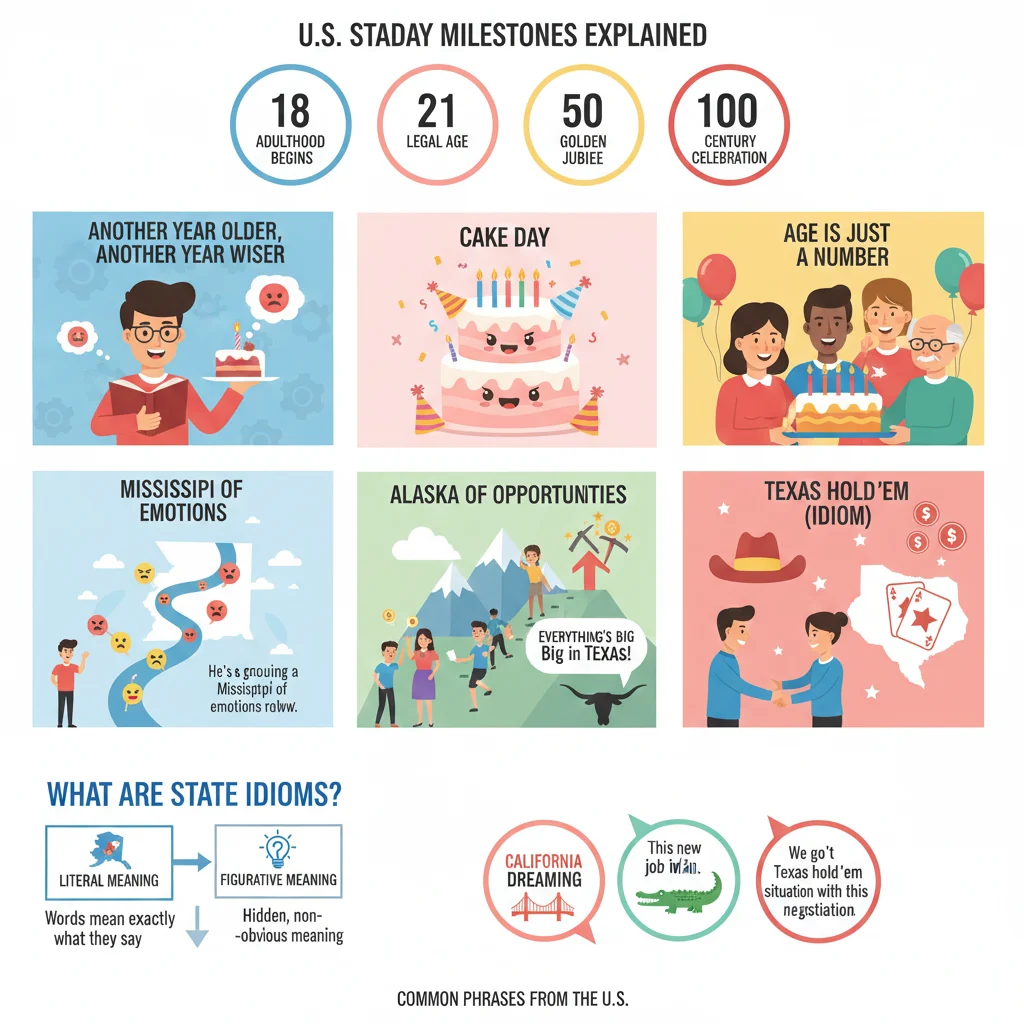
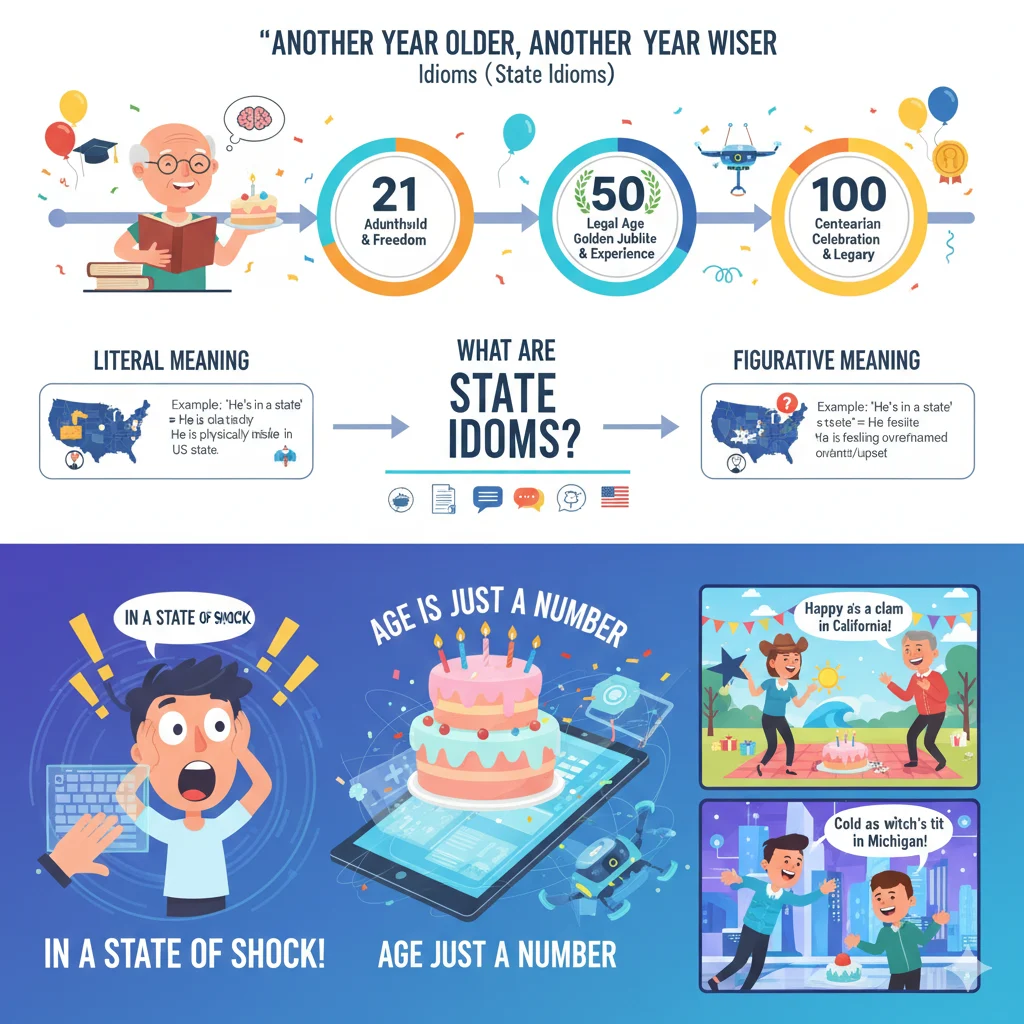
What Are State Idioms?
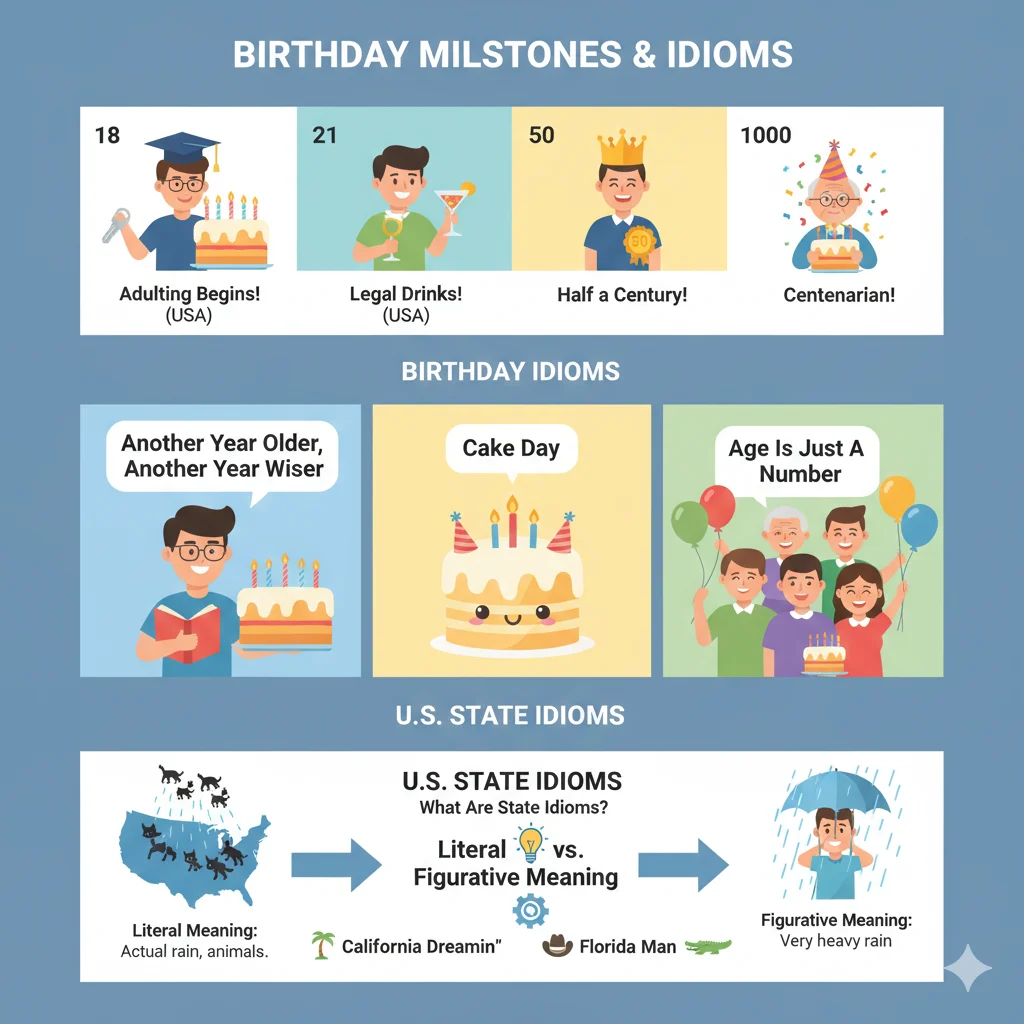
State idioms are expressions that describe:
- A condition (emotional, mental, physical), or
- A phrase connected to U.S. states or state-level ideas
They rarely mean what the words say literally—but they mean a lot in real life.
In a state of shock
Word-by-word meaning: A condition of shock
Idiomatic meaning: Feeling extremely surprised or upset
Example:
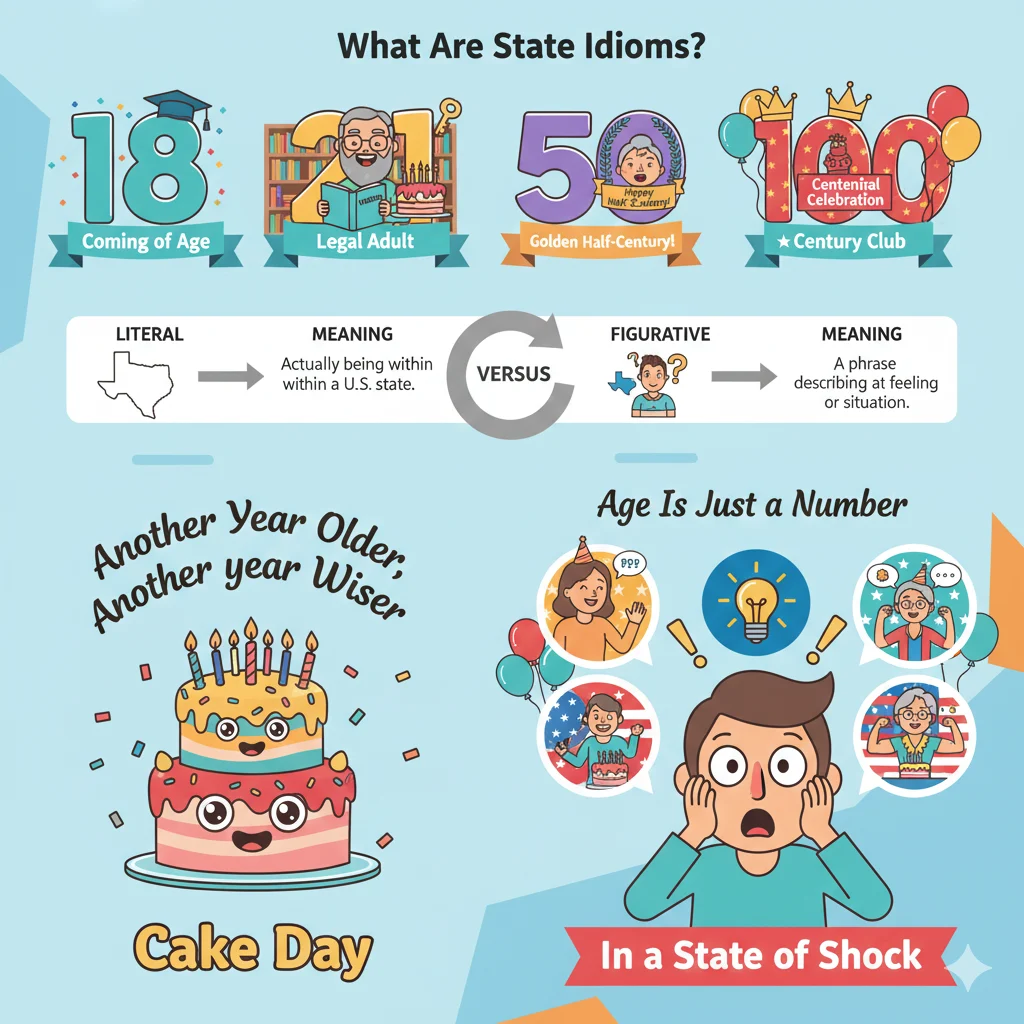
I was in a state of shock when I heard the news.
Common error: Using it for mild surprise
Usage note: Best for strong emotional reactions
210+ Best Country Music Idioms to Improve Your English 🎸
In a state of confusion
Word-by-word meaning: A condition of confusion
Idiomatic meaning: Not understanding what’s happening
Example:
Everyone was in a state of confusion after the schedule changed.
Common error: Saying “on a state”
Usage note: Always use in a state of
In a sorry state
Word-by-word meaning: A bad condition
Idiomatic meaning: Poor, damaged, or disappointing condition
Example:
The old house is in a sorry state.
Common error: Using it for people’s feelings
Usage note: Mostly for objects or situations
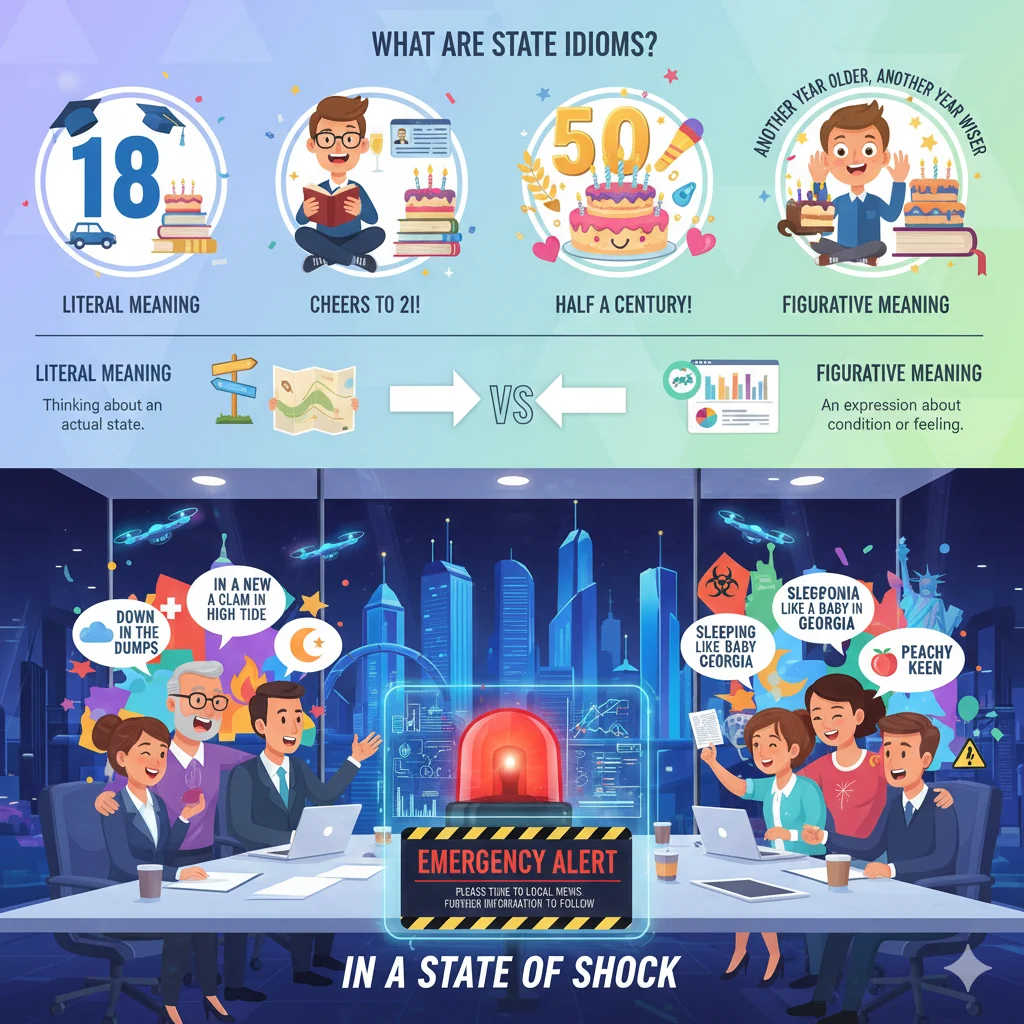
In a state of panic
Word-by-word meaning: Condition of panic
Idiomatic meaning: Feeling extreme fear or urgency
Example:
She called me in a state of panic.
Common error: Overusing it casually
Usage note: Strong emotional context
In a state of mind
Word-by-word meaning: Mental condition
Idiomatic meaning: Mood or mental attitude
Example:
I’m not in the right state of mind to decide.
Common error: Forgetting “of”
Usage note: Very common in spoken English
State of the art
Word-by-word meaning: Current condition of technology
Idiomatic meaning: Most modern and advanced
Example:
The lab uses state-of-the-art equipment.
Common error: Missing hyphens
Usage note: Often used with technology
In a state of denial
Word-by-word meaning: Condition of refusing truth
Idiomatic meaning: Not accepting reality
Example:
He’s still in a state of denial about the loss.
Common error: Confusing with “lying”
Usage note: Emotional or psychological context
State your case
Word-by-word meaning: Present your situation
Idiomatic meaning: Explain your argument clearly
Example:
The judge asked her to state her case.
Common error: Using for casual chatting
Usage note: Formal or semi-formal
In a steady state
Word-by-word meaning: Stable condition
Idiomatic meaning: No major changes
Example:
The system is now in a steady state.
Common error: Using for emotions
Usage note: Academic or technical tone
In a state of repair
Word-by-word meaning: Being repaired
Idiomatic meaning: Undergoing fixing
Example:
The road is in a state of repair.
Common error: Saying “under repair state”
Usage note: Formal usage
Police state
Word-by-word meaning: State controlled by police
Idiomatic meaning: Excessive government control
Example:
People fear the country is becoming a police state.
Common error: Using casually
Usage note: Political context
Welfare state
Word-by-word meaning: Government support system
Idiomatic meaning: State providing social services
Example:
Many European countries are welfare states.
Common error: Confusing with charity
Usage note: Political/economic usage
State of affairs
Word-by-word meaning: Current situation
Idiomatic meaning: How things are now
Example:
This is a sad state of affairs.
Common error: Using for future events
Usage note: Formal tone
In a state of readiness
Word-by-word meaning: Ready condition
Idiomatic meaning: Prepared to act
Example:
Emergency teams are in a state of readiness.
Common error: Dropping “of”
Usage note: News or formal writing
State-run
Word-by-word meaning: Operated by government
Idiomatic meaning: Government-controlled
Example:
The airline is state-run.
Common error: Forgetting the hyphen
Usage note: Adjective form
State secrets
Word-by-word meaning: Government secrets
Idiomatic meaning: Highly confidential information
Example:
The file contained state secrets.
Common error: Using for personal secrets
Usage note: Serious context
State of emergency
Word-by-word meaning: Emergency condition
Idiomatic meaning: Official crisis declaration
Example:
The governor declared a state of emergency.
Common error: Using informally
Usage note: Legal/government term
State of grace
Word-by-word meaning: Condition of grace
Idiomatic meaning: Favor or spiritual peace
Example:
He lived in a state of grace.
Common error: Mixing with “luck”
Usage note: Literary or religious tone
State your position
Word-by-word meaning: Declare stance
Idiomatic meaning: Clearly express opinion
Example:
Please state your position on the issue.
Common error: Using emotionally
Usage note: Formal discussions
State of play
Word-by-word meaning: Current status of a game
Idiomatic meaning: Present situation
Example:
Let’s review the current state of play.
Common error: Thinking it’s only about sports
Usage note: Business and news English
FAQs About State Idioms
What are state idioms in English?
State idioms describe conditions, situations, or government-related concepts using the word state figuratively.
Are state idioms formal or informal?
Both. Some are conversational (state of mind), others formal (state of emergency).
Are state idioms related to U.S. states?
Some are, but most refer to conditions, not geography.
How can I learn state idioms faster?
Use them in short sentences, real conversations, and journaling.
Conclusion
Mastering state idioms helps you move from textbook English to real-world English. These expressions appear everywhere—from daily conversations to news headlines—so learning them gives you instant confidence.
Start using just one idiom a day, and you’ll feel the difference fast.

“L.P. Hartley brings classic idioms to life on LearnIdom.com, helping readers explore language with wit, clarity, and timeless insight.”