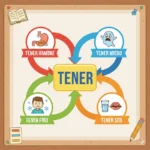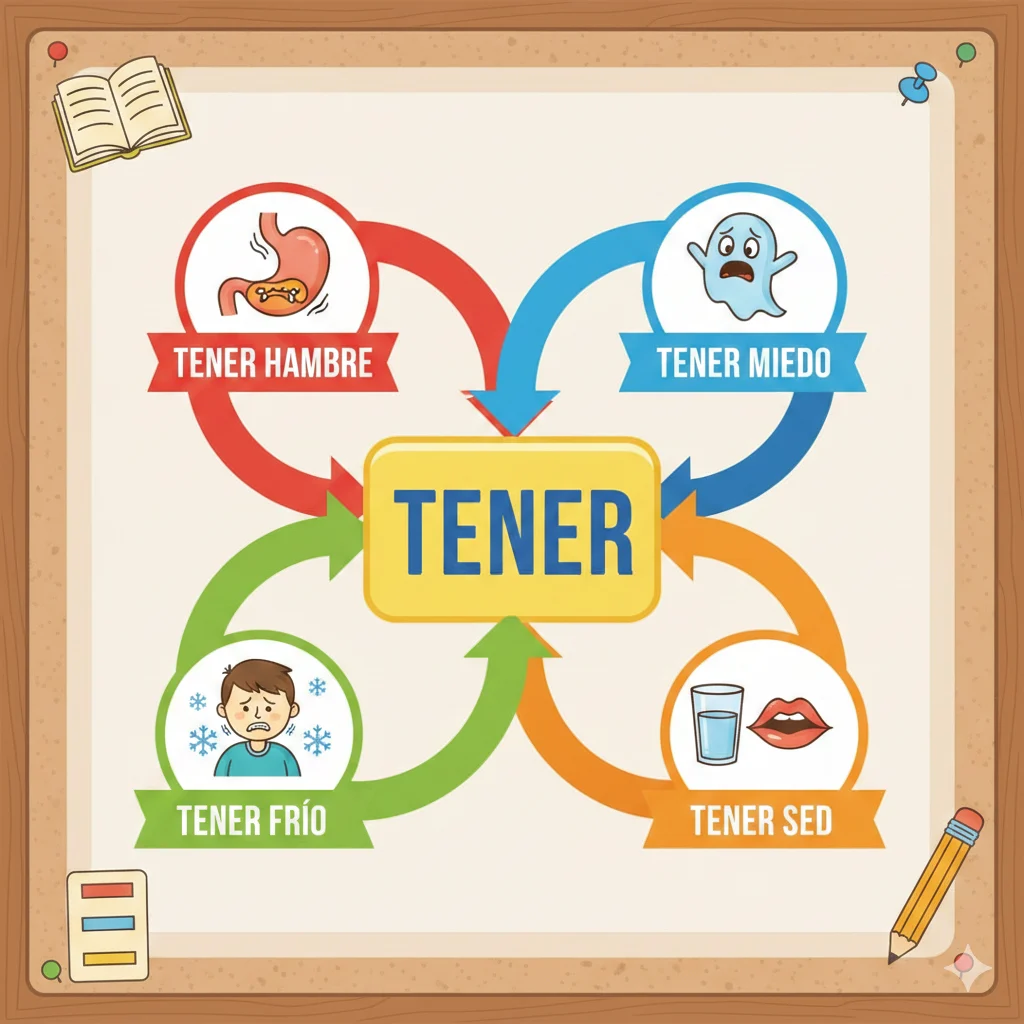
Spanish idioms with tener are common expressions that use the verb “tener” (to have) to describe feelings, age, physical states, and personal experiences in a figurative way. Popular examples include “tener hambre” (to be hungry), “tener frío” (to be cold), and “tener ganas de” (to feel like doing something).
Unlike English, Spanish often uses tener instead of “to be” when talking about conditions and emotions, which can confuse learners. Understanding these idioms is essential for speaking Spanish naturally and avoiding common grammar mistakes.
By mastering tener expressions, you improve fluency, expand vocabulary, and communicate daily situations more confidently. Whether you are a beginner or intermediate learner, learning Spanish idioms with tener helps you sound more native and understand real-life conversations with ease.
Tener Hambre
Word-by-Word Meaning
- Tener = to have
- Hambre = hunger
Idiomatic Meaning
To be hungry.
Example Sentences
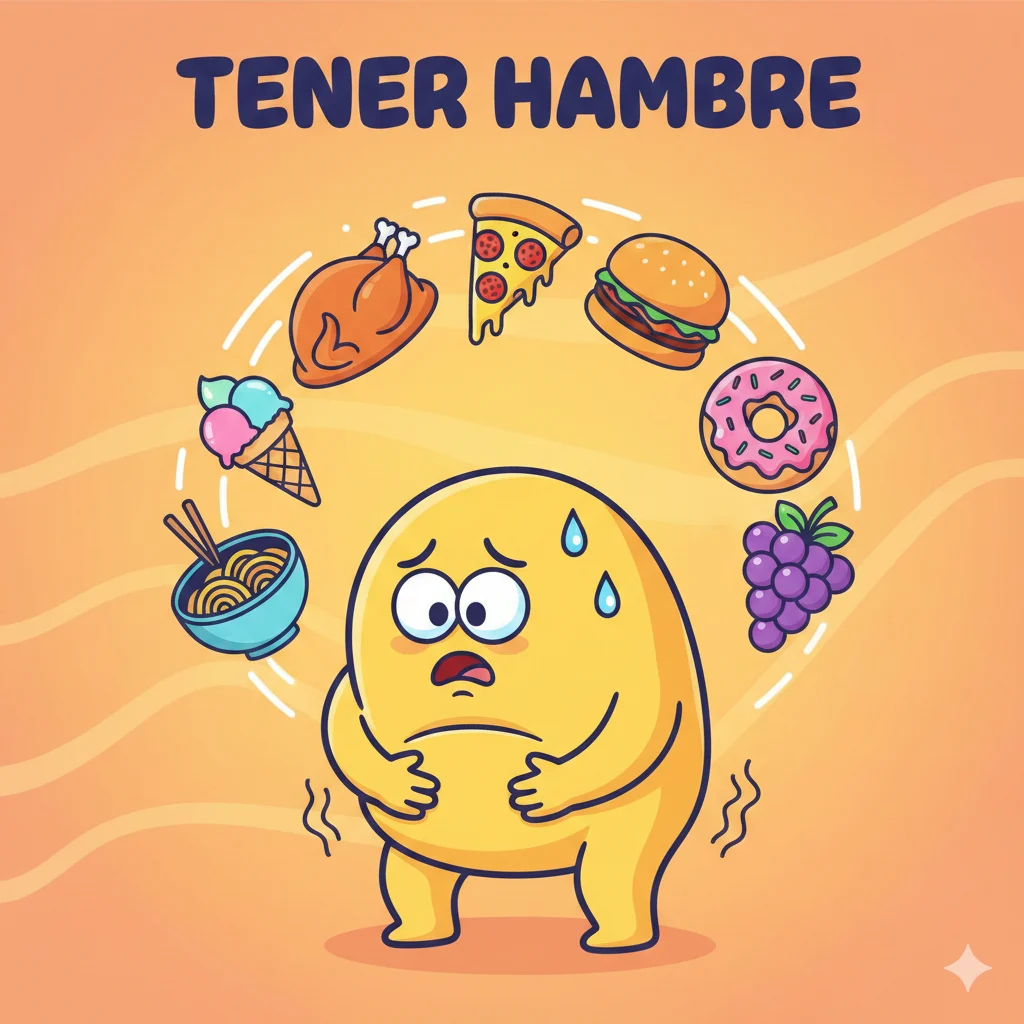
- Tengo hambre. (I am hungry.)
- Los niños tienen hambre después de jugar.
Common Error
❌ Soy hambre
✔ Tengo hambre
Usage Note
Always use tener, not ser or estar.
Tener Sed
Word-by-Word Meaning
- Sed = thirst
Idiomatic Meaning
To be thirsty.
Example Sentences

- Tengo sed.
- ¿Tienes sed?
Common Error
❌ Estoy sed
✔ Tengo sed
Usage Note
Used for physical needs.
Tener Sueño
Word-by-Word Meaning
- Sueño = sleep
Idiomatic Meaning
To be sleepy.
Example Sentences

- Tengo sueño hoy.
- El bebé tiene sueño.
Common Error
❌ Soy sueño
✔ Tengo sueño
Tener Frío
Word-by-Word Meaning
- Frío = cold
Idiomatic Meaning
To feel cold.
Example Sentences

- Tengo frío.
- ¿Tienes frío?
Usage Note
Describes personal sensation, not weather.
Tener Calor
Word-by-Word Meaning
- Calor = heat
Idiomatic Meaning
To feel hot.
Example Sentences

- Tengo calor.
- Tenemos calor en verano.
Tener Miedo
Word-by-Word Meaning
- Miedo = fear
Idiomatic Meaning
To be afraid.
Example Sentences
- Tengo miedo de la oscuridad.
- Ella tiene miedo.
Common Error
❌ Soy miedo
✔ Tengo miedo
Tener Prisa
Word-by-Word Meaning
- Prisa = hurry
Idiomatic Meaning
To be in a hurry.
Example Sentences
- Tengo prisa.
- Tenemos prisa para salir.
Tener Razón
Word-by-Word Meaning
- Razón = reason
Idiomatic Meaning
To be right.
Example Sentences
- Tienes razón.
- Mi madre siempre tiene razón.
Tener Suerte
Word-by-Word Meaning
- Suerte = luck
Idiomatic Meaning
To be lucky.
Example Sentences
- Tengo suerte hoy.
- Tuvieron suerte en el examen.
Tener Éxito
Word-by-Word Meaning
- Éxito = success
Idiomatic Meaning
To be successful.
Example Sentences
- Ella tiene éxito en su carrera.
- Queremos tener éxito.
Tener Cuidado
Word-by-Word Meaning
- Tener = to have
- Cuidado = care
Idiomatic / Figurative Meaning
To be careful.
Example Sentences
- Ten cuidado al cruzar la calle. (Be careful crossing the street.)
- Tenemos cuidado cuando manejamos. (We are careful when we drive.)
Common Error
❌ Soy cuidado
✔ Ten cuidado / Tengo cuidado
Usage Note
Often used as a warning.
Structure: Tener cuidado + con / al + infinitive
Tener Vergüenza
Word-by-Word Meaning
- Vergüenza = shame / embarrassment
Idiomatic Meaning
To be embarrassed or shy.
Example Sentences
- Tengo vergüenza de hablar en público.
- Ella tiene vergüenza.
Common Error
❌ Estoy vergüenza
✔ Tengo vergüenza
Usage Note
Common in emotional or social contexts.
Tener Celos
Word-by-Word Meaning
- Celos = jealousy
Idiomatic Meaning
To be jealous.
Example Sentences
- Tiene celos de su amigo.
- No tengas celos.
Common Error
❌ Soy celos
✔ Tener celos
Usage Note
Often used with de (tener celos de alguien).
Tener Ganas de
Word-by-Word Meaning
- Ganas = desire
Idiomatic Meaning
To feel like doing something / to want to.
Example Sentences
- Tengo ganas de viajar.
- Tenemos ganas de comer pizza.
Common Error
❌ Tengo ganas comer
✔ Tengo ganas de comer
Usage Note
Structure: Tener ganas de + infinitive
Tener Que
Word-by-Word Meaning
- Que = that
Idiomatic Meaning
To have to (express obligation).
Example Sentences
- Tengo que estudiar.
- Tienen que trabajar mañana.
Common Error
❌ Tengo estudiar
✔ Tengo que estudiar
Usage Note
Very common daily expression.
Structure: Tener que + infinitive
Tener Intención de
Word-by-Word Meaning
- Intención = intention
Idiomatic Meaning
To intend to do something.
Example Sentences
- Tengo intención de aprender español.
- Ella tiene intención de cambiar de trabajo.
Usage Note
Structure: Tener intención de + infinitive
Tener Lugar
Word-by-Word Meaning
- Lugar = place
Idiomatic Meaning
To take place / to happen.
Example Sentences
- La reunión tiene lugar mañana.
- El evento tiene lugar en Madrid.
Common Error
❌ Es lugar
✔ Tiene lugar
Usage Note
Common in formal announcements.
Tener En Cuenta
Word-by-Word Meaning
- En cuenta = in account
Idiomatic Meaning
To take into account / to consider.
Example Sentences
- Ten en cuenta mis consejos.
- Tenemos en cuenta todos los detalles.
Common Error
❌ Tener cuenta
✔ Tener en cuenta
Usage Note
Very useful in professional or academic Spanish.
Tener ____ Años
Word-by-Word Meaning
- Años = years
Idiomatic Meaning
To express age.
Example Sentences
- Tengo 18 años.
- Mi hermano tiene 25 años.
Common Error
❌ Soy 18 años
✔ Tengo 18 años
Usage Note
Spanish uses tener for age, not ser.
Tener la Culpa
Word-by-Word Meaning
- Culpa = fault / blame
Idiomatic Meaning
To be guilty / to be at fault.
Example Sentences
- No tengo la culpa.
- Él tiene la culpa del error.
Common Error
❌ Soy la culpa
✔ Tener la culpa
Usage Note
Often followed by de (tener la culpa de algo).
Quick Reference Table
| Spanish Idiom | English Meaning |
|---|---|
| Tener hambre | To be hungry |
| Tener sed | To be thirsty |
| Tener sueño | To be sleepy |
| Tener frío | To feel cold |
| Tener razón | To be right |
Frequently Asked Questions (FAQs)
1. Why does Spanish use “tener” instead of “ser”?
Spanish expresses many emotions as something you “have,” not something you “are.”
2. Are Spanish idioms with tener common?
Yes, they are used daily in conversation.
3. Can I translate these literally?
Not always. Focus on meaning, not word-for-word translation.
4. How can I memorize them?
Practice daily and create personal example sentences.
5. Are these idioms formal or informal?
Most are neutral and used in all contexts.
Conclusion
Mastering Spanish idioms with tener is one of the fastest ways to sound natural in Spanish. Instead of translating directly from English, you now understand how Spanish speakers describe hunger, fear, age, and even responsibility using tener.
When you start thinking in Spanish patterns—like “I have hunger” instead of “I am hungry”—your fluency improves dramatically. The key is repetition and real-life practice. Try using at least five of these idioms today in conversation or writing.
Language learning isn’t about memorizing rules; it’s about noticing patterns. And tener is one of the most powerful patterns in Spanish. Keep practicing, keep speaking, and soon these expressions will feel completely natural. ¡Tú puedes hacerlo!

“Rose Macaulay shares the charm of idioms on LearnIdom.com, making language learning delightful, insightful, and full of wit for every reader.”