
Have you ever felt frustrated while looking for something important and wished there was a better way to explain it? That’s where searching idioms come to your rescue. These idioms allow you to describe searching, investigating, or looking for answers in a colorful and natural way.
From finding a tiny object to solving a mystery or chasing opportunities, searching idioms make your English sound lively and expressive. Instead of saying “I looked everywhere,” you can say “I searched high and low” or “I left no stone unturned.”
In this guide, we’ll explore of the most famous searching idioms, grouped by difficulty and type of search. Each idiom will include word-by-word meaning, figurative meaning, example sentences, common errors, and usage tips. By the end, you’ll be ready to use these idioms confidently in conversations, writing, or exams.
Searching for a Needle in a Haystack
Word-by-word Meaning: Looking for a tiny needle inside a huge pile of hay.
Idiomatic/Figurative Meaning: Trying to find something extremely difficult or almost impossible.
Example Sentences:

- Finding my passport in that huge pile of documents was like searching for a needle in a haystack.
- She was searching for a needle in a haystack when she tried to find the rare book in the huge library.
Common Error:
❌ Using it for easy tasks.
✔ Correct: Use only for extremely challenging searches.
Usage Note: Often used to express frustration in both formal and informal contexts.
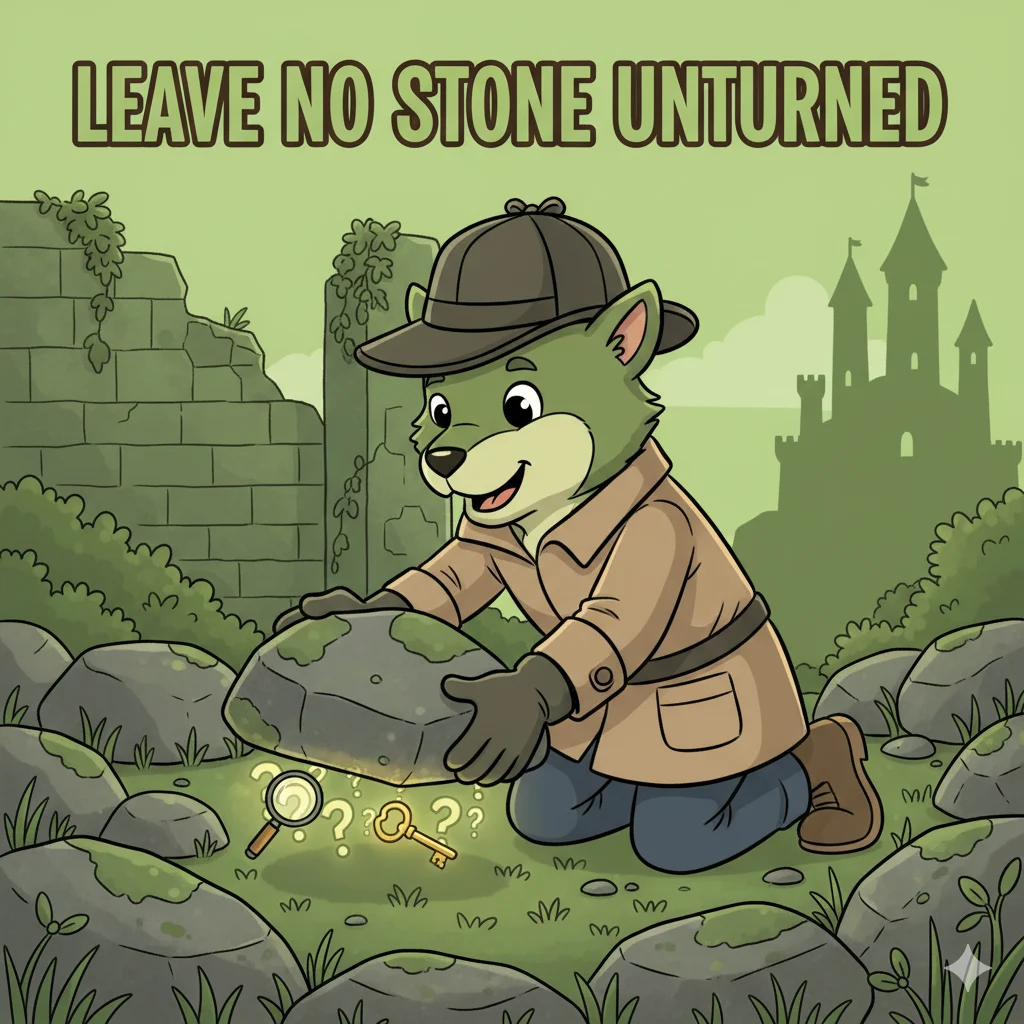
Leave No Stone Unturned
Word-by-word Meaning: Turn over every stone.
Idiomatic/Figurative Meaning: Make every possible effort to find something or solve a problem.
Example Sentences:

- The police left no stone unturned to catch the thief.
- I will leave no stone unturned in my preparation for the exam.
Common Error:
❌ Using it for trivial tasks.
✔ Best for serious or systematic searches.
Usage Note: Common in professional and academic writing.
Turn the Place Upside Down
Word-by-word Meaning: Flip everything while searching.
Idiomatic/Figurative Meaning: Search thoroughly, sometimes creating a mess.
Example Sentences:

- I turned my room upside down looking for my missing shoes.
- They turned the office upside down searching for the lost document.
Common Error:
❌ Taking it literally.
Usage Note: Informal, casual conversations.
Look High and Low
Word-by-word Meaning: Search everywhere—from high places to low places.
Idiomatic/Figurative Meaning: Search extensively.
Example Sentences:

- I looked high and low for my keys.
- She searched high and low for the missing earring.
Common Error:
❌ Using when only one place is checked.
Usage Note: Everyday English, very common idiom.
Search High and Wide
Word-by-word Meaning: Search across broad areas.
Idiomatic/Figurative Meaning: Look everywhere over a large area.
Example Sentences:
- They searched high and wide for the perfect apartment.
- I searched high and wide to find a good restaurant in the city.
Common Error:
❌ Confusing with “look high and low” (slightly more literal).
Usage Note: Often used for large areas or wide-reaching searches.
On the Hunt
Word-by-word Meaning: Actively searching like a hunter.
Idiomatic/Figurative Meaning: Actively looking for something.
Example Sentences:
- I’m on the hunt for a summer internship.
- She is on the hunt for a stylish dress.
Common Error:
❌ Confusing with actual hunting.
Usage Note: Casual, informal contexts.
Track Down
Word-by-word Meaning: Follow tracks to locate someone or something.
Idiomatic/Figurative Meaning: Find after a persistent search.
Example Sentences:
- I finally tracked down my old friend online.
- The journalist tracked down the source of the leak.
Common Error:
❌ Using when finding was easy.
Usage Note: Often used in investigative, online, or professional contexts.
Scout Around
Word-by-word Meaning: Explore areas while searching.
Idiomatic/Figurative Meaning: Look around to find something.
Example Sentences:
- Let’s scout around for a good café.
- They scouted around the market for rare antiques.
Common Error:
❌ Using it only for maps or outdoor exploration.
Usage Note: Physical or figurative searches, informal style.
Be on the Lookout
Word-by-word Meaning: Watch carefully for something.
Idiomatic/Figurative Meaning: Stay alert while searching.
Example Sentences:
- Be on the lookout for suspicious activity.
- I’ll be on the lookout for the latest job openings.
Usage Note: Informal or safety-oriented contexts.
Be All Over Something
Word-by-word Meaning: Be everywhere around a task or place.
Idiomatic/Figurative Meaning: Engage with something thoroughly to find a solution.
Example Sentences:
- The team was all over the project details.
- She was all over the information needed for the presentation.
Dig Deep
Word-by-word Meaning: Go beneath the surface.
Idiomatic/Figurative Meaning: Search carefully in research, thoughts, or data.
Example Sentences:
- The writer had to dig deep into archives for authentic information.
- Scientists often dig deep to uncover new insights.
Common Error:
❌ Using only for physical digging.
Usage Note: Research, investigation, or deep thought.
Fish for Information
Word-by-word Meaning: Try to catch info like fish.
Idiomatic/Figurative Meaning: Try indirectly to get information.
Example Sentences:
- He was fishing for information about the surprise party.
- Journalists sometimes fish for information through subtle questions.
Usage Note: Informal, investigative or conversational use.
Follow a Lead
Word-by-word Meaning: Use a clue to guide your search.
Idiomatic/Figurative Meaning: Investigate potential information to find something.
Example Sentences:
- Police followed a lead to catch the suspect.
- I followed a lead about the new book release.
Hunt Something Down
Word-by-word Meaning: Chase until you find it.
Idiomatic/Figurative Meaning: Find something after effort.
Example Sentences:
- I hunted down the rare comic book at a distant shop.
- She hunted down the perfect recipe online.
In Search Of
Word-by-word Meaning: Looking for something specific.
Idiomatic/Figurative Meaning: Actively seeking a person, item, or solution.
Example Sentences:
- He traveled the world in search of adventure.
- We visited many libraries in search of the rare manuscript.
Keep an Eye Out
Word-by-word Meaning: Watch carefully.
Idiomatic/Figurative Meaning: Remain alert while looking for something.
Example Sentences:
- Keep an eye out for traffic while walking.
- I’ll keep an eye out for discounts online.
Follow the Trail
Word-by-word Meaning: Follow a path or clues.
Idiomatic/Figurative Meaning: Investigate information in sequence to reach a solution.
Example Sentences:
- The detectives followed the trail to solve the mystery.
- She followed the trail of articles to research her topic.
Rummage Around
Word-by-word Meaning: Search messily.
Idiomatic/Figurative Meaning: Look through things to find an item.
Example Sentences:
- He rummaged around the drawer for his charger.
- Kids rummaged around the attic looking for toys.
Find Your Way
Word-by-word Meaning: Discover the correct path.
Idiomatic/Figurative Meaning: Eventually discover the solution or reach a goal.
Example Sentences:
- After weeks of practice, she found her way in chess strategy.
- He found his way through the complex project.
Seek and You Shall Find
Word-by-word Meaning: If you search, you will discover.
Idiomatic/Figurative Meaning: Effort leads to results.
Example Sentences:
- Don’t give up — seek and you shall find.
- I tried many resources, and eventually, I sought and found the perfect study guide.
FAQs
- What are the most common searching idioms in English?
- Idioms like searching for a needle in a haystack, leave no stone unturned, and track down are widely used.
- How do searching idioms improve English fluency?
- They make your speech natural, colorful, and professional, helping you sound closer to a native speaker.
- Can searching idioms be used in business or formal contexts?
- Yes, idioms like leave no stone unturned and track down are suitable for reports, emails, and presentations.
- How to remember searching idioms easily?
- Use them in stories, writing, flashcards, or conversations for better memory retention.
- Are all searching idioms informal?
- No, some idioms are informal (turn the place upside down), while others are formal (leave no stone unturned).
Conclusion
Using searching idioms is an excellent way to make your English expressive, fluent, and engaging. Practice a few idioms daily, use them in conversations, and gradually include them in writing. From everyday problems to professional tasks, these idioms will make your language dynamic and memorable.
Start today — pick idioms from this list and use them in sentences. Your English skills will improve faster than you think!

“L.P. Hartley brings classic idioms to life on LearnIdom.com, helping readers explore language with wit, clarity, and timeless insight.”