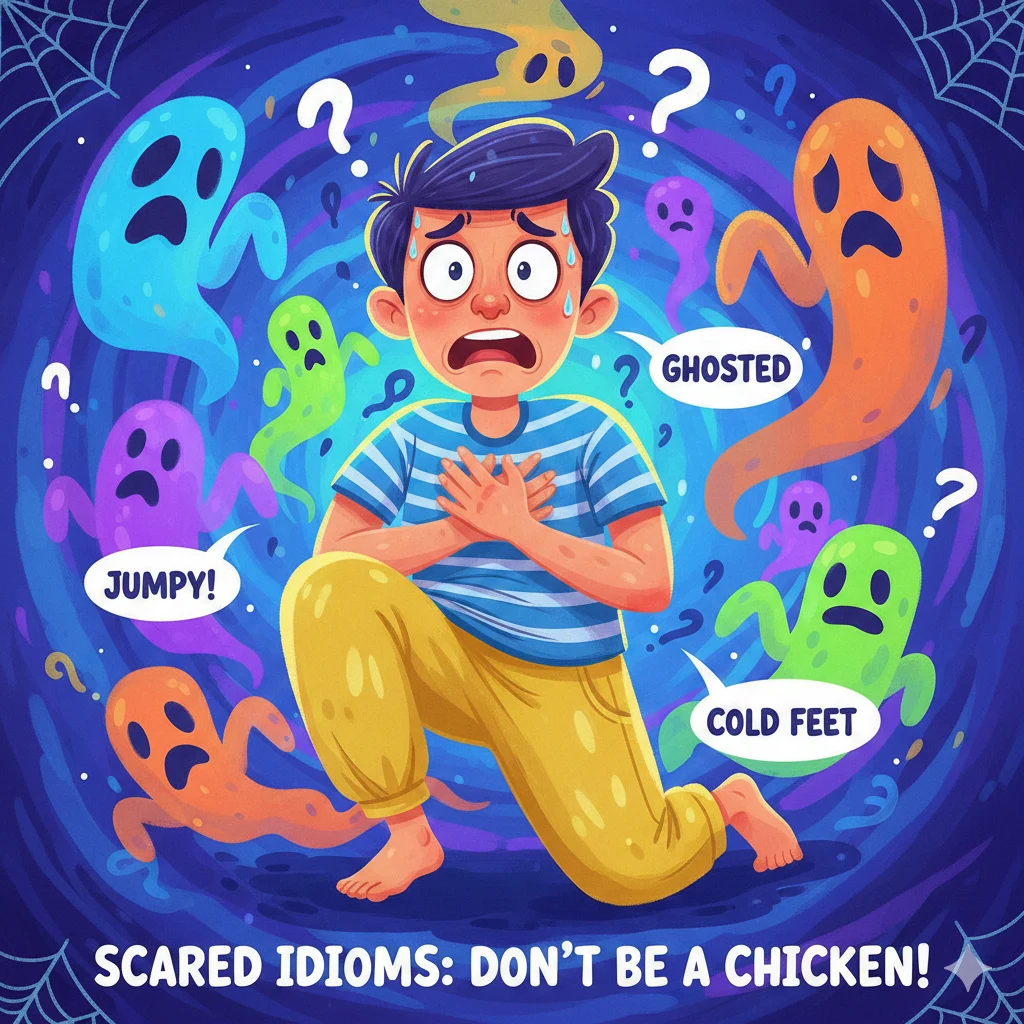
Scared idioms are English expressions that describe fear, nervousness, or being startled in a symbolic way. Common examples include “scared stiff” (extremely scared), “jump out of one’s skin” (to be very startled), and “shake like a leaf” (trembling from fear). These idioms are widely used in everyday conversations, stories, movies, and social media, helping speakers express emotions more vividly. Many English learners struggle with scared idioms because their meanings are not literal, which can lead to confusion.
Learning these idioms helps you understand native English better, express fear naturally, and sound more fluent. Whether you are a student, content creator, or professional, mastering scared idioms improves vocabulary, communication, and confidence. Once you know their meanings and practical usage, you’ll be able to recognize and use them effortlessly in real-life English conversations
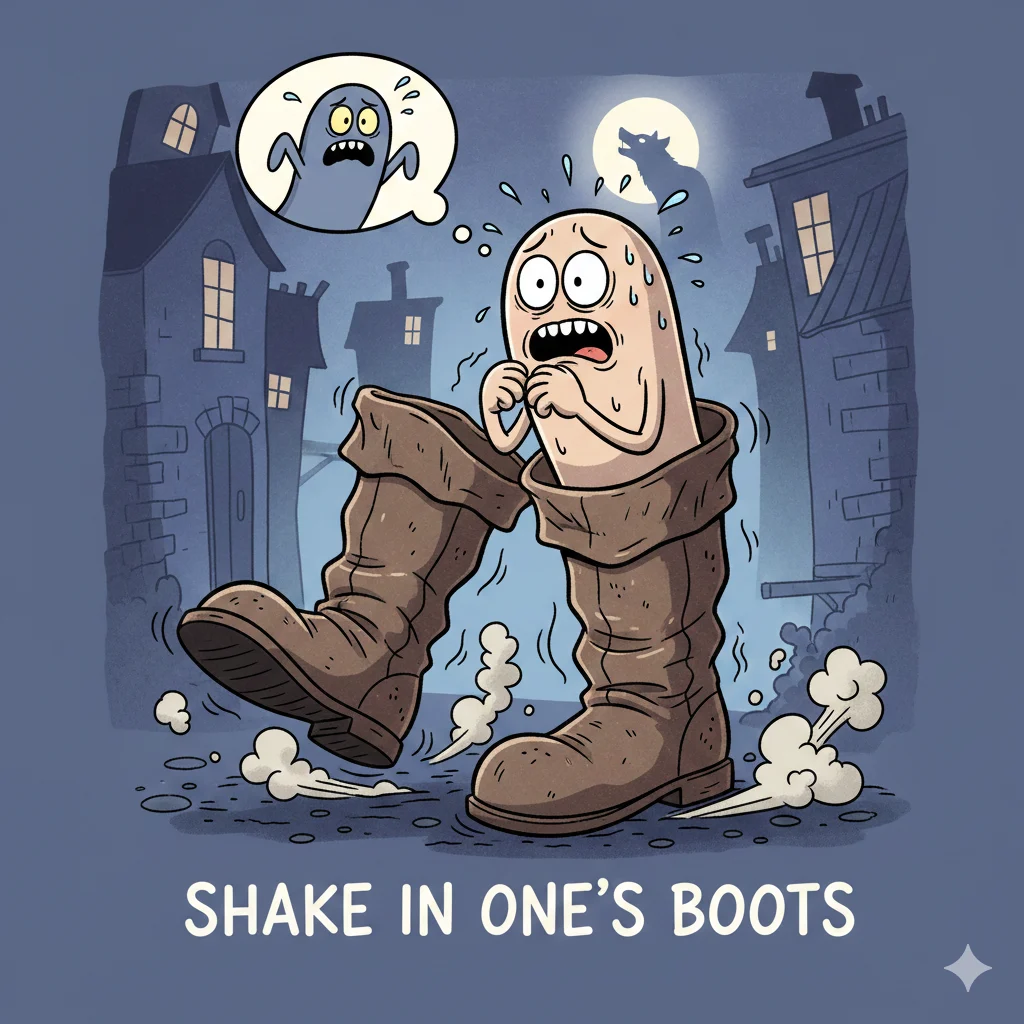
Shake in One’s Boots
Word-by-Word Meaning
Shaking while wearing boots.
Idiomatic/Figurative Meaning
To feel extremely frightened or nervous.
Example Sentences
- “When the thunderstorm started, I was shaking in my boots.”
- “He was shaking in his boots before the big exam.”
Common Error
Using it in non-fear contexts: “I’m shaking in my boots because of excitement” is incorrect.
Usage Note
Mostly informal and used in spoken English.
Scared Out of One’s Wits

Word-by-Word Meaning
Being frightened so much that your “wits” are gone.
Idiomatic/Figurative Meaning
Extremely frightened or panicked.
Example Sentences
- “She was scared out of her wits during the horror movie.”
- “I was scared out of my wits when the dog jumped at me.”
Common Error
Do not say “scared out of my mind” as a direct substitute—it’s slightly different in meaning.
Usage Note
Formal and informal usage; more dramatic than “shaking in one’s boots.”
Jump Out of One’s Skin
Word-by-Word Meaning
To leap out of your skin.
Idiomatic/Figurative Meaning
To react suddenly from surprise or fear.
Example Sentences
- “I nearly jumped out of my skin when the cat hissed at me.”
- “He jumped out of his skin when he saw the snake.”
Common Error

Avoid using it for minor scares; it implies a strong reaction.
Usage Note
Common in both British and American English.
Have Cold Feet

Word-by-Word Meaning
Feet feeling cold.
Idiomatic/Figurative Meaning
To feel nervous or scared about doing something planned.
Example Sentences
- “She had cold feet before her wedding.”
- “I always get cold feet before giving presentations.”
Common Error
Not used for general fear—only hesitation or anxiety before action.
Usage Note
Mostly figurative; often used for major life decisions.
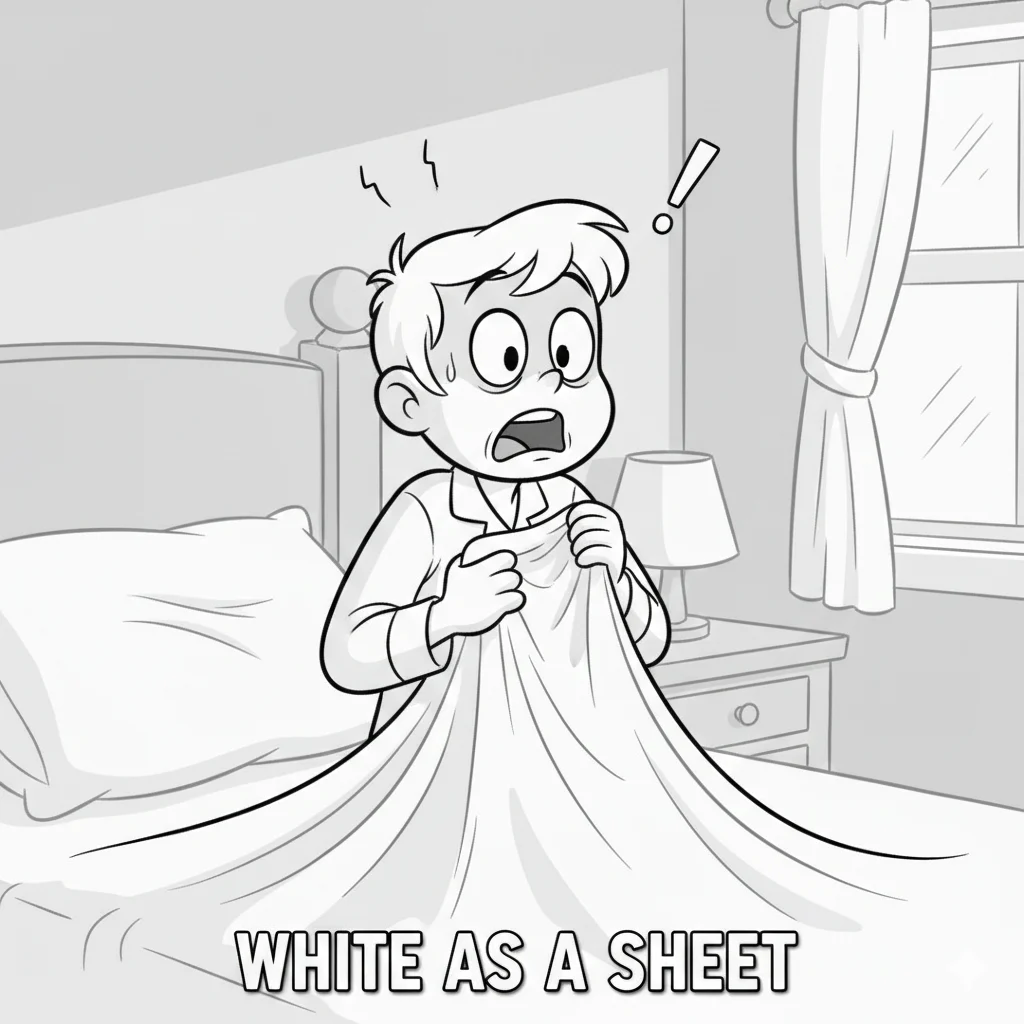
White as a Sheet
Word-by-Word Meaning
Skin becomes pale like a sheet.
Idiomatic/Figurative Meaning
Extremely pale due to fear or shock.
Example Sentences
- “He turned white as a sheet when he saw the ghost.”
- “She was white as a sheet after hearing the news.”
Common Error
Do not use casually for slight nervousness; it implies strong fear or shock.
Usage Note
Works in both spoken and written English.
Break Out in a Cold Sweat
Word-by-Word Meaning
Sweat suddenly appears on the body, feeling cold.
Idiomatic/Figurative Meaning
To feel sudden fear, anxiety, or panic.
Example Sentences
- “I broke out in a cold sweat when I realized I lost my wallet.”
- “He broke out in a cold sweat before the final exam.”
Common Error
Do not use casually; it implies strong fear or nervousness.
Usage Note
Works well in both written and spoken English.
Frightened to Death
Word-by-Word Meaning
So scared it feels like dying.
Idiomatic/Figurative Meaning
Extremely frightened.
Example Sentences
- “I was frightened to death when the lights went out.”
- “She was frightened to death by the loud crash.”
Common Error
Avoid literal usage; it’s figurative only.
Usage Note
Very common in storytelling or dramatic speech.
Petrified
Word-by-Word Meaning
Turned to stone.
Idiomatic/Figurative Meaning
Frozen with fear; extremely scared.
Example Sentences
- “He was petrified during the haunted house tour.”
- “The child was petrified of the barking dog.”
Common Error
Not used for mild fear; implies total paralysis or extreme fright.
Usage Note
Works in formal and informal contexts.
Spooked
Word-by-Word Meaning
Frightened suddenly.
Idiomatic/Figurative Meaning
To be startled, anxious, or uneasy.
Example Sentences
- “The sudden noise spooked the horse.”
- “I got spooked by the creepy shadow.”
Common Error
Avoid using “spooked” for serious trauma; it’s usually light fear or surprise.
Usage Note
Commonly used in everyday conversation, especially in American English.
Nervous Nellie
Word-by-Word Meaning
A nervous person named Nellie (figurative).
Idiomatic/Figurative Meaning
Someone who is easily frightened or anxious.
Example Sentences
- “Don’t be such a Nervous Nellie; it’s just a test.”
- “He’s a Nervous Nellie before public speaking.”
Common Error
Avoid using in formal writing; it’s casual and slightly playful.
Usage Note
Mostly informal; often humorous.
Jump at Shadows
Word-by-Word Meaning
React as if shadows are dangerous.
Idiomatic/Figurative Meaning
To be overly nervous or easily frightened.
Example Sentences
- “Since the accident, he jumps at shadows all the time.”
- “She jumps at shadows whenever there’s a loud noise.”
Common Error
Do not use literally; it’s figurative for exaggerated fear.
Usage Note
Commonly used in storytelling or describing anxiety.
Scared Stiff
Word-by-Word Meaning
Stiff due to fear.
Idiomatic/Figurative Meaning
Unable to move because of fear.
Example Sentences
- “I was scared stiff during the roller coaster ride.”
- “The cat was scared stiff when the dog barked.”
Common Error
Do not confuse with “scared silly,” which is less intense.
Usage Note
Very common in spoken English.
Afraid of One’s Own Shadow
Word-by-Word Meaning
Frightened even by one’s shadow.
Idiomatic/Figurative Meaning
Easily scared or paranoid.
Example Sentences
- “Ever since the burglary, he’s afraid of his own shadow.”
- “She’s afraid of her own shadow in the dark.”
Common Error
Not used for real danger; implies excessive fear or anxiety.
Usage Note
Used for both humor and description of nervous people.
Have the Heebie-Jeebies
Word-by-Word Meaning
Feeling creepy or uneasy.
Idiomatic/Figurative Meaning
To feel nervous, scared, or uncomfortable.
Example Sentences
- “This old house gives me the heebie-jeebies.”
- “I get the heebie-jeebies when the room is too quiet.”
Common Error
Casual idiom; avoid in formal writing.
Usage Note
Mostly informal, playful expression.
Scare the Pants Off Someone
Word-by-Word Meaning
Frighten someone so much their pants metaphorically fly off.
Idiomatic/Figurative Meaning
To frighten someone severely.
Example Sentences
- “The horror movie scared the pants off me!”
- “That sudden scream scared the pants off the kids.”
Common Error
Too informal for professional writing; purely casual.
Usage Note
Very common in spoken English for humorous effect.
Blood Runs Cold
Word-by-Word Meaning
Feeling so scared that blood metaphorically chills.
Idiomatic/Figurative Meaning
Extreme fear or horror.
Example Sentences
- “Her blood ran cold when she saw the message.”
- “I felt my blood run cold in that haunted hallway.”
Common Error
Avoid literal interpretation; always figurative.
Usage Note
Good for dramatic storytelling.
Jump Out of One’s Skin
(Already covered as #3 – can skip or use “Freak Out” here for variety)
Word-by-Word Meaning
React suddenly with shock.
Idiomatic/Figurative Meaning
To panic or react to sudden fear.
Example Sentences
- “I freaked out when I saw the spider.”
Usage Note
Common in casual speech.
Freaked Out
Word-by-Word Meaning
Reacted with panic.
Idiomatic/Figurative Meaning
Very scared, anxious, or stressed.
Example Sentences
- “She freaked out before the presentation.”
- “He freaked out when the lights went out.”
Common Error
Too informal for formal writing.
Usage Note
Widely used in everyday English.
On Edge
Word-by-Word Meaning
Feeling tense like a sharp edge.
Idiomatic/Figurative Meaning
Nervous, anxious, or easily startled.
Example Sentences
- “I’ve been on edge all day waiting for the results.”
- “He’s on edge after hearing strange noises.”
Common Error
Not exactly scared; more anxious or tense.
Usage Note
Works in both casual and formal contexts.
Quaking in One’s Shoes
Word-by-Word Meaning
Shaking while wearing shoes.
Idiomatic/Figurative Meaning
Very scared or anxious.
Example Sentences
- “I was quaking in my shoes before the exam.”
- “She was quaking in her shoes when meeting the principal.”
Common Error
Do not use for minor nervousness.
Usage Note
Common, expressive, and slightly information.
FAQ Section
Q1: What are scared idioms?
Scared idioms are expressions used to describe fear, nervousness, or panic in creative ways beyond literal words.
Q2: Can idioms for fear be used in writing?
Yes, many are suitable for informal and creative writing, while some fit formal writing too.
Q3: How do I remember these idioms?
Practice with examples in daily conversations, journaling, or roleplay scenarios.
Q4: Are scared idioms the same in British and American English?
Most are shared, but slight differences exist. For example, “scared stiff” is common in both, but some expressions may be region-specific.
Q5: Can I use these idioms for humor?
Absolutely! Exaggerated fear idioms like “jump out of one’s skin” often create funny, relatable moments.
Conclusion
Scared idioms are powerful expressions that capture fear, anxiety, and nervousness in everyday language. Phrases like “scared stiff”, “jump out of one’s skin”, or “quaking in one’s boots” vividly convey emotions and make communication more expressive and relatable. Learning these idioms enhances vocabulary, improves conversational English, and helps readers articulate feelings naturally.
By using scared-related idioms in writing and speech, one can add drama, clarity, and cultural nuance, making communication impactful and memorable. Understanding and applying these idioms not only boosts language skills but also enables readers to connect with audiences, describe emotions accurately, and make their English more colorful, engaging, and fluent.

“Rose Macaulay shares the charm of idioms on LearnIdom.com, making language learning delightful, insightful, and full of wit for every reader.”