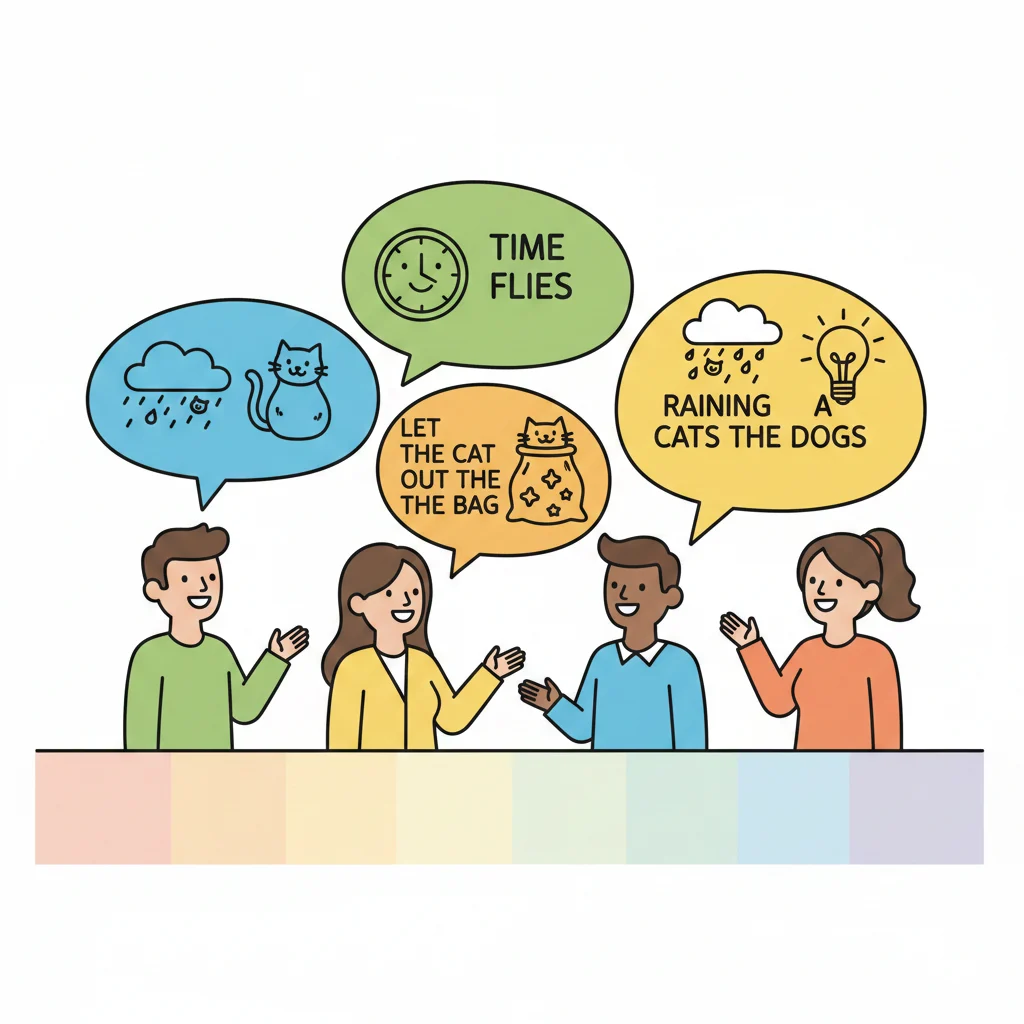
Have you ever heard someone say “break the ice” and wondered what ice had to do with conversation? That moment captures the purpose of idioms perfectly. Idioms help us express ideas, emotions, and situations in a colorful, natural way that plain words often can’t.
In everyday life, native speakers rely on idioms to sound friendly, expressive, and human. Whether you’re chatting with friends, watching movies, or reading online, idioms are everywhere.
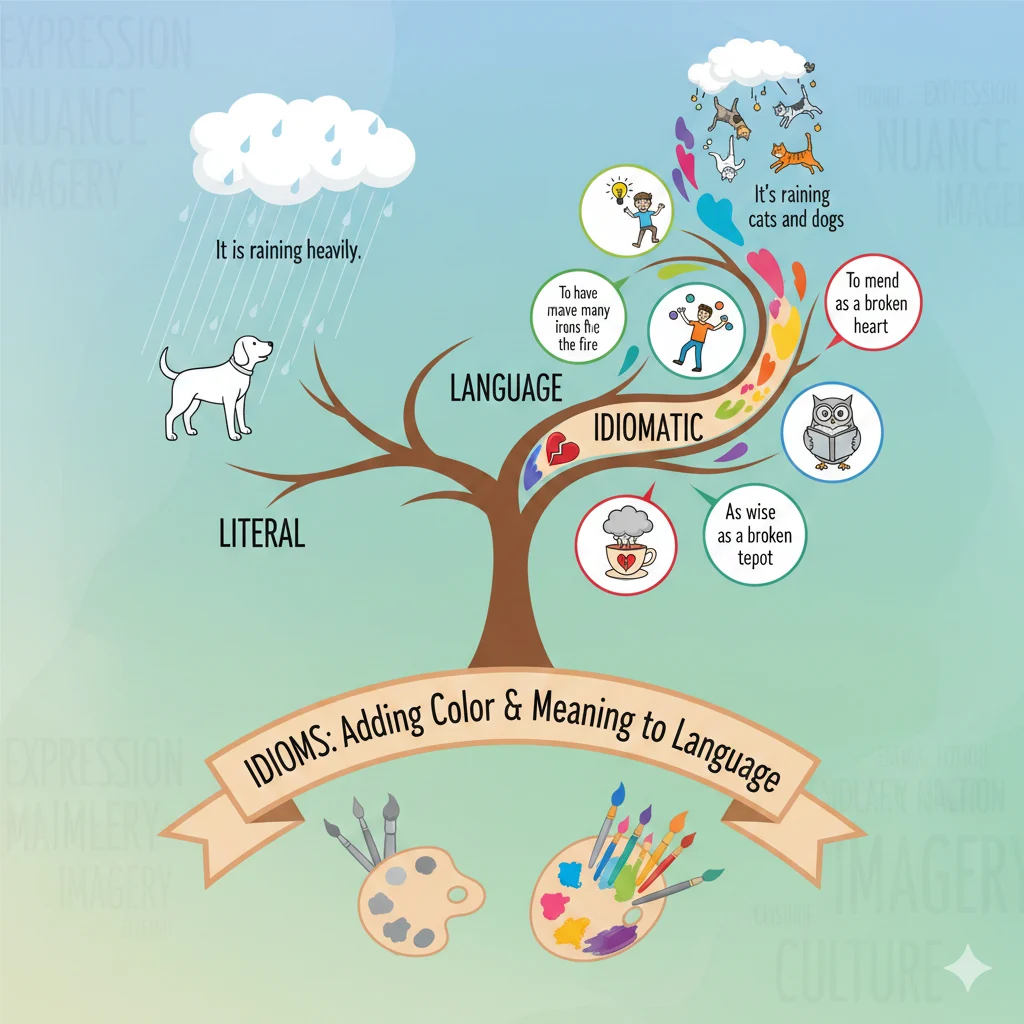
Understanding the purpose of idioms doesn’t just improve vocabulary—it helps you truly think in English. This guide explains why idioms exist, how they work, and shows you the most famous idioms with clear meanings and real-life examples you can start using today.
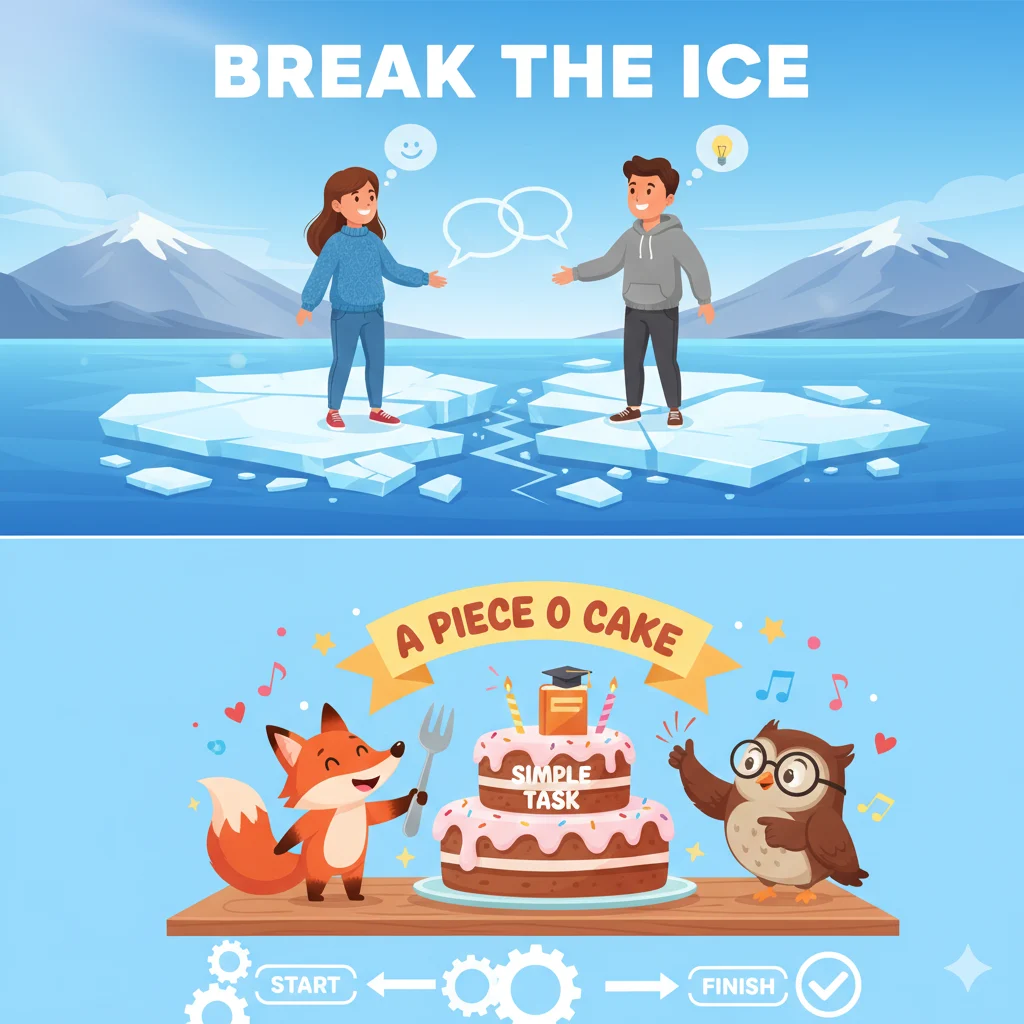
Break the Ice
Word-by-word meaning: Break frozen water
Idiomatic meaning: Start a conversation in a social setting
Example: He told a joke to break the ice at the meeting.
Common error: Using it for ending conversations
Usage note: Often used in social or formal introductions
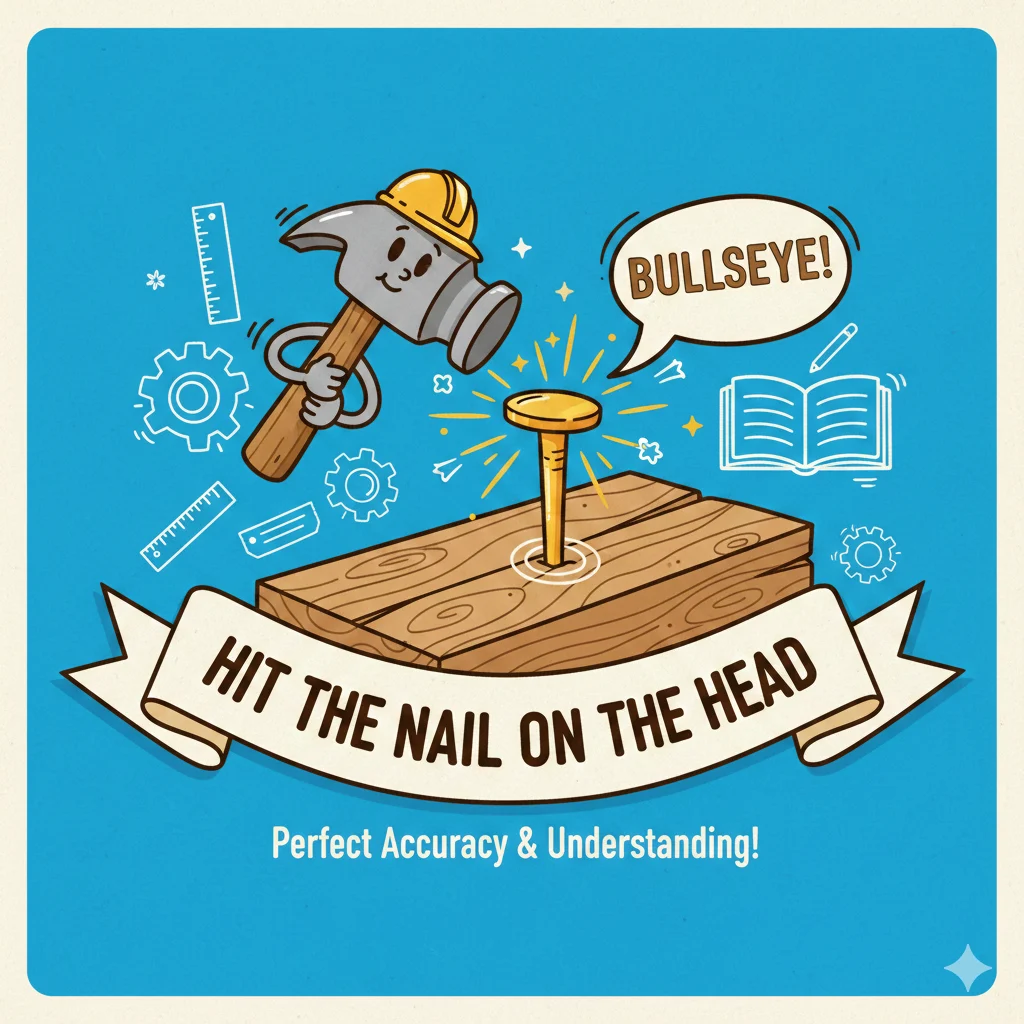
Hit the Nail on the Head

Word-by-word meaning: Strike a nail correctly
Idiomatic meaning: Be exactly right
Example: You hit the nail on the head with that explanation.
Common error: Saying “hit the head on the nail”
Usage note: Used when someone is precise
A Piece of Cake

Word-by-word meaning: A slice of dessert
Idiomatic meaning: Very easy
Example: The test was a piece of cake.
Common error: Using it for food situations
Usage note: Informal and positive
Under the Weather
Word-by-word meaning: Beneath weather conditions
Idiomatic meaning: Feeling ill
Example: I’m feeling under the weather today.
Common error: Linking it to climate
Usage note: Polite way to say “sick”
Spill the Beans
Word-by-word meaning: Drop beans
Idiomatic meaning: Reveal a secret
Example: She spilled the beans about the surprise.
Common error: Using it for accidents
Usage note: Informal conversations
Cost an Arm and a Leg
Word-by-word meaning: Lose body parts
Idiomatic meaning: Very expensive
Example: That phone costs an arm and a leg.
Common error: Taking it literally
Usage note: Emphasizes high price
Once in a Blue Moon
Word-by-word meaning: Rare moon event
Idiomatic meaning: Very rarely
Example: I eat fast food once in a blue moon.
Common error: Using it for regular events
Usage note: Casual speech
Let the Cat Out of the Bag
Word-by-word meaning: Release a cat
Idiomatic meaning: Reveal a secret accidentally
Example: He let the cat out of the bag.
Common error: Mixing with “spill the beans” incorrectly
Usage note: Often accidental
Bite the Bullet
Word-by-word meaning: Bite metal
Idiomatic meaning: Face a difficult situation bravely
Example: I had to bite the bullet and apologize.
Common error: Using it for anger
Usage note: Shows courage
Burn the Midnight Oil
Word-by-word meaning: Burn oil at night
Idiomatic meaning: Work late
Example: She burned the midnight oil before exams.
Common error: Using it for relaxation
Usage note: Academic or work context
The Ball Is in Your Court
Word-by-word meaning: Ball on your side
Idiomatic meaning: It’s your decision
Example: I’ve done my part—the ball is in your court.
Common error: Using it for sports only
Usage note: Responsibility-focused
On Cloud Nine
Word-by-word meaning: On a cloud
Idiomatic meaning: Extremely happy
Example: She’s on cloud nine after the results.
Common error: Using it sarcastically
Usage note: Strong happiness
In Hot Water
Word-by-word meaning: In heated water
Idiomatic meaning: In trouble
Example: He’s in hot water with his teacher.
Common error: Confusing with relaxation
Usage note: Negative situations
Call It a Day
Word-by-word meaning: Name the day
Idiomatic meaning: Stop working
Example: Let’s call it a day.
Common error: Using it for vacations
Usage note: Work-related
Through Thick and Thin
Word-by-word meaning: Different conditions
Idiomatic meaning: In all situations
Example: True friends stay through thick and thin.
Common error: Using it for objects
Usage note: Loyalty
Jump on the Bandwagon
Word-by-word meaning: Jump on a wagon
Idiomatic meaning: Follow a trend
Example: Many jumped on the bandwagon.
Common error: Using it positively always
Usage note: Often critical
Kill Two Birds with One Stone
Word-by-word meaning: Harm birds
Idiomatic meaning: Solve two problems at once
Example: Walking to work kills two birds with one stone.
Common error: Using in sensitive contexts
Usage note: Efficiency
Keep an Eye On
Word-by-word meaning: Watch with eye
Idiomatic meaning: Monitor
Example: Keep an eye on my bag.
Common error: Thinking it’s literal
Usage note: Everyday use
Back to Square One
Word-by-word meaning: Return to start
Idiomatic meaning: Start over
Example: The plan failed—we’re back to square one.
Common error: Using it for success
Usage note: Problem-solving
Speak of the Devil
Word-by-word meaning: Mention devil
Idiomatic meaning: Someone appears when mentioned
Example: Speak of the devil—here he comes!
Common error: Using it negatively
Usage note: Light humor
FAQs About the Purpose of Idioms
1. What is the main purpose of idioms?
Idioms make communication more expressive, natural, and culturally rich.
2. Are idioms necessary for fluency?
Yes. Understanding idioms is key to sounding natural and understanding native speakers.
3. Why are idioms confusing for learners?
Because their meanings aren’t literal and depend on context.
4. Should beginners learn idioms?
Yes, but start with common, everyday idioms.
5. How can I practice idioms?
Use them in sentences, watch movies, and keep an idiom notebook.
Conclusion
The true purpose of idioms is to bring language to life. They turn simple sentences into memorable expressions and help you connect naturally with others. Don’t try to memorize hundreds at once—start small, notice idioms in real conversations, and practice using them confidently. With time, idioms will stop feeling confusing and start feeling fun.

“L.P. Hartley brings classic idioms to life on LearnIdom.com, helping readers explore language with wit, clarity, and timeless insight.”