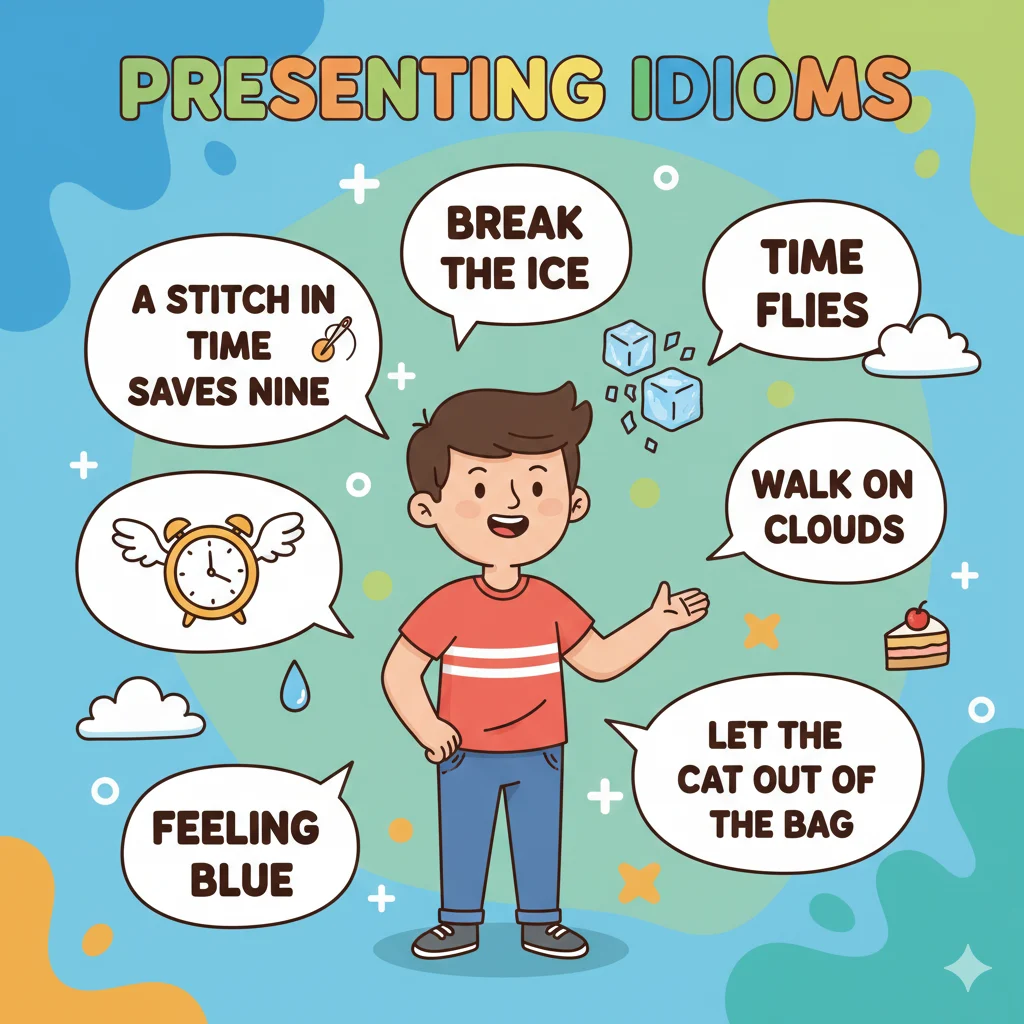
Have you ever struggled to express yourself when talking about the present moment? Present idioms are a fun and effective way to add color and personality to your English
From everyday conversations to professional writing, mastering these idioms can make your speech more engaging. Imagine telling your friend, “I’ll cross that bridge when I come to it”—sounds natural, right? Let’s explore 20 of the most famous present idioms you can start using today.
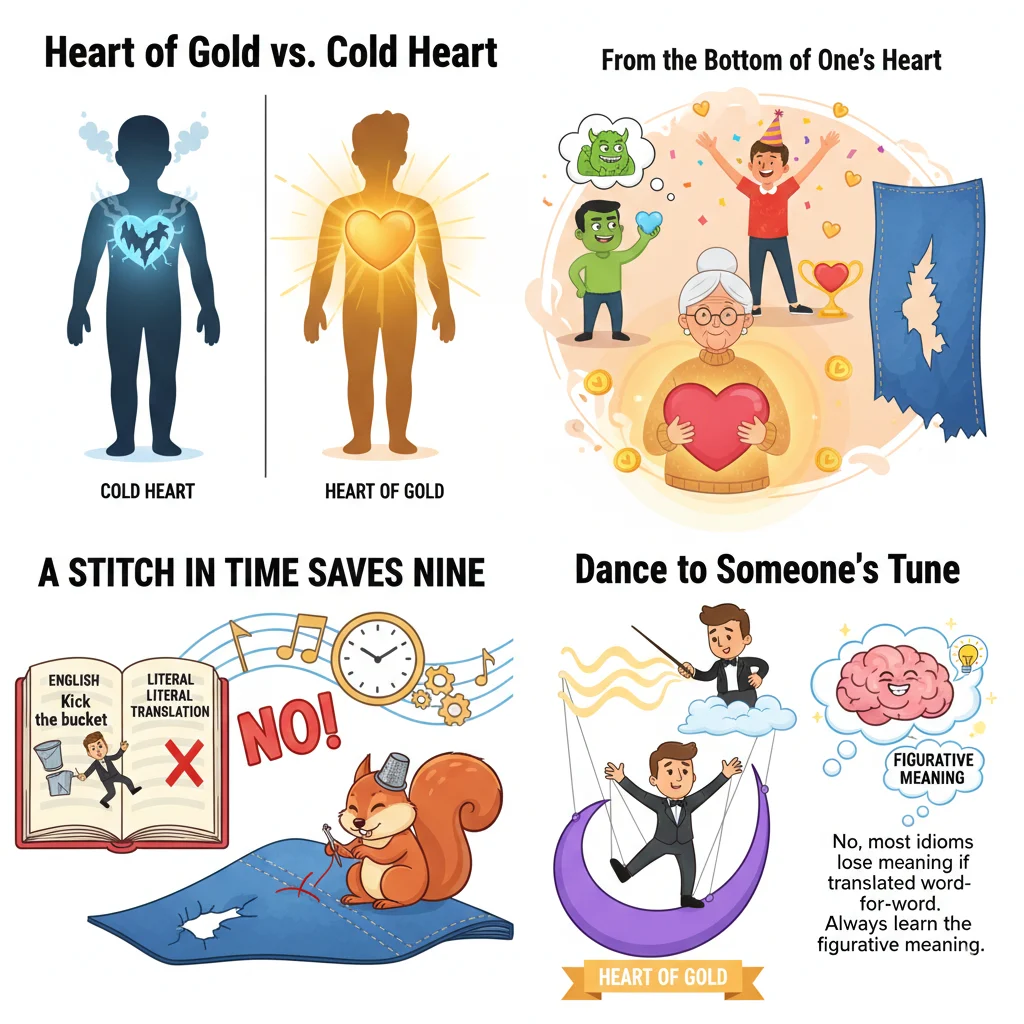
A Stitch in Time Saves Nine
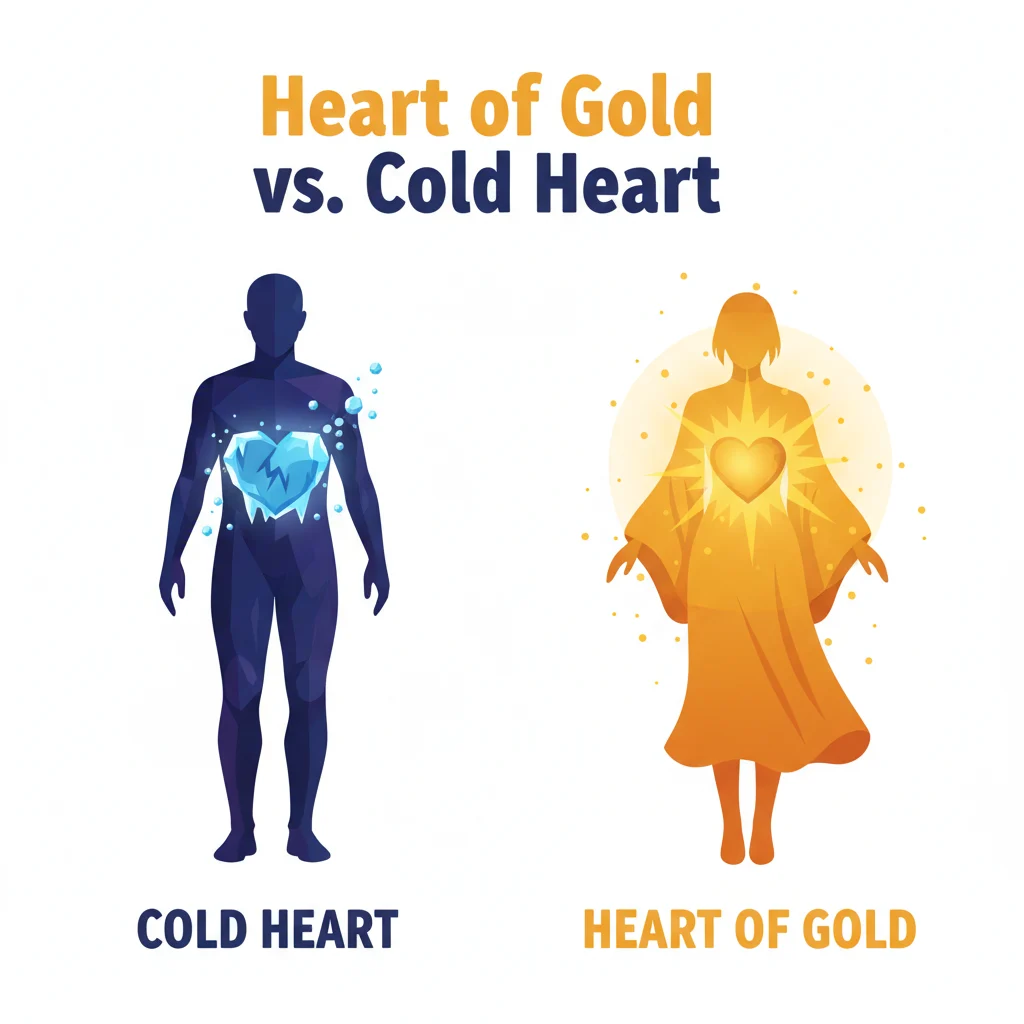
Word-by-Word Meaning
A stitch now prevents nine stitches later.
Idiomatic/Figurative Meaning
Dealing with a problem immediately prevents it from getting worse.
Example Sentences
- If you fix the leak now, it won’t cause more damage later. A stitch in time saves nine.
Common Error
Using it only for physical sewing situations—this idiom is about problems in general.
Usage Note
Use this idiom in advice or cautionary contexts.
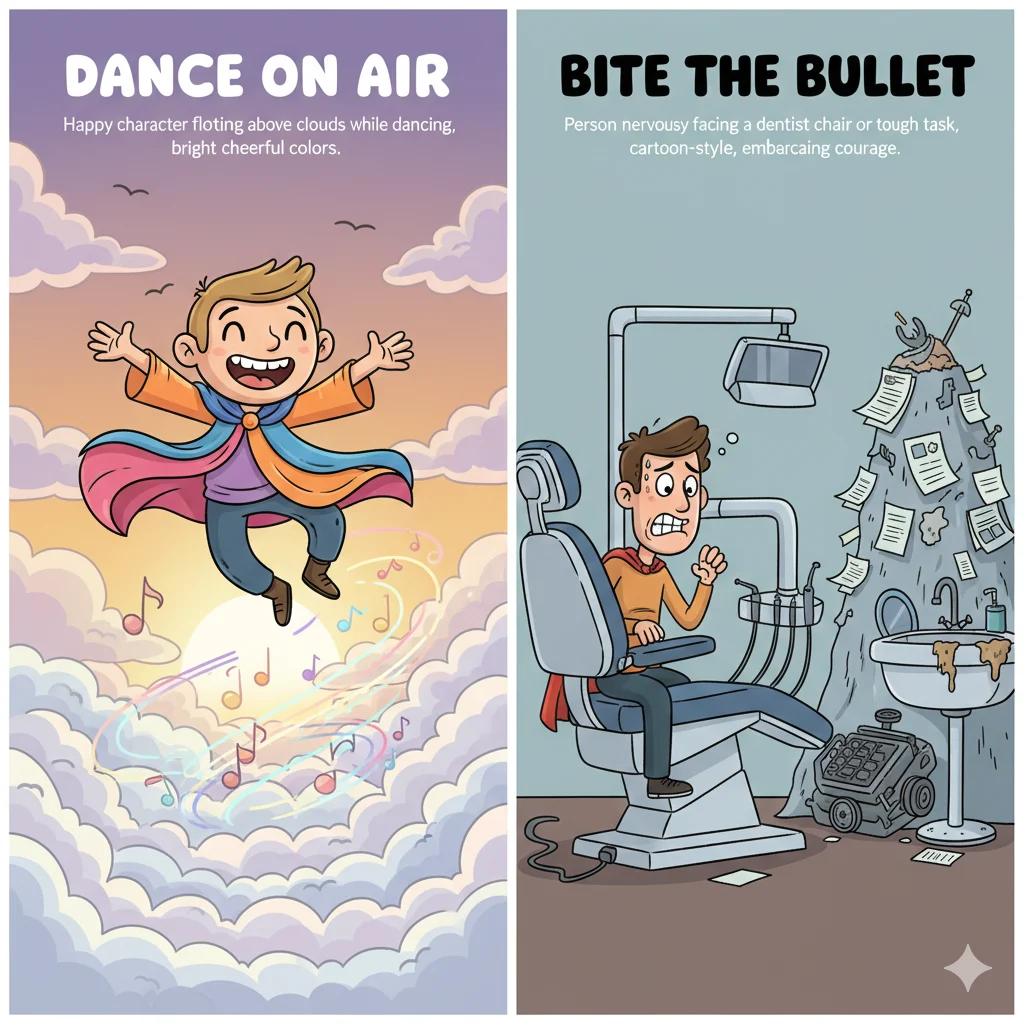
Bite the Bullet
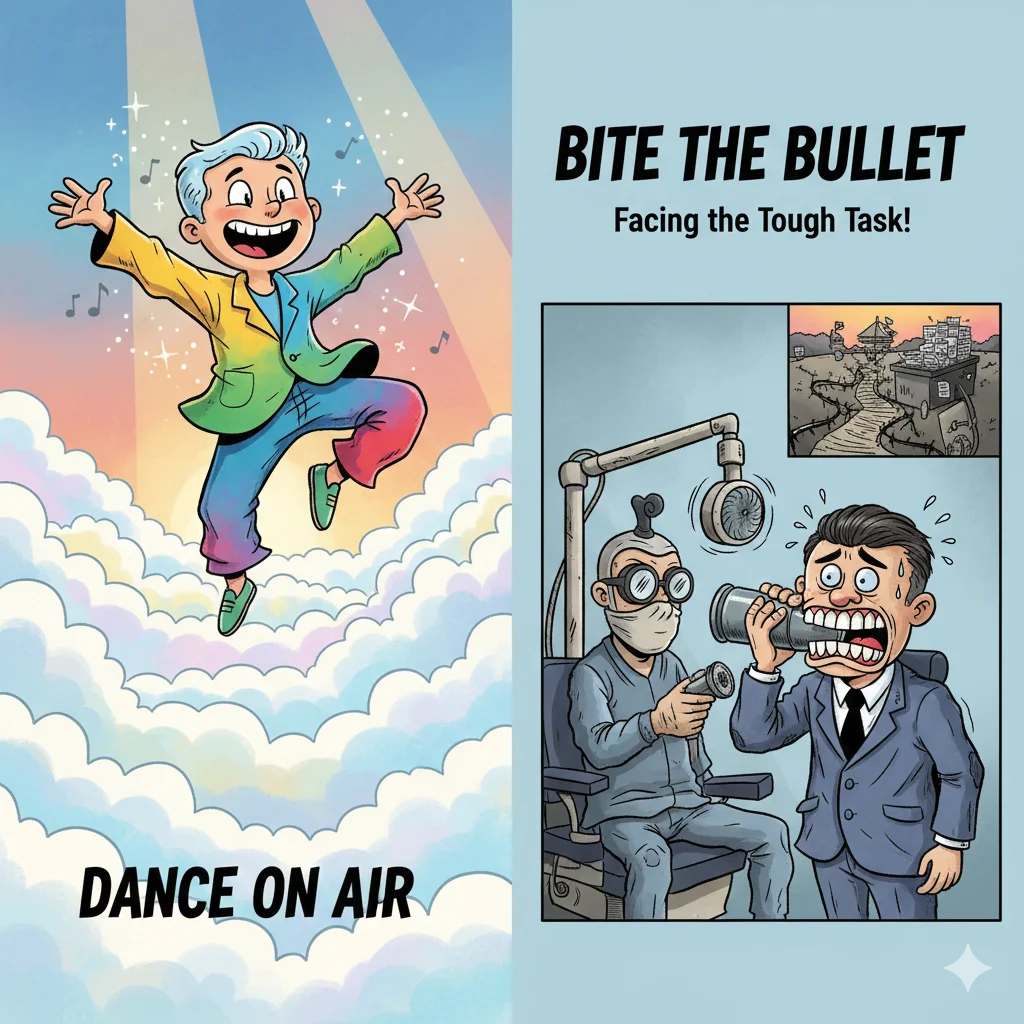
Word-by-Word Meaning
To literally bite a bullet.
Idiomatic/Figurative Meaning
To endure something painful or unpleasant with courage.
Example Sentences
- I don’t want to go to the dentist, but I’ll bite the bullet.
Common Error
Avoid saying “bite the bullet of something”—just use bite the bullet.
Usage Note
Often used when facing unavoidable challenges.
Break the Ice
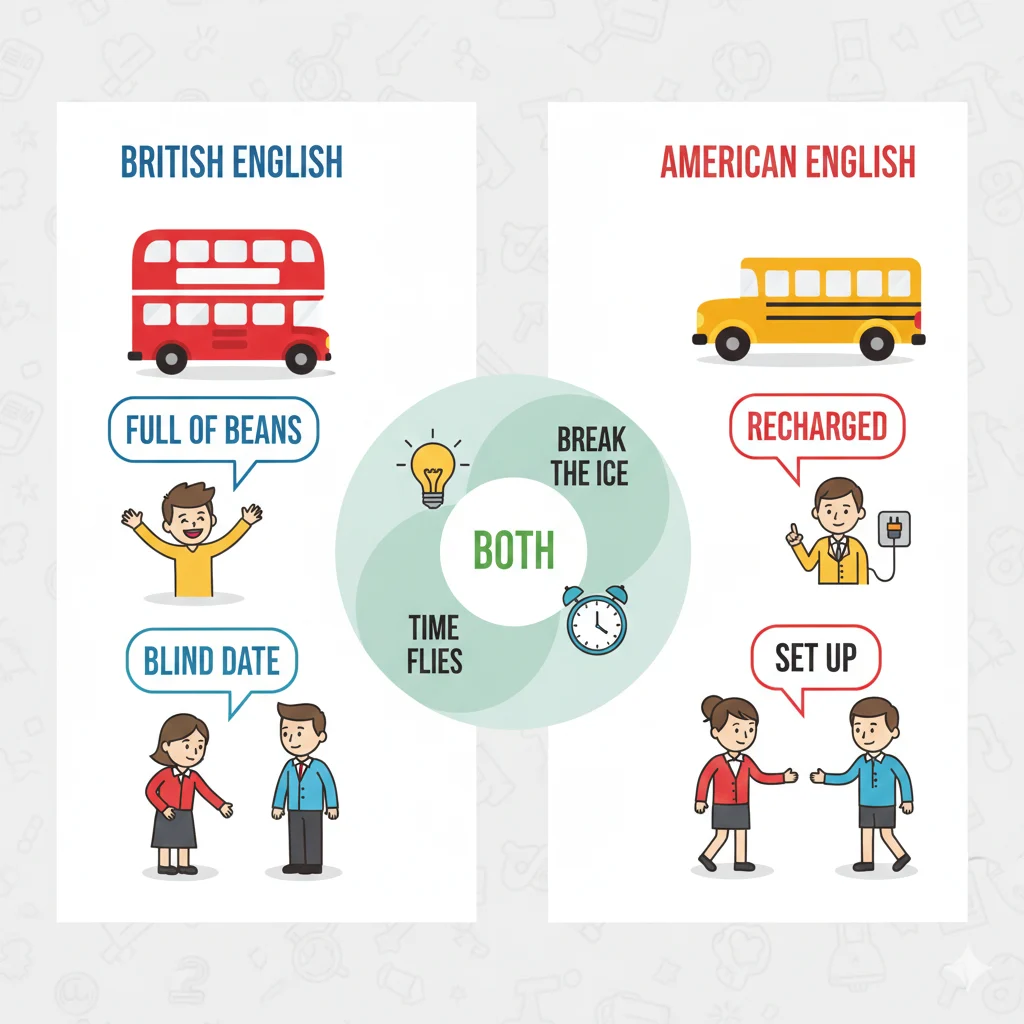
Word-by-Word Meaning
To smash ice.
Idiomatic/Figurative Meaning
To start a conversation in a social setting to relieve tension.
Example Sentences
- He told a funny story to break the ice at the meeting.
Common Error
Don’t use it for literally breaking ice; it’s always social.
Usage Note
Common in professional and casual contexts.
Call It a Day
Word-by-Word Meaning
Decide the day is over.
Idiomatic/Figurative Meaning
To stop working for the rest of the day or to quit a task.
Example Sentences
- We’ve done enough work. Let’s call it a day.
Common Error
Avoid using it for long-term quitting; it’s temporary.
Usage Note
Perfect for workplace or study contexts.
Hit the Nail on the Head
Word-by-Word Meaning
Strike the nail exactly on the head.
Idiomatic/Figurative Meaning
To describe exactly what is causing a situation or problem.
Example Sentences
- You’ve hit the nail on the head with your analysis.
Common Error
Using it for physical hitting—it’s figurative.
Usage Note
Use it for precise observations or comments.
250+ Idioms About Dancing to Express Yourself 💃🕺
Let the Cat Out of the Bag
Word-by-Word Meaning
Release the cat from a bag.
Idiomatic/Figurative Meaning
To reveal a secret accidentally or intentionally.
Example Sentences
- She let the cat out of the bag about the surprise party.
Common Error
Using it for intentional sharing is fine, but context matters.
Usage Note
Best for casual conversation.
Once in a Blue Moon
Word-by-Word Meaning
Happens once during a rare blue moon.
Idiomatic/Figurative Meaning
Something that happens very rarely.
Example Sentences
- I go to the cinema once in a blue moon.
Common Error
Misunderstanding it as frequent occurrence.
Usage Note
Use for emphasizing rarity.
Piece of Cake
Word-by-Word Meaning
A slice of cake.
Idiomatic/Figurative Meaning
Something very easy to do.
Example Sentences
- That exam was a piece of cake!
Common Error
Avoid using it for literal cake references in idiomatic contexts.
Usage Note
Use to describe tasks or challenges.
The Ball is in Your Court
Word-by-Word Meaning
The ball is now on your side of the court.
Idiomatic/Figurative Meaning
It’s your decision or responsibility to act next.
Example Sentences
- I’ve done my part; now the ball is in your court.
Common Error
Don’t use for literal ball games; it’s figurative.
Usage Note
Use in decision-making situations.
Time Flies
Word-by-Word Meaning
Time moves quickly.
Idiomatic/Figurative Meaning
Time passes very quickly.
Example Sentences
- Wow, the semester is almost over—time flies!
Common Error
Overusing without context—pair with a reference to passing events.
Usage Note
Good for reflective or nostalgic moments.
Under the Weather
Word-by-Word Meaning
Feeling beneath the weather.
Idiomatic/Figurative Meaning
To feel ill or unwell.
Example Sentences
- I think I’ll stay home today; I’m feeling a bit under the weather.
Common Error
Do not use for serious, chronic illnesses; it’s mostly for mild sickness.
Usage Note
Casual, conversational idiom.
Burn the Midnight Oil
Word-by-Word Meaning
Work late into the night by burning oil lamps.
Idiomatic/Figurative Meaning
To work late or study hard at night.
Example Sentences
- She’s burning the midnight oil to finish her project before the deadline.
Common Error
Do not use literally; it refers to hard work, not actual lamps.
Usage Note
Common in work or study contexts.
Cry Over Spilled Milk
Word-by-Word Meaning
Cry because milk has spilled.
Idiomatic/Figurative Meaning
To worry about something that has already happened and cannot be changed.
Example Sentences
- It’s too late to fix the mistake—no use crying over spilled milk.
Common Error
Do not use for future concerns; it’s about past events.
Usage Note
Often used to give advice about moving on.
Every Cloud Has a Silver Lining
Word-by-Word Meaning
Even a dark cloud has a shiny edge.
Idiomatic/Figurative Meaning
There is something good in every bad situation.
Example Sentences
- I lost my job, but every cloud has a silver lining—I now have time to start my own business.
Common Error
Avoid using literally; it’s figurative optimism.
Usage Note
Good for encouragement and motivation.
Jump on the Bandwagon
Word-by-Word Meaning
Hop onto a moving wagon used in bands.
Idiomatic/Figurative Meaning
To join others in doing something popular or trendy.
Example Sentences
- Many people jumped on the bandwagon of the new fitness craze.
Common Error
Do not use for small, personal decisions; it implies popularity.
Usage Note
Common in social and cultural discussions.
Keep Your Fingers Crossed
Word-by-Word Meaning
Cross your fingers.
Idiomatic/Figurative Meaning
Hope that things will turn out well.
Example Sentences
- I’ve applied for the scholarship—keep your fingers crossed!
Common Error
Do not use for literal finger crossing as a superstition only.
Usage Note
Used when wishing luck or positive outcomes.
Let Sleeping Dogs Lie
Word-by-Word Meaning
Do not disturb dogs that are sleeping.
Idiomatic/Figurative Meaning
Avoid restarting old conflicts or problems.
Example Sentences
- We argued about that last month, but let sleeping dogs lie.
Common Error
Do not use for literal dogs; it’s figurative.
Usage Note
Useful in advice about conflict or caution.
Spill the Beans
Word-by-Word Meaning
Drop or spill beans.
Idiomatic/Figurative Meaning
Reveal secret information, intentionally or accidentally.
Example Sentences
- He spilled the beans about the surprise wedding.
Common Error
Do not confuse with literally spilling food.
Usage Note
Common in social and casual contexts.
Steal Someone’s Thunder
Word-by-Word Meaning
Take someone else’s thunder (sound effect).
Idiomatic/Figurative Meaning
Take credit for someone else’s idea or achievement.
Example Sentences
- She stole my thunder by announcing my plan first.
Common Error
Do not use for literal theft of sound; always figurative.
Usage Note
Use in professional, creative, or social contexts.
When Pigs Fly
Word-by-Word Meaning
Pigs flying in the air.
Idiomatic/Figurative Meaning
Something impossible or highly unlikely.
Example Sentences
- Sure, he’ll clean his room without being asked—when pigs fly!
Common Error
Do not use literally; it’s for impossible events.
Usage Note
Casual, humorous idiom.
Conclusion
Learning present idioms makes your English more natural, engaging, and fun. Start small—practice a few idioms each week, use them in conversations, and notice how people respond. The more you use idioms, the more confident you’ll become. Remember, every conversation is a chance to bring language to life!

“L.P. Hartley brings classic idioms to life on LearnIdom.com, helping readers explore language with wit, clarity, and timeless insight.”