Have you ever heard someone say they’re “in the same boat” or “at a crossroads” and wondered what places have to do with it? Place idioms are everywhere in English, and they rarely mean actual locations.
I remember hearing “back to square one” during a school project and thinking there must be a secret map involved. There wasn’t—but there was a powerful lesson about English expressions.
In this guide, you’ll learn 20 of the most common place idioms, explained clearly with meanings, examples, and usage tips. By the end, you’ll understand them—and confidently use them in real conversations, writing, and exams.
In the Same Boat

Word-by-word meaning: In one boat together
Idiomatic meaning: In the same difficult situation
Example sentence: We all failed the test—we’re in the same boat.
Common error: Using it for positive situations
Usage note: Usually refers to shared problems
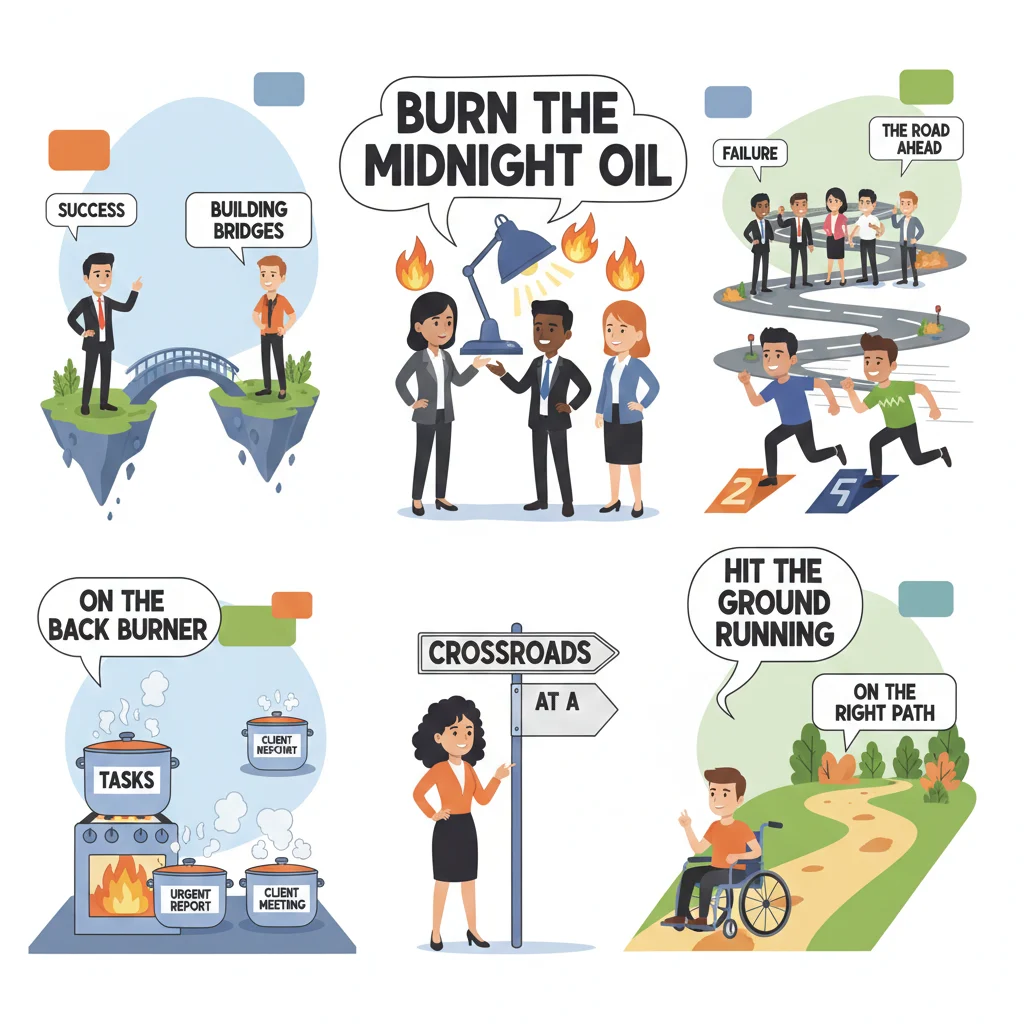
At a Crossroads

Word-by-word meaning: Standing where roads meet
Idiomatic meaning: Facing an important decision
Example sentence: She’s at a crossroads in her career.
Common error: Using it for small choices
Usage note: Often about life-changing moments
Back to Square One

Word-by-word meaning: Returning to the first square
Idiomatic meaning: Starting again from the beginning
Example sentence: The plan failed, so we’re back to square one.
Common error: Using it when progress still exists
Usage note: Common in work and study contexts
In the Middle of Nowhere
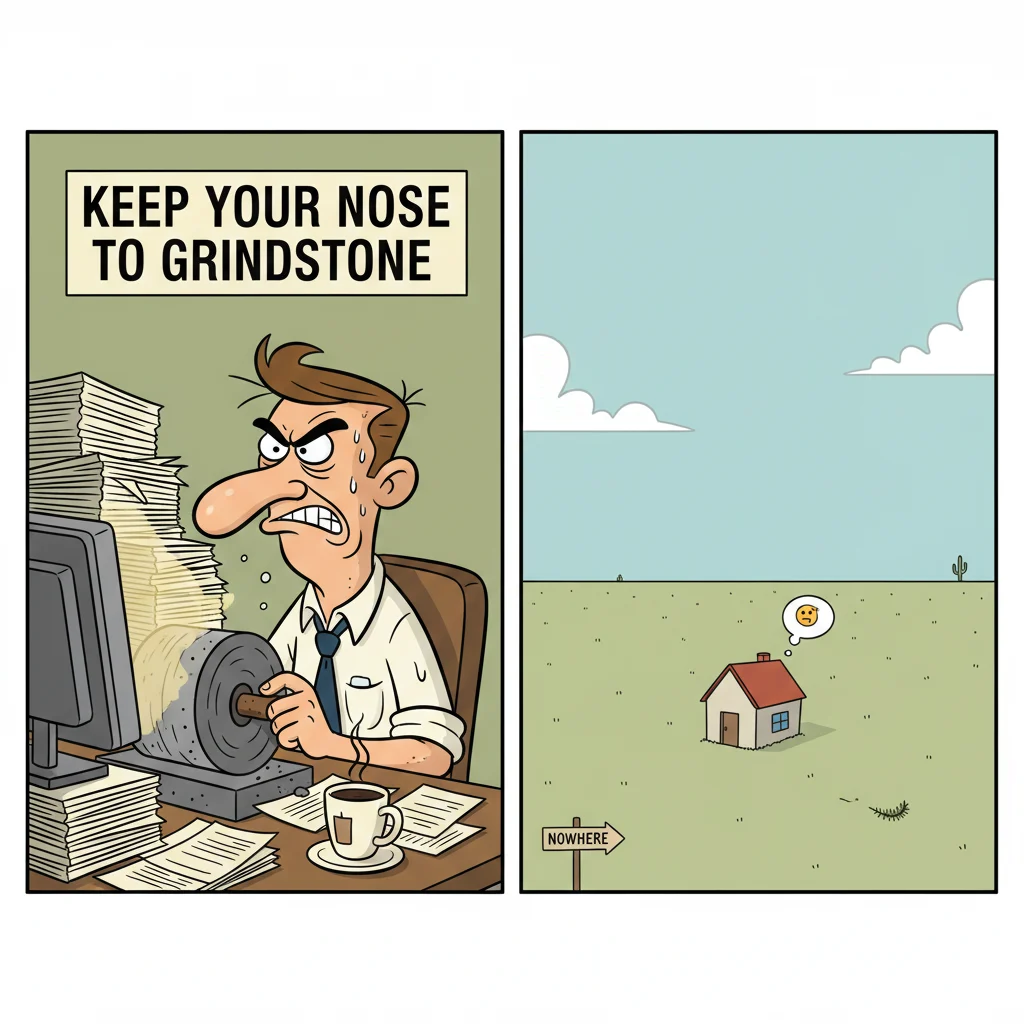
Word-by-word meaning: A place with nothing around
Idiomatic meaning: A very remote location
Example sentence: Their house is in the middle of nowhere.
Common error: Using it for busy areas
Usage note: Slightly informal
On the Right Track
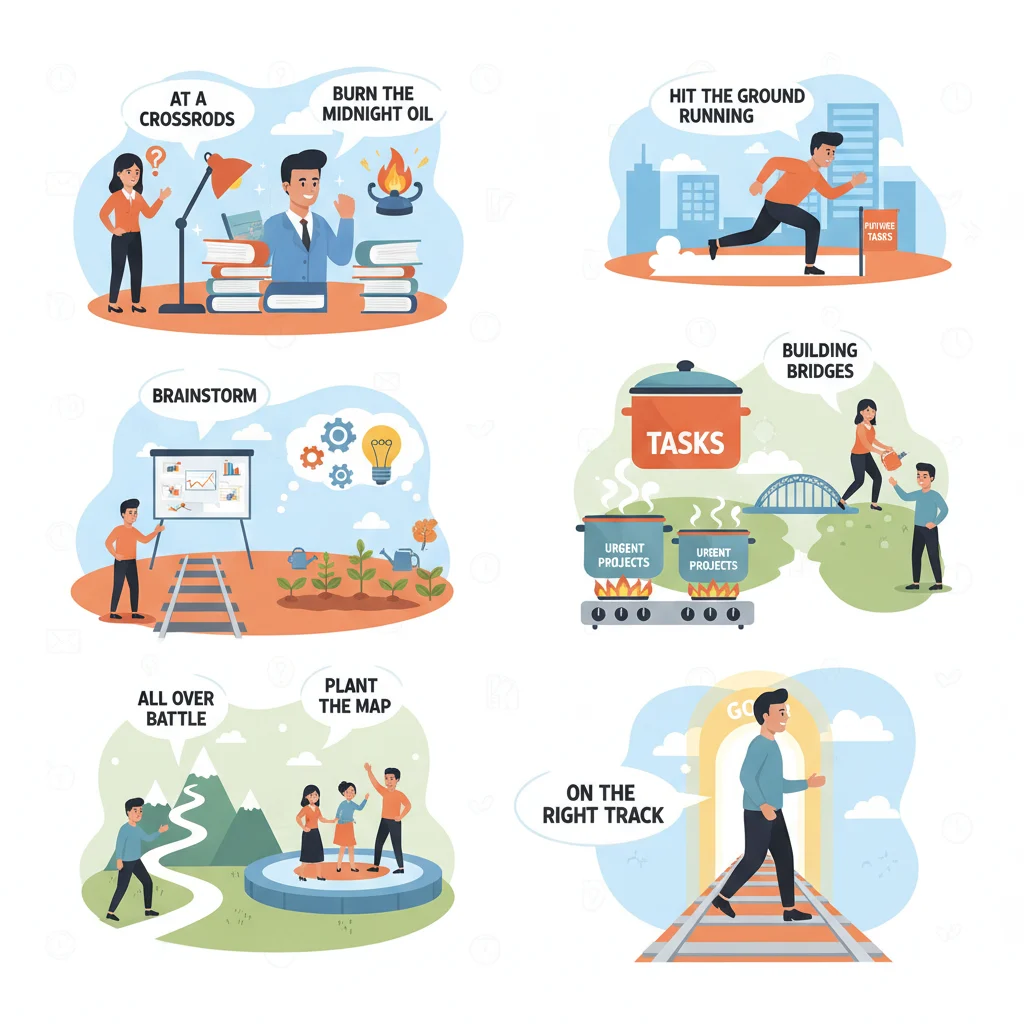
Word-by-word meaning: On a correct path
Idiomatic meaning: Doing something correctly
Example sentence: Your study plan is on the right track.
Common error: Mixing with literal travel contexts
Usage note: Encouraging phrase
A World Away
Word-by-word meaning: Far across the world
Idiomatic meaning: Completely different
Example sentence: Life here is a world away from my hometown.
Common error: Using only for distance
Usage note: Often emotional or cultural
At the End of the Road
Word-by-word meaning: No road left
Idiomatic meaning: No more options
Example sentence: The business is at the end of the road.
Common error: Confusing with “dead end”
Usage note: Serious tone
Go Back to the Drawing Board
Word-by-word meaning: Return to planning table
Idiomatic meaning: Start planning again
Example sentence: The design failed, so let’s go back to the drawing board.
Common error: Using without a failure context
Usage note: Common in creative work
In High Places
Word-by-word meaning: Located high
Idiomatic meaning: Powerful positions
Example sentence: She has friends in high places.
Common error: Taking it literally
Usage note: Often about influence
Out of Place
Word-by-word meaning: Not in the correct spot
Idiomatic meaning: Feeling uncomfortable
Example sentence: I felt out of place at the party.
Common error: Using only for objects
Usage note: Common in social settings
From All Walks of Life
Word-by-word meaning: Different paths of life
Idiomatic meaning: Many backgrounds
Example sentence: Students come from all walks of life.
Common error: Forgetting plural form
Usage note: Formal and neutral
In Someone’s Shoes
Word-by-word meaning: Wearing someone else’s shoes
Idiomatic meaning: Imagining another’s situation
Example sentence: Put yourself in her shoes.
Common error: Saying “on her shoes”
Usage note: Used for empathy
A Stone’s Throw Away
Word-by-word meaning: Distance a stone can be thrown
Idiomatic meaning: Very close
Example sentence: The school is a stone’s throw away.
Common error: Using for long distances
Usage note: Informal
Off the Beaten Path
Word-by-word meaning: Away from main path
Idiomatic meaning: Unusual or not popular
Example sentence: We visited a village off the beaten path.
Common error: Using for famous places
Usage note: Travel-related idiom
In Deep Water
Word-by-word meaning: In deep water
Idiomatic meaning: In serious trouble
Example sentence: He’s in deep water after missing the deadline.
Common error: Mixing with literal swimming
Usage note: Negative context
Go Places
Word-by-word meaning: Travel to places
Idiomatic meaning: Become successful
Example sentence: That athlete will go places.
Common error: Using for actual travel
Usage note: Positive idiom
At Home With
Word-by-word meaning: Comfortable at home
Idiomatic meaning: Very familiar with something
Example sentence: She’s at home with technology.
Common error: Confusing with physical home
Usage note: Academic or professional use
Out of the Woods
Word-by-word meaning: Outside the forest
Idiomatic meaning: Past danger
Example sentence: The patient is out of the woods now.
Common error: Using too early
Usage note: Often medical or serious
A Place in the Sun
Word-by-word meaning: A sunny spot
Idiomatic meaning: Success or recognition
Example sentence: He’s earned his place in the sun.
Common error: Literal interpretation
Usage note: Slightly formal
Dead End
Word-by-word meaning: Road with no exit
Idiomatic meaning: No future or progress
Example sentence: That job felt like a dead end.
Common error: Overusing casually
Usage note: Career-related contexts
FAQs About Place Idioms
1. Why are place idioms so common in English?
Because places are easy to visualize, making idioms more memorable.
2. Are place idioms formal or informal?
Most are neutral and work in both spoken and written English.
3. Can place idioms be used in exams?
Yes, especially in writing tasks—just use them naturally.
4. Do place idioms exist in other languages?
Absolutely! Many languages use location-based expressions.
Final Thoughts
Learning place idioms is like unlocking a secret map to fluent English. Start by choosing three idioms from this list and using them in sentences today—text a friend, write a paragraph, or say them out loud. The more you practice, the more natural they’ll feel. English isn’t just about words—it’s about knowing where you stand 😉

“Rose Macaulay shares the charm of idioms on LearnIdom.com, making language learning delightful, insightful, and full of wit for every reader.”