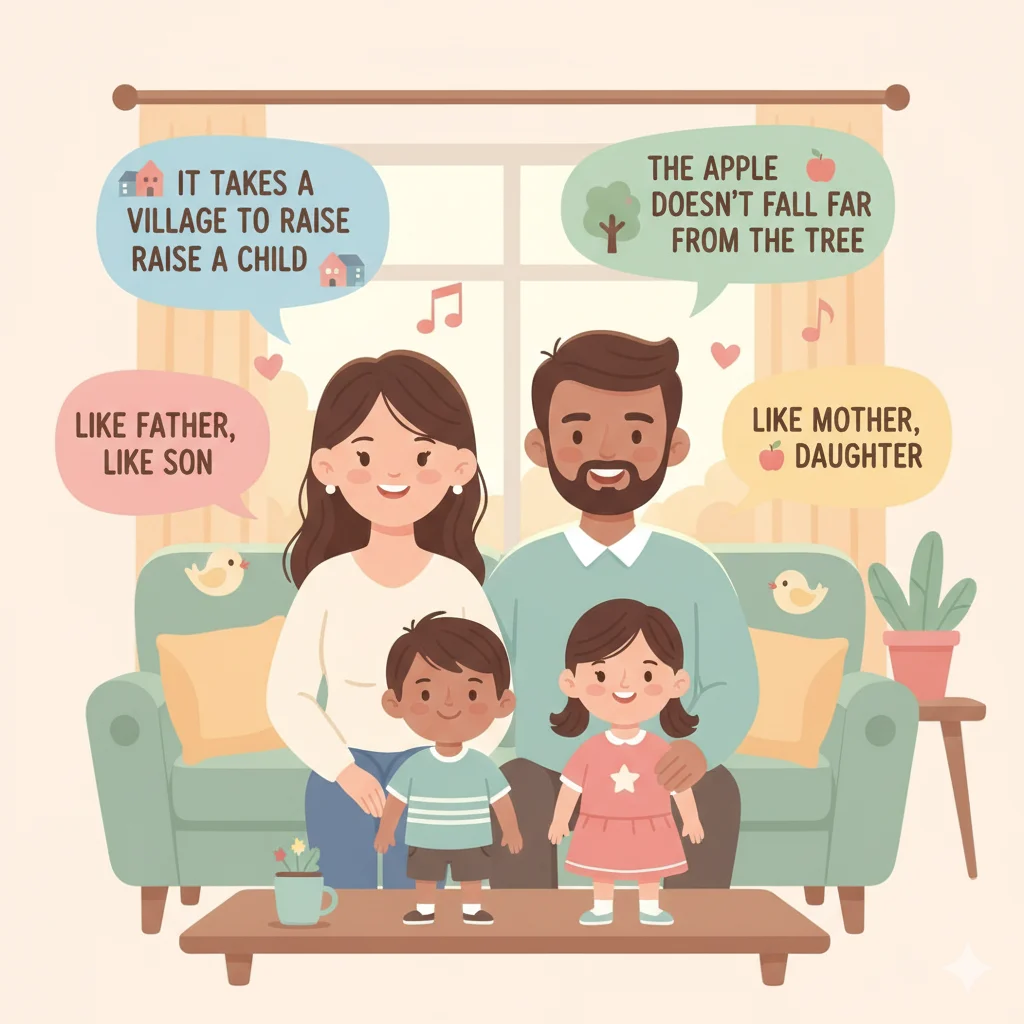
Learning English idioms is one of the fastest ways to sound fluent and natural in conversations. Idioms are phrases whose meanings aren’t literal, like “break the ice,” “piece of cake,” or “once in a blue moon.” Native speakers use them daily in conversations, movies, social media, and professional settings.
Many learners get confused when they take idioms literally, which affects understanding and fluency. By learning idioms step by step, you can express emotions clearly, speak confidently, and understand native English better. Whether you are a student, content creator, or job seeker, mastering idioms boosts vocabulary, improves listening skills, and makes your English memorable.
With the right examples and practical usage, learning idioms becomes simple, fun, and effective for everyday English.
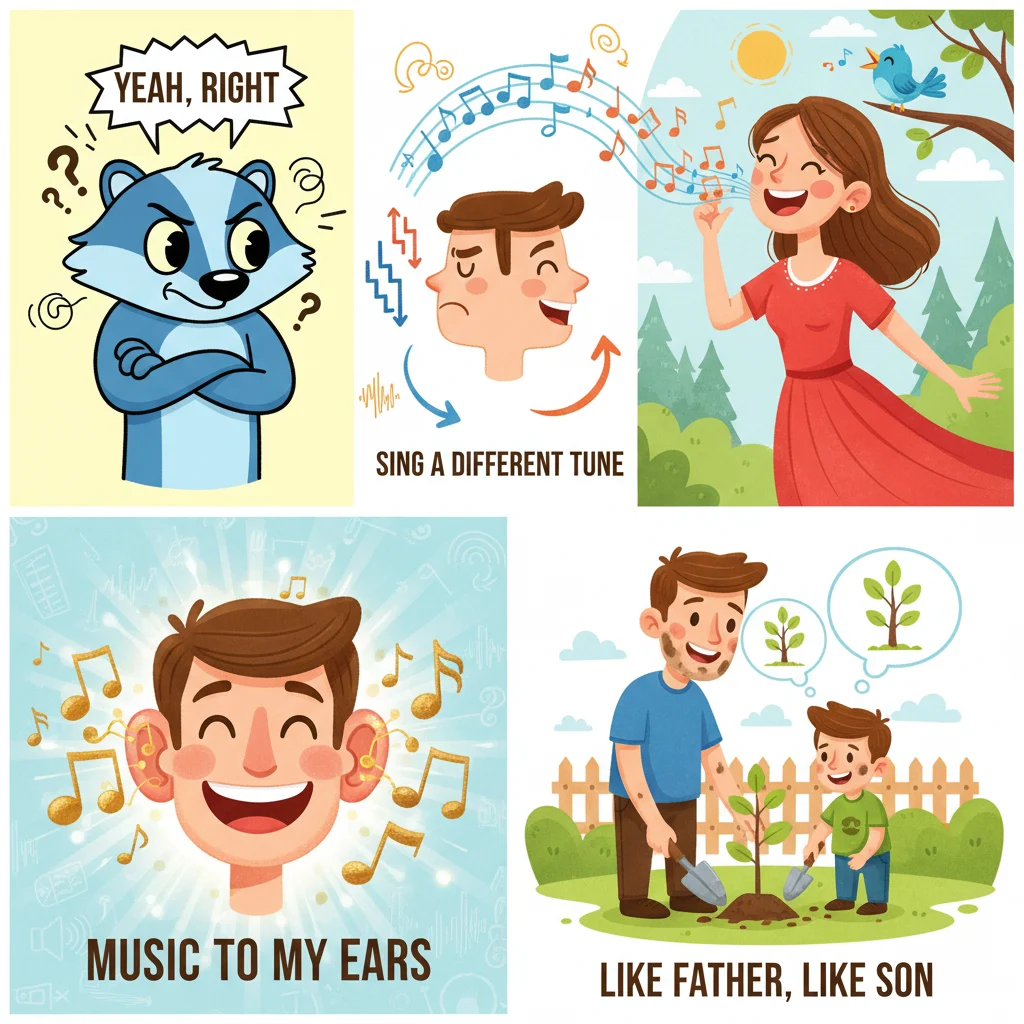
👶 Like Father, Like Son
Word-by-Word Meaning
The son is like the father
Idiomatic / Figurative Meaning
Children often behave like their parents
Example Sentences
- He loves football just like his dad—like father, like son.
Common Error
❌ Using only for physical appearance
Usage Note
Can also be used for mothers and daughters
👩👧 Born with a Silver Spoon
Word-by-Word Meaning
Born holding a silver spoon
Idiomatic / Figurative Meaning
Born into a wealthy or privileged family
Example Sentences
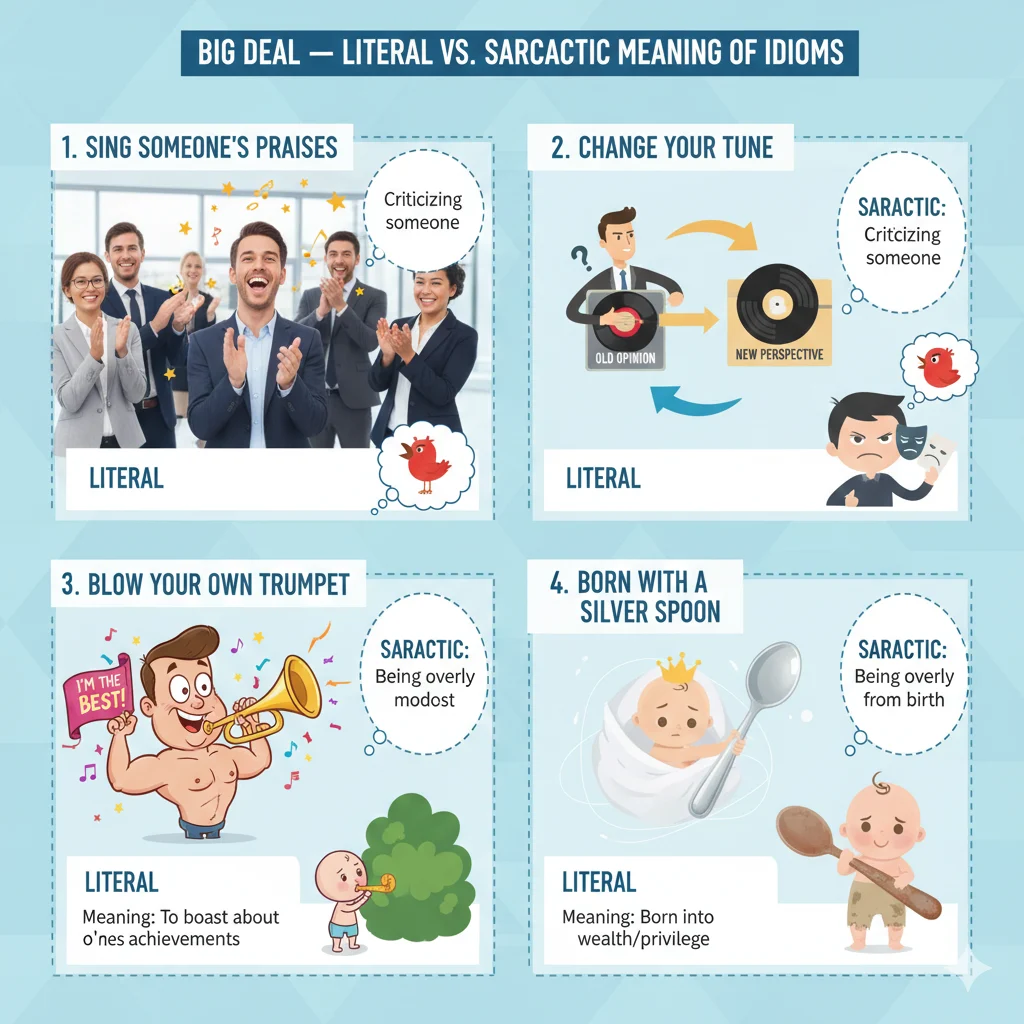
- She was born with a silver spoon and never worried about money.
Common Error
❌ Using it positively in serious writing
Usage Note
Often slightly critical
🏡 The Apple Doesn’t Fall Far from the Tree
Word-by-Word Meaning
The apple stays near the tree
Idiomatic / Figurative Meaning
Children are similar to their parents
Example Sentences
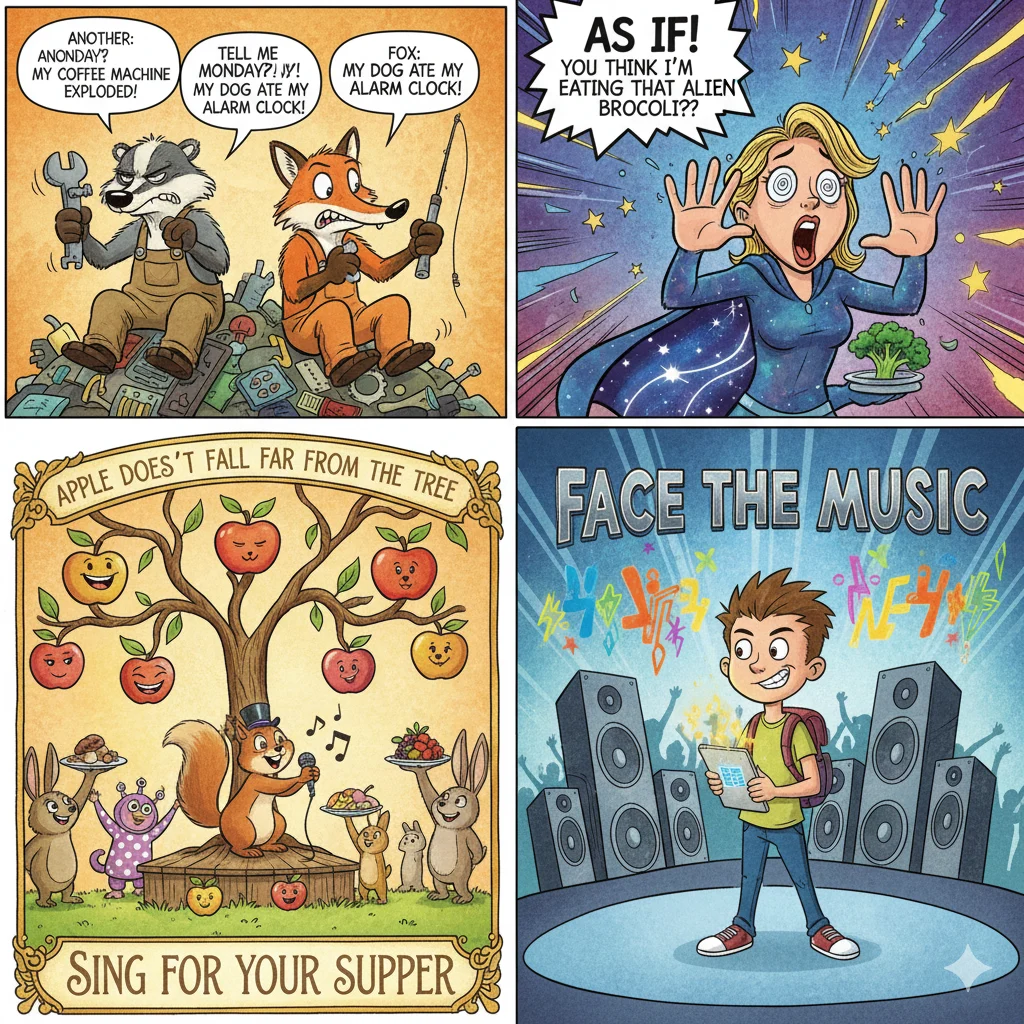
- She’s a great artist—the apple doesn’t fall far from the tree.
Common Error
❌ Mixing with unrelated situations
Usage Note
Very common in family discussions
👨👩👦 A Chip Off the Old Block
Word-by-Word Meaning
A small piece from a big block
Idiomatic / Figurative Meaning
A child who is very similar to a parent
Example Sentences
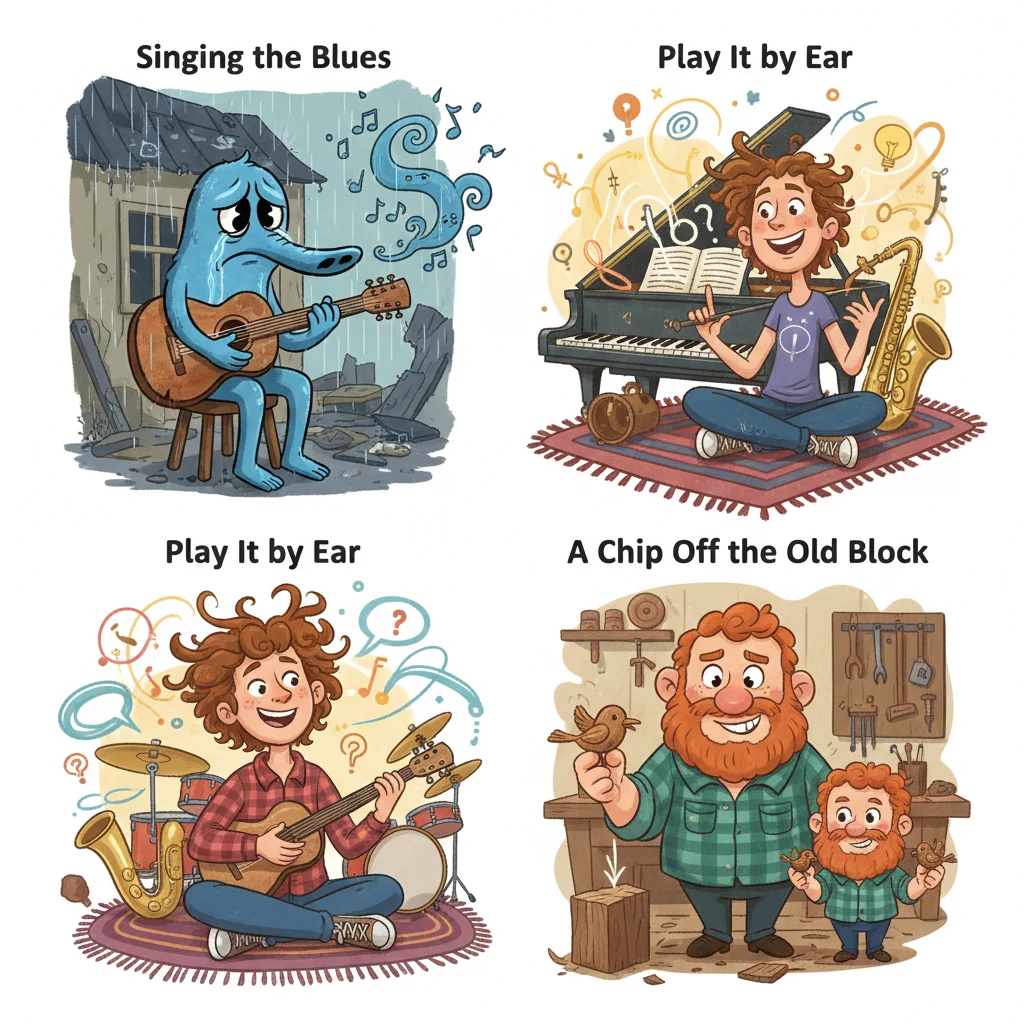
- He’s hardworking like his dad—a chip off the old block.
Common Error
❌ Using for strangers
Usage Note
Usually positive
🍼 Raise Someone Right
Word-by-Word Meaning
Teach correctly
Idiomatic / Figurative Meaning
Teach good values and manners
Example Sentences
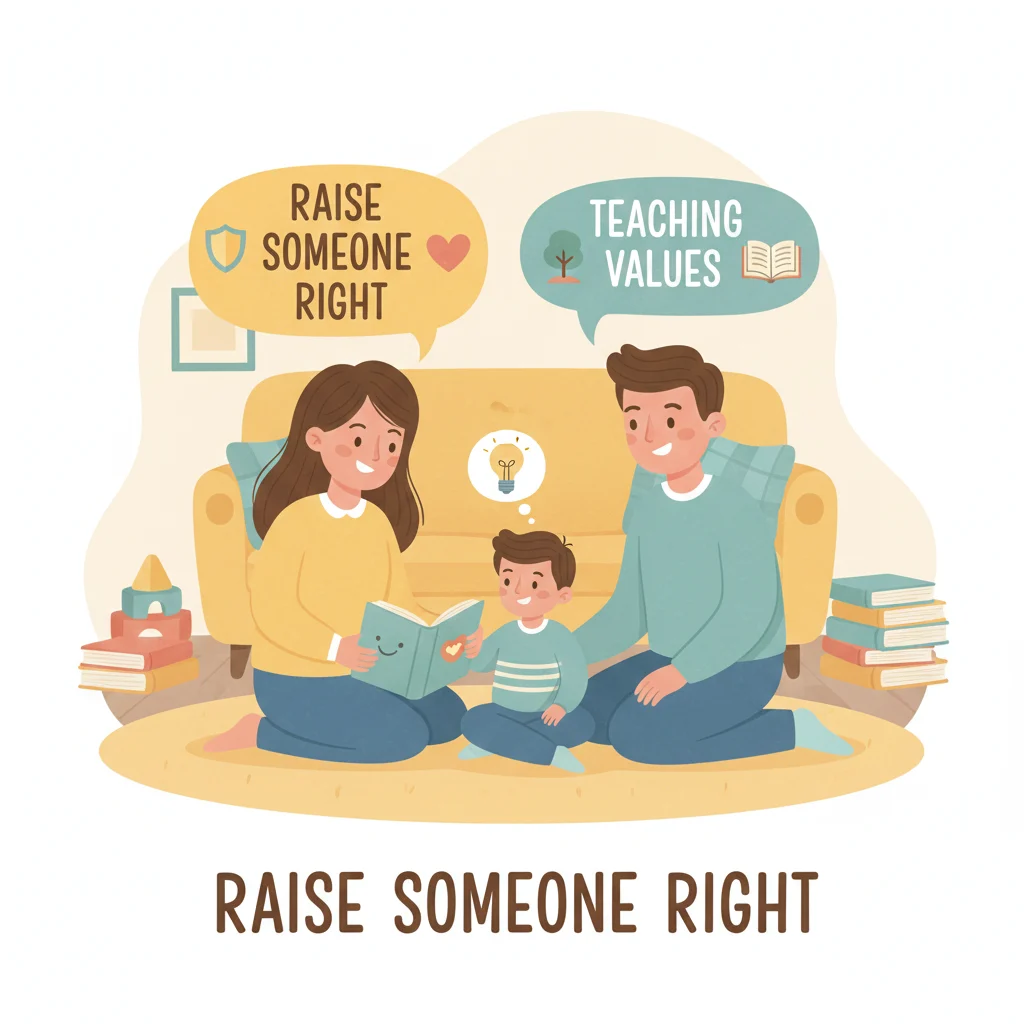
- His parents raised him right.
Common Error
❌ Using in passive situations
Usage Note
Common in moral discussions
👶 Hand-Me-Down
Word-by-Word Meaning
Passed from hand to hand
Idiomatic / Figurative Meaning
Clothes or items passed from older to younger children
Example Sentences
- She wore her sister’s hand-me-downs.
Common Error
❌ Using for new items
Usage Note
Very common in family life
👨👩👧 Rule with an Iron Fist
Word-by-Word Meaning
Rule with a strong hand
Idiomatic / Figurative Meaning
Be very strict as a parent
Example Sentences
- His father ruled with an iron fist.
Common Error
❌ Using it positively
Usage Note
Often negative
👦 Mother Hen
Word-by-Word Meaning
A caring hen
Idiomatic / Figurative Meaning
An overprotective parent
Example Sentences
- She’s a real mother hen with her kids.
Common Error
❌ Using for fathers
Usage Note
Informal, sometimes humorous
👧 Spoil the Child
Word-by-Word Meaning
Give too much
Idiomatic / Figurative Meaning
Overindulge a child
Example Sentences
- Don’t spoil the child with too many gifts.
Common Error
❌ Using for adults
Usage Note
Common parenting advice phrase
👨👩👦 Bring Up a Child
Word-by-Word Meaning
Raise from young age
Idiomatic / Figurative Meaning
Take care of and educate a child
Example Sentences
- They brought up their children with love.
Common Error
❌ Confusing with “bring”
Usage Note
Formal and informal use
👶 Daddy’s Girl
Word-by-Word Meaning
A girl who is close to her father
Idiomatic / Figurative Meaning
A daughter who is especially affectionate or attached to her father
Example Sentences
- She’s such a daddy’s girl; she never goes anywhere without him.
Common Error
❌ Using it for sons
Usage Note
Informal and affectionate; often humorous
👦 Mama’s Boy
Word-by-Word Meaning
A boy attached to his mother
Idiomatic / Figurative Meaning
A son who is very dependent on or close to his mother
Example Sentences
- He’s a mama’s boy, always asking his mom for advice.
Common Error
❌ Using it positively; often implies over-dependence
Usage Note
Informal, sometimes teasing
🏡 Run in the Family
Word-by-Word Meaning
Something continues within a family
Idiomatic / Figurative Meaning
A characteristic, habit, or talent shared by family members
Example Sentences
- Artistic talent runs in the family.
Common Error
❌ Using it for non-family groups
Usage Note
Can be used for traits, talents, or health issues
👨👩👧 Strict as a Parent
Word-by-Word Meaning
Enforcing rules strongly
Idiomatic / Figurative Meaning
A parent who enforces rules rigidly
Example Sentences
- Her father was strict as a parent, but she appreciated it later.
Common Error
❌ Using “strict as a teacher” interchangeably
Usage Note
Mostly neutral to slightly negative; context matters
👶 Learn at Your Mother’s Knee
Word-by-Word Meaning
Learn while sitting by your mother
Idiomatic / Figurative Meaning
Learn something from a parent from a young age
Example Sentences
- She learned cooking at her mother’s knee.
Common Error
❌ Using it for modern classrooms
Usage Note
Traditional idiom, often used in nostalgic or cultural contexts
👦 Baby of the Family
Word-by-Word Meaning
The youngest child
Idiomatic / Figurative Meaning
The youngest or most cared-for member of the family
Example Sentences
- He’s the baby of the family, so everyone spoils him.
Common Error
❌ Using it for adults outside family
Usage Note
Neutral and descriptive
👨👩👧 Overprotective Parent
Word-by-Word Meaning
Parent who protects too much
Idiomatic / Figurative Meaning
A parent who controls or shields children excessively
Example Sentences
- Being an overprotective parent can limit children’s independence.
Common Error
❌ Confusing it with simply caring
Usage Note
Used critically in parenting advice
👶 Raise Eyebrows at Home
Word-by-Word Meaning
Parents notice and react
Idiomatic / Figurative Meaning
Parents show disapproval or surprise
Example Sentences
- His unusual outfit raised eyebrows at home.
Common Error
❌ Thinking it means anger only
Usage Note
Often humorous or mild criticism
👦 Tough Love
Word-by-Word Meaning
Strict but caring discipline
Idiomatic / Figurative Meaning
Being strict with children to teach them responsibility
Example Sentences
- Her father showed tough love when she failed her exam.
Common Error
❌ Using it for physical punishment
Usage Note
Positive intention; guides children for long-term benefit
👨👩👧 Practice What You Preach
Word-by-Word Meaning
Act according to your advice
Idiomatic / Figurative Meaning
Parents should follow the rules or values they teach their children
Example Sentences
- Parents must practice what they preach to set a good example.
Common Error
❌ Using it only for teachers
Usage Note
Useful in parenting, workplace, and moral discussions
❓ Frequently Asked Questions (FAQs)
1. What are parenting idioms?
They are English expressions related to family, children, and upbringing.
2. Are parenting idioms common in daily English?
Yes, especially in conversations about family life.
3. Can ESL learners use these idioms safely?
Yes, most are neutral and commonly understood.
4. Are parenting idioms formal?
Mostly informal, but many appear in writing too.
5. How can I remember them easily?
Use them in short sentences and real-life examples.
🎯 Conclusion
Parenting idioms offer a fascinating glimpse into the wisdom and experiences passed down through generations. They capture universal truths about raising children, highlighting the joys, challenges, and responsibilities of parenthood in just a few words. Idioms like “spare the rod, spoil the child” or “the apple doesn’t fall far from the tree” reflect cultural beliefs about discipline, influence, and family traits, while sayings such as “it takes a village to raise a child” emphasize the collective role of the community in nurturing children. Learning these idioms not only improves language skills but also deepens our understanding of human behavior and family dynamics. By exploring and using parenting idioms, readers can gain valuable insights into child-rearing, communication, and cultural perspectives, making them both educational and meaningful in everyday conversations.

“Rose Macaulay shares the charm of idioms on LearnIdom.com, making language learning delightful, insightful, and full of wit for every reader.”