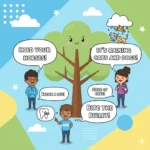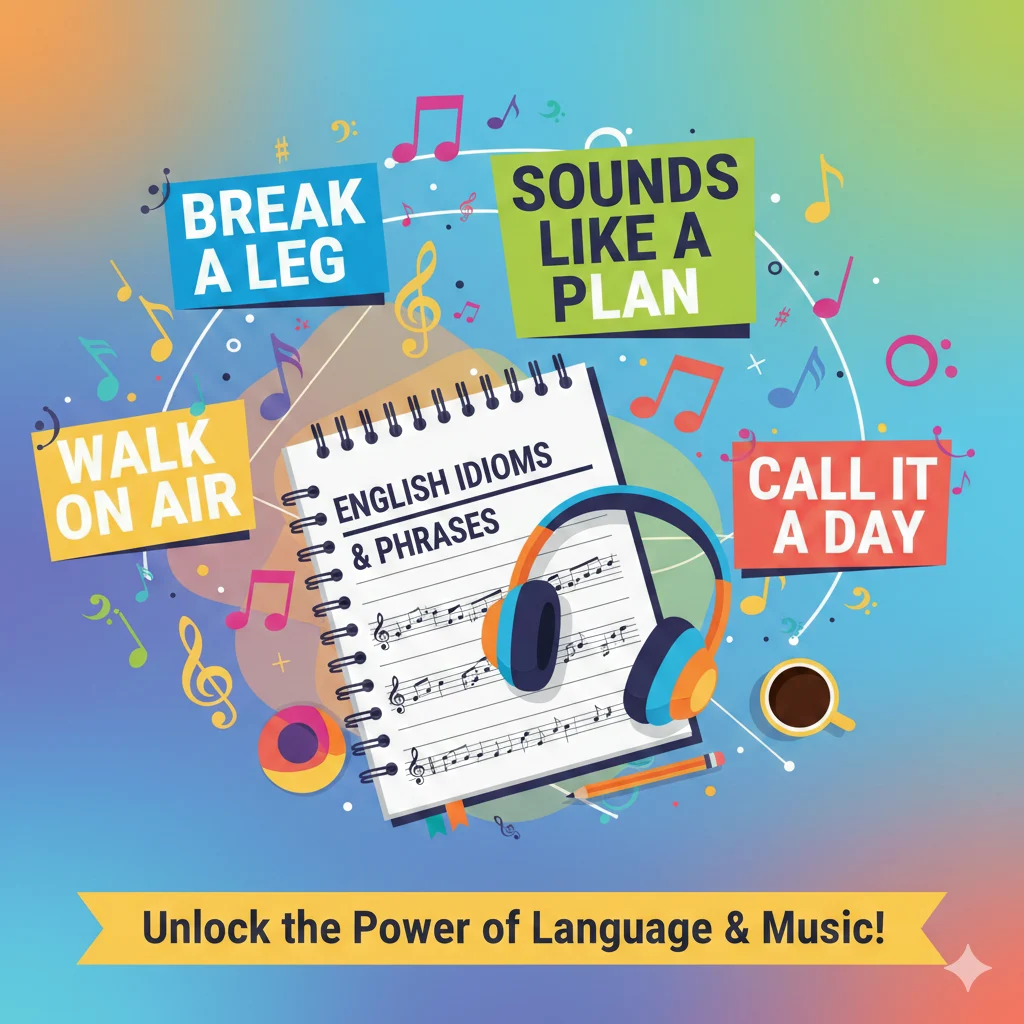
Songs with idioms are popular tracks that use common English expressions in their lyrics to express emotions, stories, and life experiences creatively. Many hit songs include idioms like “cry me a river,” “break a heart,” or “hit the road,” which add deeper meaning beyond the literal words. English learners often struggle to understand song lyrics because idioms are figurative, not literal. That confusion can make listening practice frustrating.
By learning idioms through songs, you can improve vocabulary, understand native expressions naturally, and make learning English more enjoyable. This guide explores famous songs that contain idioms, explains their meanings clearly, and shows how they are used in real-life communication. Whether you’re improving listening skills or expanding vocabulary, learning idioms through music is a fun and effective way to boost fluency.
Hit the Road
Word-by-word Meaning
- Hit = strike
- Road = path or street
Idiomatic Meaning
To leave or start a journey.
Example Sentences
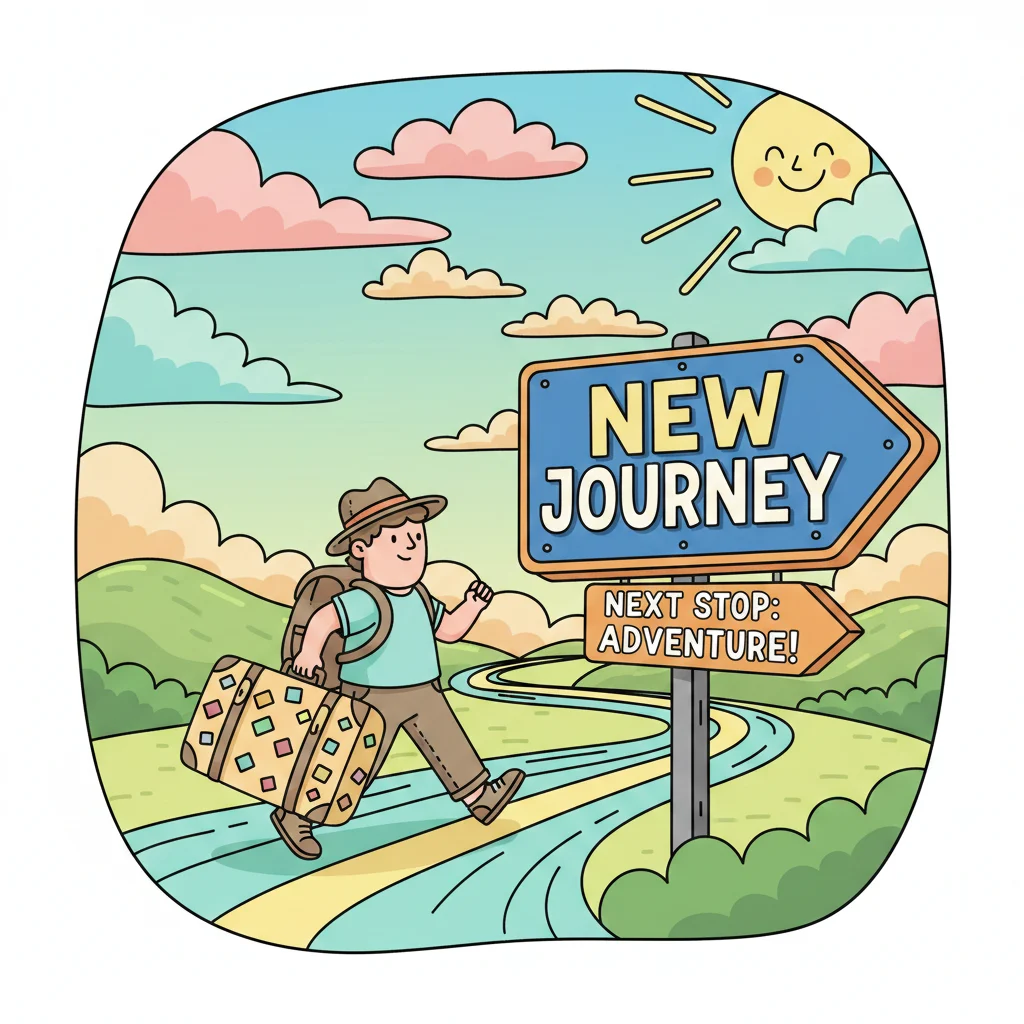
- We need to hit the road before traffic starts.
- It’s getting late, so let’s hit the road.
Common Error
❌ Don’t use it to mean physically hitting something.
Usage Note
Usually used informally when leaving a place.
Break the Ice
Word-by-word Meaning
- Break = destroy
- Ice = frozen water
Idiomatic Meaning
To start a conversation in a social situation.
Example Sentences
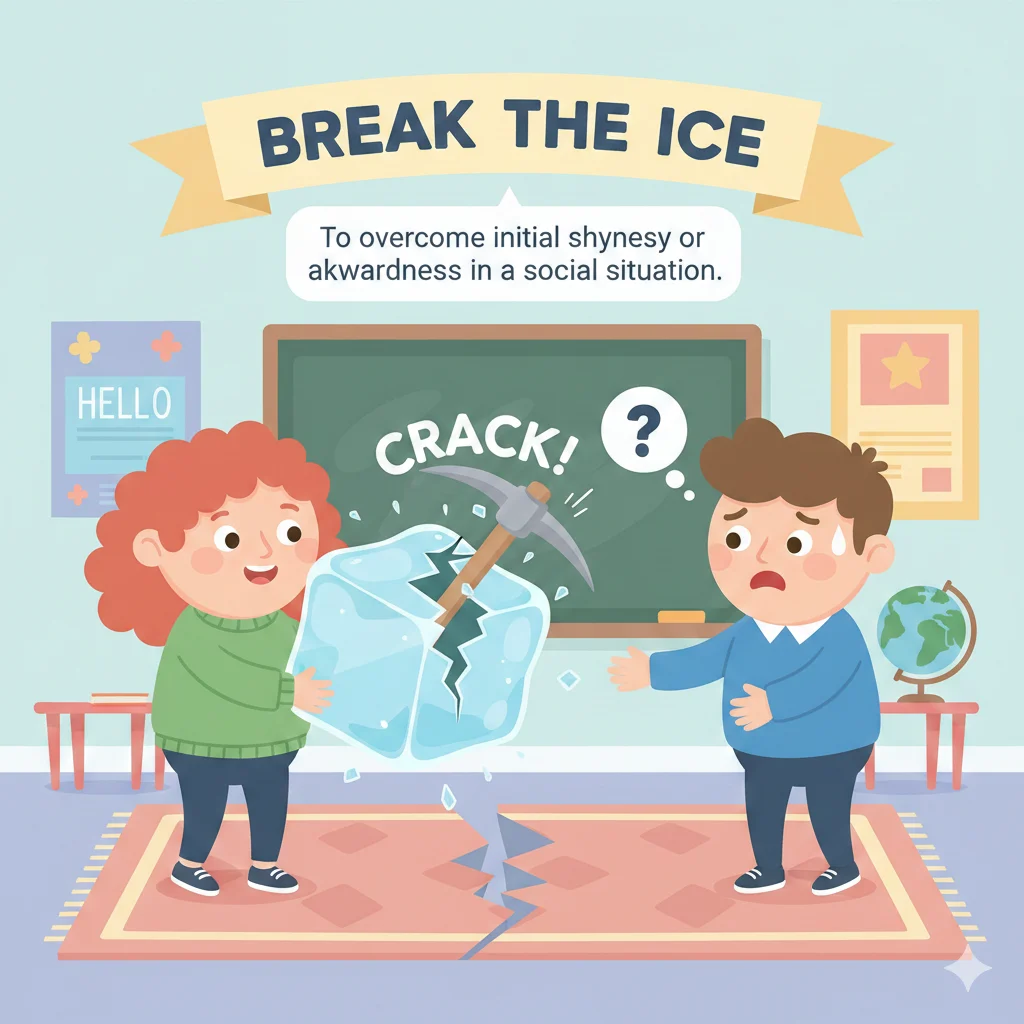
- He told a joke to break the ice.
- Games help break the ice at meetings.
Common Error
❌ Not related to real ice.
Usage Note
Common in social and professional settings.
Cry Over Spilled Milk
Word-by-word Meaning
- Cry = weep
- Spilled milk = milk poured accidentally
Idiomatic Meaning
To be upset about something that cannot be fixed.
Example Sentences

- It’s done—don’t cry over spilled milk.
Common Error
❌ Don’t use for future problems.
Usage Note
Used for past mistakes.
Let the Cat Out of the Bag
Word-by-word Meaning
- Cat = animal
- Bag = container
Idiomatic Meaning
To reveal a secret accidentally.
Example Sentences
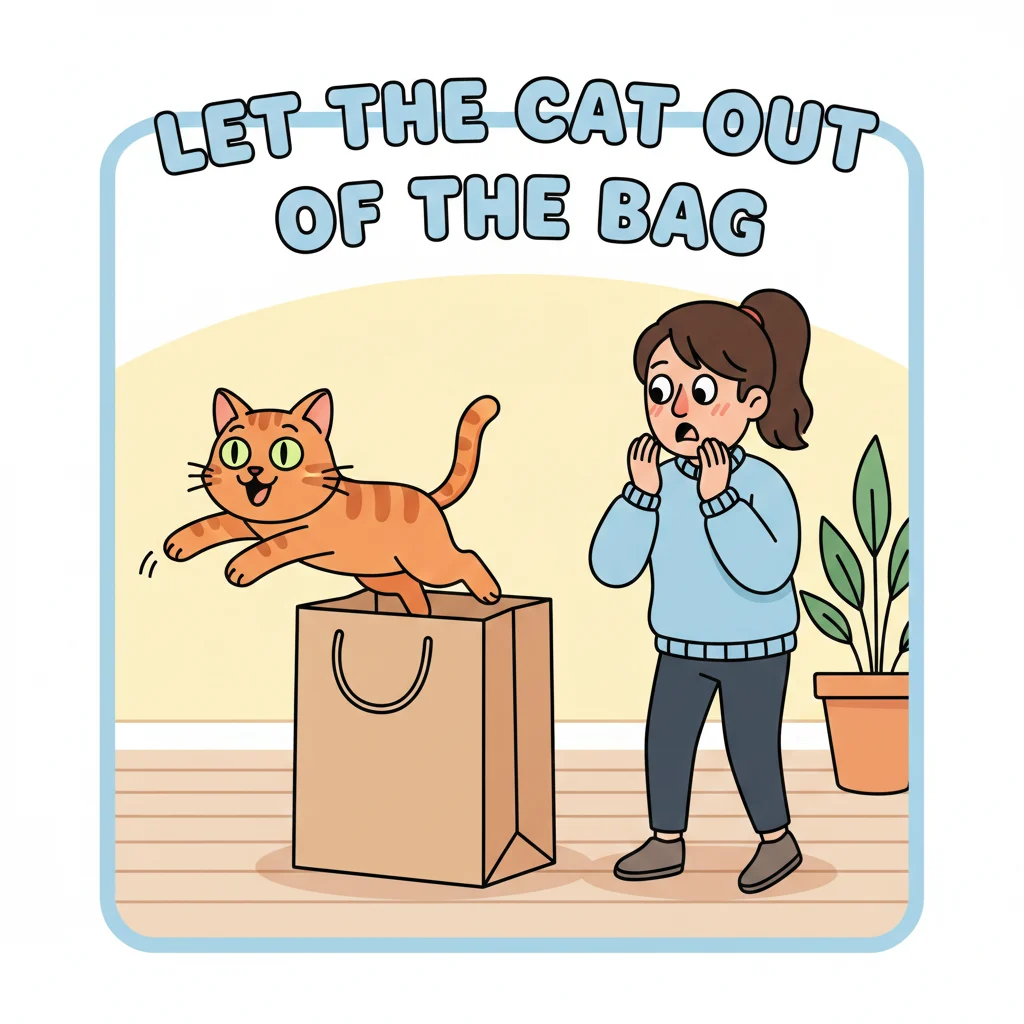
- She let the cat out of the bag about the surprise party.
Common Error
❌ Not about animals.
Usage Note
Usually about secrets.
On Cloud Nine
Word-by-word Meaning
- Cloud = sky vapor
- Nine = number
Idiomatic Meaning
Extremely happy.
Example Sentences

- She was on cloud nine after winning.
Common Error
❌ Not related to weather.
Usage Note
Used for joyful situations.
Piece of Cake
Word-by-word Meaning
- Piece = portion
- Cake = dessert
Idiomatic Meaning
Something very easy.
Example Sentences
- The test was a piece of cake.
Common Error
❌ Not about food.
Usage Note
Informal expression.
Under the Weather
Word-by-word Meaning
- Under = below
- Weather = climate
Idiomatic Meaning
Feeling sick.
Example Sentences
- I feel under the weather today.
Common Error
❌ Not about actual rain.
Usage Note
Polite way to say you’re ill.
Through Thick and Thin
Word-by-word Meaning
- Thick = dense
- Thin = slim
Idiomatic Meaning
In good times and bad.
Example Sentences
- She supported me through thick and thin.
Usage Note
Shows loyalty.
A Blessing in Disguise
Word-by-word Meaning
- Blessing = good thing
- Disguise = hidden form
Idiomatic Meaning
Something good that seemed bad at first.
Example Sentences
- Losing that job was a blessing in disguise.
Burning Bridges
Word-by-word Meaning
- Burning = setting fire
- Bridges = connections
Idiomatic Meaning
Destroying relationships permanently.
Example Sentences
Don’t burn bridges with your boss
Walking on Air
Word-by-word Meaning
- Walking = moving on foot
- Air = the invisible atmosphere around us
Literally, it would mean walking in the sky — which is impossible.
Idiomatic / Figurative Meaning
To feel extremely happy or excited, usually because of good news.
Example Sentences
- She has been walking on air since she got the job offer.
- After hearing his song on the radio, he was walking on air all day.
Common Error
❌ Don’t use it for mild happiness.
✔ It expresses strong joy or excitement.
Usage Note
Often used after achievements, proposals, success, or big life events. In songs, it usually expresses romantic happiness.
The Ball Is in Your Court
Word-by-word Meaning
- Ball = object used in sports
- Court = sports field area
It comes from tennis.
Idiomatic / Figurative Meaning
It is your responsibility to take the next action or make a decision.
Example Sentences
- I’ve explained everything. Now the ball is in your court.
- We made our offer — the ball is in their court now.
Common Error
❌ Don’t use it when you still control the situation.
✔ Use it when responsibility shifts to someone else.
Usage Note
Very common in business conversations and relationship discussions.
Bite the Bullet
Word-by-word Meaning
- Bite = press teeth into something
- Bullet = metal projectile
Historically, soldiers bit bullets during painful surgery.
Idiomatic / Figurative Meaning
To face a difficult or painful situation bravely.
Example Sentences
- I didn’t want to apologize, but I had to bite the bullet.
- She bit the bullet and paid the expensive repair bill.
Common Error
❌ Not about violence.
✔ It means accepting something unpleasant.
Usage Note
Common in emotional or financial situations.
Turn a Blind Eye
Word-by-word Meaning
- Turn = move away
- Blind eye = an eye that cannot see
Idiomatic / Figurative Meaning
To ignore something intentionally.
Example Sentences
- The teacher turned a blind eye to the small mistake.
- He turned a blind eye to his friend’s bad behavior.
Common Error
❌ Don’t use it for accidental ignorance.
✔ It must be intentional.
Usage Note
Often used in serious contexts like rules, mistakes, or wrongdoing.
Heart of Gold
Word-by-word Meaning
- Heart = emotional center
- Gold = precious metal
Idiomatic / Figurative Meaning
A very kind, generous, and caring person.
Example Sentences
- She helps everyone — she truly has a heart of gold.
- My grandmother has a heart of gold.
Common Error
❌ Not used for romantic love only.
✔ Used for kindness and generosity.
Usage Note
Very common in emotional and romantic songs.
Back to Square One
Word-by-word Meaning
- Back = return
- Square one = starting point
Idiomatic / Figurative Meaning
To start again from the beginning after failure.
Example Sentences
- The plan failed. We’re back to square one.
- After losing the data, the team was back to square one.
Common Error
❌ Not used for minor adjustments.
✔ Used when progress is completely lost.
Usage Note
Common in project-related or relationship situations.
Spill the Beans
Word-by-word Meaning
- Spill = drop accidentally
- Beans = small seeds
Idiomatic / Figurative Meaning
To reveal a secret.
Example Sentences
- Who spilled the beans about the surprise party?
- He accidentally spilled the beans during dinner.
Common Error
❌ Don’t use when information is public.
✔ Only used for secrets.
Usage Note
Informal and friendly expression.
Take It with a Grain of Salt
Word-by-word Meaning
- Grain = small particle
- Salt = seasoning
Idiomatic / Figurative Meaning
Don’t fully believe something; be skeptical.
Example Sentences
- Take his promises with a grain of salt.
- I read the news, but I take it with a grain of salt.
Common Error
❌ Not used when information is proven true.
✔ Used for doubtful claims.
Usage Note
Common in advice-related conversations.
Jump the Gun
Word-by-word Meaning
- Jump = move quickly
- Gun = starting pistol
Comes from racing.
Idiomatic / Figurative Meaning
To act too soon or prematurely.
Example Sentences
- I jumped the gun and sent the email early.
- Don’t jump the gun before hearing all details.
Common Error
❌ Not about real guns.
✔ Means acting before the right time.
Usage Note
Often used in professional or decision-making contexts.
Cut Corners
Word-by-word Meaning
- Cut = reduce
- Corners = edges
Literally shortening a path.
Idiomatic / Figurative Meaning
To do something cheaply, quickly, or poorly to save time or money.
Example Sentences
- The company cut corners to reduce costs.
- Don’t cut corners on your education.
Common Error
❌ Not about physical cutting.
✔ Means lowering quality.
Usage Note
Common in work, business, and project discussions.
FAQs About Song with Idioms
1. Why are idioms used in songs?
Because they express emotions creatively and make lyrics more powerful.
2. Are idioms common in modern songs?
Yes! Many pop, rock, and country songs use idioms.
3. How can I learn idioms from songs?
Listen carefully, check meanings, and practice using them.
4. Are idioms formal or informal?
Most idioms are informal but widely used in daily speech.
5. Can idioms improve speaking skills?
Absolutely! They make your English sound fluent and natural.
Conclusion
Learning a song with idioms is like learning English with rhythm and emotion. Instead of memorizing boring vocabulary lists, you absorb natural expressions through music. Every time you sing along, you reinforce pronunciation, meaning, and usage. That’s powerful learning!
Start small. Choose one song, find one idiom, and practice using it in your daily conversation. Write sentences, share them with friends, or even create your own mini-lyrics using idioms. Over time, you’ll notice your English becoming more expressive and confident.
Remember, language isn’t just about grammar—it’s about feeling. And music helps you feel every word. So plug in your headphones, explore songs with idioms, and let your English skills grow one lyric at a time!

“L.P. Hartley brings classic idioms to life on LearnIdom.com, helping readers explore language with wit, clarity, and timeless insight.”