Have you ever heard someone say, “That’s an open book” or “Read between the lines”? These are examples of library idioms — expressions inspired by books, reading, and knowledge.
Library idioms are powerful because they make your English sound natural, educated, and fluent. Whether you’re preparing for exams, interviews, or daily conversation, these expressions can instantly upgrade your vocabulary.
I still remember the first time I used “by the book” in a discussion — it made my answer sound confident and professional. That’s the power of idioms.
In this guide, you’ll learn of the most famous library idioms, with meanings, examples, common mistakes, and usage tips. Let’s open the book of knowledge and begin!
📚 An Open Book
Word-by-Word Meaning
Open = not closed
Book = collection of written pages
Idiomatic Meaning
A person whose thoughts, feelings, or intentions are easy to understand.
Example Sentences

- She is an open book; you always know what she is thinking.
- My best friend is an open book about her life.
- He’s an open book, so nothing surprises me.
Common Error
❌ Using it for secretive people.
(It describes someone transparent, not mysterious.)
Usage Note
Often used to describe honest, expressive personalities.
📖 By the Book
Word-by-Word Meaning
By = according to
Book = rule manual
Idiomatic Meaning
To follow rules strictly and exactly.
Example Sentences

- The manager does everything by the book.
- The police officer handled the case by the book.
- She completed the process by the book.
Common Error
❌ Thinking it refers to reading a book.
Usage Note
Common in professional, legal, and formal situations.
📘 Read Between the Lines
Word-by-Word Meaning
Read = understand
Between = in the middle
Lines = written sentences
Idiomatic Meaning
To understand the hidden or implied meaning.
Example Sentences
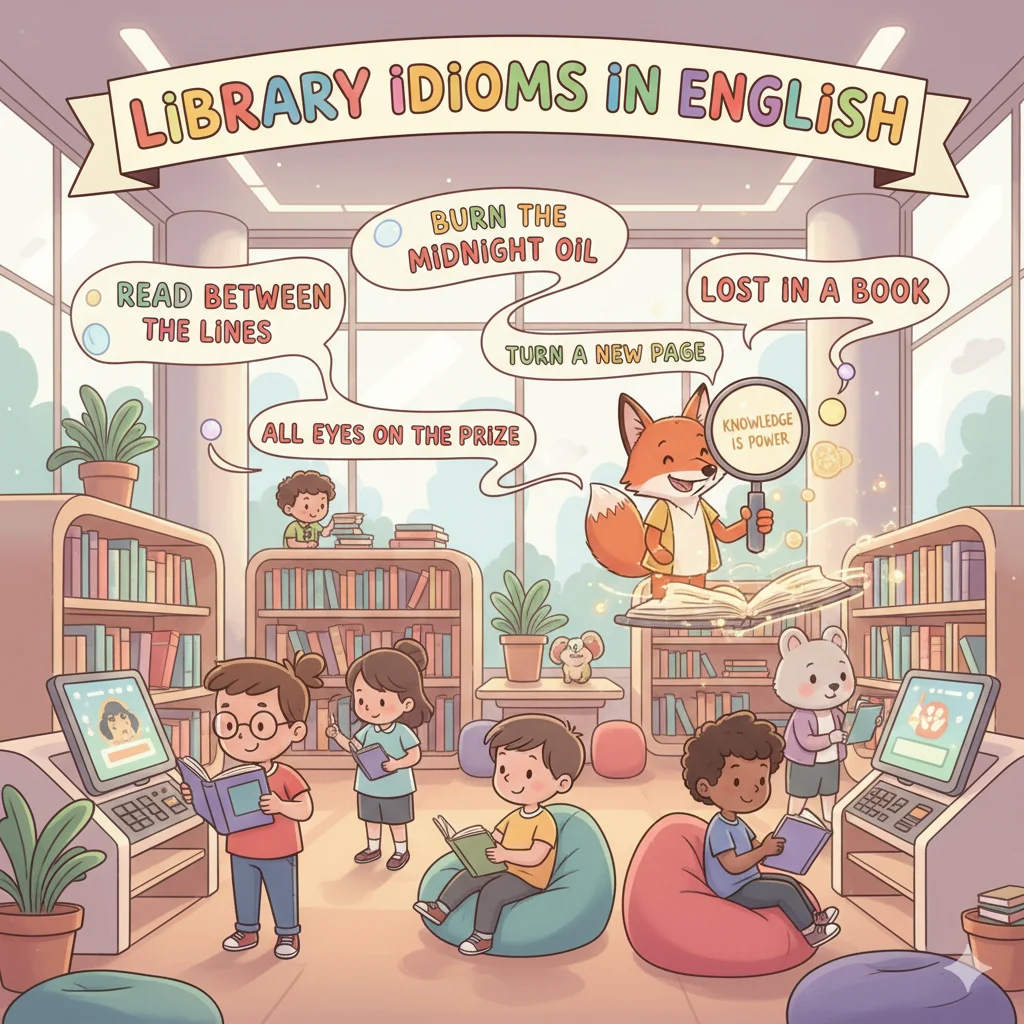
- If you read between the lines, he is unhappy.
- She didn’t say she was tired, but I read between the lines.
- The email sounded positive, but I read between the lines.
Common Error
❌ Taking the meaning literally.
Usage Note
Used in conversations, literature, and professional communication.
📗 In Someone’s Good Books
Word-by-Word Meaning
Good = positive
Books = records
Idiomatic Meaning
To be liked or approved by someone.
Example Sentences

- He worked hard to stay in the teacher’s good books.
- She is in her boss’s good books.
- He apologized to get back into her good books.
Common Error
❌ Saying “good book” (must be plural).
Usage Note
Used in schools, offices, and relationships.
📕 In Someone’s Bad Books
Word-by-Word Meaning
Bad = negative
Books = records
Idiomatic Meaning
To be disliked or in trouble with someone.
Example Sentences

- He forgot the meeting and is now in his boss’s bad books.
- She was late and landed in the teacher’s bad books.
- Don’t lie or you’ll be in my bad books.
Usage Note
Often used in informal conversations.
📙 Take a Leaf Out of Someone’s Book
Word-by-Word Meaning
Leaf = page
Book = guide
Idiomatic Meaning
To copy someone’s good behavior or method.
Example Sentences
- You should take a leaf out of her book and study daily.
- He took a leaf out of his mentor’s book.
- Let’s take a leaf out of their book and work as a team.
Common Error
❌ Saying “take a page from someone book” (missing possessive).
Usage Note
Used when giving advice or suggesting improvement.
📚 Bookworm
Word-by-Word Meaning
Book = reading material
Worm = insect
Idiomatic Meaning
A person who loves reading very much.
Example Sentences
- She is a real bookworm.
- As a child, I was a bookworm.
- He became a bookworm during lockdown.
Usage Note
Usually positive but sometimes playful.
📖 Don’t Judge a Book by Its Cover
Word-by-Word Meaning
Judge = form opinion
Book = object
Cover = outside part
Idiomatic Meaning
Do not judge someone or something by appearance only.
Example Sentences
- He looks serious, but don’t judge a book by its cover.
- The restaurant looks small — don’t judge a book by its cover.
- She surprised everyone — never judge a book by its cover.
Common Error
❌ Shortening incorrectly in formal writing.
Usage Note
Very common proverb used worldwide.
📘 Close the Book on Something
Word-by-Word Meaning
Close = shut
Book = chapter
Idiomatic Meaning
To finish or end something permanently.
Example Sentences
- It’s time to close the book on that chapter of life.
- The company closed the book on the old project.
- She decided to close the book on past mistakes.
Usage Note
Often used emotionally or professionally.
📑 Turn Over a New Leaf
Word-by-Word Meaning
Turn over = flip
Leaf = page
Idiomatic Meaning
To start fresh and improve behavior.
Example Sentences
- After the exam failure, he turned over a new leaf.
- She promised to turn over a new leaf this year.
- It’s never too late to turn over a new leaf.
Common Error
❌ Saying “turn a new leaf” (incorrect structure).
Usage Note
Commonly used for personal improvement.
📘 A Closed Book
Word-by-Word Meaning
Closed = shut
Book = written pages
Idiomatic Meaning
A person who is secretive and does not share thoughts or feelings easily.
Example Sentences
- He is a closed book; no one knows what he is thinking.
- My cousin is a closed book about her personal life.
- She remained a closed book during the interview.
Common Error
❌ Confusing it with “close the book.”
(One describes a person; the other means to finish something.)
Usage Note
Used to describe quiet or mysterious personalities.
📖 In the Same Book
Word-by-Word Meaning
Same = identical
Book = reference
Idiomatic Meaning
To share the same opinion or understanding.
Example Sentences
- We are in the same book about this issue.
- I’m glad we’re in the same book regarding the plan.
- The team members were in the same book.
Common Error
❌ This idiom is less common; more natural form is “on the same page.”
Usage Note
Used in discussions or teamwork contexts.
📚 Book Smart
Word-by-Word Meaning
Book = academic knowledge
Smart = intelligent
Idiomatic Meaning
Intelligent in studies but not necessarily practical in real life.
Example Sentences
- He is very book smart but lacks experience.
- She is book smart and always scores high.
- Being book smart helps in exams.
Common Error
❌ Assuming it means overall intelligence.
Usage Note
Often contrasted with “street smart.”
📘 Hit the Books
Word-by-Word Meaning
Hit = start strongly
Books = study materials
Idiomatic Meaning
To begin studying seriously.
Example Sentences
- I need to hit the books tonight.
- She is hitting the books for her finals.
- It’s time to hit the books before exams.
Usage Note
Very common among students.
📖 Bring to Book
Word-by-Word Meaning
Bring = take
Book = record/account
Idiomatic Meaning
To punish or hold someone accountable for wrongdoing.
Example Sentences
- The criminal was brought to book.
- The company will bring corrupt officials to book.
- Justice demands that he be brought to book.
Usage Note
Mostly used in formal or legal contexts.
📑 Cook the Books
Word-by-Word Meaning
Cook = change or manipulate
Books = financial records
Idiomatic Meaning
To change financial records dishonestly.
Example Sentences
- The accountant was caught cooking the books.
- They went to jail for cooking the books.
- The company denied cooking the books.
Common Error
❌ Using it for normal cooking.
(It is strictly about financial fraud.)
Usage Note
Used in business and legal discussions.
📕 One for the Books
Word-by-Word Meaning
One = event
Books = records
Idiomatic Meaning
An unusual or remarkable event.
Example Sentences
- That goal was one for the books.
- The storm was one for the books.
- His comeback story is one for the books.
Usage Note
Informal and often positive.
📗 Throw the Book at Someone
Word-by-Word Meaning
Throw = apply forcefully
Book = law
Idiomatic Meaning
To punish someone severely according to the law.
Example Sentences
- The judge threw the book at him.
- They decided to throw the book at the fraudster.
- The court threw the book at the offender.
Usage Note
Common in legal and crime-related discussions.
📘 Balance the Books
Word-by-Word Meaning
Balance = equalize
Books = financial accounts
Idiomatic Meaning
To ensure financial records are accurate and equal.
Example Sentences
- The accountant stayed late to balance the books.
- The company must balance the books this year.
- She learned how to balance the books properly.
Usage Note
Used in accounting and business.
📜 Take a Page from History
Word-by-Word Meaning
Page = part of a book
History = past events
Idiomatic Meaning
To learn from past events or experiences.
Example Sentences
- We should take a page from history and avoid mistakes.
- Leaders must take a page from history.
- Let’s take a page from history and improve policies.
Usage Note
Used in speeches, writing, and discussions about lessons from the past.
❓ FAQs About Library Idioms
1. What are library idioms?
Library idioms are expressions related to books, reading, and knowledge.
2. Why should I learn library idioms?
They make your English sound intelligent and fluent.
3. Are library idioms used in exams?
Yes, especially in speaking and writing tests.
4. How can I remember them easily?
Practice using 2–3 idioms daily in sentences.
🚀 Conclusion
Library idioms are more than just expressions — they are tools that make your English sound confident, natural, and impressive. By learning these 20 powerful idioms, you expand your vocabulary and improve your communication skills. Don’t just memorize them — use them in daily conversation, writing, and practice exercises. The more you apply them, the more fluent you become. Start today, and soon your English will be as rich as a library full of knowledge.

“Rose Macaulay shares the charm of idioms on LearnIdom.com, making language learning delightful, insightful, and full of wit for every reader.”