Insulting idioms pop up everywhere—from movies and memes to casual conversations—and they can be confusing if you take them literally. Imagine hearing “He’s a pain in the neck” and wondering what happened to someone’s neck. 😅
In this guide, you’ll learn what these expressions really mean, how native speakers use them, and—just as important—when not to use them.
I’ll keep things friendly and learner-safe, with clear examples and practical notes so you can recognize these idioms without accidentally offending anyone.
Pain in the neck
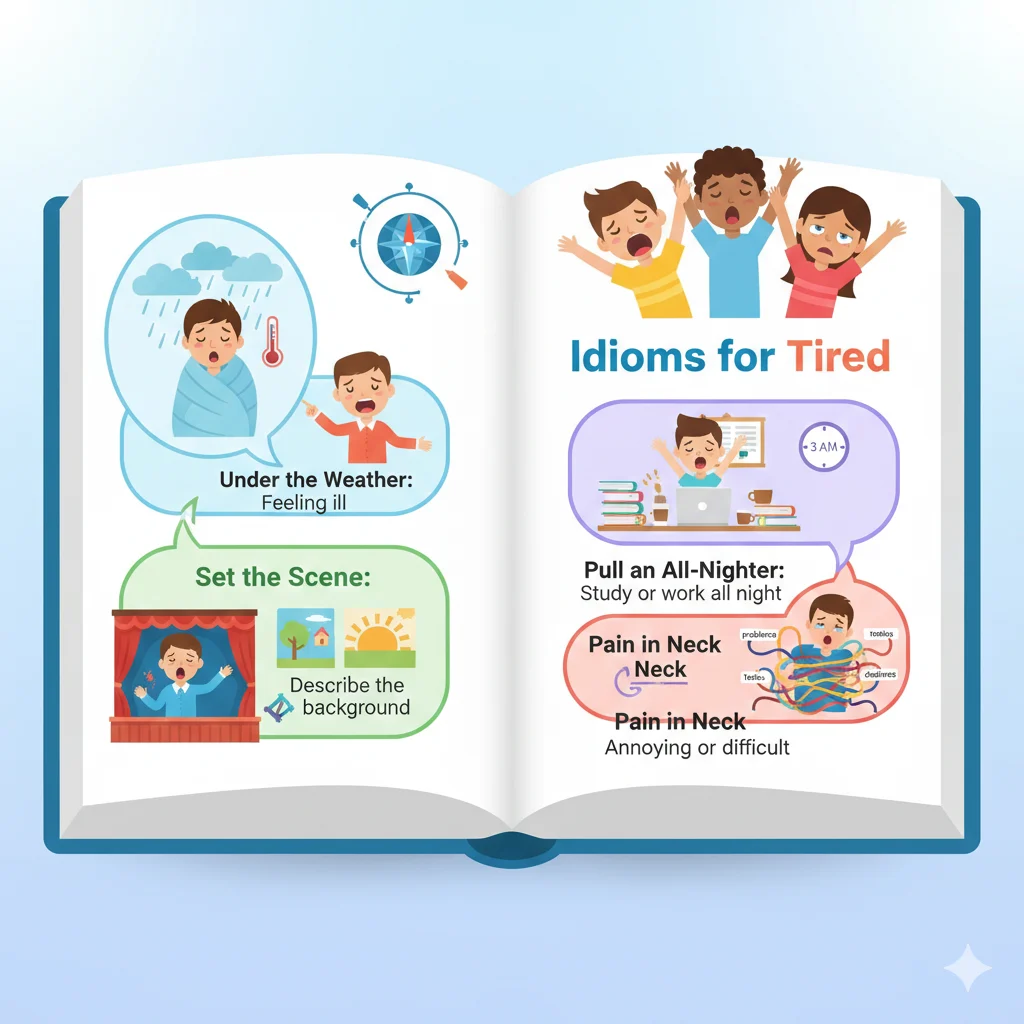
Word-by-word meaning: Something that hurts your neck
Idiomatic meaning: A very annoying person or thing
Example: My old laptop is a pain in the neck—it crashes every day.
Common error: Using it for serious hatred
Usage note: Mild and common; often about situations, not people
Full of hot air

Word-by-word meaning: Filled with air
Idiomatic meaning: Talks a lot but says nothing meaningful
Example: That speaker sounded confident, but he was full of hot air.
Common error: Using it as a compliment
Usage note: Often used critically, sometimes humorously
Big mouth
Word-by-word meaning: A large mouth
Idiomatic meaning: Someone who can’t keep secrets
Example: Don’t tell her—she’s a big mouth.
Common error: Confusing it with physical appearance
Usage note: Informal and mildly insulting
Not the sharpest tool in the shed

Word-by-word meaning: A dull tool
Idiomatic meaning: Not very intelligent
Example: He’s nice, but not the sharpest tool in the shed.
Common error: Saying it directly to someone
Usage note: Often softened with humor
A loose cannon
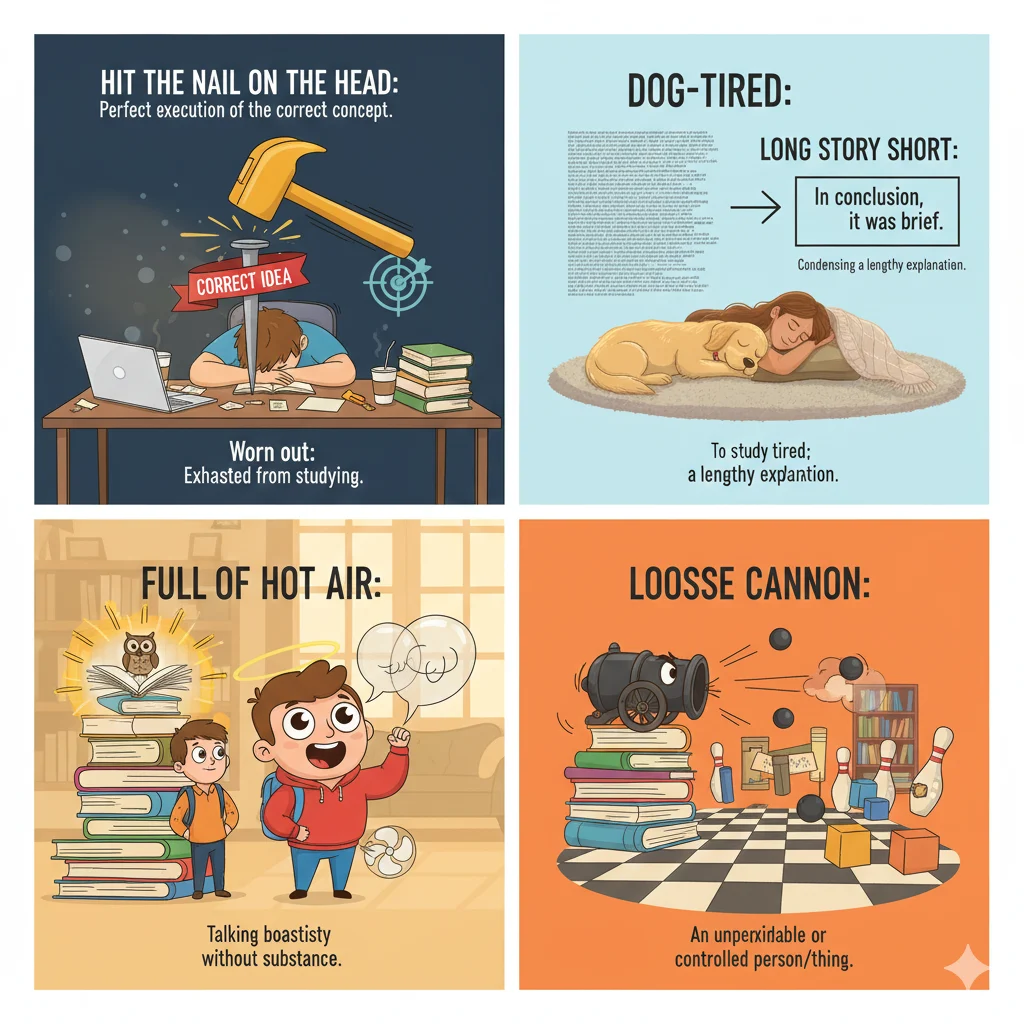
Word-by-word meaning: A cannon that moves freely
Idiomatic meaning: An unpredictable person
Example: He’s talented, but a loose cannon at work.
Common error: Using it for shy people
Usage note: Common in workplace English
Dead weight
Word-by-word meaning: Heavy, lifeless weight
Idiomatic meaning: Someone who doesn’t contribute
Example: The team improved after losing the dead weight.
Common error: Using it about beginners
Usage note: Strong—use carefully
All bark and no bite
Word-by-word meaning: A barking dog that doesn’t bite
Idiomatic meaning: Threatening but harmless
Example: Don’t worry—he’s all bark and no bite.
Common error: Mixing up with “bite and bark”
Usage note: Often reassuring
Blowhard
Word-by-word meaning: Someone who blows hard
Idiomatic meaning: A loud, arrogant talker
Example: Everyone ignored the blowhard at the meeting.
Common error: Confusing with confident speakers
Usage note: Informal and critical
Dumb as a rock
Word-by-word meaning: As unintelligent as a rock
Idiomatic meaning: Very stupid
Example: That decision was dumb as a rock.
Common error: Using it in formal writing
Usage note: Very rude—best avoided
Two-faced
Word-by-word meaning: Having two faces
Idiomatic meaning: Insincere or dishonest
Example: He’s friendly to you but criticizes you later—so two-faced.
Common error: Using it for shy people
Usage note: Serious insult
Know-it-all
Word-by-word meaning: Someone who knows everything
Idiomatic meaning: Acts superior or arrogant
Example: Nobody likes a know-it-all.
Common error: Confusing with “expert”
Usage note: Common in school/work settings
Cold fish
Word-by-word meaning: A cold fish
Idiomatic meaning: Emotionally distant person
Example: He’s smart but a bit of a cold fish.
Common error: Using it for introverts
Usage note: Mild but personal
Stick in the mud
Word-by-word meaning: Something stuck in mud
Idiomatic meaning: Boring, old-fashioned person
Example: Come on—don’t be a stick in the mud!
Common error: Using it for cautious people
Usage note: Playful in tone
Big-headed
Word-by-word meaning: Having a large head
Idiomatic meaning: Arrogant
Example: He got big-headed after winning the prize.
Common error: Confusing with confidence
Usage note: Common in British English
Smart mouth
Word-by-word meaning: A clever mouth
Idiomatic meaning: Rude, sarcastic speaker
Example: Stop being a smart mouth.
Common error: Mixing with “smart person”
Usage note: Often used by adults to kids
Airhead
Word-by-word meaning: Head full of air
Idiomatic meaning: Silly or scatterbrained person
Example: I forgot my keys again—I’m such an airhead today.
Common error: Using it harshly toward others
Usage note: Can be self-deprecating
Numbskull
Word-by-word meaning: Numb head
Idiomatic meaning: Foolish person
Example: Only a numbskull would try that.
Common error: Using it in formal speech
Usage note: Old-fashioned but still understood
Lazy bones
Word-by-word meaning: Lazy body
Idiomatic meaning: Very lazy person
Example: Get up, lazy bones!
Common error: Using it angrily
Usage note: Often playful
Bad apple
Word-by-word meaning: A rotten apple
Idiomatic meaning: A person who causes trouble
Example: One bad apple can ruin the group.
Common error: Using it for minor mistakes
Usage note: Common in news and work talk
Windbag
Word-by-word meaning: Bag full of wind
Idiomatic meaning: Someone who talks too much
Example: He’s a windbag, but entertaining.
Common error: Confusing with storyteller
Usage note: Informal and humorous
FAQs About Insulting Idioms
1. Are insulting idioms always rude?
No. Many are mild or playful, depending on tone and context.
2. Should ESL learners use insulting idioms?
It’s better to understand them first. Use cautiously and only when appropriate.
3. Are these idioms used in formal English?
Most are informal and not suitable for academic or professional writing.
4. Can insulting idioms be humorous?
Yes—friends often use them jokingly, but context is key.
5. Do these idioms exist in other languages?
Yes! Many languages have similar expressions with different imagery.
Final Thoughts
Understanding insulting idioms helps you follow real conversations, movies, and jokes without confusion. You don’t have to use them to sound fluent—just recognizing them is a big win. Try spotting one in a show or book this week and ask yourself: Is it playful, critical, or just descriptive?
Language is powerful—use it wisely, and keep learning with curiosity. 💬✨

“Rose Macaulay shares the charm of idioms on LearnIdom.com, making language learning delightful, insightful, and full of wit for every reader.”